Tag: digitisation

  • India is no longer a follower in digital space: Newgen’s Arvind Jha

    India is no longer a follower in digital space: Newgen’s Arvind Jha

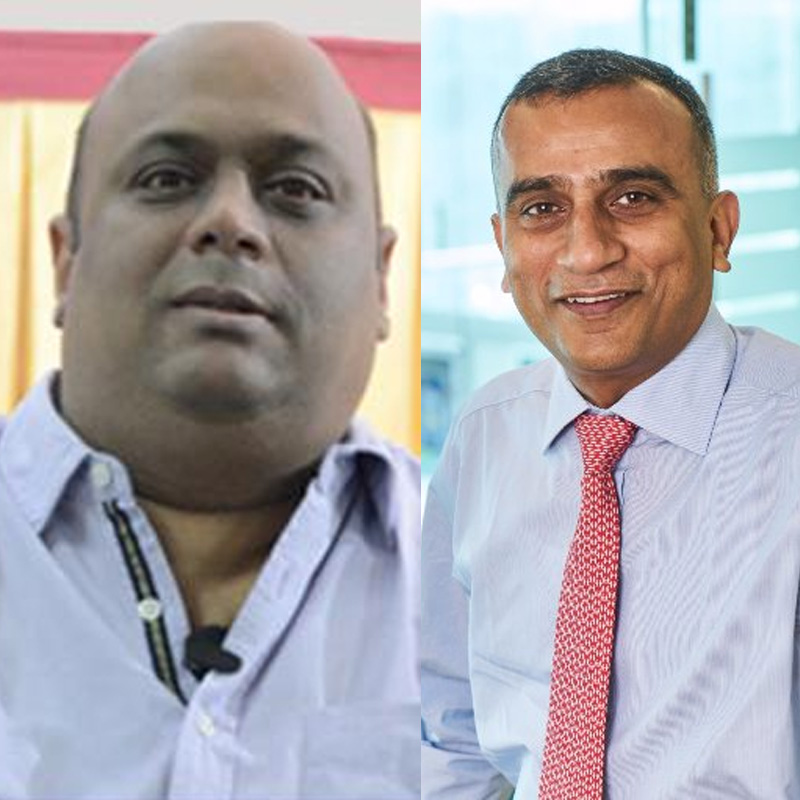
    Mumbai: Newgen Software, which has recently completed its 30 years of enterprise journey is extensively working to make communication personalised. From helping brands across the globe to simplify data to providing efficient platforms to manage large volumes of documents, the company has many products to offer.

    In a conversation with IndianTelvision.com, Newgen SVP for software development Arvind Jha speaks about their products, top trends in the digital space, and the new products in the pipeline.

    Jha has been associated with Newgen since November 2020 and is responsible for product development at Newgen. He is recognised by the Indian tech community as an innovator and community builder. Before joining Newgen, Jha also held the position of Pariksha Labs CEO and led the product development team at Polaroid, Adobe, Monsoon Multimedia, and Movico Technologies.

    In an exclusive chat, Jha shares that India is no longer a follower in the technology space, rather the country is leading towards rapid growth, leveraging cutting-edge technology.

    Top digital trends for future

    According to Jha, India was a follower of technology two years ago but looking at the latest numbers, 30 per cent of business now comes from India. “We can say that India is definitely no longer a follower (in this regard),” he asserts.

    Jha feels that over the years India has moved from the backend to the front end. He further explains the digital trends which will lead the industry in the upcoming years.

    Noting the first digital trend, Jha says, “Earlier we had a lot of paperwork and the majority of the work was being done physically, now we have it all in digitised form on our screens. People do not want anything to be hidden, they want everything to be done in front of their eyes on their smartphones.”

    He emphasised that companies who will not adopt the technology on time will be left behind in the competition. “We have clients from across the world and we process huge amounts of data every day, but one thing which all leading companies want is a transparent CMS. They want the live data to be shared with their customers,” he adds.

    Coming to the second trend, Jha says fast processing is the need of the hour. “How fast you serve your customers will be a major factor in deciding the growth rate of any company, especially in the BFSI sector,” he highlights.

    He feels that 24*7 availability of the business will be the third most important trend. “Ever since the first lockdown happened, how we operate in our everyday lives has changed. With this transition, people want things to be available as per their own time and preferences. They do not want to be bound between ten to five business hours,” he tells.

    Technology is no more restricted to particular age group

    While comparing the Indian market to the global market, he says, the user behavior of the Indian population has drastically changed over the period of last two years.

    “Before the pandemic hit the world, technology was a thing of millennials in India, however, now it is not limited to a certain age group or gender,” Jha shares. “Be it a five-year-old kid or a 60-year old man, nobody wants to stand in long queues to get their work done in physical format. They all want it all instantly. From opening a bank account to buying their everyday household stuff, people have become so used to digital,” he adds.

    Technological development & policies

    According to the Global Innovation Index, India is witnessing a burgeoning start-up and innovation culture. Jha says that this shift has accelerated the momentum in India’s development on the global platform in the technology space.

    “India is not just becoming self-reliant but also offering its service across the globe,” he notes. Coinciding with his 30-years-long career, he shares how he has seen everything changing- from what we consume, how we conduct our lives, the entire economy of the country, and the businesses growing in India, everything is disrupted by Covid-19. “If we have to scale down the differences, the health crisis actually turned out to be an opportunity for the digital brands in India.”

    On being asked how government initiatives have helped in this change? He says that policies and regulations play a vital role.”In the last five to six years, the government has done much to encourage digital transformation in the country. Today we have a robust infrastructure that allows any business to make a shift to digital easily,” Jha explains.

    Spending patterns of Indian brands

    In the concluding section, Jha talks about how spending patterns of Indian brands have evolved during this time. “Despite the major growth and transformation in the industry, Indian brands are still very conservative when it comes to their marketing budgets,” he points out.

    Comparing the behavior of Indian brands to the global ones, he says global players start marketing 10 months prior to even launching their products, whereas, in India brands still follow a slow pace.

    However, Indian brands have shifted their focus from those regular elements of budgets. While Indian brands were known to spend more on their HR teams than infrastructure, today it is completely changed. “Now brands have started to realise the importance of having a robust digital presence and a seamless infrastructure where employees can operate the business flawlessly,” Jha remarks. 

  • GUEST COLUMN: Five ways how a digital advertising agency can help grow your business

    GUEST COLUMN: Five ways how a digital advertising agency can help grow your business

    Mumbai: Amid the accelerating digitisation due to the pandemic, businesses are exploring the digital world. Companies are increasingly investing in digital strategies to stay relevant amid the competition. Although there is no dearth of online resources to help grow your digital presence, companies often lack the in-house expertise and resources to implement a robust digital advertising strategy. The digital landscape for a company can’t be short-term, or with temporary goals. Digital presence needs a robust thought process that should be backed by the business processes of the company. Digital advertising agencies play an instrumental role in assist in creating effective roadmaps. Performance-backed campaigns, and effectively utilise existing time and resources to maximise return on investment in marketing campaigns. 

    Here are five ways a digital advertising agency can help grow a business

    Ideate and develop a 360-degree digital roadmap: Helmed by seasoned marketers, digital advertising agencies help you ideate and plan a digital strategy to achieve your business goals. The brand and the agency work collaboratively to devise a plan with the right milestones for achieving marketing goals. These strategies may be short-term or long-term, depending upon the objective. The digital strategy is further broken down into actionable KPIs to be achieved within a predefined timeline.

    Craft fresh and engaging content: Content is the heart of digital advertising. Fresh and compelling content helps achieve your desired action- generate leads, boost sales, acquire new customers, etc., for your brand. Content is also the key to building long-term relationships with customers. Agency professionals are thoroughly abreast of the latest content marketing trends, which gives them an obvious advantage in content development and curation. They are experts in planning content according to the channel requirements and campaign goals while reinforcing the key messaging of the brand.

    Grow online presence: Like Taj Mahal wasn’t built in a day, the digital presence of a brand or company can’t be created overnight. A sturdy online presence is vital to enable users to find you easily. A combination of SEO, SEM and social media marketing strategies helps boost your digital presence and build a strong recall about your brand. With the availability of an experienced team with specialized people in a particular area of digital strategy, a digital agency is an asset to your business.

    Monitor campaign analytics: Big data is playing a pervasive role in measuring campaign outcomes against the objectives set during the planning stage. It allows the real-time modification of the running campaign to achieve desired results. If the campaign has already concluded, its insights serve as learning to plan the upcoming campaigns better and execute them well. Agencies have the latest tools and technologies at their disposal that automate day-today-operations, streamline campaign and account management, and draw actionable insights. This makes agencies a one-stop solution for tasks such as social listening, competitive benchmarking, keyword research, etc.

    Manage your marketing budget effectively: Digital agencies help develop a realistic budgeting plan with a prudent allocation among various channels such as SEO, social media, SEM. This minimizes the wastage of time and resources while helping you fast-track your marketing strategy.

    Today, an agency is an extension of the brand. Outsourcing digital marketing to the right agency can open a plethora of growth opportunities, facilitate knowledge-sharing and technical know-how and strengthen ideation for your brand. With the help of suitable tools, knowledge and resources, a digital agency can help propel your business onto a higher growth trajectory. Choose an agency partner who is equipped to align with your organisational goals the challenge for companies today is to access the digital partner with a balanced outlook with all the above-mentioned points. 

    (About Author: Khushboo Sharma is the founder of Zero Gravity Communications)

  • GoEvals gets Kapil Arora as consulting chief technology officer

    GoEvals gets Kapil Arora as consulting chief technology officer

    NEW DELHI: HR tech company GoEvals Solutions has named information technology expert Kapil Arora as an advisor to the board and consulting chief technology officer, providing guidance to the technology office and further strengthening their leadership team.

    A seasoned IT veteran, Arora brings with him over 20 years of experience in digital platform development, engineering and creative technology solutions. As a member of the board, he will provide guidance towards product development, user experience, and engineering teams with the aim of building and delivering new digital offerings while creating more value for GoEvals’ clients.

    “Digitisation of talent and workforce practices or processes is inevitable in the current pandemic environment,” said Arora. “GoEvals has embraced new-age technology for better workforce management and alignment which is the need of the hour for most HR practitioners. I am excited to be a part of this dynamic HR transformational journey and look forward to strengthening the range of future-ready Intelligent HR solutions by GoEvals.”

    GoEvals founder & CEO Dr Gaurav Hirey said, “These are challenging times, and a lot of companies are trying to go completely digital. I am happy to have a leader like Kapil guiding the organisation on its growth trajectory and taking us to the next level by helping clients implement effective HR digitisation initiatives.”

  • Zee TV’s Aparna Bhosle on changing the content game in television

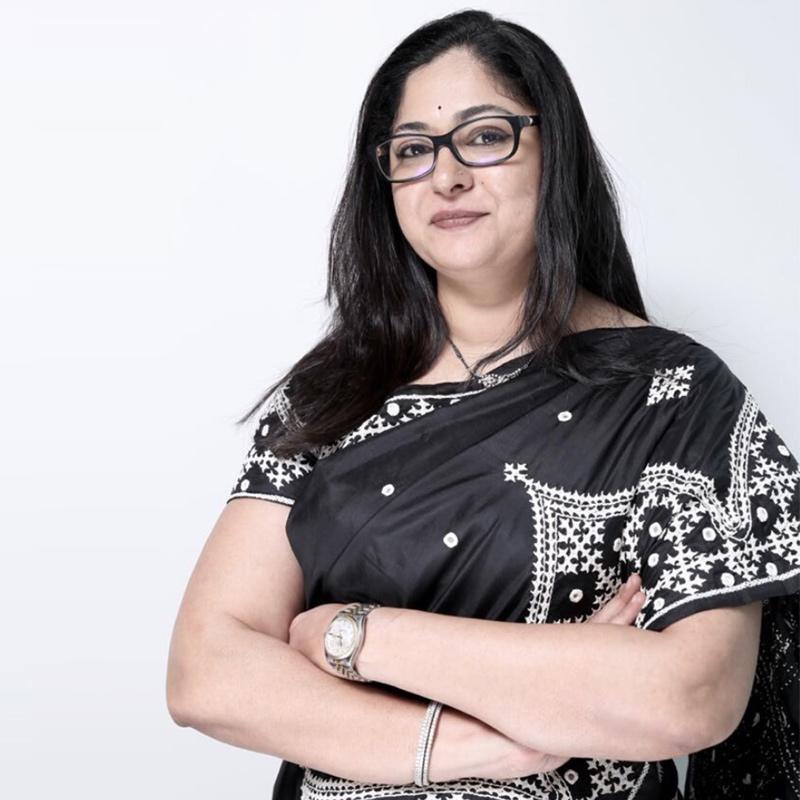
    Zee TV’s Aparna Bhosle on changing the content game in television

    MUMBAI: Traditional television broadcast has long been a staple of entertainment. But as the fast-growing internet and over-the-top (OTT) video platforms make inroads into the consumer market, more and more people are beginning to cut the cord and move to a digital viewing experience. The rules of the content game have changed. Digitisation has lifted barriers and offered a multitude of opportunities to tell stories that were once impossible to tell and it has become more important than ever for broadcasters to up their game in terms of content quality.

    Indiantelevision.com’s Shikha Singh spoke to Zee TV business head Aparna Bhosle on how this transformation has impacted the audiences’ demands, the use of newer technologies, shooting techniques to meet the ever-growing need of viewers for quality entertainment and more.

    Edited Excerpts:

    On what has led to the growth of TV shows.

    Technology has evolved over the years and has certainly contributed significantly to our shows looking much better visually. We have more sophisticated cameras and lenses today, much better visual effects, and cutting-edge post-production software. But, at the end of the day, it is more about a maker's intent. Our audiences are far more exposed to global content than they ever were. Hence we, as makers, have started putting in a lot more effort into every small detail which makes the content look more aesthetic and visually appealing. It is not only about monetary investment but also investment in terms of time and thought. A lot more thought goes into production design which overall results in shows looking much better.

    On changes they have introduced to improve the look and feel of the shows.

    Shooting on Sony F5 is a standard in today's time. We even shoot on more sophisticated cameras such as Arri Alexa, Sony FX9. These are some cameras that have given great results even in low lighting conditions and the picture quality is top-notch. And with the advent of specialty equipment such as drones, Go-Pros, one can bring alive the scale of production values.

    Apart from that, more and more technicians are now experimenting not only with cameras but also lighting techniques. The days of flat lighting are long gone. Today's storytelling requires different shows to have different lighting. It is not just about having the latest technology at your disposal, it is more about how one leverages it to narrate a story more effectively. Technicians today love to experiment and create new looks for the show. They play with camera angles, lighting techniques which overall helps in achieving a new contemporary look. Sound, too, plays a very important role in storytelling. Today, our shows come with a Dolby digital 5.1 output which gives our viewers a high-quality sound experience while watching TV.

    On advantages of shooting in 4K.

    Shooting in 4K means more resolution, deeper colours, more creative options to work with during post-production. But the 4K files are heavy, which means more time to grab, hence for daily shows, it becomes time-consuming and not viable as a process. Shooting in 4K is possible in the case of certain events or promos that provide sufficient timelines between the dates of the shoot and on-air telecast.  

    On what kind of discussion goes on with production houses before creating any property.

    Detailed discussions between the channel and the production house right from the concept of a show, the narrative and the pace at which the storytelling should unfold, the key drama spikes, the characterisation, casting, core communication pitch, the production design, and the overall look and feel of the show are an integral part of the show’s making. As one moves closer to the show going on the floor, aspects such as set design, art direction, costume styling, camera treatment, and edit patterns get discussed.  

    Today, with the audience being far more exposed and discerning,  it is imperative for every broadcaster to display their A-game to hold and sustain audience interest.

    On how shows are made and changes introduced in the script.

    Just a few years ago, a tape used to be delivered from the editing studio to a channel’s office for transmission. Today, the same is achieved by a simple file transferring process. Content production is a dynamic process, and we are always eager to introduce new technology into our ecosystem. The journey from envisioning to execution is always a challenging one. As far as scripting is concerned, technology has given far more creative freedom to content creators as a lot of sequences that were earlier unthinkable in terms of execution have now become possible and even cost-effective.

    On how digitalisation has changed content production on TV.

    It has certainly lifted a lot of barriers. The camera quality is far better. Cameras can now shoot much better in low light conditions; they are lighter in weight, there is sophisticated equipment to shoot underwater, action sequences, etc. Our requirement for lights has considerably reduced. Shooting in uncontrolled environments, outdoors has become far easier. Footage transfer has become faster. The advancement in visual effects has empowered us to bring our viewers stories that were once impossible to tell.

    The post-production process has gone through a mammoth leap. The process of DI (digital intermediate, or digitising filmed content and manipulating the colour and other image characteristics), colour grading, sound effects, and background music were all very time-consuming and today can be achieved in a decent timeline. From a viewer's point of view, they are experiencing content with never-seen-before visual and audio quality and further advances in digitisation will only help us to up our ante.

  • Google pledges Rs 75,000 cr for Indian digital economy

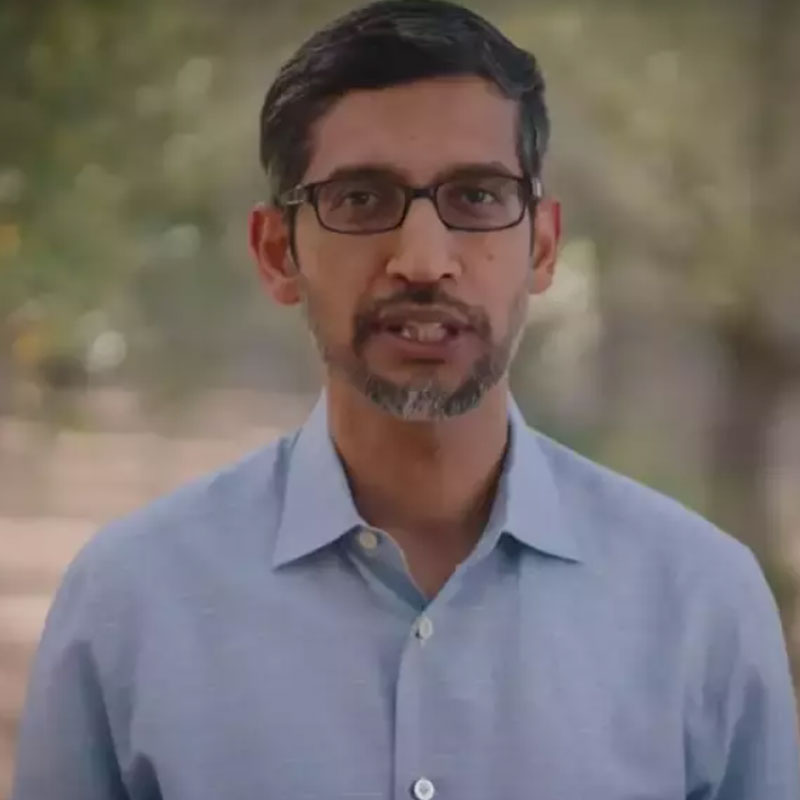
    Google pledges Rs 75,000 cr for Indian digital economy

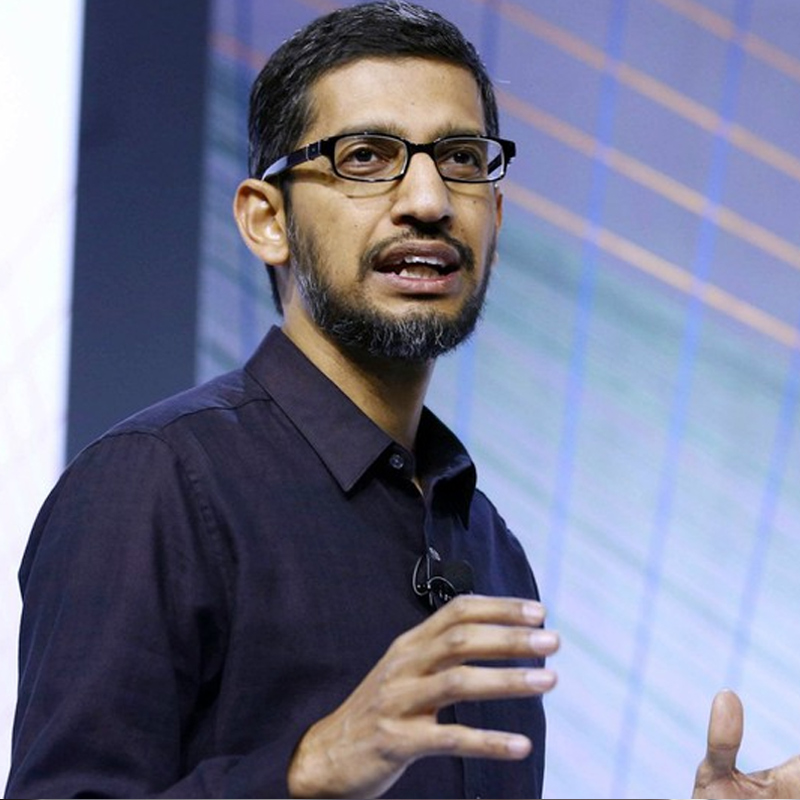
    NEW DELHI: Google has announced that it will invest around Rs 75,000 crore ($10 billion) in India over the next five to seven years. The announcement was made by Google and Alphabet CEO Sundar Pichai.

    “Google will do this as a mix of equity investments, partnerships and operational infrastructure in the ecosystem investments. Investments will focus on four areas: enabling affordable access to information to every Indian in their own language, building products and services that cater to India's needs, empower businesses to transform digitally and lastly leveraging technology and AI for social good in health, agriculture and education,” Pichai announced.

    “This is a reflection of our confidence in the future of India and its digital economy," Pichai said during the annual 'Google for India' event.

    The CEO thanked prime minister Modi for the Digital India vision. He said, “Low-cost smartphones, affordable data, and world-class telecom infrastructure has helped digital India become a reality.”

    Pichai shared, “India is setting the global standards on how to digitise payments and now it’s helping us to build the global product. Our AI-powered Bolo app is another example of technology build specifically for Indian users. Today, Indians do not have to wait to use the latest technology any longer.”

    He also mentioned that the digitisation of small business has been a success story. Just four years ago, one-third of small businesses in India had an online presence, but today 26 million SMBs in India are searchable on Google platforms. 

    “Digitisation of SMBs has increased greatly in India; small businesses are now joining the formal economy by using digital payments. India’s digital economy is far from complete. There is still more work to do in order to make the internet affordable and useful for billions of Indians,” Pichai added.

    In the last year's summit, Google unveiled tokenised cards, an artificial intelligence lab in Bengaluru, BSNL partnership, Google Pay for Business app for merchants and expanded Indian language support across its products such as Google Assistant, Discover, Lens and Bolo. 

  • Datacultr introduces collection Digitisation for Consumer lending companies

    Datacultr introduces collection Digitisation for Consumer lending companies

    MUMBAI: Datacultr, a PaaS for consumer lending companies introduces Collection Digitization, which will help in reducing the overall cost of collections. Through an innovative over-the-air communication framework, it improves outreach of a lender to a borrower to nearly 100% and hence, increases the effectiveness of the entire process.

    India's Non Performing Loans Ratio stood at 11.2 % in March 2018, compared to that of 9.3 % in 2017. The traditional way in which banks could reach out to these customers was mainly through SMS, Emails, or Agent calls which in most cases are neglected by the customers. Moreover, Lenders have to bear the cost of delay. Hence, there was a need for a platform that can digitize communication in order to reduce costsinvolved in the collection process.

    Datacultr’s platform integrates end-to-end with the lent out device on one side and the Lender’s Loan Management System on the other, bringing together the entire ecosystem, making it a successful program for both the borrower & the lender. The self-learning platform helps lenders to program & digitize all communication, that work even when the borrower is offline, out of coverage area or unwilling to pick up calls.

    Commenting on the same, Mr. Neel Juriasingani, CEO & Co-founder, Datacultr,“Consumer lending companies need to embrace digitization in their collection systems in order to gain efficiency and cut down on operational costs. As far as loan repayment is concerned, Digitisation is the key to rapidly scale the process, so that the lender can focus on new disbursals. Our solution bridges the gap by not only automating the communication with the borrower but at the same time, also educating them on the benefits of timely repayment.”

    The proprietary software provided by Datacultr is built on a combination of core IoT technology, an innovative communication framework & machine learning. The software can remotely manage smartphones given out on loan, by setting up a unique device experience module for the lenders that helps them manage the asset as well as leaverage datacultr’s communication framework.

    The software integrates with the Smartphone and provides controlled access of the device to the lender for the tenure of the loan, which the lender uses to reach out to the borrower in case of delays, gradually managing the experience on the device and ultimately locking the device in cases of default.

    For the Unbanked & Underserved user, such loans that ride on datacultr’s technology begin their journey of building a robust credit score, enabling access to bigger loans in the future. datacultr has combined technology with the basic financial service and created a simple and fair offering for those who need it the most.

  • Guest Column: The way forward for DPOs, broadcasters in the new TRAI tariff regime

    Guest Column: The way forward for DPOs, broadcasters in the new TRAI tariff regime

    During the early 2000s, cable television began to spread rapidly across India and the cable distribution business rapidly shifted from the early muddled phase towards a more corporate structure which put emphasis on the rationalisation of business practices, billing system transparency and technical know-how.

    The number of cable television subscribers in India grew from 4 lakh in the early nineties to more than 91 million by the end of 2009, the number of satellite television channels grew from a handful in 1992 to around 550 channels in 2010 and there was a significant increase in the number of distribution platform operators. However, the landscape of the cable industry completely transformed when the ordinance to digitise analogue cable systems was passed. The ordinance mandated the digitalisation and it got completed over a period of 6 years from 2011 to 2017 in four phases. Phase I covered the four metro cities of Delhi, Kolkata, Mumbai and Chennai, followed by 38 cities in phase II, all remaining urban areas and rest of India were covered in phase III and phase IV.

    The benefits of digitalisation for consumers as compared to analogue are multi-fold including refined quality of transmission, better sound clarity, and the choice to pay for select channels. Post digitalisation, we have witnessed significant consolidation/merger/closure of DPOs in the market with the number of distribution platforms reduced to 1200 from around 6000.

    The introduction of the New Tariff Order from 1 Feb 2019 focuses on “Consumer Choices” and will completely change the manner of channel selection, pricing and reach which is likely to disrupt existing revenue models of both broadcasters and DPOs.

    New regime and its impact

    Prior to the implementation of the new tariff order, the DPOs and the broadcasters were mostly operating on a fixed fee model. However, the new regime is likely to have a significant impact on the channel reach, channel share, ratings of non-driver channels and the overall revenue. The key to address these challenges for securing the correct revenue share amongst other things would entail consumer education, constant monitoring of consumer preferences and realignment of the bouquet packaging strategies taking into account consumer preferences.

    Under the new regime, consumers will have the option of paying only for channels they want to watch and can drop other channels from their list and hence, the subscriber base will now solely depend on the communication between the DPOs and the end consumer, and in the event of any communication gap, the last mile consumer will not subscribe to the channels and these may result in significant erosion of subscriber base impacting the revenue of DPOs and the broadcasters.

    Also, broadcasters and DPOs will have to upgrade or completely revamp their internal credit risk management and operating systems used for billing, settlements and disputes to capture complex and multiple combinations of channels that a consumer would choose from.

    Under the MRP regime, the revenues of MSO & broadcasters will be solely dependent on the subscriber numbers reported by LCO to MSO and IPTV, DTH and MSO to broadcasters. As subscriber reporting requirements have changed from reporting opening & closing of the month to opening & closing for all the weeks of the month, it requires significant system and process upgrades at DPOs’ end. Till such time, revenues of MSOs and Broadcasters remain in jeopardy. It would be imperative to closely monitor the situation from March 2019 onwards when DPOs are expected to submit their first subscriber report.

    Way forward

    The best solution for broadcasters and the DPOs to earn their fair share of revenues would be to continuously monitor the ground, track channel reach & availability and adapt to changing consumer preferences on a real-time basis. Such requirements can be effectively managed by mapping every DPOs headend catering to each and every last mile consumer, getting complete ground information on packages and channels being offered to consumers through field surveys and regular transport stream (TS) recording cum analysis at consumer points which will help to determine the placement of the channels and their encryption status !

    *DPOs include IPTV, DTH, MSO and LCOs.

    (The author is managing director in Risk Assurance Practice of PwC, India. The views expressed here are his own and Indiantelevision.com may not subscribe to them) 

  • Digitisation has increased M&E revenue: MIB’s Rathore

    Digitisation has increased M&E revenue: MIB’s Rathore

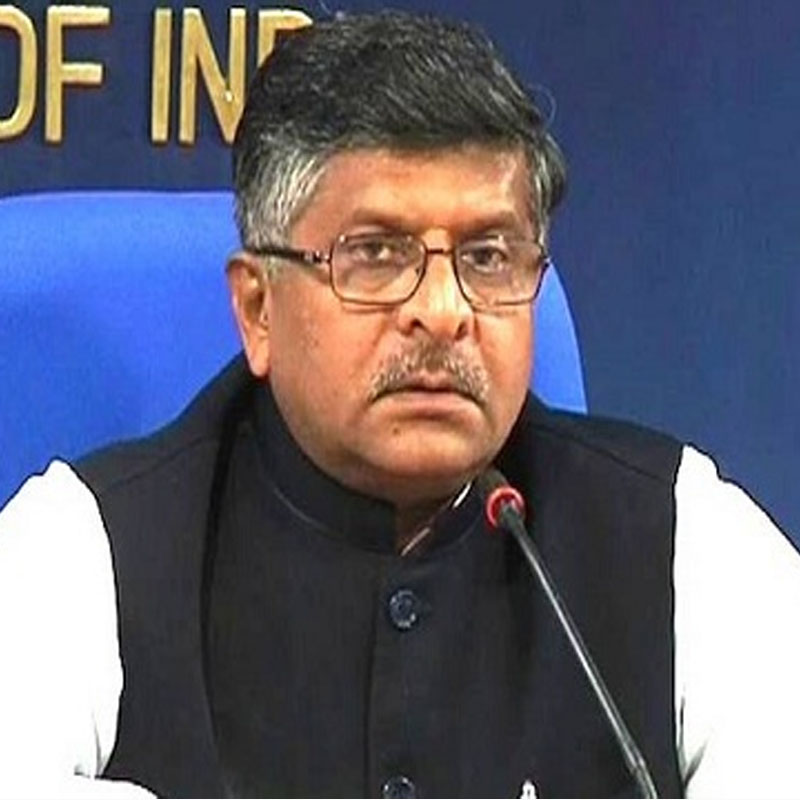
    MUMBAI: The Ministry of Information and Broadcasting (MIB) is patting its back for the digitisation success in India. Minister of State for MIB Rajyavardhan Rathore endorsed the growth of the media and entertainment industry and the benefits of digitisation.

    In response to a question raised in the Lok Sabha, he said that digitisation has led to enhanced revenue generation in the industry as it enhanced benefits to consumers as well as transparency in the subscriber base. The government passed the Cable Television Networks (Regulation) Amendment Act in December 2011 for digitisation of cable television networks in a phased manner.

    He also added “Digitisation enables efficient utilisation of the spectrum bandwidth and enhances the capacity to carry channels on the cable. The consumers get a wider choice of channels, improved quality of content and added services and the states benefit from lowered incidence of evasion of taxes. Cable TV digitisation has also given a boost to the indigenous manufacturing of set top boxes (STBs) and it also results in skill development & employment generation in digital environment."

    Rathore cited the Federation of Indian Chambers of Commerce & Industry (FICCI) report which estimated the growth of the industry at Rs 1660 billion in 2018 from Rs 1473 billion in 2017, while the figure stood at Rs 1026 billion in 2014.  

    Indian M&E sector has not only seen investments from foreign behemoths only but from large domestic conglomerates. In addition to that, the current digital wave is boosting the growth faster.

  • Aim to take phase 3 ARPU to phase 1 value: Den Networks’ SN Sharma

    Aim to take phase 3 ARPU to phase 1 value: Den Networks’ SN Sharma

    MUMBAI: Den Networks has an ambitious plan charted out for its cable and broadband business for the coming two to three years. In an interview to Bloomberg Quint, Den Networks CEO SN Sharma highlighted the company’s plan to increase revenue and subscription.

    For the multi-system operator (MSO), digitisation of phase III in India was almost over 10 months ago and certain parts of phase IV were left by all operators. Sharma said that it may take six to eight months to wind this up. “In the last 12 months, we seeded close to five million set-top boxes (STBs) in phase III. Today, we have a tall figure of 11.5 million digital homes out of which 8.5 million are paying,” he said.

    The average revenue per user (ARPU) for Den has gone up substantially over the last two years. Even tier I and II towns had low ARPU of Rs 120 and Rs 80-90 a year ago. Two years ago, the ARPU for tier I and II towns was Rs 60-70 and Rs 50-60, respectively. Today, the ARPU is at Rs 144 for phase I and Rs 112 for phase II. Sharma also said that the company was able to make up 50 per cent of the subscription revenue from the cable operators from phase I while this was 40-45 per cent in phase II markets.

    Phase III ARPUs are still low at Rs 76 out of the ground rate of Rs 150-175. “As we move forward, cable operators know they have to catch up with phase I ARPUs and will gradually increase it with subscription and, accordingly, the same will be shared with us,” he added.

    The aim is to take the current ARPU of phase III up to Rs 144 in two years’ time. “The phase I journey has been successful and a confident path has been set. There is no reason this Rs 76 doesn’t move to Rs 140 level in 2-2.5 years’ time,” he said adding that 50 per cent of the digital universe was phase III and IV. Phase IV ARPU stands at Rs 66.

    Den is talking to broadcasters and peers to increase subscription levels in phase I areas and Sharma said that discussions were actively progressing. “There is headroom to increase this [subscription]. You will see changes in bouquets and packages offered so overall revenue can be taken up,” he shared.

    One of the ways to do this will be by focussing on HD STBs now. The target for the next 12 months is to convert 10 per cent of its SD base into HD, which will allow the MSO to add another Rs 60-70 per box. Another way is by gradually increasing the number of boxes seeded in phase IV that is currently at the rate of 40,000-50,000 a month.

    The company has a system to ensure that all reported boxes are activated. When a box doesn’t yield payment for more than three months, it is removed out of the declaration and considered a dead box. Here, Sharma lauds the system for being as efficient as telecom operators that withdraw service  if a subscriber doesn’t pay.

    The entrance of players like Jio, Airtel and Vodafone has definitely changed the broadband game for the company and Sharma admits this. Den’s broadband ARPU is currently Rs 550 with a speed of 50 mbps and unlimited data. He compared it to telcos who offer just 1 gb data a day with best case speed of 9 mbps.

    Over the years, data consumption on its platform has increased from 20 gb two years ago to 60 gb last year and is hovering at 80 gb today. “There is a data explosion courtesy Jio, Airtel and Vodafone. We are consciously aware of it and so we talk of unlimited data in high speed,” he said.

    Much of its broadband business is concentrated in Delhi with 2 lakh subscribers. However, the tariff war pulled down its ARPU to Rs 600. But the same in Kanpur is Rs 800. The plan is to increase subscribers by 6 lakh in three years taking the total to about 8 lakh.

    Sharma is confident that the entire business needs external funding since it is witnessing healthy growth in subscription and ARPU and no subsidy is being offered on HD boxes. Even the broadband business has been fibre infrastructure. About Rs 100-120 crore will be required for the coming three years, which will be managed through internal accruals.

    Also Read :

    Subscription revenue drives up Den’s PAT

    Den Networks appoints Himanshu Jindal as CFO

    TDSAT rules in favor of DEN Networks, directs ZEE entertainment to provide channels on RIO basis


  • Netflix deal will help in customer retention, revenue enhancement: Tata Sky’s Harit Nagpal

    Netflix deal will help in customer retention, revenue enhancement: Tata Sky’s Harit Nagpal

    Tata Sky MD and CEO Harit Nagpal has been a bit of an early mover in terms of innovation and building a world-class satellite TV operation. Whether it has been in the case of HD or VAS or top-notch customer services, Tata Sky has been driving many of the path-breaking initiatives in the DTH sector. Nagpal announced a major strategic partnership with Netflix under which Tata Sky subscribers will be able to watch the world-class streamer’s on-demand content, including TV shows, films and documentaries, in the coming months through the direct-to-home operator’s platforms.

    Nagpal was in APOS Bali and was on stage for a conversation with MPA’s Vivek Couto. He openly spoke about the reasons behind the Netflix partnership, how it will benefit customers, what it means for Tata Sky and how does he see the satellite TV leader continuing with its leadership status. Sources indicate that Tata Sky is generating close to a billion dollars in revenue from about 15 million subscribers. Excerpts from the conversation:

    Why the Netflix tie-up?

    We don’t look at us as satellite TV platforms, we look at ourselves as the equivalent of grocers in this industry that produce and distribute content. We are a distributor part of the content, depending on the customer, whenever he wants to buy wherever he wants to watch we are privileged to provide him that—that was our thinking.

    Some customers of ours—not all, a very small fraction in India—are having access to good quality broadband, which can carry video. Also, they have the capability of paying for the broadband. And third, they don’t have the time to watch when it is broadcast; they’d rather watch it at their time.

    Who are these customers?

    Unlike the western world, where almost everybody falls in this category, in our country, a very small fraction falls in this group. Fortunately, we are providing linear television services to this kind of customers and today there are about 3.5 million such customers who are paying about $10 plus per month on content in a country whose ARPU is much lower. We have two million of these customers. So, it’s been our endeavour to create a platform. Because the lunch is lying in front of me, I would rather eat it rather than wait for someone else to come and eat it. We met Reed (Hastings) and Bill two years ago at their villa in Bali during APOS. And the rest is history.

    How will you differentiate from other service providers and mobile companies?

    We are going to distribute almost everything but not on-demand content like the mobile guys did. Mobile guys could best take a phone and put in five, six, seven eight apps. We were distributing television very differently. We were going to Sony, Star, Zee, Colors and buying content in bulk but providing it to the customer by genres making content discovery easy. That means if a linear TV customer says I don’t have kids, I like music, I don’t like sports, and I speak Malayalam, then I see no reason why he should not be watching on-demand content in the same way.

    It is my job to get all the content from various sources or on demand platforms and make the content discovery as easy as I have made it on the TV screen. We are giving him probably seven days catch-up TV for what he is subscribing on linear. To that you add Netflix, Amazon, Hotstar, YouTube, and whatever else become the prominent apps. You distribute that content via genre and offer it to him for a little over what he is willing to pay for linear TV.

    Is the Netflix addition mostly about ARPU enhancement in India?

    It’s retention and revenue enhancement. We have noticed that a customer when he gets into one of our services, his inclination to churn reduces. To the extent of around 75 per cent. The moment he gets dependent on a DVR, the 12 per cent churn becomes three per cent churn.

    So one more dependency for another service which is OTT will drive down the churn or deactivation even if it is for a short duration. The premium segment which accounts for 15-20 per cent of our base, there is no more price increases you can take on them and hence grow revenue.

    They are also consuming almost every single genre of content that is there. There is no genre to go into and select. We can lure in these guys by giving him additional services.

    Will the tie-up work against Tata Sky? Don’t you fear competition?

    Competitive intensity is good for the industry especially at the stage we are in. We need more high-quality competition to come into this business. I don’t want to run a monopoly because monopolies become very lethargic and they don’t feed the customer and they don’t grow the industry. At this stage, the more, the larger number of good quality competition that comes in it will keep us on our toes it should be there. It will help get good quality of product to the customer and is welcome.

    It’s not going to be a single platform. It’s going to be a combination. Just like a set top box is HD, DVR, SD and all those kinds of things. It’s going to be low cost to high cost. Even the customer price models will be different. You pay upfront a lot and don’t make me subsidise, you pay less per month. You make me subsidise the equipment, you pay me more per month.

    Has not the pay TV market slowed down in India? What about free to air?

    Deceleration is not happening. First of all the pay TV mass in India was not growing. What was happening was the transition from analog cable to digital platforms. If you look at the last five or six years, the pay TV base has not grown tremendously. 50 million people we have migrated from cable TV to DTH. That was growing at a pretty fast pace earlier. In the last two years, it slowed down. First year was because of free to air (FTA). We licked that problem in May last year. And since that the FTA growth has been curbed.

    There has been a lack of competitive intensity amongst the DTH competitors in the last one year. Primarily because a couple of them were busy panning out the merger and they were not participating in the competition in the market. Which has probably led to the slowing down of migration from cable TV to DTH. It’s a momentary thing, I guess. It’s going to come back.

    We don’t treat FTA as competition. FTA is a good thing. FTA provides me a pool from which I can source customers from. Because the customer does not buy a TV and decide to pay subscription simultaneously. He first buys it as subscription is going to be free. Then some of them upgrade to a paid service and that’s the pool we can tap into.

    Where do you see growth coming from?

    I see growth coming from phase IV. Two thirds of India lives in phase IV. They

    live in small villages which have 50 and 100 households. Drawing a cable to that village is uneconomical. If the cable operator who was serving those 150 households, if he loses 50 households then serving the balanced left-over subs become uneconomical.

    Will the march of the telcos like airtel, Jio, Idea Vodafones into content and distribution also impact your business?

    I welcome the telcos getting into the content business because it will keep the addiction to content alive. Compare it to the time when we only had land lines, we talked for 200 minutes a month. And we added mobiles, we are talking for 600 minutes a day. Because I am not restricted to my sofa and talking. I can be in the car, on the road, in the loo, wherever. Similarly, if I am restricted to my living room, then there are chances of addiction not become addictive enough.

    If I have the option I am watching something on the phone then I come back and again watching it on the TV, the addiction will stay. So, it’s additive not subtractive. And nobody has watched content on a six-inch screen if a 42-inch was available in front of him. You will watch it if the remote is taken from you by your wife or the kid, you will watch it on the mobile sitting in the same room: I am not deprived of the content I want to watch.