Tag: digitalisation

  • William Penn encourages you to ‘write a letter…’

    William Penn encourages you to ‘write a letter…’

    MUMBAI: ‘Write a letter and say it better’ a campaign introduced by William Penn helps to enhance the joy of posting letters for someone special. Writing to someone has always been mysterious and surprising. Though digitalisation has made it easier to communicate but this campaign has brought again the idea of curiosity to read closed ones letter in a traditional way.

    To drop your letter you can visit your nearby William Penn stores. A box will be placed to drop your letters. Volunteers of William Penn will be the mediators to convey your messages. You don’t have to worry about the stationery; you will be provided with the required material from the store to write your letter. Well, not only stationery but there are exclusive products specially designed for the customers which can be purchased.

    The campaign will be initiated on 24 November, 2016. In this cold weather it is an immense delight to share your warm emotions to your pals. By writing to someone you are not only sharing your message but you are also celebrating National Letter Writing Day which is on 7 December. So connect with your friends, loved ones and everyone who is close to you and let them know your affections with your words in the letter.

  • William Penn encourages you to ‘write a letter…’

    William Penn encourages you to ‘write a letter…’

    MUMBAI: ‘Write a letter and say it better’ a campaign introduced by William Penn helps to enhance the joy of posting letters for someone special. Writing to someone has always been mysterious and surprising. Though digitalisation has made it easier to communicate but this campaign has brought again the idea of curiosity to read closed ones letter in a traditional way.

    To drop your letter you can visit your nearby William Penn stores. A box will be placed to drop your letters. Volunteers of William Penn will be the mediators to convey your messages. You don’t have to worry about the stationery; you will be provided with the required material from the store to write your letter. Well, not only stationery but there are exclusive products specially designed for the customers which can be purchased.

    The campaign will be initiated on 24 November, 2016. In this cold weather it is an immense delight to share your warm emotions to your pals. By writing to someone you are not only sharing your message but you are also celebrating National Letter Writing Day which is on 7 December. So connect with your friends, loved ones and everyone who is close to you and let them know your affections with your words in the letter.

  • NFDC Bazaar: Content evolution through socio-eco changes, expanding genres & innovative distribution to be discussed

    NFDC Bazaar: Content evolution through socio-eco changes, expanding genres & innovative distribution to be discussed

    MUMBAI: The 10th edition of NFDC Film Bazaar to be held from 20 to 24 November, 2016, at Marriott, Goa, will have a series of interesting and engaging ‘Knowledge Series’ sessions this year.

    This year a lot of focus is on technology & its impact on narratives, digitalisation and the expanding scope of monetising films (Indie included) and of course New Voices as well as the tried and tested ones — how do they hope to tell their stories and experiment with form, what are these stories as well as how do they propose to build their viewer community and engage them.

    Film Bazaar 2016 will have a Virtual Reality Sidebar and Film Bazaar VR Lounge powered by Samsung GearVR in Knowledge Series. The VR Sidebar will have three Knowledge Series sessions including a presentation by Michel Reilhac (ex-Head of Film Acquisitions at Arte France curated the VR NEXT sidebar at Cannes 2016, and has also directed 6 VR shorts) on Virtual Reality technology.

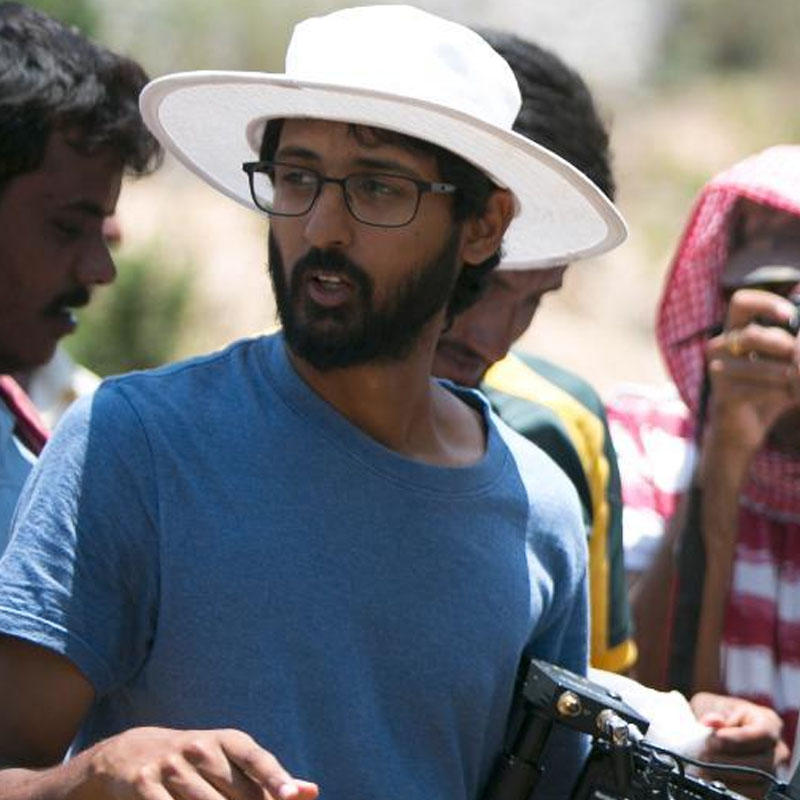
    Thithi director Raam Reddy, Sairaat director Nagraj Manjule and Kothanodi director Bhaskar Hazarika will be a part of a panel discussion on stories that are being told in Regional and Small Town India. Google, YouTube’s session will be on Building Communities and Icons and Facebook to have a session on Marketing the Indie Film and Building Communities.

    Knowledge Series, which consists of specially curated presentations, lectures and panel discussions with key decision makers and market drivers of the film industry, will have a Virtual Reality Sidebar.

    This year Film Bazaar takes the thought forward with two key Knowledge Series sessions with two of the most engaging and popularly used platforms –

    1. Google YouTube – Building Communities and Icons In Conversation with YouTube India Head of Content Operations Satya Raghavan

    2. Facebook – Marketing the Indie Film and Building Communities Presentation by Facebook Head, Media Partnerships, Saurabh Doshi

    Over multiple sessions during the four days of Film Bazaar, the Knowledge Series covers a wide range of topics including (but not limited to) the evolution of content through changing socio–economic structures, expanding genres, conventional and innovative platforms of distribution, various emerging co-production possibilities, international collaborations and treaties, and the art of navigating various film festivals and markets.

    Among the speakers are business unit heads of major media corporations (studios/producers/distributors etc.), top executives of organizations connected with the film industry, independent aggregators and content providers from across the world.

  • NFDC Bazaar: Content evolution through socio-eco changes, expanding genres & innovative distribution to be discussed

    NFDC Bazaar: Content evolution through socio-eco changes, expanding genres & innovative distribution to be discussed

    MUMBAI: The 10th edition of NFDC Film Bazaar to be held from 20 to 24 November, 2016, at Marriott, Goa, will have a series of interesting and engaging ‘Knowledge Series’ sessions this year.

    This year a lot of focus is on technology & its impact on narratives, digitalisation and the expanding scope of monetising films (Indie included) and of course New Voices as well as the tried and tested ones — how do they hope to tell their stories and experiment with form, what are these stories as well as how do they propose to build their viewer community and engage them.

    Film Bazaar 2016 will have a Virtual Reality Sidebar and Film Bazaar VR Lounge powered by Samsung GearVR in Knowledge Series. The VR Sidebar will have three Knowledge Series sessions including a presentation by Michel Reilhac (ex-Head of Film Acquisitions at Arte France curated the VR NEXT sidebar at Cannes 2016, and has also directed 6 VR shorts) on Virtual Reality technology.

    Thithi director Raam Reddy, Sairaat director Nagraj Manjule and Kothanodi director Bhaskar Hazarika will be a part of a panel discussion on stories that are being told in Regional and Small Town India. Google, YouTube’s session will be on Building Communities and Icons and Facebook to have a session on Marketing the Indie Film and Building Communities.

    Knowledge Series, which consists of specially curated presentations, lectures and panel discussions with key decision makers and market drivers of the film industry, will have a Virtual Reality Sidebar.

    This year Film Bazaar takes the thought forward with two key Knowledge Series sessions with two of the most engaging and popularly used platforms –

    1. Google YouTube – Building Communities and Icons In Conversation with YouTube India Head of Content Operations Satya Raghavan

    2. Facebook – Marketing the Indie Film and Building Communities Presentation by Facebook Head, Media Partnerships, Saurabh Doshi

    Over multiple sessions during the four days of Film Bazaar, the Knowledge Series covers a wide range of topics including (but not limited to) the evolution of content through changing socio–economic structures, expanding genres, conventional and innovative platforms of distribution, various emerging co-production possibilities, international collaborations and treaties, and the art of navigating various film festivals and markets.

    Among the speakers are business unit heads of major media corporations (studios/producers/distributors etc.), top executives of organizations connected with the film industry, independent aggregators and content providers from across the world.

  • Q1-17: HVL revenue up 129%; to invest Rs 271 crore for carriage subsidiary stake

    Q1-17: HVL revenue up 129%; to invest Rs 271 crore for carriage subsidiary stake

    BENGALURU/MUMBAI: Hinduja Ventures Limited (HVL) reported more than doubling (up 129 percent) of its revenue for the quarter ended June 30, 2016 (Q1-17, current quarter) vis-à-vis revenue for the corresponding year ago quarter.

    HVL revenue for Q1-17 was Rs 60.95 crore, while it was Rs 26.63 crore for the corresponding period previous year.
    However, quarter-over-quarter (q-o-q), revenue for the current quarter declined 35 percent from Rs 93.75 crore in Q4-16. The company attributes the increase in revenue to sale of setup boxes/ broking income/ income from trading of securities.

    The company reported a year-over-year (y-o-y) growth in profit of 1.3 percent for the current quarter at Rs 24.21 crore as compared to Rs 23.90 crore and a 70.8 percent q-o-q growth as compared to Rs 14.18 crore.

    HVL operates across three segments of media and communication, real estate, and investment and treasury. HVL is the holding company of integrated media companies IndusInd Media and Communications Limited (IMCL) and Grant Investrade Limited (GIL), which has launched the headend-in-the-sky (HITS) digital platform under brand name NXT DIGITAL.

    HVL’s media and communications segment

    Revenue from its media and communications segment declined q-o-q to less than a fourth (down 76.6 percent). HVL reported revenue of Rs 14.40 crore in Q1-17 and Rs 61.69 crore in Q4-16. The segment reported an operating loss of Rs 5.61 crore in the current quarter as compared to an operating loss of Rs 0.37 crore in Q1-16 and an operating profit of Rs 2.71 crore in Q4-16. For the year ended March 31, 2016 (FY-16), the segment reported an operating profit of Rs 10.09 crore.

    HVL to invest Rs 271 crore for stake in IMCL

    HVL proposes to purchase 43,03,000 equity shares of Rs 10 each for a premium of Rs 456 per share of its subsidiary IMCL.
    This stake purchase, which constitutes 5.82 percent of IMCL’s paid up equity capital, will cost HVL Rs 200.52 crore. HVL also proposes to buy 7,03,60,0000 IMCL preference shares of Rs 10 each at par from its wholly owned subsidiary shares of GIL. The IMCL stake purchase from GIL constitutes 26.02 percent of paid up preference capital of IMCL and will cost HVL Rs 70.36 crore.

    GIL to de-merge HITS to IMCL

    GIL will de-merge its HITS business undertaking to IMCL, the HVL board has decided. The scheme is subject to consent(s), approval(s) permission(s) of statutory authorities(s) if any, including, in particular, the approval from the Ministry of Information and Broadcasting (MIB), Government of India for transfer and vesting of HITS License held by GIL in favour of IMCL.

    HVL says that India is yet to witness a genuine and significant revolution in the digital delivery in true sense, especially in tier 3 and 4 cities and rural hinterland.

    The digitalization with many upcoming value added services of over 160 million (16 crore) TV homes is still far from over. It is envisaged that the combined strength of fibre based digital cable delivery and the satellite based digital signals for cable industry will enhance and create a new paradigm in the digital content delivery platform in terms of reach, value for money, state of the art technology, quality of services and significant value added digital services.

    The company also feels that this will further enhance shareholders value by consolidating the digital media distribution businesses and will help to rationalize the group structure by optimizing the resources and integrating operational synergies both in revenue and costs.

    The combined entity will also be able to venture and grow in the newer areas and many digital technology-linked value-added services that would be relevant for this business and same set of customers.
    According to HVL, its broadband business has also been restructured for a direct focus and is planned for a manifold technology-based growth.

    The synergy will be able to consolidate HVL’s media investments and would  enhance and maximize the shareholders value, avers the company.

    GIL’s (HITS business) merger into IMCL will be a unique first in the country in digital cable and has a long term positive financial implication by increasing competitive strength, technology synergies, customer service efficiency and high productivity with a genuine all-India reach. HVL says adding that similar models in developed countries have witnessed a prime leadership position in mid to long term.

    The company states that this arrangement will also strengthen HVL’s investment in media business, which will, in turn, unlock the value of HVL’s shareholders.

    Note: (1) The unit of currency in this report is Indian rupee – Rs (also conventionally represented by INR). The Indian numbering system or the Vedic numbering system has been used to denote money values. The basic conversion to the international norm would be:

    (a) 100,00,000 = 100 lakh = 10,000,000 = 10 million = 1 crore.
    (b) 10,000 lakh = 100 crore = 1 arab = 1 billion.

    (2) The numbers in this report are standalone unless stated otherwise

    (3)  1 USD= INR 67


  • Q1-17: HVL revenue up 129%; to invest Rs 271 crore for carriage subsidiary stake

    Q1-17: HVL revenue up 129%; to invest Rs 271 crore for carriage subsidiary stake

    BENGALURU/MUMBAI: Hinduja Ventures Limited (HVL) reported more than doubling (up 129 percent) of its revenue for the quarter ended June 30, 2016 (Q1-17, current quarter) vis-à-vis revenue for the corresponding year ago quarter.

    HVL revenue for Q1-17 was Rs 60.95 crore, while it was Rs 26.63 crore for the corresponding period previous year.
    However, quarter-over-quarter (q-o-q), revenue for the current quarter declined 35 percent from Rs 93.75 crore in Q4-16. The company attributes the increase in revenue to sale of setup boxes/ broking income/ income from trading of securities.

    The company reported a year-over-year (y-o-y) growth in profit of 1.3 percent for the current quarter at Rs 24.21 crore as compared to Rs 23.90 crore and a 70.8 percent q-o-q growth as compared to Rs 14.18 crore.

    HVL operates across three segments of media and communication, real estate, and investment and treasury. HVL is the holding company of integrated media companies IndusInd Media and Communications Limited (IMCL) and Grant Investrade Limited (GIL), which has launched the headend-in-the-sky (HITS) digital platform under brand name NXT DIGITAL.

    HVL’s media and communications segment

    Revenue from its media and communications segment declined q-o-q to less than a fourth (down 76.6 percent). HVL reported revenue of Rs 14.40 crore in Q1-17 and Rs 61.69 crore in Q4-16. The segment reported an operating loss of Rs 5.61 crore in the current quarter as compared to an operating loss of Rs 0.37 crore in Q1-16 and an operating profit of Rs 2.71 crore in Q4-16. For the year ended March 31, 2016 (FY-16), the segment reported an operating profit of Rs 10.09 crore.

    HVL to invest Rs 271 crore for stake in IMCL

    HVL proposes to purchase 43,03,000 equity shares of Rs 10 each for a premium of Rs 456 per share of its subsidiary IMCL.
    This stake purchase, which constitutes 5.82 percent of IMCL’s paid up equity capital, will cost HVL Rs 200.52 crore. HVL also proposes to buy 7,03,60,0000 IMCL preference shares of Rs 10 each at par from its wholly owned subsidiary shares of GIL. The IMCL stake purchase from GIL constitutes 26.02 percent of paid up preference capital of IMCL and will cost HVL Rs 70.36 crore.

    GIL to de-merge HITS to IMCL

    GIL will de-merge its HITS business undertaking to IMCL, the HVL board has decided. The scheme is subject to consent(s), approval(s) permission(s) of statutory authorities(s) if any, including, in particular, the approval from the Ministry of Information and Broadcasting (MIB), Government of India for transfer and vesting of HITS License held by GIL in favour of IMCL.

    HVL says that India is yet to witness a genuine and significant revolution in the digital delivery in true sense, especially in tier 3 and 4 cities and rural hinterland.

    The digitalization with many upcoming value added services of over 160 million (16 crore) TV homes is still far from over. It is envisaged that the combined strength of fibre based digital cable delivery and the satellite based digital signals for cable industry will enhance and create a new paradigm in the digital content delivery platform in terms of reach, value for money, state of the art technology, quality of services and significant value added digital services.

    The company also feels that this will further enhance shareholders value by consolidating the digital media distribution businesses and will help to rationalize the group structure by optimizing the resources and integrating operational synergies both in revenue and costs.

    The combined entity will also be able to venture and grow in the newer areas and many digital technology-linked value-added services that would be relevant for this business and same set of customers.
    According to HVL, its broadband business has also been restructured for a direct focus and is planned for a manifold technology-based growth.

    The synergy will be able to consolidate HVL’s media investments and would  enhance and maximize the shareholders value, avers the company.

    GIL’s (HITS business) merger into IMCL will be a unique first in the country in digital cable and has a long term positive financial implication by increasing competitive strength, technology synergies, customer service efficiency and high productivity with a genuine all-India reach. HVL says adding that similar models in developed countries have witnessed a prime leadership position in mid to long term.

    The company states that this arrangement will also strengthen HVL’s investment in media business, which will, in turn, unlock the value of HVL’s shareholders.

    Note: (1) The unit of currency in this report is Indian rupee – Rs (also conventionally represented by INR). The Indian numbering system or the Vedic numbering system has been used to denote money values. The basic conversion to the international norm would be:

    (a) 100,00,000 = 100 lakh = 10,000,000 = 10 million = 1 crore.
    (b) 10,000 lakh = 100 crore = 1 arab = 1 billion.

    (2) The numbers in this report are standalone unless stated otherwise

    (3)  1 USD= INR 67


  • Week 20 sees the rise of Sports channels

    Week 20 sees the rise of Sports channels

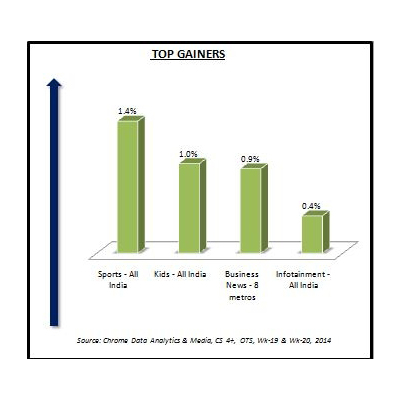
    MUMBAI: As per Chrome Data Analytics & Media’s opportunity to see (OTS) data, Sports channels were the top gainers for the week 20.


    The genre across India jumped 1.4 per cent with Ten Sports with 77.5 per cent OTS. Kids genre gained 1 per cent across the country with Cartoon Network continuing its reign with 84.6 per cent OTS.


    With a minor difference, Business News channels in the eight metros saw a gain of 0.9 per cent. Zee Business topped the genre with 80.4 per cent OTS. Discovery channel with 86.3 per cent OTS topped the Infotainment genre across India which jumped 0.4 per cent.


    As for the genres which plunged southwards, Hindi News channels in the Hindi speaking markets (HSM) fell 0.7 per cent. ABP News with 92.1 per cent OTS topped the genre.


    Hindi GECs in the HSM and English Entertainment channels in the eight metros saw a drop of 0.4 per cent. Star Plus with 96.8 per cent OTS and AXN with 72.5 per cent OTS, topped their respective genres.


    Hindi Movies in the HSM saw a minor drop of 0.1 per cent with Star Gold topping the charts with 95.9 per cent OTS.

  • Kolkata cable ops to meet FM

    Kolkata cable ops to meet FM

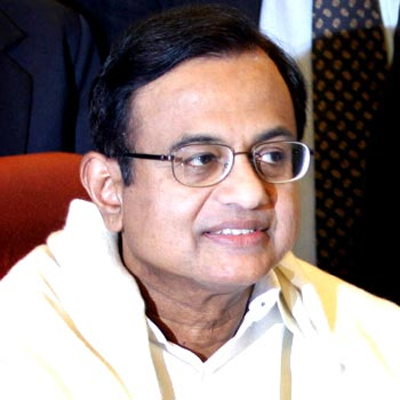
    KOLKATA: With cable operators liable to pay 12.36 per cent of the subscription amount collected per month from customers as service tax to the government, 12 cable ops met the finance minister P Chidambaram in the city today to talk on Voluntary Compliance Encouragement Scheme (VCES).


    Two months ago, indiantelevision.com was the first to report issuing of summons to over 350 city-based cable ops for evasion of service tax for the past five years. We had also reported how service tax officials conducted two raids to probe into alleged financial irregularities of two MSOs.


    This, despite the government having introduced the VCES on 10 May. VCES is a one-time amnesty scheme for paying service tax dues for the said five-year period from 1 October 2007 to 31 December, 2012, without any interest or penalty.
    Cable Operators Digitalisation Committee of the Association of Cable Operators convener Swapan Chowdhury, confirmed the news saying: “We will discuss the voluntary service tax with the minister.”


    A key issue the cable ops plan to discuss is the government’s U-turn on the proposed service tax waiver for operators with turnover of less than Rs 10 lakh per annum. With authorities now saying that as cable ops are selling brands like Manthan and Siticable, they are liable to pay service tax, irrespective of the turnover shown in books, Chowdhury stressed: “We requested the government not to include operators below Rs 10 lakh turnover for service tax payment.”


    As the secretary of Cable and Broadband Operators’ Welfare Association, Chowdhury also informed the finance minister that after implementation of DAS in the city, consumers have had to wait for bills and upon not receiving them, remained unwilling to pay service tax to the LCOs.


    About the amnesty scheme, which Chidambaram has been urging service tax defaulters to take advantage of, tax consultant Namit Dave said: “By giving up interest, the government wants people to clear their dues.”
    Meanwhile, an industry analyst opined that MSOs which have evaded service tax to the tune of Rs 15 crore to Rs 20 crore in the past four years, now have a chance to pay their dues without penalty and prosecution.

  • English movie channels bank on digitalisation for growth

    English movie channels have seen an almost flat ad revenue growth in 2007. The challenge has also been to innovate programming slots even as viewers have spent less time on these channels. The bright spot, though, is the signs of maturity that the genre is showing. New players like Anil Ambani’s Reliance and NDTV Imagine are also eyeing this space.

    Star Movies is the clear leader in the segment with a share of 47 per cent, according to Tam data (C&S 15+) for 2007. HBO follows with a share of 30 per cent. After that come Pix and Zee Studio with shares of 13 per cent and 10 per cent respectively.

    More interesting, though, is the time spent on English movie channels. Data shows that time spent has fallen with HBO showing the worst dip. Its share has gone down from 4.68 to 3.05 minutes each week. Star Movie’s share has also dropped from 5.9 minutes each week to 4.91 minutes.

    Players attribute the fall partly on the distribution scenario as more channels have jostled for space on clogged cable networks. This has meant higher carriage or placement fees. Then, of course, there is competition from other genres.

    In terms of the top films of the year, HBO’s King Kong with a rating of 0.75 topped the list. Star Movies’ The Mythhad a rating of 0.47. HBO’s Hindi dubbed King Kong took the third spot.

    Facing an intensely competitive environment, it is crucial for players to understand their audiences better. The aim in some cases is to boost the non-primetime area and look at areas like presentation. Differentiation through innovation is also important.

    Keeping all this in mind, Star Movies undertook various initiatives. It revamped the late night movies to cater to the male audience. It also focussed on the Sunday afternoon slot. Films that air are chosen so that the audience enjoys a relaxed weekend. Star VP marketing and communications Prem Kamath adds that the channel also re-looked the evening slots.

    “The aim has been to bring in more family movies. In addition to that we also constantly feature film festivals like our X Men Trilogy during the year end, the Star Wars marathon, 15 nights of Bond to name a few.”

    Kamath attributes the channel’s leadership to the focus on striving for variety without compromising on quality of offerings. So you have a serious film like Crash and blockbusters like Pirates of the Caribbean 2X Men 3.

    And what of HBO? The channel’s tagline for the year was Big! New! Most! HBO South Asia country head Shruti Bajpai expresses satisfaction in terms of how the plans were achieved. For this channel too it is a combination of raters like Mission Impossible 3, The Da Vinci Code, Batman Beginsand King Kong and critically acclaimed, path breaking movies like Brokeback Mountain and Syriana.

    A lot of focus went into seeing that different viewer segments were tuning in at different slots. So Midday Matinee every weekday at noon was introduced. Wicked Hour which is every weeknight after the 9 pm movie was also launched. “In addition, HBO also caters to the youth with Whazzup every weeknight at 7 pm, a special family treat for the whole family in Family Sunday, an action packed entertainment package for the guys in “It’s a Guy Thing”.

    HBO also revamped its on air look. The aim was to make the channel brighter and racier. Bajpai goes on to explain that there are new features like an On-air EPG of sorts, which offers the viewers a sneak peek of the upcoming titles in the next few days and a Countdown clock indicating the time left to watch the next film. Bajpai attributes the dip for the genre in part to the fact that more channels are entering other genres.

    “According to me there are only two real players in this genre (Star Movies and HBO) and there will always be a toss up of who is number one and who’s not. This is all a part of the game and we welcome it as it helps us stay on our toes. Ultimately the viewer benefits the most as he/she gets to see the best from the best,” she concludes.

    Still with more players coming in, there are signs that the genre is starting to mature. The feeling in the industry is that English movie viewing for non-blockbuster content is now starting to grow. A case in point is Pix. It launched in April 2006. The channel’s business head Sunder Aaron says that the aim last year has been to get films that push its tagline of telling good stories. For the channel it does not matter when a film is made. The aim was also to differentiate itself through local content. Therefore in association with noted Hollywood producer Ashok Amritraj it started an initiative called Gateway. This gives an aspiring filmmaker the chance to make a movie with Amritraj.

    The shows go on air next month. Aaron notes that the response has been better than the channel expected. “We have had one thousand entries to the competition, and you would be impressed by the quality and variety. We had a similar response to the Pix Short Film Festival. We have got a couple of other initiatives and programmes in development, so we are eager to continue with our strategy at this point, particularly because the Pix viewers are responding well.”

    The channel has more local ideas on the table which it will roll out later this year, he adds.

    Zee Studio did two major innovations last year. One has been subtitling which even some rivals concede was a good move. That is because it builds more comfort with viewers. The other has been to show foreign films. This has been an area that has been ignored for a while by the English film channels. Zee Studio did, among other things, a festival with Palador. Films like the Mike Leigh classic Secrets and Lies as well as Akira Kurosawa’s Seven Samurai aired.

    Ad Revenue stagnates in 2007:

    Data available withIndiantelevision.com shows that ad revenue plateaued for this genre last year. Star Movies made around Rs 770 million compared with Rs 740 million in 2006 and Rs 671 million in 2005.

    HBO followed a similar revenue trend. The channel is estimated to have made around Rs 560 million last year. This was a slight increase over the Rs 557 million made in 2006.

    Like Star Movies, 2006 was a better year for HBO on the ad revenue growth front as it only made Rs 436 million in 2005.

    For Zee Studio ad revenue was Rs 238 million in 2007.

    Pix, on the other hand, made around Rs 60 million in 2007.

    Mediaedge:cia’s Manas Mishra notes that besides Star Movies and HBO, the other two players are starting to find their own level. Since Pix caters to an evolved movie viewer aged 25+ it makes sense for certain brands to consider it. He also opines that Zee Studio has managed to get viewers from outside the core English movie viewing demographic on account of the subtitling. As a result, it can become more diverse in its offerings with foreign language fare.

    Digitisation to boost subscription earnings:

    The key for these players is the spread of digitisation this year. With Bharti and Reliance launching direct-to-home (DTH) platforms this year, English movie channels are expected to get a boost in terms of subscription revenue. A channel like HBO, after all, is purely subscription driven abroad. The hope is that the dependence on ad revenue which is anyway small will decline.

    New players eye the space:

    Digitisation means place for new channels One of them will come from Reliance. UTV and NDTV Imagine are also entering. The focus for the last two is world cinema. NDTV will be doing a World cinema initiative called NDTV Lumiere. This will span not just the launch of a channel but also release films into theatres, home video as well as provide space for on-ground activation. The aim is to bring in a culture of world cinema.

    Just how important subscription revenue will be can be gauged from the fact that NDTV Imagine CEO Sameer Nair says that the focus of NDTV Lumiere is entirely digital and it is not a question of counting TRPs to appease media buying agencies.

    Aaron seconds this view. With the economy growing so rapidly, and the number of cable and digital television (DTH, IPTV, digital cable etc.) households increasing as well, the pie will undoubtedly continue to grow, he says.

    By how much is the question. Positioning will also be key for new entrants. It is not just a case of buying titles and putting them on air; understanding, addressing and attracting English viewership is also important.

    There is also the issue of digital cable penetration. If it spreads across the country, then many channels can come in. In case that doesn’t happen, then carriage fees will stay a big obstacle.

    Pricing issues on addressable platforms also have to be sorted out. Bajpai says that even DTH is still in an “everything for everybody” format and “one pricing system for all channels” kind of model. “Once these things change, the benefit will start becoming more apparent. Broadcasting business, after all, needs to be viable,” she adds.

  • Digitalisation of films can help end piracy, save foreign exchange


    NEW DELHI: Digitalization of cinema is vital in controlling the distribution and exhibition of cinema in digital format and safeguarding intellectual property since the Indian film industry faces almost 40 per cent revenue pilferage due to piracy, according to a Planning Commission study.

    The sub-group on ‘Going Digital’ set up by the Planning Commission and headed by Rajeeva Ratna Shah, member secretary in the Planning Commission and a former CEO of Prasar Bharati,, said in its report that going digital would be incomplete if the entertainment (film) sector is not covered. Furthermore, safeguarding the intellectual property rights of the industry would encourage filmmaker to a great extent. The digital cinema system is already a reality in the country and would revolutionize the exhibition of films all over India.

    Issues of piracy plague software industry the world over. In terms of money, the industry loses approximately Rs 20 billion on account of piracy directly, on which the government neither earns Entertainment Tax nor Income Tax. digital cinema would help curb piracy in a proactive manner as it will make the pirates business unviable by providing an early and widespread release of films across the country and thus nipping piracy in the bud. Furthermore, as there is no physical movement of the film, creation of pirated copies/versions of the film is ruled out.


    The sub-group said the early availability of films combined with high quality images and scheduling flexibility ensure increased box office collections. Early migrants to the digital cinema system have witnessed around 100 per cent increase in revenue collections by way of increased box office collections and thus increased collection of Entertainment Tax and Income Tax.

    It said film prints are made from film stock imported from companies like Kodak, Agfa etc. Going by an average of 800 films, 200 prints each at a cost of Rs.50,000 per print entails an expense of Rs 8 billion. As the prints cannot be recycled, it is a waste of money once it completes its life. However, digital cinema does not use any prints, hence minimizing wastage and at the same time saving the country precious foreign exchange.

    With the advent of Digital Cinema, niche cinema and regional language films will be able to generate revenues, thus making the local film industry in the states more commercially viable. This will provide employment to local artistes and technicians and other film industry related infrastructural suppliers.


    Analogue prints are made from polyester and are destroyed by burning which is a huge biohazard. Digital prints are digital files and can be simply erased from the server’s memory. The Power consumption of a digital projection system is far more economical as compared to the power consumption of an optical projection system. The annual power savings if digital cinema is implemented in around 200 theatres across the country works out to 87,48,000 KVA.

    The print quality does not deteriorate with repeated use irrespective of the number of screenings. Small town cinemas plagued by piracy and failure of films coupled with availability of only old films have become economically unviable. However digital cinema will bring the small town cinemas at par to the cinema halls in the big cities as the films can be simultaneously released across the country. The advent of digital cinema has seen proliferation of new and compact cinema houses in small towns and cities.

    But the Sub-group said the government should provide incentives for production as well as exhibition of films in the digital format in its own interest as the loss of revenue due to piracy is considerable. Production of cinema in digital format could be on lower tax regime and theatres that have installed digital cinema exhibition facilities can be subjected to lower entertainment tax.

    Furthermore, there is need to amend the Cinematograph Act 1952 to incorporate digital cinema. digital rights management/IPR protection is of paramount importance in view of piracy. Many content owners would be apprehensive in sharing their content as piracy is a major issue. Hence, adequate laws to protect the rights of the content owners need to be put in place so that they feel safe to share their content over digital platforms.

    As small and medium players would find it difficult to digitize their respective libraries in the light of huge conversion cost, content aggregators could be encouraged and a suitable regulatory/policy regime worked out to make this happen in a hassle free manner.