Tag: Digital

  • Siemens India launches innovative integrated digital campaign

    Siemens India launches innovative integrated digital campaign

    MUMBAI: Siemens India has launched an innovative digital media campaign that uses a creative story telling technique to deliver the message to end customers. The latest digital media campaign is an extension of the Answers campaign followed globally by Siemens, which is aimed at establishing Siemens as a sustainable technology leader delivering a transformational benefit toward customers.

    Thought Process was the production house while Ogilvy was involved in the conceptualisation. The digital agency managing the campaign is Quasar (part of the WPP group), while the digital assets were created by Conrad-Caine, Munich. The social media agency involved in the campaign is LBI (part of Publicis).

    The campaign will run for a durationof six months.

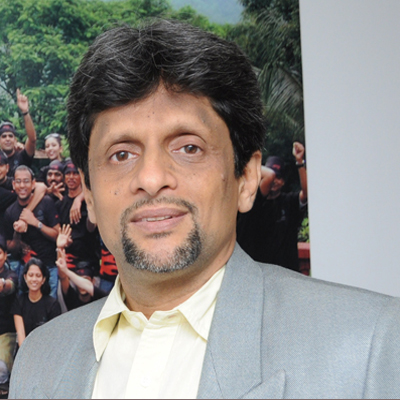
    “We have made the end-user the protagonist as well as the narrator of the story. We have kicked off the story series with the dabbawalas who use the Mumbai local trains to deliver lunch to over 200,000 office-goers and residences on time. We have brought the element of story-telling right into our creative approach,” says Siemens India head of digital media Sudhir M D.

    In the integrated digital marketing campaign, where social media is complemented by a QR code initiative, on-ground and off-line promotions, a dabbawala named Kiran Gavande narrates his story, establishing how he goes about his life. The online banners direct the website visitors to the video on YouTube brand channel of      Siemens, which then directs the visitor to the Siemens web site with details on the actual Siemens technology that has contributed to the dabbawala’s life.

    The ‘Answers’ program is designed to demonstrate the lasting impact of Siemens technologies to improve lives, improve cities and improve businesses for the better. This is achieved through a creative strategy designed to simply reveal the truth about Siemens, and reveal the brand’s greatness. In an age of increasing transparency, enabled by digital and social media, telling the truth is the strongest statement a brand can make, especially since target audiences can now very quickly discover what is a truth.

    Siemens stories generally start with a human issue, which then leads to a global problem. In every case a Siemens Answer resolves the issue, and ultimately changes peoples’ lives significantly for the better, or avoids a problem that would have changed their lives significantly for the worse.

  • Cheil Worldwide SW Asia expands its digital team in India

    Cheil Worldwide SW Asia expands its digital team in India

    MUMBAI: The agency has brought in Ranjan Nautiyal as group creative director and P. Murali Gopal as senior creative director.

    Nautiyal moves from Ogilvy & Mather where he was sr creative director and Murali from Rediffusion-Wunderman, where he was creative director. Both will be working closely with the creative and digital teams at Cheil India. They will be reporting to digital services – SVP and head Rajesh Bhatia and creative head and executive creative director Nima DT Namchu.

    This latest infusion of talent is a strategic move by Cheil India, to address the growing role of digital media in the overall advertising pie. The changing role of digital media necessitates a shift from executors to thinkers. The 50-member digital team at Cheil India, with the addition of this talent, is all set to become one of India’s strongest digital outfits.

    Speaking on the appointments, Cheil Worldwide SW Asia COO Hari Krishnan said, “Ranjan and Murali are valuable additions to Cheil’s integrated creative team. They bring with them combined sensibility of insights, ideas and technology – all these dimensions are critical to create sparkling digital work within the context of the overall consumer journey. We will be able to better deliver our promise of ‘Ideas That Move’ with these new talent additions.”

    According to Cheil Worldwide SW Asia SVP and head digital services Rajesh Bhatia, “We have always believed that excellence in digital can be truly achieved only if a layer of creativity is added to technology. These two appointments are in keeping with our goal of becoming the foremost digital and integrated set ups in the country.”

  • Allied Media appoints Saurabh Gupta in his new role as business head

    Allied Media appoints Saurabh Gupta in his new role as business head

    MUMBAI: In his new role as business head, digital media Saurabh will be responsible for providing holistic digital solutions for all clients of Percept Media and also only Digital direct clients. He would be taking care of India region, and integrate digital in the marcom solutions of all Percept Group clients.

    With his experience of almost 10 years in the industry, he has worked with renowned companies like Reliance Entertainment Digital and Wipro Technologies. He played a major role in Zapak Digital as national sales head and has serviced brands like PepsiCo (Change the Game Campaign and Pepsi T20 Football), Mountain Dew (Dew Extreme Tours, Hrithik launch and MTV Roadies Integration), Michelin Tires (Malaysia Pilot Experience, Lemans), Airtel (F1 Online Activity) and many more

    He is a professional with qualitative experience in brand building, business development, sales, process implementation, client servicing and team management.

    Allied Media CEO Shripad Kulkarni said, “It’s not about digital marketing but a fresh way of looking at marketing to digital savvy customers of our clients. So, we will have two digital teams – a digital strategy team which is a part of the core strategy team of Percept Media and a business team”.

    On the digital strategy, business head – digital Saurabh Gupta added, “Digital media behaves in a very different form factors according to businesses and categories. But, most businesses are shortsighted and consider digital media as only a marcom instrument. We are here to change the way brands perceive digital as a medium and transform the entire marketing making it a catalyst to achieve business objective and transform the brand life stage. Our digital strategy blueprint will be: digital led business re-engineering customised for brands.”

  • One million Facebook fans for Mahindra Racing


    MUMBAI: Mahindra Racing, the only Indian constructor in grand prix motorcycle racing – in the hotly contested Moto3 grand prix class – has breached the one million ‘likes’ barrier on Facebook.


    With a strong following from India, and around the world, the popular Moto3 outfit keeps their loyal Facebook fans updated daily with Mahindra Racing news.

    Whether providing an insight into who works at the team and factory riders Miguel Oliveira and Efrén Vázquez, or charting the impressive progress and development of the new-for-this-year MGP3O racer.


    Mahindra Racing thanks its fans for their continued support. It’s wonderful to see that we have such a strong and loyal following, sharing in our story as Mahindra makes history as the only Indian constructor in motorcycle racing,” said Mahindra Racing CEO Mufaddal Coonia.

    Mahindra Racing CEO, Mufaddal Choonia meeting fans in the team garage at Silverstone

    “It’s an adventure for us, and we enjoy interacting with our fans, wanting to involve our online community in our journey as we develop the MGP3O and progress in the Moto3 class. We also have one of the largest motor sport communities online. Now reaching over one million fans ‘liking’ us on Facebook, it is incredibly pleasing for us, and we try and make our fans feel as close to the team as possible via our official social media channels,” he added.

  • Google aims to get 50,000 Gujarat SMEs online

    MUMBAI: Google India has announced its plan to get 50,000 small medium businesses in Gujarat online by end of 2014. The initiative is part of Google’s national campaign titled ‘India, get your business online’ which offers free websites and hosting to small medium business in India. The campaign is aimed at bringing down the barrier that prevents small medium businesses to get on the Internet. Giving a head start to this project, Google also unveiled the details of a special project wherein Google India & HostGator went to popular traditional markets in Ahmadabad, Surat, Vadodara and Rajkot and built websites for 5,000 small businesses making them accessible to the world.


    In addition to creating the websites, Google India also created Google maps listings and Google+ business pages for these businesses. All these 5,000 businesses will be able to use 24×7 customer support to manage their websites and get free online advertising credit that can be used on Google search to promote their business online.


    This initiative was announced by Google India Head – SMB Sales Suryanarayana K, who said, “SMEs are a key driver for economic growth of India, but very few businesses have been able to utilise the benefits of the internet effectively. Gujarat houses the largest number of SMEs in the country. These can benefit greatly by having a website for their businesses which will open up new markets for them. Google’s ‘India Get Your Business Online’ initiative aims to boost the SME ecosystem by giving them a simple, effective and free platform to get their business online. We aim to get 50,000 SMEs online, which will dramatically change the business landscape and opportunities for SMEs in Gujarat.” 

    “Our research has shown that SMEs who use internet, see revenue growth of 51 per cent and raise in profits by 49 per cent. Gujarat already represents 10 per cent of the total internet population in the country and houses many export oriented businesses, by being present on the internet, they can make the world their market and continue to boost the economy of the country”, he added. 


    Amongst the businesses that were covered in the project, Google India team built websites for traditional businesses operating out of popular local markets in Ahmedabad like the Manek Chowk, Teen Darwaza, Kabootar Khanna, Lathi Bazaar. In Surat the project covered Millenium market, Radha Krishnan market (textile market), In Rajkot – Soni bazaar and Sant Kabir road famous for jewellery stories, and in Vadodara – Lehri Pura Darwaja a market that focuses on traditional artifacts. 
    Nakul Makker, owner of Swati Furniture based in Visharam Marg, Ahmadabad said “We get a lot of customers who always ask us about our website as nowadays the customers expect us to put our catalogue online. We have been thinking about making one but we did not know how to go about it. With Google offering to set up a website for us, our business is now accessible online to anyone and everyone in Ahmadabad. A website today is like a mobile phone, as a business you need to invest in one and grow your business. With our website we can also look at expanding our customer base which is not limited to Ahmedabad.” 


    In addition to this initiative, Google will host several workshops through its 200 Google partners in Gujarat, who will provide local support to SMEs and help them to get online and grow their business through online marketing. The campaign will also be supported by an aggressive marketing campaign that will focus on improving the awareness on the benefits of Internet for small medium businesses.

  • Ipsos study claims three in ten Indian drivers are on the phone while driving


    MUMBAI: About three in ten (29 per cent) Indians who drive indicate they text, email, or use social media while they are driving (even when they’re at a stop sign or a red light) compared to 22 per cent globally according a new poll conducted by Ipsos OTX – the global innovation center for Ipsos, the world’s third largest market and opinion research firm.


    However, a majority of Indian driving respondents (71 per cent) say they do not do this. The findings reflect a new poll of 14,160 drivers conducted by Ipsos globally, the number of respondents from India was 851 drivers.


    Commenting on the findings, Ipsos in India head marketing communications Biswarup Banerjee said, “Motor vehicle accidents are the leading cause of accidental death in India, and using a phone while driving significantly increases the risk of accidents. Trying to do two visual tasks at once hurt performance in both tasks significantly, sadly many people have this overconfidence in how well they can multitask which may prove fatal.”


    he countries with the highest proportions of drivers indicating they have texted, emailed or used social media while driving are from: Saudi Arabia (43 per cent), South Africa (41 per cent), South Korea (33 per cent), India (29 per cent), China (27 per cent), United States (27 per cent), Brazil (25 per cent) and Russia (25 per cent). This group of distracted drivers is followed by Indonesia (24 per cent), Sweden (24 per cent), Mexico (23 per cent), Argentina (21 per cent), Australia (20 per cent), Germany (20 per cent), Canada (19 per cent) and Italy (19 per cent), rounding out the middle of the pack. The lower group includes: Japan (18 per cent), France (17 per cent), Poland (17 per cent), Turkey (17 per cent), Belgium (15 per cent), Spain (14 per cent), Hungary (9 per cent) and Great Britain (8 per cent).


    As for demographics of Indians, age is among the most important variable in determining a driver’s likelihood to message behind the wheel in India as those under the age of 35 years (34 per cent) are most likely to say “yes” they engage in the behavior, compared with those 35-49 years (25 per cent) and those 50-64 years (14 per cent). However, Indian male drivers (31 per cent) are more likely to use their smart phone while driving compared to 26 percent female.


    Communicating digitally while in the car appears to be highly related to a person’s work life as those who are employed (32 per cent) are more likely than those unemployed (17 per cent) to say “yes”. Seniority is even more of an indicator as those who own a business (48 per cent) are among the most likely to say they do it (22 per cent among non-business owners), as are those who say they have a senior decision making role in their place of employment (38 per cent vs. 18 per cent non). Similarly, income (31 per cent high, 30 per cent medium, 25 per cent low) and education (29 per cent high, 26 per cent medium, 48 per cent low) are also indicators of greater likelihood to drive and message.

  • Grazing Goat Pictures looks at digital pastures

    Grazing Goat Pictures looks at digital pastures

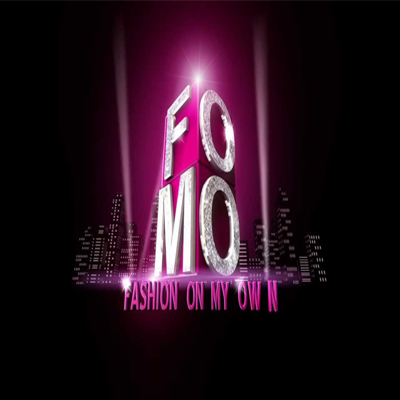
    MUMBAI: To keep up with the age of contemporary advances, Akshay Kumar and Ashvini Yardi’s production banner Grazing Goat Pictures recently launched ‘Grazing Goat Digital’. The first venture to emerge is the YouTube channel ‘FOMO Fashion On My Own’, India’s first Hindi fashion channel which lets trend-conscious women transform into a glamorous avatar without having to step into a salon.

    The fashion channel will cater to women aged between 15 and 34 and will provide them with the latest trends, tips and tricks of the fashion trade. The channel broadcasts step-by-step tutorials on such subjects as hair styling tips, make up tutorials, getting the look of your favourite celebs and more. The channel will be broadcasting videos in Hindi and English, and will upload new episodes every Monday.

    Commenting on the launch of their new digital channel, Grazing Goat Pictures co-founder Ashvini Yardi said, “Grazing Goat Digital is proud to present FOMO Fashion On My Own, India’s first Hindi fashion channel in association with YouTube, targeted at women not only in metros but even in smaller towns who have the fashion sense but not the required facilities at their disposal. FOMO will be catered in Hindi to reach a wider audience and will also available in English. It’s not very cost effective for women to visit a salon each time they desire a particular look hence they can watch it anywhere at any time and still manage to look a million bucks!”

  • VivaConnect debuts ‘LiveTalk’ with Modi’s speech

    MUMBAI: While live events and gatherings are rejoiced by those who attend it, others who are left behind due to unavailability of tickets, far off destinations, no invitation, etc. Even though the reasons may be plenty, none is good enough for those who wish to be a part of it. Thus, with an aim to connect individuals to a live event VivaConnect has unveiled a service called LiveTalk.


    LiveTalk allows one to do audio streaming of live events over a simple phone call, wherein one has to call in a published phone number and experience it without any internet, smartphone nor a subscription to special or premium add-on services.


    The service was launched on 15 September and was deployed for BJP‘s Ex-Serviceman Rally held at Rewari, Haryana. The service was greatly appreciated as it connected over 1,00,000 callers across India with Narendra Modi‘s speech.


    BJP partnered with innovative firms like Zipdial and VivaConnect and offered a unique mobile connectivity model between vast mass of mobile users and BJP Leadership. “On the launch day more than 1 lakh callers dialed in 02245014501 to hear Narendra Modi‘s live speech at Ex-Servicemen Rally in Rewari.” says BJP IT Cell head Arvind Gupta.


    VivaConnect MD Vikram Raichura said, “We are honored to be associated with BJP and showcase one more possibility on how by leveraging mobility one can extend overall reach and even cater the far flung areas to achieve mass involvement on national & international scale.”


    LiveTalk is beneficial for covering political meets, social events, musical concerts, business seminars, award shows, sports events, educational conventions, etc. It can connect over a million callers during a three hour event. 

  • Direct cable TV and online billing, India style

    MUMBAI: In a day and age when just about everything is available ‘online’, can cable television be far behind? Starting March next year, digital cable consumers in the country will be able to make payments or recharge their pre-paid subscription package online.


    Multi system operators (MSOs), particularly those who’ve just about got started on the road to retail consumer billing in Mumbai and Delhi, plan to make online payment options available to consumers by the next financial year.

    DEN is hopeful its online payment system will be active by next quarter or end of financial year

    In the case of MSOs like DEN Networks, the first cycle of billing for the Delhi circle will be generated this month. “This is just the first step to inform consumers of the changed ecosystem in a digitised environment. But as we move along, we plan to give consumers as many touch points for submission of the billing amount,” informs an official from DEN on condition of anonymity.


    DEN is hopeful its online payment system will be active by next quarter or end of the financial year but plans to go about it in a phased manner so as to not confuse consumers, the official points out.


    So what’s in it for DEN consumers? They will be able to make direct payments to the MSO through payment gateways such as credit cards, cash cards, net banking, scratch cards through IVRs and pre-paid cards, among others. “It’s too immature to comment on payment modes yet but it would be like any other model of client transaction available for telecom and DTH subscribers,” the official informs.


    InCable managing director Ravi Mansukhani, which has started direct billing in Delhi and Mumbai explains that retail (direct) consumer billing is the first step toward creating a transparent system. “Every MSO has to get into direct billing. In Delhi, our first bill cycle has been generated and handed over to the LCO (local cable operator) whereas the Mumbai bill cycle will be generated next month.”


    According to Mansukhani, not all MSOs will start the online system together, and it will depend on how and when they want to activate it. However, he thinks most MSOs will concentrate on getting retail billing in place in Kolkata next. “Considering not all CAFs have been filled in Kolkata, we can hope that in October, the September bill will be generated,” he says.


    DEN too plans to have a billing system in place for Kolkata. “We are also available in 24 of the 38 cities that have been digitised. So the billing system will also be in place for these 24 cities by the end of the calendar year,” the DEN official informs.


    Mumbai-based MSO ABS 7 Star too is looking at debuting online payment and recharge options by the next financial year though it hasn’t started retail consumer billing till date.


    “As per the High Court ruling, till the LCOs are paying entertainment tax, MSOs are not forced to do the billing for consumers. So we haven’t started direct billing as yet,” explains ABS 7 Star CMD Atul Saraf, quickly adding, “Still, effective next financial year, we will have both direct and online billing for consumers.”  


    Unlike other MSOs however, Orissa-based Ortel Communications has been owning its last mile for several years now and has resorted to direct billing right from then. “We are a last mile operator and thus, don the international model, where we are directly in touch with our consumers,” informs Ortel Communications CEO BP Rath.


    Ortel’s five lakh customers pay Rs 250 plus five per cent entertainment tax and 12.5 per cent service tax. “This is the amount that even others have to pay, who have subscribed to other MSOs. Now, whether customers agree to pay more or reduce the number of channels they subscribe to will have to be seen,” he adds.


    Speaking about whether the online model will somewhat change the existing dynamics where the LCO continues to be an interface between the MSO and the consumer, the DEN official says: “We will give subscribers options for recharge of vouchers, cash cards and online payment. But there is a road map behind this and we have started with LCOs as the collection channel for the time being.”


    While the transition to online is seen as a positive step, glitches like payment of entertainment tax have to be smoothened out.  “Currently, the LCO pays entertainment tax, which in Mumbai is Rs 45 and in Delhi is Rs 15,” says Mansukhani, adding, “There will be some amount of trouble and it will take at least two to three months for things to stabilise. However, by the second or third cycle, people will get used to the new system.”


    But after all this, will consumers stand to benefit from the online model?

    “Well, consumer perspective will not change much. The only difference is that if payments are not made for a given period, their STBs (set top boxes) will be switched off. Also, subscribers will have to pay tax directly on bills generated once we start billing them directly,” says the DEN official.


    Mansukhani echoes similar sentiments: “Currently, consumers are paying the same as in the analog regime. If there are any extra charges, they are being absorbed by the MSO.”


    Saraf however begs to differ. “Billing and digitisation will lead to an increase in ARPUs (average revenue per user) that haven’t gone up in the past 20 years. Consumers will have to pay 40 to 50 per cent more than what they are paying now. The scenario will be such that the cable operator will charge what the DTH (direct to home) operator is charging currently and the rates for DTH will go up further.”


    For consumers, the writing is clear on the wall: it‘s time you started planning for what you really want to watch; otherwise get ready to be hit with a fat-fat bill. Capiche!
  • Reliance Games and Lakshya Digital launch Rage Warriors for iOS


    MUMBAI: Reliance Games, a leading international mobile game studio, has come up with a gritty fighting game ‘Rage Warriors’ for iOS devices. Developed independently by Singapore-based Lakshya Digital, ‘Rage Warriors’ is a jarring and fierce mobile fighting game that takes inspiration, both in graphics and story, from classic hardcore console games.

    The storyline is set in a future where Earth has been nearly obliterated by an unknown catastrophe and humanity hangs on the brink of extinction. The surviving population has been left scarred and mutated, driven mad by decades of war. The only thing these humanoids love are the fights, bloody battles that serve as society’s savage entertainment.


    “As game developers with a nine year history in the mobile business, we understand what it takes to thrive in today’s competitive landscape and are ready to share our knowledge and experience with developers all around the world,” said Reliance Entertainment Digital CEO Manish Agarwal. “We aim to publish the most high-quality and entertaining games and that is what Lakshya Digital has delivered. ‘Rage Warriors’ is full of gore, carnage and intense competition; fighting game fans are going to love it!”

    “We are excited and proud to bring ‘Rage Warriors’ to the market. We made ‘Rage Warriors’ with so many fantastic worlds, epic characters and with such intense combat, we wanted to give the player an incredible console-like gaming experience,” says Lakshya Digital co-founder and president Dib Chaudhuri. “Working with Reliance Games made all the difference. We can already tell they have the developer’s best interests at heart. Their history in games and unparalleled knowledge has helped us create a polished and unique mobile game and we couldn’t have done it without their assistance.”