Tag: Digital

  • Star India is one of the very few to get its design right: Kyoorius’ Rajesh Kejriwal

    Star India is one of the very few to get its design right: Kyoorius’ Rajesh Kejriwal

    At a time when content and disruption are mentioned in the same breath in every digitally charged summit, design often takes a backseat. It’s an open secret that several marketers, be they traditional or digital, neglect design. In fact, a couple of years ago the understanding of the subject or its importance in driving brands was practically not there.  Very little was done in the country to drive conversations around design and innovation.

    Things would have remained the same, were it not for Kyoorius, a one stop place that connects designers, brands, creatives and every stakeholder in between. Kyoorius founder and CEO Rajesh Kejriwal welcomed the change that his endeavour brought to the industry. Its flagship awards show, Kyoorius Creative Awards and design and innovation conference Kyoorius Designyatra have set benchmarks year after year. Now the Kyoorius Creative Awards is in its 3rd edition and has the likes of R. Balki, Kartik Sharma, and Fergus O’Hare on board as jury members, while Kyoorius Designyatra celebrated ten years during its last edition. Kyoorius has also expanded with a marketing and communication division with MELT, where it focuses on emerging technology and digital marketing.

    In a candid chat with indiantelevision.com’s Papri Das, Rajesh Kejriwal opens up on the state of design in the industry, what to expect from Kyoorius Creative Awards and MELT 2016 and how most of the media brands haven’t cracked the design code.

    Excerpts:

    Is there anything new that we can expect at MELT 2016?

    This year at MELT we will have 14 halls with parallel sessions. The content itself is massive compared to last year with almost 60 speakers on board. We don’t like to emulate the whole ‘panel’ system as that gives the audience an information overload with no real crux.

    We have reached out to GroupM, SAP, Kinetic and Happy Finish who we expected to participate in this year’s MELT in Delhi. Now that we have postponed MELT and we are likely to hold it in August, we are actually looking at two expo areas. One would be heavy on new  technology that might interest marketers such as Gear from Samsung etc., and the other would have the GroupMs’ and Genesis, etc., of the industry.

    Why was MELT 2016 postponed?

    In every event we do, we ensure that the content we put out is very strong. I have to hand it to the curation team that felt the content and line-up for MELT, which was scheduled earlier this year, didn’t match up to standards, and therefore we rescheduled it.

    What have been the game changers in the design and creative industry?

    Digital was no doubt the biggest game changer. From the Indian perspective, in the last five years, the major change has been the acceptance of design by corporate India as a strategic tool, not an aesthetic one.  It is not looked at with a fresh perspective by business leaders now. Consider this as an immense change in the mindset of people. This has led to designers being treated with a lot more respect and seriousness. Because it is only when you have good clients with big budgets can you work wonders for them. If you are paid peanuts there is only so much you can do.

    According to you, which brand in India has made the best use of design in recent times?

    In the FMCG sector, I would say Paperboat is a success story when it comes to brilliant use of design. Right from the material it uses for packaging, its layout and how it is branded, Paperbaot has paid attention to detail, not just in terms of looks, but what that look conveys to its consumers. I am glad to see a newcomer in the field understanding and using design creatively. Fastrack from Titan has always stayed ahead of the design curve. It has nailed it down perfectly well.

    Royal Enfield India is currently using design very strategically. Flipkart and Myntra too have done a good job. But these are all what I call the new Indian businesses.

    What about the media brands?

    When it comes to media and broadcaster channels, I feel all of them really need to redo their designs except for Star India. If you look at their packaging logo and interface from a visual perspective, Star has got it right. All the other broadcasters do not understand how important a cohesive language branding identity is. Design defines the DNA of a channel, and its identity. It surprises me that they don’t understand its importance, because some of these networks have global reach. One would expect them to see how international media use their design.

    If you look at the packaging, and everything, it doesn’t reflect the brand identity of the channels. If one were to take away all text and show the channel to us, I can tell which one Star is, but any other brand would be a hard guess, because the visual language is missing. It is sad because that is what binds the consumers to the brand. Being in a mass consumer industry, broadcasters should get their design right.

    There is a tendency amongst some media organisations to rebrand themselves, and while they are at it, they change it in parts and pieces. I would hear from them that they have changed their show packaging without changing their identity branding. I think that is the wrong way to go about it. Design can’t be done in bits and pieces.

    What according to you is going wrong with the design industry in India?

    Where most designs go wrong is when the company or CEO decides what design suits the company. Design isn’t an opinion, it’s a solution. The right design isn’t as per the CEO’s fancy, but as per the consumer needs.

    Let me tell you the difference between the old India and new India. For old India designers, you would go to them as a client and ask for a logo. They would show you a logo and tell you it’s the best for you as it was ‘fresh’. Has any client in the world has asked for a stale logo? It clearly means the designers created a good looking logo, and told a story to fit the logo with the company, whereas a good designer will find that story before designing the logo. A good designer will figure out the strategy, the positioning, the brand identity, the target group and manifest that into a design. New India does it the latter way. But there is still a lot of India stuck to the old ways.

    You initially were from the paper and printing industry. What made you take interest in the design and creative field?

    Predominantly we were paper merchants who would purchase paper manufactured in other markets, bring it to India, brand it and sell it here. One of the ways to fuel these purchases was to influence the decision makers, i. e., the creatives and designers. Designyatra was first thought of to reach out to our clients and start a design revolution in India.

    To fuel this design movement, we had to expose the industry prevalent in India to what was happening globally, and make them feel proud of being designers. To do away with the bureaucracy involved in the entire system, I decided to go with the non-profit format.  Suddenly from being a vendor to the industry I was their friend, so Designyatra and Kyoorius definitely helped my paper business.

    From being a promotional method to becoming the actual business; tell us how did Kyoorius evolve?

    It happened soon after the paper industry slid downhill, though it didn’t happen overnight. Gradually the entire set up changed. While being a business man it wasn’t too difficult for me, it was a difficult transition for Kyoorius. Earlier it acted as promotion for my paper business. Now when the model changed, Kyoorius had to be sustainable or profitable.

    When it really came down to making a difference in the industry, Kyoorius actually had to be profitable, not run up losses. It had to be actually profitable and use that profit to make a positive difference in the industry. So that transition from not caring whether it made money or not to making Kyoorius sustainable was the real challenge.

    How did you manage this transition?

    Prior to this realisation we didn’t have sponsors. When we decided to make it sustainable, one of the obvious means for any conference to be functional is to have a sponsor. So we looked for one. This wasn’t easy because no one believed in the design industry in 2008 and 2009. In those days if you did something in the advertising sphere, major broadcasters would easily come on board. But design was an offbeat road to travel on that only a small breed of people was interested in.

    We were lucky in 2011, we managed to get Zee to take cognizance of the fact that design was important for the industry and the country and that’s how it came on board. And since then, Zee has remained a partner for Kyoorius and signed on year after year. We also started looking at pricing the tickets right, something which we didn’t pay attention to earlier.

    Post transformation what is the current structure of Kyoorius now?

    Currently we have two sides to Kyoorius. One is the marketing and communication section where advertising, media and digital, social media and emerging technologies or MarTech is covered, and the second is the design and innovation side.

    These are the two broad headers under which we operate, mostly because if you have a capable team, you can’t have a single event a year to keep it occupied.

    What is your take on sponsorship for events?

    For the creative awards, we have Colors, HT, Rishtey Happy Finish and Kinetic. Apart from this we have supporting partners like Addikt.tv etc.

    If an award show has to sustainably exist for a long period of time, in an ideal scenario, 80 per cent of the revenue should come from the ticketed sales or entries in guest registration. In India it is actually the reverse. Sponsorship is between 70 to 80 per cent while the rest is maybe tickets or miscellaneous.

    In our case thankfully, we have struck a healthier ratio with 60 per cent from sponsorship and 40 per cent from ticket sales. I hope we can soon invert this ratio for Kyoorius Creative Awards, as we have done for Designyatra.

    MELT is a difficult IP when it comes to ticket sales as it will always be about partners. I can’t charge each person Rs 20,000, so the prices for MELT tickets will always be lower. Given the content we showcase in MELT, the budget can only be met through sponsors.

    Last year it was Rs 8,000, and this year we are planning to have another optional ticket without dinner included that will be sold for  much less. It’s for those newcomers in the industry or students who want to attend, but for whom budget is an issue.


  • BloombergQuint: Business reporting the cross platform way

    BloombergQuint: Business reporting the cross platform way

    MUMBAI: The old TV news warhorse is back. After selling his Network18 business to Reliance’s Mukesh Ambani a couple of years ago, Raghav Bahl burst back on to the scene with a new digital venture Quintillion Media. Now the firm has got into bed with the global business information power house Bloomberg Media. The result of the union will take birth in the next three months as BloombergQuint India which will deliver business and financial news over traditional broadcast, digital and live events in the subcontinent.

    Bahl says journalism will be at the core of BloombergQuint India. Bloomberg recently dissolved its partnership in a company that included Reliance, UTV’s Ronnie Screwvala and had been operational in India as a TV channel for about eight years as UTV Bloomberg.

    Bahl believes that the entry of BloombergQuint in the hypercompetitive news space heralds challenges for both the partners, but they are up for the task. Says he: “It is a great sense of dejavu for us. We created this space which is now very powerful. We have created brands that are powerful. And now we are getting back in this space with a new offering and a new brand. There is a need for disruption and that’s where BloombergQuint stands which you will see with the service being rolled out. We have money…. and we are hoping to get good advertisers on board.”

    Bloomberg Media International managing director Parry Ravindranath explains that the Quintillion marks a first for his company.

    “We have been in India for around 20 years, “ he says. “But this is the first Bloomberg cross platform partnership. We continue to break new ground in news and deliver the best content in Asia’s fastest growing market.”

    And the decision to partner with Raghav was a natural one. “This is a second coming for Raghav and he has pioneered the business news genre in broadcast and digital in India. And he was my first boss,” adds Ravindranath with a smile.

    Adds his boss in the US Bloomberg Media CEO Justin Smith: ” It was clear when we met Raghav that we shared a common vision to create India’s premier digitally-led multi-platform business media company. And that met with our global vision. Currently, almost half of our digital traffic comes from outside the US and this figure continues to grow. Partnering with Quintillion Media in India is a game-changer for the country’s digital and broadcast media industries, and for Bloomberg Media globally as we take our investment to an exciting new phase.”

    “As the fastest growing major economy in the world, India is one of the most important stories we are covering in Asia. I’m glad we are partnering with Raghav and his team who have deep experience reporting on India for the past two decades,” chips in Bloomberg News APAC executive editor David Merritt.

    With the joint venture signed just a few days back, a gaggle of news professionals are being hired and it looks like its homecoming for them. The company has roped in former CNBC TV18 CEO Anil Uniyal and former CNBC-TV18 executive editor Menaka Doshi to serve as BloombergQuint’s CEO and managing editor respectively. Harsha Subramaniam, a Bloomberg executive producer will oversee the partnership for Bloomberg across platforms.

    “We have a set of robust colleagues on board joined by solid associates which we had in Network 18. I am delighted to have them with us. We also have Ritu Kapur with us and we are very confident about our product. They also bring a fantastic news structure. We are very proud that a global company has partnered with us,” says Bahl.

    It might be recalled that back in 2014, Bahl left a void in his own Network 18 group which was taken over by the Reliance Group. After Bahl moved out, the group also witnessed resignations from Sai Kumar, Ajay Chacko, RDS Bawa, Rajdeep Sardesai and Sagarika Ghose. Wishing Bahl luck for his new joint venture, India Today Group consulting editor Rajdeep Sardesai said, “I wish him very well. I have had enjoyable years with him and have shared an excellent relationship with Raghav.”

    “There is enormous potential in the English news genre and it’s only expanding. For now, they will have to follow the ad driven revenue model, but in the long run, every channel will love to follow a subscription revenue model,” says media analyst and IIM Calcutta professor Chandradeep (CD) Mitra. “A new channel can be successful if it has compelling content, great market presence and on-ground action. As advertisers are reluctant about going on new platforms, the channel can either give attractive rates or start with one well-known brand on board. Creating an impression helps a channel irrespective of whether it is earning profits or incurring losses.”

    The two properties – one, a linear product (television) and the other non-linear (online and digital), will completely be integrated. “There is no specific strategy for either of the products. The strategy will depend on the nature of the platform. On digital, social virality and distribution are important, while on TV distribution and breaking news play a vital role. We want to provide good quality content to the maximum number of households and also hope to bring advertisers on board,” says Bahl.

    With English news focused on six metros, the genre is often considered to be niche. And Bahl agrees that this is what BloombergQuint will concentrate on. “In India, the majority of our audience is there. But I think the audience will increase outside this catchment in sometime quickly,” he says. “But we are seeing audiences coming from tier two and three cities. We will provide content to wherever audiences are. We are a nationwide distributed TV property and on the digital front, we want to leave a global footprint.”

    “We have a huge source of content at Bloomberg and only hope to cater to a much larger audience in India and globally. Business is not niche; everyone gets affected by it,” adds Ravindranath.

    Both he and Bahl pooh-pooh the thought that digital and online is killing linear television. “TV will definitely survive as the core ethos remains the same. No. The commercials have caught up,” says Ravindranath.

    “The entire debate is incorrect. It’s not digital versus TV, its linear and nonlinear, static and mobile, family to individualistic”, adds Bahl.

    The launches will be heavily promoted on social media and will also see newsroom anchors indulging in social interactive services like Instagram and Whatsapp. “The intention is to push the traffic. Digital promotion is a big thing. We have a full business plan for everything. You just have to wait and watch,” says Ravindranath.

    And indeed everyone will be waiting and watching how messrs Bahl and Bloomberg fare in their second innings.

  • BloombergQuint: Business reporting the cross platform way

    BloombergQuint: Business reporting the cross platform way

    MUMBAI: The old TV news warhorse is back. After selling his Network18 business to Reliance’s Mukesh Ambani a couple of years ago, Raghav Bahl burst back on to the scene with a new digital venture Quintillion Media. Now the firm has got into bed with the global business information power house Bloomberg Media. The result of the union will take birth in the next three months as BloombergQuint India which will deliver business and financial news over traditional broadcast, digital and live events in the subcontinent.

    Bahl says journalism will be at the core of BloombergQuint India. Bloomberg recently dissolved its partnership in a company that included Reliance, UTV’s Ronnie Screwvala and had been operational in India as a TV channel for about eight years as UTV Bloomberg.

    Bahl believes that the entry of BloombergQuint in the hypercompetitive news space heralds challenges for both the partners, but they are up for the task. Says he: “It is a great sense of dejavu for us. We created this space which is now very powerful. We have created brands that are powerful. And now we are getting back in this space with a new offering and a new brand. There is a need for disruption and that’s where BloombergQuint stands which you will see with the service being rolled out. We have money…. and we are hoping to get good advertisers on board.”

    Bloomberg Media International managing director Parry Ravindranath explains that the Quintillion marks a first for his company.

    “We have been in India for around 20 years, “ he says. “But this is the first Bloomberg cross platform partnership. We continue to break new ground in news and deliver the best content in Asia’s fastest growing market.”

    And the decision to partner with Raghav was a natural one. “This is a second coming for Raghav and he has pioneered the business news genre in broadcast and digital in India. And he was my first boss,” adds Ravindranath with a smile.

    Adds his boss in the US Bloomberg Media CEO Justin Smith: ” It was clear when we met Raghav that we shared a common vision to create India’s premier digitally-led multi-platform business media company. And that met with our global vision. Currently, almost half of our digital traffic comes from outside the US and this figure continues to grow. Partnering with Quintillion Media in India is a game-changer for the country’s digital and broadcast media industries, and for Bloomberg Media globally as we take our investment to an exciting new phase.”

    “As the fastest growing major economy in the world, India is one of the most important stories we are covering in Asia. I’m glad we are partnering with Raghav and his team who have deep experience reporting on India for the past two decades,” chips in Bloomberg News APAC executive editor David Merritt.

    With the joint venture signed just a few days back, a gaggle of news professionals are being hired and it looks like its homecoming for them. The company has roped in former CNBC TV18 CEO Anil Uniyal and former CNBC-TV18 executive editor Menaka Doshi to serve as BloombergQuint’s CEO and managing editor respectively. Harsha Subramaniam, a Bloomberg executive producer will oversee the partnership for Bloomberg across platforms.

    “We have a set of robust colleagues on board joined by solid associates which we had in Network 18. I am delighted to have them with us. We also have Ritu Kapur with us and we are very confident about our product. They also bring a fantastic news structure. We are very proud that a global company has partnered with us,” says Bahl.

    It might be recalled that back in 2014, Bahl left a void in his own Network 18 group which was taken over by the Reliance Group. After Bahl moved out, the group also witnessed resignations from Sai Kumar, Ajay Chacko, RDS Bawa, Rajdeep Sardesai and Sagarika Ghose. Wishing Bahl luck for his new joint venture, India Today Group consulting editor Rajdeep Sardesai said, “I wish him very well. I have had enjoyable years with him and have shared an excellent relationship with Raghav.”

    “There is enormous potential in the English news genre and it’s only expanding. For now, they will have to follow the ad driven revenue model, but in the long run, every channel will love to follow a subscription revenue model,” says media analyst and IIM Calcutta professor Chandradeep (CD) Mitra. “A new channel can be successful if it has compelling content, great market presence and on-ground action. As advertisers are reluctant about going on new platforms, the channel can either give attractive rates or start with one well-known brand on board. Creating an impression helps a channel irrespective of whether it is earning profits or incurring losses.”

    The two properties – one, a linear product (television) and the other non-linear (online and digital), will completely be integrated. “There is no specific strategy for either of the products. The strategy will depend on the nature of the platform. On digital, social virality and distribution are important, while on TV distribution and breaking news play a vital role. We want to provide good quality content to the maximum number of households and also hope to bring advertisers on board,” says Bahl.

    With English news focused on six metros, the genre is often considered to be niche. And Bahl agrees that this is what BloombergQuint will concentrate on. “In India, the majority of our audience is there. But I think the audience will increase outside this catchment in sometime quickly,” he says. “But we are seeing audiences coming from tier two and three cities. We will provide content to wherever audiences are. We are a nationwide distributed TV property and on the digital front, we want to leave a global footprint.”

    “We have a huge source of content at Bloomberg and only hope to cater to a much larger audience in India and globally. Business is not niche; everyone gets affected by it,” adds Ravindranath.

    Both he and Bahl pooh-pooh the thought that digital and online is killing linear television. “TV will definitely survive as the core ethos remains the same. No. The commercials have caught up,” says Ravindranath.

    “The entire debate is incorrect. It’s not digital versus TV, its linear and nonlinear, static and mobile, family to individualistic”, adds Bahl.

    The launches will be heavily promoted on social media and will also see newsroom anchors indulging in social interactive services like Instagram and Whatsapp. “The intention is to push the traffic. Digital promotion is a big thing. We have a full business plan for everything. You just have to wait and watch,” says Ravindranath.

    And indeed everyone will be waiting and watching how messrs Bahl and Bloomberg fare in their second innings.

  • When stars collide: Karan Johar and R Balki on Goafest day 2

    When stars collide: Karan Johar and R Balki on Goafest day 2

    MUMBAI: Post lunch sessions are always a challenge at any event: between people busy with their extended luncheons, grouping to go on smoke breaks, and fighting the urge for a siesta and so the house is often checkered with empty seats.

    But Goafest presented a completely different picture on its second day with a packed house eagerly waiting for the afternoon knowledge summit to start. This was no surprise, as two of the biggest stars in advertising and film fraternity were the speakers and so when they took the stage, the audience welcomed the speakers with thunderous applause. It was hard to decide who got the loudest cheer — Karan Johar or R. Balki.

    ‘Won’t make an ad film’
    The conversation kicked off with the two giving their take on what connects the two industries represented. “I just know that advertising pays a lot of money to the actors and celebrities, making it easier and cheaper for us to cast them in interesting films,” joked the sharp Johar, before going on to share his utter displeasure when his shoots are moved thanks to an actor’s endorsement schedule.            

    Johar was also quick to say how money was still flowing strongly in advertisements, while ‘god knows that our (film) footfalls are falling.”

    If that is so, would Johar like to make an ad film himself? “Nope” came his quick and precise answer. His reason? When at one time he was asked to shoot an ad film for Shah Rukh Khan, Johar was subjected to the infamous PPM or Pre Product Meeting. That didn’t go down well, and since then he hasn’t dared to shoot another as film, chuckled Johar.

     ‘Digital”: a word that floats with few understanding it

    Given the chance, would Balki consider making a film on the digital platform? “Certainly. Why not? It isn’t much of a question of what medium but more of a content issue. If there is a story which needs to be told, it wouldn’t matter if it’s in the digital platform. Budget is a deciding factor as well depending on the kind of story one is telling and treatment they want to give it.”

    Johar said that ‘digital’ was one word floating about in his industry without a shred of comprehension of the medium meant to the industry. “I believe there is a tremendous potential in the medium, but right now, people are simply throwing the word around without actually understanding it.”

    Which is a serious threat to the industry, both the speakers agreed. Johar went on to add, “Footfalls have reduced by 10 to 12 per cent this year. There are multiple alternative mediums of entertainment for the audience. If filmmakers do not push up their content ante, and don’t empower the writers well, the industry will soon see its death.”

    ‘How we market films is all wrong’:

    A knowledge summit at Goafest is incomplete without a direct advertising and marketing question, and so Balki popped the question to Johar: Why has the film fraternity not approached the advertisers or vice versa to market their films better? Is what being done currently working for them?

    “If the amount of talent in Indian advertising in this very room could sell soaps well, or another product, they could do far more for the films. Why don’t we see more collaboration between the industries?”

    “As much as I love my industry, and how solid it is, we are a very big victim of the herd mentality,” confessed Johar. “Currently what you see us doing to promote a film has perhaps been done by one person and the rest followed. No one really sat and strategized what will work or not. There is no science to it and perhaps we need it. Maybe we should get some help to do some actual market research. Right now, we have these promotions and launch events where actors and actresses turn up wearing designer clothes, and only fashion sites are having fun. Is it helping consumers to come and buy a ticket and watch the film? I am not sure at all. This entire bubble is going to burst. Over Marketing of a film can sometimes kill the product. We need to change the way we market films because right now we are doing it all wrong.”

    ‘It’s a myth that products pay a lot to be in the films’

    When quizzed about product placement in films, Balki started off with clarifying misconceptions about this. “There is a science to it. You can’t just randomly place a product in a film just because a brand has paid you money. First of all, it’s a myth that products pay a lot to be in a film. All they help is may be in promoting the film. They do not help in making the film.”

    Balki continues, “product placement works when it is part of a given scene, not randomly posed there. People are getting clever, and clients are also getting smart and not wanting that kind of product placement. Brands and directors are realising that it is when s product is integrated into the storyline and has a real role to play in the story or a particular scene that the product gets the right mileage.”

    On being on the Social media, the necessary evil

    Celebrities, mostly in the film industry, love to hear about themselves and in this era of social media everyone has an opinion.

    The speakers were asked their take on free speech on social media. Johar said. “I confess I love hearing about, reading about myself. Be it good bad or ugly I need to know what people are talking about me. I don’t believe one can be like ‘I do not care’, in today’s world. One cannot be indifferent to the reality of our times. That’s what keeps you grounded. I think the social media is a good reality check for us celebrities. You can’t beat them, so you must join them. I am on all major social media platforms and very active online. I don’t need PR to write my twitter, it’s all me.”

    Balki had a dramatically opposite take on the subject. Taking a cue from Johar’s answer, Balki added, “I am deluded enough to think I am the worst. I do not people to tell me that, nor do I want people to tell me how good I am. I do not feel the need to listen to it. I find it tiring. I am not in it for the practically.”

    Parting shots

    While the entire session gave enough fodder to fill several online ‘powerful quotes’ sites, there were a few takeaways: Johar’s honest and straightforward acknowledgement that he is through and through ‘an unapologetic Hindi filmmaker’ and that he had no plans to make films in Hollywood.

    And Balki’s explanation of how people tend to judge creativity – on films or in advertisements: “We have defined patterns of creativity. We think good must be like this. We have a picture to what good should be and when we see something violently breaking that, the first reaction is to feel uncomfortable. Because people don’t care about innovation, they are simply looking for relativity. Pain is the biggest risk in taking the risk. It is a pain everyone who breaks a mould will live with for quite some time.”

  • When stars collide: Karan Johar and R Balki on Goafest day 2

    When stars collide: Karan Johar and R Balki on Goafest day 2

    MUMBAI: Post lunch sessions are always a challenge at any event: between people busy with their extended luncheons, grouping to go on smoke breaks, and fighting the urge for a siesta and so the house is often checkered with empty seats.

    But Goafest presented a completely different picture on its second day with a packed house eagerly waiting for the afternoon knowledge summit to start. This was no surprise, as two of the biggest stars in advertising and film fraternity were the speakers and so when they took the stage, the audience welcomed the speakers with thunderous applause. It was hard to decide who got the loudest cheer — Karan Johar or R. Balki.

    ‘Won’t make an ad film’
    The conversation kicked off with the two giving their take on what connects the two industries represented. “I just know that advertising pays a lot of money to the actors and celebrities, making it easier and cheaper for us to cast them in interesting films,” joked the sharp Johar, before going on to share his utter displeasure when his shoots are moved thanks to an actor’s endorsement schedule.            

    Johar was also quick to say how money was still flowing strongly in advertisements, while ‘god knows that our (film) footfalls are falling.”

    If that is so, would Johar like to make an ad film himself? “Nope” came his quick and precise answer. His reason? When at one time he was asked to shoot an ad film for Shah Rukh Khan, Johar was subjected to the infamous PPM or Pre Product Meeting. That didn’t go down well, and since then he hasn’t dared to shoot another as film, chuckled Johar.

     ‘Digital”: a word that floats with few understanding it

    Given the chance, would Balki consider making a film on the digital platform? “Certainly. Why not? It isn’t much of a question of what medium but more of a content issue. If there is a story which needs to be told, it wouldn’t matter if it’s in the digital platform. Budget is a deciding factor as well depending on the kind of story one is telling and treatment they want to give it.”

    Johar said that ‘digital’ was one word floating about in his industry without a shred of comprehension of the medium meant to the industry. “I believe there is a tremendous potential in the medium, but right now, people are simply throwing the word around without actually understanding it.”

    Which is a serious threat to the industry, both the speakers agreed. Johar went on to add, “Footfalls have reduced by 10 to 12 per cent this year. There are multiple alternative mediums of entertainment for the audience. If filmmakers do not push up their content ante, and don’t empower the writers well, the industry will soon see its death.”

    ‘How we market films is all wrong’:

    A knowledge summit at Goafest is incomplete without a direct advertising and marketing question, and so Balki popped the question to Johar: Why has the film fraternity not approached the advertisers or vice versa to market their films better? Is what being done currently working for them?

    “If the amount of talent in Indian advertising in this very room could sell soaps well, or another product, they could do far more for the films. Why don’t we see more collaboration between the industries?”

    “As much as I love my industry, and how solid it is, we are a very big victim of the herd mentality,” confessed Johar. “Currently what you see us doing to promote a film has perhaps been done by one person and the rest followed. No one really sat and strategized what will work or not. There is no science to it and perhaps we need it. Maybe we should get some help to do some actual market research. Right now, we have these promotions and launch events where actors and actresses turn up wearing designer clothes, and only fashion sites are having fun. Is it helping consumers to come and buy a ticket and watch the film? I am not sure at all. This entire bubble is going to burst. Over Marketing of a film can sometimes kill the product. We need to change the way we market films because right now we are doing it all wrong.”

    ‘It’s a myth that products pay a lot to be in the films’

    When quizzed about product placement in films, Balki started off with clarifying misconceptions about this. “There is a science to it. You can’t just randomly place a product in a film just because a brand has paid you money. First of all, it’s a myth that products pay a lot to be in a film. All they help is may be in promoting the film. They do not help in making the film.”

    Balki continues, “product placement works when it is part of a given scene, not randomly posed there. People are getting clever, and clients are also getting smart and not wanting that kind of product placement. Brands and directors are realising that it is when s product is integrated into the storyline and has a real role to play in the story or a particular scene that the product gets the right mileage.”

    On being on the Social media, the necessary evil

    Celebrities, mostly in the film industry, love to hear about themselves and in this era of social media everyone has an opinion.

    The speakers were asked their take on free speech on social media. Johar said. “I confess I love hearing about, reading about myself. Be it good bad or ugly I need to know what people are talking about me. I don’t believe one can be like ‘I do not care’, in today’s world. One cannot be indifferent to the reality of our times. That’s what keeps you grounded. I think the social media is a good reality check for us celebrities. You can’t beat them, so you must join them. I am on all major social media platforms and very active online. I don’t need PR to write my twitter, it’s all me.”

    Balki had a dramatically opposite take on the subject. Taking a cue from Johar’s answer, Balki added, “I am deluded enough to think I am the worst. I do not people to tell me that, nor do I want people to tell me how good I am. I do not feel the need to listen to it. I find it tiring. I am not in it for the practically.”

    Parting shots

    While the entire session gave enough fodder to fill several online ‘powerful quotes’ sites, there were a few takeaways: Johar’s honest and straightforward acknowledgement that he is through and through ‘an unapologetic Hindi filmmaker’ and that he had no plans to make films in Hollywood.

    And Balki’s explanation of how people tend to judge creativity – on films or in advertisements: “We have defined patterns of creativity. We think good must be like this. We have a picture to what good should be and when we see something violently breaking that, the first reaction is to feel uncomfortable. Because people don’t care about innovation, they are simply looking for relativity. Pain is the biggest risk in taking the risk. It is a pain everyone who breaks a mould will live with for quite some time.”

  • How will the new breed of content creators fit in the digital space with big daddies around?

    How will the new breed of content creators fit in the digital space with big daddies around?

    MUMBAI: The beauty of digital is that the younger audience can bubble up digital content for the older audience. With videos and internet becoming synonymous with each other, we tend to consume more information in the form of videos in today’s time. Reports say that Indian content gets roughly 7 billion (700 crore) views a month with a watch time of 2 billion (200 crore) hours. And what is driving this massive consumption, but the younger audience? The market is for all age groups, but is largely driven by the youngsters, the millennials. The space has also created a new age of celebrities. Brands are increasingly looking to tie-up with these content creators. The boundaries of broadcast companies, ad agencies, technology companies, music labels, etc., all are morphing into this new medium of entertainment.

    Discussing the birth of a ‘New breed of content creators powered by digital’ was a panel comprising of The Viral Fever CEO Arunabh Kumar, Rajshri Entertainment Private Limited MD and CEO Rajjat Barjatiya, Terribly Tiny Tales founder Anuj Gosalia, East India Comedy founder Kunal Rao, Click Digital studios co-founder Anand Doshi and Ping Digital Broadcast co-founder and director for talent and acquisitions Anagha Rajadhyaksha. The session was moderated by Qyuki co-founder and MD Samir Bangara.

    With big daddies like Hotstar, VOOT, etc, in the digital space, the question that arises is how is this content going to fit in the space or are they going to get stomped out?

    Kumar responded, speaking about his own company, “Obviously there are people sitting with lot of money above us. But the simple difference TVF has is that we started with videos at the time when no one was even watching them. We remain a content company, we wanted to make certain types of shows which no one wanted to produce and hence we started making web series on our own. We wanted to make web series since 2010. We are in love with creating content. The age group of 18-24 is the progressive audience, and they are bored of the stories that come on TV. We still take time and sweat to make something and still get the same amount of joy when someone appreciates it. I don’t think there is any competition. We are still evolving and I don’t think there is any question of competition with the bigger players”.

    Barjatiya said, “I think this is a very sweet spot for us. We have been producing films since 1947 and 10 years ago we started acquiring rights for content. And now we produce 3 hours of short form content for the web every day. We are a platform agnostic company and we have chosen to become the product on other platforms. We want to be the product on others’ shelves. I will never launch my own platform. We have 100 distribution partnerships with national and international companies and we are happy with this. We have got 610 billion (6,10,000 crore) views on Youtube.”

    When asked about the monetisation model that Rajshri follows, Bharjatiya replied, “Organic ads consumed on a platform like Youtube, make an amount of about 10-20 paise per view depending on various factors which comes up to 55 per cent.” He further revealed that long form of premium content works well for the company. “We are getting more traffic from mobile phones and the ad-rates are also inching up. I have been observing that more and more people are watching content on phones.”

    Doshi said, “I think it also depends on the time that you release your video. It also matters. If I release my video when I see a trend, it works more effectively for us. The fill rate also matters in a country like India. Right now we touch 120 million (12 crore) views every month on our network. The concern is that we get 90 per cent traction from mobile. It’s a beautiful scenario and the future is mobile phones but the ad sales are going down.”

    Citing an example, Doshi pointed out one of the spoofs of Prem Ratan Dhan Paayo, Bharjatiya claimed the content from Anand, and hence monetized it. So, the money was directed to Bharjatiya while the subscribers remained with Doshi.

    When asked about the shift from stand-up comedy to sketch, Rao said, “Our motto is to get people out of cinemas to us. No one reads the ads in newspapers. We wanted people to know that stand-up comedy exits. The objective is to reach out to the maximum people. Initially we had to go to places for our shows, but today we don’t have to go everywhere. Content is content; it does not have to be short or extraordinary. We give out very simple content and have roughly 3,50,000 views on our network.”

    The fact that Youtube subscribers cannot be bought or marketed is very well known to all of us. The delivery platforms are blooming up efficiently which is evident by the growing number of views each of the creators gets in a month.

    “In India, subscription is always connected with money. The subscribers don’t know the cost involved and hence don’t click that button often”, added Bharjatiya.

    “On any OTT platform, you pay first and then watch content. But on Youtube, you can watch content first and then subscribe for it. It’s like giving ‘dakshina’,” said Kumar.

    Ping Network basically produces the ‘how to’ videos and fuels search engines. “We are not in the viral business. Our focus is on utility content. As people want to know things every now and then, that is how we have grown. The power of digital is that you are true to your content. If you are pulling out a video, if it’s powerful and is good, the content will definitely work”, said Rajadhyaksha.

    Gosalia added, “We give out tweet size stories and currently reach out to 12 ½ million (1.25 crore) people on social media. We have collaborated with a lot of brands which comes out in the forms of images. We work with around 30,000 writers. We also do text content for brands. We are primarily focused on quality, commitment and reachability.  Videos are difficult and are completely different for us but they have done well for us in the past. For us to stay in this business where we want to scale stories, we went back to text. We are basically attacking the niche-micro fiction and are taking it global.”

    Talking about the money involved, Kumar said, “Way back in 2008, we used to get Rs 20-30,000 for content. The scale has gone up now. The money involved is couple of times more than a TV episode.”

    “In this business, passion is more important than money”, concluded Bharjatiya.

    With these new breed of content creators powered by digital, content will only evolve and leverage various opportunities in a digital consuming world. It will be interesting to see how the industry meets the talent pool in India over the next few years.

  • How will the new breed of content creators fit in the digital space with big daddies around?

    How will the new breed of content creators fit in the digital space with big daddies around?

    MUMBAI: The beauty of digital is that the younger audience can bubble up digital content for the older audience. With videos and internet becoming synonymous with each other, we tend to consume more information in the form of videos in today’s time. Reports say that Indian content gets roughly 7 billion (700 crore) views a month with a watch time of 2 billion (200 crore) hours. And what is driving this massive consumption, but the younger audience? The market is for all age groups, but is largely driven by the youngsters, the millennials. The space has also created a new age of celebrities. Brands are increasingly looking to tie-up with these content creators. The boundaries of broadcast companies, ad agencies, technology companies, music labels, etc., all are morphing into this new medium of entertainment.

    Discussing the birth of a ‘New breed of content creators powered by digital’ was a panel comprising of The Viral Fever CEO Arunabh Kumar, Rajshri Entertainment Private Limited MD and CEO Rajjat Barjatiya, Terribly Tiny Tales founder Anuj Gosalia, East India Comedy founder Kunal Rao, Click Digital studios co-founder Anand Doshi and Ping Digital Broadcast co-founder and director for talent and acquisitions Anagha Rajadhyaksha. The session was moderated by Qyuki co-founder and MD Samir Bangara.

    With big daddies like Hotstar, VOOT, etc, in the digital space, the question that arises is how is this content going to fit in the space or are they going to get stomped out?

    Kumar responded, speaking about his own company, “Obviously there are people sitting with lot of money above us. But the simple difference TVF has is that we started with videos at the time when no one was even watching them. We remain a content company, we wanted to make certain types of shows which no one wanted to produce and hence we started making web series on our own. We wanted to make web series since 2010. We are in love with creating content. The age group of 18-24 is the progressive audience, and they are bored of the stories that come on TV. We still take time and sweat to make something and still get the same amount of joy when someone appreciates it. I don’t think there is any competition. We are still evolving and I don’t think there is any question of competition with the bigger players”.

    Barjatiya said, “I think this is a very sweet spot for us. We have been producing films since 1947 and 10 years ago we started acquiring rights for content. And now we produce 3 hours of short form content for the web every day. We are a platform agnostic company and we have chosen to become the product on other platforms. We want to be the product on others’ shelves. I will never launch my own platform. We have 100 distribution partnerships with national and international companies and we are happy with this. We have got 610 billion (6,10,000 crore) views on Youtube.”

    When asked about the monetisation model that Rajshri follows, Bharjatiya replied, “Organic ads consumed on a platform like Youtube, make an amount of about 10-20 paise per view depending on various factors which comes up to 55 per cent.” He further revealed that long form of premium content works well for the company. “We are getting more traffic from mobile phones and the ad-rates are also inching up. I have been observing that more and more people are watching content on phones.”

    Doshi said, “I think it also depends on the time that you release your video. It also matters. If I release my video when I see a trend, it works more effectively for us. The fill rate also matters in a country like India. Right now we touch 120 million (12 crore) views every month on our network. The concern is that we get 90 per cent traction from mobile. It’s a beautiful scenario and the future is mobile phones but the ad sales are going down.”

    Citing an example, Doshi pointed out one of the spoofs of Prem Ratan Dhan Paayo, Bharjatiya claimed the content from Anand, and hence monetized it. So, the money was directed to Bharjatiya while the subscribers remained with Doshi.

    When asked about the shift from stand-up comedy to sketch, Rao said, “Our motto is to get people out of cinemas to us. No one reads the ads in newspapers. We wanted people to know that stand-up comedy exits. The objective is to reach out to the maximum people. Initially we had to go to places for our shows, but today we don’t have to go everywhere. Content is content; it does not have to be short or extraordinary. We give out very simple content and have roughly 3,50,000 views on our network.”

    The fact that Youtube subscribers cannot be bought or marketed is very well known to all of us. The delivery platforms are blooming up efficiently which is evident by the growing number of views each of the creators gets in a month.

    “In India, subscription is always connected with money. The subscribers don’t know the cost involved and hence don’t click that button often”, added Bharjatiya.

    “On any OTT platform, you pay first and then watch content. But on Youtube, you can watch content first and then subscribe for it. It’s like giving ‘dakshina’,” said Kumar.

    Ping Network basically produces the ‘how to’ videos and fuels search engines. “We are not in the viral business. Our focus is on utility content. As people want to know things every now and then, that is how we have grown. The power of digital is that you are true to your content. If you are pulling out a video, if it’s powerful and is good, the content will definitely work”, said Rajadhyaksha.

    Gosalia added, “We give out tweet size stories and currently reach out to 12 ½ million (1.25 crore) people on social media. We have collaborated with a lot of brands which comes out in the forms of images. We work with around 30,000 writers. We also do text content for brands. We are primarily focused on quality, commitment and reachability.  Videos are difficult and are completely different for us but they have done well for us in the past. For us to stay in this business where we want to scale stories, we went back to text. We are basically attacking the niche-micro fiction and are taking it global.”

    Talking about the money involved, Kumar said, “Way back in 2008, we used to get Rs 20-30,000 for content. The scale has gone up now. The money involved is couple of times more than a TV episode.”

    “In this business, passion is more important than money”, concluded Bharjatiya.

    With these new breed of content creators powered by digital, content will only evolve and leverage various opportunities in a digital consuming world. It will be interesting to see how the industry meets the talent pool in India over the next few years.

  • Biraja Swain appointed Chief Growth and Innovation Officer of Neo@Ogilvy India

    Biraja Swain appointed Chief Growth and Innovation Officer of Neo@Ogilvy India

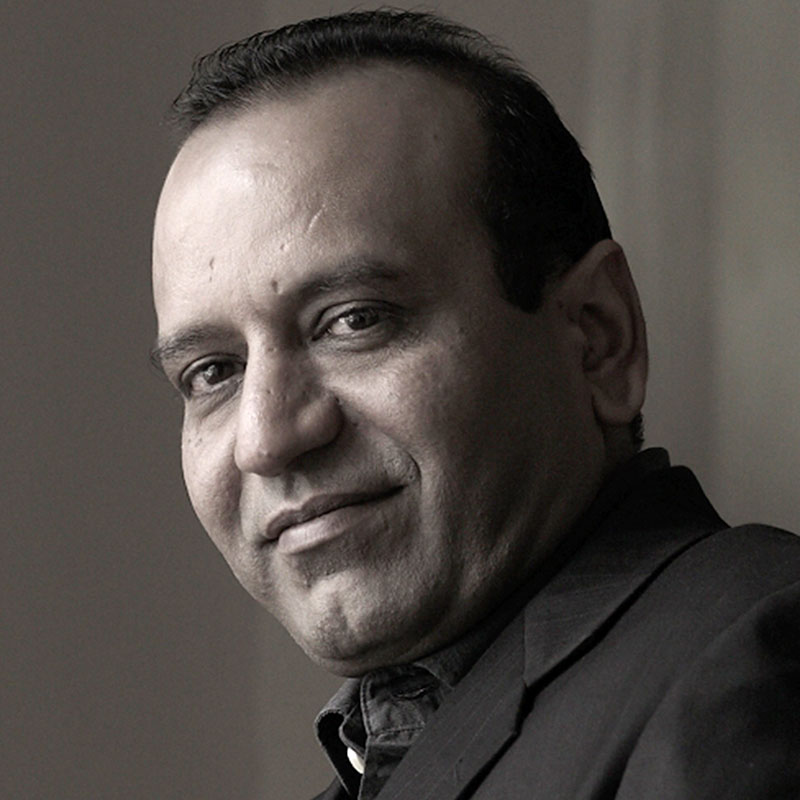
    MUMBAI:Neo@Ogilvy India  has  appointed Biraja Swain as chief growth and innovation officer. Other than leading the Neo Center of Excellence, Biraja will also drive growth and build capability in the mobile space and lead innovation for Ogilvy’s current businesses.

    Prior to this role, Biraja was the Digital and Emerging Media lead for OMD’s operations across India & South Asia with over fifteen years of digital media expertise.

    Neo@Ogilvy, India president and country head Rajesh Bhatia welcomed Swain with, “I am thrilled to have him as part of our network and I am certain that he will play a leading role in driving business, innovation and growth, not just for Neo, but Ogilvy India as a whole.”

    Biraja is well known for his penchant for innovation especially in the field of mobile and among the accolades that he has received include acclaimed awards like Cannes and FOMA. As a founding member of OMG and PhD, he created one of South Asia’s largest digital agency networks from scratch scaling to a team strength of over 250 people with the largest digital advertiser in India (Unilever) on board during his tenure. Under Biraja’s leadership Unilever was awarded “Digital Marketer of the year” and “Mobile Marketer of the Year”, for 3 years running across India and APAC respectively.

    In his previous role, Biraja was National Director at MEC Interaction (Mediaedge: CIA) where he led the “Digital Strategy” for clients such as Citi, Beiersdorf, Singapore Airlines & Sony Ericsson. His experience includes work at some of the best technology and media setups in India, including Baazee/Ebay India and Smile Technologies/Quasar. He also has extensive experience of working in international markets of Middle East and Africa during his previous stints based out of Dubai.


  • Biraja Swain appointed Chief Growth and Innovation Officer of Neo@Ogilvy India

    Biraja Swain appointed Chief Growth and Innovation Officer of Neo@Ogilvy India

    MUMBAI:Neo@Ogilvy India  has  appointed Biraja Swain as chief growth and innovation officer. Other than leading the Neo Center of Excellence, Biraja will also drive growth and build capability in the mobile space and lead innovation for Ogilvy’s current businesses.

    Prior to this role, Biraja was the Digital and Emerging Media lead for OMD’s operations across India & South Asia with over fifteen years of digital media expertise.

    Neo@Ogilvy, India president and country head Rajesh Bhatia welcomed Swain with, “I am thrilled to have him as part of our network and I am certain that he will play a leading role in driving business, innovation and growth, not just for Neo, but Ogilvy India as a whole.”

    Biraja is well known for his penchant for innovation especially in the field of mobile and among the accolades that he has received include acclaimed awards like Cannes and FOMA. As a founding member of OMG and PhD, he created one of South Asia’s largest digital agency networks from scratch scaling to a team strength of over 250 people with the largest digital advertiser in India (Unilever) on board during his tenure. Under Biraja’s leadership Unilever was awarded “Digital Marketer of the year” and “Mobile Marketer of the Year”, for 3 years running across India and APAC respectively.

    In his previous role, Biraja was National Director at MEC Interaction (Mediaedge: CIA) where he led the “Digital Strategy” for clients such as Citi, Beiersdorf, Singapore Airlines & Sony Ericsson. His experience includes work at some of the best technology and media setups in India, including Baazee/Ebay India and Smile Technologies/Quasar. He also has extensive experience of working in international markets of Middle East and Africa during his previous stints based out of Dubai.


  • Kids content growth is fastest in digital, and monetizing models need to keep up

    Kids content growth is fastest in digital, and monetizing models need to keep up

    MUMBAI: ‘Kids content has already gone digital, catering to its target audience,’ was the unanimous consensus at a session on ‘Kids Go Digital’ at the ongoing FICCI Frames 2016

    Unlike most discussions on digital media, there were no “if’s, ‘but’s and ‘maybe’s” and panelists — Chuchu TV CEO Vinoth Chander, Godimensions’ founders Shravan and Sanjay Kumaran, Nazara Technologies CEO Manish Agarwal  and Viacom 18 Digital Ventures COO Gaurav Gandhi – discussed how to take digital kids content to the next level, expand its market in India and make the most of the resources and eyeballs at disposal. Whizkidz Media founder Amit Agarwal, moderated the panel discussion.

    “Kids content growth is fastest in digital as its consumers are native to the medium. While you and I are adapting to the medium, they are born in the digital world and hence take naturally to it,” said Gandhi, adding that over the years the demography of kids born in the digital world will only grow.

    Currently kids’ content on digital platform is mostly on YouTube which has a few issues. Firstly, there is hardly any premium kids content available in India, then there is a lack of character driven shows, and most of the content for children is targeted at preschoolers leaving out a huge chunk of the audience. Moreover, most of the viewership comes from foreign markets, and the market in India still needs to be developed.

    Reflecting on how one markets kids content, Gandhi had a cryptic answer: “In their own language”. “You need to think like them and market your content on their own terms.”

    Speaking from personal experience, Gandhi added that using TV as a medium is a good start, as a huge chunk of the audience is still on TV. “Sampling videos on YouTube, TV and even reaching out to them through schools and play schools is also a good way to understand them and share your content.”

    As far as Chander was concerned, organic reach has worked wonders for him and his company ChuChu TV and he would vouch for strategically placed promotion within their own YouTube content. “We want to concentrate on quality content, rather than marketing as the former does the latter for us,” Chander said categorically. He also stressed that kids usually take more to visual content, and therefore propagating the message through videos and pictures would work better.

    “Kids are smart,” said Agarwal on the topic of edutainment. “Do not trick them into consuming content that you sell as entertainment, which is actually educational and is meant for learning. You need to separate your own consumers from their parents.” To back his argument Agarwal narrated about his own failed experiment with a gaming app that was intended to teach mathematics to kids. “A minute into the game they figured that this was no game but a trick to teach them, and immediately they got disinterested. For them games is entertainment, and just that.”

    The young entrepreneurs in the panel however differed. The Kumaran brothers said “Kids do like content that mirrors the teachings of their parents. Moreover, content that has an educational value that teaches a skill set like a programming code, or their everyday school syllabus with diagrams and videos, will work immensely well.”
     
    Expectedly monetizing models came up when discussing content production and business opportunity. “Time spent on content is what advertisers swear by. If that is so, as per market insight, kids will spend more and more time on digital or second screens than on TV, it is already happening,” said Agarwal hinting that ad revenue on kids content on digital platform will only grow.
     
    Gandhi shared another statistic from a BCG study: “Out of top 200 YouTube channels that garnered 10 billion views, 5 percent had kids content while 26 percent of the viewership came from children. It indicates that kids watch repeatedly, and they get obsessive over characters,” Gandhi said. Pointing out the simple demand supply ratio in economics, he added, “money will follow.”