Tag: Digital

  • Godrej’s #DeoReborn and #DeoCalculator campaigns for Cinthol DeoStick

    Godrej’s #DeoReborn and #DeoCalculator campaigns for Cinthol DeoStick

    MUMBAI: Angels falling and women chasing men are the kind of commercials that are conventionally seen for deodorants. For a fairly significant amount time deo promotions have revolved around opposite gender fantasies and attractions. But today, with digitization and social media, promotion campaigns have become much more interactive with consumers.

    Godrej Consumer Products Limited Head – India and SAARC Sunil Kataria says that consumers have matured in today’s times and even while chasing image building for brands, the campaigns have to be rooted firmly to the ground.

    Recently, Godrej launched Cinthol DeoStick in the market. The campaign for the product is majorly focused on digital platforms. It started with the #DeoReborn campaign and then the #DeoCalculator was run as a sub campaign. Kataria says that the basic idea of the promotion comes from the product. As most products in the market are spray or gas based, Cinthol DeoStick is a deodorant for solving real problems. Even after so many brands marketing them heavily, the market penetration of deodorants is only 18 percent. Cinthol Deostick aims at increasing the users for deodorants in the country.

    Cinthol deostick started with #DeoReborn campaign whereby the three barriers of deodorants were promoted. Contrary to norm, the campaign’s message was that Cinthol DeoStick was non-alcoholic, lasted long and was cost effective. Playing on the ‘price quotient’, the social platform offered a great medium for Cinthol to reach out to its consumers.

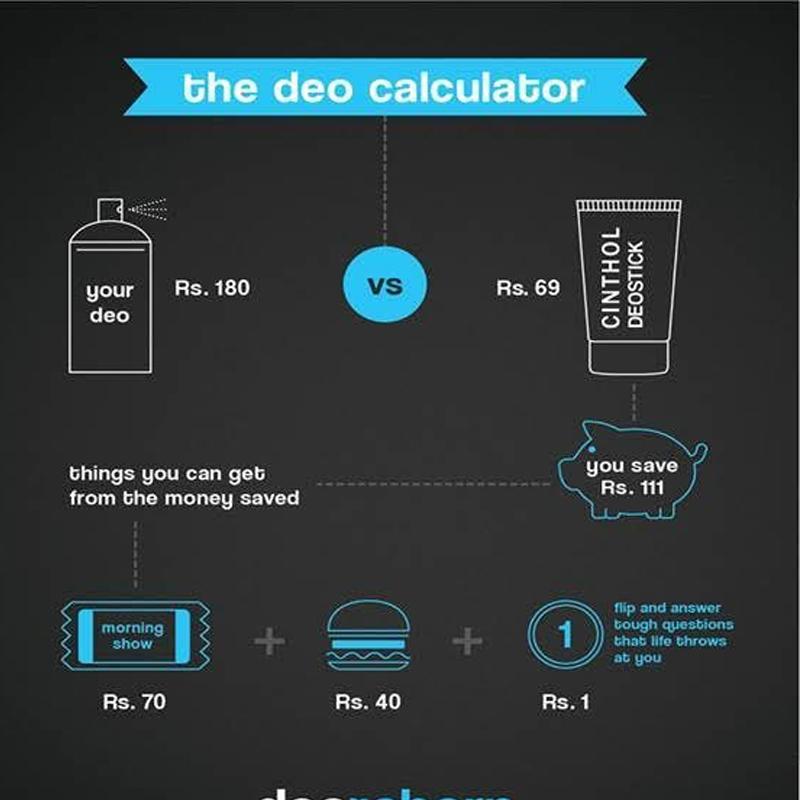
    The idea was to show consumers what they could do with the money they saved if they bought Cinthol DeoStick. This triggered the concept of #DeoCalculator. All that the consumers had to do was to share the price of their deodorant on Twitter using hashtags #DeoReborn and #DeoCalculator. The #DeoCalculator generated a quirky customized infographic giving them options on how they could put the money saved to better use.

    The Twitter campaign was run for 2 days. This campaign is also running on other platforms like television and radio. The brand has also taken up activation events focusing on college campuses for better product interaction with the target audience.

    The DeoCalculator campaign has been designed by Creative Land Asia. According to the brand, the campaign received 2274 tweets and 2443 posts. 169 tweets were posted from the official handle @GodrejCinthol in response to Twitter users tweets.

    Kataria says that Godrej has been involved with many other audience engagement campaigns earlier also with products like HIT by launching a mobile app with dengue stories. He says that any brand that intends to reach out to the youth has to adopt the digital platform. His company has increased spends over the last two years on the digital platform and has plans to further double spends on the digital medium, he informs.

  • ZEEL’s Akash Chawla replaces Pradeep Hejmadi as Business Head of Zee TV

    ZEEL’s Akash Chawla replaces Pradeep Hejmadi as Business Head of Zee TV

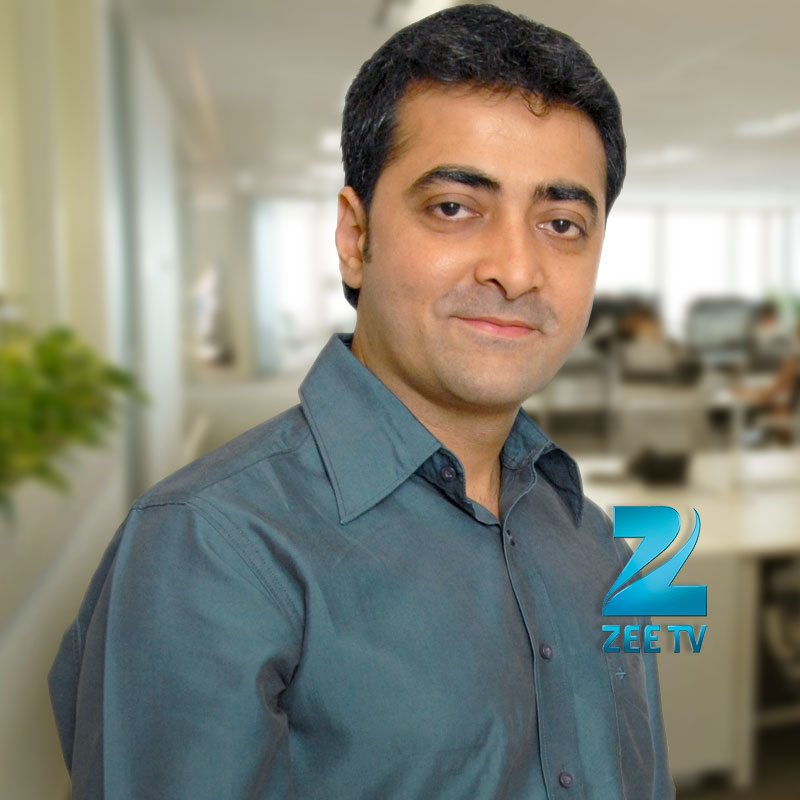
    MUMBAI: ZEEL has elevated Akash Chawla and Deepak Rajadhyaksha for key roles in Zee TV to drive the organizations goals.

    In addition to his current portfolio as Business Head- Essel Vision Productions Limited/Zee Studios, Chawla will now also take charge as the Business Head of Zee TV. In his earlier broadcasting stint, Chawla has successfully spearheaded the marketing function for the flagship and national channels like ZeeTV, Zee Cinema and Zee Classic.

    He has also played a pivotal role in the launch of channels like &pictures, Zee Anmol and Zindagi. All the functions of Zee TV like marketing, research and PR will align with Chawla.

    Meanwhile, Deepak Rajadhyaksha, who has been successfully leading the role as the Business Head of Zee Marathi, will now take charge as the Deputy Business Head, Zee TV. He will report to Akash Chawla. The entire programming, OAP and Operations team would align and report to Rajadhyaksha.The duo will work closely with ZEEL – MD & CEO, Punit Goenka to bring Zee TV towards its leadership journey.

  • ZEEL’s Akash Chawla replaces Pradeep Hejmadi as Business Head of Zee TV

    ZEEL’s Akash Chawla replaces Pradeep Hejmadi as Business Head of Zee TV

    MUMBAI: ZEEL has elevated Akash Chawla and Deepak Rajadhyaksha for key roles in Zee TV to drive the organizations goals.

    In addition to his current portfolio as Business Head- Essel Vision Productions Limited/Zee Studios, Chawla will now also take charge as the Business Head of Zee TV. In his earlier broadcasting stint, Chawla has successfully spearheaded the marketing function for the flagship and national channels like ZeeTV, Zee Cinema and Zee Classic.

    He has also played a pivotal role in the launch of channels like &pictures, Zee Anmol and Zindagi. All the functions of Zee TV like marketing, research and PR will align with Chawla.

    Meanwhile, Deepak Rajadhyaksha, who has been successfully leading the role as the Business Head of Zee Marathi, will now take charge as the Deputy Business Head, Zee TV. He will report to Akash Chawla. The entire programming, OAP and Operations team would align and report to Rajadhyaksha.The duo will work closely with ZEEL – MD & CEO, Punit Goenka to bring Zee TV towards its leadership journey.

  • Digital brands make the most of Mother’s day

    Digital brands make the most of Mother’s day

    MUMBAI: With Mother’s Day round the corner, brands have pulled out campaigns targeting moms and their interests. Brands observe special days like these with special offers, advertisements and messages targeting potential consumers. Mother’s day comes with a sentiment of gratitude towards women and the role that they play being in that shoe. Brands incorporate the significance of the day in many communication ways; some grab the opportunity to promote their brands as best gifting options while others go on glorify motherhood for brand promotions. 

    Mobile services market place, UrbanClap, this year has launched a campaign ‘Wow a Mom’. It has partnered with discovery and networking app for moms BabyChakra to launch the campaign, which ran from 21 April to 29 April, where kids could create their mom’s profile and upload it on the micro site. The reward for the maximum voted profile was a day long pampering from UrbanClap. 

    UrbanClap co-founder Varun Khaitan expresses, “Experiencing the gift of motherhood is one of life’s greatest joys. The unbreakable bond between a mother and child showcases exemplary love and strength between them. To celebrate and honor that essence, we have partnered with BabyChakra to launch the ‘Wow a Mom’ campaign for Supermoms.”

    The eCommerce fashion retailer, Faballey has also ventured with the campaign #GraciasMOM on the occasion. The brand is offering a free customized gift card and scarf to be sent to moms on a purchase of INR 1000 or above. The page on which the customer will land up after completing the purchase will give a brief on the campaign and from there they can send a brief message for their mom’s along with her address. 

    The electronic retailer, Croma has put in a strategy on the occasion to target women consumers. It has launched a Women’s Online Shopping Festival #WOSF, conceptualized by VelvetCase.com. The festival has introduced deals and offers to provide a great basket value to the Indian female consumer. In the CDIT category, Croma is bringing forth a gamut of products with exclusive offers specially designed for the audience. 

    Infiniti Retail Limited CEO Avijit Mishra says “Being part of a platform like WOSF will help Croma reach out to a key target group, the modern Indian woman, who is a key influencer and now a decision maker for majority of household electronic purchases.”

    Similarly, the diamond retailer, Platinum has taken this opportunity in promoting its offerings as the best gifts for mom. The range of chains and pendants, earrings, necklaces, bracelets and bangles is marketed as a worthy gift for worthy mothers.

    On the other hand, Housejoy has initiated a campaign, where it is featuring single moms and their everyday struggle to cope with the challenges between household and work. The brand has promoted itself with moms expressing how Housejoy is relieving their everyday stresses. 

    Explaining the campaign Housejoy CEO Saran Chatterjee shares, “They are the true inspiration to Housejoy as they are the greatest multi-taskers. They have this great ability to balance their chores, careers and children perfectly. Housejoy looks up to these single mothers and strives to lend an arm by maintaining their house in the most convenient way.”
    Brands have used various ways to market their products and make women feel relevant to them. The campaigns above have involved promoting their products using varied aspects of motherhood from being super mom to gracious moms.Most of the campaigns mentioned above have used digital platforms to push the campaigns and keeping the emotional aspect of the day intact. 

  • Digital brands make the most of Mother’s day

    Digital brands make the most of Mother’s day

    MUMBAI: With Mother’s Day round the corner, brands have pulled out campaigns targeting moms and their interests. Brands observe special days like these with special offers, advertisements and messages targeting potential consumers. Mother’s day comes with a sentiment of gratitude towards women and the role that they play being in that shoe. Brands incorporate the significance of the day in many communication ways; some grab the opportunity to promote their brands as best gifting options while others go on glorify motherhood for brand promotions. 

    Mobile services market place, UrbanClap, this year has launched a campaign ‘Wow a Mom’. It has partnered with discovery and networking app for moms BabyChakra to launch the campaign, which ran from 21 April to 29 April, where kids could create their mom’s profile and upload it on the micro site. The reward for the maximum voted profile was a day long pampering from UrbanClap. 

    UrbanClap co-founder Varun Khaitan expresses, “Experiencing the gift of motherhood is one of life’s greatest joys. The unbreakable bond between a mother and child showcases exemplary love and strength between them. To celebrate and honor that essence, we have partnered with BabyChakra to launch the ‘Wow a Mom’ campaign for Supermoms.”

    The eCommerce fashion retailer, Faballey has also ventured with the campaign #GraciasMOM on the occasion. The brand is offering a free customized gift card and scarf to be sent to moms on a purchase of INR 1000 or above. The page on which the customer will land up after completing the purchase will give a brief on the campaign and from there they can send a brief message for their mom’s along with her address. 

    The electronic retailer, Croma has put in a strategy on the occasion to target women consumers. It has launched a Women’s Online Shopping Festival #WOSF, conceptualized by VelvetCase.com. The festival has introduced deals and offers to provide a great basket value to the Indian female consumer. In the CDIT category, Croma is bringing forth a gamut of products with exclusive offers specially designed for the audience. 

    Infiniti Retail Limited CEO Avijit Mishra says “Being part of a platform like WOSF will help Croma reach out to a key target group, the modern Indian woman, who is a key influencer and now a decision maker for majority of household electronic purchases.”

    Similarly, the diamond retailer, Platinum has taken this opportunity in promoting its offerings as the best gifts for mom. The range of chains and pendants, earrings, necklaces, bracelets and bangles is marketed as a worthy gift for worthy mothers.

    On the other hand, Housejoy has initiated a campaign, where it is featuring single moms and their everyday struggle to cope with the challenges between household and work. The brand has promoted itself with moms expressing how Housejoy is relieving their everyday stresses. 

    Explaining the campaign Housejoy CEO Saran Chatterjee shares, “They are the true inspiration to Housejoy as they are the greatest multi-taskers. They have this great ability to balance their chores, careers and children perfectly. Housejoy looks up to these single mothers and strives to lend an arm by maintaining their house in the most convenient way.”
    Brands have used various ways to market their products and make women feel relevant to them. The campaigns above have involved promoting their products using varied aspects of motherhood from being super mom to gracious moms.Most of the campaigns mentioned above have used digital platforms to push the campaigns and keeping the emotional aspect of the day intact. 

  • Hathway launches new music and movie channels

    Hathway launches new music and movie channels

    MUMBAI: Hathway has launched a series of four new channels in the music & movie genres as they set on an ambitious roadmap to create a robust bouquet of channels which will offer Hathway subscribers, the best of entertainment package exclusively.

    The four new channels- Djay, Lamhe, Home Theatre and Marathi Talkies have been designed and packaged in a new vibrant, dynamic and cutting-edge look providing a sophisticated, satellite-like experience to Hathway subscribers, thus, offering them wide array of content with a fresh appeal.

    In the present day & age where consumer demands are growing and content is becoming accessible across multiple platforms, several broadcasters have been launching channels in different genres to cater to varied audiences and increasing reach. It is very rare for a TV platform, especially, a digital Cable platform to come out with contemporary channels which offer the best, customised content in a way which appeals to mass segments of consumers. Hathway is one of the only large MSOs that consist of a series of in-house channels, both pan-India as well as regionally. The launch of these 4 new channels adds to the strong existing line-up and with its distinctive approach& innovation in design, content & technology, Hathway is changing the way cable channels are perceived by giving it a contemporary, modern look which can match & compete with any of the satellite channels.

    DJAY-Music Redefined and Lamhe-Music Forever are the music channels from the Hathway stable which will bring the best of new and old melodies to music-lovers. While DJAY is Infinite, Young & Energetic bringing latest Bollywood tracks from the 2000 era which will appeal to the Gen-X,LAMHE brings back the old melodious flavour in a new-age persona by reliving the golden era of 50’s to 80’s.Moving on from the music genre, the 2 new movies channels- HOME THEATRE-Entertainment Recharged & MARATHI TALKIES-Cinema Aaplapacks the best blockbusters from Hindi & Marathi cinema, respectively.  With its slick and youthful packaging, HOME THEATRE will provide the best &latest moviesfrom multiple genres like action, romance, thriller, comedy, family etc. The new entrant, MARATHI TALKIESinspired by the warm, rustic, earthy yet colourful Marathi flavour will offer the best of old & new Marathi movies.

    Commenting on the launch of the new channels,  Hathway Cable & Datacom managing director & CEO Jagdish Kumar said, “As we move ahead to build the Hathway brand and achieve our business objectives, we have set another big milestone to launch a dedicated bouquet of channels which will redefine the way consumers look at Digital Cable channels. These 4 new channels are a start to our endeavor of creating a strong bouquet in multiple genres which will add a new dimension to Hathway and offer varied content to our loyal subscribers.”

    With the digitization era moving ahead towards its sunset and fast-changing trends, consumers are looking at new avenues to consume entertainment content. Some of the best international channels in the entertainment, movies, kids, sports and other domains are built on insights of how a consumer associates with the channels as a personal tool for entertainment, in terms of its style, quality and efficacy of content. Hathways’ new channels have been designed on this very insight that content packaged in the right way and with technology upgrade is the new mantra to bringing consumers closer to entertainment. To build hype and buzz about the channels, Hathway has launched teasers campaigns both offline and online and will be doing a series of marketing activities in the coming days across Print, TV (internal and cross), Digital, PR and OOH to create consumer and trade awareness.

    Hathway Cable & Datacom Video business president T.S. Panesar said, “With DJAY, LAMHE, HOME THEATRE, MARATHI TALKIES, we have started on an aggressive journey to create a potent line-up which will match the best of satellite channels and offer similar experience to our consumers. We are changing the face of cable channels in India by investing in content, technology, design, aesthetics, packagingwhich is young & dynamic and appeals to younger audiences. These channels will add a new dimension to our business, giving us an edge over competition and help us grow to the next level. Very soon, we will reposition & rebrand the entire existing stable of channels to have a strong family. ”

    From today, 25th April, DJAY, LAMHE and HOME THEATRE will be available across the country for Hathway subscribers while MARATHI TALKIES can be enjoyed only by audiences in Maharashtra. The channels will be available on FTA basis for now and part of the BST and Prime packs. The company is also working aggressively to build strong revenue from advertising sales and subscription in days to come.


  • Hathway launches new music and movie channels

    Hathway launches new music and movie channels

    MUMBAI: Hathway has launched a series of four new channels in the music & movie genres as they set on an ambitious roadmap to create a robust bouquet of channels which will offer Hathway subscribers, the best of entertainment package exclusively.

    The four new channels- Djay, Lamhe, Home Theatre and Marathi Talkies have been designed and packaged in a new vibrant, dynamic and cutting-edge look providing a sophisticated, satellite-like experience to Hathway subscribers, thus, offering them wide array of content with a fresh appeal.

    In the present day & age where consumer demands are growing and content is becoming accessible across multiple platforms, several broadcasters have been launching channels in different genres to cater to varied audiences and increasing reach. It is very rare for a TV platform, especially, a digital Cable platform to come out with contemporary channels which offer the best, customised content in a way which appeals to mass segments of consumers. Hathway is one of the only large MSOs that consist of a series of in-house channels, both pan-India as well as regionally. The launch of these 4 new channels adds to the strong existing line-up and with its distinctive approach& innovation in design, content & technology, Hathway is changing the way cable channels are perceived by giving it a contemporary, modern look which can match & compete with any of the satellite channels.

    DJAY-Music Redefined and Lamhe-Music Forever are the music channels from the Hathway stable which will bring the best of new and old melodies to music-lovers. While DJAY is Infinite, Young & Energetic bringing latest Bollywood tracks from the 2000 era which will appeal to the Gen-X,LAMHE brings back the old melodious flavour in a new-age persona by reliving the golden era of 50’s to 80’s.Moving on from the music genre, the 2 new movies channels- HOME THEATRE-Entertainment Recharged & MARATHI TALKIES-Cinema Aaplapacks the best blockbusters from Hindi & Marathi cinema, respectively.  With its slick and youthful packaging, HOME THEATRE will provide the best &latest moviesfrom multiple genres like action, romance, thriller, comedy, family etc. The new entrant, MARATHI TALKIESinspired by the warm, rustic, earthy yet colourful Marathi flavour will offer the best of old & new Marathi movies.

    Commenting on the launch of the new channels,  Hathway Cable & Datacom managing director & CEO Jagdish Kumar said, “As we move ahead to build the Hathway brand and achieve our business objectives, we have set another big milestone to launch a dedicated bouquet of channels which will redefine the way consumers look at Digital Cable channels. These 4 new channels are a start to our endeavor of creating a strong bouquet in multiple genres which will add a new dimension to Hathway and offer varied content to our loyal subscribers.”

    With the digitization era moving ahead towards its sunset and fast-changing trends, consumers are looking at new avenues to consume entertainment content. Some of the best international channels in the entertainment, movies, kids, sports and other domains are built on insights of how a consumer associates with the channels as a personal tool for entertainment, in terms of its style, quality and efficacy of content. Hathways’ new channels have been designed on this very insight that content packaged in the right way and with technology upgrade is the new mantra to bringing consumers closer to entertainment. To build hype and buzz about the channels, Hathway has launched teasers campaigns both offline and online and will be doing a series of marketing activities in the coming days across Print, TV (internal and cross), Digital, PR and OOH to create consumer and trade awareness.

    Hathway Cable & Datacom Video business president T.S. Panesar said, “With DJAY, LAMHE, HOME THEATRE, MARATHI TALKIES, we have started on an aggressive journey to create a potent line-up which will match the best of satellite channels and offer similar experience to our consumers. We are changing the face of cable channels in India by investing in content, technology, design, aesthetics, packagingwhich is young & dynamic and appeals to younger audiences. These channels will add a new dimension to our business, giving us an edge over competition and help us grow to the next level. Very soon, we will reposition & rebrand the entire existing stable of channels to have a strong family. ”

    From today, 25th April, DJAY, LAMHE and HOME THEATRE will be available across the country for Hathway subscribers while MARATHI TALKIES can be enjoyed only by audiences in Maharashtra. The channels will be available on FTA basis for now and part of the BST and Prime packs. The company is also working aggressively to build strong revenue from advertising sales and subscription in days to come.


  • TRAI says it favours auctioning of entire spectrum in any LSA

    TRAI says it favours auctioning of entire spectrum in any LSA

    NEW DELHI: The Telecom Regulatory Authority of India has told the Department of Telecommunications that holding back some of the spectrum in 700 MHz (i.e. 15+15 MHz) from this auction and selling it after a gap of certain period of time from now would lead to non-utilization of this scarce natural resource for that period, though it has the potential to be reused and reallocated.

    Responding to a lengthy note by the DoT on various issues relating to auction of spectrum, the TRAI has by and large stuck to its original recommendations on most questions raised before it.

    It said any delay in award of spectrum or non-utilization of spectrum would turn into irreversible loss to the Government (in the form of levies and taxes) and to the society (in the form of better services, contribution to other related activities etc.).

    Even if it is assumed that greater revenue can be generated by auctioning a part of spectrum in 700 MHz band in future, deferring the revenue receipts now may not be of economic prudence keeping in view the impact of telecom services on the other sectors and overall GDP growth. Telecom connectivity is now the basic infrastructure in any society for networking, conveying important economic and social benefits.

    The Authority emphasised that the broadband connectivity is the first pillar of ‘Digital India’ Programme of the government, which can be fulfilled quickly if sufficient quantity of spectrum is made available. Further, National Telecom Policy-2012 envisages making available additional 300 MHz spectrum by the year 2017 and 500 MHz by the year 2020 for IMT services. If all the available spectrum is put to auction, it will result in increased availability of spectrum which will result in serving larger subscriber base, increased data speed as well as growth and overall increase in economic and other networked activities. This will result in more recurring revenue to the government in terms of license fee, spectrum usage charges, service tax, etc.

    Spectrum being a scarce resource, auction of spectrum is primarily to solve the allocative problem in an open, transparent manner and revenue maximization cannot be (and should not be) the only objective of auction where the Government is an auctioneer. The government has to a strike a balance between its fiscal targets and its responsibility to promote and encourage growth of the telecom sector.

    Presently, India is way behind in the broadband penetration and the internet speeds in the world and 700 MHz band can prove to be a vital band for proliferation of broadband in the country. In view of the above, the authority is of the opinion that entire spectrum in the 700 MHz band is required to be made available for commercial use without any delay. Accordingly, the authority reiterates its earlier recommendation that entire available spectrum (2x35MHz) in the 700 MHz band should be put to auction in the upcoming auction.

    The authority has been in favour of auctioning of all the available spectrum in entire LSA(s). However, the authority had recommended that partial spectrum available in Bihar, Rajasthan and North-East LSAs should not be put to auction till such time it becomes available in at least 75% of total number of districts of the LSA including the state capital(s). As 1.0 MHz of spectrum in 1800 MHz band is available in entire service area of Rajasthan it should be put to auction. Moreover, DoT is carrying out process of harmonisation of spectrum in this band, therefore, issue of partial spectrum may not arise.

    It said telecom service providers feel that the escalation in the number of mobile drops, especially in urban and metro areas, can also be attributed to spectrum related issues, including shortage of spectrum supply. In order to serve the telecom needs of ever increasing subscriber base, the authority has recommended to DoT, from time to time, for making additional spectrum available in existing as well as new bands for commercial use. Further, in all the spectrum auctions held since 2012, the authority has been recommending to put to auction the entire available spectrum with the DoT. I

    As stated in the recommendations dated 27 January 2016, 700 MHz band is a sought after band for LTE deployment around the world due to its efficiency and higher penetration inside buildings. Due to lower frequency, it provides wider coverage which reduces number of towers required for setting up the LTE network and thus significantly cuts down capital expenditure involved in making the network live. In 42 countries commercial networks have been deployed in this band. After the assignment of spectrum in this band in India, it is expected that there will be an accelerated deployment of device eco-system due to ‘economies of scale’ that will be delivered on account of large subscriber base.

    The authority is of the view that if a service provider is not utilizing the administratively assigned spectrum without any justification, the licensor should take back the assigned spectrum.

    The DoT may take the legal opinion on the above issue and start the process of withdrawal of the spectrum separately. As soon as this spectrum becomes available, the same should be put to auction.

    The authority is of the opinion that there is no need for any modification in the provisions of the latest NIA with respect to block size and minimum quantum of spectrum that a new entrant/existing licenses/expiry licensee is required to bid for in 900/1800 MHz band. However, due to limited availability of spectrum in some LSAs in 900/1800 bands minimum spectrum, that a bidder is required to bid for, has been amended in these LSAs.

  • TRAI says it favours auctioning of entire spectrum in any LSA

    TRAI says it favours auctioning of entire spectrum in any LSA

    NEW DELHI: The Telecom Regulatory Authority of India has told the Department of Telecommunications that holding back some of the spectrum in 700 MHz (i.e. 15+15 MHz) from this auction and selling it after a gap of certain period of time from now would lead to non-utilization of this scarce natural resource for that period, though it has the potential to be reused and reallocated.

    Responding to a lengthy note by the DoT on various issues relating to auction of spectrum, the TRAI has by and large stuck to its original recommendations on most questions raised before it.

    It said any delay in award of spectrum or non-utilization of spectrum would turn into irreversible loss to the Government (in the form of levies and taxes) and to the society (in the form of better services, contribution to other related activities etc.).

    Even if it is assumed that greater revenue can be generated by auctioning a part of spectrum in 700 MHz band in future, deferring the revenue receipts now may not be of economic prudence keeping in view the impact of telecom services on the other sectors and overall GDP growth. Telecom connectivity is now the basic infrastructure in any society for networking, conveying important economic and social benefits.

    The Authority emphasised that the broadband connectivity is the first pillar of ‘Digital India’ Programme of the government, which can be fulfilled quickly if sufficient quantity of spectrum is made available. Further, National Telecom Policy-2012 envisages making available additional 300 MHz spectrum by the year 2017 and 500 MHz by the year 2020 for IMT services. If all the available spectrum is put to auction, it will result in increased availability of spectrum which will result in serving larger subscriber base, increased data speed as well as growth and overall increase in economic and other networked activities. This will result in more recurring revenue to the government in terms of license fee, spectrum usage charges, service tax, etc.

    Spectrum being a scarce resource, auction of spectrum is primarily to solve the allocative problem in an open, transparent manner and revenue maximization cannot be (and should not be) the only objective of auction where the Government is an auctioneer. The government has to a strike a balance between its fiscal targets and its responsibility to promote and encourage growth of the telecom sector.

    Presently, India is way behind in the broadband penetration and the internet speeds in the world and 700 MHz band can prove to be a vital band for proliferation of broadband in the country. In view of the above, the authority is of the opinion that entire spectrum in the 700 MHz band is required to be made available for commercial use without any delay. Accordingly, the authority reiterates its earlier recommendation that entire available spectrum (2x35MHz) in the 700 MHz band should be put to auction in the upcoming auction.

    The authority has been in favour of auctioning of all the available spectrum in entire LSA(s). However, the authority had recommended that partial spectrum available in Bihar, Rajasthan and North-East LSAs should not be put to auction till such time it becomes available in at least 75% of total number of districts of the LSA including the state capital(s). As 1.0 MHz of spectrum in 1800 MHz band is available in entire service area of Rajasthan it should be put to auction. Moreover, DoT is carrying out process of harmonisation of spectrum in this band, therefore, issue of partial spectrum may not arise.

    It said telecom service providers feel that the escalation in the number of mobile drops, especially in urban and metro areas, can also be attributed to spectrum related issues, including shortage of spectrum supply. In order to serve the telecom needs of ever increasing subscriber base, the authority has recommended to DoT, from time to time, for making additional spectrum available in existing as well as new bands for commercial use. Further, in all the spectrum auctions held since 2012, the authority has been recommending to put to auction the entire available spectrum with the DoT. I

    As stated in the recommendations dated 27 January 2016, 700 MHz band is a sought after band for LTE deployment around the world due to its efficiency and higher penetration inside buildings. Due to lower frequency, it provides wider coverage which reduces number of towers required for setting up the LTE network and thus significantly cuts down capital expenditure involved in making the network live. In 42 countries commercial networks have been deployed in this band. After the assignment of spectrum in this band in India, it is expected that there will be an accelerated deployment of device eco-system due to ‘economies of scale’ that will be delivered on account of large subscriber base.

    The authority is of the view that if a service provider is not utilizing the administratively assigned spectrum without any justification, the licensor should take back the assigned spectrum.

    The DoT may take the legal opinion on the above issue and start the process of withdrawal of the spectrum separately. As soon as this spectrum becomes available, the same should be put to auction.

    The authority is of the opinion that there is no need for any modification in the provisions of the latest NIA with respect to block size and minimum quantum of spectrum that a new entrant/existing licenses/expiry licensee is required to bid for in 900/1800 MHz band. However, due to limited availability of spectrum in some LSAs in 900/1800 bands minimum spectrum, that a bidder is required to bid for, has been amended in these LSAs.

  • Star India is one of the very few to get its design right: Kyoorius’ Rajesh Kejriwal

    Star India is one of the very few to get its design right: Kyoorius’ Rajesh Kejriwal

    At a time when content and disruption are mentioned in the same breath in every digitally charged summit, design often takes a backseat. It’s an open secret that several marketers, be they traditional or digital, neglect design. In fact, a couple of years ago the understanding of the subject or its importance in driving brands was practically not there.  Very little was done in the country to drive conversations around design and innovation.

    Things would have remained the same, were it not for Kyoorius, a one stop place that connects designers, brands, creatives and every stakeholder in between. Kyoorius founder and CEO Rajesh Kejriwal welcomed the change that his endeavour brought to the industry. Its flagship awards show, Kyoorius Creative Awards and design and innovation conference Kyoorius Designyatra have set benchmarks year after year. Now the Kyoorius Creative Awards is in its 3rd edition and has the likes of R. Balki, Kartik Sharma, and Fergus O’Hare on board as jury members, while Kyoorius Designyatra celebrated ten years during its last edition. Kyoorius has also expanded with a marketing and communication division with MELT, where it focuses on emerging technology and digital marketing.

    In a candid chat with indiantelevision.com’s Papri Das, Rajesh Kejriwal opens up on the state of design in the industry, what to expect from Kyoorius Creative Awards and MELT 2016 and how most of the media brands haven’t cracked the design code.

    Excerpts:

    Is there anything new that we can expect at MELT 2016?

    This year at MELT we will have 14 halls with parallel sessions. The content itself is massive compared to last year with almost 60 speakers on board. We don’t like to emulate the whole ‘panel’ system as that gives the audience an information overload with no real crux.

    We have reached out to GroupM, SAP, Kinetic and Happy Finish who we expected to participate in this year’s MELT in Delhi. Now that we have postponed MELT and we are likely to hold it in August, we are actually looking at two expo areas. One would be heavy on new  technology that might interest marketers such as Gear from Samsung etc., and the other would have the GroupMs’ and Genesis, etc., of the industry.

    Why was MELT 2016 postponed?

    In every event we do, we ensure that the content we put out is very strong. I have to hand it to the curation team that felt the content and line-up for MELT, which was scheduled earlier this year, didn’t match up to standards, and therefore we rescheduled it.

    What have been the game changers in the design and creative industry?

    Digital was no doubt the biggest game changer. From the Indian perspective, in the last five years, the major change has been the acceptance of design by corporate India as a strategic tool, not an aesthetic one.  It is not looked at with a fresh perspective by business leaders now. Consider this as an immense change in the mindset of people. This has led to designers being treated with a lot more respect and seriousness. Because it is only when you have good clients with big budgets can you work wonders for them. If you are paid peanuts there is only so much you can do.

    According to you, which brand in India has made the best use of design in recent times?

    In the FMCG sector, I would say Paperboat is a success story when it comes to brilliant use of design. Right from the material it uses for packaging, its layout and how it is branded, Paperbaot has paid attention to detail, not just in terms of looks, but what that look conveys to its consumers. I am glad to see a newcomer in the field understanding and using design creatively. Fastrack from Titan has always stayed ahead of the design curve. It has nailed it down perfectly well.

    Royal Enfield India is currently using design very strategically. Flipkart and Myntra too have done a good job. But these are all what I call the new Indian businesses.

    What about the media brands?

    When it comes to media and broadcaster channels, I feel all of them really need to redo their designs except for Star India. If you look at their packaging logo and interface from a visual perspective, Star has got it right. All the other broadcasters do not understand how important a cohesive language branding identity is. Design defines the DNA of a channel, and its identity. It surprises me that they don’t understand its importance, because some of these networks have global reach. One would expect them to see how international media use their design.

    If you look at the packaging, and everything, it doesn’t reflect the brand identity of the channels. If one were to take away all text and show the channel to us, I can tell which one Star is, but any other brand would be a hard guess, because the visual language is missing. It is sad because that is what binds the consumers to the brand. Being in a mass consumer industry, broadcasters should get their design right.

    There is a tendency amongst some media organisations to rebrand themselves, and while they are at it, they change it in parts and pieces. I would hear from them that they have changed their show packaging without changing their identity branding. I think that is the wrong way to go about it. Design can’t be done in bits and pieces.

    What according to you is going wrong with the design industry in India?

    Where most designs go wrong is when the company or CEO decides what design suits the company. Design isn’t an opinion, it’s a solution. The right design isn’t as per the CEO’s fancy, but as per the consumer needs.

    Let me tell you the difference between the old India and new India. For old India designers, you would go to them as a client and ask for a logo. They would show you a logo and tell you it’s the best for you as it was ‘fresh’. Has any client in the world has asked for a stale logo? It clearly means the designers created a good looking logo, and told a story to fit the logo with the company, whereas a good designer will find that story before designing the logo. A good designer will figure out the strategy, the positioning, the brand identity, the target group and manifest that into a design. New India does it the latter way. But there is still a lot of India stuck to the old ways.

    You initially were from the paper and printing industry. What made you take interest in the design and creative field?

    Predominantly we were paper merchants who would purchase paper manufactured in other markets, bring it to India, brand it and sell it here. One of the ways to fuel these purchases was to influence the decision makers, i. e., the creatives and designers. Designyatra was first thought of to reach out to our clients and start a design revolution in India.

    To fuel this design movement, we had to expose the industry prevalent in India to what was happening globally, and make them feel proud of being designers. To do away with the bureaucracy involved in the entire system, I decided to go with the non-profit format.  Suddenly from being a vendor to the industry I was their friend, so Designyatra and Kyoorius definitely helped my paper business.

    From being a promotional method to becoming the actual business; tell us how did Kyoorius evolve?

    It happened soon after the paper industry slid downhill, though it didn’t happen overnight. Gradually the entire set up changed. While being a business man it wasn’t too difficult for me, it was a difficult transition for Kyoorius. Earlier it acted as promotion for my paper business. Now when the model changed, Kyoorius had to be sustainable or profitable.

    When it really came down to making a difference in the industry, Kyoorius actually had to be profitable, not run up losses. It had to be actually profitable and use that profit to make a positive difference in the industry. So that transition from not caring whether it made money or not to making Kyoorius sustainable was the real challenge.

    How did you manage this transition?

    Prior to this realisation we didn’t have sponsors. When we decided to make it sustainable, one of the obvious means for any conference to be functional is to have a sponsor. So we looked for one. This wasn’t easy because no one believed in the design industry in 2008 and 2009. In those days if you did something in the advertising sphere, major broadcasters would easily come on board. But design was an offbeat road to travel on that only a small breed of people was interested in.

    We were lucky in 2011, we managed to get Zee to take cognizance of the fact that design was important for the industry and the country and that’s how it came on board. And since then, Zee has remained a partner for Kyoorius and signed on year after year. We also started looking at pricing the tickets right, something which we didn’t pay attention to earlier.

    Post transformation what is the current structure of Kyoorius now?

    Currently we have two sides to Kyoorius. One is the marketing and communication section where advertising, media and digital, social media and emerging technologies or MarTech is covered, and the second is the design and innovation side.

    These are the two broad headers under which we operate, mostly because if you have a capable team, you can’t have a single event a year to keep it occupied.

    What is your take on sponsorship for events?

    For the creative awards, we have Colors, HT, Rishtey Happy Finish and Kinetic. Apart from this we have supporting partners like Addikt.tv etc.

    If an award show has to sustainably exist for a long period of time, in an ideal scenario, 80 per cent of the revenue should come from the ticketed sales or entries in guest registration. In India it is actually the reverse. Sponsorship is between 70 to 80 per cent while the rest is maybe tickets or miscellaneous.

    In our case thankfully, we have struck a healthier ratio with 60 per cent from sponsorship and 40 per cent from ticket sales. I hope we can soon invert this ratio for Kyoorius Creative Awards, as we have done for Designyatra.

    MELT is a difficult IP when it comes to ticket sales as it will always be about partners. I can’t charge each person Rs 20,000, so the prices for MELT tickets will always be lower. Given the content we showcase in MELT, the budget can only be met through sponsors.

    Last year it was Rs 8,000, and this year we are planning to have another optional ticket without dinner included that will be sold for  much less. It’s for those newcomers in the industry or students who want to attend, but for whom budget is an issue.