Tag: Digital

  • Voot launches show on 2016 urban marriages

    Voot launches show on 2016 urban marriages

    MUMBAI: Voot, Viacom18’s digital VOD platform, has added one more feather to its original shows’ hat. It has announced the launch of their new web-series, It’s Not That Simple. Slated to go online from 6 October, the six-part show is a first of its kind relationship drama that explores the complexities of urban marriages.

    Written by Charudutt Acharya and directed by Danish Aslam, the story is about a school reunion, which along with fond memories also brings back a little part of Meera that was lost in the process of just being a wife. Tempting her to go on a journey to find her lost self again, is an unfinished love triangle from days bygone. The story further develops based on the decisions the lead protagonist takes.

    “The one box that digital content needs to check is being relatable to the viewer. And relationships & marriage in India are going through a dynamic change from the classic interpretation we are used to. We really wanted to take a closer look at urban marriages in 2016 with all their pressures and challenges… because at the end of it, marriage is the one choice that is life altering, good or bad, it’s really not that simple,” said VOOT head programming Monika Shergill.

    The starcast of the show includes Swara Bhaskar as Meera, along with Vivan Bhatena as Rajeev, Akshay Oberoi as Sameer and Karanveer Mehra as Jayesh.

  • Trai effect: Vodafone falls in line with Jio

    Trai effect: Vodafone falls in line with Jio

    Vodafone telecom service provider is committed to continue playing its responsible role in further developing the Indian telecom sector and in creating value for the consumer.

    Vodafone India has always provided Points of Interconnect (PoI) to other operators for all their fair, reasonable and legitimate requirements and will continue to do so.

    Following guidance from Trai and clarifications from Jio regarding its commercial launch, Vodafone India has decided to increase the Points of Interconnect (POIs) between the two operators by three times.
    Accordingly, it will increase the capacity to connect.

    Vodafone is hopeful that all issues that it has raised with Trai and Jio will be duly considered and resolved at the earliest.

    To create a truly connected, inclusive and Digital India, it is vital to have a level playing field between providers offering the same service, encourage innovations and judiciously use a portfolio of technologies – 2G, 3G & 4G to service the evolving needs of consumers across the country.

    Vodafone is one of India’s leading telecom service providers, a co-creator of the telecom ecosystem, and a catalyst of the telecom revolution in India.

  • Trai effect: Vodafone falls in line with Jio

    Trai effect: Vodafone falls in line with Jio

    Vodafone telecom service provider is committed to continue playing its responsible role in further developing the Indian telecom sector and in creating value for the consumer.

    Vodafone India has always provided Points of Interconnect (PoI) to other operators for all their fair, reasonable and legitimate requirements and will continue to do so.

    Following guidance from Trai and clarifications from Jio regarding its commercial launch, Vodafone India has decided to increase the Points of Interconnect (POIs) between the two operators by three times.
    Accordingly, it will increase the capacity to connect.

    Vodafone is hopeful that all issues that it has raised with Trai and Jio will be duly considered and resolved at the earliest.

    To create a truly connected, inclusive and Digital India, it is vital to have a level playing field between providers offering the same service, encourage innovations and judiciously use a portfolio of technologies – 2G, 3G & 4G to service the evolving needs of consumers across the country.

    Vodafone is one of India’s leading telecom service providers, a co-creator of the telecom ecosystem, and a catalyst of the telecom revolution in India.

  • Zoom-ing in on the music aficionados

    Zoom-ing in on the music aficionados

    MUMBAI: Zoom aims at providing special type of content in the Bollywood space which is not happening on any other channel. Apart from branded content, music is the mainstay of this category. Distinguishing its position from the rest through differentiated Bollywood content available on the channel apart from being high on music is Zoom, the Bollywood and lifestyle channel from the Times Network.

    With a huge presence of its content on digital, the channel is clear on music being their forte. The channel is in a win-win situation as it witnesses a huge demand from the audience for Bollywood as well as music content.

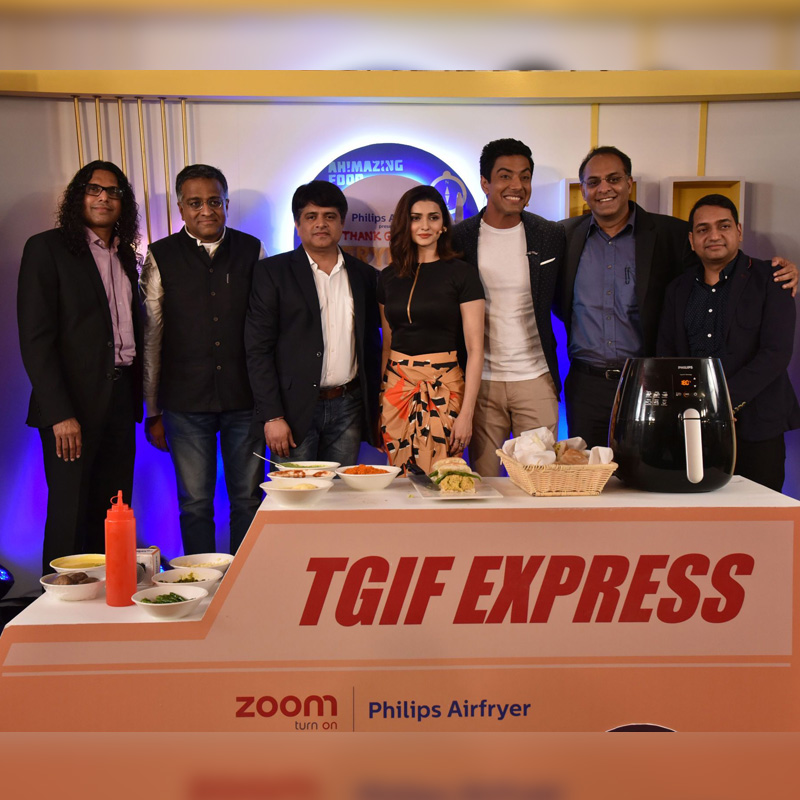
    Apart from riding high on its content, the channel is also planning to launch an app for its audience. The channel has also brought the third season of Thank God It’s Fryday (TGIF) in partnership with Philips.

    “Though we have branded content, music is still the bread and butter of this category. Given the fact that 90 per cent of our content is completely music, we will not compromise on it,” says Times Network president (revenue) Ashit Kukian.

    The channel also plans to launch a couple of shows within 10 days. While, some of the shows will be new, others will be existing shows that worked well and were loved by the audience. The shows will be in line with the Bollywood and lifestyle theme.

    Since the time of its inception, the channel has seen a positive growth both, in terms of advertising revenue and viewership. “Every brand under the Times Network is trying to evolve with the changing needs of the consumer. The viewer’s needs change from what it was a few years ago. We are evolving both as a network and a channel,” says
    Kukian.

    Targeted at a well-defined audience from whoever is interested in music, 15-35 remains to be the channel’s core audience. With a strong Hindi and English song library, the channel sees more traction coming from the west and north of India.

    “As any other product, you will have age cohorts reflecting from either side of the defined category as well. If a channel plays more retro, than you can have a larger,higher age-bracket viewers. As we have more Hindi and English type of content, you will have people from the west or north dominating and consuming more,” explains the revenue
    head.

    With several branded shows, it sees a mix of advertising categories which cuts across age-groups, demographic and psychographic lifestyles. It has a lavish portfolio of advertisers from across categories like FMCG, e-commerce, auto, etc. “FMCG by and large uses a lot of music as a category”, comments Kukian.

    It intends to penetrate deeper as they believe that there is much more to do, especially when the entire music space is getting cluttered.

    “We are looking at larger share of value. In that sense, our current pricing is well in tune with what we deliver to the audience. As we peak up and our numbers increase, currency correction will happen from time to time. We do not have the understanding that now if it is six months old, we have to increase the rate. We believe that if we are delivering higher value to our advertisers, we will increase the rate which is acceptable to the advertisers,” adds Kukian.

    Kukian believes that with a portfolio of 10 to 12 channels the volumes in the music space are fragmented. “if you go by the clear division, anything which is about 8-10 per cent of the share is good and we are well above that”.

    With Sony Pictures Networks’ Sony Mix, 9XM, 9X Jalwa, ETC, Star India’s Channel V which recently got converted into a music-only channel, Viacom18’s VH1, MTV and the newest addition of Hindi music channel MTV Beats, the music genre is only getting more aggressive. But, the presence of these channels does not hamper the growth of Zoom. The channel does not see its relevance decreasing. “Whether they can be called as competitors, the answer is a yes and no. Yes, because we are operating in the same category, and no because I don’t think anyone else is giving that type of content. The entire music category is under stress from an overall perspective. But, within the category, each of us are being able to do the best we can,” he adds further.

    Even the availability of various online streaming services are not a threat for the clearly mapped action plan of Zoom. With the booming number of web series available on the internet today, Kulian believes that the content that is available through the existing terrestrial TV has a huge demand due to some reason, and will continue to be there.

    “Online streaming services will co-exist because the terrestrial TV follows a model and has its own reason due to which it has prevailed so far. Whether there will be a change of behaviour happening between people completely moving to streaming, I don’t think so. Music channels are distinctively going to be there in the next four to five years,” says Kukian.

    “Digital penetration is limited in India and the fact that we have come into using 3G or 4G, streaming is still a challenge from a consumer’s viewing experience,” he added.

    With the cost of content rising from what it was three years ago, the channel is keen on holding special events like music concerts, gigs, etc.

    “If there is a viewer-led on-ground event, we will be happy to do that. Right now, we do one or two small things but I would want to be a part of bigger events and we are working on that,” adds Kukian.

    Having sold as an independent channel due to its offering, the channel does not see distribution as a hurdle as it is available across all major MSOs and DTH platforms.

    Kukian says, “Zoom is sold as an independent channel. If there are advertisers who want to bundle it with them, we do cooperate.”

    With the advancement in technology and the improvement of infrastructure in our country, many broadcasting networks have either launched HD feed of their existing SD channels or have launched a HD channel directly. But, Zoom definitely does not see itself in that zone. “At this point in time, I don’t think an HD feed is necessary because for us the product itself is the differentiator and consumer experience is the next level,” says Kukian.

    Coming from a rich heritage as a brand and banking on differentiated content as its USP, the channel envisions to be amongst the top 2-3 brands just like the other channels under the Times umbrella which operate in various categories.


  • Zoom-ing in on the music aficionados

    Zoom-ing in on the music aficionados

    MUMBAI: Zoom aims at providing special type of content in the Bollywood space which is not happening on any other channel. Apart from branded content, music is the mainstay of this category. Distinguishing its position from the rest through differentiated Bollywood content available on the channel apart from being high on music is Zoom, the Bollywood and lifestyle channel from the Times Network.

    With a huge presence of its content on digital, the channel is clear on music being their forte. The channel is in a win-win situation as it witnesses a huge demand from the audience for Bollywood as well as music content.

    Apart from riding high on its content, the channel is also planning to launch an app for its audience. The channel has also brought the third season of Thank God It’s Fryday (TGIF) in partnership with Philips.

    “Though we have branded content, music is still the bread and butter of this category. Given the fact that 90 per cent of our content is completely music, we will not compromise on it,” says Times Network president (revenue) Ashit Kukian.

    The channel also plans to launch a couple of shows within 10 days. While, some of the shows will be new, others will be existing shows that worked well and were loved by the audience. The shows will be in line with the Bollywood and lifestyle theme.

    Since the time of its inception, the channel has seen a positive growth both, in terms of advertising revenue and viewership. “Every brand under the Times Network is trying to evolve with the changing needs of the consumer. The viewer’s needs change from what it was a few years ago. We are evolving both as a network and a channel,” says
    Kukian.

    Targeted at a well-defined audience from whoever is interested in music, 15-35 remains to be the channel’s core audience. With a strong Hindi and English song library, the channel sees more traction coming from the west and north of India.

    “As any other product, you will have age cohorts reflecting from either side of the defined category as well. If a channel plays more retro, than you can have a larger,higher age-bracket viewers. As we have more Hindi and English type of content, you will have people from the west or north dominating and consuming more,” explains the revenue
    head.

    With several branded shows, it sees a mix of advertising categories which cuts across age-groups, demographic and psychographic lifestyles. It has a lavish portfolio of advertisers from across categories like FMCG, e-commerce, auto, etc. “FMCG by and large uses a lot of music as a category”, comments Kukian.

    It intends to penetrate deeper as they believe that there is much more to do, especially when the entire music space is getting cluttered.

    “We are looking at larger share of value. In that sense, our current pricing is well in tune with what we deliver to the audience. As we peak up and our numbers increase, currency correction will happen from time to time. We do not have the understanding that now if it is six months old, we have to increase the rate. We believe that if we are delivering higher value to our advertisers, we will increase the rate which is acceptable to the advertisers,” adds Kukian.

    Kukian believes that with a portfolio of 10 to 12 channels the volumes in the music space are fragmented. “if you go by the clear division, anything which is about 8-10 per cent of the share is good and we are well above that”.

    With Sony Pictures Networks’ Sony Mix, 9XM, 9X Jalwa, ETC, Star India’s Channel V which recently got converted into a music-only channel, Viacom18’s VH1, MTV and the newest addition of Hindi music channel MTV Beats, the music genre is only getting more aggressive. But, the presence of these channels does not hamper the growth of Zoom. The channel does not see its relevance decreasing. “Whether they can be called as competitors, the answer is a yes and no. Yes, because we are operating in the same category, and no because I don’t think anyone else is giving that type of content. The entire music category is under stress from an overall perspective. But, within the category, each of us are being able to do the best we can,” he adds further.

    Even the availability of various online streaming services are not a threat for the clearly mapped action plan of Zoom. With the booming number of web series available on the internet today, Kulian believes that the content that is available through the existing terrestrial TV has a huge demand due to some reason, and will continue to be there.

    “Online streaming services will co-exist because the terrestrial TV follows a model and has its own reason due to which it has prevailed so far. Whether there will be a change of behaviour happening between people completely moving to streaming, I don’t think so. Music channels are distinctively going to be there in the next four to five years,” says Kukian.

    “Digital penetration is limited in India and the fact that we have come into using 3G or 4G, streaming is still a challenge from a consumer’s viewing experience,” he added.

    With the cost of content rising from what it was three years ago, the channel is keen on holding special events like music concerts, gigs, etc.

    “If there is a viewer-led on-ground event, we will be happy to do that. Right now, we do one or two small things but I would want to be a part of bigger events and we are working on that,” adds Kukian.

    Having sold as an independent channel due to its offering, the channel does not see distribution as a hurdle as it is available across all major MSOs and DTH platforms.

    Kukian says, “Zoom is sold as an independent channel. If there are advertisers who want to bundle it with them, we do cooperate.”

    With the advancement in technology and the improvement of infrastructure in our country, many broadcasting networks have either launched HD feed of their existing SD channels or have launched a HD channel directly. But, Zoom definitely does not see itself in that zone. “At this point in time, I don’t think an HD feed is necessary because for us the product itself is the differentiator and consumer experience is the next level,” says Kukian.

    Coming from a rich heritage as a brand and banking on differentiated content as its USP, the channel envisions to be amongst the top 2-3 brands just like the other channels under the Times umbrella which operate in various categories.
  • Digital is nothing, says Havas Media’s Tom Goodwin

    Digital is nothing, says Havas Media’s Tom Goodwin

    NEW DELHI: Tom Goodwin is not happy with the way marketers have abused the word ‘digital.’ In fact, he doesn’t want the word to be used at all. To the roomful of marketing enthusiasts gathered at Zee MELT 2016, who anticipated a lecture on cutting edge technology and the disruption it brings to the brand world, this 37-year-old SVP of strategy and Innovation at Havas Media said: ‘Sorry, no change.’

    “Things have never changed so fast before, but it will never change so slowly again. If you look at the daily everyday lives of people in suburbs, not everything is changing. While it’s important to look ahead, we need to pay more attention to what is not changing,” Goodwin made it clear.

    One needs to be mindful of the human behaviour that has evolved from centuries, that won’t change so easily.

    Through a number of pictorial slides, Goodwin then took the audience to a time before the industrial revolution to point out how that big change had effected how we function, and its implication in the new world of disruption.

    Giving the analogy of how power plants looked almost the same before and after electricity was discovered, Goodwin implied that technology can be embraced at surface and at deeper levels. Only when the latter is done that real efficiency kicks in a system.

    Putting it in context with the current ‘digital’ onslaught, “currently businesses are trying new technology only at the fringes. Whenever something new comes up, they are tacking it on their existing system without rebuilding the entire structure,” Goodwin said.

    Goodwin then cautioned creative agencies from celebrating their so called ‘digital ads.’ “Simply sticking a TV ad on a pre roll before an online video, or publishing an ad on an online portal doesn’t make it digital. There is nothing new about using the same old ideas in different devices,” he said.

    Calling the current use of technology in marketing as a ‘digital garnish’ done mostly for PR attention rather than serving a functional purpose, Goodwin called said businesses were getting complacent on using digital in silos or add-ons.

    “That Dominos ad with drones delivering pizza was an attractive piece of content but we still await a drone to deliver pizza at our doorstep. British Airways went all high tech and introduced Neuroblankets that would gauge its passenger’s emotions for collecting data, when its website doesn’t have an email address to write to! That’s a perfect waste of marketing spends when the same purpose could be served if they get their basics right,” Goodwin advised.

    In order for business to get these basics right, Goodwin suggested a few pointers. To start with “we need to stop getting awed by digital like we are still in the 90s, as if it is some place to go to. In today’s world there is no concept of ‘online’ or ‘offline.’ An 11 year old boy who has grown up with Internet, doesn’t go to shop ‘online on his smart phone’, he simply shops. Marketers need to understand this concept of ‘disappearing of digital world,’ and stop introducing new ‘digital arms’ in their respective organisations,” Goodwin explained.

    “People really don’t care about how a product gets to them, they don’t want to understand what is radio, print, digital, display, out of home, television or streaming, so marketers too should stop overanalysing over the different channels,” he said.

    Marketers should be mindful of the new realities like virtual reality augmented reality, chat bots and even AI; but ensure that technology or tools aren’t limiting their imagination and growth. “There is a famous saying that goes ‘we shape tools and then they shape us.’ Hotel lobbies still use a giant desk to separate the consumer from the staff, when it was a product of pre digital age and can be done without off now,” cited Goodwin.

    Goodwin sees huge potential in the use of anticipatory computing in advertising where contextual information on how a consumer lives his or her day can help brands target them with meaningful and relevant advertising. “The goal of an advertiser is to make people’s life easier. Brand building can play a huge role in this. Advertising should help us navigate through life not woo us at points with cool tech toys,” Goodwin opined.

    Lastly, Goodwin left the room with a thought: Digital is nothing. It is vital but noticeable only through its absence. This mad race to add another ‘digital’ silo to our business isn’t challenging any system, but following it. No changes there.

  • Digital is nothing, says Havas Media’s Tom Goodwin

    Digital is nothing, says Havas Media’s Tom Goodwin

    NEW DELHI: Tom Goodwin is not happy with the way marketers have abused the word ‘digital.’ In fact, he doesn’t want the word to be used at all. To the roomful of marketing enthusiasts gathered at Zee MELT 2016, who anticipated a lecture on cutting edge technology and the disruption it brings to the brand world, this 37-year-old SVP of strategy and Innovation at Havas Media said: ‘Sorry, no change.’

    “Things have never changed so fast before, but it will never change so slowly again. If you look at the daily everyday lives of people in suburbs, not everything is changing. While it’s important to look ahead, we need to pay more attention to what is not changing,” Goodwin made it clear.

    One needs to be mindful of the human behaviour that has evolved from centuries, that won’t change so easily.

    Through a number of pictorial slides, Goodwin then took the audience to a time before the industrial revolution to point out how that big change had effected how we function, and its implication in the new world of disruption.

    Giving the analogy of how power plants looked almost the same before and after electricity was discovered, Goodwin implied that technology can be embraced at surface and at deeper levels. Only when the latter is done that real efficiency kicks in a system.

    Putting it in context with the current ‘digital’ onslaught, “currently businesses are trying new technology only at the fringes. Whenever something new comes up, they are tacking it on their existing system without rebuilding the entire structure,” Goodwin said.

    Goodwin then cautioned creative agencies from celebrating their so called ‘digital ads.’ “Simply sticking a TV ad on a pre roll before an online video, or publishing an ad on an online portal doesn’t make it digital. There is nothing new about using the same old ideas in different devices,” he said.

    Calling the current use of technology in marketing as a ‘digital garnish’ done mostly for PR attention rather than serving a functional purpose, Goodwin called said businesses were getting complacent on using digital in silos or add-ons.

    “That Dominos ad with drones delivering pizza was an attractive piece of content but we still await a drone to deliver pizza at our doorstep. British Airways went all high tech and introduced Neuroblankets that would gauge its passenger’s emotions for collecting data, when its website doesn’t have an email address to write to! That’s a perfect waste of marketing spends when the same purpose could be served if they get their basics right,” Goodwin advised.

    In order for business to get these basics right, Goodwin suggested a few pointers. To start with “we need to stop getting awed by digital like we are still in the 90s, as if it is some place to go to. In today’s world there is no concept of ‘online’ or ‘offline.’ An 11 year old boy who has grown up with Internet, doesn’t go to shop ‘online on his smart phone’, he simply shops. Marketers need to understand this concept of ‘disappearing of digital world,’ and stop introducing new ‘digital arms’ in their respective organisations,” Goodwin explained.

    “People really don’t care about how a product gets to them, they don’t want to understand what is radio, print, digital, display, out of home, television or streaming, so marketers too should stop overanalysing over the different channels,” he said.

    Marketers should be mindful of the new realities like virtual reality augmented reality, chat bots and even AI; but ensure that technology or tools aren’t limiting their imagination and growth. “There is a famous saying that goes ‘we shape tools and then they shape us.’ Hotel lobbies still use a giant desk to separate the consumer from the staff, when it was a product of pre digital age and can be done without off now,” cited Goodwin.

    Goodwin sees huge potential in the use of anticipatory computing in advertising where contextual information on how a consumer lives his or her day can help brands target them with meaningful and relevant advertising. “The goal of an advertiser is to make people’s life easier. Brand building can play a huge role in this. Advertising should help us navigate through life not woo us at points with cool tech toys,” Goodwin opined.

    Lastly, Goodwin left the room with a thought: Digital is nothing. It is vital but noticeable only through its absence. This mad race to add another ‘digital’ silo to our business isn’t challenging any system, but following it. No changes there.

  • Rajshri Entertainment MD & CEO Rajjat Barjatya no more

    Rajshri Entertainment MD & CEO Rajjat Barjatya no more

    Mumbai: Rajjat Barjatya, the affable, soft-spoken managing director & CEO of Rajshri Entertainment, passed away Friday evening in Mumbai’s Jaslok Hospital. Rajjat had been battling a blood cancer relapse since end-March this year. He was 41 years old.

    He was first detected with lymphoblastic leukemia in 2010. But he fought and conquered the life-threatening disease and had started aggressively expanding Rajshri in the digital space over the past couple of years. The dreaded disease resurfaced earlier this year.

    He is survived by his wife Neha and two daughters, aged 11 and six.

    Rajjat was a big votary of digital and online video and Rajshri Entertainment had emerged as amongst YouTube’s most preferred partners in India under his guidance.

    Confirming the news, Jaslok Hospital CEO Dr Taran Gianchandani said that the death occurred at around 6:30 pm and refused to comment further.

    According to sources, Rajat was supposed to travel to London next week for a bone marrow transplant. “He had been in and out of hospital over the past three weeks. In the ICU and out. On Thursday, he became quite serious and was put on the ventilator,” says a source close to family. “His body gave up the fight on Friday evening.”

    His last rites will be performed on Saturday at Mumbai’s Worli Crematorium at 1 pm.

    A cousin of renowned film maker Sooraj Barijatya and the son of Ajit Kumar Barjatya, Rajjat was also the founder & managing trustee of Rajshri Foundation, the non profit social enterprise of the Rajshri Group. He was actively involved in the Barjatya family’s Rajshri Productions, which has been behind family based movies such as Maine Pyar Kiya, Hum Apke Hain Kaun and the recent 2015 Salman Khan starrer Prem Ratan Dhan Payo.

    May his soul rest in peace.

    (Updated on 1 August 2016, 12:54 pm)

  • Rajshri Entertainment MD & CEO Rajjat Barjatya no more

    Rajshri Entertainment MD & CEO Rajjat Barjatya no more

    Mumbai: Rajjat Barjatya, the affable, soft-spoken managing director & CEO of Rajshri Entertainment, passed away Friday evening in Mumbai’s Jaslok Hospital. Rajjat had been battling a blood cancer relapse since end-March this year. He was 41 years old.

    He was first detected with lymphoblastic leukemia in 2010. But he fought and conquered the life-threatening disease and had started aggressively expanding Rajshri in the digital space over the past couple of years. The dreaded disease resurfaced earlier this year.

    He is survived by his wife Neha and two daughters, aged 11 and six.

    Rajjat was a big votary of digital and online video and Rajshri Entertainment had emerged as amongst YouTube’s most preferred partners in India under his guidance.

    Confirming the news, Jaslok Hospital CEO Dr Taran Gianchandani said that the death occurred at around 6:30 pm and refused to comment further.

    According to sources, Rajat was supposed to travel to London next week for a bone marrow transplant. “He had been in and out of hospital over the past three weeks. In the ICU and out. On Thursday, he became quite serious and was put on the ventilator,” says a source close to family. “His body gave up the fight on Friday evening.”

    His last rites will be performed on Saturday at Mumbai’s Worli Crematorium at 1 pm.

    A cousin of renowned film maker Sooraj Barijatya and the son of Ajit Kumar Barjatya, Rajjat was also the founder & managing trustee of Rajshri Foundation, the non profit social enterprise of the Rajshri Group. He was actively involved in the Barjatya family’s Rajshri Productions, which has been behind family based movies such as Maine Pyar Kiya, Hum Apke Hain Kaun and the recent 2015 Salman Khan starrer Prem Ratan Dhan Payo.

    May his soul rest in peace.

    (Updated on 1 August 2016, 12:54 pm)

  • Open House Discussion by TRAI on Quality of Service in DAS

    Open House Discussion by TRAI on Quality of Service in DAS

    NEW DELHI: With consumers and service providers still to get a full experience of digital addressable systems and the various rules relating to it, an Open House Discussion has been organized by the the Telecom Regulatory Authority of India late this week on Quality of Services in Digital Addressable Systems and Consumer Protection.

    Earlier in mid-June, Trai had extended its last date for receiving comments on its Consultation Paper of 18 May 2016 on the issue on the subject to 1 July with counter-comments by 8 July 2016.

    The Discussion is in Delhi on the afternoon of 28 July at the India International Centre.

    As the country moves towards the final phase of digital addressable systems, TRAI wanted to know if there should be a uniform regulatory framework for quality of service and consumer protection across all digital addressable platforms.

    TRAI had also sought opinion of stakeholders on the standards and essential technical parameters for ensuring good quality of service for Digital Cable TV, Direct-to-home (DTH), head-end in the sky (HITS) and Internet Protocol Television (IPTV).

    In over fifty questions posed to stakeholders, it wanted to know the broad contours for Quality of Service Regulatory Framework for digital addressable systems.

    The regulator had asked if timelines relating to various activities to get new connection should be left to the Distribution Platform Operators (DPOs) to be transparently declared to the subscribers. What should be the time limits for various activities including consumer application form and installation and activation of service for new connections, it wanted to know.

    Referring to a query often asked by stakeholders, the regulator wanted to know if the minimum essential information to be included in the CAF should be mandated through regulations to maintain basic uniformity. Should the use of e-CAF be facilitated, encouraged or mandated, it had asked.