Tag: Digital

  • Dual LCN helping consumers, says KCCL’s Shaji Mathews

    Dual LCN helping consumers, says KCCL’s Shaji Mathews

    MUMBAI: Kerala Communicators Cable Ltd (KCCL) CEO Shaji Mathews believes dual local channel numbers (LCN) is helping consumers and that its fate should be left to the market.

    2017 saw many channels, especially news broadcasters, raising the issue of channels broadcasting themselves on two LCNs thus creating biased ratings in their favour. Their contention was that the channel gets overarching visibility for viewers. “I don’t see any problem in dual LCN and why the government is restricting dual LCN. They need to rectify the rating system if they see some issues in the rating of a channel. Dual LCN is helping the consumer and we should leave it to the market to decide,” Mathews told Indiantelevision.com in an interaction.

    The structure of the Indian cable and satellite TV distribution market is evolving, led by digitisation of cable network mandated by the government. The Kerala cable industry has benefitted from the digitisation process with over 5000 cable operators and 50 lakh active subscribers.

    KCCL is an initiative of independent cable TV operators in Kerala under the guidance of Cable Operators Association (COA). COA is an umbrella union of local cable operators all over Kerala. KCCL has around 25 lakh active subscribers according to Mathews. The digitisation in the state was complete in March 2017.

    “In Kerala, the majority of the market is with KCCL and Asianet Cable. Apart from this, there are about a dozen small cable operators. The size of the state’s cable industry is around Rs 100 crore,” says Mathews.

    Mathews shares that the overall revenue has gone up because pay subscribers have increased. “The ARPU (average revenue per user) remains the same after the shift to digital from analogue, which is below Rs 200 in Kerala,” Mathews reveals.

    He says that small cable operators didn’t complete the digitisation on time because of various reasons such as non-availability of STBs and expecting the dates to be postponed.

    For KCCL’s first project-Kerala Vision Channel-raised a share capital of Rs 1.5 crore in 2006. The channel today covers 20 lakh homes in Kerala. Now its share capital is enhanced to Rs 10 crore with the approval of Registrar of Companies, SEBI and other government authorities. The capital outlay for the second major project is Rs 8.5 crore, 50 per cent of which has already been raised from the existing shareholders.

    There is already a cumulative investment of Rs 500 crore in the cable TV industry in the form of equipment, networking, studios and other infrastructure owned by individual cable TV operators all over the state with a consolidated turnover of Rs 250 crore per annum.

    Mathews lashed out at broadcasters who indulge in discriminative pricing. “To keep the competition going, the big broadcasters give their channel feeds to small operators for very low rates which forces us to negotiate and accept their terms and conditions.”

    The Telecom Regulatory Authority of India (TRAI) had clarified that a channel can only be present at one LCN number and the landing page would be considered as a separate one which is not allowed and TRAI has the right to investigate and take action.

  • Industry hails doubling of digital allocation

    Industry hails doubling of digital allocation

    MUMBAI: One of the key points that came out of Finance Minister Arun Jaitley’s Union Budget 2018-19 was the focus on Digital India. The allocation was doubled to Rs 3073 crore and the budget was clearly beyond wooing voters.

    The government has decided to increase digital intensity in education and technology will be the biggest driver in improving quality of education. Jaitley aims to move from blackboard to digital board schools by 2022.

    About Rs 14.34 lakh crore is to be spent on rural infrastructure. According to the budget, five lakh Wi-Fi hotspots will be setup to provide broadband access to five crore rural citizens, at the cost of Rs 10,000 crore.

    ALTBalaji CMO Manav Sethi said, “It’s a great effort from the government if it’s executed well for connectivity. It is easier but more relevant to connect small villages and towns in India on Internet rather than roads. This connectivity has the potential to impact not only India’s entertainment options but their means of livelihood, healthcare and education.”

    HAL Robotics MD Prabhakar Chaudhary says that the government has understood the need and capability of technology. “It’s great to see that the government is recognising future technology for building the nation’s future. Not only does this help in job creation but also advances the nation in competitive global space.”

    Instappy founder & MD Ambika Sharma believes the move with empower society in areas like broadband and mobile connectivity. “Furthermore, the allocation of Rs 10,000 crore for the five lakh WiFi hotspots to provide broadband access to five crore rural citizens is also promising. With nearly 70 per cent of the country’s population living in rural and semi-urban geographies, the move will give the vision of a digital India a big boost and provide businesses an opportunity to upscale.”

    Staqu CEO and co-founder Atul Rai believes that this year’s budget has not only taken significant steps towards the digital India vision but also towards inculcating the latest technologies like artificial intelligence for the national development. He said, “With NITI Aayog to establish a national programme for artificial intelligence, we look forward to supporting the nation with R&D support and more programmes like ABHED which is already assisting the polices forces with AI capabilities. With the advent of new technologies and the Indian government being equally eager to adopt them, we strongly foresee the nation to be on the road to transformation and emerge as one of the leading digital nations on the world map.”

    Said BARC India CEO Partho Dasgupta: “Budget 2018 is clearly focussed on driving rural sector growth. This should result in higher rural incomes and therefore higher standards of living in rural India. Our baseline study indicated that economic prosperity and higher living standards go hand in hand with TV penetration and higher TV consumption. With only 2/3rd of Indian homes having access to TV, there is huge headroom for growth here, and this year’s budget should help drive up TV ownership and consumption in rural India. As head of a tech-driven research company, I am also excited to see government’s focus on machine learning, artificial intelligence and other such technologies of the future. One dampener for industry is the hike in basic customs duty on certain electronic equipment including LCD/LED/OLED screens, which would make TVs more expensive. Our barometers too are likely to get more expensive, and this will raise burden on industry for our planned panel expansion.” 

    Contradictory to that, nexGTv COO Abhesh Verma opines thinks that doubling the budget for the digital India scheme will be emerging as a major move towards assisting the nation to progress further. He commented, “The second development of investment of Rs 10,000 crore for rural Wi-Fi hotspots, giving five crore citizens access to broadband speed internet by the deployment of five lakh Wi-Fi hotspots should help bring more consumers online, increasing digital consumption of services like OTT, entertainment, banking, and e-commerce. We at nexGTv feel that all these steps are a definite plus for the significant growth of the digital businesses in the country.”

    In the same track, News18.com editor language Nidheesh Tyagi feels that Arun Jaitley has really shown this government’s serious emphasis for digital India. He said, “An extra Rs 10,000 crore is provided to bring 50 million people through five lakh wifi hotspots in rural areas to this side of the digital divide. I am sure much of this action is going to happen in languages. We hope to see more use of digital payment through mobile spreading in the tier 3 / 4 towns and villages besides more connectivity on mobile, broadband and access to government services. Digitisation of agricultural markets will also benefit some 300 million farmers.” But he feels that more could have been achieved by reforms in telecom sector.

    Haptik founder & CEO Aakrit Vaish has a similar opinion as Rai. He commented, “With NITI Aayog to establish a national programme for AI, this will not only significantly aid job creation but will also assist the government to move towards its vision.”

    Government will take measures to stop cryptocurrency circulation, as it is not considered legal tender. Jaitley proposes use of blockchain technology to encourage digital payments and curb the use of cryptocurrencies, setting up of a national programme to encourage AI and providing easy internet access to villages.

    Also Read:

    Industry holds bright outlook for budget 2018

    Union Budget 2018:  Populist budget fails to excite industry at large

    Guest Column: M&E sector pins hopes on a developmental budget

  • M&M to revamp e-commerce platform

    M&M to revamp e-commerce platform

    MUMBAI: Mahindra & Mahindra (M&M), India’s largest utility vehicle maker, has decided to revamp it’s digital platform by engaging with experts BCG, Microsoft and Dassualt to engage with prospective buyers right through their purchasing cycle according to a Brand Equity report.

    Being the first to sell vehicles through e-commerce platform, the company today gets 6 per cent of its sales lead from online platform, by revamping the digital platform, M&M’s intent is to bring the showroom home of the buyers through a mix of physical and virtual experience to keep its prospective buyers hooked to its brand at a time when the buyers are spoilt with choice, the report said.

    The company expects about 15 per cent of its retail sales to be generated through online platform in FY-19 from the current 7-8 per cent.

    The company has started the concept of “taking showroom at home” on a pilot basis at one of its dealership in Mumbai and the company claims it is doing well and very soon it will roll it out to the other parts of the country

    The company has worked with Microsoft Consulting to envisage the pre-sales strategy. M&M created SyouV Platform along with Microsoft, Dassault Systemes & Hard n Soft Technologies. For the post purchase platform Mahindra With You Hamesha, the company had engaged with Extentia Technologies and BCG helped the company “Bring The Showroom Home” initiative for which application has been developed by Artificial Reality.

    The new digital strategy takes into account the experience a prospective buyer may have pre-purchase during purchase and post purchase and the idea is to offer transparency, convenience and personalisation option.

  • QuikrHomes releases consumer sentiments report for 2018

    QuikrHomes releases consumer sentiments report for 2018

    MUMBAI: Leading digital real estate business QuikrHomes has released a comprehensive report that captures consumer sentiments for the year 2018. The report was conceptualised to understand consumer sentiments post regulatory changes in the real estate and what it means to the industry in 2018. 

    The QuikrHomes consumer survey report provides insights about the future of home buying and is based on a survey that was conducted among 1500 participants across Delhi, Kolkata, Mumbai, Pune, Hyderabad, Chennai and Bangalore. The report enables one to understand the expectations, interests of property buyers from consumer demand perspective and highlights the key drivers that will shape the realty sector in 2018. 

    Online property portals are gaining popularity amongst buyers with at least 60 per cent participants opting for them across metros and tier-II cities. Over the last few years, online property portals have evolved to provide a data-backed analysis of wide range of properties with minute details thus emerging as a one-stop destination for not only buying property, but also offering advice on finance and preparation of rent agreements.

    Other insights that the survey threw up were 41 per cent of the respondents still not being aware of RERA and its impact completely while  19 per cent of the total respondents willing to invest in tier-II cities across India and a staggering 80 per cent of respondents showed inclination towards buying property for self-use. This was especially seen among first time buyers.

    QuikrHomes VP and business head Sonu Abhinandan Kumar says, “At present real estate industry is undergoing fundamental transformation thus creating great opportunities for all industry stakeholders.  As per the trend in our survey, 2018 can be the year of buying and selling property with 80% of the consumers looking to own a property this year. With greater transparency in the system, we believe this is also the best time for those looking to invest in a property market. We see that policy support such as the PMAY budget and the 7th pay commission terms will fulfil the demand for affordable housing.”

    Talking about consumers’ preference towards real estate platforms for their house hunt, he further added that, “Photo galleries, street view, price &neighbourhood comparison, location benefits and facilities in and around the projects are freely available for consumers with a few clicks making it convenient for people to narrow their search.”

  • 2018 will be a year of video campaigns: WATConsult’s Rajiv Dhingra

    2018 will be a year of video campaigns: WATConsult’s Rajiv Dhingra

    MUMBAI: If you see an advertisement on a website or your app, you are a well defined consumer of digital advertising. Thet ads on the website you visit are primarily revenue source for internet companies.

    Digital advertising is no longer a joke. The emails were considered pointless and annoying and banner ads used to be laughed at but today, with smartphone penetration being higher than ever and decreasing low data costs, digital advertising needs to be done and done well as the market is highly saturated and consumer’s attention span is shorter than ever.

    Some twenty years ago, digital advertising was just a couple of banners placed cleverly on websites. They were considered super annoying, as if you happened to click on one of them intentionally or unintentionally, you would soon be bombarded with banners all over your website. Today, digital advertising has become extensive with different types of online ads being produced based on the website content and target audience. Online advertising is one of the fastest growing way to reach an audience which includes banner ads to social media networking, email marketing, site takeovers, online classified ads, Search Engine Optimisation (SEO) and even

    SPAM.

    With the accessibility of internet on smartphones and low data cost, companies are now spending millions of rupees trying to find a way to advertise on digital platforms without creating an unpleasant experience for the consumer.

    Digital advertising doesn’t come cheap but it is far more affordable for marketers than traditional advertising model. There are over hundreds of different digital advertising models available today and every ad we see on digital platforms today is paid by one of those models. The most popular method though are CPA (Cost Per Action), PPC (Pay Per Click) and CPM (Cost Per Mille).

    To get some insights on the changing face of digital industry in India, Indian Television Dot Com got talking to WATConsult founder and CEO Rajiv Dhingra who has seen and been a part of the digital revolution in India and recently completed 11 years in digital advertising business.

    The company which started off as a social media specialist in 2007 has expanded its reach and portfolio to become the most sought after full service digital agency in the country. WATConsult today specialises in digital marketing, social media marketing, search marketing, mobile marketing, digital analytics and digital video production.

    How has the digital ecosystem in India evolved along with WATConsult?

    When I look back to the industry’s growth in context of the past 11 years, there has been a tremendous change in the digital industry. Digital industry has become so large today in terms of advertising yet it is only 15 per cent of the overall market advertising and there is so much more growth opportunity left. While digital has been around for around 20 years, the industry has just started to become significant in terms of advertising efficiently on the platform.

    Since the market is highly competitive today, how does associating oneself with a bigger network help since WATConsult was also acquired by Dentsu Aegis Network back in 2015?

    It is the comfort of being associated with a large network that helps in getting global processes in line. That is the core level where a global network helps. Beyond that, every agency is unique and every agency has to work hard to earn its bread. I don’t think you can credit any agency or network all the accolades they achieve and if that was the case, all agencies under a network would work equally efficiently which is not the case.

    How is the Indian digital ecosystem different from the rest of the world as it sure does have its own challenges and uniqueness?

    India is still a very small market for advertising and within the small market, it has an even smaller advertising pie for digital. But what is similar is that Indian marketers are now open to new ways of leveraging digital. Execution and creative wise digital is not a very backward market as we see some amazing work happening in digital which is globally comparable as well.

    and the challenges…?

    In India, we need to up our ante when it comes to our creative and overall work level. Only that will help in bringing more clients and get them to spend more money. Digital still needs to simplify in our country as to what it is that an agency or marketer is trying to tell and achieve. Today, there are too many people selling digital in 100 different ways. We need to focus on business and brand objectives rather than focusing on 100 different t metrics that digital brings.

    How much do you project the ad spends to increase by 2020?

    There are no doubts about it that ad spends will definitely increase on digital. Ad spends will increase by 32 per cent CAGR y-o-y  and by 2020 it is going to be 24 per cent of the market which is almost 1/4 of the advertising market.

    How soon will the shift happen where digital becomes a dominant medium over television?

    I believe for digital to become dominant over television medium will take another 5-6 years in my mind and it is not going to happen by 2020. Although it is definitely going to happen by 2022-23 and that is when it will come very close to the advertising share of television.

    We have been hearing a lot about AI, Big data and Machine Leaning and the buzzwords lately. Is the Indian media ready and understands the concepts or we still have a long way to go?

    I don’t see these as buzzwords or jargons. Social media 10 years ago was considered a jargon and a buzzword but today it is an accepted reality. 10 years from today, AI, big data and machine learning will become accepted reality. Although they may not be called what they are called today and will be referred to as something else entirely. For instance, when social media was launched, it was called, Web 2.0. Similarly, 10 years from now, these new technologies will have a huge impact not only on digital adverting but on businesses in general.

    But why are marketers still reluctant on investing in these newer technologies?

    That is imply because marketers were also reluctant about social media 10 years ago. Marketers are always reluctant because they don’t want to spend their money on or betting on future technology which may or may not happen. They want results of today and hence they will always stay reluctant. Technology moves faster than marketing moves and users move even faster as far as technology adoption is concerned. Globally marketers have got there and back in India, some mature marketers have started experimenting with the technologies. Some of the large FMCG companies in India are looking to create their own data repository data lake to make sure they have detailed data analytics. One of our own automobile client has insisted that we get a data scientist on board for their brand. These are early but significant times of how data, AI and machine learning are going to be big part of digital advertising as we go forward.

    Do you believe influencer marketing is here to stay was that just a passing phase in 2017?

    Influencer marketing is becoming more and more of a professional industry and it is going to only grow. Three to four years from now, marketers will end up spending so much more on this medium and as internet grows and the frequency grows, word of mouth is going to be even more important than paid media as it has its own challenges in terms of cost and credibility.

    Facebook recently announced that it will filter the newsfeed by removing marketing ads to ensure better user experience. Will this hamper businesses in any way?

    Facebook has always focussed on user experience. I am sure they will find other ways to make sure marketers who spend money do reach their audiences. But yes, marketers who would like to use Facebook as a free tool will be hit because clearly Facebook doesn’t think that free advertising should be allowed on Facebook itself.

    What would be the game-changer in digital adverting this year ? How does 2018 look to you?

    Video has been a huge growth factor in 2017 and it is going to continue at a break next speed in 2018. With data consumption going through the roof, you wont see a digital campaign that does not have a video. 2018 looks like a year which has a lot of opportunities and it could be the best year for digital industry ever with so many interesting things happening in the industry.

    ALSO READ:

    How iProspect’s Vivek Bhargava foresaw a digital future two decades ago

    2017 – The year of long-format ads

    Going from clicks to bricks

    Martin Sorrell on how WPP is combating ad world slowdown

    BFSI’s changing communication in the digital era  
  • Digital will be core of ad budgets by 2020: DAN report

    Digital will be core of ad budgets by 2020: DAN report

    MUMBAI: The increasing penetration of digital media in India is creating huge opportunities for marketers to reach out to untapped audiences in newer ways than before. Marketers are getting innovative with the way they choose to advertise to their audience.

    As of 2017, the Indian ad industry stands at Rs 55960 crore and is estimated to grow with a CAGR of 11 per cent till 2020 to touch Rs 77623 crore. This growth will be driven by the smart phone revolution and the subsequent spends on digital advertising, according to the second edition of media and digital marketing communications company Dentsu Aegis Network’s (DAN) digital report that was launched yesterday.

    India is on the brink of transitioning into a digital economy with a big push from the government and the public private partnership model. The Indian government’s concerted endeavours to boost digitisation coupled with an array of economic reforms and policies have infused higher momentum into India’s participation in a digital economy. The telecom sector has contributed in equal measure — lower data rates, improved connectivity have put India on a path to a mobile revolution of sorts.

    The Telecom Regulatory Authority of India (TRAI) estimates the internet population in the country to hit 738 million by 2020. Currently India’s internet subscriber count stands at around 430 million. As per TRAI’s performance indicator report for July-September 2017, a total of 129 million rural subscribers and 300 million urban subscribers are connected via internet or broadband services. The tele-density in urban areas is 74 per cent whereas it is around 14 per cent in rural India.

    Ad spends have seen double digit growth rates in e-commerce, BFSI, automotive and telecom in 2017. Ad spends have seen the highest increase in e-commerce with 13 per cent and BFSI at 11 per cent. Television takes the largest share of media spends at 40 per cent (Rs 22526 crore) followed by print at 34 per cent (Rs 18981 crore) and digital media at 15 per cent (Rs 8202 crore).

    While spends on television will grow with a CAGR of eight per cent till 2020, its contribution to the advertising market has been on a decline. The digital ad industry is estimated to grow with a CAGR of 32 per cent by 2020 as advertisers are now adopting digital media as a branding medium, not merely a performance medium. The highest spender on digital is e-commerce followed by telecom and BFSI sector. The spends on digital video is expected to see the highest growth rate followed by display and social media. OTT and an engaging mobile experience will also help in driving the digital growth.

    DAN chairman and CEO South Asia Ashish Bhasin believes that digital is no longer a medium but a way of doing business. It is how consumers interact with brands. “The digital transformation is affecting every business and agencies and marketers who don’t recognise this will be left behind. Digital is a behavioural change taking place with the consumers, not just a way of building a brand. This is a critical difference many don’t understand,” he says.

    Brands are slowly shifting their marketing budgets to digital platforms as the digital medium becomes all pervasive and consumers increase time spent on this medium. Even though digital ad platforms have been instrumental in direct sales, so far they do not match up to traditional media when it comes to brand building. Brand building is largely happening through mature ad mediums such as TV rather than digital.

    Marketers are moving from purely mass-targeting platforms to a mix of traditional
    and digital platforms. This makes use of the relative advantages of both media for an optimal marketing strategy. Traditional media provides a better reach in comparison to digital media while the latter is unparalleled when it comes to measurability. When it comes to performance marketing, digital media has evolved as a powerful platform. The explosive growth of internet-enabled businesses such as e-commerce, digital wallets, etc., has also caused a shift of ad money towards this medium as businesses targeting consumers inclined to online transactions rely on digital ad platforms. Meanwhile, the smaller brands also prefer to make investments on digital platforms as compared to bigger brands it provides better return on investment (RoI).

    Automotive sector has had one of the highest growth in ad spends last year and is expected to spend a large majority of its ad budget on traditional media. Within digital, it distributes the budget across all ad formats. Growth in ad spends for e-commerce has been the highest and it spends the highest proportion of marketing budget on digital media and mostly on search and social media. Additionally, telecom also spends a high amount of its marketing budget on digital media but mostly on media and video.

    Marketing has been an ever-evolving field. It’s normally exposed to so many new technologies and is an early adopter for most of them. This happens because the consumer is nearly always a step ahead and the competition is stiff. Businesses today have to acquire and retain consumers extremely efficiently in the marketing process. There is a limit to how many line items a digital marketer can create and manage effectively at a human level. No matter how many segments our planners create, no matter how finely we slice and dice the data, it’s extremely difficult to connect all the dots. Here is where machines come in helpful.

    But the digital advertising industry is faced by several challenges like slow pace of digital transformation, lack of unified metric system, ROI on programmatic, ad frauds and the growing use of ad blocking softwares.

    Having said that, the future of digital advertising looks bright and optimistic with the rise in video content, engaging mobile experience, voice-based interaction, data science and machine learning and transformation in payment mechanism.

  • Guest column: Digital outlook for 2018

    Guest column: Digital outlook for 2018

    MUMBAI: The year 2017 is behind us and, as we peek into 2018, there is so much to look forward to. The digital landscape is so dynamic and ever-evolving that an annual trend-spotting article would be unfair. But still there are key areas where digital is heading and I can safely say that 2018 is going to be a year of technology and innovation. 2018 is also the year of the dog, according to the Chinese calendar, and brands and agencies who remain loyal to their technological prowess and who are open to newer territories will emerge as differentiators in the cluttered space. 

    Consolidated big data

    Data is going to the king going forward. Empirical evidence suggests that with exhaustive consumer behaviour and spending patterns, marketers can position their brands accordingly. This, coupled with improved data analysis and research, can improve customer experiences and journeys, personalise marketing initiatives and make the whole experience meaningful and convenient.

    AI will lead the way

    If AI were added to the mix, it becomes a formidable weapon in interpreting data. The data is useless unless there is an intelligent way of analysing it. And AI does that precisely. 2018 will be the year we will see this going mainstream. AI will help to not just optimise customer experiences but also reduce marketing investments by finally removing the subjective nature around the question of what worked and what didn’t.

    Focus on visual search  

    The latest mobile phone from Google has a feature called Google Lens. This was used by Nokia also few years ago but Google is now backing it with their redoubtable AI technology. For instance, Google Lens will help users learn all about a retail outlet by simply pointing their phone camera at it.  The search could throw up discount coupons, too, leading to direct footfalls. Visual search can be leveraged by retail and travel brands. As the feature matures, we will see use cases across the spectrum. 

    Algorithms will keep evolving

    Machine learning will make algorithms much smarter and we will see marketing models changing. 2018 may just be the year that will define the direction marketing automation will take in years to come.

    Blockchain and IndiaChain

    Blockchain was the buzzword of 2017. Blockchain was used by Bitcoin but the scope is not limited to cryptocurrencies only. In lay man’s terms, blockchains are encrypted and secured distributed ledgers of economic transactions. On the same lines, NITI Aayog has an ambitious plan to develop its own blockchain called IndiaChain. The idea is to build a distributed ledger system that makes data manipulation virtually impossible through verification by other stakeholders in the network. Not just across the nation, once operational, IndiaChain will also be the largest blockchain in the world. What’s in it for marketers? Well to start with, Indian fintech companies will benefit a lot from IndiaChain. It will allow them to leverage this network to their advantage. This will speed up contract enforcements, minimise fraudulent transactions, increase transparency and precision in operations.

    Talk and search

    Back in 2016, when Google introduced its new assistant and messaging platform, there were quite a few eyebrows raised. The question was, in the cluttered messaging environment, was this any different? Well to be fair, Google has answered its detractors. The Google Assistant can engage in a two-way conversation with the user and this has been possible because of Google’s language-processing algorithm. With the rise of voice-driven search assistants from Amazon and Apple, spoken search-terms will be the norm.

    The author is founder and CEO of Tonic Worldwide. The views expressed are personal and Indiantelevision.com may not subscribe to them.

    Also Read :

    India ad spend to grow by 12.5% in 2018: DAN report

    Industry applauds Sam Balsara as he turns 67

  • Ad honchos: Digital to be central to advertising very soon

    Ad honchos: Digital to be central to advertising very soon

    MUMBAI: Today’s marketers are working in a complex environment with increasing consumer choice and fragmenting media environment. With mobile becoming central to our lives, content consumption through it has skyrocketed. This has created a dynamic consumer purchase cycle and an opportunity for businesses to find newer sources of growth.

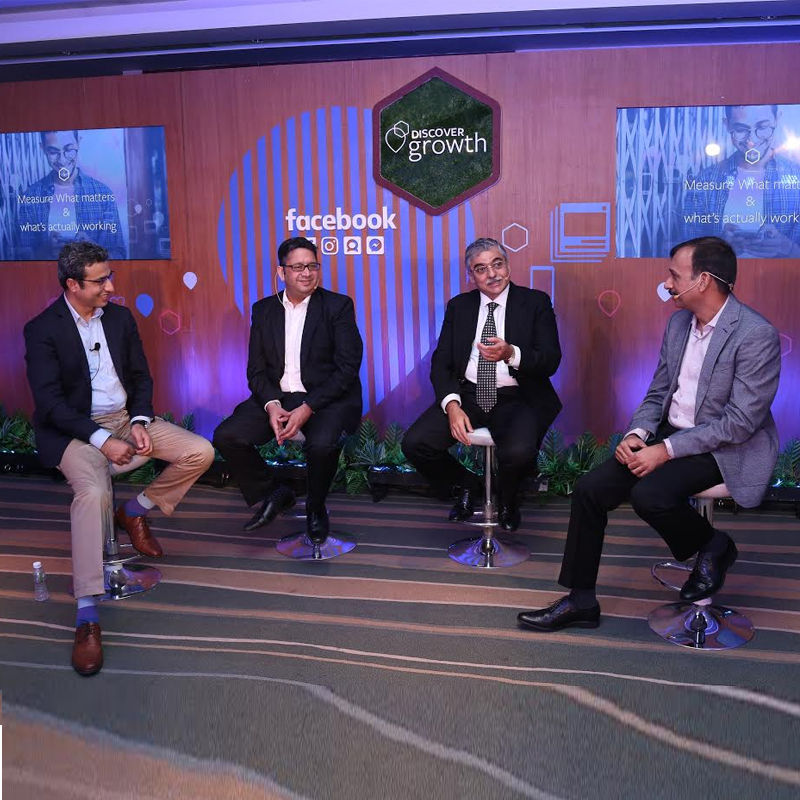
    Addressing the needs of the industry, marketers sat down to discuss how brands are tapping into this shift in consumer behaviour and discovering growth at Facebook’s ‘Discover Growth’ session. The session moderated by Facebook India and South Asia interim MD Sandeep Bhushan, had panelists including Dentsu Aegis Network chairman and CEO South Asia Ashish Bhasin, GSK Consumer Healthcare general manager of marketing excellence Alok Agarwal and Ambuj Chandna, head – retail liabilities, investment and payment products at Kotak Mahindra Bank.

    Brands today understand the value of mobile because 75 per cent of Indians accessing Facebook do so from their smartphones. The presence of over two million business pages on Facebook indicates that companies expect customers and growth to come from it.

    Bhasin opened the panel by pointing out some key trends that are seen in digital. He pointed out that digital is now becoming equivalent to mobile. Digital has benefited some major brands in the country that are investing heavily on the platform.

    With 40 per cent of Dentsu Aegis Network’s revenue coming in from its digital operations, Bhasin sees a clear shift in the way digital will impact brands and clients going forward. He expects 25 per cent of the market to be digital by 2020 and digital to be the single largest medium in the industry by 2023 but traditional mediums will continue to grow as well.

    Banking was one of the earliest sectors adopters of digital when it provided online banking facility to its existing customers but lately, BFSI sector has also been investing moderately in digital content. This is in contrast to 15 years ago when nothing but physically presenting yourself at the bank could allow a transaction.

    Chandna added that almost 60 per cent of Kotak’s active customers is transacting digitally. Kotak Mahindra Bank launched 811, a digital only bank account early this year. The 14-year-old bank has 10.5 million customers as of June 2017 and saw a jump of 30 per cent in two quarters only because of 811 account. “The physical world rules don’t apply to digital as it is important to create value proposition for digital and if you get that right, a brand can scale up dramatically,” he added.

    Alok Agarwal mentioned that though internet typically is a male-skewed platform, female consumers are increasingly spending more time on it. “High time spent on internet leads to funnelling of brand spends as they want to tap the customers at all touch points.”

    Consumers are platform-agnostic, which is shifting dynamics from television planning to video planning.

    Bhasin raised an important point of the need for a common measurement metric system for the advertising industry in the next two to three years. “We are a year away from a very big inflexion point where digital is going to be hugely central if not peripheral,” he adds.

    Agreeing to Bhasin on the need for a measurement metric, Chandna cited that initially Kotak heavily depended on traditional media advertising but stopped that when they realised it was only creating a category and not launching a product. The brand is leveraging in a big way to create ease of doing business and have a better connect with its customers. “Kotak Bank’s digital spends have increased by 40X and a majority of that goes into Facebook as we get detailed analysis and data there which is not available on other digital platforms,” he states.

    Alok Agarwal concluded the panel by emphasising that Facebook allows GSK to geo-target the customers in ways that were not possible earlier. A brand can also go for advocacy on digital where consumers can react and share their feedback in real time which is not possible on television.

  • Digital radio broadcasting issues to be discussed under TRAI aegis in Delhi on 25 Oct

    Digital radio broadcasting issues to be discussed under TRAI aegis in Delhi on 25 Oct

    NEW DELHI: An Open House Discussion is being held later this month on the Consultation Paper issued earlier this year on Digital Radio Broadcasting by the Telecom Regulatory Authority of India.

    The paer on the subject had been issued on 10 July 2017 and several responses have been received by TRAI, including a detailed reply from the Digital Radio Mondiale Consortium – India welcoming the concept and underlining various advantages of the technology for both, terrestrial and satellite radio broadcasting. The OHD will be held in Delhi on 25 October 2017, for which TRAI had posed 13 questions.

    The paper had been issued even as TRAI noted that All-India Radio is active in implementation of digital radio in MW and SW bands but there is no initiative in FM radio space, either by public or private FM radio broadcasters.

    Since FM is primarily used for analogue transmission, TRAI had said that it appeared as if the frequency allocations under these policy guidelines are only for analogue transmission. Analogue FM technology can provide only one channel per frequency. Therefore, existing FM radio channels provide limited services to their listeners. In addition, analogue radio broadcasting is facing competition from emerging technologies and other platforms like webcasting, podcasting and internet streaming etc.

    In view of this, the TRAI had suo moto issued the consultation paper on issues related to digital radio broadcasting in India.

    Late last year, TRAI had commenced a similar exercise in digital terrestrial television. Interestingly, both DTT and digital radio broadcasting have been the domain so far of the pubcaster Prasar Bharati.

    At the outset, TRAI has noted that radio is a prevalent source for providing entertainment, information and education to the masses due to its wide coverage, portability, low set-up cost and affordability.

    At present, terrestrial radio coverage in India is available in Frequency Modulation (FM) mode and Amplitude Modulation (AM) mode (Short Wave and Medium Wave). All India Radio (AIR) along with private sector radio broadcasters are providing terrestrial radio broadcast services throughout the country transmitting programs in AM and FM frequency bands.

    AIR has 420 radio stations (AM & FM) that cover almost 92 per cent of the country by area and more than 99.20 per cent of the country’s population. Private sector radio broadcasters transmit programmes in FM mode only and presently operate through 293 radio stations. Private sector radio broadcasters are licensed to operate in FM frequency band (88-108 MHz).

    In Phase-I of FM Radio, the government auctioned 108 FM radio channels in 40 cities. Out of these, only 21 FM radio channels became operational and subsequently migrated to Phase-II in 2005. Phase-II of FM Radio commenced in 2005 when a total of 337 channels were put on bid across 91 cities having population equal to or more than 300,000. Of 337 channels, 222 channels became operational. At the end of Phase-II, 243 FM Radio channels were operational in 86 cities.

    In Phase-III expansion of FM radio, 966 FM radio channels are to be made available in 333 cities. In the first batch of Phase-III, 135 private FM Radio channels in 69 cities were auctioned in 2015. Out of these, 96 FM Radio channels in 55 cities have been successfully auctioned.

    In the second batch of Phase-III, 266 private FM Radio channels in 92 cities were auctioned in 20162. Out of these, 66 FM Radio channels in 48 cities have been auctioned. As on 31st March 2017, 293 FM radio stations have been made operational in 84 cities by 32 private FM Radio broadcasters.

    In order to encourage radio broadcasting for the specific sections of society, the government has allowed setting up of Community Radio Stations (CRS). CRS typically broadcast in FM band with low power transmitters restricting its coverage to the local community within approx 10 KM. There are 206 operational CRS at present.

    Radio signals on FM are presently transmitted in analogue mode in the country. Analogue terrestrial radio broadcasting when compared with digital mode is inefficient and suffers with operational restrictions as discussed below:

    Digital radio broadcasting has existed since quite sometime around the world. The International Telecommunications Union (ITU) recommendations have described four major standards for broadcast of digital radio which are DAB, ISDB-TSB, HD Radio and DRM.

    In keeping with the pace of deployment of digital radio around the globe, the government in 2010 took a decisive step forward for transition from analogue radio services of AIR to digital mode of transmission. AIR conducted rigorous trials over the years and adopted the Digital Radio Mondiale (DRM) standard for low frequency band (MW and SW). It has initiated digitisation of its MW and SW radio network in three phases. It has recently concluded phase-I of digitisation of its network with deployment of 37 digital (DRM) transmitters throughout the country, which are now operational and is now in the process of launching phase-II of the DRM project by offering full features/services from these DRM transmitters and further improving service quality.

    Also read: After DTT, TRAI launches exercise on digital radio broadcasting

    After DTT, TRAI now launches exercise on digital radio broadcasting


  • Content need not only be comedy, fashion etc., says One Digital COO as ‘SOS’ gets under way

    Content need not only be comedy, fashion etc., says One Digital COO as ‘SOS’ gets under way

    MUMBAI: One Digital Entertainment has come up with its brand new documentary web series titled ‘SOS’- Survivors Of Suicide. The series brings forth stories of people who have put on a brave face and overcome prejudices and struggles that plague our society when it comes to mental illnesses.

    The six-episodic series got under way on 10 October, on occasion of World Mental Health Day.

    The network is aiming to spread awareness about mental health issues and stamp out the stigma associated with the help of this series. The show will unveil intimate stories of suicide survivors suffering from varied issues ranging from clinical depression to bipolar disorder to PTSD. The docu-series is also encouraging the suicide- attempt survivors to shun their cloaks of anonymity.

    One Digital Entertainment COO and co-founder Gurpreet Singh Bhasin said, “We had two prime reasons of choosing the topic of mental health and suicide for this documentary web series. As a team we truly believe that these are stories that need to be told. There are over 50 million people in our country who suffer from mental  illnesses in silence out of shame and fear. We want to change this attitude and mindset. It is essential for survivors to speak up so others can be inspired to do the same. Secondly, we wanted to showcase that digital content need not necessarily be restricted to comedy, fashion and entertainment. We asked ourselves, why should the quality content debate be restricted to films and television? With that, we took the bold step of launching this series that will get people talking about this grave issue, accepting it and along the way inspiring them to speak up and seek help.”

    At a time, when one third of India’s population suffers from the hidden burden of mental illnesses, ‘Survivors of Suicide’ serves as a beacon of light to many of us who have grappled with mental illness directly or indirectly behind closed doors. They aim to initiate a very important conversation around mental health which is the need of the hour & raise awareness about the big issue through varied, uplifting, hopeful and inspiring stories.

    ALSO READ :

    One Digital Entertainment launches Nokia campaign

    One Digital launches ‘Hip Hop Highway’ on Saavn

    Yatra.com partners with You​Tube sensation Prajakta Koli