Tag: Digital

  • Time to have rules ensuring no one player dominates media: Smriti Irani

    Time to have rules ensuring no one player dominates media: Smriti Irani

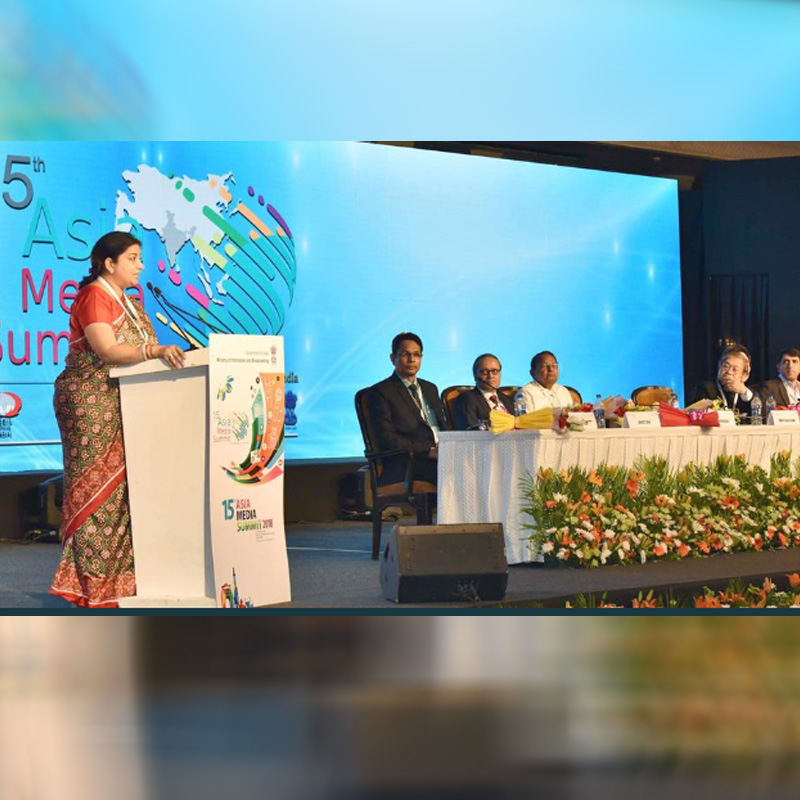
    NEW DELHI: Minister for Information & Broadcasting Smriti Zubin Irani yesterday said that the time has come to put laws, ethics and rules into place that will help in balancing the media industry so that no one dominant player can rule the roost. She, however, did not elaborate what those parameters should or could be.

    Speaking at the 15th Asia Media Summit (AMS) 2018 yesterday, she, however, hinted at her version of what good content could be, throwing oblique references to the growing digital-spurred edgy content in Indian media, including television.

    Pointing out that India will have around 969 million internet users by 2021 and that the media industry looks upon the digital world “not only as a challenge but also as an opportunity”, Irani asked, “How do we attract, retain and develop talent, which frees good content from the trappings of revenue needs and brings about a balance in media institutions?” 

    She hoped that the media event would deliberate on ways to “delve and deliberate on Asia values”, and the need for good stories to be told.

    Dwelling on the need for regulations to ensure level playing field for all, the minister referred to an address made by media baron Vineet Jain, group MD of Times Group, before her at the media conference to drive home a point that present laws may be inadequate to deal with the changing landscape of the Indian media.

    Jain, during his address to the delegates at AMS 2018, had said, “But for Indian media to realise its full potential, regulatory reforms are needed across the board – to make it easier to do business, remove anomalies in the system, and above all, ensure a fair marketplace that benefits the consumer.”

    Carrying forward, Irani said the India media is getting more consumer-centric because of the opportunities (and challenges) that the digital ecosystem is offering stakeholders, apart from the overall evolution of the industry.

    Giving a perspective of the expanding Indian media industry, Irani said India was one of the fastest growing advertising market that is expected to touch $10.59 billion by the end of 2018, while the mobile spend was estimated to grow to $1.55 billion in the current year. “We have a vibrant media industry, which has a direct established impact of Rs 1.35 lakh crore and indirect and induced benefits of Rs 4.5 lakh crore, with close to 4 million people associated with it,” she added.

    The three-day 15th Asia Media Summit is being hosted by the Ministry of Information and Broadcasting jointly with the Indian Institute of Mass Communication (IIMC), and Broadcast Engineering Consultants India Limited (BECIL) in New Delhi. The theme of this year’s summit is ‘Telling Our Stories – Asia and More’, which would encourage regional and bilateral dialogue and cooperation to respond to challenges to the broadcasting sector in the region.

    The minster expressed hope that the event will throw up new ideas so that pathways to strengthen media institutions for a better mankind could be explored.

    Addressing the inaugural session, Minister of Information from Bangladesh Hasanul Haq Inu outlined six complex challenges the world faces today: poverty, gender disparity, terrorism, ICT revolution, climate change and uneven globalisation. Expressing concern at cybercrimes, he stressed upon the need to fight a war against cyber-criminals to keep the media safe and expanding.

    This is the first time that the Asia Media Summit is being held in India. Over 220 foreign delegates representing 39 countries (SAARC, ASEAN, East Asia, Africa, Oceania, Europe, Syria, Uzbekistan, USA, China) and senior officials of the government and members of Indian media industry are participating in the event.

    Also Read:

    MIB moves to regulate online media: various organisations join issue   

    Online media professionals write to Smriti Irani expressing regulation concerns

    TRAI seeks to regulate online streaming platforms

  • Telecom policy likely to be rolled out in June

    Telecom policy likely to be rolled out in June

    MUMBAI: The new telecom policy is likely to be implemented by next month, telecom secretary Aruna Sundararajan said yesterday.

    The draft policy, branded as National Digital Communications Policy 2018, was unveiled by the government yesterday. It aims to attract $100 billion or about Rs 6.5 lakh crore investments in the digital communications sector by 2022 with the help of reforms.

    “We want to place it (the telecom policy) before the cabinet in four weeks. It will be open for public comments for two weeks, then we will finalise everything in a week and send to the cabinet after that. It will be in place in June,” Sundararajan told reporters in Delhi.

    The Department of Telecommunications (DoT) has already issued a draft of the new telecom policy.

    Promising rationalisation of levies such as spectrum charges to rejuvenate debt-ridden telecom sector, the proposed new telecom policy seeks to provide broadband access to all with 50 mbps speed, 5G services and create 40 lakh new jobs by 2022.

    “The crux of the policy is to have broadband for all,” Sundararajan said. She said that spectrum usage charges will be rationalised within the ongoing financial year. “The investment in the sector will come once industry stabilises. There are efforts to stabilise industry soon.”

    Also Read :

    DoT addresses broadband issues in policy out for public consultation

    TRAI releases paper on National Telecom Policy 2018


  • Glitch launches content division Flux@The Glitch

    Glitch launches content division Flux@The Glitch

    MUMBAI: Digital agency The Glitch, an independent brand under GroupM, has launched Flux@The Glitch, a specialised new-age content division.

    Flux is a content development and production hub that works in a unique structure built for the modern creation needs of brands around the world. Saransh Agarwal is being elevated to lead content strategy and business for Flux and will report to Varun Duggirala, content chief at The Glitch.

    Flux@The Glitch will have two distinct verticals to service the content requirements of clients.

    Creator Lab will be a unique incubator for content creators, brands and platform partners or in short, Tinder for branded content. Content Studio and Hub will focus on the long-term requirements for brands who have an ‘always on’ approach towards content. This can range from micro content, especially for ecommerce models, to long form content that is driven by data and insights.

    Duggirala says, “Over the last 8+ years, we have always relied on a core brand insight driven strategy to build brands across platforms and consumers. It is this very thought process that has helped us create effective branded content as a core part of a brand’s value chain, and we have used that learning to come up with an effective yet fluid system that works for brands, for consumers, for creators and for platforms. The beauty of a fluid model is that it will always be in Flux because the world of content changes every day.”

    GroupM chief strategy officer Tushar Vyas adds, “Flux will be empowering brands by providing powerful meeting point between the consumer and the brand across diverse touchpoints- this brings in a unique layer augmenting GroupM’s capability in consumer insight, planning and activation. Flux will work closely with GroupM Agencies to deliver effective and engaging content solution for our clients across GroupM in India and beyond.”

    The Glitch has been one of the first movers in the Digital Branded Content space and has created successful branded content campaigns across a vast array of clients encompassing FMCG, Entertainment & OTT, Auto amongst other categories.


  • Guest column: How chat-based ads are winning the marketing race

    Guest column: How chat-based ads are winning the marketing race

    ‘You talking to me?’ 

    The famous line of Travis Bickle, a lonely taxi driver in Martin Scorsese’s iconic film Taxi Driver, is known to cinephiles all over the world. In the world of advertising these days, this line is often being repeated by customers, thanks to the prominent rise of chat-based ads as the most effective medium of communication in the millennial world.

    Creating compelling brand engagements has become the need of the hour for brands today. While the digital world has opened up numerous possibilities for advertisers all over the world, this very same abundance of options is also driving them crazy. Brands are trying to create the optimum communication mix by employing multiple channels such as print, radio, TVCs, video ads, social media engagement etc. to connect better with their consumer bases and gain insights to help their marketing efforts. However, understanding the millennial customer’s mind with non-personalised advertising tools is like walking into a labyrinth with general directions, rather than a customised map. While the former will only result in you losing your way as you move further, a map, as is the case with chat-based ads, will ensure that you are able to navigate, control, and conquer it.  

    Chat-based vs. Video ads: Identifying the perfect ad mechanism for the millennial mind

    Imagine this: globally, the average consumer is exposed to 4,000-10,000 brands per day, with 56 per cent of digital ads and 86 per cent of TV ads not being seen – even once! In this era of over-saturation, the only way to keep your brand thriving is to shun the volume-driven approach and create personalised, engaging advertising efforts that make users an essential part of your brand’s conversation. This is where chat-based ads are most suited, for they do not inform, but engage users through a two-way communication. As chat-based ads are driven by the inputs of the users, there is no predefined message or conclusion and the chat ad takes a route as driven by the conversation. At one to two minutes, the user engagement on chats is also much higher when compared to the sub-10 seconds worth of engagement that video ads deliver. Even with the rapidly growing proliferation of social media, and its share of video-based content, in our lives, theengagement rate of 75 per centon personalised chatbot-based ads is much higher than the measly 10 per cent of audience interactions that video-based ads manage.

    public://grp1.jpg

    While video ads today offer an edgier style that also has a call-to-action embedded in the form of a link to the brand’s homepage, it can never be a help in the fundamental process of decision-making due to its inherent opacity. Chat-based ads, on the other hand, engage customers by distilling the rigid process of advertising into a simple and personal conversation. Perhaps, this is the reason why 90 per cent of users are reported to give a positive feedback to chat-based conversations, as compared to 45 per cent affirmative responses received by video ads. 

    public://grp2.jpg
     
    Furthermore, the recent technological developments in the field of machine learning and artificial intelligence have made it possible for chat-based ads to offer remarkably authentic conversational experience, while simultaneously collating data and solving a user’s problem. For business purposes, chatbot creators like us have developed numerous solutions that help organisations to conduct initial communication with customers. These chatbots then store the data, thus obtained, and analyse it. The information collated by chatbots presents a rich data source that enriches future conversations by human agents, invariably culminating in positive end-results for the business. In fact, 40 per cent of chat-initiated communication efforts result in task completion, a number that in videos still hovers at 10 per cent.

    Apart from the fact that it creates highly personalised experiences for the user, the alternative possibilities with chatbots, as opposed to video ads, is endless. Chat-based solutions are being used the world over to tackle a diverse range of problems, from helping out cyber harassment victims report incidents and file complaints to helping insomniacs get through the night without having to go through multiple re-readings of old WhatsApp conversations! For instance, Endurance, a chatbot specifically designed for dementia patients, apart from being a conversational companion to the users suffering from the ailment, also identifies deviations in conversational branches indicative of a problem with immediate recollection – quite a technical achievement for a natural language processing-based system.

    Every era has a generation-defining advertising medium that is preferred by consumers. The post-World War eras saw the epic rise of print-based ads, which was followed by the complete dominance of radio and TVCs. At the onset of the digital era, video ads and content ruled the roost. As the era of smartphones reaches its peak, it still hangs on to the throne. But chat-based ads, with their personalised, flexible, deeply engaging, and highly-efficient approach, are quietly making their way to the top, one conversation at a time. 

    public://ceo.jpg

    The author is the co-founder and CEO ofHaptik. The opinions expressed here are his own and Indiantelevision.com may not subscribe to them.

    Also Read :

    Guest column: Cybersecurity in the advertising sector

    Guest column: Digital outlook for 2018

  • Vodafone launches first IPL 2018 campaign with ZooZoos

    Vodafone launches first IPL 2018 campaign with ZooZoos

    MUMBAI: With great customer service at the core of its philosophy, Vodafone India has developed new age digital experiences for its 210 plus million customers. Vodafone is now bringing back the ZooZoos in a new Ninja avatar and communicating about “Happy to Help – In a click”.

    Like every cricket season, Vodafone is back this year with a big bang ZooZoo campaign.

    With the world going digital, customer service across categories has evolved from being a human led, call centre-based query resolution mechanism to a more digitally evolved, self-care and 24/7/365 experience. Vodafone is leading this evolution, handholding customers to move from assisted only care to digital self-care and anytime and doorstep services.

    With speed and efficiency at the core of its service philosophy, Vodafone focuses on convenience across channels for the customers. For example, customers can now customise their plans and numbers online and have a connection home delivered. They can also manage their entire family’s accounts on the My Vodafone App and pre book appointments before they visit a store.

    Vodafone India executive vice president of marketing Siddharth Banerjee says, “As technology drives the changing customer behaviour and expectations, we at Vodafone have driven our digital transformation initiatives hard and also evolved our Happy to Help philosophy for the 2018 Digital Customer to “Happy to Help – IN A CLICK”. Further, in keeping with the topicality of our campaign break, we are bringing back our much loved ZooZoos in a brand-new Ninja avatar, they are quick, agile and efficient; much like our service experience, enabled by the digital transformation initiatives at Vodafone India.”

  • Sports sponsorship in 2017 up by 14%: SportzPower-GroupM report

    Sports sponsorship in 2017 up by 14%: SportzPower-GroupM report

    MUMBAI: SportzPower, in association with GroupM’s sports arm ESP Properties, has released its 2018 report on sports sponsorship in India.

    Ground advertising was up from Rs 6400 crore in 2016 to Rs 7300 crore in 2017. Another GroupM report said that Indian advertising expenditure in 2017 was Rs 61,263 crore out of which 12 per cent was contributed by sports. The year also saw sports other than cricket gain traction. India’s second biggest sport by participation and attendance, football, grew by a considerable 64 per cent. India hosted its first ever FIFA U-17 world cup that became the most attended in the history of the event. Attendance for this football world cup was a record 1,347,133, surpassing China’s 1985 audience of 1,230,976.

    ESP Properties business head Vinit Karnik said, “2017 was truly the ‘big’ year for the business of sports. With PKL emerging as the second-most popular league in India after the Indian Premier League (IPL), and the Indian edition of U-17 football world cup creating history in terms of audience attendance, has given sports sponsorship enjoyed a bull run. As popularity of sports grows in India, sports stars also expand their brand endorsement portfolios. Virat Kohli led brand endorsements with 19 brands and 150+ crore in value, while PV Sindhu leads the non-cricket endorsement space with 11 brands and 30+ crore in value.”

    Despite demonetisation and GST hiccoughs, the sports sector has been able to ride the storm with a steady and positive trajectory. All major sporting leagues managed to bring on board sponsors at a 100 per cent or more incremental value for the title sponsorship.  Specifically, the IPL has emerged as one of the top five most valuable global sports properties in the world.

    Since last year, Indian Super League (ISL) is a 10 team, 18+ week showcase, up from eight teams and 10 weeks in the last season. ISL sponsorship has grown by 22 per cent from the previous year. The report states that the gap between Pro Kabaddi League and IPL TV ratings is narrowing – PKL delivered 1.5 TVR with 312 million reach and IPL delivered 2.7 TVR with 411 million. 

    2017 also saw the birth of five new franchise based leagues – UTT, SBL, SFL, Cue Slam & P1 Power Boating. Brands are interested in emerging sports and 25 per cent increase in franchise fees came from them. Thirty-six new franchises were added across all new and existing leagues.

    SportzPower co-founder Thomas Abraham said, “With the 2017 momentum and the economy also looking up and set to grow at 7.3 per cent in 2018-19, sports is looking at an even bigger year. As the industry anticipates clarity on the structure of club football in India, among the new leagues on the horizon, volleyball seems the most promising. In the media firmament, while new revenue benchmarks are expected from television, it will be traction in the digital arena that provides real pointers to where the industry is going over the next few years.”

    Also Read:

    IPL 2018 gets a makeover with Star India

    Dsport not in the running for BCCI’s media rights

  • Meal Of The Moment unveils new digital TVC on Ghar Ka Khana

    Meal Of The Moment unveils new digital TVC on Ghar Ka Khana

    MUMBAI: In the fast-paced urban life its a luxury to have healthy delicious home food at all times. Meal Of The Moment has launched a new digital TVC for 2018 in an ode to all those people in Mumbai who have left their homes to build on their dreams. It is titled ‘Mumbai Stops For MOM’. 

    The ad film has been conceptualised and developed by creative agency Gramini Media, India. The campaign will run across Facebook, Instagram and YouTube.

    The film beautifully makes a simple point that even on the busiest day, we always find time for home. The film sets out showing the chaotic life of Mumbai everyday. Under the chaos lies a symphony that beats like the heart of Mumbai. But however busy people here get, they still stop to answer when Mom calls. The film tunes itself into the life of a girl who has moved into the big city.

    M.O.M Meal Of The Moment co-founders Prateek and Mugdha Bhagchandka say, “In many ways this video will introduce our brand to consumers so we wanted to portray what the brand truly stands for, which is making everyday meal moments special with mom’s love! The beautiful relationship mothers share with their children – young and old – and how that love and care manifests itself through food most often.”

    Gramini Media creative director Kuber Sarup adds, “It was definitely exciting to work with a brand with the potential to transform the Indian RTE market, but more than that it was really a privilege working with the brand team who understand the nuances and needs of what the customer wants.”

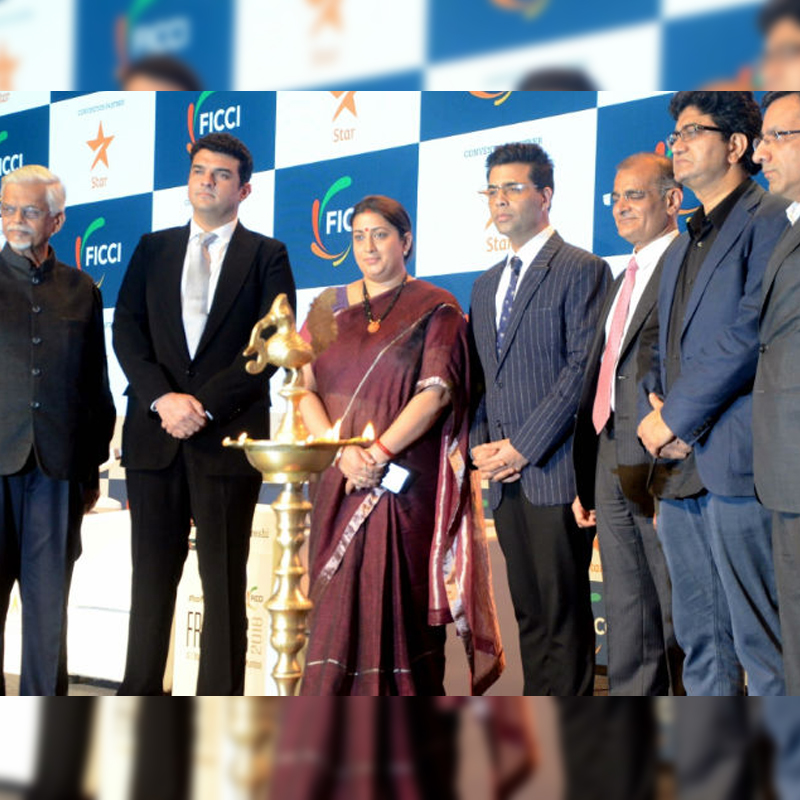
  • Ficci Frames 2018: Smriti Irani for highlighting M&E’s economic importance

    Ficci Frames 2018: Smriti Irani for highlighting M&E’s economic importance

    MUMBAI: Even as the Indian media and entertainment (M&E) sector is projected to cross $31 billion by 2020, Minister for Information and Broadcasting (MIB) Smriti Irani said yesterday it is imperative that the country as a whole projected the economic value that the industry lends to the country’s economy.

    Speaking at the FICCI-Frames 2018 inaugural ceremony here, Irani said the Indian M&E industry is much more than just naach-gana (song and dance) and it was high time that the industry came forward to articulate the economic value and contribution that it gave to the Indian economy and exhorted the industry to use modern data analytics and technology to arrive at conclusions at the type of content the consumer desired.

    Referring to artificial intelligence or AI and other technologies, she said, “Technology is looked upon as a disruptor, but have we looked at technology from a creative point of view?”

    The Indian M&E sector hit nearly Rs 1.5 trillion ($22.7 billion) in 2017, growth of around 13 per cent over 2016. With its current trajectory, it is expected to cross Rs 2 trillion ($31 billion) by 2020, at a CAGR of 11.6 per cent. The digital segment-led growth demonstrates that advertising budgets are in line with the changing content consumption patterns, according to the FICCI-EY report ‘Re-imagining India’s M&E sector.’

    Launched on Sunday in the presence of the minister and other industry stalwarts such as Star India MD Sanjay Gupta, Siddharth Roy Kapoor and filmmaker Karna Johar, the FICCI-EY report highlighted that the M&E sector continues to grow at a rate faster than the GDP growth rate, reflecting the growing disposable income led by stable economic growth and changing demographics.

    The report states that the subscription growth outpaced advertising growth in 2017, but advertising would continue to grow till 2020 led by digital advertising.

    The report estimates that 1.5 million consumers in India today are digital-only and would not normally use traditional media. It is expected that this customer base will to grow to 4 million by 2020, generating significant digital subscription revenue of approximately Rs 20 billion. Going forward, micropayments, enabled through the Unified Payment Interface (UPI) and Bharat Interface for Money (BHIM) platforms, developed by the National Payments Corporation of India (NPCI), will further accelerate subscription revenue for entertainment content.

    EY partner and M&E leader Farokh Balsara stated, “The Indian M&E sector reached INR1.5 trillion in 2017 led by digital. With digital subscribers expected to reach 20 million by 2020, has Indian M&E reached its digital tipping point? We now need to reimagine the future of Indian M&E sector.”

    Said Gupta, “These are truly exciting times for our industry. It is amongst the fastest growing sectors in the country and has crossed the Rs 147 thousand crore mark. There is a revolution happening all around us, one that promises to, and in fact, has already started to redefine the future of media and entertainment.”

    “To compete well with the world, we need to set new standards of storytelling, we need to reimagine our stories. We cannot allow our legacy to shape our creativity. With digital, we have the license to break away from all the trappings of traditional media. We need to challenge where we release our films first, in a theatre or on a mobile screen. We need to challenge the constraints of 8 pm prime time, daily and hourly news formats and 22-minute episode lengths,” he added.

  • Diverse language content the pivot for ZEE5’s growth

    Diverse language content the pivot for ZEE5’s growth

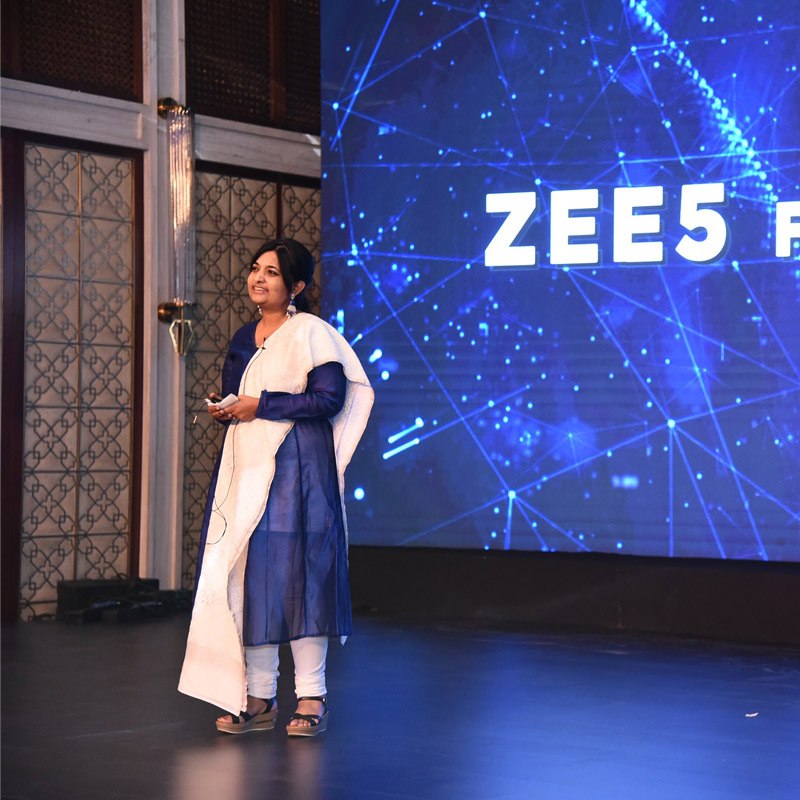
    MUMBAI: The Zee Group’s much anticipated new digital platform ZEE5 (Z5) has finally launched, a few months down the brand refresh that was given to media behemoth’s entertainment channels. Offering everything from Indian and international original content, movies, TV shows, music, live TV and health and lifestyle content, Z5 gives viewers the opportunity to pick their entertainment from 11 browsing (and content) languages—English, Hindi, Bengali, Malayalam, Tamil, Telugu, Kannada, Marathi, Bhojpuri, Gujarati and Punjabi.

    During the launch event, Zee International and Z5 global CEO Amit Goenka said, “As a global content company, our biggest strength is how well we understand our consumers and translate this into content they love. Every aspect of Z5 is based on our deep understanding of our consumers and their local ecosystem. It is both local and global at the same time and we know it is going to change the way you watch content.”

    Z5 is seeking to addresses the entertainment demands of a young India that is increasingly digital savvy and globally connected, yet fundamentally rooted in its culture. Aggregated and original content is offered in the 11 languages as well as Odiya. “Digital will play a critical role in fuelling this growth and we wanted to ensure that we had a strong offering and presence in the space. With the launch of Z5 we see ourselves catapulting into the next phase of growth,” added Amit.

    A silent preparation of 1.5 years went into Z5 to include content and features that cannot be found on any other Indian platform. While revealing the mystery of the silence Zee Entertainment Enterprises MD and CEO Punit Goenka said, “We have invested immense amount of time and energy in creating and acquiring rich and engaging content for Z5, which I am sure will be cherished by our viewers across the nation and worldwide. The launch of Z5 further strengthens us as a media and entertainment powerhouse.”

    While talking about the strategies for India, ZEE5 digital head Archana Anand said, “We see ZEE5 as filling a definite need-gap in the Indian market for strong language content and navigation experience across Indian languages. Our platform will be as relevant to the urban elite as it is to the new digital audiences experiencing Internet for the first time. India’s digital story is going to be fuelled by new language consumers and that’s exactly who ZEE5 is for. 

    Our Brand Anthem celebrates this spirited new India, globally savvy, yet happiest in the language of their comfort. We believe this market to be hugely underserved and hence, see this approach as key to driving our India win.”
    Z5 is banking on India’s rich diversity of languages to bag it the popularity. “Our brand anthem celebrates this spirited new India, globally savvy, yet happiest in the language of their comfort. We believe this market to be hugely underserved and hence, see this approach as key to driving our India win,” she added. Tie ups have been made with regional producers for language content. 

    The platform’s brand anthem has been directed by Dangal director Nitesh Tiwari, composed by Amit Trivedi and written by Amitabh Bhattacharya. Keeping in mind the distinct audiences, two versions of the anthem have been created – one for the North market and one for the South, each catering to the specific market nuances for authenticity and connect.

    Z5 has a freemium pricing model with both free and paid premium content to cater to a mix of audiences. Viewers who subscribe to the subscription pack will get access to the entire library of content at a special launch offer price of Rs 99 per month instead of the actual monthly pack price of Rs 150. The advertisers will have a strong involvement in their free wall offerings. Those with Zee’s older digital platforms, i.e. Ozee will automatically upgrade to Z5, whereas Ditto TV will ask for an upgrade from the viewer. However, originals, international movies, old shows, Zee theatre and many more things will fall under its paid offerings. The live news TV offering will not only provide Zee News but also other news broadcasters’ feeds on it.

    People can watch 100 movies that have never been shown on TV with subtitles and with dubbing in their language of choice. Fresh series will be either launched together or on a weekly basis. Punit said that Z5 will focus towards the production of kids’ content in the near future. Anand also added that they will look at acquisitions in the kids’ space in regional languages. 

    Z5 is also available as a progressive web app (PWA) to address the patchy connectivity and low phone storage scenarios.

  • Unilever threatens to pull the plug on digital advertising

    Unilever threatens to pull the plug on digital advertising

    MUMBAI: International major FMCG player Unilever has threatened Facebook and Google that it will withdraw its advertising on the social media platforms if they fail to remove content that creates division in society and promotes hate.

    The biggest multinational player said in a conference held at California that, “As one of the largest advertisers in the world, we cannot have an environment where our consumers don’t trust what they see online.”

    Unilever’s stern step comes while technology and social media companies are facing major criticism for failing to protect children and to erase fake news, hate speech and extremism.

    Unilever chief marketing officer Keith Weed said at the conference that the brand cannot continue to prop up a digital supply chain that delivers over a quarter of their advertising to consumers – which at times is little better than a swamp in terms of its transparency.

    While mentioning that such messages are toxic for the society and only take us backward, Weed added, “Fake news, sexism, toxic content aimed at children, terrorists spreading hate messages are all a part of internet now and we have ended up with a million miles from where we thought it would take us.”

    He goes on to add, “It is in the digital media industry’s interest to listen and act on this. Before viewers stop viewing, advertisers stop advertising and publishers stop publishing.”

    A third of the company’s advertising spend is on the digital medium today and Unilever has decided to cut down on the 3000 ad agencies it uses globally and further cutting costs by making 30 per cent fewer ads. Unilever has promised to boost more ‘responsible content’ that will tackle concerns like gender stereotypes. It will only work with digital networks that agree to use industry standards of ad metrics and improve consumer experience. Discussions with Facebook, Google, Twitter, Amazon and SnapChat are already on.

    Facebook and Google are said to account for nearly three-quarters of the total digital advertising in the US. Last year Procter & Gamble (P&G) issued a similar warning before cutting $100 million of its digital ad spend without any negative impact on sales.

    On the other hand, in the UK, Facebook and Google have more than 60 per cent of digital advertising and 90 per cent of all new digital spending.

    A move like this could adversely impact the digital industry and major advertising agency’s revenue.