Tag: Digital

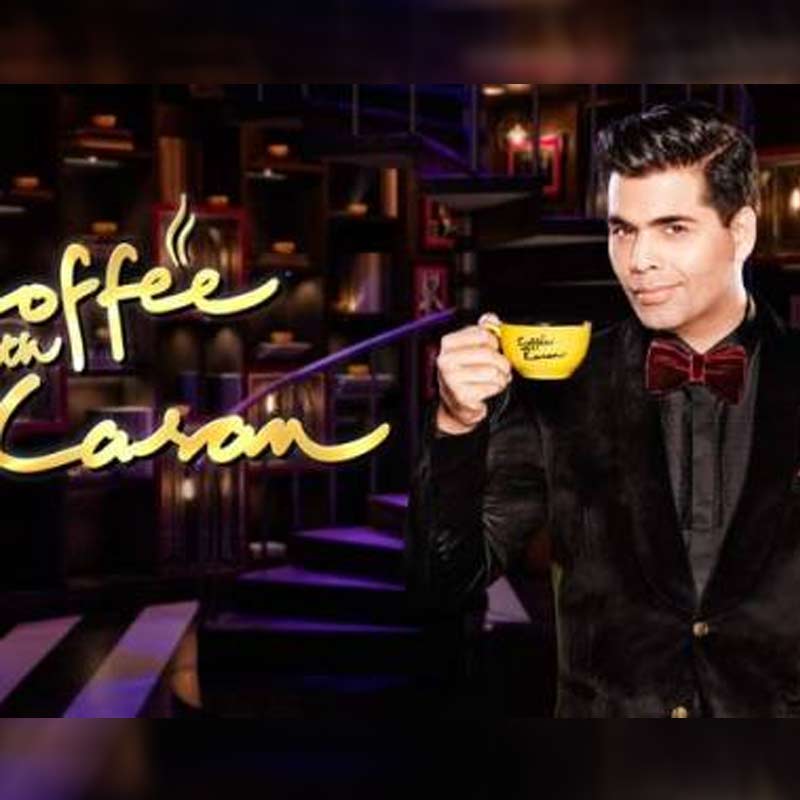
  • Karan Johar adds bold new flavours to our cuppaKoffee

    Karan Johar adds bold new flavours to our cuppaKoffee

    MUMBAI: Unabated and utterly unafraid – Koffee with Karan is back for its 6th season. The longest running chat show on Indian television sets new benchmarks with every new season creating unprecedented buzz and aggregating premium consumers across TV and digital. 

    This year, Karan will bring unique celebrity pairings and unravel different facets of these superstars that promise to be fresh and endearing. The crowd favourite Rapid Fire will be even more fiery with tougher questions. And, finally, fans will see a brand-new gaming section that’ll bring out the crazy competitive side of even the most zen celebs.

    Koffee with Karan season 6 premieres this Sunday at 9PM with a stellar showcase of girl power featuring Deepika Padukone and Alia Bhatt. The leading ladies with the biggest box office blockbusters get candid with Karan on success, marriage and even address “the elephant” in the room. As the season continues, see Akshay Kumar go toe-to-toe with Ranveer Singh, the endearing father-daughter duo Saif and Sara Ali Khan, sibling stories of Arjun and Janhvi Kapoor to name a few, making the wait for the new season absolutely worth the while.

    Karan Johar, the ultimate host, masterfully cajoles the biggest superstars into revealing their real selves. The marketing campaign for this season in the ‘unafraid boy’ film captures in essence why this show has been successful for so long – Karan asking all the wrong questions and audience loving the answers. 

    Over the last 6 seasons, Koffee with Karan has established a loyal fanbase. This season, Star World will endeavour to give those fans a more immersive experience to engageand express their love for the show. In a first for a TV show in India, fans will be able to pose with the iconic Koffee Mug using hand-tracking AR technology on Facebook. Not only this, fans will also get a chance to posewith their favourite celebrities. The most die-hard fans, will get a once-in-a-lifetime opportunity to be on the hot seat and field Rapid Fire questions from Karan through a Facebook camera innovation and can capture this experience on social media.

    Koffee with Karan season 6 together with Google Home, driven by Audi, powered by Idea 4G, lifestyle parterJaquar Group, special parterOppo F9 Pro and beauty parterL’Oreal Paris.

  • Pritam Jit Das joins BBC GoodFood India as chief operating officer

    Pritam Jit Das joins BBC GoodFood India as chief operating officer

    MUMBAI: BBC GoodFood India has strengthened its top-level management by appointing Pritam Jit Das to expand their presence in Print, Digital, TV, Social Media and Events.

    Das has joined BBC GoodFood India as Chief Operating Officer (COO).

    According to the numbers provided, BBC GoodFood India, recently crossed the milestone of over 2 Lac readership in August 2018 (Just 6 months after launching the India Edition). Also the FoodFood TV Channel has 40 million viewership.

    Das was previously working as a Director with One Media Group (OMG) and has handled International & India Projects from Events, Movies, Digital Content & IPs, Food & Lifestyle Shows and Branded Content. Prior to that he was working as Assistant General Manager (AGM) with Hindustan Times (HT Media Ltd), where he was responsible for setting up the overall sales function for Brand Promotions. He was awarded with over achieving Annual Targets and also for Monetizing a new Sub-Category for HT Brand Promotions Entertainment Division. Prior to HT Media Ltd, he had worked with Discovery TLC as India Producer for Ian Wright series (RoastBeef Productions, UK),Mudra Communications, Lintas India Pvt. Ltd and Epigram Advertising, He has rich experience of eighteen years having worked across categories from Entertainment, Travel, Real Estate, Food, Sports, Fashion & Lifestyle.

    He will be directly reporting to CEO & Editor-in-Chief, BBC GoodFood India and CEO & Editor-in-Chief, FoodFood Awards, Shafquat Ali.

    Commenting on his appointment, Das said, “I am excited to join BBC GoodFood India. I believe that going forward, we are all set to bring a big name in the B2B luxury segment for Hospitality Industry (F&B). The focus is to give clients value for money and promote the same via Print, Digital, TV, Social Media and Events. I look forward to workingwith Shafquat &the India team increating new IPs and to consolidate BBC GoodFood India& FoodFood TV Awards as market leaders.

    Commenting on his appointment, BBC GoodFood India, CEO & Editor-in-Chief and FoodFood Awards, CEO & Editor-in-Chief, Shafquat Ali said, “BBC GoodFood India has grown from strength to strength with a record rise in readership, unique visitors and engagement in just six months from its launch. One of the strong pillars of this property is that it has a lot of potential in the luxury B2B segment. With the perfect blend of International & Indian content, BBC GoodFood India along with our Publisher Chef Sanjeev Kapoor, BBC GoodFood India andowner of FoodFood TV Channel, we are confident of being a market leader in this luxury space. We have had a tremendous response for the FoodFood Awards & Summit 2018 (Regional Round already done for Delhi-North, Mumbai-West, and all set to host Bangalore-South (21st Sep), Kolkata-East (28th Nov) &Grand Finale of All the Regional Winners in Mumbai on 19th Dec). BBC GoodFood India magazine is the proud media partner for the same. With the appointment of Pritam, we are gearing up to create new IPs that could bolster our portfolio and shore up the bottom lineand best-in-class events for our valued clients.”

  • Kotak 811’s initiative of inclusiveness on digital gets support

    Kotak 811’s initiative of inclusiveness on digital gets support

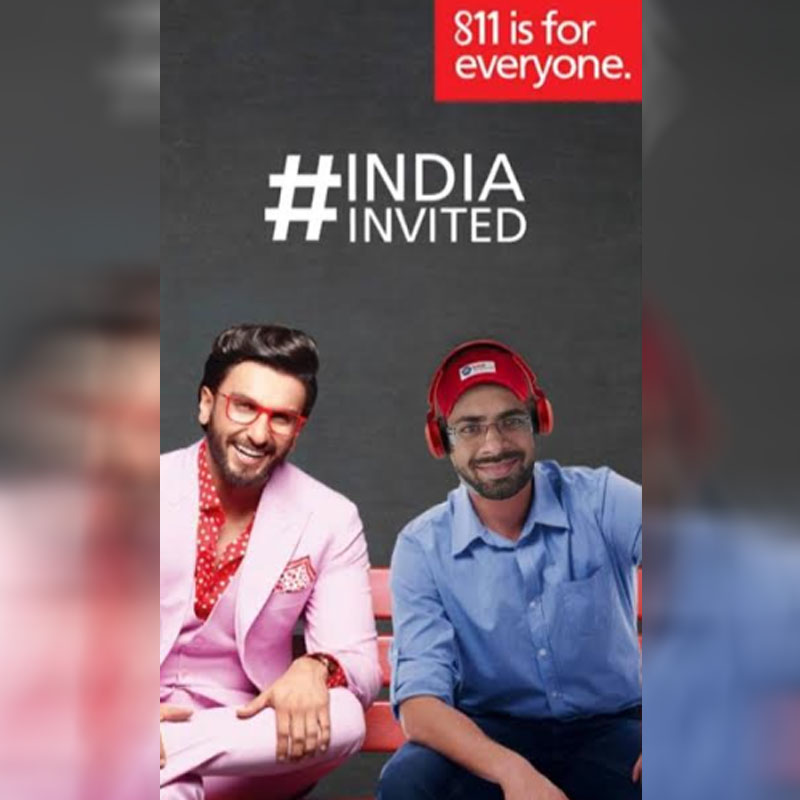
    MUMBAI: The #IndiaInvited campaign by Kotak 811 builds on the insight of inclusiveness for everyone irrespective of personal or physical characteristics and draws attention to how 811, just like a bench, does not discriminate against anyone and the messaging was led by the Bollywood Superstar Ranveer Singh.

    The campaign, conceptualised and executed by Tonic Worldwide, extended an invitation to all Indians to be a part of the movement through various innovations.

    The digital campaign showcases the real stories of people who have faced discrimination in the face of opportunity. Later, every Indian who wanted to support the cause, got a chance to participate by sharing the frame with Ranveer Singh using a custom-made Kotak 811 AR filter. The idea was to use technology on one of the most popular social media platforms and simplify participation for users.

    In the next phase, people were invited to share their perspectives of how they could take inspiration of non-discrimination by emulating the Bench in the story ‘Bench Ki Aatmakatha’. From poems to rap songs, shayaris to mini stories, the 500+ video entries that featured on the brand’s page were both interesting and humorous, while being aligned to the brand campaign.

    The contest was judged by the famous stand-up comedians- Sourabh Pant and Sonali Thakker.

    The Bench of Unity is a community formed by over 2.5 lakh Indians in the digital space who believe that they can be the change the society needs to put an end to the judgemental attitude. Invitations were sent out to people who have created a unique identity for themselves by achieving great feats, despite facing discrimination and judgments from the society. Bharti Singh and Geeta Phogat were also a part of the initiative and became members of the Bench of Unity.

  • As digital gets mainstream, it will become more important for a movie’s success: Facebook

    As digital gets mainstream, it will become more important for a movie’s success: Facebook

    MUMBAI: An outstanding script, a big production house backing you or roping in lead actors don’t ensure a Bollywood movie’s success today. The aim is to crack the box office code. From the Rs 100 crore mark, the movies of today have set themselves targets of Rs 300 crore.

    One of the most important driving factors for any movie to be a hit or miss is its PR. It’s crucial for any filmmaker to promote the movie extremely well on all major platforms and all consumer touch-points. Running the trailers and songs on television, having them as guests on reality or comedy shows, a chat show on radio, topped up with a dash of digital is the success mantra for any movie promotion.

    Lately, every filmmaker and actor wants to promote the movie on Facebook, Twitter, Instagram and Youtube. The “digital” consumer no longer has the time and bandwidth for the TV or newspaper. They need the information to be accessed if, when and how they want to. They want to know all about the movie, its box office report and reviews before spending Rs 300-400 on a movie ticket.

    Social media lends itself beautifully to promote the movie, song or an album way before it is set to release. Actors nowadays share the making of their movies to engage the audience right from the start to ensure they are hooked on to the content and in turn will watch the movie. They go on to disclose the movie name, their first day of shooting, the shooting locations, the actor’s looks and outfits in the movie, and even behind the camera videos and images.

    To understand the media effectiveness in film marketing and how it helps filmmakers and actors to drive awareness, engagement and conversions, Ormax Media and Facebook recently launched a report – Media Effectiveness in Hindi Film Marketing – that studies and correlates the actual box office collections to a movie’s marketing mix.

    Indian movie marketers are already taking advantage of engaging desired audiences through Facebook, to drive uptake at the box office. For them, Facebook can help in building a community and interest, generate real-time conversation and feedback, and create a fan base even before the movie is released, which in-turn drives word of mouth and buzz.

    At the report launch, Facebook India’s spokesperson engaged with us to talk at length about the report, the changing dynamics of film marketing, small budget films leveraging social media and much more. Excerpts:

    The recent report by Ormax and Facebook shows how YouTube has more appeal power over Facebook and Instagram put together. How are you going to top up that to ensure Facebook has more engagement than Youtube?
    A lot of users have their view on movies based on the trailers that they see. YouTube has had a legacy of video content whereas Facebook has just embarked on its journey to introduce video content to the users at a massive scale. We are aware of that as an organisation and are moving to ensure that quality music owners and labels are able to protect their content. Music is increasingly becoming important to Facebook users with trailers and music content. As we scale up, we expect the difference between Facebook and Youtube to change soon. Currently, music is the most talked about content on our platform.

    How will the audience know about your offerings if they are not a part of the group or have liked the page?
    Our partners know that there are users who are excited about our products. Given the base that we have and the growth that we have seen in India, user adoption is pretty quick for all the products that we launch because our partners know that they can create incremental reach and engagement. The whole narrative of entertainment marketing has shifted to storytelling and community. Today, movie marketing has social built at the core.

    While we talk about the use and benefits of new media v/s traditional media, isn’t film marketing hugely impacted by the use of digital?
    The traditional media does have a role and will continue to have a role. But we feel the overall importance and the function of each is changing. The biggest trend in India is that smartphone adoption has gone through the roof and we are seeing a lot of regional content and tier II, tier III users on the smartphone. As digital gets mainstream, it will become more important for a movie’s success, especially for movies that have large box office inhibitions. Digital is a mass phenomena. India is one of those few markets where television and print have a 10 year window, but digital allows movie studios to engage which is not possible on traditional mediums like television and print. While they may be used to build awareness, when brands want to engage they use digital. Smart movie marketers and actors have understood that and use digital to connect with their audiences.

    There was a time when movie marketing began 20 days before the movie hit the theatres but now it starts months before the movie is set to release. In such cases, what is the ROI that the filmmakers look at?
    The ultimate objective of a filmmaker is to ensure they have box office impact. From a consumer standpoint, when I make a choice to watch a movie in a theatre on Friday, I am also making a choice of not watching a show on Netflix, Amazon or a cricket game. It becomes important to engage with your consumers very early. Our job is to ensure the right product is used in the right context. Our platform IGTV is the future of video content which is a great mix of live content and video stories. Today, brand’s objectives have changed and the use of various mediums has changed.

    What about sports? You don’t talk much about that…
    Sports as a category is a huge priority for us and we will continue to invest in it. Although we can’t talk about it at the moment, we have huge plans for sports as a category to increase viewership.

    While we talk about big studios and actors leveraging social media for marketing, are regional players also leveraging social media the way Bollywood is?
    Oh yes, in a big way! Regional players are reflecting this trend as well and we see a lot of activity in Tamil, Telugu and Bengali movies.

    What about small budget films? Are they leveraging social media?
    We work closely with a variety of partners. We have an entire team working on the scale side that works with emerging creators and studios.  and they are smarter about it. The contribution of Facebook and Instagram for B category movies in driving conversion is 99 per cent.

    Demographically, is your user the millennial audience since they are avid users of digital?
    A large part of the audience on digital is millennial. Around 60-65 per cent of the digital user is male audience but we see a mix of age. Jio has created a wave in the market where access and affordability both have happened together. We are excited because we want to create a perfect storm in the entertainment industry. Today, there is a huge amount of content, great smartphone experiences created by apps, ease of data access and price. It is a great time for consumers.

    While we talk about digital being the cherished medium for every marketer today, ad spends on television still contributes to 50-70 per cent while digital is only at 10-15. Do you see that changing?
    Digital is growing today at a CAGR of 30 per cent. While TV does have a long window in India, so does print. However, video content will create a huge upside for digital in India. We know there are efforts being made across the board on digital ecosystem. If you look at the media ecosystem, especially in the buying agencies, programatic is seeing tremendous growth. Earlier, digital ad spends would be reserved inventory based, and now you have premium programmatic coming in. As display ads starts to become more programmatic driven, you will see digital coming into play. Quality inventory in India will drive digital ad spends.

  • YES Bank opts for iCubesWire’s AI solution

    YES Bank opts for iCubesWire’s AI solution

    MUMBAI: In an industry first in the BFSI sector, YES Bank has opted for iCubesWire’s AI enabled solution, Instatalk, which provides an accurate platform for the customers to interact instantly with the brand and seamlessly suits their requirements.

    YES Bank country head Rajat Mehta said, “As a new-age, technology-enabled bank, we are always exploring new opportunities to innovate and tie-up with partners that can help to increase our brand presence digitally. We are happy to explore the possibilities with iCubesWire and incorporate their AI solution Instatalk, a new-gen product which is the quintessential bridge between the user and the brand. The bot engagement integrated with the campaign strategies will elevates the rate of user engagement for our display campaigns”.

    iCubesWire founder and CEO Sahil Chopra added, “YES Bank is a pioneer in the BFSI sector to create a customisable savings account and we are more than excited to have tied-up with them for an AI enabled campaign. It is a great opportunity for us to bank upon and we are certain the integration will prove fruitful for the brand as well as the users thereby strengthening their loyalty towards the bank. We are keen to explore the digital domain with YES Bank.”

    With the rising neck to neck competition in the BFSI sector, it is paramount to keep up with the pace and innovate better means to impart customer experience. This is when Instatalk becomes the ideal fit in the swift digital world. 

    Through this campaign, YES Bank aims to enhance the user engagement and curtails the long process for queries revolving around savings accounts.

  • “We focus on digital to promote non-film music” – Vinit Thakkar

    “We focus on digital to promote non-film music” – Vinit Thakkar

    EMI Records India recently launched its own unique platform VYRL Originals which completed six months on 12 July. Every month, a single was released with the latest being Aaya Na Tu by Arjun Kanungo and Momina Mustehsan.

    EMI Records India was launched in May 2015 by Universal Music Group in collaboration with film director Mohit Suri. This venture marked the return of the iconic EMI label to India, which developed a new platform to promote non-film music.

    Indiantelevision.com spoke to Vinit Thakkar, the senior vice president, Universal Music Group India & South Asia about the idea behind launching VYRL Originals, challenges they faced and their marketing and promotional strategies.

    What is the main idea behind launching VYRL Originals?

    The idea behind launching VYRL Originals was to create a unique platform to promote non-film music. Through this unique platform we have been releasing one brand new song every month which launches simultaneously across all platforms- digital, TV and radio. The property launched on 12 January 2018.

    What kind of mentorship or support does VYRL Originals provide to the debut artists?

    I believe that our partner, Mohit Suri is one of our biggest strengths. Up until May, most of the artists we’ve worked with have been newcomers. He’s been a great mentor to all the artists who have created content for VYRL Originals. Right from the composers, lyricists to the singers, each of them have been carefully worked on and handpicked by the director himself. Also, all the technical infrastructure and support that is required for an artist to create world-class content is provided by EMI records India.

    What are the challenges you faced in the music industry and how did you overcome it?

    We started EMI Records India almost three years ago when there wasn’t as much non-film music being released. Very few non-film songs actually made it to the mainstream commercial charts across platforms. Traditional mediums like television and radio were also giving preferential treatment to Bollywood music. So one of the biggest challenges we have faced so far is to reach a larger set of audience in India.

    But thankfully with a lot of support from audio streaming platforms and our exclusive partner Fever FM for VYRL Originals, we have been able to reach out to a wide audience. Effective use of social media platforms has also helped us a lot.

    What are EMI’s promotional and marketing strategies to stand out of the crowd?

    Every song has a different story to be told. We do a complete integrated marketing campaign. Our main focus is digital as we believe that our target audience is active on digital platforms and it’s really important to reach out to today’s youth who use these platforms to discover new content. This is followed by television and radio promotions. We also engage with a lot of influencers who help us create a buzz around the song and the artist.

     What is the cost of releasing one single?

    It is difficult to put a number to it as there are many elements involved in putting together a single. There are several costs attached, right from the audio to the visuals to the marketing and promotional spends.

    How do you keep a track of the song being played overseas?

    We are a global company with a global footprint. All our content is deployed through a global supply chain and that helps us with all the information that is needed with regards to the content.

  • Zenith’s Tom Goodwin dismisses concept of a digital world

    Zenith’s Tom Goodwin dismisses concept of a digital world

    MUMBAI: The last few years have seen a major shift in consumer behaviour and the way brands interact with them through various mediums. So, the industry is evolving and changing? Well, if Zenith Media EVP and Head of Innovation Tom Goodwin is to be believed, nothing is changing.

    “All we hear now is how the world is changing and the [advertising and marketing] industry is evolving, which is not true. Nothing is changing. Our businesses will not be hampered with drones overnight. It’s easier for people living in big cities to say that the world is changing, which is not the reality,” Goodwin said.

    Speaking at Zee Melt 2018 marcom event here yesterday, Goodwin not only shattered some of the common perceptions and myths about the advertising and marketing industry but expounded too on his theories.

    Take, for example, the perceptive trend of newspaper readerships on the decline globally with people now accessing news on hand-held devices like mobile phones and tablets. Goodwin rubbished this belief by stating that newspaper readerships have increased significant, especially in countries like India and Africa.

    According to the Zenith executive, in a perfect future, passwords and payments could become a thing of the past and one would be able to unlock devices or pay a bill via face recognition software or a smile or a just a gesture. “But that’s far from today and we have to work actively in the right direction to make that happen as we, as an industry, only talk about technologies but know very little about them,” Goodwin explained, adding the industry hasn’t been able to use chatbots effectively.

    Expounding more on technology, he said people were still trying to figure out technology and its many uses in, what he calls, the “mid-digital era”. “As our expectations are high, we tend to refer [to] the past and layer it up without completely understanding it. For instance, reading newspaper should give different consumer experience on different mediums. But it doesn’t. Most newspapers today tend to copy-paste the same model of the physical paper and put it up on the internet without any innovation,” Goodwin explained.

    Pointing out that the world hasn’t “really seen any innovation in advertising since 1950”, while taking pride in being in the creative industry, he didn’t mince words: “We keep making the same mistakes”.

    While everyone talks about how the millennials were difficult to connect with, Goodwin thought they were the “easiest generation to target”. Reason? As the millennials were always connected or on their mobile phones, there, probably, hasn’t been an easier group to “reach in the entire history of humanity”. Though he’s not the only one now saying so, but Goodwin is of the opinion that “TV is not going anywhere” or dying out due to a digital onslaught simply because “TV is now being watched at more places than ever” and it was “irritating to hear” about the death of television.

    However, Goodwin certainly is not wishing away the march of digital altogether. The post “digital age” will be a world where digital will become a part of everybody’s existence and, for that to happen, “markets and agencies collectively need to create brand new experiences from the scratch”, was the advice. He added: “In order to do better business in times of chaos, brands need to transform their communication strategy by understanding people and what they need at what time.”

    While everyone talks about a digital world, Goodwin thinks there is no digital world and people were just “obsessed with the idea of digital being a thing”. Why so? He explained: “We still talk about digital as a thing and a behaviour. We have heads for digital and digital strategy and digital advertising. For the next generation, digital will be a part of their lives just as electricity is. Do we have a global head for electricity? People today don’t do internet banking but do banking in 2018, they don’t do e-commerce, they just buy stuff as and when they feel like it.”

    Not content with countering some presently held popular industry beliefs, Goodwin had some observations on brand expectations too. “Brands today like to set expectations of being the best or giving the best experience ever, which is not at all true. For instance, every bank wants to compare with every other big bank on the street,” the master said, adding, “But that’s not how a consumer judges you. They [consumers] judge you for your own service. Brands need to look into that [aspect], rather than setting high expectations.”

    Moving on to technology and companies, Goodwin advised people to apply technology correctly though they may not necessarily be technology companies. Driving home the point that beyond all the hype, consumer was the king and that every company should keep consumers at the heart of their businesses, he said, “It’s an incredible balance to be made and brands like Uber, WeWork, Whatsapp, Facebook are doing a tremendous work in that area.”

    He also noted that it was easy to presume that most companies don’t know what they were doing today, which is not the case really. “Most companies in the market today have had a large legacy behind them, and whatever and whichever version we see of them today, is a compilation of all the work they’ve been doing for so many years,” Goodwin explained, however, cautioning them of the need to “revamp and relook at their consumers” with a different lens to keep up with the changing needs and demands.

    What does he think of the present era? “It’s the most exciting time to work in business, advertising and marketing. And to be alive,” was how Goodwin summed it all up.

  • Video content will be the game changer in 2019: Shrenik Gandhi, White Rivers Media

    Video content will be the game changer in 2019: Shrenik Gandhi, White Rivers Media

    MUMBAI: A young professional just graduated from an MBA college would be thrilled to join a reputed company like Future Group. But Shrenik Gandhi’s entrepreneur blood wouldn’t allow him to work under someone else.

    Within a year, he quit and started his own digital marketing agency White Rivers Media and propitiously the agency’s first client was Future Group who handed over the signing amount cheque during Gandhi’s exit interview at the company.

    Gandhi began his entrepreneurial journey in 2012 with his MBA batchmate Mitesh Kothari, who was then working for another digital agency WATConsult. What started off as a two-man operation today has a team size of over 75 people in its HQ in Mumbai. With the new office in DLF Cyber City, White Rivers Media is looking to localise all the digital, video and AI-driven e-commerce solutions for its NCR-based clients and more.

    With a strong hand over national and international clients from more than eight countries, it has worked with some of the top-valued brands in the country, executing many of their flagship campaigns and grabbing eyeballs internationally. The agency has worked across a range of industries and verticals, including brands like OnePlus, Viacom18, TATA Cliq, Zivame amongst others.

    Indiantelevision.com caught up with White Rivers Media CEO and co-founder Shrenik Gandhi to discuss the company’s initial struggles, progress and how things are panning out today.

    Excerpts:

    What was your initial capital like when you started off White Rivers Media?

    Our initial capital was just a laptop and our collective brains and I think that is the good and bad thing about digital that there is zero inventory/investment. Today, anyone with a good laptop and internet connection and some brain can start a digital company. 

    How was the opening year for you? Was it hard for you to recover money from clients since you were a new agency?

    Yes, it was difficult to recover money but, luckily, acquiring clients was never a challenge for us because we made sure that the effort and passion we put in was 100 per cent. Our numbers grew only because of word of mouth. We hired a professional business development team only eight months back which only shows that our work spoke about the company for nearly four years. Today, we have 100 per cent growth year-on-year in terms of revenue. 

    Who were your initial clients? And do you think your clients have evolved over the time?

    Our first five clients are still with us. In the first year, we had less than 10 clients but today, we have on board 50+ clients. Most of our business comes from retainer clients and 60 per cent of our clients are retainers. Our clients have also evolved with us and gone are the days when people said that digital is the future. Digital is not the future. The future is now! Most of our clients have accepted that and give us the required freedom to come up with the best possible campaign for them. 

    You recently expanded your reach and opened an office in Delhi. What’s your team size there and was this the right time to expand?

    In Delhi, we currently have a team of four people but we are actively recruiting people to expand the team. Delhi is a big market and it only made sense to scale up and cater to our clients there, by physically being present.

    So is Bangalore the next step for you?

    Possibly!

    You are traditionally a digital marketing agency, but today agencies are looking at expanding their reach and getting more clients to have a diverse portfolio. Will you also be looking at doing traditional medium anytime soon or are you only going to focus on digital marketing?

    To be honest, going forward, I don’t see any offline campaign which will not be supported by digital. It will just not make sense. Yes, a newspaper article is very important but how do we measure it? The campaigns in future will have to be more integrated and digital by itself will not be always enough. As for us, we will do traditional stuff but the core will always be digital. If the offline campaign augments to digital we will definitely do it. 

    Will you be open to getting acquired at any time if a larger network approaches you?

    It is a difficult question to answer, but if it makes return on investment (ROI), we will but only if the ROI makes sense today, after a year and five years down the line. Being a part of something bigger will only make sense when whoever we talk to makes strategic sense and the acquisition helps us in getting a seat next to bigger brands to pitch better with the agency’s larger network. 

    Is it safe to say that India has become digitally evolved with the advent of Jio, free data and cheaper mobile phones?

    People in rural areas today are also using voice search, Google maps and internet. Kids as young as 10-12 years have their own YouTube channel. The younger generation has skipped the laptop and they have gone straight to using mobile phones.  If we look at the data, India consumed roughly 25 crore GB of data per month before Jio was launched. Just after six months of launch, data consumption has grown up to 6X. With over 125 crore GB data consumption in India, we are today the highest data consuming nation in the world. 

    Every brand today wants to be present on digital as that seems to be the latest trend. Do you think digital investment will go up in future?

    It will have to increase because brands will eventually realise that the amount they are putting in on hoardings is not yielding them with enough revenue. Clients might want to cut on the cost of two hoardings to invest on digital. Even if they see the same revenue coming in for the company, it is an ROI for them. You will see a lot of budget being shifted to digital. A lot of campaigns being devised for digital first. Gone are the days when people would say that lets create a digital strategy but the world today has become digital and agencies will have to create strategies which will ultimately be digital. 

    Which category do you think will make the most of digital for advertising?

    I think FMCG and automobile will invest majorly on digital. FMCGs have traditionally been pathbreakers in the use of digital and they will continue to bet big on the medium. Smaller brands, however, will have to scale up and divide their advertising budget accordingly. 

    On a parting note, what do you foresee to be the game changer next year (2019)?

    Without a second thought, it has to be videos. The video consumption in India has gone up rapidly. The consumption of short format six-second, 10-second and15-second videos is increasing. The micro video content consumption has become crazy because people have a lot of free data. Today, four out of 10 posts on your Facebook newsfeed will be videos. One would wonder what is the benefit for the social network in this? Well, it would result in better stickiness on the app and more chances of having videos with free data and better revenue for the social platform.

  • BTVI to leverage digital mediums for growth

    BTVI to leverage digital mediums for growth

    MUMBAI: English business news channel BTVI is completing two years in August this year. The company was transformed from Bloomberg TV India after Bloomberg decided not to renew its deal with Business Broadcast News. BTVI got its COO Megha Tata in 2016 at the same time it got its new name. 

    English Business News (EBN) genre is still a very niche market with only five channels in the race – CNBC TV18, ET Now, BTVI, NDTV Profit and CNBC TV18 Prime HD. The genre contributes to less than one per cent of the total TV pie where BTVI is still struggling to compete with the genre leaders, CNBC TV18 and ET Now.

    It was around the same time that BTVI decided to bring in ex HBO MD Megha Tata on board as the channel’s new COO. Tata’s journey ever since has been a roller-coaster ride and she believes that refurbishing the leadership at BTVI has been a positive step. “Bringing back revenue function in-house which was outsourced before was another move that has worked for us,” she says. 

    One of the crucial decisions that paid off for BTVI was refurbishing the leadership. “Besides having a strong editorial leadership, in people like Anuj Katiyar to lead marketing, research and branded content, Shilpa Shetty to head revenue, Ashim Chakraborty as HR head and Deepa George to head our legal, I think we found an absolutely perfect leadership team. Bringing back revenue function in-house which was outsourced before was another move that has worked for us,” she adds.

    The hard work in the last one year has helped in boosting the channel’s market share from two per cent to a stable 15 per cent (touching as high as 24 per cent at times). This growth was riding on the back of very strong consumer insights being translated into on air content, programming changes, promo planning, FPC planning and brand building. 

    Tata believes that the business news genre is consumed not only on linear TV but also on OTT platforms. The channel is already present on Hotstar, Jio TV, Yupp TV, Airtel TV and Tata Sky TV. The key trend this year, according to Tata, will be the further penetration of TV in rural areas.

    Tata says that the future is for broadcasters to create specialised content for their social media as well as OTT platforms to retain subscribers and their loyalty. “More TV viewers from rural India will also mean an increase in advertiser base and hence advertising revenue. This year will also see exponential growth in the viewership of non-linear OTT platforms. Now that these OTT platforms have garnered critical subscriber base, it will be interesting to see what are the different revenue models that will emerge to monetise this critical subscriber mass. BARC is expected to launch EKAM – the integrated viewership measurement module – later this year. This will certainly help in rationalisation of investments in these OTT platforms,” she adds.

    With eight states gearing up for elections, news channels are sure to have a ball. Tata thinks that with addressable TV, broadcasters will get an option of customising ad breaks and play different ads targeted at different markets/TG. This will make TV lucrative for regional and small advertisers thus increasing advertiser base and revenues of broadcast TV media.

    BTVI, in the last financial year, had focussed on improving the OTS levels to 100 per cent in its key markets. In this financial year, the channel’s aim is to achieve this 100 per cent OTS in all the P1 markets.

    The growth in digital hasn’t had a deteriorating impact on traditional news viewing. Instead, Tata believes they complement each other and it is the content that will be the winner. Advertising on digital medium is growing rapidly, though not at the expense of TV revenues. 

    Urban India is ahead when it comes to consuming news on digital mediums but it is mainly headlines. When it comes to analysis, views or opinions, the option is always a news channel or newspaper.

    Tata reveals that increasingly audiences are consuming English business news on their mobiles and non-linear platforms like OTT and m-sites of trading apps. It’s an opportunity not to be missed. “Hence, we at BTVI have increased our focus on building a strong digital ecosystem for brand BTVI. We are already available on trading apps of Kotak, Axis Direct and IIFL. We are also working on our mobile app as well as revamping our website. To support the app and website, we plan to build a robust digital content plan,” she says.

    Though the regional market is important, BTVI will first look at focussing its energy and resources in establishing itself in its core metro market first. The regional market will come in at a later time.

    Speaking on the issue of taking up dual local channel number (LCN) she says that though it is advantageous to the channel, it can even hamper the brand since people can’t remember more than one number for a channel. Though it may get additional reach, it won’t get enough TSV to justify the cost.

  • Nielsen on changing landscape of global sports

    Nielsen on changing landscape of global sports

    MUMBAI: The global sports industry is undergoing more disruption than ever as a result of ongoing shifts in media consumption, the emergence of new technologies and a rapidly evolving sponsorship market.

    Nielsen Holding, a global measurement and data analytics company released a report on the top five global sports industry trends. It found that the big tectonic movements like the rise of digital media, esports and diversity are setting off many smaller ripples of activity such as the rise of short-form video, content-led esports sponsorship and new women’s sports formats.

    The top five trends noted by Nielsen are distribution disruption, esports evolution, content rules, sponsorship and partnership and sports in our changing society.

    In the distribution disruption, the single biggest question for the sports business today is whether media rights revenues will hold up as the traditional TV business is disrupted. Star India is a very good example for the disruption in traditional TV business. The broadcaster invested around Rs 22,000 crore in a span of eight months to acquire IPL, the biggest domestic cricketing league and the BCCI media rights.

    Other significant effects of disruption include consolidation among traditional media companies. Several large media companies are seeking greater scale in revenue, geographical and programming terms, partly in order to compete with the tech giants.

    Esports globally has grown suddenly in the past couple of years. The percentage of fans that started following esports in countries like Japan, France, the UK, Germany and the US are 39, 34, 34, 30 and 29 respectively within the last year.

    The combined e-sports and gaming market is estimated to be Rs 3900 crore with more than 2000 teams consistently participating in tournaments across India and abroad with over 50 crore players worldwide. U Sports, one of the newly formed sports business companies in India, launched U Cypher, the country’s first multi-platform, multi-game esport championship.

    E-sports has been announced as a medal event in the 2022 Asian games seeing its rapid growth. It is moving from being a hobby to an actual career option.

    ‘Content is king’ is the third trend in the list. Attention spans are shortening and competing for consumer attention is rising. This trend, perhaps reflects the ongoing rise of over-the-top (OTT) streaming solutions across a variety of private platforms, in particular social media, and media consumption trending towards mobile, bite-sized and on-demand content.

    The likes of Facebook and Amazon and the life-or-death value of live sports to pay-TV should maintain rights fee growth for premium properties.

    The rise of the smartphone, coupled with the expansion of high-speed internet connections in many countries, has seen consumption habits shift ‘inevitably and irreversibly’ away from linear programming and towards on-demand mobile content.

    Sponsorships are continuing to evolve into richer, two-way relationships. The market had already been trending in this direction, but today the most successful sponsorships truly are proper partnerships. In the new sponsorship paradigm, audience data, compelling content and connection to business objectives are the winning traits, according to the report.

    In India, ground advertising saw growth from Rs 6400 crore in 2016 to Rs 7300 crore in 2017.

    In last year’s trends, Nielsen reports said “Social responsibility is becoming more prevalent and impactful.” This year, the relationship between sport and society is changing faster than ever, and staying on top of that change has become even more important.

    Overall, 66 per cent of the consumers are willing to pay more for brands committed to positive social and environmental impact. If we bifurcate it age-wise then 72 per cent of consumers are below 20, 75 per cent are under 34 and 51 per cent are between 50-64.

    Women’s sports continues to grow in focus for rights holders, brands and media. The sector is booming as the growth opportunity represented by under-engaged females is recognised, as brands demand a focus on women’s sports and gender equality takes greater prominence.

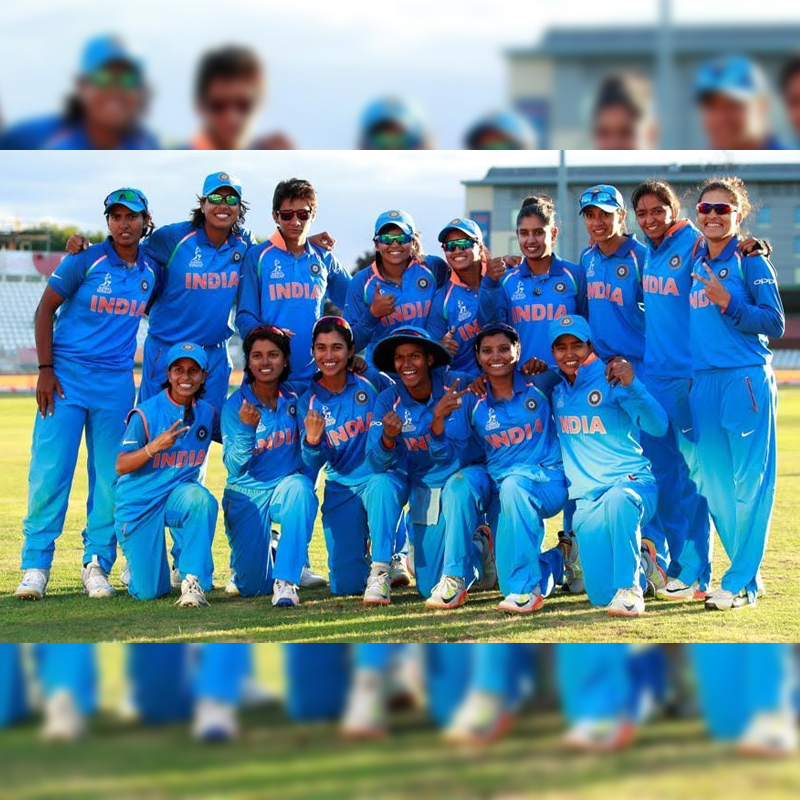
    It isn’t just in developed markets that women’s sports is gaining traction. Last year saw the remarkable opening of sports stadia to women in Saudi Arabia, the inaugural CAF Women’s Football Symposium, and Harmanpreet Kaur becoming India’s first female cricketer to secure a bat sponsorship, among other milestones.

    The year also saw exciting launches of new women’s properties, such as the UK’s Tyrrells Premier 15s rugby union competition and Australia’s AFLW. And the 2018 Winter Olympics offered great opportunities for storytelling around female athletes. Stakeholders like the US broadcaster NBC obliged, putting the likes of Lindsey Vonn and Mikaela Shiffrin center stage in their promotional coverage.

    The next big thing can be that the tech giants will increasingly challenge traditional sports media and increased competition will force higher fees for some premium content.

    The esports market can possibly take a cue from traditional sports by adopting similar revenue-generating models and creative content will be key for successful esports sponsorships.

    The content rule for the right holders will play an important role in the future and they will explore ways of monetising the new types of content, through sponsorship and subscription products. As the quality, volume and variety of content increase, it will be harder and harder to cut through.

    Sponsorships will become more flexible and tailored, and will include more value-in-kind. Rights holders will invest more in digital content and activation capabilities, in order to engage fans, collect data and service sponsors.

    Women’s sports will continue to grow, but properties will have to work harder as the marketplace becomes more crowded. Spending will increase on sponsorship campaigns that exhibit brands’ credentials on diversity, sustainability and other social issues.

    Also Read :

    Sports sponsorship in 2017 up by 14%: SportzPower-GroupM report

    IPL 2018: Team sponsorship deals may see an uptick