Tag: Digital

  • WinZO onboards as sponsor for India-Australia series on SonyLiv

    WinZO onboards as sponsor for India-Australia series on SonyLiv

    MUMBAI: Homegrown e-sports platform WinZO has come onboard as the official co-powered sponsor of the India tour of Australia on SonyLIV. This is the first time WinZO will be sponsoring a major sports event on a digital platform.

    India’s tour of Australia, starting on 27 November 2020, is the Men in Blue’s first international tour after nine months post the global Covid2019 pandemic lockdown; Team India last played New Zealand in February 2020. The tour is two months long, comprising a three-match ODI series, followed by a three-match T20 series, and a four-match Test series. 

    WinZo Games co-founder Saumya Singh Rathore said, “India is a market with over a billion cricket fans who have been hungry for cricketing action for the last nine months. Post IPL, it is great to see the resuming of international tournaments as well and it’s a proud moment for us to associate with the first India-Australia international series of the year. WinZO is always committed to bringing the best entertainment to Bharat.”

    SonyLIV head ad sales revenue – digital business Ranjana Mangla said, “We are really delighted to have WinZO as a co-powered sponsor for the India tour of Australia on SonyLIV. This is a big overseas tournament that’s sure to drive viewership on the platform and be of value to both brands.”

    WinZO was recently in the news for its $18 million series B funding led by global interactive entertainment fund, Makers Fund, New York-based Courtside Venture, and Steve Pagliuca, the co-chairman of Bain Capital and investor in Epic Games – developers of the massively popular Fortnite. All these players have made their maiden investments in the Indian market through WinZO.  

    WinZO aims to create a highly personalised and localised social gaming platform powered by micro transactions, where users can enjoy multiple engaging gaming formats and fantasy sports in 10+ regional languages with their friends or strangers online.

    Founded by Paavan Nanda and Rathore, WinZO has been successful in delivering strong positive unit economics in the Indian gaming ecosystem and has continued to support the gaming ecosystem by setting-up a game developers fund 2.0 of a $5 million corpus to fund projects in interactive entertainment space built by game developers.

  • Ferns N Petals launches FNP Media, a digital content company & production house

    Ferns N Petals launches FNP Media, a digital content company & production house

    New Delhi: Ferns N Petals has forayed into the digital video content segment with the launch of FNP Media, the brand’s new digital content house. FNP Media is a content company and production house that works to produce quality content for digital platforms. Given the fact that FNP has been a part of peoples’ lives from birth to marriage and even death, the journey of human emotion has been experienced from very close quarters, and it was but natural to translate that understanding on screen.

    FNP Media has three verticals, Live By FNP Media,Films By FNP Media and Music By FNP Media. The content in the form of short films, web series, storytelling etc. is hosted on YouTube channels of the respective verticalsthat showcases performing arts, films & shows and original music.

    Live by FNP Media is a platform for both aspiring and established artists to showcase their talent in multiple disciplines of performing arts. It brings in a plethora of new-age-content, an interesting mix of social media platforms, YouTube channel and live events. Live by FNP Media is truly an opportunity that performing arts as a whole needs. 

    “We are very excited to enter in this new segment. With the launch of FNP Media we see ourselves catapulting into the next phase of growth,” Ferns N Petals & FNP Media MD & founder Vikas Gutgutia said. “Digital will play a critical role in fueling this growth and we wanted to ensure that we had a strong offering and presence in the space. We have invested a lot of time and energy in creating and acquiring good content for FNP Media, which we hope our viewers enjoy.”

    The other vertical, Films by FNP Media is a completely integrated entertainment offering of original short format movies, which showcases unique content that is believed to have the power of changing people’s perception. The platform will also host content to address the entertainment demands of a New India that is increasingly digital savvy and globally connected, yet fundamentally rooted in its culture.

    Commenting on the occasion, FNP Media GM Ahmad Faraz said, “I believe the audience has become smarter and they want to see good meaningful content. We are concentrating on bringing the content which appeals to people and helps them change their perception. We are working with some new but very talented writers and directors from the industry right now. As a content company we have seen and observed that short format content appeals with audiences as well as brands and it is the future of the content industry. Having said that, we are also going to bring out some unique and never heard before concepts of web series as well in coming months."

    Music by FNP Media envisions to bring you original music content by upcoming and established artists. The platform will help independent musicians and performing artists to present original music under FNP Media’s label and for fans to discover hidden gems. The brand intends to bring out the best in every genre.

    FNP Media marks its entry into this segment with an original short film, The Hire. In addition to this, the platform also offers many other hard hitting films like Almariyaan– that deals with significant LGBTQ issues, Blue Sweater and many more.

  • Over three decades, marketing has seen a paradigm shift

    Over three decades, marketing has seen a paradigm shift

    MUMBAI: On a long trip, the mode of travel may encompass an assortment including air, train, road, boat. Even within these legs, the experience could differ significantly, for example driving on a mountain road, versus regular old ride through the city.

    Similarly, a marketer’s journey over the last three decades has seen multiple metamorphoses, entailing a continuous need for change and adaptation.

    Those were the days, when planning media spends was a simple matter of allocating monies between Ramayana, Hindi feature films, and Chitrahaar on DD, with the option of throwing in Krishi Darshan for the adventurous rural marketer. The satellite TV boom, bringing in hundreds of channels and programmes, added complexity to media planning, and forced marketers to slice and dice the communication target group in terms of multiple demographic parameters. “Focused communication” really took shape in the nineties.

    And then the internet explosion, along with the advent of smartphones, dramatically changed the rules of the game. Digital marketing and social media are the buzzwords now. Engaging the viewer is paramount. Communication can now be targeted at a specific age group, even at a micro level of a city. Youth today interact with the world through their devices. TV viewing and print media are almost skipping this generation. Even a few years ago, advertising on live sports telecasts was a sure-fire way of reaching the youth. Today, even that is transitioning to the Hotstar and Cricbuzz of the world.

    This is having a significant impact on consumer buying behaviour, and the purchase decision-making process. The erstwhile classical marketing’s five step process – spanning problem identification, information search, evaluation of alternatives, purchase decision and post-purchase behaviour – is passé. The three Moments of Truth (MOT) theory has been flipped on its head.

    As per traditional theory, the first MOT is when the consumer interacts with the brand for the first time, say, on a supermarket shelf, and decides to pick up a brand, over others. The second MOT is when she experiences the brand, which may be once (for example, in a restaurant), or maybe multiple times (like a shampoo). A few proceed to the third MOT, and become advocates (positive) or critics (negative), based on their individual experiences. This journey has now been collapsed to what is termed the Zero Moment of Truth (ZMOT). Thanks to the explosion in internet usage, every new brand or product is now researched, where consumers are vicariously exposed to the entire journey at one shot, through others’ experiences. Managing social media is critical now. For example, while evaluating options to buy a car, if one comes across half a dozen negative comments about a specific brand, it is very likely that this brand will drop out of one’s consideration set.

    A few decades ago, there was allegedly a thumb rule across the world – that a happy consumer will tell five others, while a dissatisfied consumer will crib to 21 people. Today these numbers have magnified manifold, and are probably in thousands, if not millions, thanks to the power of viral posts in social media.

    30 years ago, fashion and lifestyle trends in the western world would take their own sweet time, maybe two to three years, to catch on in India. Today all brands need to keep pace with global innovations, since consumers are constantly exposed to these. Discerning powers of consumers, thanks to the plethora of information available, have taken quantum leaps. Earlier, ‘value-for-money’ was the key for mass marketing. Today’s informed consumer is willing to pay for value-added features, leading to the ‘money-for-value’ concept.

    Changes, and the necessity to adapt to these, will be keeping marketers on their toes. From print/radio/cinema, to TV (single channel to hundreds), to the internet with its multiple social media platforms, to live streaming and OTT – the milestones and the route map keeps evolving. It’s perhaps foolhardy to even attempt to predict what’s coming next.

    (The author is Navneet Youva stationery division chief strategy officer. The opinions expressed here are his own and Indiantelevision.com may not subscribe to them.)

  • Republic Media expands presence in online news space, launches in Hindi language

    Republic Media expands presence in online news space, launches in Hindi language

    MUMBAI: Republic Media Network has announced its expansion into Hindi news in the digital space with the launch of Republic Bharat’s online platform. It aims to become the leader in Hindi news on digital platforms.

    Republic Bharat aims to redefine content on digital for users in the Hindi audience and will operate with the same philosophy of ‘Rashtra ke naam.’ Among its differentiators, the digital platform will focus on news and breaking it to its viewers first while also aiming to change the way video content is created and consumed for the digital audience. 

    Republic Media Network Group CEO Vikas Khanchandani said that this is Republic’s first big step into Indian languages and the start of the network’s overall project of doing news in every Indian language. 

    "We want to leverage the growth of Republic Bharat and popularity within the digital ecosystem. Our English content business has scaled up tremendously and we are looking forward to adding 100 million MAU’s to our digital offerings," Khanchandani added.

    Digital EVP and business head Devinder Gupta said, “We enter the Hindi digital market and will shortly plan for our venture into other regional languages as well. With the Hindi digital platform we will be expanding our digital reach into India, catering to a much larger audience across the country."

    Republic Bharat’s digital wing will operate out of a newly-constructed digital newsroom in Noida. The process of hiring its teams for Bharat’s digital expansion is already underway. A 20,000 square feet space has been undertaken, and over 100 people are in the process of being hired.

    Much like its digital English news destination, the bharat.republicworld.com platform will be doing news across verticals with pace and depth in Hindi. On the digital Hindi news platform, plans to publish 1000 stories per day and reach 100 million unique users in the near future. 

    Republicworld.com claims that it has witnessed 34 per cent month on month growth in the past year, and has broken into the top five players in the genre. 

    The network’s aggressive expansion into Hindi news on digital will definitely challenge the present status-quo and presently-insipid nature of the genre. 

    Republic Bharat’s expansion comes ahead of the network’s intent to grow into regional languages in the near future 

  • Brand Sentry bags brand building mandate for Orchids International

    Brand Sentry bags brand building mandate for Orchids International

    MUMBAI: Brand Sentry has bagged the digital and PR mandate for Orchids International. It is a leading name in the hygiene product industry. They started their journey over a decade ago and have emerged as a key leader servicing majorly to B2B sectors.

    In the current Covid2019 times where hygiene has become an essential part of our routine, Brand Sentry along with Orchids took the opportunity to drive the narrative of how people consume information around hygiene, its importance and make it easily available for masses at large.

    While Orchids International has been an important player in the B2B hygiene market, the increasing demands for hygiene products have paved their way strongly into the B2C market too. Brand sentry plans to strengthen the brand awareness by building and reinforcing the brand’s presence across digital and media verticals.

    Orchid International, director, Kumail Vakil said, “In this new partnership, we look forward to amplifying our brand’s image, vision and the company’s offerings. We have identified the dire need of hygiene products in the country and are constantly innovating to accommodate all our consumer’s needs during the COVID and post COVID era. We believe the leadership at Brand Sentry understands us as a brand and will help us in building our image as a prominent leader with the right communication strategy. We are looking forward to creating a long lasting impact and changing the narrative of the hygiene industry with Brand Sentry as our partners.”

    Brand Sentry, co- founder, Vishakha Mota added, “We designed Brand Sentry to drive purpose led communication for Brands that are trying to make a difference and create an impact and Orchid falls beautifully under this category. We are excited to bring Orchid’s innovation of hygiene through our vision and create a benchmark in the industry.”

  • Digital is the key to unlocking Emerging India

    Digital is the key to unlocking Emerging India

    NEW DELHI: The next big market is beyond metros’.

    Non-metros, rural, tier 1, 2, & 3 are driving the next wave of consumption in the country. There is no product category on the shelf that does not sell well in this region. However, the consumer and the consumption pattern is also much different from what we see in the metros.

    Better known as Emerging India or Real Bharat, the audiences in the region are aspirational and keen to spend on newer experiences. Brands and marketers are very excited about this opportunity and working towards chalking out a strategy to increase its footprint, strengthen the distribution, and create tailor-made range of products for the audiences region. All of them are leveraging digital medium to crack this billion dollar puzzle – ‘Real Bharat’. 

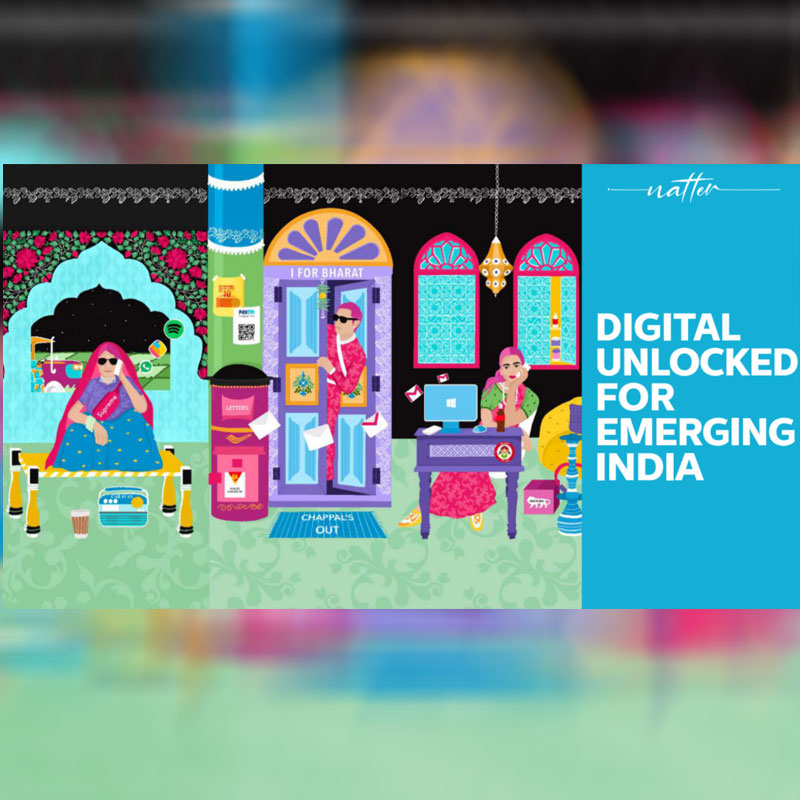
    Natter, a leading Delhi-based digital marketing agency that has placed itself comfortably between the consumer insights and marketing requirements, is accompanying brands in this journey to crack the Real Bharat code. It undertook a study with 11000 respondents across 10 states to get an indepth analysis on the digital consumption patterns of this new consumer. The new-age agency that aims to position itself as the one-stop solution to all the brand requirements has come up with a report ‘Digital Unlocked for Emerging India’. The report clearly elucidates the role of 'Digital' in Emerging India is not just restricted to advertisements, but it will be the medium to engage, reach and sell. 

    It further enables the marketers and brands to deep-dive into the consumption & spending patterns, digital penetration, entertainment choices and mediums, language preferences of ‘Emerging India’ across socio-economic groups and geographies.

    Some of the key points highlighted in the report are:- 
    •    43% respondents are taking farming as primary occupation; 21.5% use WhatsApp groups for gathering farming related information; 9.9% farmers watch farming related videos on YouTube
    •    37% women access internet for songs, movies; 18% watch funny videos; 16% educational videos; 
    •    Samsung leads in the smartphone & feature phone category 
    •    50% respondents use Jio followed by Airtel
    •    Order from E-commerce: Flipkart (46%), Amazon (33%), other local online stores (16%), Snapdeal (5%) 
    •    YouTube: 63% go for entertainment & songs, 12% education related videos, 25% business & farming related videos 
    •    WhatApp: 68.3% use it for connecting with friends, 21.5% use it for farming related information, and 7.5% for buying and selling information.
    •    Facebook: 65% respondents had profile on Facebook
    •    Gaming: Time spent on gaming has increased, and increasingly females are also playing more.

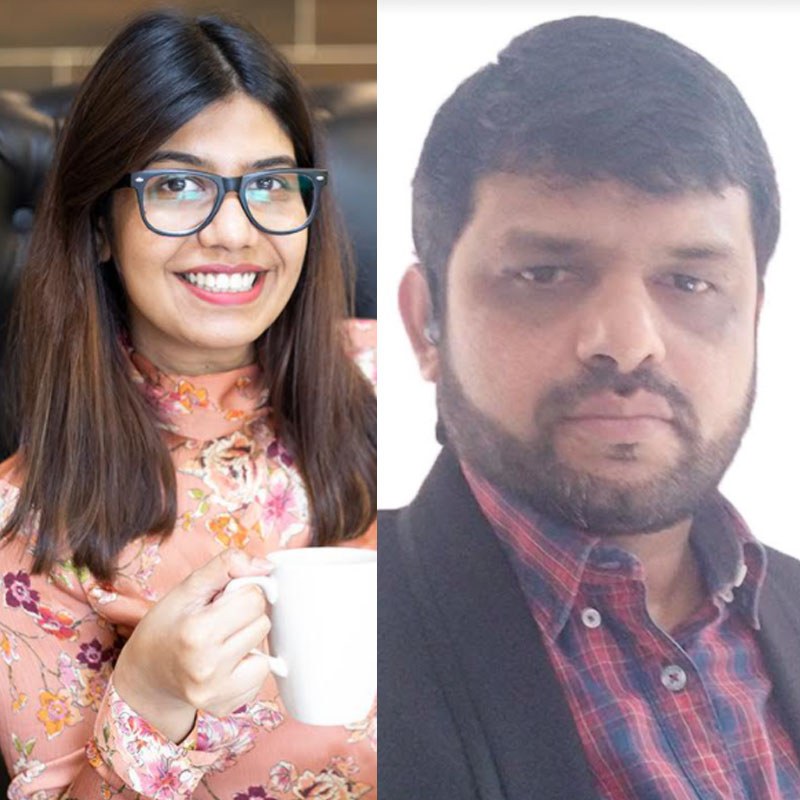
    Jankana Kaul, Founder & CEO, Natter says, “The focus of report has been to capture the variations in digital consumption patterns & insights on different needs of Digital citizens in Bharat. At Natter we will continue to de-code these differences & capture nuances to help marketers to opt, devise & craft solutions relevant for rural consumers. With more than a decade long brush with Bharat, I have seen a steady pace of digital evolution & now giants entering this space to woo this consumer class. Here we are in next phase of Digitisation – an imperative shift from WHY DIGITAL TO HOW DIGITAL. And at Natter we provide you with the HOW STRATEGY.”

    Avinash Joshi, COO Natter says, “We at Natter strongly believe and aim to initiate and catalyze discussions around the significant advancements in adoption of digital across emerging India. In its first edition, the Digital Unlocked report reveals the most significant shift in digital that will be driving marketing strategies, company investment and consumer behaviour. Brands leading the way in engaging and providing the needed value are more likely to significantly exceed their business goals. Digital Unlocked will prove to be a valuable tool for our teams at Natter and marketers across the globe.”

    You can download the report here.

  • Network18 makes key changes in editorial leadership

    Network18 makes key changes in editorial leadership

    New Delhi: Network18 has made key changes in its editorial leadership, with Karthik Subbaraman being tapped as managing editor of the network’s digital news operations and Vivek Narayan stepping into Subbaraman’s shoes.

    While Subbaraman has been given a new role at the network, Narayan has been appointed. The latter was last serving as the executive editor and head of output at Times Now.

    Both Subbaraman and Narayan will report to Santosh Menon, the network’s chief content officer. The announcements come amid an incremental growth of the network’s audience base and market dynamics.

    Narayan will oversee news channels in Karnataka, Kerala and Tamil Nadu. He started his career as a reporter at Network Television in Thiruvananthapuram in 1994 before moving on to stints at Asia Pacific communication and Eenadu TV in New Delhi. He then worked at the TV Today Network in Delhi and Kerala for five years, until 2005.

    Subbaraman has been with the network for nearly four years as the editor overseeing three southern channels. A consummate news hound, Subbaraman has expertise across genres spanning general news, business, tech/start-ups and international relations. In his new role, he will supervise the editorial operations of all Network18’s digital properties, with the editors of News18 (English, Hindi and languages), Firstpost, Moneycontrol, cnbcv18.com and the central digital videos team reporting to him.

  • BARC is not keen to take part in industry rivalry: Sunil Lulla

    BARC is not keen to take part in industry rivalry: Sunil Lulla

    MUMBAI: Eight years ago India’s viewership monitoring agency Broadcast Audience Research Council (BARC) was born. Its conception was the result of an unhappy industry and several Telecom Regulatory Authority of India (TRAI) interventions that resulted in the  shutting down of viewership ratings as an industry currency by Tam Media Research. 

    Since its launch, BARC has done a commendable job of building the world’s largest audience measurement system in one of the most fragmented markets. Last year, the affable veteran media industry executive Sunil Lulla was brought in to lead the organisation after the departure of its CEO Partho Dasgupta.

    Lulla,a well-rounded professional, has had around three decades of work experience in advertising, music, the internet, youth and news broadcasting, production and OTT companies.  He could not have come in at a more challenging time: TRAI has been making noises about bringing in another viewership monitoring agency. Then some member or the other from time to time has been raising a stink about his channel’s viewership. Also, hardly six months of his joining, the pandemic hit, and Sunil and team BARC had to turn to working from home.

    Lulla got into a fireside chat with indiantelevision.com founder, CEO and editor-in-chief Anil Wanvari on all things related to the organisation he heads. He spoke at length about his vision for BARC 2.0, challenges faced during pandemic, controversies revolving around the company and much more insightful details. Excerpts from the interview as written by Shikha Singh.

    Watch our fireside chat with Sunil Lulla

    How are you guys working now?

    At the start of the epidemic, we were not equipped to do work from home. We got ready when we had to. We pick up people and drop them. We had to resize our company in terms of cost structure because we knew revenues were going to fall, and I was successful at doing that. I think the team has done a brilliant job of making sure BARC delivers output and stays relevant. We made sure that we ran at a commercial value that the industry warrants us to. I think it's all about how you approach things.

    We have got back to the office.  We are working with 83 employees across locations. Our productivity has gone up. People enjoy coming to the office. For a lot of people work from home is not easy in India, because of space or other constraints. Work from office is a professional space. There is enough social distancing. We have field operations in every state. In some places, they can’t travel in every city, because there may be a containment zone. But in many places they are. If I remember correctly, the stats for this week are that 97 per cent of people are on the road.

    Was there any impact on people who were having meters at their home?

    There is a people meter box in a particular home, and then there's a people meter box in a retail outlets, restaurants, bars and cafes. So the HoReCa (hotel, restaurant and café) business is shut because there is no out of home consumption of food, spirit beverages or any kind, no restaurant is open no coffee shop. We have access to those places but we are not utilising them as there is nobody there to measure television content.

    The home panel, as we closed in March, is continuing at the same pace. We have not added new homes until now, because in many places there were restrictions. But we will add new homes in the next few months as the restrictions open up. Some of the homes did move out,  some came back. We had to do routine maintenance of the box. During May and June some of the homes did not recharge their SIM cards, cable bills, DTH. But right now, relatively speaking, we are much better off and almost as good as before the lockdown happened. 

    The good part is that most of the people have watched television and TV viewing went up by 43 per cent. January 2020 is what we call the pre-Covid2019 period. We are now 15 percent higher in viewing, six per cent higher in daily reach,  nine  per cent higher in daily viewing, and 18 per cent higher in ad volumes as compared to January. July and August 2020 have done better than July and August of 2019. In September we are trending higher. All parameters of engagement are on the positive side.

    Read more news on BARC

    Was it an individual decision to invite you or was it a collective decision to have you onboard?

    A large part of my life has been representing the audiovisual industry directly or indirectly. TV networks have taken a large part of my professional existence. BARC represents the stakeholders of advertising, marketing, and audiences. It basically is a currency of  where the audience is and marketers and sellers, that is broadcasters, exchange that value. It is a big privilege for me to represent the stakeholder body. We help provide the information, for them to understand what India watches

    It was a board-based decision, the chairman of the company then and even now is Punit Goenka. Many people have known  me because I was involved in the TV and advertising business. So, they reached out to me and it was a good opportunity to build what we are building. It has lived upto the expectation and  I have set myself a calendar, and an agenda for all of us to build BARC 2.0. We are stretching and pushing harder with some constraints in this particular environment. But I think we will build a much stronger measurement system.

    What BARC 2.0 is going to look like?

    Measurement science is the heart of the company.  We have been able to build or reinforce that in terms of processes of measurement as well as in processes of validation. We have invested very heavily in terms of validation of  what we do. And there is that every day correction. It is not something that you dial up or down, but something you statistically wade in and out of. Because when we say that this is what India watches, we better be sure of that statement. Yes, it is a sample, it’s an extrapolation of that sample within a reasonable range that you can look from an estimate point of view. So there will always be those statistical errors, which are statistically validated. For us, it will be some amount of expansion that we will do in sample homes, the continuous corrections that we do, the processes we bring in, the volume of data that we generate is humungous and people tend to think of it in terms of audience measurement. But it is also picking up and hauling that data, storing it and being secure about it. It’s the ethics of the organisation that are really important – the standards that we set out over there.

    Also, if there is one big takeaway from this pandemic it is that there has been a huge adoption of digital consumption. We are working very closely with the industry to build something which can offer a ‘one video view.’ You may watch TV, you may watch the TV show on your telephone or you may watch an OTT content which is not coming on TV. We would like to bring that measure to bear and that’s what we are working towards. We will begin that process next year of being able to share that data in 2021.

    BARC’s previous attempts to monitor digital video consumption were ambitious. What you need to understand is that the currency starts with advertising. Television was estimated to be a Rs 32,000 crore industry. It is going to be a little less this year because of the pandemic. It’s going to bounce back pretty much. What is going to accelerate it is the advertising investment happening in digital.

    So you start from where the marketing money is being spent, because marketing drives consumption, consumption drives the economy.

    That’s where I see BARC’s role playing out in benchmarking, measuring, projecting or stating out on how the consumption is happening and how that economy is being driven. We already have had conversations with the stakeholders. We will now to have to build proof of concept, build pilots, though it could take a year. Everybody need not participate.  On TV all channels get watermarked, all channels want to get measured. In digital many players may or may not participate. But we will navigate this as we go along. I do believe that if we have a good successful commercial model, then there is one neutral entity called BARC that measures television and if we can bring other components that bring digital, give it time, then we should be able to deliver on both accounts. We are open to partnerships. At the end of the day, it is not about a number. Any independent streaming platform can give you a number. It's a demographic relationship that you need which comes from the audience. And that information is not easily available. That information is available at the TV end. We can link in those two and that’s a conversation for 2021. The right tool will come in place. We will all work together, learn together – both locally and globally how to build it.

    Read more news on BARC

    What about expanding the sample of TV?

    We are at 44,000 boxes today. We will get to 50,000. Expansion is a moot point given what’s happened within the industry. These things cost money. The industry pays for it. And we have to also be allowed to do the processes and measures we can do. So we have to wait for a little more unlock, a little less scare and then be able to progress this. Our repair centre has been working two shifts a day and we have started replacing repaired boxes.

    You took over BARC in end of 2019, what have you been doing since then?

    The big part of the exercise that we did was to report the data as is where is. And consistency is not a simple act. You need to sort that data and be consistent with your processes. You need to make sure you have all the safeguards in place, it’s not an easy act. The pandemic made it a lot more difficult as we were not able to move out, getting the data around, and getting the boxes going, not being able in expand in May, June and July.

    Installations were not happening as you are dealing with fear – both at the sample end and at the organisation end. We  made very big steps in data validation. The board appointed an oversight committee that validates every single thing we do. We brought back trust into the industry.

    I spent a lot of time from December to March, going from city to city and town to town talking to our stakeholders over there and explaining to them about what we were trying to do. The algorithm we were trying to do. One of the big demands which was coming in from the industry was to address the inflated viewership that sometimes comes due to the forced viewing due to landing pages. We took a long time to address that. It is a large scale technological and statistical project.

    We have got our company far more ingrained in deep processes, and the culture of measurement. For me that has been the changeover, that we have made within the company. I think the industry recognises it, the board too does, the stakeholder body too. We have continued to run our techcom measurement, oversight meetings in the same rigour that we did. The data goes out there. The same time every Thursday.

    Despite all this there was News Broadcast Association (NBA) writing to you about TV9 Networks' spiking viewership?

    The best part of doing something is to know that somebody is always  unhappy in the world. They are unhappy because everybody wants to be number one. Our job is for the marketing industry to give them credible evidence, that those people who are watching TV, we can report on that with accuracy.That’s what we do.  Which channel people choose to watch or how much time they want to spend is their choice. We have to make sure the sampling and representation of that sample is accurate. Competitive rivalry is part of the industry, we don't  partake   in that. There has been a shift in people's choices. Men have started watching a lot more television in non-prime time. Similarly kids got exposed to a lot of news. There was no original content for the first few months. A lot of habits changed over there. If you look today and compare it to a year back, there are significant changes in preference. And there are always changes, channel preferences change from year to year. There is a resettling back to where we were in January now. Some consumers may have started watching digital content. We are going to have live with these changes. 

    There have been departures in the past few months. Have we seen the last of that?

    BARC's functioning organisation is eight years old. The operations and release of data started five years back in 2015. On an average, over the last many years our average attrition of 10 per cent, and it is not a surprising number in this market. People who have worked for seven to eight years want to do other things and are justified. I am grateful for their contribution. Also I don't think you need to replace senior people with other experienced people, we have given a lot of younger people an opportunity to grow and redesign the organisation a bit so there is greater participation.We have given a lot more people a lot more say in the management of BARC. It’s not as pyramidic  as it used to be. When you start a company you start with a pyramid, then it starts expanding. We are at that part where we have started expanding. The natural evolution of BARC has been good. Apart from that the functioning of the company remains the same.

    Measurement science team has got stronger, more robust. Dr. Derrick Gray runs that.  Data and product team sit together. This was not as aligned over the last five years but because of I believe that data measurement is at the heart of the business and it will be consolidated. Technology which is a very important aspect of securing the data and churning the data as well as transporting that data has a very strong role to play in the day to day management of the company. Our commercial function is centric within our CFO. We have given other functions like HR, legal a lot of new leaders. I think the management is more robust, it is wider, it is less centric and more participative of the company.

    I would also like to have many more advertisers buying our products and services. We have a lot of broadcasters and agencies buying; we would like to have a lot more advertisers. Some have really shown confidence and faith, our large customers, and I would like to grow that pie. Because I would also like to have many more advertisers buying our products and services. We have a lot of broadcasters and agencies currently. We would like to have a lot more advertisers. Our large customers have really shown confidence and faith and I would like to grow that pie. there is a lot in the TV data that many marketers can benefit from and it's just not ratings. It’s the habit of buying; the way you plan your spots. There are some agencies who are doing a phenomenal job of planning. Advertisers have started spending a lot of money on TV and they are challenged to spend a lot of money on digital. I believe they can understand the TV data better. And as the economy starts unlocking and marketers will want to bring back their volumes, their market shares, their numbers back on the table. They will start spending more both on TV and now digital. Marketers can participate in that data pool and then use the expert partners – the agencies – to build a better proposition for their advertising.  I think there is a great opportunity in terms of the tools we are developing – both for broadcasters as well as marketers. 

  • BARC announces intent to initiate ‘one video view’ measurement

    BARC announces intent to initiate ‘one video view’ measurement

    MUMBAI: Media planners and buyers and marketers have repeatedly expressed their desire to have a way of tracking how much video is being watched, on TV, on the mobile handset and on OTTs as linear or video on demand. BARC India CEO Sunil Lulla says the monitoring agency may have a solution by 2021.

    In a virtual fireside chat  with  indiantelevision.com founder, CEO and editor-in-chief Anil Wanvari, Lulla said that if there is one big takeaway from this pandemic it Is that there has been a huge adoption of digital consumption. Lulla is working very closely with the industry to build something which can offer a  ‘one video view’.

    "You may watch TV, you may watch the TV show on your telephone or you may watch an OTT content which is not coming on TV,” he said. “We would like to bring that measure to bear and that’s what we are working towards. We will begin that process next year of being able to share that data in 2021.”

    Lulla explained BARC’s previous attempts to monitor digital video consumption were ambitious.

    “The industry has been impacted by the pandemic. It’s going to bounce back quickly. What is going to accelerate it is the advertising on digital. That’s where I see BARC’s role playing out in benchmarking, measuring, projecting or stating out on how the consumption is happening and how it is driven," he said. 

    Lulla further added that the BARC teams have had conversations with the stakeholders, and the idea is now to have a proof  of concept, build pilots, though it could take a year.

  • Pocket Aces unveils talent management division Clout

    Pocket Aces unveils talent management division Clout

    KOLKATA: Pocket Aces, India’s leading digital entertainment company, unveiled new branding for its talent management division, labeling it “Clout”.Clout, which means the ability to influence, will focus on exclusively representing the digital industry’s finest and most popular faces.

    It will be responsible for offering comprehensive and fully integrated services, facilitating social media growth, IP creation, branded content and endorsements, PR and events, training across various skillsets, casting across all touchpoints including films, web series and TVCs. The team will also act as mentors and sounding boards for important career decisions in the fast-evolving media landscape. Exclusive talent will also have dedicated business managers to ensure high quality, high touch engagement.

    Clout’s roster currently boasts of 50+ exclusive talents including popular faces like Barkha Singh, Ayush Mehra, Ahsaas Channa, Komal Pandey, Yashaswini Dayama, Viraj Ghelani, Kriti Vij, Pranay Manchanda, Vrushika Mehta, Disha Madan, in addition to 100+ non-exclusive talentClout has executed successful campaigns for brands like UberEats, Amazon Pay, Swarovski, Revv Cars, Hotstar, and Prime Video, Bumble, Aditya Birla Investing, to name a few. The wing has also played a pivotal role in casting talented actors like Akashdeep Arora in the movie Uri, Rohan Khurana in Thappad, Sukant Goel in Ghost Stories among many others.

    Pocket Aces has a massive advantage compared to other talent management companies – they know how to build brands on digital, they have their own channels platforms to give the talent unparalleled visibility, and have a global footprint that the talent can leverage. 

    Speaking on the unveiling, Pocket Aces co-founder  Aditi Shrivastava said, “We are thrilled to add Clout, another strong media brand, to our kitty. Ever since our inception, Pocket Aces has been discovering and giving a growth path to talented actors and creators via our own channels, as well as via our strong partnerships with brands and OTT platforms. Now with the creation of Clout, we are excited to formally spur the growth of this talent, build their individual brands, and give them visibility at a global level. In just a few months, we’ve built an extremely strong and passionate team, and are well on our way to becoming the #1 talent managers in the digital landscape.”

    Clout co-lead Juhi Singh shared, “We’ve built out our talent wing with great care and aim to build a well-balanced pool of talent to represent. By focusing on casting or brand associations for talent most suited to their profile, we look forward to creating opportunities that will bring them in the forefront of some great shows, series, films and brands. From the casting viewpoint, many avenues are opening up where digital talent is front lining shows and films. Scoping these out for our talent is our primary objective and in order to achieve this, we are constantly working with industry’s leading producers, directors and casting agencies.”

    Commenting on this announcement, Clout co-lead Vinay Pillai added, “Being a pioneer of creating original and noteworthy content, we see tremendous potential in Clout providing talented creators and actors a strong medium to collaborate with leading brands. We truly believe that our country is home for some outstanding talent and Clout will help them get the right opportunities at the right time. We have been successful with striking collaborations like Gillette Venus and we look forward to many more. We also plan to introduce workshops for our digital influencers in the near future. Having pioneered branded content on digital, we are excited to expand this out to creators we work with and further strengthen our partnerships with reputed brands.”