Tag: Digital

  • India’s M&E industry to reach $55-70 bn by 2030: CII – BCG Big Picture 2021 Report

    India’s M&E industry to reach $55-70 bn by 2030: CII – BCG Big Picture 2021 Report

    Mumbai: Currently valued at around $27 bn, India’s media and entertainment industry is all set to grow at 10-12 per cent CAGR to become a $55-70Bn industry by 2030, the Confederation of Indian Industry (CII) and Boston Consulting Group (BCG) have projected in their new report, released on Thursday.

    Ending the year on an optimistic note, the report highlighted how the industry has already revived to pre-Covid levels and its next phase of growth will be led by OTT, gaming, VFX and animation.

    “Our industry has always been at the forefront of disruption and we will continue to innovate over the next decade. We will now need new answers and will need them fast, even on the most fundamental things like talent pool to run our companies and methodology for measuring the impact we are delivering to advertisers on our platforms. We will need to continue to embrace change going forward,” said CII National Committee on M&E – chairman and The Walt Disney Company India and Star India president K Madhavan.

    Robust growth for TV

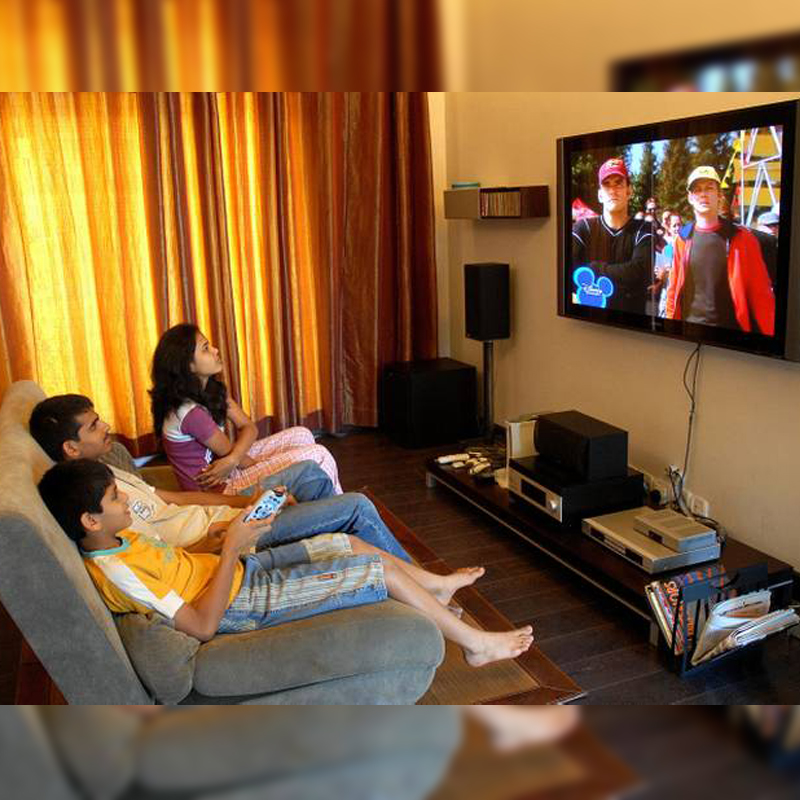
    According to the report – ‘Blockbuster Script for the New Decade: Way Forward for Indian Media and Entertainment Industry’, TV as a medium is expected to remain robust given its function as a platform for family viewing, strong user base, and the evolution of content to meet everyone’s needs. Unlike global markets, India’s TV penetration has remained flat and ARPUs have also been steady, with both trends expected to continue in the medium term. Subscriptions will be driven by the strong performance of regional channels and cost advantage vis-à-vis OTT. Cord cutting is nascent and is expected to be limited in the medium term. TV ad volumes have bounced back to pre-Covid levels, and are expected to continue growing in the future, driven by an increase in advertising on regional channels & growth in new advertisers.

    OTT sector in the scaling stage

    The Indian OTT segment is currently in scaling stage with strong subscription growth and increased investments in premium & original content, stated the report. More affordable data has led to an increase in internet access and digital payments, thereby improving access to OTT platforms and digital videos. The industry is one of the most competitive amongst emerging markets with 40+ players representing all types of content providers. SVOD revenue has seen a remarkable surge over last few years and is expected to overtake AVOD in the coming years.

    “The share of traditional media is slowly declining with increased digital adoption but there is still high headroom for penetration with only 54 per cent of Indian households having a pay TV connection compared to more than 70 per cent in China. For many households, TV continues to be the center of the home and a significant part of family time,” said BCG India MD and partner Mandeep Kohli.

    Film industry’s road to recovery

    According to the report, the film industry has shown encouraging signs of recovery post a difficult 2020. There are a few growth factors for the future – continued growth in regional, direct to digital releases and the rise of “content films” and others. The Indian Postproduction, VFX and Animation industry accounts for <10 per cent share of the global market and has the potential to be a booming sector this decade on the back of several Central and State Government initiatives.

    “After a long period of shutdown, cinema halls are now back in business with a bang. A record number of big-ticket movies are lined up for release well into 2022. That augurs well for the sector but caps on occupancies, closures of cinemas and modified audience behaviour might impact the speed of recovery,” said CII National Committee on M&E co-chairman and founder & MD Roy Kapur Films Siddharth Roy Kapur. “On the other hand, streaming has provided new avenues for screening and broad-based the options available for producers, artistes and technicians. Along with the rise of regional cinema, this marks the start of a truly fantastic decade ahead for the Indian content business.”

    Way ahead for the industry

    According to Technicolor India country head Biren Ghose, who is also CII National Committee on Media and Entertainment vice chairman, the success of India’s media and entertainment will ultimately depend on the ability to scale world-class creative talent in order to capitalise on the global opportunity, especially in the gaming sector.

    The projections showed that the industry is at a critical juncture of transformation, offering rapid growth in some areas. “But, to realise this growth, companies must tweak their strategies to take advantage of the current market situation,” said BCG India MD and senior partner Kanchan Samtani. “In addition to investing in content and technology to improve user experience, companies should also leverage suitable distribution models to enhance reach, focus on providing integrated ad solutions and offer innovative marketing formats to enhance the value proposition to advertisers.”

    “This year’s report put together by BCG with the help of CII Media and Entertainment Committee, looks at the decade ahead, and will help businesses chart their growth path and aide the government in framing enabling measures to facilitate further expansion of the sector,” said CII director-general Chandrajit Banerjee.

  • GUEST COLUMN: One accurate measurement is worth a thousand expert opinions

    GUEST COLUMN: One accurate measurement is worth a thousand expert opinions

    MUMBAI: Management guru Peter Drucker once said, “Because its purpose is to create a customer, the business enterprise has two — and only these two – basic functions: marketing and innovation.”

    Marketing is more important today than ever before as it leads to brand creation, which is the growth driver of the business. A brand is the biggest moat and one of the most powerful intangible assets a business has. Today around 11 per cent of a company’s revenue is spent on marketing. The second most important quote of Peter Drucker was, “If you can’t measure it, you can’t improve it.” And, how true is this even today in this age of data overload.

    Around 70 per cent of marketing spends are on media. Advertisers have never been under more pressure to prove ROI. TV has been leading and digital has been growing over the years. Together they contribute to around 80 per cent of spending. Measurement of both remains important, but it’s critical to focus on the right metrics which can drive action.

    TV viewership has undergone changes over the years, especially with digitisation, NTO & OTT. The pandemic has led to increasing the overall TV viewership with rural growing faster. If one has to look at genre level, then News, FTA & Regional has been on a continuous growth & Niche has been facing challenges. The good part about TV is that it has an industry-accepted third-party measurement system which drives most of the decisions on planning and investment. However, the industry needs to sort the recent ambiguity on news measurement.

    The consumer looks at TV and digital as a continuum. The majority of OTT content is TV shows, acting as catch-up TV. Growth of connected TV has been fast, though on a smaller base and with NTO 2.0 closer, it’s an indication that TV might keep tilting the balance towards rural & OTT will emerge as new Urban TV. The question is “When”? The audience being the key, can TV take a step further towards digital with improving targeting capabilities at a geo level as well as consumer interest and affinity?

    Digital has been growing and the launch of 4G and Jio has accelerated the growth. Specific measurement is possible at the customer level due to the availability of large data sets; however, digital comes with the challenge of a common currency and a heavy reliance on self-claimed platform level data.

    Platforms do not talk to each other leading to higher inefficiencies in planning. Over the last 18 months, digital spending has been moving to lower-funnel actions driving purchase and conversion. Evolved businesses do understand the need to balance the spending across the funnel (TOF) to get more efficiency on performance marketing without compromising on brand building.

    One of the major changes over the last few years is the advent of the creator economy. Scale is a challenge here and the industry needs to enable this. There is a need to move beyond views and likes. Coupon codes and affiliate links are solving the attribution question. However, the focus should also be to measure brand advocacy.

    With large data sets and extremely sharper targeting capabilities, digital also faces the wrath of privacy which is now being spoken at various industry forums and is at a cusp of change with regards to customer opt-in and usage of data.

    Hence TV & digital will have to come closer and there is a need for standardisation of the measurement mechanics, for improving the investment decisions. While the basic measures like monitoring reach, frequency, views, etc. are important to track, other outcomes remain critical like brand searches including marketplace, direct traffic, time spent, footfalls, etc. Tracking customer satisfaction, mind metrics, and NPS is also a key measure of brand health.

    While today’s consumer is multiscreen, measurement of media is operating in silos and the absence of single-source data adds to the woes. The industry has to take steps to arrive at a cross-media third-party measurement currency that helps measure effectiveness as well as efficiency of marketing spending.

    And finally, brand metrics across the marketing funnel, like awareness, consideration, and purchase intent will remain critical varying from business to business depending on customer engagement. The power of the brand will be determined by the ability to charge a price premium, loyalty, and advocacy, and it is imperative to measure these continuously.

    (Rahul K Shah is general manager, Motivator at GroupM. The views expressed in this column are personal and Indiantelevision.com may not subscribe to them.)

  • TV9 Network to launch new digital video magazine platform

    TV9 Network to launch new digital video magazine platform

    Mumbai: TV9 Network is gearing up to launch an English language online platform for long shelf-life narratives and news-based factual content.

    According to sources, the platform’s beta version will be launched in December, followed by a formal launch in January 2022.

    This will be a first-of-its-kind digital offering built along the lines of over-the-top (OTT) streaming services that help audiences choose the content they wish to consume. Incidentally, CNN+ has been reported to be working on a similar plan with a rollout expected later in 2022. TV9’s new platform will offer news-driven content with the depth of magazine coverage and the high production quality of OTT streaming services.

    The focus will be on providing narratives and multiple perspectives to news events. “We want to create news-driven content that has a long shelf life and host it in an OTT environment,” said a source on condition of anonymity. “The user experience will be that of an OTT platform but the editorial richness will be that of a magazine. We are calling this industry-first platform a Digital Video Magazine or V-Mag.”

    This new offering will be built on TV9’s legacy brand News9 that continues to have a recall as a news channel that TV9 ran from Bengaluru earlier. TV9 currently also operates an English news website called News9 Live. Though this new video platform – is likely to use a similar brand name, it will be a separate, standalone platform.

    “While videos are the most popular medium of consumption, digital is where that consumption will happen. That’s why we decided to revive the News9 brand and bring it in a brand new avatar for the English-speaking audience that is now used to a certain quality that entertainment OTT platforms offer,” said the source.

  • GUEST COLUMN: How has the PR ecosystem evolved over time

    GUEST COLUMN: How has the PR ecosystem evolved over time

    Mumbai: It is no secret that the public relations (PR) landscape has been steadfastly evolving over the past decade, thanks to the advent of digital media and the boom in the tech space.

    However, the conversations surrounding PR and its evolution often tend to be dichotomous in nature, pitting the old guard i.e. traditional PR against digital PR. In reality, both these systems are poised to work in a syncretic manner, with the traditional model supplementing the advances made by digital PR.

    How has the PR ecosystem evolved over time?

    The internet has created an almost borderless media and this has led to the birth of the concept of integrated communications. In essence, the Integrated model espouses leveraging all platforms, traditional and online, to ensure that a brand’s message is delivered to the intended target audience.

    PR agencies have thus had to move away from pure media relations to a more holistic model of communication strategy that is driven by multi-channel quality content. Gone are the days when pulling in a favour with a journalist for a CEO’s profile would suffice. In the wake of the blurring of lines between public relations, advertising, marketing, online and offline media, PR agencies are now being looked at as strategic partners to their clients. PR professionals today are thus tasked with creating meaningful messaging and communication strategies that appeal to clients, analysts, investors and journalists alike.

    There are myriad of changes that are being brought about by the advent of digital tech in PR. Some are more prominent than others and thus deserve to be looked at in-depth.

    Influencer Outreach: After an initial bout of resistance, when this was touted as a fleeting millennial trend, social media influencers have now become an integral part of PR strategies. This is because most brands and agencies have realised the value that influencers hold and the immense sway they have with their followers. Influencers resonate deeply with a specific sector and this can help brands boost visibility and popularity by being able to reach their target audience. It also helps a brand to garner credibility as influencers are able to build trust among audiences.

    Performance and Result Oriented Goals: PR agencies can no longer rely on traditional currencies such as goodwill and trust. Digital media has ushered in the era of real-time trend monitoring and brands can now stay in touch with their consumers through social listening.

    This means that it is possible for brands to have accurate performance metrics and develop a keen sense of what works and the changes that need to be made. And most importantly, data gathering and analysis can now lead to valuable insights and more informed decision-making processes. Companies and their brand solution agencies are thus capable of having their ear to the ground and knowing how the market reacts to their product/service and what consumers are thinking.

    Deeper Impact: Now more than ever before, PR professionals are expected to take into account a multiplicity of factors. Brands and companies don’t just have to be good for consumers, but they also have to be attuned to cultural sensitivities and be beneficial for the environment. Media messaging thus needs to be able to demonstrate true purpose and reflect good intention on behalf of a brand in order to garner the goodwill and trust of the consumers.

    As newer industries and verticals such as healthcare and fintech continue to emerge, PR is set to become an essential arm when it comes to strategic communication. And contrary to popular discourse, traditional PR won’t disappear altogether. In fact, it will just be merged and supplemented with newer digital forward models. The future of PR is thus vibrant but also daunting, and those who are hesitant to pivot to adapt to this new order, risk stagnation or worse.

    (Akshaara Lalwani is the founder & CEO of Communicate India. The views expressed in the column are personal and Indiantelevision.com may not subscribe to them.)

  • Social media to be fastest-growing channel by 2024: Zenith ad spend forecast

    Social media to be fastest-growing channel by 2024: Zenith ad spend forecast

    Mumbai: Social media will be the fastest-growing channel between 2021 and 2024, with an average annual growth rate of 14.8 per cent, closely followed by online video at 14.0 per cent, predicts Zenith’s Advertising Expenditure Forecasts report, published on Monday. The global ad market will continue its remarkable recovery from the 2020 downturn with 9.1 per cent growth in 2022, after 15.6 per cent growth in 2021, according to the report. Retailer media advertising is set to grow from $77 billion this year to $143 billion in 2024, it said.

    Social media is leading ad growth and will overtake television next year, estimates Zenith, with social media platforms embracing commerce and developing new advanced interactions between brands and consumers. The global data analytics firm expects social media ad spend to reach $177 billion in 2022, overtaking television at $174bn. Social media ad spend will rise to $225bn by 2024, when it will account for 26.5 per cent of all advertising, followed by paid search at 22.5 per cent and television at 21.0 per cent. Brands can use self-serve tools to create augmented reality experiences and then distribute them through targeted advertising, which can powerfully lift awareness and intent to purchase.

    Covid-19 setbacks have extended the period of heightened digital transformation and thoroughly disrupted shopping habits. Many consumers who would prefer to browse and purchase in person are shopping online by necessity. Businesses have responded by investing more than would otherwise have been justifiable in new technology, infrastructure, organisational change – and advertising. This includes brand advertising to promote e-commerce platforms, performance advertising to direct traffic to them, and advertising within these platforms (‘retailer media advertising’) to promote specific products, all of which have surged.

    Digital advertising as a whole will exceed 60 per cent of global ad spend for the first time in 2022, reaching 61.5 per cent of total expenditure, and will increase its share to 65.1 per cent by 2024. Zenith estimates that global ad spend will reach $70577billion in 2021, up from $63477billion  in 2019, and will rise to $87377billion by 2024. Global ad spend will expand by 5.7 per cent in 2023 and 7.4 per cent in 2024 as brands continue using advertising to spur further growth in e-commerce.

    “Digital Transformation in India continues to be a priority with one in two corporates having a digital transformation at their core,” said Zenith India CEO Jai Lala. “The pandemic has further accelerated digital growth amongst consumers with increased consumption across platforms in the area of entertainment, purchase, social, education and finance, amongst others. All these factors have led to a steady increase in ad spend making digital the fastest growing medium.” 

    Television advertising remains the easiest route to mass-audience brand awareness, despite years of audience losses to digital media. Brands’ reliance on television is fuelling rapid media inflation, which will continue even after the comparison with 2020 has passed, says the report. Zenith forecasts the cost of television advertising to rise by 11 per cent in 2022, compared to four per cent for out-of-home, three per cent for digital display, two per cent for radio, and zero for print. Brands will have to confront their dependence on a medium that consistently delivers smaller audiences for higher prices.

    Online video is fragmented and complicated to navigate. Multiple platforms deliver content through multiple devices to multiple screens, while ads may be passed through a chain of demand-side platforms, exchanges, ad networks, and content delivery networks before reaching the consumer. But, by investing in data and planning technology, and building partnerships with providers, brands can use online video to increase their reach and reduce their costs. Zenith forecasts online video ad spend to increase from $62 bilion in 2021 to $91 billion in 2024 when it exceeds 50 per cent of this size of television for the first time. Television ad spend will rise from $171 billion to $178 billion over the same period.

    Progress towards containing Covid-19 has been slower than expected with the emergence of new variants, and consumers have been less willing to resume in-person shopping. Businesses have continued their heightened investment in digital transformation, during a period in which many expected to ease back as consumers returned to shops. Digital advertising has therefore been stronger in the second half of this year than previously expected. Zenith now estimates that digital advertising will grow by 25 per cent year-on-year in 2021, compared to the 19 per cent estimated in the previous forecast, published in July.

    This structural change in the economy means that advertising is playing a greater role in driving sales growth through e-commerce. In particular, it has sparked a surge in retailer media advertising: display or search advertising that appears on e-commerce platforms.

    Retailer media can be highly effective, allowing brands to target active buyers at the point of purchase. Zenith estimates that retailer media advertising surged from 24 per cent growth in 2019 to 53 per cent in 2020, and then 47 per cent in 2021, when it totalled $77 billion. This is equivalent to the sums spent on newspaper, magazine, radio and cinema advertising combined, and accounts for 20 per cent of all expenditure on digital display and paid search advertising. By 2024, retailer media ad spend is expected to reach US$143bn, and 27 per cent of display and search. Much of this will be incremental to existing ad expenditure, coming from commercial budgets previously used to negotiate for shelf space in brick-and-mortar stores.

    The rise of the digital economy has also stimulated other forms of advertising, including brand campaigns on television and out-of-home, where digital brands are now prominent. The share of global GDP contributed by advertising had been rising steadily before the pandemic, from 0.72 per cent in 2014 to 0.75 per cent in 2019. After the step-change in digital media consumption and e-commerce last year, it is forecast to reach 0.77 per cent in 2021 and 0.80 per cent by 2024. This will be the biggest rise in advertising’s share of GDP since the late 1990s.

    Ad spend in all regions is now well above pre-pandemic levels, and all are expected to grow healthily over the next few years. Zenith expects digital transformation to slow down, but not go into reverse, as the pandemic eases in 2022 and beyond. The pandemic has accelerated trends that were already fundamentally reshaping the economy and will continue to do so. Zenith forecasts 14 per cent growth in global digital ad spend in 2022, up from the previous forecast of 10 per cent, followed by nine per cent growth in 2023 and 10 per cent in 2024.

    Paid search will grow by 9.8 per cent a year, primarily driven by retailer media, and out-of-home will enjoy solid 7.4 per cent annual growth as foot and vehicle traffic return to normal. Radio and television will grow marginally, by 2.2 per cent and 1.4 per cent respectively, while print declines by 4.7 per cent.

    “As consumers rely ever more on digital technology to connect and entertain them, and to inspire and fulfil their purchases, advertising is playing a greater role in driving sales and brand growth,” said Zenith head of forecasting Jonathan Barnard. “Over the next three years, we expect the ad market to achieve its highest rate of sustained growth since 2000.”

  • Optiminastic Media launches digital influencer marketing platform Click2Collab

    Optiminastic Media launches digital influencer marketing platform Click2Collab

    Mumbai: Digital marketing agency Optiminastic Media has announced the launch of Click2Collab, a tech-based influencer marketing platform. Click2Collab is built upon a seamless interface that helps influencers, brands, and agencies to connect with each other on a single platform.

    By introducing an end-to-end solution, Click2Collab aims to help brands and agencies design, curate, and customise campaigns as per their needs and requirements with the platform’s network of verified influencers from across India, said the statement.

    Speaking on launching a first-of-its-kind platform in India, Optiminastic Media co-founder Akshae Golekar said, “Click2Collab is a platform that is built to ease, simplify and bring efficiency to this evolving business. The platform is multifaceted wherein it allows influencers to on-board themselves and become more easily available and accessible, brands with easy discoverability of the right influencer for their campaign as well as agencies to streamline their business.”

    He further added, “Click2Collab reduces the complexities associated with the influencer marketing business. We are sure that it will also help the influencer marketing and creator’s ecosystem grow to greater heights. We will continue to invest in enhancing the platform and are certain of becoming a platform of choice for influencer marketing campaigns.”

    The platform, designed to cater to all three stakeholders – brands, influencers and agencies, will ease the business of influencer marketing, improve efficiency and help all stakeholders plan better, said the company.

    By providing brands with a state-of-the-art tech interface, Click2Collab aims to help them easily identify, estimate, execute campaigns in a short span of time by doing away with pseudo-science and manual intervention. It also provides the creator community an e-commerce platform thus giving them the opportunity to sell merchandise directly to their followers along with an exhaustive dashboard to track their earnings, it added.

  • Teachmint teams up with Anil Kapoor for #NayeZamaaneKiNayiSchooling campaign

    Teachmint teams up with Anil Kapoor for #NayeZamaaneKiNayiSchooling campaign

    Mumbai: Teachmint, an education infrastructure startup and teaching platform has launched its brand new campaign featuring Bollywood veteran Anil Kapoor. Centered around the idea of ‘Naye Zamane ki Nayi Schooling,’ the all-new ad campaign decodes what makes a school truly digital in today’s world and how digitisation can empower schools and teachers, thereby benefiting the learning opportunities and experiences of students.

    The digital ad film sees Kapoor play the role of a school principal who is experiencing the benefits of having digitised his entire school. The film begins with him establishing the fact that true digitisation goes beyond just conducting “live classes,” it takes place when you automate your operations and allow your teachers to focus on what they love doing – teaching. 

    The film also highlights the brand’s features like automated test generation & correction, classroom recordings as well as end-to-end institute management which enables principals and admins to significantly boost efficiency by automating several mundane, manual processes.

    “I am delighted to be associated with Teachmint, not just as an actor but also as a strong advocate of the power of education,” said Anil Kapoor. “Tech-enablement in education will play an integral role in building the future of our nation and it’s heartening to see a young company like Teachmint revolutionize this experience for educators, schools and institutes.”

    This is Teachmint’s second significant celebrity collaboration in 2021. The company had launched its first large marketing campaign with Rajkummar Rao in April to drive awareness and adoption of its mobile-first teaching platform. 

    “We have witnessed unprecedented growth in just 17 months since launching Teachmint and this campaign marks a new milestone in our journey of building a state-of-the-art infrastructure for education,”  said Teachmint COO & co-founder Divyansh Bordia. “With this new campaign, we take this up a notch by introducing an offering to help an entire institute digitise within minutes – Teachmint for Institute. We are extremely excited to collaborate with Anil Kapoor and are confident that this partnership will help us reach out to a larger audience, connect with educational institutes and help them become more aware of the benefits of end-to-end digitisation.”

  • LinkedIn urges professionals to hit ‘pause’ with new #FindTheBalance campaign

    LinkedIn urges professionals to hit ‘pause’ with new #FindTheBalance campaign

    Mumbai: Online professional network LinkedIn has tied hands with digital creative agency The Glitch to launch the second phase of the #FindTheBalance campaign that provokes honest conversations about the realities of working from home and the struggle of finding work-life balance amid the pandemic. The new creative films spotlight the importance of well-being in today’s remote hustle culture by encouraging professionals to hit pause and strike the right balance between work and life in the new world of work.

    In the second phase of the campaign, the three films take a deeper look at the lives of the characters introduced in the first #FindTheBalance film and present three 35-second films that depict the lives of professionals Vedika, Andrew and Gaurav, who struggle to keep up with work-from-home challenges.

    Conceptualised and executed by The Glitch, the second phase of the campaign comes as an extension of its first phase, which sparked honest conversations about the realities of working from home amid the pandemic across India.

    “Professionals in India are grappling with burnout at this time, and our Future of Work perception study also finds that today professionals value work-life balance (52 per cent) even more than job security (50 per cent),” said LinkedIn APAC head of brand marketing Sivaram Parameswaran. “The #FindTheBalance brand campaign is a reminder for our members to hit pause, reconnect with their family, friends, and colleagues, and find a new idea of balance.”

    These films are also being supported by a social media campaign across LinkedIn, Facebook and Twitter that encourages professionals to rewrite motivational quotes to make them more relatable for the post-pandemic world of work that professionals find themselves in today.

    “What I love about this campaign is the mirror it holds up to our lives. In the last 1.5 years, working from home gave us so many new perspectives,” The Glitch creative director Lucille Pereira said. “It showed us how to make time for family, or carve out time for self, whether it’s doing things we love or just a quiet coffee & sunset session. Whatever it means to you, however you do it, this campaign is a beautiful reminder to #FindTheBalance.” 

    With six million engagements on Facebook alone, the first phase of the campaign resonated with the Indian workforce aching to discuss issues of burnout and an increasingly toxic hustle culture.

    “The world around us has changed and many of us have experienced the blurring of our professional and personal lives. This film aims to showcase this very relatable narrative — the monotony that has become part of our everyday. Our hope is that it leaves professionals with the message of how we are all in this together, and as we navigate these unprecedented times it is important to remember to find our own unique version of balance,” The Glitch associate business director Riya Lalchandani stated.

    Professionals in India are also taking to LinkedIn to spark conversations, and share tips and learnings about how they can #FindTheBalance to beat the pandemic blues.

    The three films are now live on LinkedIn and other digital channels including YouTube.