Tag: Digital world

  • Havas promotes Hagen to global tech czar, Seltzer steps up to helm media network

    Havas promotes Hagen to global tech czar, Seltzer steps up to helm media network

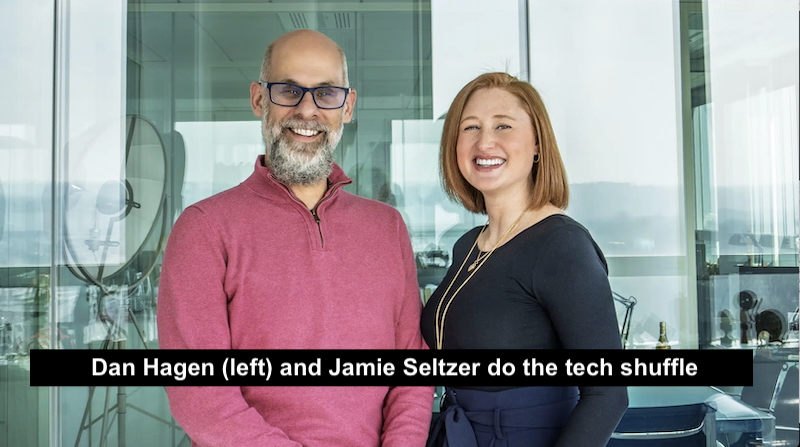
    MUMBAI: Havas has announced a double-header of senior appointments, shuffling its data and tech deck to turbocharge its “converged” strategy. Dan Hagen has been promoted to global chief data and technology officer, while Jamie Seltzer steps up to take the reins at Havas Media Network. Think of it as a digital power play, a  tech reshuffle.

    Hagen, previously the media network’s tech guru, is now tasked with developing Havas’s AI-powered “converged” operating system. He’ll be wielding the digital baton, ensuring the agency’s 23,000 employees are working smarter, not harder. He also will be responsible for “strategic data and tech alignment,” which, in plain English, means making sure all the digital cogs are turning smoothly.

    Havas’s CEO and chairman Yannick Bolloré, declared that “data and technology are the cornerstone of our converged global strategy.” He praised Hagen’s “award-winning audience planning platform,” suggesting he’s the man to lead Havas into the digital future.

    Seltzer, meanwhile, steps into Hagen’s old shoes at Havas Media Network, charged with developing the “converged media product and roadmap.” She’ll also be overseeing CSA, Havas’s global tech, data, and analytics consultancy arm. 

    Havas Media Network global CEO Peter Mears  said Seltzer has been “critical” in ensuring the agency is “data-led and outcome driven.” 

    Both Hagen and Seltzer bring a wealth of experience to their new roles, with over 20 years in the data and tech trenches. They’re tasked with ensuring Havas stays ahead of the curve in an increasingly digital world, where clients are demanding “future-forward” agency partners.

  • Stage set for the second edition of Indian Digital Brand Fest 2022

    Stage set for the second edition of Indian Digital Brand Fest 2022

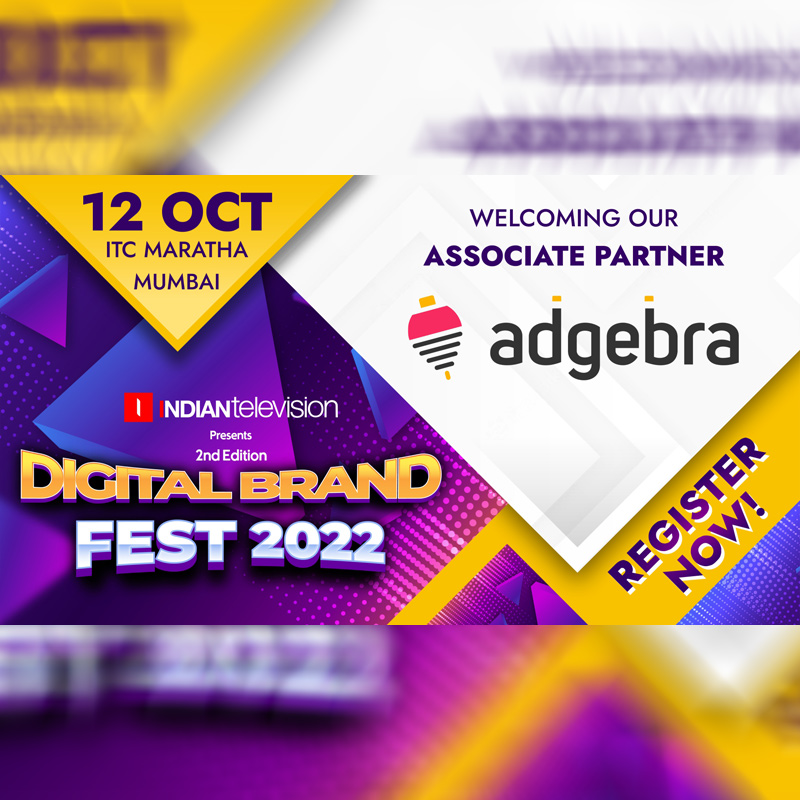
    Mumbai: In today’s digital world, the way that companies connect with their customers and cater to their preferences is key. The digitally empowered consumers of today have more choices than ever before, as the online medium becomes the new battleground for brands to up their marketing game and retain their connection with consumers. At the Indian Digital Brand Fest 2022, organised by Indiantelevision.com to be held on 12 October at Mumbai’s ITC Maratha Hotel, we take a deep dive into how businesses can leverage evolving technology to be their allies. The second edition of the Digital Brandfest brings together a host of industry experts, brands, advertisers, tech-platforms, top marketing professionals from across the spectrum and solution providers accelerating digital growth in India under one roof to analyse the digital transformation happening in the industry, propelled by new-age tech. The Digital Brand Fest 2022 will host 40 plus speakers and over 200 delegates from new-age D2C brands as well as the legacy consumer companies of India, in the largest gathering of digital brands. The one-day physical event boasts over ten sessions of panel discussions, fireside chats, and keynote knowledge sessions by the digital doyens on a host of industry relevant issues that discuss the trends shaping the future of marketing and advertising for brands. The summit is carefully curated around sessions to guide the market players with the right insights, strategies, and tech solutions and partners to build future-proof brands. The summit will also look at the latest trends driving the change in consumer behaviour and how it has impacted the industry’s growth. Google India’s director of business solutions & insights Priya Choudhary will address the keynote session at the summit, which will see participation from top industry speakers such as Warner Bros. Discovery director of marketing, South Asia Azmat Jagmag, dentsu India Media COO Bhaskar Jaiswal, Lokmat Media sr. EVP & head of digital business Hemant Jain, HDFC Bank VP & head of digital acquisition, content, & social media marketing Jahid Ahmed, Godrej Consumer Products vice-president & head of media services Subha Sreenivasan Iyer, Essence India VP of media activation Rahul Marwaha, GroupM India’s Niraj Ruparel, and many more. In a special address, Divya Karani, CEO, Media South Asia, dentsu will weigh in on “navigating advertising in a madtech world” in a special address. Indiantelevision.com group founder, CEO & editor-in-chief Anil NM Wanvari will engage mediasmart vice president, India and SEA Nikhil Kumar in a candid fireside conversation. Another special session will see JioAds CEO Gulshan Verma address the elite gathering on the topic ‘Unlocking opportunities-India beyond metros.’ The subjects and themes of discussion at the second edition of the IDBF summit will include content marketing for web 3.0, the metaverse marketing playbook, the martech stack roadmap for D2C brands, Among the topics covered are crossing the chasm: direct to programmatic, identity in a cookie-less world, and new-age internet users—challenges and opportunities. TV9 Network is the presenting partner for the event, which is co-powered by mediasmart. Adgebra and TellyChakkar are the associate partners, and Playflix & One Take Media Co. are the industry support partners. The event is executed by ITV 2.0 Productions.

  • ZEE5 and Wework host discussion on changing landscape of the digital world

    ZEE5 and Wework host discussion on changing landscape of the digital world

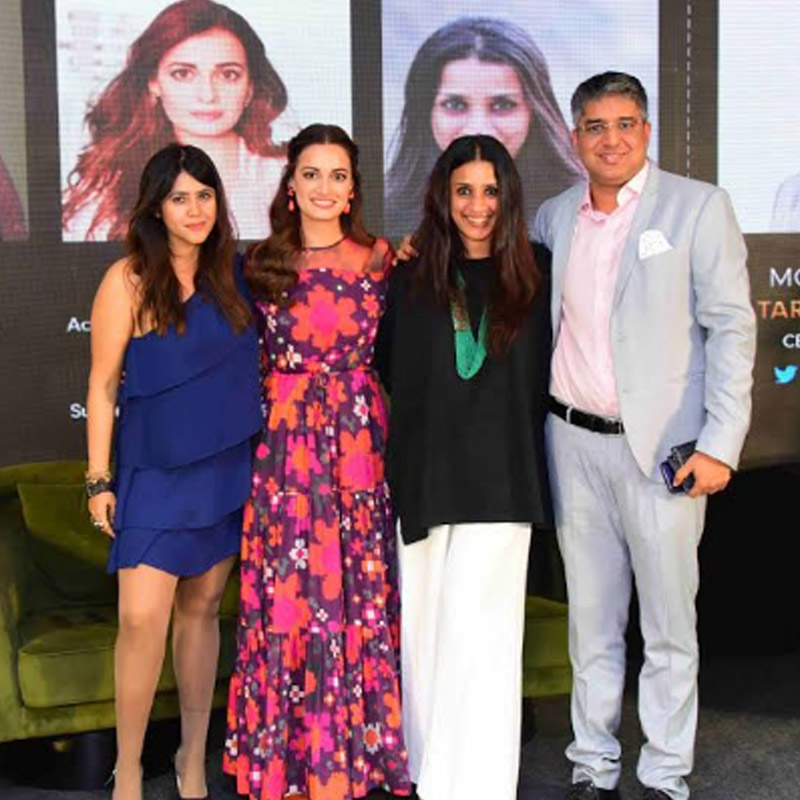
    MUMBAI: Addressingthe rapidly evolving digital ecosystem in India, ZEE5 India and WeWork India today co-created an evening of discussions on the Changing Landscape of the Digital World.Tarun Katial, CEO – ZEE5 India, India’s fastest growing ConTech brand, and Ryan Bennett, CWeO of WeWork India, welcomed the guests present for the evening.Bringing forth expert voices from multiple sectors of the techno-sphere, the event was attended by content creators and enablers alike, making it an eclectic mix in the room.

    The evening comprised of two separate panel discussionscentred on Technology and Content.

    •    Themed on ‘Transforming technologies in the digital media landscape’, the Technology-focussed discussion brought Deepak Pande, Associate Director – Vodafone Idea, Vijay Kolli, Head – Mobile Strategy, Akamai Technologies and Ashish Dhawan, Managing Director – Enterprise Business, Amazon Web Services on the panel, moderated by Tushar Vohra, Head – Technology, ZEE5 India.

    •    The Content discussion that revolved around ‘OTT: The golden age of screenagers | How digital video streaming has become a lifestyle!’ brought Ekta Kapoor, Joint Managing Director, Balaji Telefilms, renowned actress Dia Mirza,and Ashvini Yardi, Bollywood Producer together moderated by Tarun Katial.

    ZEE5 and WeWork have been disruptors in their respective areas of business, and the digital ecosystem as a whole. Leveraging the synergies,the initiative aims to bring the community together to encourage industry-wide conversations around the evolution of digital world and how the players can collaborate to offer a valuable solution to the viewer.

    Tarun Katial, CEO, ZEE5 India said,“The boom in digital infrastructure in the country today has enabled the man on the street to consume content in his preferred language anytime, anywhere. For the OTT industry to remain ahead of the game always, we believe that the industry needs to come together to chart out a growth trajectory which changes keeping country’s dynamic digital landscape in mind.WeWork and ZEE5 have been disruptors in their individual capacities, and we couldn’t have chosen a better partner to set forth on this journey. With thought leaders of the calibre we saw here today, this was certainly an interesting first of many such discussions we hope to spur in the ecosystem.”

    Ryan Bennett, CWeO, WeWork India, “We are thrilled to host this interesting discussion on the changing landscape of the digital world. Such discussions help in bringing together young innovators and leverage their synergies to find solutions to relevant issues, while collaborating and developing long-lasting relationships amongst one another. Fostering this community-building spirit and encouraging industry-wide conversations is our passion as we are constantly undertaking initiatives that bring the community together.”

    Ekta Kapoor, Joint Managing Director, Balaji Telefilms, “There are three faces to every viewer – the family face, the friend's face and the face when you are alone. In my view, digital viewing is for that third face – what you watch when you are alone. Different kinds of content work for different kinds of people in different places. Television has evolved over the past 20 years; storytelling has changed. I can tell you with confidence that no medium is dying, all of them are heading towards peaceful co-existence. For every user who is going digital in urban areas, there is one person who has bought a new TV in a village. There is no one size that fits all in content. Different communities are watching different things. So hyper-personalisation is the new normal.”

    Dia Mirza, Actor, Producer, UN Environment Goodwill Ambassador & United Nations Secretary General Advocate for Sustainable Development Goals, “Social content is driving people to viewing a different kind of content – be it cinema, television or the web series. People are connecting with the stories that they see now. I believe that there is a larger purpose to story-telling and it is a powerful medium to change the way that people are thinking. Self-expression is key. The digital medium has democratised content, and this means an explosion of good content like never before bringing ample opportunity for the talented people out there who are struggling to find enough work in the industry today.”

    Ashvini Yardi, Content Producer and Founder of Viniyard Films, “I have been in the industry for the longest time and have seen the industry change in these years. Content has always been the striving force for a successful project be it on GEC channels, Cinema or digital platforms. While I was working with one of the most popular channels, I realised I wanted to explore something new and that's when OMG (the movie) happened. Moving away from something I knew and enjoyed was not easy, but films – especially OMG – was something that fascinated me, and I took the chance to explore my passion. Today I look back and feel it was a good decision. OTT is a great platform to showcase one's creativity and to choose the right channel for the content. Each channel has a different target audience and one has the freedom to create success stories, if chosen wisely. I think the industry is only going to boom with amazing work and talent.”

    Vijay Kolli, Head of Mobile Strategy, AKAMAI, “Hyper-personalisation is here to stay. Platforms are increasingly looking for the right kind of content to build viewer stickiness with the platform. We, at Akamai, carried out a survey to understand audiences’ emotional reactions to the content they were they consuming. The insights from this survey has helped us in laying out the philosophy for ad integration into OTT platforms and developing tools to gauge this effectively. As we inch towards 5G implementation, demand will rise for applications of Artificial Reality and its high interactivity component. Given Japan is moving closer to the year of hosting the Olympics, they are investing heavily into AR to elevate the entire experience; we are seeing a lot of movement there.”

    Deepak Pande, Associate Director, IoT, Vodafone Business Services, “There are two stories to hyper-personalisation – besides the obvious, there is a set of people who are worried that in case of too much personalisation, they may miss out on some spectrum of content. Convergence of technologies is happening at an unprecedented level and this will have a profound impact on the experiences that consumers are seeking. Possibility of what can be achieved through implementation of 5G is enormous, the cost is what we have to ready to bear.”

    Ashish Dhawan, Managing Director – Enterprise, Amazon Web Services, “Hyper-personalisation is complicated – applying all the tools to read and analyse the consumption trends generated by the viewerand then accessing the appropriate CX to present content to them. Difference between 4G and 5G is not just speed but the reduction in delay of response. Communication across time zones and across the ends of the planet will get lower. And with this, we will see an immediate benefit to sectors such as healthcare, education, entertainment and such.”

  • Smriti Irani favours facilitating constructive communication in digital world

    Smriti Irani favours facilitating constructive communication in digital world

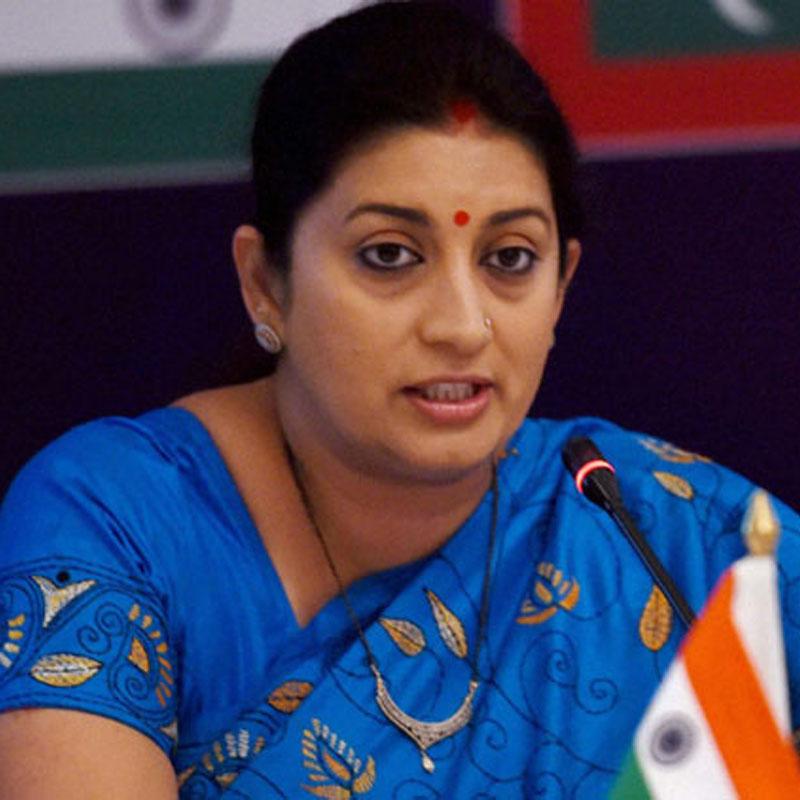
    MUMBAI: Union information and broadcasting minister Smriti Irani has said that the role of the central government was to facilitate constructive communication in the digital world. She was speaking at an interactive session organised by the Observer Research Foundation in New Delhi.

    “I think the biggest challenge and opportunities in managing (digital content) is (to know and understand) the intent behind that creativity,” she said when asked how she managed, as a minister, the artificial distinction in content or creativity in a digital world where jurisdiction and borders had no place, PTI reported. If the intent of creativity or communication was to “create disharmony,” she said then there would be concerns regarding it.

    If the intent was to empower, she said, then it was not the job of the government to intervene.

    About a low budget films performing well, she said that a creative person would “never pursue a balance sheet which says only profit” but would pursue telling a great story. She also said that the best way to discourage bad content was to avoid watching such things. In a creative democracy, in a country like India, we could not ask people to stop making a certain type of content.

  • Mastercard revamps its logo keeping digital world in mind

    Mastercard revamps its logo keeping digital world in mind

    MUMBAI: Leading global payments & technology company Mastercard has revamped its logo, a first for the financial services giant in 20 years, according to reports.

    The new card logo no longer reads CamelCase; it’s just “Mastercard” now and in some cases “mastercard’, as per theverge.com. The logo still has the overlapping red and yellow circles and sans-serif font, but all the elements are finer and sharper.

    Knowing that almost 2.3 billion people carry the company’s cards, one would wonder why it needed a change in the first place endangering its 20 year old brand identity.

    “This is really one of the most broadly distributed and most widely seen marks in the world,” said Michael Bierut, who designed the new branding with Pentagram partner Luke Hayman in an interview with the media. Between them, the acclaimed designers have revamped identities for everyone from Verizon to New York Magazine to Hillary Clinton.

    There is also the question of credibility. Consistent branding is one of the ways in which banks and credit cards build trust with their customers. But as the function that these financial services offer have evolved with time between online payment platform, a digital wallet, and a technology company, suiting the current digitally charged consumers, it is important to have a logo that reflects just that.

    “It needs to thrive in a digital space,” Mastercard’s customer experience and design head Cindy Chastain had said on the new change. “It’s simplified. It’s modernized and optimized for relevance in an increasingly digital world.”

    In other words, traditional financial companies are now opting for logos that not only look good and trustworthy on banners, billboards and cards, but on laptop screens, smartwatches and of course as app logos as well.

  • Mastercard revamps its logo keeping digital world in mind

    Mastercard revamps its logo keeping digital world in mind

    MUMBAI: Leading global payments & technology company Mastercard has revamped its logo, a first for the financial services giant in 20 years, according to reports.

    The new card logo no longer reads CamelCase; it’s just “Mastercard” now and in some cases “mastercard’, as per theverge.com. The logo still has the overlapping red and yellow circles and sans-serif font, but all the elements are finer and sharper.

    Knowing that almost 2.3 billion people carry the company’s cards, one would wonder why it needed a change in the first place endangering its 20 year old brand identity.

    “This is really one of the most broadly distributed and most widely seen marks in the world,” said Michael Bierut, who designed the new branding with Pentagram partner Luke Hayman in an interview with the media. Between them, the acclaimed designers have revamped identities for everyone from Verizon to New York Magazine to Hillary Clinton.

    There is also the question of credibility. Consistent branding is one of the ways in which banks and credit cards build trust with their customers. But as the function that these financial services offer have evolved with time between online payment platform, a digital wallet, and a technology company, suiting the current digitally charged consumers, it is important to have a logo that reflects just that.

    “It needs to thrive in a digital space,” Mastercard’s customer experience and design head Cindy Chastain had said on the new change. “It’s simplified. It’s modernized and optimized for relevance in an increasingly digital world.”

    In other words, traditional financial companies are now opting for logos that not only look good and trustworthy on banners, billboards and cards, but on laptop screens, smartwatches and of course as app logos as well.

  • Star looks to give mobile users a Plus experience

    Star looks to give mobile users a Plus experience

    MUMBAI: In an effort to tap into the burgeoning mobile sphere, Star India is launching the platform Plus by the end of February.

    Star is hoping this initiative will help users go beyond using the mobile for text and voice. It is being positioned as a solution for consumers to catch up on television, sports, movies, shop and bank on the go.

    Speaking on this, Star Mobile Entertainment senior VP Viren Popli says, “The mobile service is a particularly valuable tool for those who do not have access to the net. They can access the digital world. You do not need to change your phone. You need GPRS to download the application for free. There will be a monthly fee of around Rs 2 for the content. Of course ringtone downloads or purchases will be billed separately.

    “Once a user downloads the application he will see nine buttons. These are TV, Sports, Music, Movie, Lifestyle, Community, Downloads, Info Services and Help. TV has a TV guide. We also offer mobisodes of our shows. This is basically a summary of the episode that has just aired. You can also get wallpapers. As far as information services are concerned we have a few partners. For banking we have tied up with HDFC. It allows you to access your account, ask for a cheque book.”

    Popli adds that in the travel, segment there are two partners – Travelguru and makemytrip.com. One can buy tickets and make hotel reservations. Star has also tied up with Infomedia for the Yellow Pages service. Here you can search for phone numbers. For astrology there is a tie-up with Dinesha Speaks. The sports section has a news desk for cricket, hockey, golf, tennis etc. One can also get ball by ball updates.

    In the movies section one gets clips, news and reviews. For music the firm has tied up with Universal Music. One can get information on new releases, classics etc. One can listen to clips before deciding whether or not to make a purchase. Popli adds that as of now five to 10 per cent of mobile phones in India have GPRS. Hopefully in two years time with services like this launching 30-40 per cent of phones will have GPRS.

    He says that the service took six to seven months to set up. One criteria was that the user should not have to change his/her phone. Also the interface needed to be easy to use. Right now the interface is in English but Star is looking at making it available in other languages as well. Going forward Plus’ aim will be to add to the depth and breadth of the services it offers.

    For instance, in TV in the future one might get other channels’ schedules and have clips from there besides the Star bouquet. That is one reason why Popli says the name Plus was given to the service to separate it from the Star brand name. The firm is also examining the possibility on introducing mobile blogs, mail as time goes on.

    In the Lifestyle section one can get information on cars courtesy a tie up with Overdrive. Then there is a tie-up with T3 for gadget news. Computing information comes courtesy Chip. Design tips will be provided by Better Interiors. Fans of audio can learn what is happening thanks to a tie up with AV Max. If one wants to buy a car for example one can put in a price range and then see what is available. A review will be there and then one can ask for a test drive.

    The Community section will offer Midnight Chat on Channel [V] as well as shopping. One can also blog here.

  • Nickelodeon unveils virtual community playground ‘Nicktropolis’

    Nickelodeon unveils virtual community playground ‘Nicktropolis’

    MUMBAI: Nickelodeon, a division of Viacom Inc.’s MTV Networks, has launched new kid-targeted virtual community titled Nicktropolis on 30 January. It promises to offer visitors multi-media experience giving them an opportunity to engage in a virtual world filled with web-based activities.

    According to an official release issued by the company, (at Nicktropolis, available at http://www.nicktropolis.com/ or through http://www.nick.com/), kids will have their own virtual community where they will have the opportunity to play games, watch video, explore Nickelodeon-branded and original environments, interact with other kids or Nickelodeon characters in real time, and create their own personalized 3D rooms.

    “Virtual worlds like Nicktropolis are part of our strategy to bring immersive, relevant entertainment experiences to our audiences wherever they are, and to build communities around our content across every kind of platform,” said MTVN chairman and CEO Judy McGrath. “The virtual worlds we’ve been building across our networks give the fans of our brands the high level of interaction they want with one another, and with the content itself.”

    Kids enter Nicktropolis by assuming an “avatar” that they design and personalize, choosing from an array of hairstyles, skin tones and clothing styles. Once a user selects a destination, the avatar appears in the particular environment and can move around simply by clicking where he/she wants to go.

    “Nickelodeon has a deep connection with kids, and Nicktropolis is built from our knowledge that kids’ interest in social networking is all about gaming,” said Nickelodeon and MTVN Kids and Family Group president Cyma Zarghami. “Nicktropolis serves as a one-of-a-kind multimedia virtual entertainment playground for kids that allows them to watch video from our immense library of programming, play games, interact with our characters and safely communicate with each other through controlled chat.”

    The site offers a 3D environment consisting of four main areas containing multimedia experiences, gaming, and opportunities to personalize their space, create video play lists of their favourite Nickelodeon content, and interact in a safe, community environment. Additionally, the company states that Nicktropolis incorporates numerous safety features to ensure kids’ virtual playground experience is as safe as possible. Participation in Nicktropolis relies entirely on the anonymous registration system, which does not allow kids to divulge personal, identifiable information, adds the release.

    Nickelodeon’s Nicktropolis is MTV Networks’ latest move in serving its audiences through original online and wireless content across all of its brands. This follows from Nickelodeon’s latest research study, Living in a Digital World (2006), which found that 86 per cent of kids 8-14 are gaming online; more than half (51 per cent) are watching TV shows and videos online; 37 per cent are instant messaging and 12 per cent are participating in chat rooms.

  • BBC licence fee to rise by 3%

    BBC licence fee to rise by 3%

    MUMBAI: UK Culture Secretary Tessa Jowell has announced that the BBC licence fee will rise by three per cent over each of the next two years. The deal will see the current fee of ?131.50 rise to a maximum ?151 by 2012.
    Borrowing limits will also be tighter than requested. The BBC had wanted an above-inflation hike in the licence to boost programmes and digital services.
    Not surprisingly BBC DG Mark Thompson expressed “real disappointment” at the Government’s final licence fee level settlement but said it was a privilege to receive and gave certainty in planning to create the best possible content and services for all audiences.
    Thompson said that no commercial rival enjoyed that certainty of funding. While the BBC could argue that the benefits that extra funding would bring to the wider creative industries as well as audiences, he said that it was ultimately for the Government to decide the level in the broader context of inflation and the wider public sector.
    He also welcomed the longer settlement at six years enabling efficient planning for digital switchover, rapidly changing audience expectations and new creative initiatives.
    “Our vision for the future, broadly endorsed by a Government White Paper, as well as their own requirements and ambitions, especially around digital switchover, plus not wanting existing, valued BBC services to be squeezed as we invest for the future, led us to bid for a settlement that would increase in real terms.
    “The settlement announced means the BBC still receives substantial, guaranteed income of more than ?20billion over the next six years, which is financial security denied to any other media player. But it leaves a gap of around ?2 billion over the next six years between what we believed we needed to deliver our vision and what will actually be available. That’s not a gap many organisations can swallow comfortably.”
    Thompson said there were three ways the organisation could now move to reduce the gap:
    1 – Simply not make some new investments, do them later or do them more modestly;
    2 – Increase self help targets. This would mean: increasing licence fee efficiencies in collection and evasion; maximising commercial revenues and continuing reform, modernisation and productivity;
    3 – Move resources inside the BBC from existing content and services to new ideas.
    The BBC’s executive board and senior managers across the organisation will now review investment plans in the light of the settlement and explore the options.
    The executive will then make initial recommendations to the BBC Trust who will take decisions later in the year in the best interests of licence fee payers, drawing on the framework of the BBC’s public purposes and public value.
    Thompson adds, “The BBC faces challenges to find enough money to create the fantastic content our audiences want. After seven years of funding that has grown in real terms, we now face not just a tight settlement but daunting investment challenges in distribution, infrastructure and technology that risk diverting money away from content creation. These challenges call for some new thinking about how we produce content and how we create value.”
    Thompson said that the BBC’s vision for content in the digital world, Creative Future, was never fundamentally about spending new money:
    “It is about flexing, adapting, liberating all content, but above all, content we already make. It’s about unlocking the full value of existing investment.”