Tag: digital video

  • Subscription economy will balloon to $1.2 trillion by 2030 as consumers drown in services

    Subscription economy will balloon to $1.2 trillion by 2030 as consumers drown in services

    HAMPSHIRE: The subscription economy is heading for $1.2 trillion by 2030, up 67 per cent from $722 billion this year, according to Juniper Research. But consumers are growing weary of endless monthly bills, and providers face a reckoning: deliver distinctive value or watch customers bail.

    Digital video services will dominate, accounting for over a third of global subscription spending by 2030. But the fastest-growing category is mobility-as-a-service, where users subscribe to access multimodal transport. That market will explode by 540 per cent between 2025 and 2030.

    The growth masks a brewing crisis. Simply mixing adverts with subscription fees whilst raising prices is not a long-term solution, warns Juniper Research fintech research vice-president Nick Maynard. “As consumers grow increasingly weary of endless subscriptions, providers must deliver distinctive value to maintain growth. Simply relying on hybrid models risks alienating already fatigued customers.”

    The fix, according to Juniper, is bundling and flexible management. Combining subscriptions into bundles allows users to make informed decisions with a single view. Add flexible management options and users feel more empowered—which increases satisfaction and reduces churn.

    “Managing subscriptions can be a challenge for consumers, particularly as the number of subscriptions increases,” said Maynard. “We have seen many bank and fintech apps focus on subscription management as a key issue for users. Therefore, subscription providers must look at bundling and flexible management to ease the user experience, or they will lose control of subscription management to third parties.”

    The warning comes as banks and fintech firms increasingly position themselves as subscription gatekeepers, offering tools that let users track, manage and cancel services from a single dashboard. If subscription providers don’t simplify the experience themselves, they risk ceding control to intermediaries.

    Juniper’s study analysed over 71,500 datapoints across 61 countries over five years, making it the most comprehensive assessment of the subscription economy to date. The research includes a competitor leaderboard and examination of future market opportunities.

  • OTTs are regarded as one of the most important aspects that influence consumer behaviours: MMA Report

    OTTs are regarded as one of the most important aspects that influence consumer behaviours: MMA Report

    Mumbai: In India, OTTs are regarded as one of the most important aspects that influence consumer behaviors. In a recently published report, in collaboration with Warc, MMA Asia Pacific examines how the industry is approaching these challenges, focusing on current trends and future opportunities. To drive growth in the digital age, marketing needs to modernise a specific set of capabilities and mindsets.

    Findings from this study suggest that over a third (36 per cent) of Indian marketers will spend more than 60 per cent of their budgets on digital marketing, compared to 25 per cent of Apac marketers overall.

    19 per cent of Indian marketers are investing in AR/VR in efforts to promote marketing advancements, the report added.

    A majority of marketers are using data analytics and collection to drive improvements in their digital marketing. While 69 per cent marketers expect the metaverse to significantly impact the space, a budget of 36 per cent identified it as the biggest barrier to digital marketing growth in India.

    To drive growth in the digital age, marketing needs to modernise a specific set of capabilities and mindsets. But as complexity grows, marketers face increasingly difficult choices about where to allocate their investments, what objectives and tactics to choose, and what capabilities to develop in order to drive future growth.

  • YouTube’s Primetime Channels to bring more than 30 services in one single place

    YouTube’s Primetime Channels to bring more than 30 services in one single place

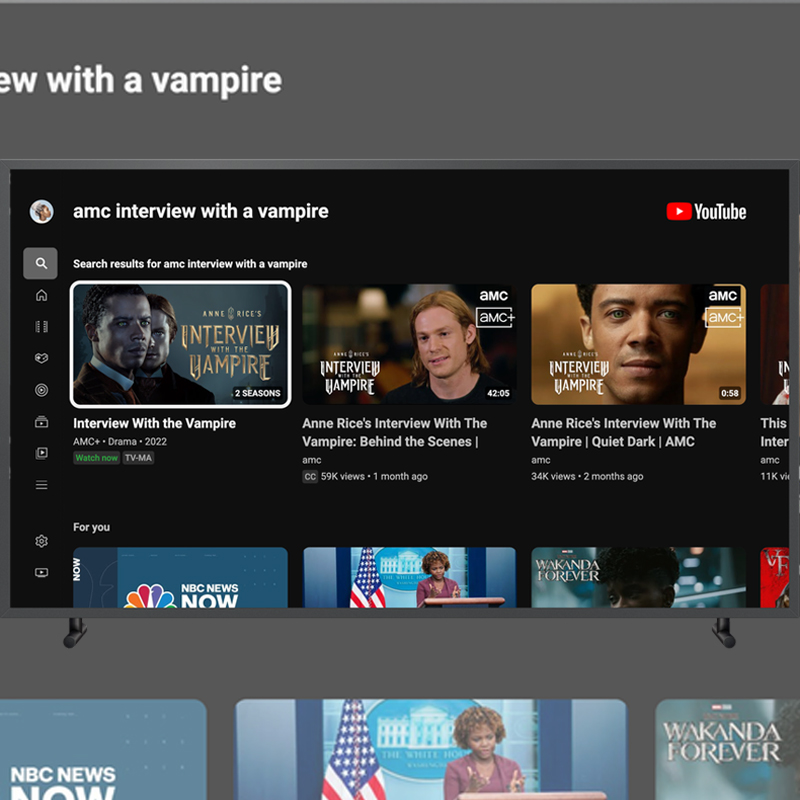
    Mumbai: Digital video social network YouTube has announced the launch of ‘Primetime Channels.’ Users will be able to sign up, browse, and watch TV shows, movies, and sports from streaming services such as Showtime, Starz, Paramount+, AMC+, ViX+ and more, all directly on YouTube.

    In a blog post, YouTube director of product management Erin Teague wrote that the digital video social network will roll out an early version of ‘Primetime Channels’ in the US. To sign up, users can head to the movies and TV hub, where they will see over 30 channels that they can buy directly through YouTube, with streaming services such as NBA League Pass and more coming soon.

    “‘Primetime Channels’ adds even more content that you just can’t miss to our collection of thousands of movies and shows available for rent or purchase, or for free with ads. Choosing between sci-fi or horror? Well, we got both options covered with the Paramount+ original Star Trek: Picard and Anne Rice’s Interview with the Vampire on AMC+. Are you itching to see Spider-Man: No Way Home for the hundredth time? We have that too, through Starz. Or maybe you’ve been meaning to catch up on a great drama. From 1883 on Paramount+ to The Chi on Showtime, you can enjoy it all right on YouTube,” wrote Teague.

    “We are excited to expand our partnership with YouTube to offer customers of Paramount+ another way to stream the content they love. This new feature gives us the opportunity to expand our presence on YouTube, broadening our reach and giving consumers even more choice when it comes to streaming the best in entertainment,” said Paramount Streaming chief strategy officer & business development officer Jeff Shultz.

    “Once users sign up, content from your ‘Primetime Channels’ will be reflected in the YouTube experience you know and love. For fans who like to go deeper into what they’re watching, ‘Primetime Channels’ will feature shows and movies with curated trailers, behind-the-scenes footage, and cast interviews. When searching for content from your purchases, you’ll be able to quickly identify and access them in the search results, alongside videos from your favourite creators. And YouTube recommendations will also include programmes from ‘Primetime Channels,’ delivering a personalised selection of content across YouTube that appeals to all your interests.

    “People already come to YouTube to watch trailers for highly anticipated movies or clips of scenes from their favourite TV episodes. Now you can continue watching directly on YouTube. And you will continue to have choice and control over your accounts with the ability to manage all of them in one place.

    “Whether it’s subscribing to Nerdist to find favourite clues after watching a Yellowjackets episode on Showtime or finding makeup tutorials from Trixie Mattel to recreate your favourite looks from Paramount+’s original series RuPaul’s Drag Race All Stars, you can now immerse yourself in all the content YouTube has to offer.”

    “We’ll continue working with our partners to bring even more content options to ‘Primetime Channels,’ build new unique features that only YouTube can deliver, and expand to our international users, so please let us know what you’d like to see next!”, wrote Teague.


  • OTT, broadband, and ARPU chase

    OTT, broadband, and ARPU chase

    Mumbai: The adoption of streaming in India has happened in stages driven by affordable handsets, cheap data, and most recently the pandemic. While the first two aspects set the stage for global streamers like Amazon Prime Video and Netflix to enter the country, the next few years saw both existing as well as new network and non-network players intensifying the scene.

    Despite Netflix’s admittedly ‘frustrated ambitions,’ India continues to be an attractive market for international OTT brands. NBC Universal’s hayu launched last December, AMC+ in March 2022, and the entry of HBO Max is on the cards. The ‘mainstreaming of streaming’ in India, however, depends in a big way on ‘Bharat’ which will power the next wave of OTT adoption through the ‘regional OTT-local ISP/wired broadband’ combine. And now is the time for it.

    What changed?

    The obvious increase in on-demand content consumption aside, what the pandemic changed at a more fundamental and universal level was that India seems to have reached the point of no return in the context of broadband adoption. Between 2016 and now, broadband has become a utility, and ‘2020’ is to be credited exactly for that.

    This also explains why despite the prepaid tariff hike in November 2021 that led to the gross loss in subscriptions, clean up of low paying, dormant users, and movement to postpaid resulted in higher ARPUs (average revenue per user) for telcos across. A look at the past 10 months of Telecom Regulatory Authority of India (Trai) data shows that wired broadband has grown consistently, while mobile and fixed broadband fluctuated.

    In fact, the sharp rise of 8.24 per cent last December was reminiscent of the increased demand for wired broadband fuelled by work from home, online education, e-commerce and other digital services, as well as online video during the pandemic.  The requirement for cheaper, faster and uninterrupted data, saw wired broadband subscriptions growing by 3.42 per cent post the second wave.

    Mutual advantage

    The shifting of broadband consumption from offices to homes, mobiles to CTVs and urban to rural is bound to create more regional prospects for VoD content providers, as well as smaller ISPs and MSOs that are struggling to maintain their individual existence. The OTT opportunity has contributed significantly to ensuring that players like OneOTT and ACT that thrive on a strong tier 2-3 play in addition to the metros are counted in the league of Reliance Jio, Bharti Airtel, and Vodafone Idea today.

    “We all know that wired broadband is more reliable in terms of speed and quality compared to wireless. But to wire, the whole country is Capex sensitive,” Microscan business head–ISP and director Playbox TV Samson Jesudas says. “The penetration of wired broadband is therefore just about 20 per cent in India. Hence we should appreciate big telcos who are investing huge amounts to wire up the whole country. At the same time, we should ensure the survival of other ISPs in the country.”

    Struggling on account of dropping ARPUs as a result of data prices going down, increased customer acquisition cost, high payback of over 12 months, as well as churn issues, ISPs are in greater need than ever to explore other value-added services as revenue options. In such a scenario, OTT can be the catalyst to promote wired broadband.

    “Today, all telcos and ISPs are bundling OTT content along with their broadband plans. Cable operators have upgraded themselves to ISPs or franchisees of ISPs. Logistically they are in best position to give quality and timely service to end subscribers,” observes Jesudas. “In fact, there has to be a major consolidation of these LCOs and ISPs by telcos and large ISPs,” Jesudas adds.

    In addition to tech and content, partnerships with ISPs are an integral part of ErosSTX’s OTT platform Eros Now’s B2B strategy.

    “Today, content makes up for over 82 per cent of internet consumption which also means more consumption of data and increased ARPUs for ISPs. In other words, ISPs have emerged as a medium for consumers to consume more data,” remarks Eros Now senior VP distribution and alliances Manpreet Bumrah. “We work together with ISPs on innovative modulation of engineered subscription plans with a win-all proposition for the entire ecosystem which includes OTT, ISPs and consumers.”

    Elaborating on the prospects for MSOs, Bumrah shares that there are over 750 million mobile internet consumers in the country today which establishes the fact that India is riding on the internet. However, only 25 million households have access to wired broadband. “With the cable connected to around 200 million houses, there is a huge opportunity for the entire digital media and entertainment ecosystem to grow at the household level,” he says. 

    According to Global Infocom Networks partner and director Harshal Dalal, local ISPs are moving ahead from being vanilla broadband service providers to becoming digital service providers today. “Along with OTT which is proving to be a major stepping stone, diversification is being carried out through other offerings such as insurance and travel & tourism,” he notes.

    Currently associated with over ten OTT platforms, the Global Infocom Networks has been providing quality and cost-effective solutions to ISPs. It aims to bring more awareness to them in terms of customising their offers and penetrating tier 2 and 3 cities in 2022.

    The promise of 100 million ‘TV Nevers’

    In a further boost to digital India, the recent budget promised great leaps in rural broadband connectivity through the government’s flagship programme – BharatNet. It aims to bring broadband to 361,000 villages across 16 states, including 1.37 lakh gram panchayats by 2025.  The new infra-sharing guidelines are also making it feasible for smaller MSO/ISPs to reach remote areas of the country. 

    Commenting on the possibility this creates, Bumrah says, “As internet bandwidth improves, the consumer experience will improve which will further accelerate the uptake of the internet in the country including by the 100 million ‘no TV households’.”

    According to the economic survey released on 31 January, 5.46 lakh km optical fiber cable (OFC) has been laid as of September 2021, a total of 1.73 lakh gram panchayats (GP) have been connected by OFC, and 1.59 lakh gram panchayats are service ready under BharatNet. Combined with the global push for affordable broadband led by the ITU, BharatNet has the potential to revolutionise the telecom sector much in the same way as Free Dish has transformed the broadcasting industry in recent years.

  • 2020 and the debate of TV vs digital video

    2020 and the debate of TV vs digital video

    MUMBAI: It’s been two decades since I have been listening, participating and speaking about the great inflection point in digital in India. Every five years with some growth in consumer usage of the internet, adoption of platforms and growing online shopping, the claim used to only add fuel. Further to tons of VC money going into start-ups, every third person used to say “Digital Inflection Point” has truly arrived in India.

    So, I am kind of tired of this whole story, but wait… 2020 has been that year when the digital inflection point truly arrived. I say it with total conviction, data points and authority as a media agency head, based on what I am seeing on the ground and how clients have responded to the turning landscape and massive consumer behavior changes happening around us.

    VCs invest in ideas for the future and 90 per cent of them fail but the ones that stick, address the growing need when the inflection point arrives, solving a problem and making the business viable because the business has a purpose. Purpose of disseminating information or spreading joy through entertainment or enabling healthcare in remote places or bringing education to people’s homes or even making financial transactions simpler.

    This would not be possible without the technology that could back the high-speed internet required for addressing any of the purposes I have mentioned above. India as a country still has affordability issues. So,  when the high-speed internet became affordable, consumer intent naturally swayed towards cheaper options, making viewability of content agnostic in nature.

    That is the only true reason why I believe that the inflection point has arrived and it’s here to not just stay but grow exponentially. Now how does that translate to comparing digital video to TV?

    TV is known as the idiot box and it will continue to be one. Mobile will be known as an idiot brick, but these idiotic products are the only mediums that enable communication with the latter being a two-way mechanism of communication at the highest levels.

    Indians have consumed AV since the early fifties  through movies, which was later followed by terrestrial TV, then the VCR wave settled in with cable TV from early nineties. Indians are emotional and therefore anything that brings in emotional highs has always worked, which is why entertainment as an industry is so large in India. Naturally, the progression would be towards affordable consumption, and high-speed internet did just that. It enabled consumption of the ever-growing content from emotional to comedy to dramatic to romantic to edgy to sexual to the next level. Add to that social media, where you could be a star with millions of followers generating income for the content you create, made the medium even more adoptable for creators and stickier for the consumers.

    We haven’t even spoken about cricket here!

    Add to that the pandemic in 2020, every aspect of consumption soared, and India’s favorite pastime now made its entry into the idiot bricks or what we call mobile phones. Everything changed and I am going to quickly explain how the growth of mobile internet actually grew the market and did not take away the share from TV.

    I recently met an MD of a very large financial institution with my team and we started talking about how OTT is taking away the share from TV in terms of reach and I begged to differ with him because the data that I am narrating shows that not only has TV grown in size and consumption, but digital video has also in fact created newer audiences, thereby breaking the myth of OTT taking over TV in the future.

    India is the second largest television market in the world with 195 Million households of which 80 per cent are paid C&S channels, which makes it a subscription market for TV at around 156 million as per Statista. As per BARC, TV viewership grew by 10 per cent  in 2020 over 2019 (consolidated – urban + rural, Jan – Nov). India is looking at a projected revenue generation of $3 billion  from TV as an industry through advertising in FY 21.

    Despite the growth in C&S, digital advertising is going to overtake TV advertising in FY 21 with a projected revenue of $3.5 billion. As per KPMG, the 20 per cent drop from projections is largely the dismal economic situation due to the Covid 19 pandemic but what that did was to enable the massive adoption of OTT and grew the whole base of paid subscribers which will cross 40 million in FY 21 fueling the growth of digital advertising northwards.

    There are standing examples of these claims with the release of movies on OTT and its subsequent adoption, IPL on Hotstar which saw unprecedented growth reaching over 300 million handheld devices and the ever-growing connected TV story, for which Samsung is gearing up to provide solutions on advertising in the near future.

    With an average of $10 in subscriptions, we are estimating  paid subscription revenue on OTT to be around $400M which clearly indicates that consumers are willing to pay to consume more and more video content. Players to watch out for in 2021 will be YouTube, Hotstar, Instagram Reels, Netflix, Amazon Prime, Zee5, SonyLiv, MX Player, Ullu, Hoichoi and SunNext.

    If TikTok makes a comeback then it will see tremendous adoption but there are players like Josh who are taking that space up quickly, so while OTT consumption will continue to grow, social video sharing apps are also now part of the same mix when it comes to content consumption if it has to be classified as digital video.

    So, my humble submission therefore is, “inflection point” has truly arrived in 2020 and was accelerated by the pandemic, which is why in FY 21, digital advertising will overtake television advertising and while TV is seeing growth in viewership, it is declining in revenues due to the drop of 20 per cent  in advertising spends again due to the pandemic that impacted our economy on the whole. TV and OTT are parts of the same coin as heads and tails are. Hence, while we see OTT adoption is growing at a rapid pace, it will necessarily not replace TV anytime soon. OTT behavior is in silos except when on connected TVs  and television viewing is typically family driven, again a big difference in consumer behavior thus making a niche for both these mediums which is why I continue to believe that OTT as disruption has increased the overall size of audience and not taken away share from TV. Therefore, both these mediums will co-exist in India for some time to come, period!

    (The author is managing partner at DDB Mudra Group and is responsible for the media business. )

  • ESPN bets big on apps for India

    ESPN bets big on apps for India

    MUMBAI: With increasing preference for sports on digital platforms, ESPN is working towards tapping this demand with more content.

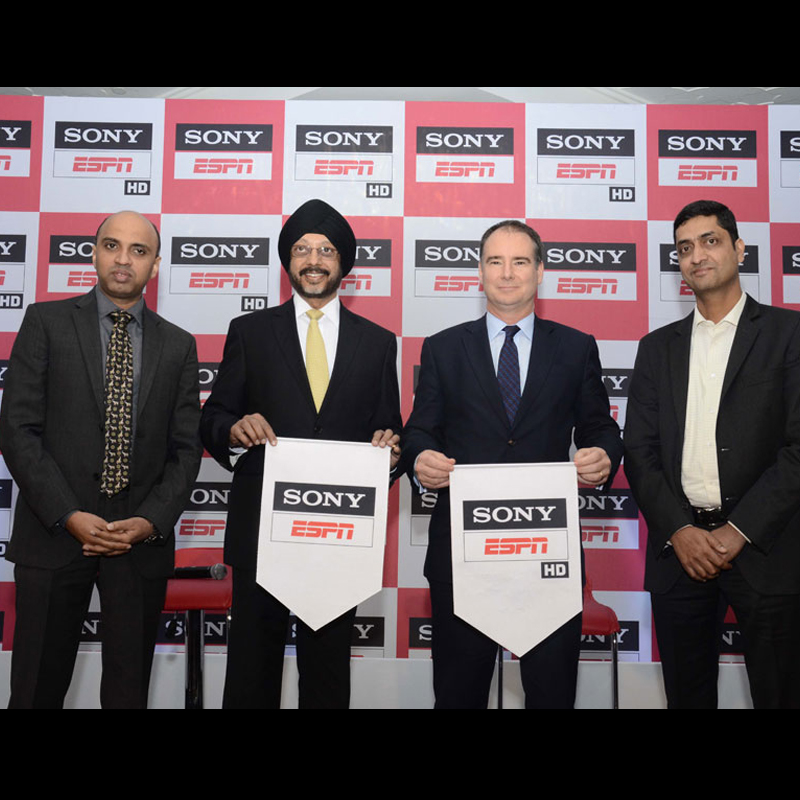
    The broadcaster, which has been present here for over quarter of a century, owns two digital properties — ESPNcricinfo, a cricket content platform, and a co-branded multi-sport content offering ESPN.in, with its joint venture partner Sony Pictures Networks India that was launched 15 months earlier.

    For ESPN, digital video consumption has been growing at 150 per cent, while mobile video demand has been growing even more dramatically, at a rate as high as 350 per cent.

    “We believe that India is a mobile-first market and data confirms that. Almost 78 per cent of all our traffic is either on the mobile web or the app. We also believe that, over time, people are shifting from mobile web towards apps,” ESPN International executive vice-president and managing director Russell Wolff has said.

    He said the company has been producing more videos for mobile and digital platforms, given the growing interest in digital content.

  • Industry needs to understand on-ground changes in distribution, not question flux in data, says Partho Dasgupta

    ‘Works at something sometimes somewhere’. That’s the description of the work profile on the Facebook page of Partho Dasgupta, chief executive of Broadcast Audience Research Council of India or BARC India. And, that probably also gives a hint to all about the personality of the man, who sits on a hot seat balancing the delicate (and, may be, at times challenging, some would say) interests of various stakeholders of the organization, including the government.

    When Dasgupta is not busy absorbing the data collated and crunched by his team at BARC India, he is, probably, strategizing along with his core team about the initiatives to be rolled out in a complex and diversified market like India or reading about branding and getting an insight into Indian media through books like ‘Behind a Billion Screens: What Television Tells Us About Modern India’.

    And, when he does get some family time, he would love nothing better than to travel along with his family and follow the F1 races around the world (speed helps me breathe, he says on his FB page) with a single malt whiskey – the older it is the better, his friends chuckle.

    A media industry veteran,  Dasgupta’s stints at various organizations also do give a glimpse at his various areas of interests, which include organizations like the Times of India Group, Future Group, BARC India and also an entrepreneurial jab at a start-up that he mentored. Though he’s a hard taskmaster, as claimed by some of his past and present colleagues, he is also looked up to as a ‘yaroon ka yaar’ or a true friend who’s always around when you need him most.

    On the occasion of BARC India’s second anniversary, Indiantelevision.com engages Dasgupta on a wide range of subjects in an interview. Excerpts:

    How would you describe the journey till now — challenging or a process of evolution?

    Any change is challenging and it’s true for us as well. From the time BARC India started reporting TV viewership, it has been a process of evolution for the industry, including us. The industry evolved when they understood fidelity of BARC India data, which was a true representative of actual viewership behavior. With support of industry, we have grown in both size and experience over the last two years. We have hired the right talent who have successfully reduced client queries and helped in a smooth transition for adopting the data.

    Apart from addressing data needs of our clients, we also made an effort to reach out to the public at large, and sensitize them about BARC India data. We have made headline viewership data available to all through our mobile app and social media platforms. While we have achieved some of the things we had set out for, there is still a lot we aspire to do.

    Going forward, how do you see BARC making progress? What are the timelines and signposts?

    This year we will see our panel expanding from 20,000 to 30,000 reporting homes. Combined with the newly added homes, we will also be seeding some new homes as part of our regular churn policy. We will also stop reporting on all analogue homes across the country with the exception of Tamil Nadu state from 1 July 2017. With the current digitization mandate for TN, hopefully the state’s analogue reporting will also stop soon.  All this may lead to some interim flux, but in the long term will improve robustness of our viewership data. We are also trying to innovate panel expansion by tying up directly with key DTH and digital cable operators to enable return path data (RPD).       

    This year is also crucial for us as we will launch something that hasn’t been attempted in the country as yet — a third party digital viewership measurement. We have set the ball rolling by announcing the umbrella brand EKAM under which our digital products will be offered. We are hoping to roll out the first EKAM product this year.

    Apart from ensuring a stable weekly data service, we have launched THiNK (a monthly insights newsletter), Alpha Club (a report on viewership trends of NCCS A1, A2, A3 of 6 mega cities), and kids genre special report for the benefit of our subscribers. Earlier this year, we successfully rolled out our new universe estimate. We have also set up an independent disciplinary committee to check attempts at panel infiltration. Very soon industry will also be able to access designated independent consultancy firms who would provide strategic consultancy services.

    Unlike some other global audience measurement currencies, BARC India’s impressions method seems a tad complex. How is it explained to clients, data users and the regulator and the government?

    The terminology and methodology for data outputs is in keeping with global standards. BARC India Media Workstation (BMW) software used by subscribers for viewership data is easy to operate and is being used across 27+ countries. We also engage with our clients to understand their needs and that helps us align our services accordingly. We have a strong training team, which trains and provides support to every subscriber, new and existing.

    In fact, last year we launched a BMW certification programme for our subscribers  to enable them to test their knowledge of the software. The results have been very encouraging. We also meet the regulator and government from time to time to update them about the developments.

    While it is endorsed by the industry, BARC India still faces some criticism from certain quarters and smaller TV players about security and its biases towards the biggies who are funding it. Your reactions.

    While we are a joint industry company (JIC), we have never functioned like a monopoly and so we always welcome feedback from subscribers. As far as funding goes, we got the funding without any substantial equity investment from any shareholder. Our operations are built upon a unique debt funded model. So, it would be incorrect to say that “biggies” funded BARC India. We have a common pricing philosophy for all broadcasters, irrespective of whether it is a small or big broadcaster. For transparency, we have also placed it (the subscription methodology) on our website.

    Talking of security, BARC India didn’t hold back any punches while taking action against those involved in panel infiltration and it included some of the big names as well. Yes, there are some issues which our subscribers face. But that is more to do with understanding the data. Our team is working day in and day out to help them. This is normal for any new system and for all measurement companies around the world.    

    Did BARC India and its top management foresee some of the problems and controversies that have beset the organization in recent times? Like the court cases arising out of chastising some users of paid/subscribedBARC data for alleged attempts at data manipulation?

    If acting against defaulters who try to infiltrate our panel homes leads to controversy, we would happily get into it. That’s because we are answerable to our subscribers and it is our responsibility to ensure that the data we release holds value. Panel infiltration is a legacy issue, but BARC India has decided to take it head on. With advertising expenditure on TV in an upward trend, it is very important for us to ensure infiltration activities are rooted out.

    While the defaulters have been crying foul, we have received tremendous support from the industry. Our intent is to always produce a currency which is fair, transparent and representative.

    Was the formation of the disciplinary council, which seems a revamp of the ethics committee, a result of such cases mentioned above?

    The independent six-member disciplinary council, under the leadership of Justice Mukul Mudgal, will further strengthen transparency and credibility of our measurement system. As it is an independent body, cases of infiltration or any such issue can be heard by the committee. This will ensure that both the subscribers and BARCIndia get a fair hearing in matters like these.

    We have our on-ground vigilance team, which keeps a track of any malpractice. The disciplinary council will independently examine vigilance team reports and where culpability is clearly established, it will be empowered to order punitive action appropriate to the level of an offence. This has again been done in keeping with our philosophy of transparency.

    Rolling out digital measurement was announced by you in a Hong Kong conference almost two years back. What has held back the rollout so far?

    Third party digital viewership measurement has never been attempted in India. In fact, some of the products we are launching are a global first. Also, we are a JIC, which takes a 360 degree feedback from all its stakeholders. We had to first understand the industry needs and then design services accordingly. That apart, consumption pattern in India is very different from what exists globally. This only makes the task more challenging. We wanted to come out with a product that is robust and meets everyone’s needs.

    It is important to understand that nowhere in the world have these kind of services been launched in less than at least four to five years. They are still evolving. In fact, we are being extremely ambitious when we say 18-24 months roll out of all products, which will start in a phased manner from 2017 onwards.

    Did the digital measurement rollout get entangled in lack of consensus amongst various stakeholders and plain industry politics?

    Frankly, I do not feel that there has been any unjustifiable delay. We have a digital technical committee, just like for TV. We went to several countries to understand digital measurement in those markets. Also, we had to set up a new digital team from scratch. We have invested a lot of time in understanding the needs of the industry and setting up a team which could give us the best product. We always wanted to come up with a product, which is as strong as our TV measurement. As regards consensus, I guess we are the only JIC in a major country, which has digital publishers, platforms and broadcasters on the same table, taking consensus decisions.

    What lessons have you and the organization learnt in these two years of operation in a complex, but diversified and a big market like India?

    Learning has been a continuous process and we still learn every single day from the market. What we have understood is that nothing here is permanent. Someone might be happy with the data released this week and the same person might be upset the next week as he might feel the data isn’t in his favour. I, frankly, don’t blame them. Our subscribers have been used to seeing data with hardly any variation, for years. Now, when we capture data from more number of panel homes, use better and advanced technology to monitor and measure data, the data is bound to faithfully fluctuate, which arises out of normal human behavior. This does not mean our data is not accurate, but it shows that we are capturing what India is watching.

    To give an example, in months when Indian kids are busy preparing for exams or are giving exams, kids’ genre (ratings) is bound to fall. This picks up again from March onwards when the vacation season kicks in. Our data captures such nuances and changes. Not just this, take, for instance, total TV viewership in the country. Instances of heat waves and power cuts across the country from March onwards leads to a drop in TV viewership — when compared to the October-December period. This has been a trend for long and this education is an ongoing task for us.  

    Personally you have held a view that TV is far from dead despite digital’s impressive march. What gives you so much of conviction?

    Look at advertising expenditures. Yes, digital is growing, but TV remains the most important medium for advertisers to get eyeballs. Talking of statistics, while more people are moving to digital, TV with 64 per cent penetration contributes to almost 45 per cent of ad revenue. Not just this, print, even today, contributes to 30 per cent of ad revenue and this happens only in India. With penetration of TV increasing in the next few years, its contribution to ad revenue will only go up and so, while digital is a significant contributor, it is still a small base and thus would take a while for any such tectonic shift to happen in India.

    India is an under-marketed country with the ad:GDP ratio of 0.38 per cent, while the global averages are 0.7 per cent. Countries like China and Brazil have 0.46 per cent and 1.02 per cent, respectively. Good measurement being one of the drivers, I feel advertising spends will increase in India substantially and all mediums will grow, led by TV and digital.

    How much of growth in TV viewership do you foresee in the short to medium term of one to three years? What will fuel this growth — rise of multi-TV homes in rural areas or simple one-TV homes coming under the measurement radar and, thus, increasing the total number of TV HHs in India?

    As of 2016, India boasts of 183 million TV households, a 19 per cent growth from 2015. Sixteen years ago, one-third of Indian households had TV, but today close to two-thirds of households own TV. These figures will only go up in the coming years, led by rural. Of the 183 million TV households, rural contributes to 99 million homes, but its TV penetration remains at 52 per cent. This leaves huge headroom for growth.

    Multi-TV homes in the country today stands at 3.4 per cent of total TV homes. Increase in TV homes will also be driven by this.

    Our Broadcast India 2016 survey shows a drop of 19 per cent in NCCS D/E. This means that people are moving up the affluence chain. The relative share of NCCS `A’ homes has also come down due to the rise of nuclear families. This has led to growth in NCCS `B’ and `C’ homes, and, thus, increase in TV homes. Such phenomena of nuclear families will increase in the future, leading to further growth in NCCS `B’ and `C’ as well as TV homes. Hence, overall, we still feel there is big headroom for TV growth still.

    BARC India was supposed to have been in talks with DTH operators for return path data (RPD) to boost data generation. What’s the status of that proposal?

    Yes, we are in talks with a number of DTH and MSOs. We should be making some announcement on this front soon. These are complex solutions and some of them will be world firsts.

    What are some other initiatives being planned by BARC in the short term to bring more robustness in its data generation?

    Expansion of panel size will help build higher degree of accuracy in our data. The RPD initiative is also aimed at the same objective. Annual universe updates will allow us to map changes on the ground, and that will reflect in accuracy of the data as well.

    Will the technology and the methodology used be future proof?

    Yes. In fact, the reason we chose to use unique audio watermarking technology in the first place was to ensure that it is future-ready. BARC India system captures data about TV content consumed through any form of distribution — terrestrial, DTH, analogue cable, digital cable and digital.

    Would BARC look at STB-embedded software rather than a separate meter to counter attempts at hacking and manipulations? Sign-ins could be like in Netflix where profiles sign in and tracking/recommendations happen based on profile of user.

    Our tie-ups with DTH operators and MSOs for RPD are an attempt to do this. This will not only increase the number of sample panel homes, but will also make infiltration efforts ineffective. We will innovate more with our meter technology to make it as much hack-proof as possible.

    With the movement towards handset consumption of video growing, what tech is BARC looking at monitoring such trends? When would the rollout happen and who’d fund it?

    EKAM Pulse, the first digital product will be rolled out by this year. EKAM Pulse will allow granular level ad campaign measurement. It will measure reach of ad campaigns at multiple levels of an ad campaign. Some of the metrics it will provide are unique reach, frequency, on-target percentage and demography by geography. The other digital products will be rolled out in a phased manner in the next 18-24 months. All these products will be funded byBARC India.

    Do you see BARC working with clients just as the former TAM is with Tata Sky to offer them viewing solutions?

    Yes.

    With AI coming in, how do you see that being put to viewership enhancement/tracking/recommendation and how do you see BARC reacting/using it, if at all?

    We have already deployed AI at two levels. One at the panel level, which is then extrapolated to know TV viewing habits of TV universe and the other that helps us track any aberration in the viewing pattern of our panel. We use technology in a big way and are looking to move all our applications to the big data environment and accessible through cloud to make us future ready.

    Is BARC contemplating measurement of radio listenership?

    Not as of now. The radio industry should be able to support the cost of measurement to make it viable for any player.

    What would be your message to the industry, players, the regulator and the government on the occasion of BARC India’s second anniversary?

    The industry has been very supportive in the last two years and we hope that it would continue to offer its support. In fact, I would like to take this opportunity to thank all our stakeholders and subscribers.

    One point that I would like to raise is that factors like analogue switch offs in Phase IV (of digitization), TRAI order(s) and seasonal swings will continue to impact TV viewership. However, we would like the industry to understand these on-ground changes before questioning the flux in data. While the MIB mandate is to increase the panel size by 10k each year, till our fourth year of operation, we are aiming at multi-fold increase. We would like the industry to come together and support us to achieve this target.

    Also Read :

    BARC India to halt analogue measurement from July, up overall data collection

    ‘Common standard’ good to measure ‘unbundled’ viewership & ads cost-effectiveness: EKAM

    BARC India gets thumbs up for 2016…but challenges remain

    BARC India suspends three errant channels’ review

  • Prasar Bharati’s main role is of pubcaster, not revenue generator, says Rathore

    NEW DELHI: Stressing that revenue generation is not the main objective of Prasar Bharati, the Parliament was today told that the pubcaster is generating its revenue through Internal Extra Budgetary Resources (IEBR) to meet its operating expenses.

    Minister of state for information and broadcasting Rajyavardhan Rathore said in reply to a question that the government was providing 100 per cent salary support to Prasar Bharati, apart from plan grant for creation of capital assets and content development.

    He said that Prasar Bharati’s primary mandate was to organise and conduct public broadcasting service with the intent to inform, educate and entertain the public and to ensure a balanced development of broadcasting on radio and television in the country.

    Listing various achievements as an outcome of measures taken in recent years, he said the capability of the direct to home platform FreeDish had been increased from 59 to 104 TV channels of which 80 are already on air, and orders had been placed for implementation of Indian Conditional Access System (iCAS).

    (DD sources told indiantelevision.com that these 80 were on MPEG-2 , while the remainder will be on MPEG-4 which has been tested and the auction process to fill those slots has already been initiated.)

    Apart from DD Kisan, the minister added, that 24-hour Doordarshan channels had been launched in Bihar, Madhya Pradesh, Uttar Pradesh, Rajasthan and Saptagiri from Vijaywada.

    The technical facility for launch of new TV Channel DD Arunprabha for the north east had been completed.

    Earth stations had been set up at Indore, Rajkot, Vijayawada and Jalpaiguri and the earth station at Leh, Chandigarh, Hisar, Panaji, and Port Blair (except RF equipment) had been modernised.

    Other steps included:

    High Definition television (HDTV) studios set up at Delhi and Mumbai; digitisation of 39 studios; commissioning of a permanent studio set up at Dehradun; multichannel automated playback facility set up and installation of multi camera studio production facility in HDTV format in progress at Central Production Centre in Delhi; Media Asset Management for archive system set up at Kolkata; HDTV outside broadcast (OB) vans supplied at Delhi and Mumbai; and six Digital Satellite News Gathering (DSNG) vans deployed.

    Referring to status of transmitters, he said 19 digital High Power Transmitters (Digital Video Broadcasting-and Generation Terrestrial) (DVB-T2) had been supplied and 16 digital HPTs commissioned; four HDTV transmitters supplied and installed; a HPT commissioned in Cannanore, apart from a Very Low Power Transmitter (VLPT) at Joginder Nagar.

    Ageing HPTs had been replaced by new 10 KW HPTs at 14 locations and 111 auto-mode LPTs supplied & commissioned.

  • Online will surpass DVDs in movie viewing in the US: IHS report

    Online will surpass DVDs in movie viewing in the US: IHS report

    MUMBAI: The year 2012 will see online movie viewing in the US surpassing digital video disc and Blu-ray sales for the first time, according to a report by IHS Screen Digest.
     

    Legal online viewings of films will more than double to 3.4 billion this year from 1.4 billion in 2011, the report said. Physical viewings of DVDs and Blu-ray discs will shrink to 2.4 billion from 2.6 billion, according to the forecast.

    The report highlights the price disparity between online purchases and movies sold in retail shops. Consumers paid an average of 51 cents for every movie consumed online, compared with $4.72 for physically purchased videos, IHS found.

    Last year, unlimited-streaming subscription plans, including those offered by Netflix Inc. (NFLX) and online retailer Amazon.com (AMZN)’s Prime service, accounted for 94 per cent of all paid online movie consumption in the US, the report said.
     

    Streamed movies have been replacing video discs much as streamed music is overtaking compact audio discs.