Tag: Digital transformation

  • TheSmallBigIdea bags integrated digital marketing mandate including e-commerce for Sandu Pharmaceuticals

    TheSmallBigIdea bags integrated digital marketing mandate including e-commerce for Sandu Pharmaceuticals

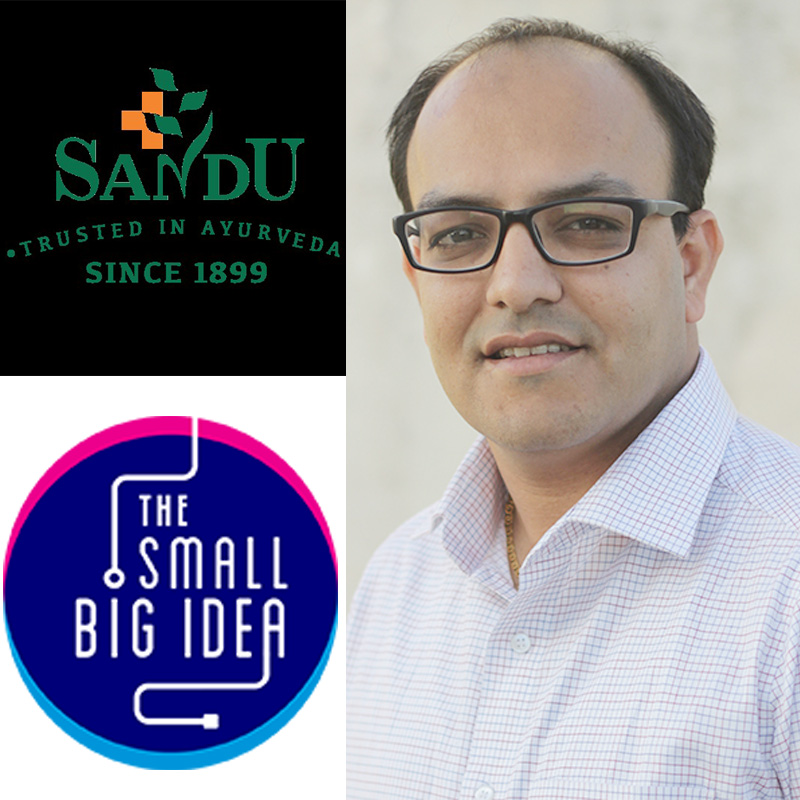
    Mumbai: Digital and social media marketing agency TheSmallBigIdea has been appointed as the digital strategic partner for online pharmacy and medical care platform, Sandu Pharmaceuticals.

    As a part of the mandate, the agency will be responsible for driving the next wave of growth and expansion and taking the brand on a journey of digital transformation.

    Along with managing social media platforms, crafting integrated digital creative strategies for the brand, and developing their e-commerce business, TSBI Studios, the agency’s video creation arm as a starter to the mandate, conceptualised and made four brand films and launched them digitally.

    Speaking about the win, TheSmallBigIdea COO and co-founder Manish Solanki said, “Ayurveda has always been a part of the Indian way of life and we are happy to be part of the digital journey of Sandu’s 123-year-old legacy. With the evolution of the healthcare and wellness sector, it is a great opportunity for us to bring to light Sandu Pharmaceuticals and the rich herbal products it offers. As part of the mandate, our task at hand is to create compelling digital first stories on social media to help prospects understand and sample our products at the same time build a robust marketplace and e-commerce platform that engages and converts those prospects into loyal customers. Through this association, our endeavour would be to deliver result-oriented strategies across multiple platforms.”

    Commenting on awarding the mandate to TheSmallBigIdea, Sandu Pharmaceuticals director Shashank Sandu said, “We are extremely happy and excited to associate with a reputed agency like TheSmallBigIdea for our 360-degree brand communication and are confident that this association will help us build our brand presence digitally and strengthen it offline as well. TheSmallBigIdea’s data-driven insights and content-driven approach make them the perfect partner to manage our mandate. We are excited to have them on board and look forward to a fulfilling digital journey to deepen the engagement with our customers.”

  • Kyndryl India appointed as technology partner of Honda Motorcycle and Scooter India

    Kyndryl India appointed as technology partner of Honda Motorcycle and Scooter India

    Mumbai: Honda Motorcycle and Scooter India (HMSI) recently announced its exclusive collaboration with IT infrastructure services provider Kyndryl, to elevate its IT and security transformation journey across HMSI’s manufacturing plants.

    Currently, Kyndryl manages infrastructure services for plant production applications, enterprise and dealer management systems for all the dealers.

    Bringing operational efficiency with an agile and improved customer service experience, the company’s renewed alliance with Kyndryl will improve infrastructure manageability and uptime through increased automation as well as enhance the company’s cybersecurity and resiliency.

    Further enhancing HMSI’s business applications and IT systems’ availability, the new partnership will integrate an on-demand disaster recovery-as-a-service (DRaaS) set-up for minimal outage and production loss during a crisis impacting HMSI’s primary data centre.

    Speaking on the association, Honda Motorcycle & Scooter India managing director, president & CEO Atsushi Ogata said, “At HMSI, we are glad to announce our exclusive technological partnership with Kyndryl India. Their in-depth knowledge of HMSI’s business functions pillaring upon complex IT systems is what precisely makes them a trusted advisor for our operations in India. Moving forward, the new synergy will enable us with better business availability and operations predictability while infusing a more agile IT environment that serves our customers and partners better.”

    Sharing his thoughts on the partnership, Kyndryl India president Lingraju Sawkar said, “In an increasingly competitive ecosystem staying ahead of the curve and anticipating business and operational challenges is paramount. Kyndryl’s proven expertise in infrastructure management, automation, and cloud transformation, coupled with a deep understanding of HMSI’s critical operations allows us to anticipate and structure a resilient and agile framework for the future. We are excited to expand on our collaboration with HMSI as they further unlock the potential of true digital transformation within their India operations.”

    During a disaster, Kyndryl’s cloud resiliency orchestration tool will bring HMSI’s primary data centre to a fully operational state in a matter of seconds, and its resiliency architecture will span seismic zones for added flexibility to systems during a customer demand surge.

  • UN agency ITU to set up area office for South Asia in New Delhi

    UN agency ITU to set up area office for South Asia in New Delhi

    Mumbai: The International Telecommunication Union (ITU) – United Nations specialised agency for information and communication technologies (ICTs), is set to open in New Delhi by mid-2022. The planned area office, funded by the government of India, will enhance regional initiatives for sustainable and inclusive digital transformation in South Asia.

    The ITU area office and innovation centre aims to strengthen technology cooperation and boost regional telecommunications development. Through a closer presence, ITU hopes to advance shared regional priorities, such as reducing disparities between developing and developed countries in terms of Internet access, digital skills, and other socio-economic indicators after the Covid-19 pandemic.

    From India’s national capital, the new office will implement ITU initiatives and provide technical assistance and policy guidance on information and communication technologies (ICTs) in South Asia.

    “Today’s agreement is an important step in the enduring partnership between ITU and the Republic of India, and between ITU and the South Asia sub-region,” said ITU secretary-general Houlin Zhao. “I’m confident that the establishment of an ITU area office for South Asia in New Delhi will help to push the boundaries of innovation and accelerate digital transformation for all people and communities across India, the region and beyond.”

    India’s minister of communications Ashwini Vaishnaw welcomed the opportunity for closer regional and international engagement through the signing of a host-country agreement for the office.

    “India is proud to partner with ITU on this progressive initiative for the region, which will advance shared regional priorities, help reduce disparities with developed countries, and strengthen South Asia’s post-Covid recovery. India is determined to bridge the digital divide and help address the ensuing inequalities in digital access affecting the entire region,” he said.

    ITU promotes inclusive connectivity for all as a key part of global sustainable development. Governments, companies, research institutes, and civil society organisations from around the world, gathered at the last ITU Plenipotentiary Conference in Dubai in 2018, noted the need for an upgraded regional presence to conduct programmes and projects harnessing technologies for sustainable development.

    ITU regional and area offices report to the director of ITU’s telecommunication development bureau, currently Doreen Bogdan-Martin, who said she was excited about the opening of the South Asia area office in New Delhi.

    “This new office will allow ITU to broaden partnerships, building upon current work and facilitating digital innovation,” she said. “ITU will work, together with the Government of India, to ensure that the new office strengthens ITU’s regional presence, by bringing ITU closer to member countries, and further enhances ITU’s capability to help them recover from the Covid-19 pandemic, accelerate the achievement of sustainable development, and at the same time advance digital transformation.”

    ITU’s South Asia team will focus specifically on setting up an innovation centre for exchanges of ideas, success stories, innovative solutions, and global endeavours, promoting the introduction of advanced technologies, contributing to the development of ICT/telecommunication networks and services in South Asia, providing technical assistance in relation to infrastructure, e-governance, and cross-sectoral ICT applications, assisting with human resources and capacity development and conducting other activities related to ITU’s mandate to connect the world and support the UN sustainable development goals.

  • Pearson India ropes in Vicky Kaushal as brand ambassador

    Pearson India ropes in Vicky Kaushal as brand ambassador

    Mumbai: British multinational education company Pearson on Monday announced Bollywood actor Vicky Kaushal as its new brand ambassador. With this, the London-headquartered learning company aims to step up its India efforts and accelerate its growth plans as the global digital powerhouse of learning.

    India is a strategic growth market for Pearson, focused on driving transformational change and digital innovation. Kaushal as the brand ambassador will help the company in building a strong relationship with youth and strengthen its direct-to-consumer proposition, said the company in a statement.

    “We are thrilled to welcome Vicky Kaushal as our brand ambassador. His recent achievements and contributions towards the entertainment industry have made him one of the most popular youth icons in the country. He is an inspiration for the youth of the country, motivating them to dream big, chart their own journey and strive for the best,” said Pearson India and Asia MD Siddharth Banerjee. “Today, the Indian Education system is at the cusp of a digital transformation, and we are certain that this partnership will help us create a strong, meaningful connect with learners, thereby forming a highly vibrant education ecosystem in the country.”

    Kaushal will feature in Pearson India’s upcoming campaign and activations in strengthening Pearson’s connect with the learners. An engineer himself, Vicky has appeared in several acclaimed films like “Masaan,” “Uri,” “Sardar Udham” among others.

    “Today’s youth are innovators, builders, creators, and leaders of the future. They are the hope of a brighter tomorrow and education is the key to unlock their true potential and empower them to rise and shine. I am happy and excited to be a part of Pearson’s mission to promote quality education and connect with young minds,” said Kaushal on the brand association.

    Pearson’s collaboration with Kaushal is a testament to the company’s commitment to continuously evolving with changing times as it enters a new era of direct to customer, it said. The company would also be working along with other influencers and personalities in the education ecosystem to strengthen its digital proposition in the region. 

  • Social media to be fastest-growing channel by 2024: Zenith ad spend forecast

    Social media to be fastest-growing channel by 2024: Zenith ad spend forecast

    Mumbai: Social media will be the fastest-growing channel between 2021 and 2024, with an average annual growth rate of 14.8 per cent, closely followed by online video at 14.0 per cent, predicts Zenith’s Advertising Expenditure Forecasts report, published on Monday. The global ad market will continue its remarkable recovery from the 2020 downturn with 9.1 per cent growth in 2022, after 15.6 per cent growth in 2021, according to the report. Retailer media advertising is set to grow from $77 billion this year to $143 billion in 2024, it said.

    Social media is leading ad growth and will overtake television next year, estimates Zenith, with social media platforms embracing commerce and developing new advanced interactions between brands and consumers. The global data analytics firm expects social media ad spend to reach $177 billion in 2022, overtaking television at $174bn. Social media ad spend will rise to $225bn by 2024, when it will account for 26.5 per cent of all advertising, followed by paid search at 22.5 per cent and television at 21.0 per cent. Brands can use self-serve tools to create augmented reality experiences and then distribute them through targeted advertising, which can powerfully lift awareness and intent to purchase.

    Covid-19 setbacks have extended the period of heightened digital transformation and thoroughly disrupted shopping habits. Many consumers who would prefer to browse and purchase in person are shopping online by necessity. Businesses have responded by investing more than would otherwise have been justifiable in new technology, infrastructure, organisational change – and advertising. This includes brand advertising to promote e-commerce platforms, performance advertising to direct traffic to them, and advertising within these platforms (‘retailer media advertising’) to promote specific products, all of which have surged.

    Digital advertising as a whole will exceed 60 per cent of global ad spend for the first time in 2022, reaching 61.5 per cent of total expenditure, and will increase its share to 65.1 per cent by 2024. Zenith estimates that global ad spend will reach $70577billion in 2021, up from $63477billion  in 2019, and will rise to $87377billion by 2024. Global ad spend will expand by 5.7 per cent in 2023 and 7.4 per cent in 2024 as brands continue using advertising to spur further growth in e-commerce.

    “Digital Transformation in India continues to be a priority with one in two corporates having a digital transformation at their core,” said Zenith India CEO Jai Lala. “The pandemic has further accelerated digital growth amongst consumers with increased consumption across platforms in the area of entertainment, purchase, social, education and finance, amongst others. All these factors have led to a steady increase in ad spend making digital the fastest growing medium.” 

    Television advertising remains the easiest route to mass-audience brand awareness, despite years of audience losses to digital media. Brands’ reliance on television is fuelling rapid media inflation, which will continue even after the comparison with 2020 has passed, says the report. Zenith forecasts the cost of television advertising to rise by 11 per cent in 2022, compared to four per cent for out-of-home, three per cent for digital display, two per cent for radio, and zero for print. Brands will have to confront their dependence on a medium that consistently delivers smaller audiences for higher prices.

    Online video is fragmented and complicated to navigate. Multiple platforms deliver content through multiple devices to multiple screens, while ads may be passed through a chain of demand-side platforms, exchanges, ad networks, and content delivery networks before reaching the consumer. But, by investing in data and planning technology, and building partnerships with providers, brands can use online video to increase their reach and reduce their costs. Zenith forecasts online video ad spend to increase from $62 bilion in 2021 to $91 billion in 2024 when it exceeds 50 per cent of this size of television for the first time. Television ad spend will rise from $171 billion to $178 billion over the same period.

    Progress towards containing Covid-19 has been slower than expected with the emergence of new variants, and consumers have been less willing to resume in-person shopping. Businesses have continued their heightened investment in digital transformation, during a period in which many expected to ease back as consumers returned to shops. Digital advertising has therefore been stronger in the second half of this year than previously expected. Zenith now estimates that digital advertising will grow by 25 per cent year-on-year in 2021, compared to the 19 per cent estimated in the previous forecast, published in July.

    This structural change in the economy means that advertising is playing a greater role in driving sales growth through e-commerce. In particular, it has sparked a surge in retailer media advertising: display or search advertising that appears on e-commerce platforms.

    Retailer media can be highly effective, allowing brands to target active buyers at the point of purchase. Zenith estimates that retailer media advertising surged from 24 per cent growth in 2019 to 53 per cent in 2020, and then 47 per cent in 2021, when it totalled $77 billion. This is equivalent to the sums spent on newspaper, magazine, radio and cinema advertising combined, and accounts for 20 per cent of all expenditure on digital display and paid search advertising. By 2024, retailer media ad spend is expected to reach US$143bn, and 27 per cent of display and search. Much of this will be incremental to existing ad expenditure, coming from commercial budgets previously used to negotiate for shelf space in brick-and-mortar stores.

    The rise of the digital economy has also stimulated other forms of advertising, including brand campaigns on television and out-of-home, where digital brands are now prominent. The share of global GDP contributed by advertising had been rising steadily before the pandemic, from 0.72 per cent in 2014 to 0.75 per cent in 2019. After the step-change in digital media consumption and e-commerce last year, it is forecast to reach 0.77 per cent in 2021 and 0.80 per cent by 2024. This will be the biggest rise in advertising’s share of GDP since the late 1990s.

    Ad spend in all regions is now well above pre-pandemic levels, and all are expected to grow healthily over the next few years. Zenith expects digital transformation to slow down, but not go into reverse, as the pandemic eases in 2022 and beyond. The pandemic has accelerated trends that were already fundamentally reshaping the economy and will continue to do so. Zenith forecasts 14 per cent growth in global digital ad spend in 2022, up from the previous forecast of 10 per cent, followed by nine per cent growth in 2023 and 10 per cent in 2024.

    Paid search will grow by 9.8 per cent a year, primarily driven by retailer media, and out-of-home will enjoy solid 7.4 per cent annual growth as foot and vehicle traffic return to normal. Radio and television will grow marginally, by 2.2 per cent and 1.4 per cent respectively, while print declines by 4.7 per cent.

    “As consumers rely ever more on digital technology to connect and entertain them, and to inspire and fulfil their purchases, advertising is playing a greater role in driving sales and brand growth,” said Zenith head of forecasting Jonathan Barnard. “Over the next three years, we expect the ad market to achieve its highest rate of sustained growth since 2000.”

  • Newgen Software elevates Virender Jeet to CEO

    Newgen Software elevates Virender Jeet to CEO

    Newgen Software, a global provider of digital transformation platform, has elevated its senior VP- sales, marketing, & products, Virender Jeet to the position of chief executive officer (CEO). The company has also announced the promotion of senior VP- business management, Tarun Nandwani as chief operating officer (COO). The changes have been effective from 1 September.

    “Jeet and Nandwani have been integral to the Newgen growth story and have left no stone unturned in bringing us to an enviable position in the industry,” said Newgen Software, chairman & MD, Diwakar Nigam. “With their experience and able leadership, we look forward to achieving newer heights.”

    Jeet has been with Newgen since its inception in 1992. He has been closely associated with the complete lifecycle of product development, sales & marketing, patents, and various other strategic functions at Newgen, thereby significantly contributing to the business growth in the last 29+ years.

    “With low code- and cloud-based digital transformation taking center stage, we, with our recently unveiled NewgenONE platform, are well-positioned to help enterprises across industries accelerate their digital initiatives and achieve their business goals,” said Jeet. “I look forward to working closely with our SI and consulting partners, and establishing Newgen as the world’s leading platform company.”

    Nandwani has been with Newgen for over 27 years and has been successfully spearheading customer relationship management, commercial activities, new solution, and application development. He has been instrumental in driving business from the install base.

    “Industry analysts have consistently recognised us for our technology and innovation. With digital becoming a priority for every enterprise, we are poised for even greater success,” said Nandwani.

  • L’Oréal elevates Asmita Dubey as group chief digital officer

    L’Oréal elevates Asmita Dubey as group chief digital officer

    NEW DELHI: Beauty brand L’Oréal has elevated Asmita Dubey as chief digital officer and member of the group’s executive committee. Dubey succeeds Lubomira Rochet, who is moving on from the global cosmetics giant.

    Dubey was chief media officer for the group and chief digital officer for L’Oréal’s consumer products division. She is entrusted with the responsibility of driving the second phase of the brand’s digital transformation.

    With a background in both statistics and economics, Dubey started her career in the Indian advertising industry. Later in China, she activated campaigns for some of the world’s biggest FMCG companies. As part of the group, she laid the foundations for L’Oréal’s e-commerce acceleration in China. She built L’Oréal’s first joint-business partnerships with Alibaba and Tencent and established a broader start-up ecosystem. As chief marketing officer for China and Asia Pacific for L’Oréal, she strengthened L’Oréal’s digital footprint in the region.

    L’Oréal deputy chief executive officer – divisions Nicolas Hieronimus remarked, “Asmita is a real expert in her field and is a true strategic thinker, with a unique ability to simplify within complexity. With her long-term experience in digital marketing, trend-spotting and consumer centricity, she is the perfect choice to build the next big phase of our digital transformation.”

  • Jio and Microsoft announce alliance to accelerate digital transformation in India

    Jio and Microsoft announce alliance to accelerate digital transformation in India

    MUMBAI: Reliance Jio Infocomm Limited (Jio), a subsidiary of Reliance Industries Limited, and Microsoft Corp. are embarking on a unique, comprehensive, long-term strategic relationship aimed at accelerating the digital transformation of the Indian economy and society. This 10-year commitment combines the world-class capabilities of both companies to offer a detailed set of solutions comprising connectivity, computing, storage solutions, and other technology services and applications essential for Indian businesses and will span the broad Reliance Industries ecosystem including its existing and new businesses.

    In combining efforts, Jio and Microsoft aim to enhance the adoption of leading technologies like data analytics, AI, cognitive services, blockchain, Internet of Things, and edge computing among small and medium enterprises to make them ready to compete and grow, while helping accelerate technology-led GDP growth in India and driving adoption of next-gen technology solutions at scale.

    As part of this new agreement:

    1. Jio will provide its internal workforce with cloud-based productivity and collaboration tools available with Microsoft 365 and will migrate its non-network applications to the Microsoft Azure cloud platform.

    2. Jio’s connectivity infrastructure that aims to connect everyone, everything, everywhere will promote the adoption of the Microsoft Azure cloud platform within its growing ecosystem of startups, as part of Jio’s cloud-first strategy.

    3. Jio will set up datacenters in locations across India, consisting of next-generation compute, storage and networking capabilities, and Microsoft will deploy its Azure platform in these datacenters to support Jio’s offerings. The initial two datacenters, which can house IT equipment consuming up to 7.5 MW of power, are being set up in the states of Gujarat and Maharashtra. These are targeted to be fully operational in calendar year 2020.

    4. Jio will leverage the Microsoft Azure cloud platform to develop innovative cloud solutions focused on the needs of Indian businesses. Through these Jio-developed solutions:

    Indian startups will have access to efficient and affordable cloud infrastructure and platform services, enabling them to develop innovative products and services faster and more cost-effectively.

    Small and medium businesses in India will have access to a range of cloud-based productivity, collaboration and business applications including Office 365, enabling them to compete more effectively in the Indian marketplace.

    Large companies will be able to accelerate their own digital transformations by leveraging new Jio solutions that can work with Microsoft offerings already in use today within many large enterprises.

    The partner ecosystem in India will have the opportunity to leverage Jio’s new offerings to serve the unique needs of their customers and rapidly grow their businesses.

    5. Jio will be executing on its vision of integrated speech and computer vision solutions for Indian customers by working together with Microsoft to develop solutions that support major Indian languages and dialects, which will promote the adoption of technology across all cross-sections of Indian society.

    “Jio is delighted to partner with Microsoft in our efforts to further deepen the use of technology on scale to all Indians,” said Mukesh Ambani, Chairman and Managing Director of Reliance Industries. “This is a unique and first-of-its-kind partnership that brings the capabilities of two large companies focused on creating significant value to Indian enterprises — small and large. By working together to develop innovative and affordable cloud-enabled digital solutions built around Jio’s world-class digital infrastructure and Microsoft’s Azure cloud platform, we will accelerate the digitization of the Indian economy and make Indian businesses globally competitive. This will be a showcase to the world to demonstrate tech-enabled value creation that is both exponential and inclusive.”

    “We have an incredible opportunity to apply advances in technology to help organizations across India innovate and grow,” said Satya Nadella, CEO of Microsoft. “The combination of Jio’s leading connectivity and digital solutions with Azure, Azure AI and Office 365 will bring powerful tools and platforms for compute, storage, productivity and more to millions of businesses in the country.”

  • Digital transformation, not hitting short-term metrics must be the primary role of marketers, say APAC CMOS

    Digital transformation, not hitting short-term metrics must be the primary role of marketers, say APAC CMOS

    MUMBAI: Dentsu Aegis Network’s 2019 global survey of 1,000 CMOs and senior-level marketers in 10 markets – including Australia, China, and Japan in Asia Pacific – highlights a growing challenge for marketing leaders, as they seek to move beyond optimisation and drive business transformation through digital.

    Globally, 8 out of 10 surveyed recognise the imperative to transform the business in the face of digital disruption, as well as taking more responsibility for product and service innovation over the next 2-3 years. China, in particular, comes out leading this trend with 98% and 96% of respondents respectively prioritising these areas as key elements of the marketing function.

    However, global CMOs are finding it difficult to achieve this vision with ‘Business Transformation’ and ‘Disruptive Innovation’ at the bottom of the list for the second year running in terms of functional priorities, and current capabilities beginning to lag behind future needs as short-term metrics dominate their focus.

    Within APAC, CMOs are beginning to lead a shift away from this trend, with China, Japan and Australia ranking Business Transformation within the top 3 priorities for the marketing function today, as well as over the next 3 years. CMOs in China and Japan also notably outperform global counterparts in their expectations for Disruptive Innovation to rise among marketers’ top 3 priorities in the next 3 years, at 61% and 47% respectively, well above the global average of 36%.

    Marketing functions risk lagging the digital race as performance gaps emerge

    Across a spectrum of marketing capabilities, CMOs were asked what they believe to be important to future success, versus their current ability to execute. The data shows a significant gap emerging between the two:

    85% believe creativity is critical to future business success, 54% believe they are delivering well today 83% identify the importance of seamless customer experience and commerce across channels, yet only 60% believe they are developing this capability well But the divide is most stark in data management and analytics, where 84% identify these capabilities as important to future success, yet only 49% are confident in these capabilities today

    The divide between existing capabilities in data skills and the importance these skills will have on future business performance is perhaps the greatest risk CMOs must address as the growth of the global digital economy shows no signs of slowing down.

    Digital transformation challenges emerge as key barriers in APAC rather than access to long-term investment

    Globally, an inability to secure long-term investment is cited as the most significant barrier to delivering on marketing strategy (rated as a top three concern by 50% of all CMOs).

    At the global level, the outlook for the next 12 months is mixed with 41% of CMOs reporting budgets as flat or declining, despite growing revenues (64% of respondents reported revenue growth over the same period). China stands out as a rare exception here, with only 17% of CMOs reporting budget as flat or declining (against 87% of same respondents reporting revenue growth for their businesses).   

    In contrast with their global counterparts, top barriers faced by CMOs in APAC are linked to the challenges associated with digital transformation as opposed to securing long-term investment.

    For Australia and China for example, the inability to transform the business quickly enough is the number one barrier to delivering on marketing strategy. Also cited among their top 3 challenges is insufficient control over digital investments or programmes across the company. In Japan, the lack of access to requisite talent emerges as the top challenge.

    While globally, two-thirds (64%) say they expect to come under further pressure to demonstrate tangible short-term results, marketers in China (84%), Japan (71%), and Australia (49%) are more likely to plan their marketing strategy over the longer term, at least 2 years in advance. 

    Takaki Hibino, APAC Executive Chairman, Dentsu Aegis Network said:

    “Brands globally have invested heavily in digital but have yet to reap the rewards as short-term metrics rather than driving digital transformation continues to dominate the marketing function’s focus and priorities.

    In Asia Pacific however, CMOs are leading the curve with business transformation now firmly positioned as function’s top 3 priorities, and CMOs in the region being more likely to plan their marketing strategies over the long term. This creates a real opportunity for CMOs in this region to truly embed the digital transformation agenda and drive the future capabilities the region depends on for growth.”

  • Integrating data analytics, combining diverse generations are challenges for HR department of media cos

    Integrating data analytics, combining diverse generations are challenges for HR department of media cos

    MUMBAI: The digital transformation has not left any niche behind, even if it is the human resources department of the media and entertainment industry. HR has moved far beyond backend and soft skills; data analytics is now in a crucial position.

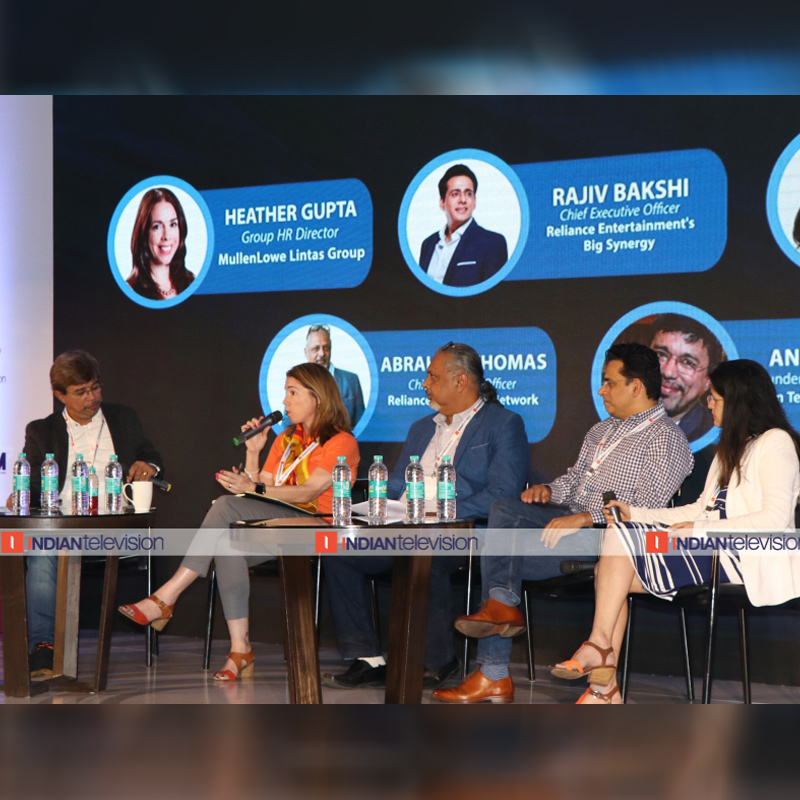
    Indiantelevision.com founder, CEO and editor-in-chief Anil Wanvari held a session “Responding to megatrends” in its first-ever Media HR Summit. MullenLowe Lintas group HR director Heather Saville Gupta, Reliance Entertainment’s Big Synergy CEO Rajiv Bakshi, Madison World executive director Lara Balsara Vajifdar and Reliance Broadcast Network Ltd CEO Abraham Thomas participated in the panel discussion.

    MullenLowe Lintas’ Gupta said that the media industry is most dynamic. Other industries do not have to deal with such face-paced movement. Adding to this, Thomas said, “Two disruptions which have actually changed our lives as consumers and professionals are digital disruption and the huge societal change that has come upon us. We currently have almost five different generations working together.”

    According to Thomas, the role of HR has become a watchdog looking for trends and insights in the industry. The HR department is like a composer, trying to scale the company goals. Thomas is of the view that HR role has suddenly become front-end and frontline. He opined that with digital, HR is the other important buzz word.

    Bakshi added that while that bastion was held by the word ‘transformation’ for the last three years, now HR has arrived to play the role of not just a partner but also an anticipator. HR has to anticipate business trends for the survival of the company.

    “HR is very important for the agency as our business is all about people. HR is not just the HR head’s responsibility; it is each and every senior management’s responsibility especially in an agency business which is full of young people coming with its own set of challenges,” Vajifdar said.

    According to her, media is getting a good share of young employees who are ambitious, impatient, have a sense of purpose for work and don’t want to listen to someone just because they are senior.  She said that they want their leaders to command respect not just demand and expect.

    Gupta’s company delves in producing 30-60 second TVCs where upscaling older employees is a challenge while millennials understand digital faster. Added to this are the budget constraints while hiring, training, recruiting and retaining employees due to smaller client budgets.

    Bakshi added that one major challenge the industry is facing is creating a value proposition which will attract multi-generation people. This means creating an organisation where there are stalwarts, experienced people as well as energetic youngsters who have to collaborate for the same project. He also added that HR needs personalisation with the help of data analytics. This can be done via customised training programmes and incentives.

    Experts also agreed that younger employees look for direct communication from authority to get a sense of what they are doing. Hence, taking out time for personalised informal communication without any agenda is important. Any key factor is HR management is to align personal goals with the company’s and get employees to look at the bigger picture with greater contribution to society.