Tag: Digital transformation

  • AET Displays: Redefining LED brilliance and leading India’s DOOH revolution

    AET Displays: Redefining LED brilliance and leading India’s DOOH revolution

    MUMBAI: Marketing isn’t just getting smarter; it’s getting flashier—and DOOH is proof that advertising is no longer a static affair. According to recent market reports, India’s DOOH (Digital Out-of-Home) market is currently valued at around USD 282.6 million in 2024, with expectations to reach USD 630 million by 2030 at a CAGR of 13.8 per cent.

    Forget peeling billboards that fade into the background; today, LED-powered displays are turning streets into visual feasts. Bright lights, big impressions, and data-driven campaigns—what’s not to love? AET Displays, the wizards of outdoor advertising, are leading this transformation.

    Curious why India’s DOOH market is shining brighter than ever, with a staggering 13.8 per cent CAGR? Want to know how AET Displays is capturing eyeballs (and wallets)? Keep reading for insights, strategies, and a touch of LED magic that’s redefining advertising.

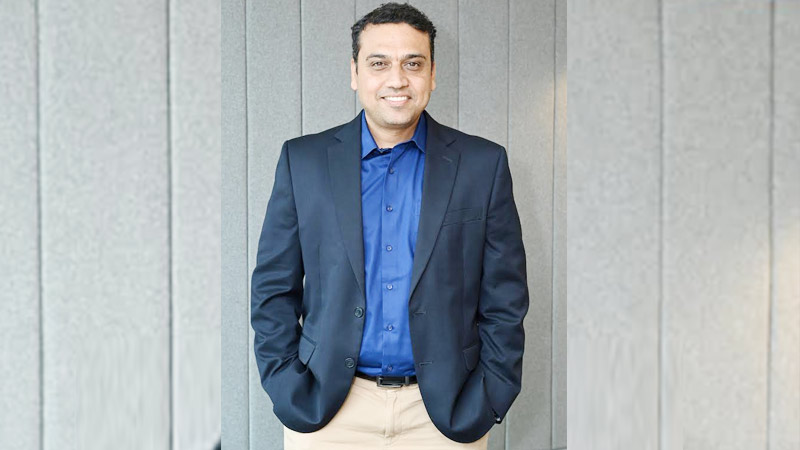
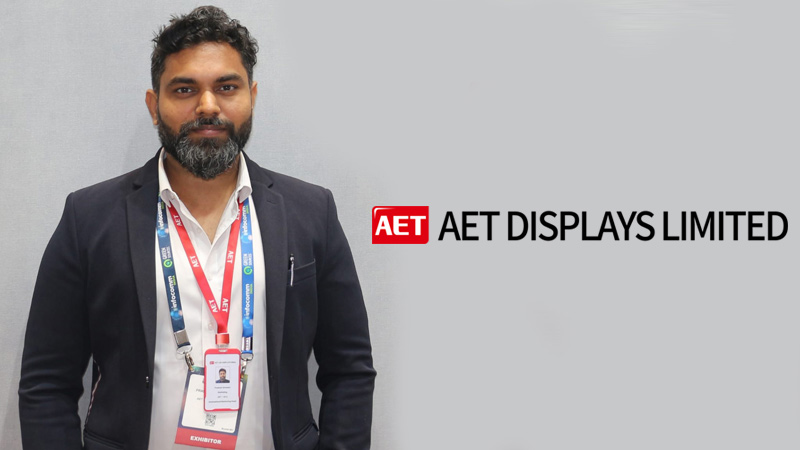
    Indian Television’s Suman Baidh and Sreeyom Sil recently sat down with AET Global’s international marketing head, Prashant Srivastava for a candid chat on India’s buzzing DOOH advertising market. From billion-dollar projections to the latest LED wizardry, Srivastava didn’t hold back. Want to know how AET Displays plans to light up the competition, one screen at a time? Let’s dive into the trends, the opportunities, and maybe even a few trade secrets (if we’re lucky!).

    Edited Excerpts

    The DOOH market in India seems to be on fire right now. What’s fuelling this growth?

    India’s DOOH market is witnessing a transformative phase, growing at an estimated CAGR of 14 per cent and poised to reach $1 billion by 2027. Key trends include the integration of programmatic advertising, real-time analytics, and the rise of interactive displays. However, challenges such as infrastructure gaps and regulatory inconsistencies persist. The opportunities lie in expanding to Tier 2 and Tier 3 cities, where the adoption of digital solutions is accelerating, and in catering to smart city initiatives that demand high-quality, weather-resistant displays.

    Challenges and opportunities always go hand in hand. What’s your strategy for tackling them?

    Our AET Spark Program is a transformative initiative designed to elevate the LED display industry by providing a seamless, end-to-end experience for our partners. This program goes beyond just supporting our clients; it also focuses on skill development by training employees to enhance their expertise in the LED display industry.

    With a strong network of over 80 partners and distributors across 34 countries, the program helps extend AET’s global footprint while addressing local market needs. We also offer comprehensive product training to empower customers to fully utilise their LED displays and maximise their potential. The program ensures high-performance maintenance and minimal downtime while committing to sustainability with advanced packaging technologies like MIP and COB.

    That’s a solid approach. So, what makes AET’s displays stand out in this competitive market?

    AET is not just a seller of LED products, but a leader in LED technology. Our displays stand out due to their technological superiority, durability, and customisation options. We incorporate cutting-edge technologies such as Micro LED (COB & MIP Technology), Quantum Dot Chip on Board (QCOB), and Transparent LED with AM Technology.

    Our products are built to withstand India’s diverse climates, from Rajasthan’s searing 49°C heat to the monsoon-heavy Mumbai. They’re dustproof, waterproof, UV-resistant, and consume 20 per cent less energy than industry standards. This aligns with global sustainability goals while delivering top-notch quality.

    Advertisers must love that level of innovation. How do they leverage AET’s displays for campaigns?

    Advertisers leveraging AET displays understand that times have changed, and today’s campaigns demand real-time insights to ensure their ads are capturing consumer attention. Our LED displays are not just products but a promise of quality, consistency, and innovation. From seamless installations to ongoing support, we provide a comprehensive service that sets us apart.

    With AET, advertisers gain more than just a display; they gain a dedicated partner committed to their success. Our displays integrate real-time analytics and interactive features, ensuring maximum engagement and deepening consumer relationships.

    Let’s talk tech—how is AET revolutionising outdoor advertising in India?

    AET Displays is at the forefront of revolutionising digital outdoor advertising in India by driving a significant shift from traditional static advertising to dynamic, interactive, and data-driven solutions.

    Our transparent LED displays are a prime example of innovation, offering visually captivating mediums for high-traffic areas while maintaining the surroundings’ aesthetic. Additionally, our Quantum series, built on cutting-edge MIP technology, delivers superior image quality and energy efficiency for large-scale installations.

    We empower brands with real-time analytics, allowing for campaign optimisation on the go. By integrating interactive features, advertisers can create unforgettable experiences for their audiences. We’re also contributing to smart city projects, ensuring our displays enhance urban connectivity and innovation.

    Sustainability seems to be a buzzword across industries. How is AET walking the talk?

    At AET Displays, sustainability is at the core of our business strategy. Our LED displays consume up to 20 per cent less energy compared to industry standards, reducing carbon emissions while cutting operational costs for our clients.

    Our advanced packaging technologies like MIP and COB ensure safer deliveries while minimising waste. Additionally, our displays are designed for durability, reducing the need for replacements and cutting down on electronic waste. These efforts align our operations with global sustainability standards, ensuring a greener and more sustainable future.

    Looking ahead, what does the future hold for India’s DOOH industry and AET Displays?

    The future of the Digital Out-of-Home (DOOH) industry in India looks extremely promising. The market is projected to double by 2030, driven by advancements in technologies such as AI, IoT, and 5G connectivity. These innovations will enable more personalised, dynamic, and interactive advertising experiences.

    As for AET Displays, 2024 was a landmark year with 40 per cent growth in India. In 2025, we plan to expand aggressively into Tier 2 and Tier 3 cities, launch new product lines with enhanced capabilities, and strengthen our partnerships through initiatives like the AET Spark Program. Our mission is to remain at the forefront of this transformation and help brands captivate audiences like never before.

    As AET Displays paves the way with tech-savvy brilliance and sustainability-driven innovation, India’s DOOH market is truly lighting up—literally. The future of outdoor advertising is bright, and it’s undoubtedly LED-powered. So, the next time you walk past an LED display, don’t just admire its shine—wonder if it’s plotting world domination with programmatic ads and AI analytics. Will the old-school billboard ever make a comeback? Doubtful. But as Srivastava cheekily puts it, “In the battle of the billboards, it’s clear—LED always outshines paper. It’s bright, it’s dynamic, and most importantly, it’s the future of how we connect with audiences.”
  • Shejale-Ganganna’s LS Digital mastermind revolutionary AI Marketing Stack

    Shejale-Ganganna’s LS Digital mastermind revolutionary AI Marketing Stack

    MUMBAI: Founded by visionary leaders Prasad Shejale and Venugopal Ganganna, LS Digital has long been the underdog-turned-powerhouse in the marketing world. Now, with the launch of their much-anticipated “AI Marketing Stack”, they’ve thrown down the gauntlet to competitors, effectively saying, ‘AI isn’t optional anymore – it’s your secret weapon’.

    This revolutionary offering integrates cutting-edge AI tools into every facet of marketing, empowering businesses to unlock insights, optimise campaigns, and stay miles ahead of the competition in today’s ever-evolving digital ecosystem.

    What sets LS Digital apart? Well, it’s not just about slapping a buzzword on a product. This stack is more like a power packed pitstop for marketers, blending tools that decode data, predict consumer behaviour, and even create hyper-personalised campaigns.

    Prasad, the “master strategist” CEO, pairs perfectly with Venugopal, the “technological wizard” CIO, making LS Digital a dynamic duo in the marketing universe. Together, they’ve created a solution that not only future-proofs brands but turns AI from a mystery into a necessity. And the best part? They’re making it accessible for businesses large and small. Intrigued yet?

    From L to R: LS Digital founder & CEO Prasad Shejale; LS Digital co-founder & CIO Venugopal Ganganna

    LS Digital gets it: CMOs aren’t here for more jargon, they’re here for tools that actually do the heavy lifting. And that’s where swoops in AI Marketing Stack—a marketer’s secret sauce that promises to spice up campaigns, cut the fluff, and deliver results faster than you can say, conversion rates! AI features include:

    1    Research AI: Turning customer data into golden insights faster than you can say “target audience.”

    2    Generate AI: Because no one has time to write generic content anymore—this tool churns out campaigns and social posts so personalised, they might as well come with your customers’ birthstones.

    3    Predictive AI: It’s like a marketing crystal ball—forecasting trends and fine-tuning campaigns like it’s nobody’s business (except yours).

    Oh, and they aren’t stopping there. They’re letting existing clients take their Research AI tool for a free test spin—no strings attached. Why? Because getting CMOs hooked on AI shouldn’t feel like pulling teeth.

    Shejale said, “AI isn’t just another tool; it’s the foundation for tomorrow’s marketing success. With our AI Marketing Stack, we’re removing the hurdles and enabling brands to explore new frontiers of growth and innovation. This is about making every brand unstoppable in the age of AI.”

    Adding to this vision, Ganganna emphasised the strategic depth of the initiative: “AI isn’t just about technology—it’s about staying ahead of the curve. With our solutions, we’re not just helping clients optimise campaigns; we’re future-proofing their strategies.” Ganganna also highlighted LS Digital’s partnership with Quilt, an expert in AI culture analysis and market intelligence, which has been instrumental in refining the stack’s capabilities.

    Forget everything you thought you knew about marketing—it’s not just about playing darts with data anymore. LS Digital’s new AI Marketing Stack is like upgrading from a rusty bicycle to a rocket ship; it promises to make AI the default setting for every brand aiming to win the marketing race.

    Indiantelevision.com Sreeyom Sil had an exclusive tête-à-tête with Venugopal Ganganna during LS Digital’s big launch event in Mumbai. Amidst the buzz and excitement, Ganganna spilled the beans on how this stack is a marketer’s dream come true and why it’s set to leave competitors playing catch-up. Let’s dig in!

    What inspired the creation of the AI marketing stack? Who were the key collaborators?

    The AI marketing stack has been a product of collaborative innovation involving multiple partners, technologies, and our experience over the last 18 months of building a digital business transformation agency. Our partnerships with companies like Quill.ai, Gemini, Vertex AI, Claude, and others helped shape the stack. We connected the dots around data intelligence, creative automation, and predictive modelling to tackle real-world marketing challenges.

    What’s the price tag for this innovation, and what ROI are you targeting?

    Our investment in the AI marketing stack amounts to $2–3 million over the past 18 to 24 months, spanning technology, talent, and research. But the expected ROI isn’t just financial – it’s about driving marketing transformation. We measure success through cost savings, productivity improvements, and efficiency gains, aiming for a 15–25 per cent uplift in these areas for our clients.

    Who are your target clients?

    The stack is industry-agnostic but tailored for sectors like FMCG, retail, e-commerce, BFSI, and lifestyle brands – areas that demand scalability, hyper-personalisation, and data-driven insights. We cater to enterprise clients needing large-scale solutions, mid-sized brands seeking efficiency at an accessible cost, and digital-first businesses looking to integrate creativity, media, and predictive modelling seamlessly.

    What makes this stack unique compared to similar tools?

    It’s not just a tool – it’s a customised AI agent, or rather 20 agents, designed for specific marketing needs such as predictive analytics, hyper-personalised media planning, and consumer cohort analysis. It’s a combination of many agents that integrate across platforms, scale effectively, and, most importantly, are cost-effective. We also offer a tiered pricing model ranging from SMB subscriptions to enterprise-level solutions with advanced capabilities.

    Is the stack India-focused, or is global expansion in the works?

    While the initial launch was in India, we’ve already done projects across GCC, SEA, the UK, and the US. As we scale, we’re targeting the Middle East, North America, and the EU as key hubs for enterprise adoption.

    What are the biggest challenges clients face when transitioning to AI-driven marketing?

    The main challenge is: where do I start? How do I begin? There’s scepticism about AI’s ROI, fears of complexity, and integration issues. To tackle these, we offer exclusive free access to our research modules for a few months, supported by dedicated training. This removes the barrier to entry, enabling brands to test the waters without huge upfront budgets.

    Ganganna is clear: AI isn’t a luxury – it’s a necessity. LS Digital’s AI Marketing Stack doesn’t just level the playing field; it flips the script entirely. Imagine a world where marketers swap their guesswork for a precise, algorithm-fueled strategy—and that’s exactly the future LS Digital promises.

    So, what’s next? The tools are here, the playbook is ready, and LS Digital is handing CMOs the keys to the AI kingdom. Ganganna leaves us with this thought: “AI isn’t just about technology; it’s about staying ahead of the curve and winning the race.” And with that, LS Digital makes one thing clear—when it comes to marketing, it’s no longer a sprint; it’s a smart race powered by algorithms.

  • C Com Digital teams up with Rushi Ventures to redefine F&B branding

    C Com Digital teams up with Rushi Ventures to redefine F&B branding

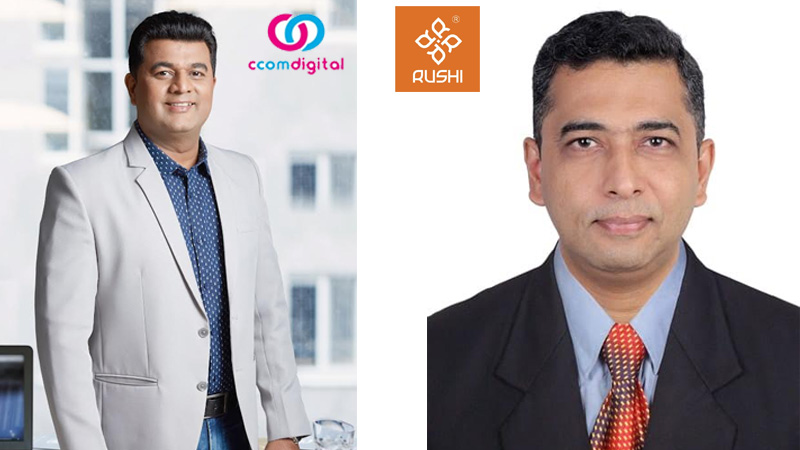
    MUMBAI: In a move that promises to revolutionise its online presence, Rushi Ventures Pvt Ltd (RVPL) has joined hands with C Com Digital, a global full-service techno digital marketing agency. The partnership will drive digital transformation across RVPL’s diverse food and beverage portfolio, including celebrated brands Rushi Fudzs, Mumbai Bowls, and Say Yummee.

    From its humble beginnings in 1993 as ‘Udipi Refreshment’, founded by Sham Shinde, RVPL has grown into a multi-brand enterprise. Now under the leadership of Siddhartha Shinde, the company blends a legacy of excellence with a flair for innovation. C Com Digital will spearhead digital campaigns, social media management, and strategic print marketing to amplify RVPL’s reach and resonance across Mumbai and Thane.

    Here’s a quick rundown of the brands set to sizzle in the spotlight:

    . Rushi Fudzs: A tribute to Mumbai’s soul food-think vada pav and dabeli with a dash of modern charm.

    . Mumbai Bowls: Customisable meals in a bowl, curated for the Gen Z crowd and corporate hustlers.

    . Say Yummee: A vibrant QSR offering everything from pav bhaji to pasta, created to delight Millennials and Gen Z alike.

    Each brand brings a unique flavour to the table, and C Com Digital’s job is to ensure they shine brighter in the crowded F&B market.

    RVPL’s MD, Siddhartha Shinde expressed his enthusiasm for the collaboration, “At RVPL, our journey has been fuelled by a passion for food, a legacy of excellence, and a belief in constant innovation. Partnering with C Com Digital marks a new chapter, allowing us to engage with audiences in meaningful ways. Their expertise will be pivotal as we expand our footprint and bring our unique offerings to more customers.”

    Meanwhile, C Com Digital founder & director Chandan Bagwe shared his vision, “Rushi Ventures is a remarkable blend of legacy and modernity in the F&B space. This partnership is an opportunity to craft dynamic, data-driven strategies that will elevate their brands, ensuring they stay relevant and top-of-mind in an increasingly digital world.”

    C Com Digital’s strategy will focus on expanding brand visibility, boosting customer engagement, and data-driven storytelling.

    Through creative campaigns, precision targeting, and relentless innovation, C Com Digital aims to establish RVPL as a leader in the F&B industry. With a legacy that began in 1993 and a vision that looks far into the future, the partnership is set to cook up something truly spectacular.

  • Decoding Next Mediaworks Q3 and nine month results

    Decoding Next Mediaworks Q3 and nine month results

    MUMBAI: Next Mediaworks Limited is a holding company with a colourful portfolio in multimedia—think of it as the Swiss Army knife of the entertainment world. Helmed by HT Media and with deep roots in Indian broadcasting, the company has evolved into a jack-of-all-trades, dabbling in everything from FM radio to online news.

    Let’s start with its bread and butter: FM radio broadcasting. Through its Radio One FM stations, Next Mediaworks has become a household name in seven cities, including the media powerhouses of Mumbai, Delhi, and Chennai. Feeling nostalgic for some old-school TV magic? The company also markets television programmes, films, and software—the behind-the-scenes wizardry that keeps your screens alive.

    And it doesn’t stop there. Acting as an advertising agent, providing online music and news, and even diving into internet commerce, Next Mediaworks spreads its wings wide. But how does one juggle all these pies while staying profitable? That’s the million-dollar question as we dig deeper into its financials.

    When you’re in the business of radio, every quarter brings a new tune. For Next Mediaworks Limited, this time, the notes were both harmonious and dissonant. The financial results for the quarter and nine months ending 31 December 2024, paint a picture of a company striving to balance its operational challenges with strategic resilience.

    Standalone Results

    The standalone results for Next Mediaworks in Q3 present a smaller slice of the financial pie—or should we say crumbs? Total income for the quarter was Rs 43 lakh, bolstered entirely by other income, as revenue from operations took a vacation. For the nine months, the total income barely inched up to Rs 44 lakh. The real story, however, is the expenses—and it’s a thriller.

    Employee benefit expenses for the nine months amounted to Rs 24 lakh—impressive if you’re running a lemonade stand, but less so for a media company. Meanwhile, finance costs gobbled up Rs 323 lakh, a jump from Rs 271 lakh last year, making one wonder: Are they financing or fine dining? Other expenses, at Rs 56 lakh, added more salt to the wound. This cocktail of costs stirred up a quarterly standalone loss of Rs 97 lakh and a nine-month loss of Rs 359 lakh.

    EBITDA, the trusty metric of financial health, barely registered a pulse, with Rs 15 lakh in Q3 and a cumulative Rs (36 lakh) for the nine months. Exceptional items stayed out of the picture, leaving the losses to hog the spotlight. The loss per share for Q3 was Rs 0.15, and for the nine months, Rs 0.54.

    Can this standalone operation hit the reset button and find its groove, or is it destined to stay on mute?

    Consolidated Results

    The consolidated revenue for Q3 stood at Rs 1,124 lakh, reflecting a decline from the Rs 1,172 lakh posted in the same quarter last year. However, the nine-month revenue was nearly flat at Rs 3,090 lakh, compared to Rs 3,077 lakh in 2023. Despite these figures, the company faces mounting challenges, as total expenses for the nine-month period surged to Rs 5,233 lakh, up from Rs 5,065 lakh.

    Now, let’s spice things up with the consolidated results—the section where the numbers get all the attention. EBITDA, the shining knight in an otherwise troubled kingdom, stood at Rs 143 lakh for Q3 and Rs 680.76 lakh for the nine months. However, profitability has been elusive, with the company posting a consolidated loss of Rs 632 lakh in Q3 and a whopping Rs 2,143 lakh over the nine months. Talk about a steep hill to climb!

    Let’s not sugarcoat it: the losses weren’t small. Employee expenses totalled Rs 597 lakh for the nine months, and radio license fees alone devoured Rs 1,048 lakh. Meanwhile, finance costs ballooned to Rs 1,739 lakh, up from Rs 1,539 lakh in 2023.

    As Next Mediaworks faces these towering costs, one has to ask: can they trim the fat without losing muscle?

    In a world where Spotify dominates playlists and podcasts grab ears globally, where does traditional radio fit? The consolidated losses may seem like a dirge, but Next Mediaworks is no stranger to finding harmony in chaos. Can it pull off a comeback and compose a more profitable tune?

    Next Mediaworks, through its flagship subsidiary Next Radio, is a prominent player in the radio broadcasting space. Yet, operating in an era dominated by streaming platforms has amplified the pressure to innovate. Radio license fees for Q3 were Rs 351 lakh, while employee benefits expenses climbed to Rs 597 lakh for the nine months, compared to Rs 634 lakh the previous year. Finance costs were another thorn, growing to Rs 1,739 lakh for the nine months, compared to Rs 1,539 lakh in 2023.

    Despite these hurdles, the company maintains a “going concern” assumption, bolstered by support from its holding company, HT Media. How long will this financial backing shield the group from market headwinds?

    While the overall narrative appears grim, there are glimmers of hope. The company has avoided external borrowings and maintains a favourable current assets-to-liabilities ratio. Its strategic focus on maintaining operational liquidity could provide the breathing room needed to recalibrate its business model.

    Moreover, the appointment of Sameer Singh as a non-executive non-independent director introduces a seasoned hand with global experience. His prior leadership roles at GroupM, Google, and ByteDance could inject a fresh perspective into the company’s strategic planning.

    The radio industry may no longer be the dominant force in entertainment, but its relevance endures. The challenge for Next Mediaworks is to harmonise traditional broadcasting with the demands of a tech-savvy audience. Will the company invest in digital transformation, or will it double down on its current model?

    As the financial results highlight, the road ahead is far from smooth. Yet, with strategic backing and seasoned leadership, Next Mediaworks has the potential to rewrite its tune. Investors and stakeholders will be keen to see whether the company’s next quarter hums a more uplifting melody.

    Key financial highlights

    . Consolidated Revenue: Rs 1,124 lakh for Q3; Rs 3,090 lakh for nine months.

    . EBITDA: Rs 143 lakh for Q3; Rs 680.76 lakh for nine months.

    . Consolidated Loss: Rs 632 lakh for Q3; Rs 2,143 lakh for nine months.

    . Standalone Loss: Rs 97 lakh for Q3; Rs 359 lakh for nine months.

    .  Finance Costs: Rs 1,739 lakh for nine months, up from Rs 1,539 lakh in 2023.

  • Shemaroo’s Q3 revenue: Adapting to digital and facing legacy trials

    Shemaroo’s Q3 revenue: Adapting to digital and facing legacy trials

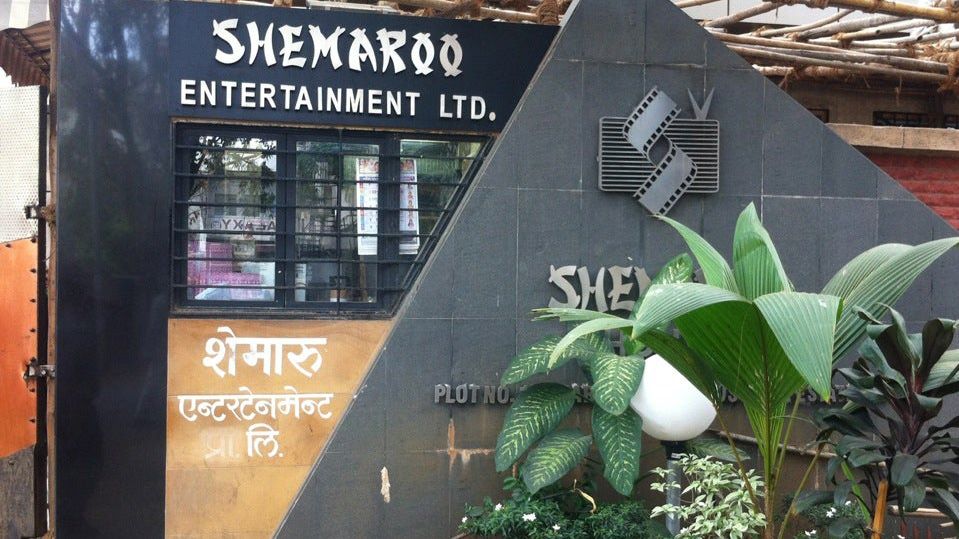
    MUMBAI: Shemaroo Entertainment Limited has rolled out its financial results for Q3 FY25 and the nine-month period ending 31 December 2024. Founded by the ever-visionary Raman Maroo in 1962 as a humble book library, Shemaroo has since performed an Indian cinema-style transformation into one of India’s foremost entertainment companies. With a current market valuation of approximately Rs 10,000 crore and a legacy spanning six decades, the company is proof that a great plot (and some brilliant foresight) can weather any twist. Maroo’s genius for spotting trends early—like assembling one of India’s largest content libraries—has cemented Shemaroo’s reputation as a box-office favourite in both traditional and digital media.

    Now, who says legacy brands can’t dance to a new tune?

    In today’s fiercely competitive market, where giants like Netflix, Amazon Prime Video, Sony and Zee vie for consumer attention, Shemaroo’s strategy is anything but passive. The company’s ability to repurpose its extensive Indian cinema and regional film library for streaming platforms, coupled with its focus on regional and niche content, is its secret sauce for staying relevant. Can a legacy brand like Shemaroo thrive in a world dominated by binge-worthy web series and blockbuster originals?

    Let’s dive deeper into the numbers and uncover the plot twists behind the balance sheet.

    Consolidated Performance

    For Q3 FY25, Shemaroo Entertainment reported consolidated revenue from operations at Rs 16,437.42 lakhs. Think of it as a steady performance—better than Rs 15,592.64 lakhs in the previous quarter but just a tad shy of Rs 16,206.08 lakhs in Q3 FY24. Adding Rs 296.45 lakhs in other income, the total income reached Rs 16,733.87 lakhs for the quarter. It’s not quite a standing ovation, but at least the audience has not walked out.

    Now, let’s talk about EBITDA (Earnings Before Interest, Taxes, Depreciation, and Amortisation)—the backstage crew of financial performance. For Q3 FY25, EBITDA stood at Rs 1,539.47 lakhs. Rising operational costs and tight advertising budgets played the villain here, but the show must go on! Meanwhile, Profit After Tax (PAT) took a dramatic dive, with a loss of Rs 3,652.75 lakhs, compared to a profit of Rs 1,228.94 lakhs in Q3 FY24. If this were a movie, we would call it a tragic second act.

    For the nine months ended 31 December 2024, consolidated revenue totalled Rs 48,082.93 lakhs. That’s down from Rs 50,834.08 lakhs in the previous year—not the kind of sequel numbers anyone hopes for. EBITDA came in at Rs 4,210.69 lakhs, while PAT posted a net loss of Rs 10,937.90 lakhs, compared to a loss of Rs 2,041.57 lakhs in FY24. It’s safe to say, the financial script could use a few rewrites.

    Despite these challenges, Shemaroo’s numbers reveal a company determined to stay in the game. With rising operational costs and shifting consumer preferences, the Q3 results underline the importance of resilience and adaptability in today’s cutthroat entertainment landscape. After all, every blockbuster needs a bit of suspense, doesn’t it?

    Standalone Results

    On a standalone basis, Shemaroo’s revenue from operations for Q3 FY25 was Rs 15,542.52 lakhs, edging up from Rs 15,226.01 lakhs in the previous quarter and Rs 14,773.76 lakhs in Q3 FY24. Total income, including Rs 253.41 lakhs from other sources, hit Rs 15,795.93 lakhs for the quarter. While it’s not quite a red-carpet moment, it’s certainly not a straight-to-DVD release either.

    EBITDA for Q3 FY25 clocked in at Rs 1,419.05 lakhs. Operational costs, which soared to Rs 14,792.44 lakhs, weren’t shy about stealing the spotlight. Meanwhile, PAT took a dramatic dive, delivering a loss of Rs 3,739.99 lakhs compared to Rs 2,732.39 lakhs in Q3 FY24. Let’s call this twist in the tale Shemaroo’s “Bollywood tragedy” phase.

    For the nine months ended 31 December 2024, standalone revenue reached Rs 45,506.20 lakhs, falling short of Rs 48,541.42 lakhs reported in the same period last year. Total income tallied up to Rs 46,058.52 lakhs, while EBITDA for the period stood at Rs 4,153.34 lakhs. PAT for the nine months delivered a loss of Rs 8,176.58 lakhs, more than doubling last year’s Rs 4,035.48 lakhs. These numbers suggest Shemaroo’s script might need some serious rewrites to avoid becoming a “box-office bomb.”

    Still, Shemaroo’s knack for juggling its legacy operations with a burgeoning digital portfolio shows promise. After all, every epic needs its moment of redemption—here’s hoping Shemaroo’s next act delivers the blockbuster twist we’ve all been waiting for!

    Shemaroo’s dual focus on traditional media and digital growth has been a defining aspect of its strategy. While revenue from legacy operations faces mounting challenges, the company’s investments in digital platforms are yielding promising results. Shemaroo’s partnerships with OTT players and its direct-to-consumer initiatives are driving audience engagement and revenue growth. The question remains: can Shemaroo go viral in the digital world while keeping its classic charm?

    The digital segment has shown significant traction, with increasing subscriber counts and higher engagement metrics. However, the competition in the OTT space is fierce, with new entrants vying for market share. Will Shemaroo’s robust content library and its reputation for delivering quality entertainment be enough to sustain long-term growth? Or will the digital world prove to be a tougher audience than expected?

    Shemaroo has long been a pioneer in India’s entertainment sector, leveraging its extensive content library to cater to diverse audience preferences. The company’s innovative marketing initiatives, such as regional-language content expansions and festival-centric campaigns, have strengthened its brand equity. However, the slight decline in revenue indicates that the path forward will require even greater innovation to compete in a market increasingly dominated by digital platforms.

    Can Shemaroo continue to build on its legacy while charting a new course in the digital age? The coming quarters will reveal whether this stalwart of Indian entertainment can transform challenges into opportunities and emerge stronger in a competitive landscape. For now, Shemaroo is writing its next chapter—and it promises to be an interesting read.

    After all, even legends need to adapt—no one wants to be a rerun.

  • Network18’s rollercoaster Q3: Cash crunch or clever moves?

    Network18’s rollercoaster Q3: Cash crunch or clever moves?

    MUMBAI: When Mukesh Ambani sets his sights on a business, it’s never a low-stakes affair—and the Q3 FY25 results of Reliance Industries-owned Network18 Group are no exception.

    With Rahul Joshi at the editorial helm and Adil Zainulbhai overseeing the boardroom, Network18’s quarterly performance unfolds like a high-stakes thriller, leaving analysts juggling numbers and the audience wondering: is this brilliance or blunder?

    From headline revenue twists to profit-margin cliffhangers, this quarterly report reads more like a script straight from Bollywood. So grab your popcorn because this isn’t just a financial disclosure—it’s Mukesh Ambani, once again, rewriting the playbook of India’s media landscape.

    Standalone stars & stumbles

    For Q3 FY25, Network18 pulled in Rs 476.41 crore in revenue from operations. That’s a respectable leap from last quarter’s Rs 445.27 crore, but is it really a win when Q3 FY24 wasn’t far behind at Rs 469.10 crore?

    Total income, at Rs 483.96 crore, held its ground against Rs 447.62 crore last quarter. Steady as it goes, right? Yet, for a company of this scale, one might wonder: is this pace enough to stay ahead of the competition?

    But here’s the plot twist: the company posted a net loss of Rs 66.27 crore. While better than Q2’s Rs 74.45 crore, it’s a wider hole than the Rs 43.42 crore loss in Q3 FY24.

    What’s eating into those profits?

    Higher operational costs of Rs 103.07 crore and ballooning employee expenses at Rs 181.24 crore seem to be playing the villains here. Add to this the creeping pressure of content investments, and it’s clear Network18 is juggling multiple priorities.

    Nine months in, and the company’s revenue has grown to Rs 1,374.45 crore from last year’s Rs 1,282.74 crore. But with a cumulative loss of Rs 216.37 crore, you’ve got to ask—is this progress or just treading water? Can they turn this around with their strategic pivots, or is a deeper overhaul needed?

    Consolidated chaos or calculated moves?

    The consolidated picture? Think of it as the bigger, messier sibling. Revenue from operations slipped to Rs 1,360.50 crore, down from Rs 1,825.18 crore in Q2. Total income followed suit at Rs 1,442.55 crore. Soft advertising revenues and soaring expenses seem to be the culprits here. It begs the question: are advertisers tightening their belts, or is Network18 losing its edge in attracting ad spend?

    And then there’s the elephant in the room: the Rs 1,400.05 crore net loss. Yes, you read that right.

    Exceptional items—mainly from the derecognition of subsidiaries post the Viacom18 and Star India restructuring—contributed a jaw-dropping Rs 1,425.73 crore to the loss column. Talk about exceptional! While this move may have long-term benefits, the immediate financial optics are challenging to say the least.

    So here’s the question: does shedding these subsidiaries make Network18 leaner and meaner, or just lighter in the pocket? With this dramatic restructuring, will the company’s new shape enable it to sprint ahead, or will it limp along burdened by its past?

    Operational costs for Q3 soared to Rs 682.44 crore, while marketing expenses hit Rs 340.00 crore. It’s clear the company is investing in its brand, but with employee benefits at Rs 267.78 crore, could some belt-tightening be in order? Or is it all part of a grand plan to win the long game? After all, balancing brand-building with profitability is no small feat.

    Consider this: even as costs rise, the company’s digital platforms are gaining traction. Could this be the silver lining in a stormy quarter? And how long before these investments start paying dividends?

    A key subplot of this quarter is the composite scheme of arrangement. Selling Viacom18 and other assets to Star India and Digital18 might seem like a costly move now, but will it pay off in the long run? Time’s the ultimate critic, but this bold restructuring has certainly captured attention. As part of the shakeup, Viacom18 ceased to be a subsidiary as of 30 December 2024. While this realignment adds immediate weight to the expense column, it positions the company to streamline and optimise in future quarters. Could this be Network18’s masterstroke?

    The challenges are clear: falling advertising revenue and rising content costs. But don’t count Network18 out just yet. With its digital platforms growing steadily, could we be seeing the early stages of a bold new chapter? Or is this just a trailer for more turbulent times?

    There’s also the matter of competition. In a crowded media landscape, innovation and adaptability are key. Network18’s investments in digital transformation signal ambition, but can these moves outpace rivals who are equally hungry for market share?

    Network18’s Q3 FY25 is a tale of highs, lows, and bold bets. Sure, the losses are glaring, but the strategic realignments hint at a company playing the long game. Is this a case of short-term pain for long-term gain? Or are we witnessing the opening act of a broader reckoning?

    So, will the next quarter be a comeback or another cliffhanger?

  • Amit Rathi hangs up his boots at Digital Turbine after nine years

    Amit Rathi hangs up his boots at Digital Turbine after nine years

    MUMBAI: Every book, no matter how extraordinary, must one day close to make way for a new tome.

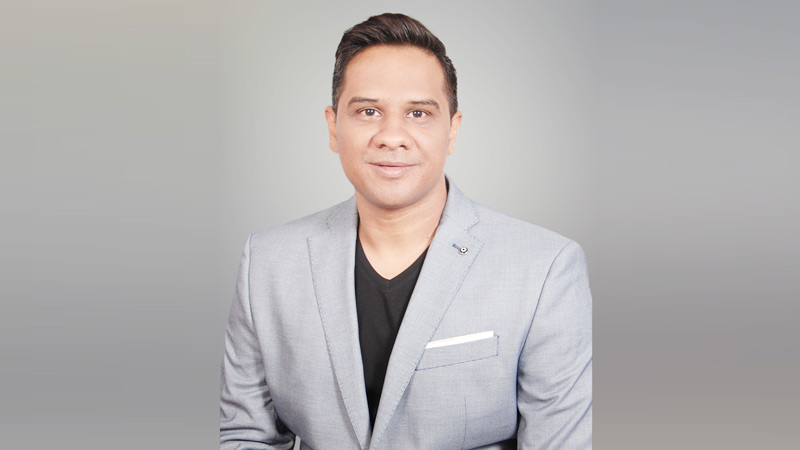
    Amit Rathi, with over 20 years of expertise in digital media and advertising, is stepping down from mobile  advertising platform Digital Turbine as country manager -south Asia  after an illustrious tenure spanning eight years and 10 months. His departure is both bittersweet and inspiring-a poignant goodbye to a journey marked by relentless innovation, transformative teamwork, and collaborations that shaped the future of the industry.

    During his time at Digital Turbine, Rathi witnessed the transformative evolution of the organisation, from its beginnings as Opera Mediaworks to its transition into AdColony, and finally its integration into Digital Turbine. His leadership played a pivotal role in driving the company’s growth, particularly across the Asia-Pacific (APAC) region, where he built strong partnerships with leading agencies, brands, and publishers.

    He extended his gratitude to the APAC team for their camaraderie and dedication, “A special thank you to the Digital Turbine APAC team for your unwavering support—you made this journey truly special.”

    He also acknowledged the invaluable trust and collaboration of clients, agencies, and partners, “A heartfelt thank you to all the clients, agencies, partners, and brands I had the privilege of working with. This journey would have been incomplete without your trust and collaboration.”

    Rathi’s tenure at Digital Turbine saw the company emerge as a leader in delivering innovative mobile advertising solutions, leveraging technology to connect brands with audiences globally. He played a vital role in driving revenue growth, expanding market presence, and fostering a culture of excellence within the organisation.. 

    Prior to his time at Digital Turbine, spent a few of his formative years at Yatra Online, Sify, Rediff.com, Infomedia (formerly Tata Press Yellow Pages) and Integrated Databases (India Today goup) when they were all in their glory days. 

    As he embarks on the next phase of his career, Rathi expressed excitement for future challenges and opportunities. His extensive expertise in strategic planning, market development, and team leadership positions him as a formidable force in the evolving digital landscape.  

    The question being asked, however, is: what’s he going to do next?


  • The modern CMO: Driving growth and innovation in India

    The modern CMO: Driving growth and innovation in India

    Mumbai: In a world where screens dominate our lives, advertisements have evolved into captivating narratives that often capture more of our attention than the movies we adore or the podcasts we cherish. This relentless tide of digital innovation has placed marketing at the very heart of modern business. Behind every clever campaign or viral ad lies a creative mind weaving strategies that resonate deeply with audiences, shaping trends and subtly steering our choices.

    India, a land of infinite diversity and ceaseless contrasts, offers an unparalleled canvas for marketers. Here, chief marketing officers (CMOs) transcend their traditional roles, becoming architects of growth, pioneers of digital transformation, and custodians of trust. In this dynamic marketplace, where every consumer interaction carries the weight of cultural nuance, CMOs are tasked with not just adapting to change but leading it, forging a path toward a future brimming with opportunity and innovation.

    To delve deeper into this dynamic evolution, Indian Television dot com spoke with Danone’s marketing director, Sriram Padmanabhan about the challenges, opportunities, and expectations shaping the modern CMO’s role in India.

    How has the role of the CMO evolved in India over the years?

    The role of the CMO has expanded far beyond traditional marketing functions like advertising and brand building. Today, the CMO is a strategic leader who collaborates closely with the CEO and other C-suite executives. This transformation is driven by the need to integrate marketing with broader business goals, particularly in a market as diverse as India.

    CMOs must now navigate the complexities of digitised consumer touchpoints, leverage data-driven insights, and create personalised customer experiences. In essence, they’re not just marketers—they’re business architects who play a pivotal role in steering their companies toward growth.

    What are the biggest challenges CMOs face in the Indian market?

    India’s diversity is both a strength and a challenge. The country’s rich cultural tapestry means consumer preferences can vary drastically across regions. For a CMO, crafting marketing strategies that resonate deeply with such a varied audience requires not just creativity but also a deep understanding of market research and consumer behavior.

    Additionally, technological advancements have added layers of complexity. The integration of AI and machine learning into marketing is no longer optional. CMOs must be comfortable with these technologies to analyse consumer behavior, predict trends, and optimise campaigns effectively.

    How important is technology in redefining the CMO’s role?

    Technology is absolutely central. Tools like AI, machine learning, and advanced analytics have revolutionised marketing. They allow us to predict customer needs, create hyper-personalised experiences, and measure outcomes with unprecedented precision.

    In fact, a recent EssenceMediacom report highlights that 90 per cent of marketing leaders find their roles increasingly complex due to these technological demands. But this complexity also presents opportunities. By embracing technology, CMOs can drive efficiency, enhance engagement, and deliver measurable results.

    Can you elaborate on the leadership qualities a modern CMO needs?

    Today’s CMOs must be strategic visionaries who align marketing with business objectives. They need to inspire innovation within their teams and foster a culture of agility and creative thinking. This includes having a deep understanding of the broader business landscape, anticipating market shifts, and identifying new growth opportunities.

    More importantly, CMOs must embrace a mindset of continuous learning. In a rapidly changing environment, the ability to adapt, experiment, and take calculated risks is essential. Leadership isn’t just about managing—it’s about inspiring and guiding the organisation through transformation.

    What role does the CMO play in building trust and customer experience?

    At its core, the CMO’s role is to be the guardian of the brand and the customer experience. Trust is the cornerstone of any successful brand, and in today’s age of social media, maintaining that trust requires transparency, authenticity, and consistency.

    CMOs must ensure seamless interactions across all customer touchpoints, integrating marketing with sales, customer service, and product development. The ultimate goal is to create a unified, positive customer journey that strengthens brand loyalty.

    What advice would you give to aspiring CMOs navigating a dynamic market like India?

    The key is to be proactive rather than reactive. Don’t just follow trends—lead them. Understand the pulse of your market and leverage technology to your advantage. Invest in learning new tools and methodologies, and always keep an eye on how your strategies align with the company’s broader objectives. Finally, stay customer-focused. Every decision, whether strategic or operational, should ultimately enhance the customer’s experience with your brand. That’s where the true value of a CMO lies.

    The journey of a CMO in India is akin to navigating a vibrant mosaic—each piece representing a unique cultural nuance, consumer preference, and technological shift. As India’s market continues to evolve and diversify, the CMOs who embrace the art of storytelling, the power of technology, and the essence of trust will not just adapt to change—they will orchestrate it. Their leadership will illuminate the path to enduring growth, leaving a legacy that shapes the future of business in a world where innovation and authenticity reign supreme.

  • Havas CX launches in Singapore, expands reach in Southeast Asia

    Havas CX launches in Singapore, expands reach in Southeast Asia

    Mumbai: Havas CX, the global customer experience network of Havas, has expanded its operations into Singapore as of 13 November 2024, bolstering its presence in Southeast Asia. This move enhances Havas CX’s regional footprint, integrating its established UI/UX and experience design expertise from Think Design with the technical strengths of Ekino, which has operated in Singapore since 2017.

    Havas India, Southeast and North Asia (Japan & South Korea), group CEO, Rana Barua emphasised the strategic nature of this expansion: “Expanding our CX capabilities in Southeast Asia, with Singapore serving as the strategic hub, is a key part of our broader Converged growth strategy in the region. While we establish a robust UI/UX design capability through Think Design, in the coming months, we’ll be introducing more of Havas CX Network’s services into Southeast Asia—reinforcing our commitment to delivering transformative customer experiences in one of the world’s most dynamic digital economies.”

    Havas CX Network global CEO, David Shulman noted the growing importance of integrated brand experiences: “As brands seek to create deeper, more meaningful connections with their audiences, the need for seamless, integrated experiences has never been greater. By expanding our CX capabilities in Southeast Asia, starting with Singapore, we are reinforcing our dedication to customer-centric innovation throughout the region, providing solutions that resonate with audiences at every step of their digital journey.”

    To deliver cohesive brand experiences combining creativity, design, and technology, Think Design will collaborate closely with BLKJ Havas, supported by Ekino’s extensive technological capabilities. This integrated approach will be led by Think Design CEO, Deepali Saini and BLKJ Havas, CEO, Rowena Bhagchandani of both reporting to Barua.

    Sharing their enthusiasm, Saini and Bhagchandani stated, “We are excited to integrate our CX capabilities into the region, positioning Singapore as a leading hub for digital innovation to drive significant growth across the region.”

  • India Today Group sees revenue fall amid challenging market conditions

    India Today Group sees revenue fall amid challenging market conditions

    Mumbai: When a titan stumbles, the tremors are felt far beyond its own walls. Investor confidence wavers, markets shift uneasily, and a once-unshakeable reputation finds itself on thin ice. Such is the case for the India Today Group, which, in a jarring Q2 FY25 performance, posted steep declines in both revenue and profits. This downturn isn’t just a dip in the numbers; it’s a stark reminder that even the most formidable institutions can struggle against economic forces and the relentless pressure of an ever-changing media landscape. Despite efforts to trim costs and adapt, India Today’s latest results signal not progress, but troubling stagnation.

    For the quarter ending September 2024, the Group’s revenue plummeted to Rs 206.77 crores from Rs 311.79 crores in the preceding quarter, marking a sharp 33.7 per cent drop. This contraction becomes more severe when juxtaposed with the Rs 213.86 crores reported in the same quarter last year. Despite moderate operational adjustments, production costs grew by over 3 per cent, reaching Rs 24.35 crores compared to Rs 23.62 crores a year ago. Employee expenses also remained stubbornly high at Rs 81.41 crores, reflecting a challenging balance between workforce retention and profitability.

    Net profit for the quarter dwindled to Rs 8.35 crores, representing a staggering decline from Rs 51.43 crores reported in Q1 FY25. This downward spiral in profitability is exacerbated by a combination of rising costs and a limited revenue base, suggesting that the current strategic approach may lack the flexibility needed to weather industry-wide upheaval. Even more concerning is the dwindling cash flow, with net cash inflows from operations at a mere Rs 88.78 crores, down significantly from previous levels, limiting future investments and expansion.

    Television and media operations, traditionally a strong revenue stream, reported Rs 202.85 crores, down from Rs 309.22 crores in the previous quarter, reinforcing an overall industry-wide struggle to maintain viewership and advertiser interest. Radio broadcasting, a secondary but growing segment, failed to offset this decline, posting a minor increase to Rs 3.92 crores in Q2 FY25, underscoring limited diversification.

    While India Today Group continues to hold a respected position within the media industry, these financial indicators highlight urgent structural and strategic reevaluation. Moving forward, the Group must navigate the intricate dance of cost control and technological investments, all while addressing audience shifts in an age of digital-first content.