Tag: Digital Terrestrial Transmission

  • TRAI for pvt players in DTT, suggests capping of transmitters

    TRAI for pvt players in DTT, suggests capping of transmitters

    NEW DELHI: The telecom regulator TRAI has made it clear that it was in favour of private players being permitted to provide digital terrestrial transmission (DTT) services along with the public service broadcaster (Doordarshan) to ensure plurality and competition in the market.

    Private participation is expected to bring in investment and speed up the digitisation process, thereby benefiting the consumers by providing variety of TV channels and value added services, it said. TRAI said the maximum number of DTT providers may be capped at five (one public broadcaster and four private broadcasters) at a particular place as per availability of spectrum.

    DTT has been recommended to be introduced in three phases by 31 December 2023, beginning with metro cities by 31 December 2019. Seven months after it suo moto released a consultation paper on the subject on 24 June last year, the Telecom Regulatory Authority of India today said in its recommendations that a total of seven DTT transmitters may be allowed in a particular service area for making DTT as a competitive platform for providing rich bouquet of services including SDTV, HDTV channels, Mobile TV services and value added services.

    Stressing that DTT services ‘may be introduced throughout the country in a time-bound manner to provide alternate affordable platform to consumers in accessing TV channels, Mobile TV services and other value added services’, the regulator said that after the first phase, the second phase will cover (cities having more than 10 lakh population as per Census 2011) by 31 December 2021.

    The Information and Broadcasting Ministry in consultation with Wireless Planning and Coordination Wing of Department of Telecommunications and other technical agency such as Broadcast Engineering Consultants India Limited (BECIL) may carry out comprehensive frequency planning for roll out of DTT services in a time bound manner.

    A maximum overlap of three month must be provided as simulcast period for migration from Analog to digital platform before analog switch off, the recommendations on “Issues related to Digital Terrestrial Broadcasting in India” said.

    A Coordination Committee may be set up by the I and B Ministry to steer implementation of DTT as a mission mode project to ensure creation of a facilitating environment and timely completion for digitisation of terrestrial broadcasting.

    It said terrestrial television broadcasting is the preferred method for providing free-to-air TV services to the people in most of the countries.

    At present, Terrestrial TV broadcasting in India is under the exclusive domain of pubcaster Doordarshan (Prasar Bharati) and it is predominantly analogue.

    Indiantelevision.com had earlier reported then Prasar Bharati Chief Executive Officer Jawhar Sircar as saying that the pubcaster had given the idea of DTT going private about two years before TRAI came out with its paper.

    While a large number of TV channels are available to the consumers through various delivery platforms such as DTH, Cable TV, IPTV, HITS etc, the existing terrestrial TV platform provides only a few channels which do not offer a value proposition to the viewers.

    But in the digital era, consumers prefer to have access to number of TV channels on various devices such as mobile phone and other handheld devices. However, terrestrial viewers are deprived of such benefits due to non availability of digital terrestrial broadcasting services.

    Analogue terrestrial broadcasting is being phased out world over due to poor quality of service, inefficient use of spectrum and obsolescence of analog technologies.

    In order to exploit benefits of digitization several countries have already switched off analog terrestrial TV broadcasting while many others are in the process of digitization as per the roadmaps laid down by them.

    In India, although the work for digitization of analog terrestrial transmission has already begun, a clear roadmap is yet to be formulated to ensure an early migration to digital.

    The regulator also listed the advantages of DTT over existing analogue TV services apart from better quality of TV reception – with enhanced quality of picture and sound.

    This will also provide for more efficient use of frequency spectrum – one DTT transmitter can broadcast multiple TV channels (20 to 30 SD TV Channels in a given slot of 7 to 8 Mhz by using latest compression technologies). In analog , one transmitter broadcast only one TV channel.

    There can be more efficient reception of TV channels in portable environment such as on moving vehicles and TV channels can also be received on mobile phones and handheld devices without requiring internet and broadband connection.

    A combination of multiple DTT transmitters at a location can provide a rich bouquet of SDTV, HDTV, UHTV, mobile TV channels, radio service and other value added services. The recommendations follow an open house discussion after various stakeholders had sent in their comments.


  • TRAI for pvt players in DTT, suggests capping of transmitters

    TRAI for pvt players in DTT, suggests capping of transmitters

    NEW DELHI: The telecom regulator TRAI has made it clear that it was in favour of private players being permitted to provide digital terrestrial transmission (DTT) services along with the public service broadcaster (Doordarshan) to ensure plurality and competition in the market.

    Private participation is expected to bring in investment and speed up the digitisation process, thereby benefiting the consumers by providing variety of TV channels and value added services, it said. TRAI said the maximum number of DTT providers may be capped at five (one public broadcaster and four private broadcasters) at a particular place as per availability of spectrum.

    DTT has been recommended to be introduced in three phases by 31 December 2023, beginning with metro cities by 31 December 2019. Seven months after it suo moto released a consultation paper on the subject on 24 June last year, the Telecom Regulatory Authority of India today said in its recommendations that a total of seven DTT transmitters may be allowed in a particular service area for making DTT as a competitive platform for providing rich bouquet of services including SDTV, HDTV channels, Mobile TV services and value added services.

    Stressing that DTT services ‘may be introduced throughout the country in a time-bound manner to provide alternate affordable platform to consumers in accessing TV channels, Mobile TV services and other value added services’, the regulator said that after the first phase, the second phase will cover (cities having more than 10 lakh population as per Census 2011) by 31 December 2021.

    The Information and Broadcasting Ministry in consultation with Wireless Planning and Coordination Wing of Department of Telecommunications and other technical agency such as Broadcast Engineering Consultants India Limited (BECIL) may carry out comprehensive frequency planning for roll out of DTT services in a time bound manner.

    A maximum overlap of three month must be provided as simulcast period for migration from Analog to digital platform before analog switch off, the recommendations on “Issues related to Digital Terrestrial Broadcasting in India” said.

    A Coordination Committee may be set up by the I and B Ministry to steer implementation of DTT as a mission mode project to ensure creation of a facilitating environment and timely completion for digitisation of terrestrial broadcasting.

    It said terrestrial television broadcasting is the preferred method for providing free-to-air TV services to the people in most of the countries.

    At present, Terrestrial TV broadcasting in India is under the exclusive domain of pubcaster Doordarshan (Prasar Bharati) and it is predominantly analogue.

    Indiantelevision.com had earlier reported then Prasar Bharati Chief Executive Officer Jawhar Sircar as saying that the pubcaster had given the idea of DTT going private about two years before TRAI came out with its paper.

    While a large number of TV channels are available to the consumers through various delivery platforms such as DTH, Cable TV, IPTV, HITS etc, the existing terrestrial TV platform provides only a few channels which do not offer a value proposition to the viewers.

    But in the digital era, consumers prefer to have access to number of TV channels on various devices such as mobile phone and other handheld devices. However, terrestrial viewers are deprived of such benefits due to non availability of digital terrestrial broadcasting services.

    Analogue terrestrial broadcasting is being phased out world over due to poor quality of service, inefficient use of spectrum and obsolescence of analog technologies.

    In order to exploit benefits of digitization several countries have already switched off analog terrestrial TV broadcasting while many others are in the process of digitization as per the roadmaps laid down by them.

    In India, although the work for digitization of analog terrestrial transmission has already begun, a clear roadmap is yet to be formulated to ensure an early migration to digital.

    The regulator also listed the advantages of DTT over existing analogue TV services apart from better quality of TV reception – with enhanced quality of picture and sound.

    This will also provide for more efficient use of frequency spectrum – one DTT transmitter can broadcast multiple TV channels (20 to 30 SD TV Channels in a given slot of 7 to 8 Mhz by using latest compression technologies). In analog , one transmitter broadcast only one TV channel.

    There can be more efficient reception of TV channels in portable environment such as on moving vehicles and TV channels can also be received on mobile phones and handheld devices without requiring internet and broadband connection.

    A combination of multiple DTT transmitters at a location can provide a rich bouquet of SDTV, HDTV, UHTV, mobile TV channels, radio service and other value added services. The recommendations follow an open house discussion after various stakeholders had sent in their comments.


  • Opening DTT to private sector; discussion planned

    Opening DTT to private sector; discussion planned

    NEW DELHI: An open house discussion will be held on 19 October 2016 on a Consultation Paper on “Opening Up Digital Terrestrial Transmission.” The OHD will be held in the PHD Chamber near Sirifort Auditorium at 10.00 am.

    The Paper by the Telecom Regulatory Authority of India was issued on 24 June 2016, about a year after Prasar Bharati – which is the only terrestrial broadcaster in the country – unanimously recommended that DTT should be opened up to the private channels. Apart from Prasar Bharati, several private channels have already responded to the paper, which was followed by a linked paper on sharing infrastructure issued on 21 September 2016.

    In its response to the DTT paper, the pubcaster said even as it supports the move, it feels that the potential of available distribution options need to be critically analysed to fulfill their requirements (for example coverage, capacity, reception mode, and type of service etc).

    The public broadcaster has also said that the terrestrial broadcast platform will be relevant in the long term if its usage offers veritable benefits to the broadcasters, the audiences and the society as a whole. Even in countries where cable, satellite or broadband hold a significant market share, terrestrial broadcasting is usually regarded as an essential, flexible and reliable way of delivering broadcast content to a mass audience.

    In its response to 11 questions asked by TRAI in its Consultation Paper on ‘Issues related to Digital Terrestrial Broadcasting in India,’ the pubcaster says that the terrestrial platform must be digital to remain viable in the long term.

    Prasar Bharati CEO Jawhar Sircar, who had told indiantelevision.com in an interview earlier that it had cleared DTT for the private sector more than a year ago, said at the recent Indian Digital Operators Summit (IDOS) that it was willing to give its infrastructure to the private TV and radio channels.

    Also read:

    http://www.indiantelevision.com/television/tv-channels/terrestrial/idos-2016-prasar-bharati-could-share-infra-with-private-players-sircar-161001

    http://www.indiantelevision.com/videos/event-coverage/one-on-one-discussion-with-jawhar-sircar-ceo-prasar-bharati-161004


  • Opening DTT to private sector; discussion planned

    Opening DTT to private sector; discussion planned

    NEW DELHI: An open house discussion will be held on 19 October 2016 on a Consultation Paper on “Opening Up Digital Terrestrial Transmission.” The OHD will be held in the PHD Chamber near Sirifort Auditorium at 10.00 am.

    The Paper by the Telecom Regulatory Authority of India was issued on 24 June 2016, about a year after Prasar Bharati – which is the only terrestrial broadcaster in the country – unanimously recommended that DTT should be opened up to the private channels. Apart from Prasar Bharati, several private channels have already responded to the paper, which was followed by a linked paper on sharing infrastructure issued on 21 September 2016.

    In its response to the DTT paper, the pubcaster said even as it supports the move, it feels that the potential of available distribution options need to be critically analysed to fulfill their requirements (for example coverage, capacity, reception mode, and type of service etc).

    The public broadcaster has also said that the terrestrial broadcast platform will be relevant in the long term if its usage offers veritable benefits to the broadcasters, the audiences and the society as a whole. Even in countries where cable, satellite or broadband hold a significant market share, terrestrial broadcasting is usually regarded as an essential, flexible and reliable way of delivering broadcast content to a mass audience.

    In its response to 11 questions asked by TRAI in its Consultation Paper on ‘Issues related to Digital Terrestrial Broadcasting in India,’ the pubcaster says that the terrestrial platform must be digital to remain viable in the long term.

    Prasar Bharati CEO Jawhar Sircar, who had told indiantelevision.com in an interview earlier that it had cleared DTT for the private sector more than a year ago, said at the recent Indian Digital Operators Summit (IDOS) that it was willing to give its infrastructure to the private TV and radio channels.

    Also read:

    http://www.indiantelevision.com/television/tv-channels/terrestrial/idos-2016-prasar-bharati-could-share-infra-with-private-players-sircar-161001

    http://www.indiantelevision.com/videos/event-coverage/one-on-one-discussion-with-jawhar-sircar-ceo-prasar-bharati-161004


  • TRAI issues paper on mobile TV, opening up DTT to pvt players; lists advantages over analog transmission

    TRAI issues paper on mobile TV, opening up DTT to pvt players; lists advantages over analog transmission

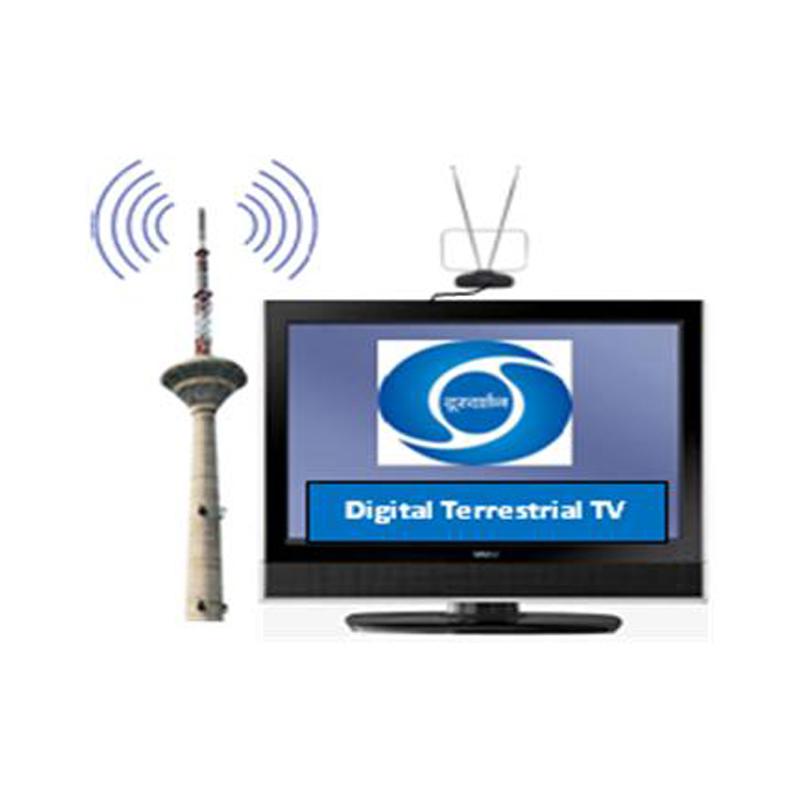
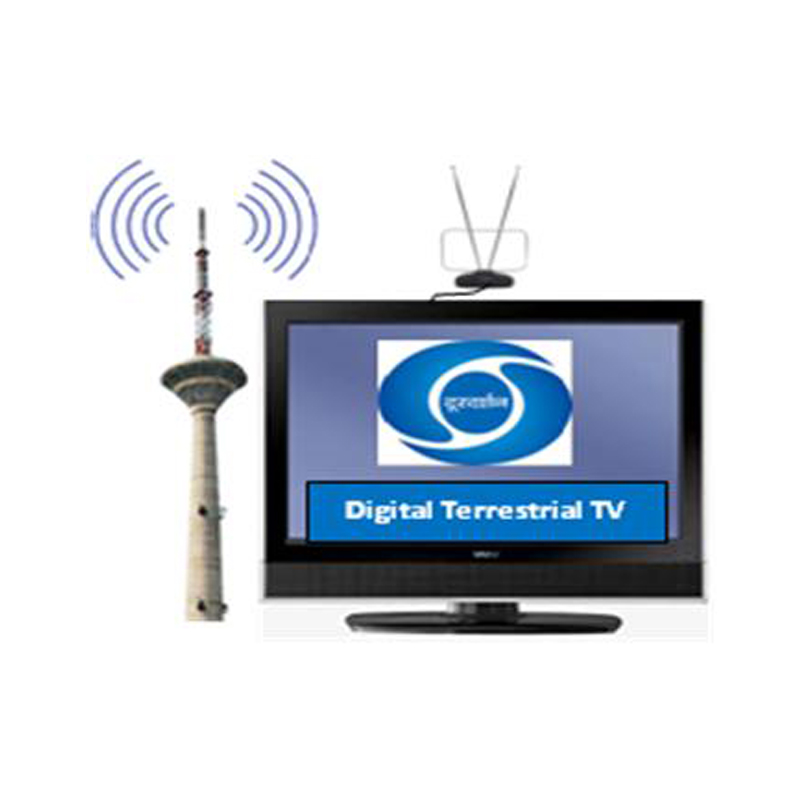
    NEW DELHI: Digital Terrestrial Transmission (DTT), which has until now remained a monopoly of the public broadcaster Doordarshan, is set for being opened up to private players in an effort to reach the largest audiences in the country.

    Similarly, the mobile TV, hanging fire for some years now in an on-off mode with policy-makers and regulators, too could become a reality.

    The Telecom Regulatory Authority of India (TRAI) today issued a consultation paper on DTT and mobile TV, asking stakeholders to respond by 22 July, 2016 with counter-comments by 5 August, 2016.

    Indiantelevision.com had earlier reported that the government was in the final stages of this exercise. Later, the website had also quoted Prasar Bharati Chief Executive Officer Jawhar Sircar as saying that the pubcaster was not afraid of possible entry of private players.

    DD, which presently has exclusive domain over terrestrial broadcasting, is ranked amongst the world’s largest terrestrial television networks. It has a network of 1,412 analog transmitters that provide TV services through two national channels namely, DD National and DD News.

    In addition to this, the DD network also broadcast several regional TV channels over the terrestrial network in a time sharing mode to meet the local and regional needs of people in different parts of the country. All TV channels provided by DD are free-to-air.

    India’s regulator, in its latest consultation paper, has sought feedback from stakeholders regarding DTT and mobile TV primarily on the following issues:

    Q.1 Do you perceive the need for introduction of DTT in presence of multiple broadcasting distribution platforms?

    Q.2 If yes, what should be the appropriate strategy for DTT implementation across the country?

    Q.3 Should DTT be opened for participation by the private players?

    Q.4 What should be the approach for implementing DTT network (MFN/SFN/Hybrid)?

    Q.5 What should be the criteria for arriving at optimum size of DTT multiplex at any location?

    Q.6 How many digital multiplex per DTT operator should be planned for metro, major cities, urban and rural areas and why?

    Q.7 What should be most appropriate frequency band as per National Frequency Allocation Plan 2011 for implementation of Digital 32 terrestrial transmission including mobile TV?

    Q.8 Should spectrum be exclusively earmarked for roll out of DTT services? If so, what should be the quantum considering the broadcasting sector requirement in totality?

    Q.9 What should be the roadmap for digitization of terrestrial TV network in the country?

    Q.10 What should be the analog switch off date(s) for the terrestrial TV channels in context with the suggested roadmap for DTT implementation?

    DTT for broadcasting TV programme services was first introduced in the UK in 1998 by deploying the first generation DVB-T standard developed by the European Digital Video Broadcasting (DVB) group.

    Since then, TRAI says, many new standards have evolved and at this juncture implementation of the second generation standards are underway. The DTT broadcasting spectrum has been harmonized with earlier analog spectrum allocation and therefore DTT makes use of similar analog channel allocations.

    Latest DTT technologies provide a number of advantages over analog terrestrial broadcasting technology. The main amongst them are the following:

    — Better quality TV reception

    — Efficient use of frequency (one DTT transmitter can broadcast multiple TV channels)

    —Possible frequency reuse

    — TV channels can also be received on mobile phones and handheld devices

    — The 7 or 8 MHz TV frequency band can accommodate 10-12 Standard Definition (SD) TV channels or it can be employed as a data pipe to deliver different type of services including radio services.

    — A DTT platform is flexible and content format agnostic as newer formats of TV channels such as HD TV, 3D TV, UHD TV, data and radio services, etc. can be delivered with reduced transmission power requirements.

    —Subsequent digitization also allows for government bodies to reclaim spectrum and repurpose it.

    Analog terrestrial broadcasting has several limitations including transmission being susceptible to Radio Frequency (RF) interference resulting in poorer reception quality; spectrally inefficient as more spectrums per TV channel is required and frequency reuse is limited, apart from other drawbacks.

    Quoting a recent global research report that studied DTT in 138 countries, including India, TRAI says in its paper the global digital TV penetration at the end of 2015 stands at 74.6 percent with 1170 million digital TV households in the world. There are 261.9 million analog terrestrial TV and 252 million DTT TV households. DTT households comprise 239.4 million FTA DTT and 12.6 million pay DTT households globally. Between 2010 and 2015, about 584 million digital TV homes were added, out of which 156 million came primarily from DTT, TRAI stated quoting the report.

    While admitting that many other countries have laid down clear roadmaps to switch-off analog terrestrial TV transmission with a transition to DTT, TRAI points out in India a clear roadmap is unavailable, though work for changeover from analog to digital terrestrial transmission by DD has already commenced.

    The full consultation paper of TRAI on this issue could be accessed at http://www.trai.gov.in/WriteReaddata/ConsultationPaper/Document/Consultation_Paper_24_june_2016.pdf.

  • TRAI issues paper on mobile TV, opening up DTT to pvt players; lists advantages over analog transmission

    TRAI issues paper on mobile TV, opening up DTT to pvt players; lists advantages over analog transmission

    NEW DELHI: Digital Terrestrial Transmission (DTT), which has until now remained a monopoly of the public broadcaster Doordarshan, is set for being opened up to private players in an effort to reach the largest audiences in the country.

    Similarly, the mobile TV, hanging fire for some years now in an on-off mode with policy-makers and regulators, too could become a reality.

    The Telecom Regulatory Authority of India (TRAI) today issued a consultation paper on DTT and mobile TV, asking stakeholders to respond by 22 July, 2016 with counter-comments by 5 August, 2016.

    Indiantelevision.com had earlier reported that the government was in the final stages of this exercise. Later, the website had also quoted Prasar Bharati Chief Executive Officer Jawhar Sircar as saying that the pubcaster was not afraid of possible entry of private players.

    DD, which presently has exclusive domain over terrestrial broadcasting, is ranked amongst the world’s largest terrestrial television networks. It has a network of 1,412 analog transmitters that provide TV services through two national channels namely, DD National and DD News.

    In addition to this, the DD network also broadcast several regional TV channels over the terrestrial network in a time sharing mode to meet the local and regional needs of people in different parts of the country. All TV channels provided by DD are free-to-air.

    India’s regulator, in its latest consultation paper, has sought feedback from stakeholders regarding DTT and mobile TV primarily on the following issues:

    Q.1 Do you perceive the need for introduction of DTT in presence of multiple broadcasting distribution platforms?

    Q.2 If yes, what should be the appropriate strategy for DTT implementation across the country?

    Q.3 Should DTT be opened for participation by the private players?

    Q.4 What should be the approach for implementing DTT network (MFN/SFN/Hybrid)?

    Q.5 What should be the criteria for arriving at optimum size of DTT multiplex at any location?

    Q.6 How many digital multiplex per DTT operator should be planned for metro, major cities, urban and rural areas and why?

    Q.7 What should be most appropriate frequency band as per National Frequency Allocation Plan 2011 for implementation of Digital 32 terrestrial transmission including mobile TV?

    Q.8 Should spectrum be exclusively earmarked for roll out of DTT services? If so, what should be the quantum considering the broadcasting sector requirement in totality?

    Q.9 What should be the roadmap for digitization of terrestrial TV network in the country?

    Q.10 What should be the analog switch off date(s) for the terrestrial TV channels in context with the suggested roadmap for DTT implementation?

    DTT for broadcasting TV programme services was first introduced in the UK in 1998 by deploying the first generation DVB-T standard developed by the European Digital Video Broadcasting (DVB) group.

    Since then, TRAI says, many new standards have evolved and at this juncture implementation of the second generation standards are underway. The DTT broadcasting spectrum has been harmonized with earlier analog spectrum allocation and therefore DTT makes use of similar analog channel allocations.

    Latest DTT technologies provide a number of advantages over analog terrestrial broadcasting technology. The main amongst them are the following:

    — Better quality TV reception

    — Efficient use of frequency (one DTT transmitter can broadcast multiple TV channels)

    —Possible frequency reuse

    — TV channels can also be received on mobile phones and handheld devices

    — The 7 or 8 MHz TV frequency band can accommodate 10-12 Standard Definition (SD) TV channels or it can be employed as a data pipe to deliver different type of services including radio services.

    — A DTT platform is flexible and content format agnostic as newer formats of TV channels such as HD TV, 3D TV, UHD TV, data and radio services, etc. can be delivered with reduced transmission power requirements.

    —Subsequent digitization also allows for government bodies to reclaim spectrum and repurpose it.

    Analog terrestrial broadcasting has several limitations including transmission being susceptible to Radio Frequency (RF) interference resulting in poorer reception quality; spectrally inefficient as more spectrums per TV channel is required and frequency reuse is limited, apart from other drawbacks.

    Quoting a recent global research report that studied DTT in 138 countries, including India, TRAI says in its paper the global digital TV penetration at the end of 2015 stands at 74.6 percent with 1170 million digital TV households in the world. There are 261.9 million analog terrestrial TV and 252 million DTT TV households. DTT households comprise 239.4 million FTA DTT and 12.6 million pay DTT households globally. Between 2010 and 2015, about 584 million digital TV homes were added, out of which 156 million came primarily from DTT, TRAI stated quoting the report.

    While admitting that many other countries have laid down clear roadmaps to switch-off analog terrestrial TV transmission with a transition to DTT, TRAI points out in India a clear roadmap is unavailable, though work for changeover from analog to digital terrestrial transmission by DD has already commenced.

    The full consultation paper of TRAI on this issue could be accessed at http://www.trai.gov.in/WriteReaddata/ConsultationPaper/Document/Consultation_Paper_24_june_2016.pdf.

  • DTT could be thrown open for pvt sector companies

    DTT could be thrown open for pvt sector companies

    NEW DELHI: The Indian government is exploring possibilities of throwing open the digital terrestrial transmission or DTT services for private sector participation.

    Broadcast carriage and telecoms regulator TRAI is poised to start a public consultation in this regard soon.

    Presently, terrestrial transmission, analogue or digital, is a monopoly game with India’s pubcaster Doordarshan being the only player.

    A senior level source in Ministry of Information & Broadcasting (MIB) admitted that in near future DTT could see involvement of private sector companies as seen in the area of cable and satellite broadcasting.

    The MIB source also pointed out that in this connection TRAI has already been consulted and the regulator is in the process of fine-tuning a background paper on DTT that will form part of the consultation with industry stakeholders.

    Some of the issues that could be put up for discussion include whether it’s correct in this age of fast-evolving technology to keep DTT a playing arena for only DD; whether DTT services with private sector involvement would be in an encrypted or unencrypted form and technologies to be used.

    Quite a few Asian countries like Hong Kong, Thailand and Singapore — considered more sophisticated media markets in terms of ARPUs in comparison to India — have private sector companies providing DTT services.

    According to ViaSat magazine, telco PCCW, for example, in Hong Kong recently announced launch of a new set-top box (STB) that will be an all-in-one, 4K-ready device providing IPTV, DTT and over-the-top (OTT) services to subscribers.

    However, it must be remembered that even if TRAI comes out with a consultation paper on DTT and finally recommends that private sector companies be allowed to provide DTT services, along with DD, the final say on the matter would be with MIB.

    In an earlier story Indiantelevision.com had reported that DD, one of the largest broadcasting organisations in the world in terms of the studios and transmitters, has commenced DTT services in 16 cities.

    DD move to also replace its analogue transmitters with digital transmitters will allow up to 8 channels to be carried from a single transmitter.

    Interestingly, while listing the many advantages of DTT services, Doordarshan on its website points out that “DTT secures greater plurality in Platform ownership, ensuring that no single platform owner is so powerful that they can exert undue influence on public opinion or political agendas.”

    ALSO READ:

    Doordarshan launches Mobile TV in India, needs no internet

    http://www.indiantelevision.com/television/tv-channels/terrestrial/doordarshan-launches-mobile-tv-in-india-needs-no-internet-160404

    DD moving to digitisation through Freedish and DTT: Rathore

    http://www.indiantelevision.com/regulators/i-and-b-ministry/dd-moving-to-digitisation-through-freedish-and-dtt-rathore-141202


  • DTT could be thrown open for pvt sector companies

    DTT could be thrown open for pvt sector companies

    NEW DELHI: The Indian government is exploring possibilities of throwing open the digital terrestrial transmission or DTT services for private sector participation.

    Broadcast carriage and telecoms regulator TRAI is poised to start a public consultation in this regard soon.

    Presently, terrestrial transmission, analogue or digital, is a monopoly game with India’s pubcaster Doordarshan being the only player.

    A senior level source in Ministry of Information & Broadcasting (MIB) admitted that in near future DTT could see involvement of private sector companies as seen in the area of cable and satellite broadcasting.

    The MIB source also pointed out that in this connection TRAI has already been consulted and the regulator is in the process of fine-tuning a background paper on DTT that will form part of the consultation with industry stakeholders.

    Some of the issues that could be put up for discussion include whether it’s correct in this age of fast-evolving technology to keep DTT a playing arena for only DD; whether DTT services with private sector involvement would be in an encrypted or unencrypted form and technologies to be used.

    Quite a few Asian countries like Hong Kong, Thailand and Singapore — considered more sophisticated media markets in terms of ARPUs in comparison to India — have private sector companies providing DTT services.

    According to ViaSat magazine, telco PCCW, for example, in Hong Kong recently announced launch of a new set-top box (STB) that will be an all-in-one, 4K-ready device providing IPTV, DTT and over-the-top (OTT) services to subscribers.

    However, it must be remembered that even if TRAI comes out with a consultation paper on DTT and finally recommends that private sector companies be allowed to provide DTT services, along with DD, the final say on the matter would be with MIB.

    In an earlier story Indiantelevision.com had reported that DD, one of the largest broadcasting organisations in the world in terms of the studios and transmitters, has commenced DTT services in 16 cities.

    DD move to also replace its analogue transmitters with digital transmitters will allow up to 8 channels to be carried from a single transmitter.

    Interestingly, while listing the many advantages of DTT services, Doordarshan on its website points out that “DTT secures greater plurality in Platform ownership, ensuring that no single platform owner is so powerful that they can exert undue influence on public opinion or political agendas.”

    ALSO READ:

    Doordarshan launches Mobile TV in India, needs no internet

    http://www.indiantelevision.com/television/tv-channels/terrestrial/doordarshan-launches-mobile-tv-in-india-needs-no-internet-160404

    DD moving to digitisation through Freedish and DTT: Rathore

    http://www.indiantelevision.com/regulators/i-and-b-ministry/dd-moving-to-digitisation-through-freedish-and-dtt-rathore-141202