Tag: Digital technology

  • GUEST ARTICLE: Why do brands need to be more vigilant about brand infringement attacks?

    GUEST ARTICLE: Why do brands need to be more vigilant about brand infringement attacks?

    Mumbai: The meaning of brand safety has evolved over time for marketers. In traditional marketing, a marketer’s focus was to ensure their trademarks and copyrights were protected.

    When it came to brand safety, brands primarily focused on making sure their advertisements appeared in a safe environment.

    With the evolution of the digital era, things became complicated for brands. Today, brand safety is more than just safe ad placement. It has grown to the point where it is necessary to take the right measures to combat infringement attackers who target unsuspecting and trusting customers of the brand.

    The evolution of threats in the digital era

    As digital technology took a revolutionary leap, fraudsters also took bigger and smarter steps to con marketers. They have used the digital realm as a medium to steal the trademarks and intellectual property of brands and use them against them.

    In most cases, this digital theft leads to the theft of money or information from people who are loyal to the brand.

    The fraudsters look for one loophole to seep through the brand’s protected assets and use them for their own benefit. And with the evolution of the digital arena, fraudsters are becoming smarter. With time, infringement attacks have gone beyond just tampering with the intellectual property of a brand.

    Some of the evolving infringement threats looming on the brands are:

    ATO attacks: The fraudsters have mastered the skill to replicate and misuse the brand’s domain, website, and logo. They have broadened their level of attacks from just intellectual properties to stealing the brand’s consumer data.

    One of the highest-growing infringement threats to brands is account takeover attacks, where a fraudster gets access to a person’s online account. Generally, the fraudster takes over the account of the user and locks them out of their own account. According to a recent report, ATO attacks have increased by up to 90 per cent in the past two years.

    The consequences of the ATO attacks are not limited to consumer data leaks. It leads to the brand losing the trust of a loyal customer. When a user’s account is compromised, they are unable to access the brand’s website or services.

    The user’s data is a gold mine for fraudsters, as they use it to steal payment details and make purchases. Either the money is directly taken from the accounts or the points on shopping sites and apps are used to buy goods and services.

    While the pandemic has caused a surge in ATO attacks, it has also made it necessary for brands to be more vigilant to protect their consumers’ data. To bring trust and safety to the entire customer experience journey, brands must take charge and ensure consumer data protection.

    Fake customer care numbers: Fraudsters have hacked not only consumer data but also brand customer service numbers. With the growing demand for being online, brands have started putting their customer care numbers online. And the con artists have discovered yet another winning pot from which to profit.

    The number of cases where people have been duped by a fake customer care executive has increased. When a consumer searches for the number online, they find the customer care number available. But here is the catch.

    The fraudsters put fake customer care numbers under the name of a legitimate brand. And when consumers call on these numbers, they are often fooled into transferring money.

    Eventually, the fraudster gets the money, the consumer loses the money, and the brand name used to dupe them loses its reputation without their knowledge.

    Spam emails: The search engine is no longer necessary because fraudsters can now enter the inbox without raising suspicion. The fraudsters can use a brand’s email template, and logo to reach out to their consumers, just like a legitimate brand. In most cases, they lure users with things like an “extravagant offer” or an “urgent message” to take quick action.

    Usually, the user is either asked to share their personal information in exchange for the offer or asked to download an app or visit a website. When the user takes the action, the fraudsters get access to their information and can misuse it for their own gain.

    This is a wake up call

    As digital marketing is set to take new leaps, cyber risks are also looming in the digital era, which is going to impact both brands and their loyal consumers. And with the growing threats, the need for brands to incorporate a shield for their new digital world has become a necessity. Thus, the brands have to go beyond the traditional definition of brand safety. To uphold the brand’s reputation, the brands have to focus on a solution to protect not just their brand but also their consumers and stakeholders.

    The author of this article is mFilterIt director and co-founder Amit Relan.

  • Café Coffee Day enhances in-café experience with future-forward digital technology

    Café Coffee Day enhances in-café experience with future-forward digital technology

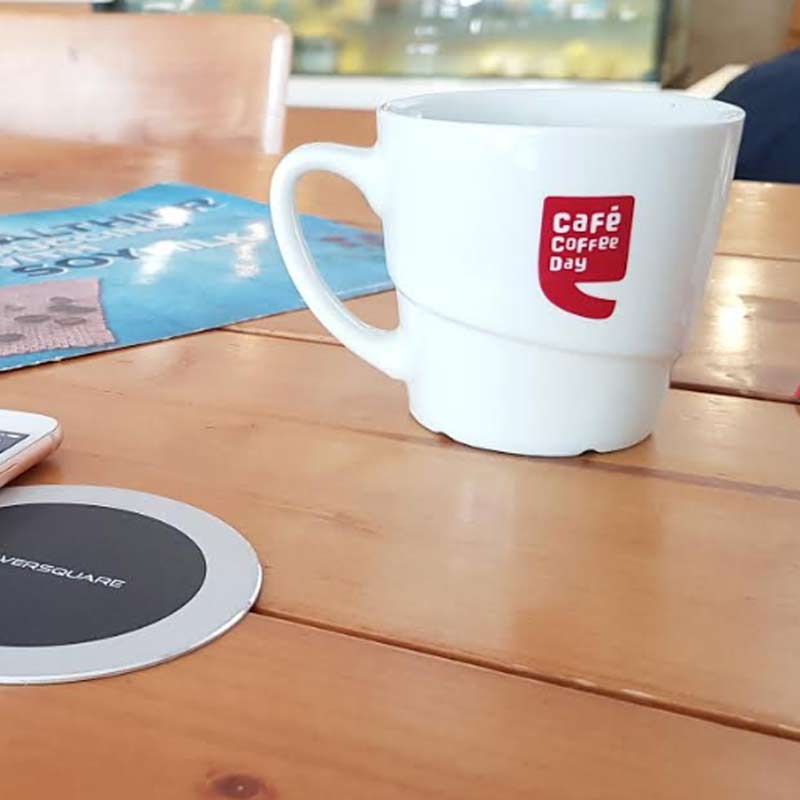
    India, 25th September, 2018: India’s largest cafe chain Cafe Coffee Day has partnered with one of the leading wireless power solutions provider in the world PowerSquare to unveil India’s biggest wireless charging network for cafes across the country. The network has installed 300+ wireless charging spots across 100+ cafes in leading metros like Bengaluru, Chennai, Mumbai and Delhi. Café Coffee Day is the youth’s favourite hangout destination. With mobile being an integral part of its young consumers’ lives, India’s largest café network is strengthening its digital technology to keep its customers connected at all times. After making free Wi-Fi available nationally at several cafes it is launching wireless charging, another category first, in partnership with PowerSquare.
    Customers visiting Café Coffee Day can now place their Qi-enabled smartphones on the surface and wirelessly charge their phones. This eliminates the constant hassle of carrying charging cables. This smart wireless charging modules designed and developed by PowerSquare will be installed on café tables, bringing the convenience of wireless charging to café customers.
    Consumers rely heavily on smartphones and a draining battery is a constant concern. Often, frequently visited cafes and restaurants do not have multiple slots to charge phones. PowerSquare’s wireless charging technology will help address this problem by charging any Qi-enabled smartphones effortlessly without worrying about cables and power slots.
    This launch is the first step in Café Coffee Day’s strategic partnership with PowerSquare and will soon offer wireless charging to customers across all their cafés in India.

    Speaking about the launch, Venu Madhav, CEO, Café Coffee Day said, “Café Coffee Day has always been pioneering in its approach with several firsts in the country. We not only pioneered the café culture and introduced many youth in India to international coffees and unique coffee brewing techniques but we also led the way with technological innovations based on consumer needs and trends. From introducing high speed Wi-Fi at many of our cafes to being the first to try out digitized tables, Café Coffee Day has always believed in investing in digital technology to enhance in-café experience for our young customers. Café Coffee Day’s collaboration with PowerSquare to offer customers the next level of convenience with wireless charging solutions is a perfect fit and in sync with our vision of being future ready to provide a better cafe experience to our customers.”

    Pavan Pudipeddi, CEO, PowerSquare and one of the founding members of the Wireless Power Consortium (USA) added that, “Our vision is to enable consumers in India to charge their smartphones anywhere and anytime without having to carry a charger. By building this network of charging spots, we are looking at transforming the lives of consumers across the country who no longer have to worry about low battery. Our association with Cafe Coffee Day is a major step in realizing this vision. With their presence and scale, Cafe Coffee Day provides us with a great platform to provide these services.”

    Cafe Coffee Day and PowerSquare will be expanding this service across cafes in other cities including Hyderabad, Pune, among others. Visit www.powersquare.com to check the list of Cafes with wireless charging spots and also to check compatibility of your smartphone.

  • Hathway Cable and Datacom launches E-KYC

    Hathway Cable and Datacom launches E-KYC

    MUMBAI: Hathway Cable and Datacom announced the launch of electronic KYC that will strengthen the create efficiency in the KYC process as defined and stipulated by TRAI.

    With the launch of electronic KYC, Hathway says that it endorses regulatory compliance with TRAI regarding completion of customer requisition form by the customer in a digitized format. With the electronic KYC, the entire distribution chain including the LCO will be able to easily store millions of forms at a lower operational cost, thus, simplifying Hathway’s daily business and improving customer relationships.

    This digital technology is also aimed at upgrading LCO partners and helping them to align with the current trends and service consumers effectively.  The electronic KYC feature also enables updation of customer details including proof of identity, proof of address and customer’s digital photograph by using an APP, at the same time activating the customer’s set top box in real time basis.

    The detailed process flow includes authenticating customers through their digital signature on a smartphone or via an OTP generated on the registered mobile number which is followed by the CRF being generated. The same will be circulated to the customer in person and also stored digitally, which can be easily accessed by the LCO as well.

    This environment-friendly initiative eliminates the need to print large number of paper forms in a fast growing digital world, thus, proving time-consuming and effective measure keeping in mind the ever increasing digital cable subscriber universe.Recently, Hathway launched a breakthrough initiative with an LCO portal Hathway Connect that aims to redefine and transform business dynamics and  further strengthen the role of the LCO in the distribution chain.

    Commenting on the E-KYC initiative,Hathway  video business president TS Panesar said, “Over the past year, Hathway has taken some defining steps in transforming the way the cable industry operates and with the launch of the E-KYC process, we truly comply with TRAI’s directive in easing out customer experience which will prove to be an important stepping-stone. It also coincides with ‘Hathway Connect’-our online portal for LCOs, which will overall help our LCO partners and  make their business operations more convenient. By upgrading the LCOs with E-KYC, our endeavour is to give our consumers, a world class and seamless experience from the word go.”

  • Hathway Cable and Datacom launches E-KYC

    Hathway Cable and Datacom launches E-KYC

    MUMBAI: Hathway Cable and Datacom announced the launch of electronic KYC that will strengthen the create efficiency in the KYC process as defined and stipulated by TRAI.

    With the launch of electronic KYC, Hathway says that it endorses regulatory compliance with TRAI regarding completion of customer requisition form by the customer in a digitized format. With the electronic KYC, the entire distribution chain including the LCO will be able to easily store millions of forms at a lower operational cost, thus, simplifying Hathway’s daily business and improving customer relationships.

    This digital technology is also aimed at upgrading LCO partners and helping them to align with the current trends and service consumers effectively.  The electronic KYC feature also enables updation of customer details including proof of identity, proof of address and customer’s digital photograph by using an APP, at the same time activating the customer’s set top box in real time basis.

    The detailed process flow includes authenticating customers through their digital signature on a smartphone or via an OTP generated on the registered mobile number which is followed by the CRF being generated. The same will be circulated to the customer in person and also stored digitally, which can be easily accessed by the LCO as well.

    This environment-friendly initiative eliminates the need to print large number of paper forms in a fast growing digital world, thus, proving time-consuming and effective measure keeping in mind the ever increasing digital cable subscriber universe.Recently, Hathway launched a breakthrough initiative with an LCO portal Hathway Connect that aims to redefine and transform business dynamics and  further strengthen the role of the LCO in the distribution chain.

    Commenting on the E-KYC initiative,Hathway  video business president TS Panesar said, “Over the past year, Hathway has taken some defining steps in transforming the way the cable industry operates and with the launch of the E-KYC process, we truly comply with TRAI’s directive in easing out customer experience which will prove to be an important stepping-stone. It also coincides with ‘Hathway Connect’-our online portal for LCOs, which will overall help our LCO partners and  make their business operations more convenient. By upgrading the LCOs with E-KYC, our endeavour is to give our consumers, a world class and seamless experience from the word go.”

  • Paramount shows the way for digital distribution

    Paramount shows the way for digital distribution

    MUMBAI: Being one of the oldest and largest Hollywood distribution studios, which has relied on 35-millimeter film to capture motion pictures, has taken a huge step for the industry. Paramount Pictures has become the first big studio to stop releasing its major movies on film in the US.


    The studio’s Oscar-nominated film The Wolf of Wall Street is its first movie in wide release to be distributed entirely in digital format. The studio also notified theater owners that Will Ferrell’s comedy Anchorman 2: The Legend Continues, which opened in December, was the last movie released on 35-mm film, reports revealed.


    The decision is likely to encourage other studios to take a leap of faith and follow suit, pushing for a complete phase-out of film in a year or two. Closer home, we already have movies releasing on the digital format and this historic move will only fuel more distribution studios to think of migrating to the digital format seriously.


    The major factor for film studios to still remain hesitant of going completely digital is the factor of missing out on revenues and box-office collections from theatres which are still not equipped to show digital movies and are still on film. Internationally, Paramount is still expected to ship film prints to Latin America and other foreign markets where most theaters still show movies on film.


    So how will Paramount benefit from this move? Well here are a few facts to ponder over: Studios prefer digital distribution because it is much cheaper. Eventually, these movies could be beamed into cinemas by satellite, saving even more on production and shipping costs. Digital technology also enables theaters to screen higher-priced 3-D films and makes it easier for them to book and program entertainment.


    But then what about the theatre owners, they are at a risk of going out of business if they can no longer obtain film prints of movies.
     

    The future is certainly looking bleak for distribution of movies on film to continue…

  • Ozone Media, MicroAd partner to serve digital consumers in southeast Asia

    Ozone Media, MicroAd partner to serve digital consumers in southeast Asia

    MUMBAI: Ozone Media, an India-based digital technology company, has entered into a partnership with MicroAd, an online ad platform company in Japan, to enable dynamic retargeting which allows advertisers to create and manage personalised advertisements for every single customer.


    The collaboration with MicroAd will ensure that display campaigns, served via its integrated management platform ‘MicroAd BLADE’, are optimised to meet the specific goals of advertisers in southeast Asia – especially in the travel and tourism, and e-commerce verticals. Online ad spend is growing rapidly and, according to PricewaterhouseCoopers, is forecast to reach nearly US$34 billion in Asia Pacific by 2015, highlighting advertisers’ growing confidence in online media.


    On the tie-up, Ozone Media founder Kiran Gopinath said, “We are pleased to enter this alliance with MicroAd, and are confident that we will provide great value to advertisers with increased returns on their retargeting campaigns.”


    Ozone Media recently launched ‘Adadyn’ – a creative optimisation solution – which allows for a deeper and meaningful engagement with online users by serving dynamic creatives to selectively targeted audience segments.


    “We look forward to working closely with Ozone Media, and equip our clients across southeast Asia with real-time advertising capabilities that will help them reach their target audience with relevant and customised messaging,” said MicroAd Vietnam CEO Kosuke Sogo.

  • BBC signs partnership with Twitter Amplify

    BBC signs partnership with Twitter Amplify

    MUMBAI: BBC Global News has announced a new partnership with Twitter Amplify, the social broadcast network service’s innovative video promotion tool.


    This is the first Twitter Amplify partnership with a global news broadcaster. Commenting on the same, BBC global news director of digital & technology James Montgomery said, “This new collaboration harnesses our global reach and newsgathering capabilities to bring our advertising partners clever and impressive products. Building on the efforts of BBC America’s partnership with Twitter, we’re thrilled to bring our ad partners with us at the cutting edge of news.”


    BBC Global News will provide the global Twitter community timely in-tweet video clips that complement its global newsgathering operation. This partnership offers BBC Global News and its future brand partners an integrated cross-platform tool to reach new audiences on Twitter. BBC Global News operates BBC World Service radio, BBC World News television, and bbc.com/news outside the UK.


    “What makes this partnership exciting is the amazing content Twitter users will get from BBC Global News, no matter where they are in the world,” said Twitter Amplify senior director Glenn Brown. “We look forward to working with BBC Global News to bring these programmes to market.”


    BBC.com has already begun production of a new in-Tweet broadcast, #BBCTrending, a new series of innovative short form video broadcasts that will be presented by Anne-Marie Tomchak (@AMTomchak) and will launch later this fall. The broadcast will give users the inside story behind the latest trending phenomena on social media that day. #BBCTrending is distributed to the 4.8 million followers of the BBC international news Twitter handle, @BBCWorld, and will be enhanced by Twitter Amplify.


    #BBC Trending will incorporate three key elements:


    1. The BBC’s international social media reach and 24-hour video production operation
    2. The BBC’s global newsgathering and monitoring operations, which provide both round the clock news reporting and monitoring of global TV, radio, press, internet and news agency sources, and
    3. Twitter Amplify’s innovative real-time video promotion tool.


    “Being a part of this new project is thrilling,” said Tomchak. As the face of #BBCTrending, Tomchak will be working with production units across the BBC to identify and build compelling conversations on what’s trending around the world. “On Trending, we’re tapping the most powerful internal insight tools and the massive BBC international newsgathering and language operations to decipher why and how trends are happening on social media around the world.”


    In April, BBC America signed a similar deal with Twitter Amplify to offer the first in-Tweet branded video synced to hit series, including Top Gear.

  • Digital technology facilitates filmmaking

    Digital technology facilitates filmmaking

    NEW DELHI: Students of different film schools feel digital technology has made their work easier but agree that the main challenge still remains: finding good content that will move the viewers.

    Some of the students who interacted at the Open Forum organised by IDPA and FFSI were also nostalgic about the celluloid and said they would always want to keep at least one print of their film since digital technology.

    The students belonged to the Film and Television Institute of India, the Satyajit Ray Film and Television Institute, The AJK Mass Communication Research Centre of Jamia Millia Islimia, and the MGR Government Film School whose films are being screened in a separate section of Student Films and a section of Fifty Years of FTII.

    Ashim Paul whose film ‘Birds of Passage’ is in the non-features of the Indian Panorama said that digital technology did not pose a problem as young people were familiar with it, but celluloid held its own charm. He said one like to feel the product. In any case, it was important to preserve it in celluloid for archival purpose as digital technology could only save a film as a file. A film is tangible material, he said. He said while answering a question that content would not be affected by going digital,

    He said cinema was an art form and not a technology driven form and celluloid is a pious form.

    Kaushal Oza whose ‘Afterglow’ is also in the Indian Panorama said technology is an enabler and not the be-all and the end-all. The final product will still be in the hands of the creator. He did not agree with the view that digital will drive film out of the theatres, and said it could be viewed in all mediums.

    Prince George who was involved as music director of ‘Allah is Great’ which is also in the Panorama said technology was king for him as it had made his job very easy. He said digital technology had given him another advantage – he had been able to compose music for a film made by a filmmaker in Oman without that person coming to India or him having to go there.

    Govind Raju whose film ‘Golden Mango’ figures in the FTII package said the shift to digital was not too easy initially and took some time, but it has a lot of advantages. However, it would erroneous to say digital films are easier to make as they take the same effort. He also did not agree that films would disappear from theatres with digitisation.

    Kabil Dev M whose film ‘Rajini’ is in the Students Package said he felt very comfortable using digital technology for his films. But he felt that theatrical exhibition may be affected with so many other mediums.

    Arun said the movement from celluloid to digital was still in a transitional phase and it may take time for all to accept this new technology. Digital technology he said was pocket friendly but may affect theatrical exhibitions. He was also of the view that a film made on a small camera is fit for the small screen.

    Vandana said new media has brought forward a new way for promoting films, and said it was not true that the new media like YouTube did not pay for the content. But she agreed there was a romance in celluloid as one could keep and feel the product one produced.

    Suparna said digital technology also required discipline and so the filmmaker was important. She also wondered about problems faced by filmmakers for finance.

  • Long tail of film distribution gets boost by digital technology

    Long tail of film distribution gets boost by digital technology

    MUMBAI: The LA India Film Council, in association with the Center for Content Protection (CCP), hosted a panel discussion on The Long Tail Of Film Distribution and The Role Of Technological Protection Measures (TPMS) in conjunction with FICCI’s 4th MEBC in Chennai, India.

    Motion Picture Dist. Association (MPDA) India managing director Uday Singh said, “The long tail is really happening. It‘s facilitated and enabled by digital technology. However it‘s essential that policy makers understand the need to create a proper infrastructure, which includes protection and security, transparent market access, and weeding out content theft.”

    Films make most of their financial returns during the initial weeks of their release. However, theatrical is not the only return-on-investment for films given the emergence of Pay TV and other business models on platforms such as IPTV, mobile, packaged media and internet.

    India’s National Telecom Policy 2011 envisions providing high speed and high quality broadband access to all village panchayats through optical fiber by the year 2014. The government intends to provide affordable and reliable broadband on demand by the year 2015 and to achieve 175 million broadband connections by the year 2017 and 600 million by the year 2020 at minimum 2 Mbps download speed. This paves the way for emerging business models and the need for content protection measures that are critical for the feasibility of these new delivery channels.

    A special Council publication commissioned by Ernst & Young titled ‘Monetizing Your Content In A Digital World’ was unveiled on this occasion. The report focuses on the changing nature of media and entertainment consumption and the impact that these trends are having on Media and Entertainment companies’ digital strategies and how these companies are tailoring their products and service strategies to meet the increasing consumer demands for content anywhere, anytime and in any form.

    “As distribution gets digitised, content choice for the consumer increases manifold leading to fragmented media landscape. Successful digital monetization, in a fragmented landscape, depends on sharp customer targeting, providing enhanced value in entertainment experiences and seamless integration of targeted advertising micropayment mechanisms. Media owners who rework their business models based on these parameters will be valued in the future,” commented Ernst & Young Segment Champion Digital Media Raghav Anand.

    The panel further discussed the role of TPMS in the above scenario and went on to chart the road ahead for India. “There is so much potential for Indian films worldwide. With technologies many more communities worldwide can enjoy Indian movies after their theatrical release. We explored the most current aspects of digital distribution and technologies in our panel,” said Isa Seow, Managing Director, CCP.

    Technology and accompanying digital rights are central in enabling new business models that meet consumer needs. Joining the panel were industry experts such as Krishnan Rajagopalan, Head of Technology, Group Digital Life, Singtel, Ankan Biswas, Chairman, Digital Broadcast Council, Consumer Electronics Appliances Manufacturers Association, Paul Jackson, Chief Engineer, NDS, Dr. Nagendra .S, Head -Sales and Strategy, Ignis Technology Solutions.

  • Whistling Woods in co-production pact with University of Calgary

    Whistling Woods in co-production pact with University of Calgary

    MUMBAI: In another move to widen its wings internationally, Whistling Woods International (WWI) has signed a Memorandum of Understanding with the University of Calgary and SAIT for a co-production partnership.

    This will be an exchange program between select students from the joint University of Calgary (UC) and South Albertan Institute of Technology (SAIT) Bachelor of Film Studies Program and Whistling Woods International (WWI) film school, Mumbai.

    This agreement is poised to mark an important milestone in education and training in Digital technology and knowledge exchange related to different facets of film production. This initiative is spread over six months, including pre-production, production and post-production process shared equally between WWI and UC. 10 students (5 from Mumbai, 5 from Calgary) and 4 instructors (2 from Mumbai, 2 from Calgary) will participate in this venture.

    Speaking on the occasion, Whistling Woods International, founder and chairman Subhash Ghai said, “It is a great privilege for Whistling Woods to be associated with universities of this stature internationally. I am truly grateful that UC and SAIT have extended their support to us for this new exchange programme and look forward to a long-standing, strong working relationship together.”

    The WWI team will travel to Canada for part of the principal shoot and the rest will be executed in India with the Canadian counterparts in Mumbai. The project will create greater cross-cultural and mutual understanding of each other‘s work processes, values, approaches and ways of working. Additionally, the project will encourage possibilities of curricula and faculty exchange in the future.

    Students and faculty involved in the project will be the first to participate in this cross-cultural exchange and have the opportunity to gain international work experience. This cooperative initiative will evaluate the feasibility of future collaborative ventures related to the training of professionals in the film industry.

    These select students along with selected instructors from both campuses will work together to produce a short 20-minute film that shall be premiered at the 2013 Banff World Media Festival, one of the biggest International gatherings of short films in the world.

    Recently, WWI had announced that it would, in collaboration with Trend Media City Ltd (TMC), set up a film and media training institute in Nigeria that would mark Africa‘s first world-class film institute to be called Whistling Woods International Nigeria (WWIN).