Tag: digital space

  • OTT business is a ‘lucrative market’ in India: Shemaroo’s COO-digital businesses Zubin Dubash

    OTT business is a ‘lucrative market’ in India: Shemaroo’s COO-digital businesses Zubin Dubash

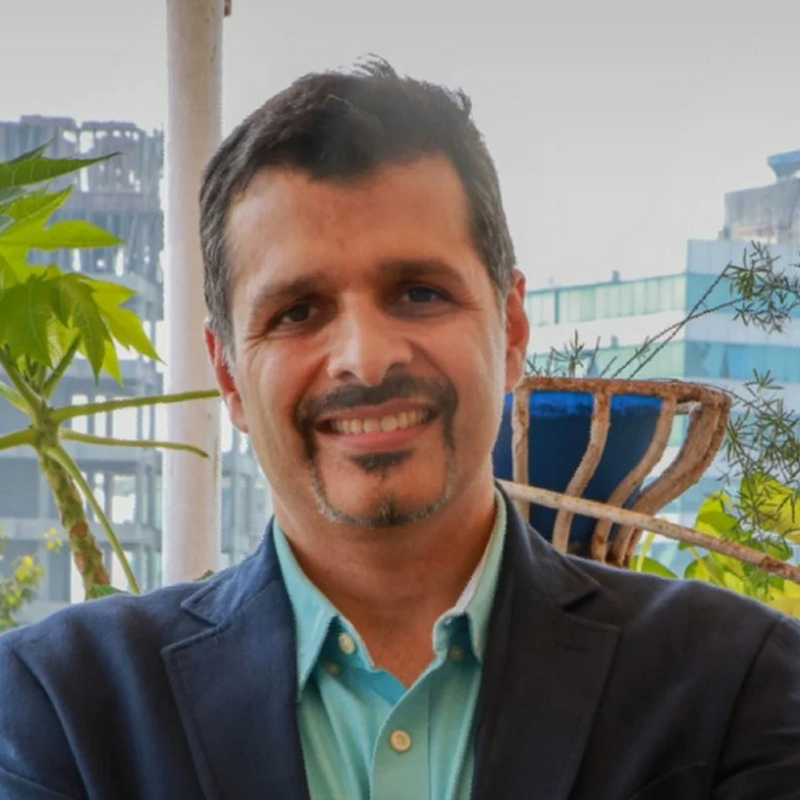
    Mumbai: Shemaroo has been a pioneer in the Indian media and entertainment space since its inception. With the advent of digital media, Shemaroo is spreading its wings throughout the market and showing robust growth in the digital space. This could not have been possible without Zubin Dubash, the real man behind Shemaroo’s digital growth story.

    In 2017, Shemaroo’s chief operating officer of digital businesses Zubin Dubash took charge of the position. Shemaroo’s digital platforms are growing stronger day by day. In the last five years, Zubin has been working tirelessly to increase the subscriber base of the company’s flagship streaming entertainment platform ShemarooMe and bestow content that matches the audience’s taste. ShemarooMe is available in over 150 countries. Its extensive content library includes Bollywood, regional, devotional, and children’s genres.

    During the first two years after its release, the app’s focus was on increasing reach and awareness through partnerships. In FY’22, the revenue breakdown of the company’s digital media contributed 48 per cent while traditional media contributed 52 per cent.

    The company has also launched ShemarooMe Gujarati, which includes an impressive slate of direct-to-digital movie releases, plays, and original web series starring leading actors. Over 52 new titles were released on the platform in 2021. ShemarooMe Gujarati also expanded its footprint outside India with its presence in the US, the largest market for the Gujarati diaspora.

    Shemaroo originals such as Yamraj Calling, Goti Soda, and Vaat Vaat Ma, released on the platform, were well received by the audience. They are gearing up with a new content lineup like 53 Mu Panu, Cash Che To Aish Che, MatsyaVedh, Leela Natwar Ni, What The Fafada Season 01, Rajyog, Baap No Bagicho and Yamraj Calling Season 02.

    The company reported that digital advertising revenue increased by 29 per cent in 2021 due to traditional advertisers’ increasing their investments in digital sales channels. 40 million households paid for 80 million video OTT subscriptions in 2021, contributing to 27 per cent growth in the number of subscriptions and 27 per cent growth in revenue. 322 million Indians consumed content that came bundled with their data plans.

    In an exclusive conversation with Indiantelevision.com, Dubash shared insights about Shemaroo’s legacy, its digital journey, the OTT market and its future, and digital media opportunities and challenges.

    Edited Excerpts:

    On the growth of ShemarooMe

    Zubin: Our focus is on the needs of the customer; it works for us. To effectively communicate with and serve the customers, it is important for us to fully comprehend their needs.

    We make sure that, whatever the issues are, we provide a solution. We also ensure that the solution is developed correctly and conveyed, as well as that the consumers receive service without any issues. We concentrate on what the customers’ desires are and, based on that, we develop our proposals and solutions.

    We have cutting-edge technology. The tech stack is based on numerous technological elements, and we are active on several online platforms. As a result, everything is available and distributed, and our technical support is excellent in terms of all the other elements, including analytics, technology, platform, transport, and back-end content. The entire technology stack is therefore extremely well-built to scale up at a 3x or 2x capacity within a week to 10-day period. Therefore, we developed our agile stack there.

    On the legacy of Shemaroo 

    Zubin: We have been in business for 60 years and are well-known to people of all ages, from 18 to 60. As a result, we cater to the audience’s various segments. Our strategy is also quite straightforward. We offer video content in a variety of genres and languages.

    Therefore, we follow the customer to ensure that we have a sufficient and increased presence on the platform where the client visits and utilises whatever device or technology to consume content. We are currently using our broadcast channels. As a result, we will be present to provide content to the user wherever they are. It is clearly reflected in our vision.

    On his journey

    Zubin: We’ve seen a multifold increase in business on all three platforms (YouTube, Facebook, and OTT). Since I joined, I have been part of building up everything, from setting up a team and planning strategy, to thinking about what the entire vision & roadmap is, and getting the tech on board, including everything. So it started with B2B to see what would happen, and then we moved on to B2C, where we have many other plans. So it has been a slow but spectacular ride since 2017. We’ve been riding the wave of digital adoption, ensuring that customers appreciate and discover every such platform across the digital landscape.

    On the model 

    Zubin: We are a subscription-based platform. And, of course, we began in 2019, where we continued to be B2B but focused on driving subscription video on demand (SVOD) through partnerships. If we want to go from B2B to B2C, we have to wait a couple of years to showcase the entire product and offers. Additionally, we ensure that our distribution is in place through all of the B2B partnerships with telecom, direct-to-home (DTH), Internet service providers (ISP), and other players.

    In 2021, we launched our B2C forum, where we began to learn about what customers wanted, as it was directly based on a specific cohort that we identified, and that cohort was that we wanted to focus on one regional market. We’ve been growing rapidly over the past five years at a rate of roughly 200 per cent annually. We’ve expanded more than 10 times in terms of utilisation, which is a really large increase in overall consumption.

    On the ShemarooMe Gujarati

    Zubin: There is a significant need in the Gujarati market to be driven by Gujarati content, and there are formidable players out there who can sustain and provide consistently excellent content. We devised a proposition that stated we would give you one piece of content every week, so whether it’s a blockbuster hit, a web series, or a play, we promised this weekly.

    From the Gujarati audience’s perspective, we speak to customers, understand what they want, and look at different types of profiles; what the overall family audience wants to watch; what individuals want to watch; and what YouTube viewers want to watch. Then, based on that, we configure our content strategy and proceed from there. So this will be the same formula that we’ll use for different cohorts and regions that we develop as we go.

    On content commissioning 

    Zubin: We operate under a variety of models. We commissioned our content on various models, and we worked with producers to get all of their films on the OTT platform and acquire them for long-term or perpetual rights. We also work on revenue share deals, so it’s a mixed bag of everything we work on, and we’re willing to collaborate with the entire ecosystem.

    I would say we work as good partners in a professional approach with the entire ecosystem of content providers and writers. We want to create a level playing field to provide a pitch for us, and we have an opportunity to select it with the customers. 

    On the challenges

    Zubin: Regional business is quite lucrative. There is such an acute need for content, that there will always be difficulties. As a result, you will need to manage your profit and loss appropriately. Additionally, every organisation will be considering the difficulty of acquiring customers while staying within the parameters necessary to maintain profit and loss. Every industry is dependent on the ROI and without profit do we have the appetite to burn?

    On the opportunities

    Zubin: We haven’t explored all areas of OTT and only got success in the Gujarat region as of now, there is enough room to expand and we will do that horizontally. We want to cater to all audiences who do not get enough content but can pay for it.

    Undoubtedly, 5G will be here over the next few years. As a result, many new modules will emerge, and so will numerous new revenue streams.

    On arrival of 5G  

    Zubin: We collaborate closely with telecommunications companies. For us, it is essentially about extending and cementing our relationships as well as providing more facilities, content, and quality. Without a doubt, 5G and any new technology for enhancing data gathering simply add a significant or exponential effect and a factor of growth to this business.

    On the competition 

    Zubin: There are 40 OTT players, and they all have different types of content and approaches to reaching out to consumers. So, in the end, it’s essentially a supply of digital content for consumers to consume. Each OTT will have a unique strategy for the audience they are attempting to reach, where there is enough and more room for everyone to participate and grow.

    I don’t see why there should be a contest. And in terms of competition, as of now, we’ve made sure that we’re playing a digitally original game, the Cohorts’ game, focusing on indie web series (that is, Indian web series). Bollywood is our forte and we will explore many more new categories. So competition is beneficial. It’s extremely useful. And it’s a good thing to have because it keeps you on your toes and forces us to make the entire industry grow.

    On the OTT market

    Zubin: It’s a lucrative market. There are about 80 to 90 million subscriptions in India, and at least about 40 to 50 million households have at least one OTT subscription. This is just the beginning. So the sky’s the limit. We’ve got 450 million video users or digital video users in India, and you have at least 850 million data consumers. So, as 5G comes in, there will be a huge impact on the overall streaming experience.

    The lessons have all been learned. Therefore, when OTT first emerged, it was about changing people’s viewing habits away from television to smaller screens and educating them on the possibility of viewing long-form material on these screens. Shemaroo started with an advertising-based model, but now it is a subscription-based model.

    On the devotional genre 

    Zubin: We have a lot of content on live shrines. So we take the live feed from the shrines and upload it directly to our OTT platform so that customers can access it. During the Ganesha festival, we live-streamed Lal Baug ka Raja, and these audiences aren’t being served by the market as a whole. Most of them are only getting an indie web series or south dub. However, this type of content is underserved. That’s where we come in to make sure customers get what they’re looking for.

  • GUEST COLUMN: How a cookie-less environment will affect the digital space

    GUEST COLUMN: How a cookie-less environment will affect the digital space

    Mumbai: For the past decade, marketers have been experimenting in the digital environment to enhance brand-customer interactions. In the B2C and B2B spaces, the growth of social platforms has changed how marketers communicate with their clients. In addition, advances in big data and artificial intelligence have enabled marketers to better target and communicate with customers and analyse the impact of their efforts. Third-party cookies are crucial for such advancements.

    The advertising/marketing game now stands on the verge of groundbreaking change. Google plans to stop supporting third-party cookies on its Chrome browser by the end of 2023, ultimately ending two decades of media and data-driven performance-focused marketing. As a result, marketing executives and their teams must prepare for a world without cookies by focusing on consent-based advertising and adopting digital transformation strategies for a world without cookies.

    We have boiled down the entire marketing plan fitting for a cookie-less world into five steps.

    Shift to the first-party data strategy

    The websites visitors visit place first-party cookies on their browsers, which the website owner owns. They assist in collecting vital analytical data, language preferences, and the overall delivery of a positive user experience. Companies must make changes in their digital transformation strategy and start investing in developing the ability to acquire first-party data precisely. Businesses must be early adopters and ensure that their first-party cookies are mature enough to gather critical data elements. 

    According to a Deloitte survey, 61 per cent of high-growth enterprises are shifting to a first-party data strategy.

    Start developing second-party relationships

    Sharing second-party data is standard among organisations in related domains, and it may be highly advantageous to all parties involved. The company’s first-party data is shared under a contractual arrangement as second-party data to another company. Such mutualistic ties may become increasingly significant for enterprises with a considerable audience overlap in the near future.

    This change will only come to fruition once the marketers are willing to rethink their digital transformation strategy for enterprises.

    Focus on building rapport with tech giants

    Marketers may need to explore outside their boundaries to expand their first-party data. For example, marketers should establish connections with tech giants like Google and Facebook and other media publishers to acquire access to their ‘walled gardens’ of corresponding insights and data to ensure internal data creation.

    This step will require exceptional digital transformation services at your business’ disposal.

    Reinvent your media spend strategy

    Cookie obsolescence would aggravate existing digital ad measurement difficulties, such as transparency and integration standards and attribution accuracy. Instead, reinvent measurement baselines, engage in market research, and lock in essential resources to prepare for an era of advertising experimentation.

    Revamping your brand marketing is not a piece of cake. You will require a robust and streamlined process for your digital transformation strategy. Many digital marketing agencies in India offer remarkable digital transformation services for B2B and B2C firms. 

    Practice contextual targeting

    Behavioral targeting tries to collect data on a visitor’s behavior to ensure that the ad is relevant to them while ignoring the context of the ad. Marketers must evolve this strategy and shift to contextual targeting practice, which targets visitors based on the page’s content where the ad appears. As the number of options for giving individualised advertising to audiences decreases, marketers must return to the basics and concentrate on contextual targeting to get their messages to the right audience.

    Adapting, surviving, and thriving in a cookie-less world is possible with specific finetuning measures in your digital transformation strategy.

    (About Author: Ambika Sharma is the Pulp Strategy founder and managing director)

  • Zee5 onboards Lloyd Xavier as marketing director, South

    Zee5 onboards Lloyd Xavier as marketing director, South

    Mumbai: Video streaming service ZEE5 has brought on board Lloyd Xavier as marketing director for the South region, as per his updated LinkedIn profile.

    Xavier’s appointment comes at a time when the OTT platform is focused on its growth and expansion strategy in the southern markets.

    Starting his career as an analyst with Deloitte in 2010, Xavier has over a decade of experience in the field of marketing, digital and social. He was last associated with Arha Media and Broadcasting as assistant vice president, marketing.

    Previously, he worked with Telugu streaming platform aha as AVP – marketing, Network18 as senior marketing manager, YuppTV as marketing manager.

    He holds a master’s degree in business administration from MIT, School of Business, Pune.

  • Digital space is no longer about just viewing content on multiple devices: Subhash Chandra

    Digital space is no longer about just viewing content on multiple devices: Subhash Chandra

    MUMBAI: With digital content becoming increasingly mainstream, media juggernaut Zee Entertainment Enterprise Ltd (Zeel) is taking extensive measures to drive larger market share of consumer eyeballs. The group intends to push for inorganic growth through improved content services and plans to leverage constant innovation to engage and ensure consumer stickiness on their media platforms

    Zeel plans to monetise its digital offerings like dittoTV and OZEE through a mix of strategies including tie-ups with advertisers, targeted SEO and band solutions. To grow the subscription side of the digital business, the group will focus on multiple technological innovations that empowers consumer to get more by paying less and will allow better user experience and seamless content.

    “The global media and entertainment industry is expected to grow at a CAGR of 4 per cent during 2015-18 to reach around $ 2.3 trillion. This may seem modest in relative terms but its absolute impact is significant… the share of various media is constantly getting recalibrated with digital growing at the fastest rate,” says ZEEL Chairman Subhash Chandra in the annual report 2015-16.

    Further adding, “The digital space is no longer about just viewing content on multiple devices. On-demand viewing patterns have resulted in newer content formats, crisper episodes and differentiated content packaging tailor-made to audience preferences. This is where our expertise of rightly gauging the audience pulse is being leveraged ensuring that rich, engaging and relevant content is offered to our viewers across the globe.”

    According to Chandra, India will be at the cusp of the transformation in the entertainment industry. Chandra and his team are definitely taking instrumental steps in achieving their long term goals and objectives. Its ditto TV offers its subscribers a complete on-the-go entertainment experience with a choice of over 120 premium live channels and over 40,000 hours of on demand content across TV shows, movies and videos. While all the Zeel channels form part of the ditto TV bouquet, it also aggregates both live and on-demand content from other broadcasters to cater to viewer preferences across genres and languages. ditto TV stands apart from other players for its ‘desh ka TV’ and ‘bees ka TV’ feature through which viewers can watch top shows, hours before their telecast along with digital premieres of movies. The platform has also entered the Limca Book of Records for being the only OTT service with the largest bouquet of channels across 13 languages.

    “However, the share of wallet that entertainment commands today is lower than the global average presenting a great opportunity for growth,” he says.

    The riposte recently launched dittoTV with a bouquet of 100 plus channels at a price point of just Rs 20 per month. The price gets even more lip smacking for users subscribing for three months (Rs 50), six months (Rs 90) and annually (Rs 170). The platform has tied up with major Indian broadcasters with the exception of the SunTV group and Star India giving it a portfolio of 100+ Hindi, English and regional language channels, encompassing general entertainment, sports, movies, news and lifestyle on board.

    “With the new avatar of dittoTV, we aim to change the media landscape to suit the evolving media consumption preferences of consumers. It will allow users to control where they watch television in a way that has not been possible before. We are proud to present a platform that will help scale up this transformation by making it affordable for people across a wide economic spectrum,” voices Zeel MD & CEO Punit Goenka.

    OZEE, Zeel’s free of cost VOD platform, launched to provide the vast library of entertainment on anytime anywhere basis, across devices. The platform showcases the latest and full episodes of TV shows from popular Zeel channels like Zee TV, & TV, Zee Marathi, Zee Telugu, Zee Tamil and more. The platform also hosts a vast library of popular music hits from Zee Music Company, and full length movies in Hindi and regional languages. It offers entertainment to over 11.6 mn users, generating 114.4 mn page views and 75.4 mn video views as of March 2016.

    Zeel’s international OTT service, Zee Family TV streams over 30 live channels and has 2,000 plus movies on demand besides 25,000 plus hours of library content. It has over 86,000 users and is available across 152 countries. Zee Family TV is available across devices, and has considerably helped in curbing piracy.

    “Increasing urbanisation coupled with the Phase III and IV digitisation by the government is ensuring better entertainment infrastructure and a more addressable and understandable. Zeel is proactively reorganising its operations focusing on newer delivery formats and ramping up its digital business in line with the changing dynamics of the operating environment,” opines Chandra.

    The media brand offers content in multiple languages and has a strong presence in over 171 countries with a total viewership of 1 billion around the globe. It has a network share of 17.9 per cent while its total revenue comes close to Rs 58,515 million.

  • Digital space is no longer about just viewing content on multiple devices: Subhash Chandra

    Digital space is no longer about just viewing content on multiple devices: Subhash Chandra

    MUMBAI: With digital content becoming increasingly mainstream, media juggernaut Zee Entertainment Enterprise Ltd (Zeel) is taking extensive measures to drive larger market share of consumer eyeballs. The group intends to push for inorganic growth through improved content services and plans to leverage constant innovation to engage and ensure consumer stickiness on their media platforms

    Zeel plans to monetise its digital offerings like dittoTV and OZEE through a mix of strategies including tie-ups with advertisers, targeted SEO and band solutions. To grow the subscription side of the digital business, the group will focus on multiple technological innovations that empowers consumer to get more by paying less and will allow better user experience and seamless content.

    “The global media and entertainment industry is expected to grow at a CAGR of 4 per cent during 2015-18 to reach around $ 2.3 trillion. This may seem modest in relative terms but its absolute impact is significant… the share of various media is constantly getting recalibrated with digital growing at the fastest rate,” says ZEEL Chairman Subhash Chandra in the annual report 2015-16.

    Further adding, “The digital space is no longer about just viewing content on multiple devices. On-demand viewing patterns have resulted in newer content formats, crisper episodes and differentiated content packaging tailor-made to audience preferences. This is where our expertise of rightly gauging the audience pulse is being leveraged ensuring that rich, engaging and relevant content is offered to our viewers across the globe.”

    According to Chandra, India will be at the cusp of the transformation in the entertainment industry. Chandra and his team are definitely taking instrumental steps in achieving their long term goals and objectives. Its ditto TV offers its subscribers a complete on-the-go entertainment experience with a choice of over 120 premium live channels and over 40,000 hours of on demand content across TV shows, movies and videos. While all the Zeel channels form part of the ditto TV bouquet, it also aggregates both live and on-demand content from other broadcasters to cater to viewer preferences across genres and languages. ditto TV stands apart from other players for its ‘desh ka TV’ and ‘bees ka TV’ feature through which viewers can watch top shows, hours before their telecast along with digital premieres of movies. The platform has also entered the Limca Book of Records for being the only OTT service with the largest bouquet of channels across 13 languages.

    “However, the share of wallet that entertainment commands today is lower than the global average presenting a great opportunity for growth,” he says.

    The riposte recently launched dittoTV with a bouquet of 100 plus channels at a price point of just Rs 20 per month. The price gets even more lip smacking for users subscribing for three months (Rs 50), six months (Rs 90) and annually (Rs 170). The platform has tied up with major Indian broadcasters with the exception of the SunTV group and Star India giving it a portfolio of 100+ Hindi, English and regional language channels, encompassing general entertainment, sports, movies, news and lifestyle on board.

    “With the new avatar of dittoTV, we aim to change the media landscape to suit the evolving media consumption preferences of consumers. It will allow users to control where they watch television in a way that has not been possible before. We are proud to present a platform that will help scale up this transformation by making it affordable for people across a wide economic spectrum,” voices Zeel MD & CEO Punit Goenka.

    OZEE, Zeel’s free of cost VOD platform, launched to provide the vast library of entertainment on anytime anywhere basis, across devices. The platform showcases the latest and full episodes of TV shows from popular Zeel channels like Zee TV, & TV, Zee Marathi, Zee Telugu, Zee Tamil and more. The platform also hosts a vast library of popular music hits from Zee Music Company, and full length movies in Hindi and regional languages. It offers entertainment to over 11.6 mn users, generating 114.4 mn page views and 75.4 mn video views as of March 2016.

    Zeel’s international OTT service, Zee Family TV streams over 30 live channels and has 2,000 plus movies on demand besides 25,000 plus hours of library content. It has over 86,000 users and is available across 152 countries. Zee Family TV is available across devices, and has considerably helped in curbing piracy.

    “Increasing urbanisation coupled with the Phase III and IV digitisation by the government is ensuring better entertainment infrastructure and a more addressable and understandable. Zeel is proactively reorganising its operations focusing on newer delivery formats and ramping up its digital business in line with the changing dynamics of the operating environment,” opines Chandra.

    The media brand offers content in multiple languages and has a strong presence in over 171 countries with a total viewership of 1 billion around the globe. It has a network share of 17.9 per cent while its total revenue comes close to Rs 58,515 million.

  • “Think mobile as ad dollars are heading there”: CVL Srinivas

    “Think mobile as ad dollars are heading there”: CVL Srinivas

    MUMBAI: Several market forecasts that we have seen in the past couple of months project digital advertising and marketing growing by leaps and bounds this year. The historical galloping growth rates have led marketers and planners to consider the possibility that the medium will overtake television spends in the near future.
     

    Brand custodians are no longer investing in digital as an added benefit but are thinking about investments on that front from the get-go. So is digital gnawing away at television’s share of ad spends or is its growth coming courtesy a new breed of brand builders?


    Group M South Asia CEO CVL Srinivas does not think that TV is losing its edge. “Television is riding the digital wave, and smartly so”, says the veteran waving off any worries of television ad revenues seeing a dip this year. Not denying the obvious growth one sees in the digital space, Srinivas gives indiantelevison.com a complete breakdown of  how the digital growth works in favor of broadcasters and content providers, while also touching upon the key trends in the market, the changing role of media agencies and his take on the currently mushrooming of several digital agencies in the market. Excerpts from an interview with indiantelevision.coms Papri Das. 


    Here it is:


    How was 2015 for GroupM as a whole? What were the agency’s benchmark developments?


    2015 was a great year for us in GroupM. All our agencies performed well, especially when it comes to client retention which I consider most important. On the client acquisition front as well, we grew our business with several new accounts.


    Last year has also been kind to us when it came to awards. The GroupM Office of Year award, which is given out by GroupM APAC, was given to us last year. That’s something I consider as another high for us.


    For me, 2015 would be the year when we truly broke out of the mould of pure play media agency and delivered a range of different services to our clients to help them keep ahead of the curve. Over the years we have made investments in data, analytics and experiential marketing, cinema advertising and rural marketing and so on. All of that delivered excellent value to our clients last year. That has helped us diversify our offerings and in turn win us new and interesting mandates as well. Apart from that we have actively involved ourselves in the Mobile Marketing Association to help set standards and get some measurements going.


    Out of the four agencies under GroupM in India, which one do you think performed the best?


    I think all of them did exceptionally well and I say this with confidence based on each of the agency’s client retention and the newer arenas that they ventured successfully into.


    How was the year for the industry at large? Did you notice any changes that majorly impacted the industry?


    Last year we projected 12.7 per cent growth in ad expenditure and I must say we erred on the conservative side at the start of the year and we ended up with 14.2 per cent, but no one’s complaining!


    Several factors led to this development. The FMCG sector despite all the pressure it is facing continues to invest big money behind brands. You also saw huge growth coming in through e-commerce and there were quite a few brands that continued to invest throughout the year.


    What key trends do you see emerging in the market in 2016?


    Very clearly, our clients and brands in general are adapting to mobile as a medium. Till few years ago we hardly had ten or twenty clients, today the count is around 150. Advertisers are actively investing in campaign after campaign, month after month, by experimenting with new formats and following the measurements.  That is something I see taking off in a major way this year as several enablers are supposed to come into place in 2016.


    E commerce is emerging as a platform for advertisers in 2016 which can give an interesting spin to ecosystem.


    Apart from this we see several interesting initiatives happening in the content space, especially in the video and branded content space. This can give a further push to mobile advertising. The real big headline for me is mobile driving digital growth and in turn driving ad growth in India, and getting all traditional medium owners – be it broadcasters or be it print publication – to think mobile fast and think mobile first, because that’s where most of the advertising dollars are gonna flow to.


    What do you think will dictate how marketers spend this year?


    Right now we observe that marketers are a bit circumspect on where and when to invest. We are not yet seeing any major budget cuts otherwise our numbers in the GroupM This Year Next Year report for 2016 wouldn’t have looked so good.  But there is definitely an amount of cautiousness creeping in amongst advertisers.


    I think this year they are going to look at a lot more Return On Investment (ROI) and accountability across different media platforms. I also think they will wait and watch the market before deploying any of their long term campaigns and investments across media channels. Unless a property is tried and tested it will go through intense scrutiny before marketers decide to invest. Tracking of ROI and tracking of what the marketing spends are doing to the overall business will be key drivers for brands this year.


    Brands are increasingly seen as the sum of all customer touch points and this in turn increases the scope of marketing. In this context, how is the role of agencies changing?


    We think we are becoming even more relevant in the current scenario and important at the end of the day given the way the marketing and the media landscapes are shaping. Today consumers have multiple choices when it comes to brands and media consumption channels. In the same way advertisers and marketers also have multiple options to invest in. It can become highly confusing for the clients. That’s where GroupM  went ahead of the curve and started investing in multiple media investment management  services so that our clients can have a holistic marketing strategy and solution.


    What percentage of your business is “traditional” or core media now?


    I can’t share the break up but if you look at the market split, and the fact that we are future focused we tend to concentrate on wherever the marketing is moving to step ahead of it.


    A lot has been said about digital advertising overtaking television as the primary medium. What’s the ground reality?


    If you look at the trends in the last few years, not just in India but across markets we see a lot of synergy between television and digital. Looking at it from a consumer’s lens, you and I watch television and also consumer media on our second screen be it mobile or laptop. There is some amount of interplay happening between the screens.


    Looking at it from a broadcaster or content providers angle, most major broadcasters today have their own digital arms. And hence, I say television is actually riding the digital wave. Broadcasters are doing it very smartly, unlike other media which are getting swamped by digital. We see that trend continuing. Inf act if you look at our forecast figures, TV and digital account for close to 60 per cent of the market share of the total ad expenditure, and we see that number move to 70 to 80 per cent in near future.


    Is India truly ready for mobile marketing? Do we have a road map for it?


    There are several developments that have happened in the recent past. I have been personally involved in setting up the Mobile Marketing Association (MMA). Despite India being one of the top markets globally for mobile, we did not did not earlier have a body that monitors the digital marketing space. Therefore we needed this body where all stakeholders can come and ideate and put in place systems and structures for the medium. A lot of useful discussions have happened in the recent past be it on measurement and advertising standards and MMA as a body has done phenomenal work across the market. That is one of such several initiatives that will show its effect in 2016.


    What impact did BARC rural inclusive data have on the TV industry and on advertisers?


    I think it’s still early days to comment on BARC’s rural ratings. It’s only few weeks that they have come out. It is a very positive development. Rural India’s viewership accounts for a sizable chunk of our market. It’s a very aspirational class and important segment for many products and categories. To have data for this segment is a very good development.


    Though we will have to wait on watch how the data impacts the market, it is sure that advertisers are going to look at rural markets a lot more seriously especially in terms of media investment deployment across TV and other media options. Similarly content creators are also going to look at that space a lot more seriously today and come up with relevant products and offerings.


    And over all it is good for the economy and the country because we are finally becoming a lot more inclusive.


    How will the advertising landscape change with the completion of cable television digitization in India?


    Funny thing about India is that nothing ever happens sequentially…..everything happens together….somehow amalgamating. This actually makes our job fun because on the one hand you have the whole cable TV digitization playing out and DAS phase III being rolled out, and a lot of DTH players have gotten very active. On the other hand you have the 4 G launch that will open up a lot more bandwidth and infrastructure in digital and you have mobile crossing 1 billion connections.


    For marketers and advertisers what this means is to be aware of the developments, keep a close eye on them and see what are the opportunities they can capitalize on in short term and where is it that they need to invest, test and learn so that they can start capitalizing on them in the long term.


    The big lesson for us and specially me has been that we need to be constantly in a state of beta. What do we keep testing and learning today which could become a big thing tomorrow. Staying dynamic is the way to go.


    2015 also saw several well-known creatives and executives setting up their own startups, resulting in a mushrooming of several branded content and digital agencies. What is your take on this development?


    I think it is a good thing that bright young individuals are setting up companies on their own.  In fact some of us wouldn’t have jobs if this wasn’t done earlier. It also shows that today there are so many different areas that are emerging, and with the way the industry is being revolutionized there are many different expertise and special skill sets that the marketers need. I believe all of us can co-exist as one happy family because of the way the whole pie is getting fragmented. A lot of them are my dear friends and I wish them all the best.


  • “Think mobile as ad dollars are heading there”: CVL Srinivas

    “Think mobile as ad dollars are heading there”: CVL Srinivas

    MUMBAI: Several market forecasts that we have seen in the past couple of months project digital advertising and marketing growing by leaps and bounds this year. The historical galloping growth rates have led marketers and planners to consider the possibility that the medium will overtake television spends in the near future.
     

    Brand custodians are no longer investing in digital as an added benefit but are thinking about investments on that front from the get-go. So is digital gnawing away at television’s share of ad spends or is its growth coming courtesy a new breed of brand builders?


    Group M South Asia CEO CVL Srinivas does not think that TV is losing its edge. “Television is riding the digital wave, and smartly so”, says the veteran waving off any worries of television ad revenues seeing a dip this year. Not denying the obvious growth one sees in the digital space, Srinivas gives indiantelevison.com a complete breakdown of  how the digital growth works in favor of broadcasters and content providers, while also touching upon the key trends in the market, the changing role of media agencies and his take on the currently mushrooming of several digital agencies in the market. Excerpts from an interview with indiantelevision.coms Papri Das. 


    Here it is:


    How was 2015 for GroupM as a whole? What were the agency’s benchmark developments?


    2015 was a great year for us in GroupM. All our agencies performed well, especially when it comes to client retention which I consider most important. On the client acquisition front as well, we grew our business with several new accounts.


    Last year has also been kind to us when it came to awards. The GroupM Office of Year award, which is given out by GroupM APAC, was given to us last year. That’s something I consider as another high for us.


    For me, 2015 would be the year when we truly broke out of the mould of pure play media agency and delivered a range of different services to our clients to help them keep ahead of the curve. Over the years we have made investments in data, analytics and experiential marketing, cinema advertising and rural marketing and so on. All of that delivered excellent value to our clients last year. That has helped us diversify our offerings and in turn win us new and interesting mandates as well. Apart from that we have actively involved ourselves in the Mobile Marketing Association to help set standards and get some measurements going.


    Out of the four agencies under GroupM in India, which one do you think performed the best?


    I think all of them did exceptionally well and I say this with confidence based on each of the agency’s client retention and the newer arenas that they ventured successfully into.


    How was the year for the industry at large? Did you notice any changes that majorly impacted the industry?


    Last year we projected 12.7 per cent growth in ad expenditure and I must say we erred on the conservative side at the start of the year and we ended up with 14.2 per cent, but no one’s complaining!


    Several factors led to this development. The FMCG sector despite all the pressure it is facing continues to invest big money behind brands. You also saw huge growth coming in through e-commerce and there were quite a few brands that continued to invest throughout the year.


    What key trends do you see emerging in the market in 2016?


    Very clearly, our clients and brands in general are adapting to mobile as a medium. Till few years ago we hardly had ten or twenty clients, today the count is around 150. Advertisers are actively investing in campaign after campaign, month after month, by experimenting with new formats and following the measurements.  That is something I see taking off in a major way this year as several enablers are supposed to come into place in 2016.


    E commerce is emerging as a platform for advertisers in 2016 which can give an interesting spin to ecosystem.


    Apart from this we see several interesting initiatives happening in the content space, especially in the video and branded content space. This can give a further push to mobile advertising. The real big headline for me is mobile driving digital growth and in turn driving ad growth in India, and getting all traditional medium owners – be it broadcasters or be it print publication – to think mobile fast and think mobile first, because that’s where most of the advertising dollars are gonna flow to.


    What do you think will dictate how marketers spend this year?


    Right now we observe that marketers are a bit circumspect on where and when to invest. We are not yet seeing any major budget cuts otherwise our numbers in the GroupM This Year Next Year report for 2016 wouldn’t have looked so good.  But there is definitely an amount of cautiousness creeping in amongst advertisers.


    I think this year they are going to look at a lot more Return On Investment (ROI) and accountability across different media platforms. I also think they will wait and watch the market before deploying any of their long term campaigns and investments across media channels. Unless a property is tried and tested it will go through intense scrutiny before marketers decide to invest. Tracking of ROI and tracking of what the marketing spends are doing to the overall business will be key drivers for brands this year.


    Brands are increasingly seen as the sum of all customer touch points and this in turn increases the scope of marketing. In this context, how is the role of agencies changing?


    We think we are becoming even more relevant in the current scenario and important at the end of the day given the way the marketing and the media landscapes are shaping. Today consumers have multiple choices when it comes to brands and media consumption channels. In the same way advertisers and marketers also have multiple options to invest in. It can become highly confusing for the clients. That’s where GroupM  went ahead of the curve and started investing in multiple media investment management  services so that our clients can have a holistic marketing strategy and solution.


    What percentage of your business is “traditional” or core media now?


    I can’t share the break up but if you look at the market split, and the fact that we are future focused we tend to concentrate on wherever the marketing is moving to step ahead of it.


    A lot has been said about digital advertising overtaking television as the primary medium. What’s the ground reality?


    If you look at the trends in the last few years, not just in India but across markets we see a lot of synergy between television and digital. Looking at it from a consumer’s lens, you and I watch television and also consumer media on our second screen be it mobile or laptop. There is some amount of interplay happening between the screens.


    Looking at it from a broadcaster or content providers angle, most major broadcasters today have their own digital arms. And hence, I say television is actually riding the digital wave. Broadcasters are doing it very smartly, unlike other media which are getting swamped by digital. We see that trend continuing. Inf act if you look at our forecast figures, TV and digital account for close to 60 per cent of the market share of the total ad expenditure, and we see that number move to 70 to 80 per cent in near future.


    Is India truly ready for mobile marketing? Do we have a road map for it?


    There are several developments that have happened in the recent past. I have been personally involved in setting up the Mobile Marketing Association (MMA). Despite India being one of the top markets globally for mobile, we did not did not earlier have a body that monitors the digital marketing space. Therefore we needed this body where all stakeholders can come and ideate and put in place systems and structures for the medium. A lot of useful discussions have happened in the recent past be it on measurement and advertising standards and MMA as a body has done phenomenal work across the market. That is one of such several initiatives that will show its effect in 2016.


    What impact did BARC rural inclusive data have on the TV industry and on advertisers?


    I think it’s still early days to comment on BARC’s rural ratings. It’s only few weeks that they have come out. It is a very positive development. Rural India’s viewership accounts for a sizable chunk of our market. It’s a very aspirational class and important segment for many products and categories. To have data for this segment is a very good development.


    Though we will have to wait on watch how the data impacts the market, it is sure that advertisers are going to look at rural markets a lot more seriously especially in terms of media investment deployment across TV and other media options. Similarly content creators are also going to look at that space a lot more seriously today and come up with relevant products and offerings.


    And over all it is good for the economy and the country because we are finally becoming a lot more inclusive.


    How will the advertising landscape change with the completion of cable television digitization in India?


    Funny thing about India is that nothing ever happens sequentially…..everything happens together….somehow amalgamating. This actually makes our job fun because on the one hand you have the whole cable TV digitization playing out and DAS phase III being rolled out, and a lot of DTH players have gotten very active. On the other hand you have the 4 G launch that will open up a lot more bandwidth and infrastructure in digital and you have mobile crossing 1 billion connections.


    For marketers and advertisers what this means is to be aware of the developments, keep a close eye on them and see what are the opportunities they can capitalize on in short term and where is it that they need to invest, test and learn so that they can start capitalizing on them in the long term.


    The big lesson for us and specially me has been that we need to be constantly in a state of beta. What do we keep testing and learning today which could become a big thing tomorrow. Staying dynamic is the way to go.


    2015 also saw several well-known creatives and executives setting up their own startups, resulting in a mushrooming of several branded content and digital agencies. What is your take on this development?


    I think it is a good thing that bright young individuals are setting up companies on their own.  In fact some of us wouldn’t have jobs if this wasn’t done earlier. It also shows that today there are so many different areas that are emerging, and with the way the industry is being revolutionized there are many different expertise and special skill sets that the marketers need. I believe all of us can co-exist as one happy family because of the way the whole pie is getting fragmented. A lot of them are my dear friends and I wish them all the best.


  • Rajan Srinivasan bids adieu to Web18

    Rajan Srinivasan bids adieu to Web18

    MUMBAI: Rajan Srinivasan has decided to move on from his role as CEO, IBNLive. During his stint with Web18, Srinivasan managed a variety of mandates including head of sales for moneycontrol, head of sales and marketing for Web18 and CEO, IBNLive.


    He has been part of the core team that has helped build some of country’s leading digital brands like moneycontrol.com and IBNLive.com.
    Rajan Srinivasan is proud of what Web18 achieved over the past many years with it


    Speaking on this development, Web 18 CEO Lakshmi Narasimhan said: “Rajan has been with our web business for over eight years and has been a pillar of strength for our business. He has taken on every challenge we have thrown at him and has come out tops. He has been an integral part of our team and has made a big difference to us in many ways. I would like to wish him the very best in all his future endeavours.”


    Rajan Srinivasan added: “I am proud of what we achieved over the past many years at Web18. I am more than grateful for the immense support I’ve received from the Network18 team, our customers and our partners. Clearly, this is a rather emotional and tough call but I am happy to know that the Web18 suite of products are well positioned as well as future ready and wish them every success.”


     Srinivasan has over eighteen years of experience in the media industry, including nine in the digital space. Prior to joining Network18 in 2003, he had stints with the Indian Express, Sony Entertainment Television and BBC World.

  • MIH Group forays into Indian internet and digital space

    MIH Group forays into Indian internet and digital space

    MUMBAI: MIH, part of the multinational media group Naspers Limited, is making a foray into the Indian internet and digital space.

    “MIH plans to develop internet and mobile applications for the growing online Indian market. India is an attractive market, which is forecast to show strong economic growth going forward. Internet penetration which is currently only at 4.5 per cent is expected to grow rapidly over the next five to ten years offering many opportunities in online communication. MIH seeks to capitalise on these opportunities in the long run by building strong online communication platforms. MIH Internet’s first office will be based in Gurgaon, Haryana,” said spokesperson for MIH Internet (India) Craig White.

    MIH operates pay television and internet subscriber platforms and related technologies in over 50 countries. Its significant operations are located in South Africa, elsewhere in Africa, Brazil, China, Thailand, The Netherlands, Greece and Cyprus. Given the huge growth in the internet and mobile VAS space in India, the group is now planning investments here.

    The group would be launching a range of innovative applications in the Indian internet and mobile space. Its aim is to create a personal reference world of entertainment and information, which can be accessed wherever you are, whenever you want.

    MIH creates media content, builds brand names around it, and manages the platforms distributing the content. The content is delivered in a variety of forms and through a variety of channels, including television platforms and internet services.

    With a view to expand offices across the nation, the group plans to set up its first office in Gurgaon and hire talent for various functions ranging from engineering, R&D, technology, creative, marketing, sales, support etc.

    The MIH group is exploring media opportunities in emerging markets where strong economic growth is expected. Within emerging markets the specific focus is on the BRICSA countries – Brazil, Russia, India, China and the rest of sub-Saharan Africa.

    In China, the group has an investment in the pioneer instant messaging platform, Tencent, which is a developer and operator of innovative real-time communication and online entertainment technologies and services. Tencent’s instant messaging product, QQ, processes more than three billion messages every day and is one of the top 10 portals globally.