Tag: Digital medium

  • Print or digital; what redefines a traditional paradigm?

    Print or digital; what redefines a traditional paradigm?

    MUMBAI: While circulation of newspapers is still in the positive and print continues to have the lion’s share of the ad spend pie; digital is gaining ground rapidly. So is there a reason for fear amongst print players?


    Discussing this was a panel comprising The Indian Express Group wholetime director Anant Goenka, Mid-Day editor Sachin Kalbag, BBC Online editor Nidheesh Tyagi, Danik Bhaskar Group SVP – sales, market development and brand marketing Vinay Maheshwari and Percept Allied Media CEO Shripad Kulkarni. The panel was moderated by MXM editor-in-chief and CEO Pradyuman Maheshwari.


    Goenka recalled that when he started handling the digital side of The Indian Express Group, the important factor was to stick to the funda of ABCD – Astrology, Bollywood, Cricket and Devotion. He went on to say that politics became the hot topic interest on the Internet, thanks to the issues related to Narendra Modi, elections and Arvind Kejriwal. He believes that Internet, gives them an opportunity to reach out to a wider range of audience where print can’t be reached at this point of time.


    Goenka believes that it is a very complimentary medium. “It is clearly about finding a way to create content that works for both mediums (digital and print). Content has to be exclusively for each medium. Both mediums in India are comfortable and are here to stay,” he said.


    According to Danik Bhaskar’s Maheshwari, both the mediums always do not have the same set of audience. He opines that print and digital are going to co-exist and for long. He believes that newspapers act as an advantage for any consumer. “It reaches people at 7 am in the morning at their doorsteps and people are fresh to read it. In tier II and III cities, literacy, income and readership is on a rise. On top of all this, affordability is also on the rise. The reach that print delivers today is worth mentioning,” he said, adding that regional languages papers are also consumed well.


    Kalbag said that what digital is doing right now is putting a lot of strength to what print delivers in the morning. “Where you break big stories in print, it is a big worry for any journalist and editor for how to do justice post 8 am for internet. To viralise it on social media platforms is the best way to reach out to the whole world.” He asserted that social media platforms have become curated platforms where all print news is curated in the best manner for each of the digital platform.


    “What works for Twitter may not necessarily work for Facebook or Pintrest and vice-a-versa. So each of these platforms need to have a perfect tactic or strategy to put all of the content together and every journalist and editor should know how to do justice to each of the platforms,” said Kalbag.


    Kulkarni had a different opinion altogether. He believes that the industry is definitely witnessing a change, thanks to digital platforms entering into the market. “We have spoken about India and Bharat but for the first time, digital has had a heavy impact. Look at all the generations, from old generation like me to a new generation like my daughter. I still prefer newspapers and she prefers reading it online. This is the change and more changes are yet to come.”


    To conclude, most of the parties believed that print and digital are equally important for different set of audiences and both are here to stay for a very long time.


  • “Indian media is going through a digital tsunami”: Aroon Purie

    “Indian media is going through a digital tsunami”: Aroon Purie

    NEW DELHI: The world is going digital and so is the print medium, which currently is at the forefront of a digital revolution. The digital boom has redefined print business. “Those in the medium, now call themselves as content producers,” said The India Today Group chairman and editor in chief Aroon Purie.


    According to Purie, print medium has gone a step further, as it now engages with the audience. Talking on monetisation in print at the CII Big Summit 2014, Purie emphasised on the growing need for those in the publication business, to engage with consumers in different ways. “We are going through a digital ‘tsunami’. The good news for print medium is that we are riding on top of this tsunami. But it is moving so fast that one doesn’t know where he/she is heading,” said Purie.


    While there was a time when print was in a depressed mood, things now have changed drastically. For Purie, print has converted the tsunami into an opportunity, where they are generating revenue not just by advertising in the print format but also on digital.


    Currently India has 240 million internet users, which according to reports will jump to 350-400 million in the next three to four years. “These are opportunities where content can be transferred,” he informed. The good thing, as for Purie, is that publishers in India have good content and so there is nothing to worry about when they go to the digital medium.


    But he agrees that the print content needs to be modified as per the medium, which is a challenge. “Traditional business is declining, while there is an increase in the digital business,” he informed.


    While advertisers are ready to catch the young eyeballs on the internet, digital advertising currently is not very prominent. “But the future is digital and if you don’t invest in that now, you will soon die,” he added.


    In order to have a healthy business, Purie suggested that the print industry should look at transforming itself into multi-platform, get into contextual advertising, build clients, brand launches for advertisers and also look at hosting events. “Sometimes the events become more popular and profitable than the publication itself,” he said. 


    Digital revolution has also changed the kind of content being produced. “Today, content needs to be designed in a way that it can be availed on any screen. It needs to be interactive, sharable and available all the time,” informed Purie.  

  • Brands have to take a back seat and tell human interest stories

    Brands have to take a back seat and tell human interest stories

    MUMBAI: At a time when the world is moving towards the digital medium, can advertising be far behind?


    Indeed, the last couple of years have seen several brands and agencies falling back on this space to reach out to their consumers.


    D&AD’s CEO Tim Lindsay and president & Dare CD Laura Jordan Bambach who are in the country to address the forthcoming seminar (organised by Kyoorius) on Building Brands via Digital Media, shared some valuable insights on the subject with indiantelevision.com.


    On the fast blurring line between traditional and digital advertising in India, Tim quips: “Probably there are other markets which are further ahead when it comes to digital; and this is simply to do with the penetration of tablets, laptops and smart phones. Mobile is highly developed in this country and will only amplify. Therefore, digital advertising and marketing will develop in a separate way in India.”


    Still to recover from jet lag, Laura adds: “It is quite an exciting time and I can see the behaviour change and there is a more digital approach in various campaigns; which is more worldwide, but it is there here as well. The change in advertising message is becoming more purposeful.”


    Speaking about the trend of viral videos, Laura says they would work better if people had an interesting story to tell rather than the brand putting forth its message. “The brand has to take a back seat and tell a human interest story. Not all viral campaigns are good, there are many bad ones as well because they don’t tell you the story you want to hear,” she says, pointing out that videos which are entertaining, funny and have a human angle are likely to click with the viewers.


    Also the co-founder of SheSays, an international volunteer organisation encouraging women to take up digital creative careers, Laura feels things are changing now as more and more women are not only entering the field but also reaching high positions. “There are a quite a few women in the higher ranks and the things are looking up in India as well,” she says.


    Asked to point out the two important advertising trends of 2013, Tim talks about ads and campaigns having moved more towards story-telling apart from the increased engagement of people through branded content and added efforts by companies to take their CSR activities more seriously. He cites the example of Unilever’s latest Project Sunlight (Unilevers Project Sunlight promises a brighter future) . “In India, HUL’s Lifebuoy campaigns have been very successful. Be it the village one or the stamped rotis,” he says.


    In the coming year, Tim feels there will be more acquisitions including digital acquisitions of smaller agencies which will only serve to increase their credibility and sustainability.

    Both Tim and Laura feel that hereon, the digital space is only set for a further boom, with agencies milking the medium to reach out to as many people as possible.

  • Lowe Lintas creates campaign for Fastrack

    Lowe Lintas creates campaign for Fastrack

    MUMBAI: Keeping with the brand’s fun, bold and irreverent image, Fastrack has launched its latest campaign for its watch collection.


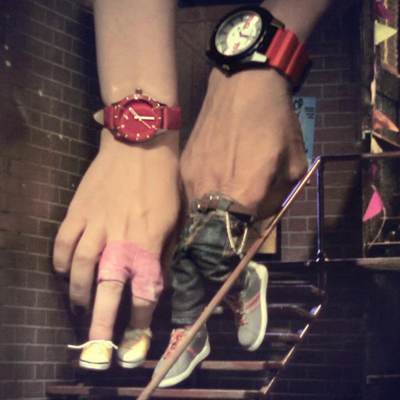
    The TVC conceputalised by Lowe Lintas features finger break dancing choreographed by Lilach Chen. The youth brand wanted to draw attention to the product category using finger break dancing as a major player as its core thought has always been about the mating game and it wanted the TVC to have a twist on it.


    Commenting on the campaign, Lowe Lintas’ national creative director Arun Iyer says, “We had to showcase a new collection of watches in a quick, snappy manner while being true to the brand essence. Hooking-up is no big deal and the commercial conveys exactly that. And that to us is very Fastrack.”


    The campaign will be showcased on television and digital medium.


    On the association, Fastrack marketing head Simeran Bhasin says, “We wanted to do something different to introduce our new line of watches. The finger break dancing in the ad is a unique way to showcase the watches and also plays on the irreverence of the brand.”

  • Hyundai i20 viral campaign ‘Casts a Spell’ crosses over one million viewers

    Hyundai i20 viral campaign ‘Casts a Spell’ crosses over one million viewers

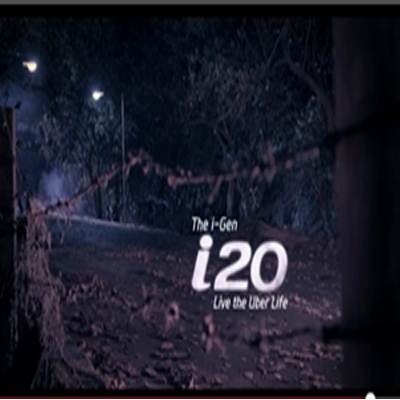
     NEW DELHI: A unique viral campaign ‘Hyundai i20 Casts a Spell’ launched by Hyundai Motor India to promote the i-Gen i20 garnered over one million views on YouTube and other digital platforms within a span of three weeks.


    The campaign is an initiative to expand its outreach through digital medium. Targeting the youth, HMIL has undertaken a slew of initiatives to engage its customers and bolster the appeal of the brand.


    The ‘Cast a Spell’ digital film uses a generous sprinkle of humour to highlight the car and its innovative features. The viral campaign creatively highlights the hatchback’s latest features including its automatic headlamps, rain sensing wipers and rear view camera with parking sensor.


    Unbridled by the constraints of a television commercial with limited time frame of 20 to 30 seconds, the video has been successful to engage its viewers, all in a short span.


    On the i20 viral video, Hyundai Motor India senior GM and group head Nalin Kapoor said, “The audience of digital media is innovative and experimental in their reception to brand communication. The viral video for the i20 was conceptualised to reach the youth on the internet in an engaging format. The i20 viral campaign was developed to create a buzz on the digital media, involve and engage consumers using humor and at the same time communicating class leading features of the i20.”