Tag: digital media

  • Delhi HC issues notice to Centre on plea challenging new IT rules

    Delhi HC issues notice to Centre on plea challenging new IT rules

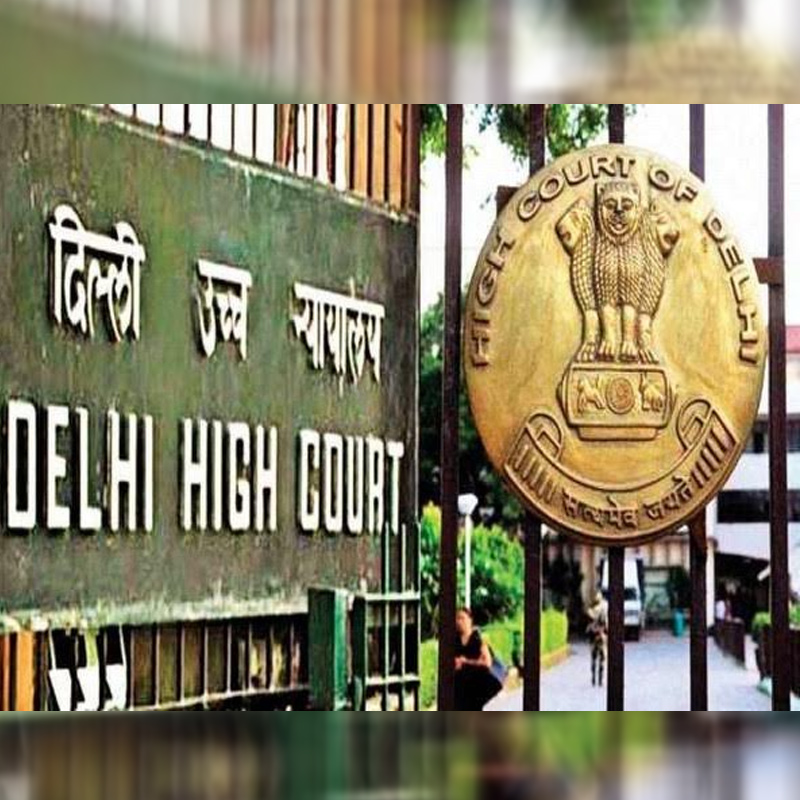
    KOLKATA: The Delhi high court on Tuesday issued notice to the central government in a plea challenging the new rules framed under Information Technology (guidelines for intermediaries and digital media ethics code) Rules 2021.

    A division bench headed by chief justice DN Patel was hearing the petition which has been filed by the Foundation of Independent Journalism (the non-profit company that publishes The Wire). It has sought a response from the ministry of electronics and information technology in the matter and given them time to submit the same.

    The counsel for the petitioners, senior lawyer Nitya Ramakrishnan, stated that the rules have put an additional regulatory burden on news media and current affairs.

    “They cannot place a whole regulatory burden under Section 69A on news and current affairs agencies. 69A only provides for issuing directions to intermediaries,” she argued as quoted in media reports.

    The petition argued that the new IT Rules issued on February 25, 2021, were “palpably illegal” in seeking to control and regulate digital news media when the parent statute nowhere provided for such a remit.

    “The IT Rules, 2021, expand the scope of the Act even further by providing for a Code of Ethics and a three-tier regulatory system to administer a loose-ranging Code of Ethics, that contains wide and vague terms as ‘half-truths’, ‘good taste’, ‘decency’,” the petition said.

    The plea also contended that the oversight mechanism and the inter-departmental committee set up under the new rules would have the power to recommend "draconian measures such as ordering the deletion, modification of content or blocking the same."

    The matter will be heard next on 16 April.

    Several journalists, lawyers and activists have decried the rules as an attempt to muzzle freedom of press by laying the ground for tightening executive control over digital media. The Editors Guild of India last week demanded the repeal of these rules.

    The government laid down new guidelines for social media platforms on 25 February, making a distinction between social media intermediaries and significant social media intermediaries. In a gazette notification, it also specified five million registered users in India as the threshold for significant social media intermediaries.

  • Petition filed against new intermediary and digital media rules before Delhi HC

    Petition filed against new intermediary and digital media rules before Delhi HC

    KOLKATA: Last month, the Centre notified new rules for digital media which caused a stir amid the industry’s online content providers. Now, a petition has been moved before the Delhi high court challenging the new rules under the Information Technology Act to regulate internet intermediaries, over-the-top (OTT) platforms and digital news media.

    The plea has been filed by the Foundation of Independent Journalism. It will be heard on 9 March by a division bench headed by chief justice DN Patel.

    Several journalists, lawyers and activists have decried the rules as an attempt to muzzle freedom of press by laying the ground for tightening executive control over digital media. The Editors Guild of India last week demanded the repeal of these rules.

    The government laid down new rules for social media platforms on 25 February, making a distinction between social media intermediaries and significant social media intermediaries. In a gazette notification, it also specified five million registered users in India as the threshold for significant social media intermediaries.

    “Social media platforms have done exceedingly well in terms of business and the number of users, while also empowering ordinary Indians. But it is very important that crores of social media users must be given a proper forum for resolution of their grievances against use and abuse of social media in a time-bound manner,” said union information technology minister Ravi Shankar Prasad.

    Each significant social media intermediary would be required to appoint a chief compliance officer, a nodal contact person for 24×7 coordination with law enforcement agencies and a resident grievance officer. All three would be resident Indians. They will also have to publish a monthly compliance report mentioning the details of complaints received and action taken.

    They will also have to give a prior intimation, in cases where they remove/disable access to any information (social media post) on their accord. So, the platforms will now have to communicate to the users, the grounds and reasons for such action and give users adequate opportunity to dispute the action taken by the intermediary.

    The government also asked the significant social media intermediaries providing services primarily in the nature of messaging to enable identification of the first originator of the information.

  • Divo to now offer digital content & influencer marketing services

    Divo to now offer digital content & influencer marketing services

    KOLKATA: Digital media and music company Divo has forayed and expanded its offerings to digital, content and influencer marketing services.

    During the country’s protracted lockdown, a fundamental shift has been triggered in the influencer marketing space with big brands deepening their engagement with a variety of influencers as consumers turned to YouTube videos and Instagram reels for everything. Ergo, the team realised a huge market opportunity in the digital marketing domain.

    The new division comprises a 15-member team, with associates from leading media companies like TVF, Radio Mirchi, Sun Network, and has collectively created noteworthy case studies through award winning campaigns.

    Divo has been working very closely with content creators and talents in growing their digital presence since 2014. And now with brands and advertisers heavily investing in branded content and influencer marketing, Divo aims at providing integrated solutions that fill the gap for content creators and creatively fit the brand’s overall communication, without breaking the USP of the content creators.

    In a span of six months, Divo has empowered India’s creator community by locking ties with over 1,000+ YouTube creators and social media influencers; one of the biggest ones being MicSet, Nakkalites, Irfans View under the hood. The pursuit is to cultivate talents of creators across multifaceted genres like fashion, food, entertainment, singing, travel and connect them with brands looking to make a dent on the market by integrating their product/services via powerful creative storytelling.

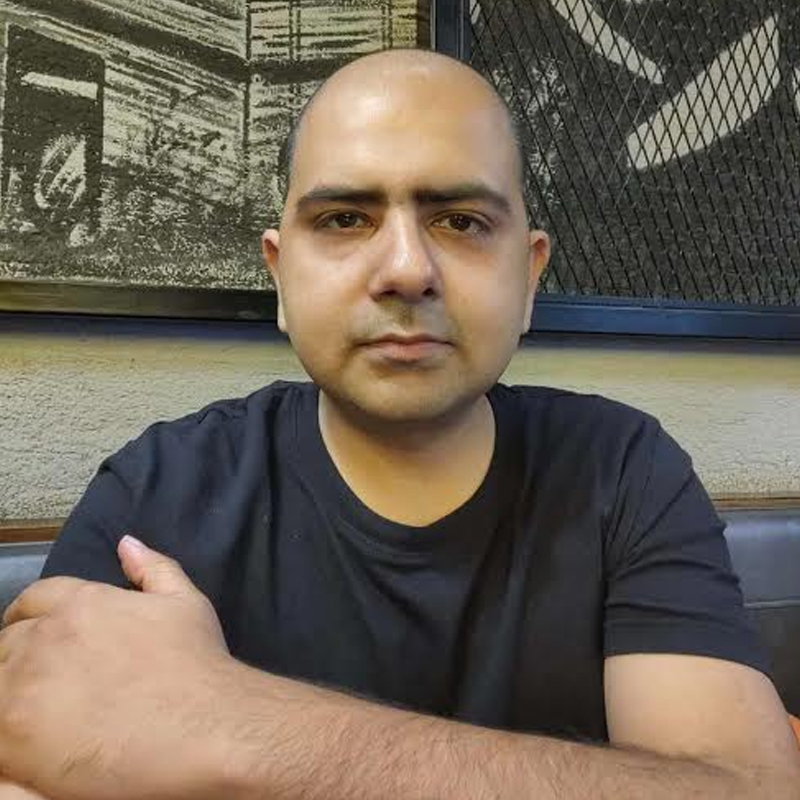
    Divo founder and directory Shahir Muneer said, “With traditional mediums like print magazines, newspapers, OOH either shutting down or facing a huge hit in terms of readership/subscriptions, we noticed that brands and companies are aligning their budgets to online platforms and noticing the importance of influencer marketing. This made it a perfect time for us to launch this new division as we foresee the influencer market growing tremendously over the next two years. While we have already been catering to brands for past couple of years, more from a reactive requirement, this focused approach will be more proactive and grow the agency division with a concerted approach.”

    Divo has worked with brands from fintech platforms like Groww, edu-tech learning platforms like Upgrad, Byju’s, to FMCG drivers like Gillette, Pantene, Colgate, e-commerce like Amazon and LG from smartphone category and engaged millions of audiences single-handedly through influencer marketing. Divo recently won a Gold Award at StreamCon in the best brand integration category for one of their clients- Nua, for their sanitary pad in association with Youtuber – Cheeky DNA.

  • HuffPost India to no longer publish content

    HuffPost India to no longer publish content

    KOLKATA: HuffPost India said on Tuesday that it would no longer publish content and redirected readers to parent site, HuffPost.com.

    “As of November 24, HuffPost India will no longer be publishing content. For more great global content, please visit HuffPost.com. We thank you for your support and readership,” it said.

    The news outlet which covers everything from politics, media and entertainment to technology, religion and lifestyle entered India back in 2014. 

    While The Huffington Post launched in the country on the back of a content partnership with The Times Of India, the partnership collapsed after three years.

  • MIB directs digital media entities with FDI to share details within one month

    MIB directs digital media entities with FDI to share details within one month

    KOLKATA: A month ago, the department for the promotion of industry and internal trade (DPIIT) clarified certain aspects of 26 per cent foreign direct investment (FDI) in digital media. The ministry of information and broadcasting (MIB) has now directed the entities having foreign investment to share details of the company and its shareholding pattern along with the names and addresses of its directors and shareholders within one month.

    They have to share other details like names and address of promoters, significant beneficial owners, a confirmation with regard to compliance with pricing, documentation and reporting requirements under the FDI Policy.

    Entities which, at present, have an equity structure with FDI exceeding 26 per cent will have to inform MIB and take necessary steps for bringing down the foreign investment to 26 per cent by 15 October 2021 and seek approval of the ministry. To bring any fresh investment, the entities have to seek prior approval of the government.

    “Every entity has to comply with the requirements of citizenship of board of directors and of the chief executive officers (by whatever name called). The entities are required to obtain security clearance for all foreign personnel likely to be deployed for more than 60 days in a year by way of appointment, contract or consultancy or any other capacity for the functioning of the entity, prior to their deployment. For this purpose, the entities will apply to MIB at least 60 days in advance and the proposed foreign personnel shall be deployed by the entity only after prior approval of this ministry,” the ministry added in the notification.

    Earlier DPIIT clarified that the rule would apply to:- 

    ·        Entities uploading/ streaming news and current affairs on websites, apps, other platforms;

    ·        News agencies which supply news to digital media entities and/or news aggregators;

    ·        News aggregators which, using software / web applications, aggregate content from various sources in one location.

  • Will MIB crack the whip on online content: Experts debate

    Will MIB crack the whip on online content: Experts debate

    KOLKATA: It's been an oft debated issue over the past few years: how does one keep a tab on free as a bird, digital sector – OTT and digital news platforms? With the government bringing it under the regulatory oversight of the ministry of information and broadcasting (MIB) many a conservative who has complained about the content on streaming services may well heave a sigh of relief. But it is  exactly this which is creasing the brow of many a digital executive as they wonder now  if their creative freedom is about to be curtailed with the leash of a draconian censorship law.  But experts believe there is no reason to panic at the moment.

    They say that so far, the matter of digital content regulation was neither here nor there, dangling between the MIB and ministry of electronics and information technology (MEITY). The government’s move was aimed at drawing lines and clearly defining what comes under whose ambit. According to industry experts, MEITY has less knowledge about content and was also not very active in the sphere.

    “There is certainly a need for some kind of regulation. If self-regulation is adopted, exercised, and disciplined, that would have been ideal. That’s what the industry had signed up for some time back. Putting everything under censorship would be one extreme step which could be very difficult for the industry to work on as the OTT segment is a very different business in terms of content, infrastructure, investment, and challenges,” said PwC India media, entertainment & sports advisory partner a& leader Raman Kalra.

    He went on to add that there would be a need for the government to work in very close consultation with the various stakeholders in the industry and arrive at a middle ground. “You can’t have a completely unregulated environment. On the other hand, you can’t have a very tightly controlled censorship driven framework,” he quipped.

    Elara Capital VP – research analyst (Media) Karan Taurani conjectured that the ministry may be formulating a framework for regulating the OTT space but that may not be very anti-digital in nature.

    Since the industry cannot be left unregulated, the government’s gazette notification will ensure that the entire media ecosystem will be aligned in terms of processes and overview under MIB, commented former SonyLiv head and Kurate Digital Consulting’s Uday Sodhi.

    “It is still early days to predict the impact. I think it has done the re-categorisation and recognised OTT as a proper medium and therefore put it under MIB. This is the right way to go about. It basically integrates the entire content ecosystem whether it is entertainment content or news, whether it is digital or TV,” he added.

    In terms of censorship, Sodhi was of the view that change in ministry will not change the Centre’s take on the matter, which has been a hot button issue for a while now. But he believes that MIB will not impose any censorship, rather it will follow the self regulation model in traditional media.

    On the subject of investment in the OTT sector, Kalra stated that it will be affected if – and only if – there is a heavy regulatory environment. The harder it becomes to create a good content funnel, the slower will be the growth of the sector. However, he qualified his statement by saying that it’s still early days. On the other hand, Taurani claimed this will not discourage global OTT giants from investing, or impact the streaming sector negatively in a big way.

    “We look forward to working with the ministry to implement our industry's self-regulation efforts. As responsible content creators, we want to ensure this act not only takes cognisance of the nature of content being released, but also ensures that we safeguard creativity in this rapidly growing sector,” MX Player CEO Karan Bedi clarified.

    On a slightly different note, another senior media professional added that the move is aimed more at the news segment. The good part, he said, is that MIB will now be able to keep a check on fake news and foreign companies’ control over news determination. But he cautioned against the misuse of power as well. Things will get sticky from a political point of view if the action turns out to be ‘A vs B.' However, the ministry will need a piece of huge machinery if it really tries to monitor every piece of news content.

    With an increasing number of services  getting into streaming –  and some have  content which can  be construed as crossing the line of decency by a sensitive India today – it behooves the mainline streaming players to quickly come up with a self regulatory mechanism which is acceptable to the MIB.  Also, those streamers who have not signed on the dotted line, need to arrive at an agreement with those who have.  So far the fledgling sector's efforts to come up with self-regulation under the IAMAI have not  really excited the regulator.

    Advertisers, agencies, and  entertainment and news broadcasters have –  in their time – got together, buried their differences  and drawn up mechanisms which have kept audiences, and the government  satisfied.  OTT and digital outlets need to keep a picture in their minds: being forced to run to the censor board for every piece of content that they produce, should they fail to get a self regulatory code in place. That's a nightmare no OTT  executive would like to go through.

  • DPIIT issues clarification on 26% FDI in digital media

    DPIIT issues clarification on 26% FDI in digital media

    KOLKATA: While significant growth in media is coming from digital media consumption, the government amended the foreign direct investment (FDI) policy last year. As a part of the reform, it had announced an approval of  26 per cent FDI in digital media. However, there was a lack of clarity about the niggling details. 

    Mire than a year later, the department for the promotion of industry and internal trade (DPIIT) has thrown some further light on it:

    The rule would apply to :

    ·   Entities uploading/ streaming news and current affairs on websites, apps, other platforms;

    ·    News agencies which supply news to digital media entities and/or news aggregators;

    ·    News aggregators which, using software / web applications, aggregate content from various sources in one location.

    These news organisations would be required to align their FDI to 26 per cent level with governmental the approval, within a year from today. To comply with the FDI policy, the majority of directors on the board of the company and CEO should be Indian citizens.

    "Security nod must for foreign personnel deployed for more than 60 days in India if security nod for any foreign personnel gets denied, the employee has to resign/employment terminated," DPIIT said.

    In this context, the ministry of information and broadcasting (MIB) has announced that it will consider in the near future to extend the following benefits, presently available to traditional media (print and TV), to such entities also:

    ·      PIB accreditation for its reporters, cameramen, videographers enabling them with better first-hand information and access including participation in official press conference and such other interactions.

    ·     Persons with PIB accreditation can also avail CGHS benefits and concessional rail fare as per the extant procedure.

    ·     Eligibility for digital advertisements through Bureau of Outreach and Communication.

    Moreover, MIB has suggested forming a similar self-regulating body in digital media like print and electronic media.

  • Vega aims to refresh cosmetic industry with SERY

    Vega aims to refresh cosmetic industry with SERY

    NEW DELHI: Personal care appliances brand Vega has forayed into the cosmetic brand with the name SERY. The company launched its product through e-commerce channels including its own website. SERY has entered the market with an easy-to-use, stick format make-up range.

    The brand has roped Bollywood actress Amyra Dastur as the brand ambassador. As part of the association, Dastur will be featured in the latest launch campaign video. 

    The company has expanded its footprints at a time when the cosmetic industry has been facing a steep decline due to the pandemic. Not only India but across the APAC region, many cosmetic brands have witnessed net sales decreased in the past few months.

    SERY MD Sandeep Jain shared, “The Covid2019 pandemic has had a negative impact on the industry. But many indigenous brands have started creating stronger e-commerce presence since offline has taken a hit. Individuals, particularly millennials, continue to purchase items via e-commerce platforms besides buying products directly from their favourite brands’ websites. So, having a strong presence in leading e-commerce platforms will be of help. However, retail will continue to be a point of focus for us in the near future.”

    VEGA has been a known brand in the personal care market. The company started its operation in 2006 as a makeup brush brand but transformed itself into a one-stop-shop brand for beauty care accessories and personal care appliances by 2013. 

    “Ever since we launched Vega in the Beauty Accessories and Personal Care Appliances category, our aim was to diversify into other segments. Although our initial plan was to bring everything together under one roof, we realised that launching a fresh brand would help in transforming the market without losing the intrinsic values of the respective brands,” he said.

    The idea behind launching a new brand, in an already cluttered market, was to bring the consumers something different and unique as a concept. “Being unique in terms of the pricing model and the product itself is of huge importance to brands today. The advent of the digital age has exposed the younger generation to a whole new world of products that are better, cheaper and more easily accessible,” he added.

    The brand mentioned that it’s not possible to have a retail presence right now, but a large population continues to shop from their favorite retail store instead of e-commerce.

    Jain also added that the pricing is competitive and comparable to big brands. Instead of the regular OOH billboard style of campaigns, the brand will look at digital for now.

  • A hot cuppa instant marketing

    A hot cuppa instant marketing

    'Just take an Uber', is the fastest way of telling, 'arrange a clean, safe, convenient, mode of transport for yourself'. Theoretically, the company and its marketers have at this moment communicated awareness, interest, consideration, preference, purchase, loyalty and even advocacy. Congratulations, dear readers, you just saw a company become a brand.

                                                                “Marketing is a series of events,” said the gurus. Only no longer now and we’ll tell you how!

    With the abundant channels, competitors, digital literacy and logistical accessibility, time has become expensive than money. But the startups and investor backed companies have brought in variety in almost all B2C sectors. As a consumer our intent is to receive the best experience instantly, with least research done. With all of us locked down, all traditional marketing efforts are meagre right now. The marketers are under pressure to create an empirical roadmap to make the target consumer be aware, buy, and become a brand custodian. What’s the bailout?

    Making a quicker marketing journey

    With due respect to the legends, and thanks to the majority imbibing technology across all levels we can jump and skip the non-bankable steps in the various marketing models. Technology and its prodigy, 'the digital', is the push that has triggered the plunge. Our focus on sharper techniques will cut the flab out of the marketing budgets. We’ll hit the target audience where they belong saving a lot of resources and time.

    The new format, we call it the ‘instant marketing’, enables the brand to reach the target customer fast and reduce the cost of communication.

    Marketing today is only as impactful as a user’s attention span

    Marketers have this tremendous pressure to make the consumer make a right swipe within 8 seconds. It’s the ultimate test of seduction out there. Only the best combination of content and media wins the race. This compels us marketers to think slow and act fast. Our goal is to understand everything about our customers, be where they are and then gratify their mind-set.

    In the marketing funnel of 2020, we may not really have to go all the way through awareness, interest, consideration, desire, engagement and action. As per our audience, maybe we jump straight from awareness to engagement and purchase action. Or from interest to desire and action. Any of the combinations work best for our brand! The accessibility of technology and the hand-held medium has given us this superpower to jump our marketing methodology around.

    Covidified consumer behaviour

    Marketers will see themselves become more budget-oriented in order to be cost effective. On its way up to revival, marketers will opt for the most economical methods to reach their audience. There isn’t a lot of liquidity, yet there are huge capacity and inventory. Any player to chance upon and make the fastest dash to be in the playfield will rise above the competition. Post-Covid, brands have a changed course already.

    Consumers will be more thoughtful about what they consume and how much they need to consume. Their value seeking parameters will now be different and they’d look brands with a different eye. Safety, empathy, concern, wellness, purpose driven, social could be some of them. Less experimental now, they’ll choose the brand that they best understand and relate to.

    The marketer’s 2020 tool kit

    Unlike the old dictum, we can now easily measure where half of the money in marketing and advertising goes. We can have instant stats of what works and what doesn't and can promptly change the strategy. We have amazing forces to choose from –

    ·       Programmatic Communication – To shout out loud where your consumer is listening

    ·       Communications Formats – Video and Pictures for tempting their senses

    ·       Performance Marketing – Make a payment on delivery (on a completed lead, sale, booking or download)

    ·       Communications Platforms – Tactically repurposing content for Youtube, Instagram, Google and Twitter

    The organic traffic is down in major industries globally. That’s a huge concern cited by the marketing guru, Niel Patel. When that happens, it reflects, that there is a demand crunch in almost all sectors. It means that disposable incomes are now savings. And it means that the money isn’t flowing. This is the time for consolidation, for being judicious with the expenses and for reaching out to the customers in the tools that use the shortest time. As a marketer, do not be fearful, because right now, everyone is. Be smart, because everyone isn’t.

    By the time you finish reading this article, three businesses got shut down worldwide. You don’t believe me? Google it!

    (The author is integrated marketing specialist at Topline Consulting Group. The views expressed are his own and Indiantelevision.com may not subscribe to them.)