Tag: digital media

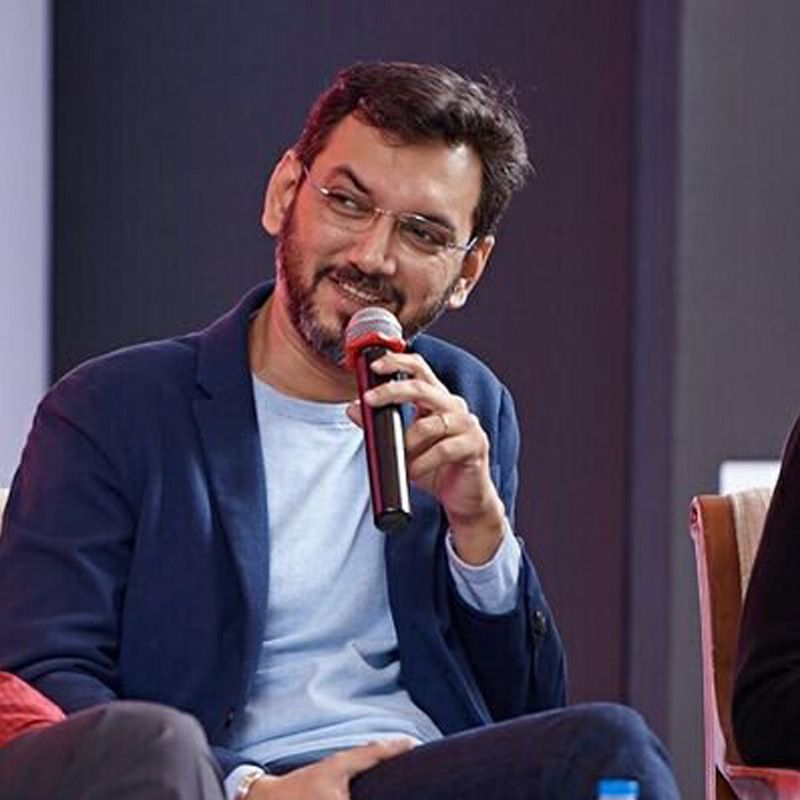
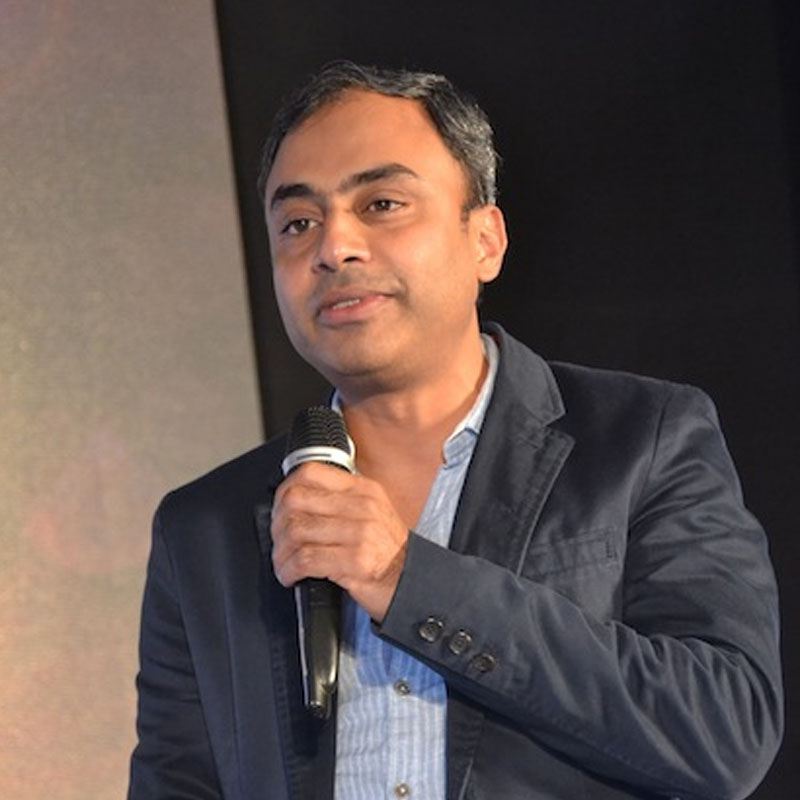
  • “The digital creative industry’s landscape is in perpetual flux”: Garage Group’s Saurabh Gupta

    “The digital creative industry’s landscape is in perpetual flux”: Garage Group’s Saurabh Gupta

    Mumbai: Digital media, music production, and creative marketing are vibrant and interconnected facets of the entertainment and advertising industries. Digital media encompasses online content, including videos and interactive experiences. Music production involves creating and arranging music tracks, often for media projects. Creative marketing focuses on innovative campaigns to engage audiences and promote brands. Together, these elements play pivotal roles in shaping modern entertainment and advertising strategies, leveraging technology and creativity to captivate and engage audiences in an ever-evolving digital landscape.

    Garage Group is a creative agency founded in 2015 by Saurabh Gupta and Anjali Chauhan. They offer services in creative, digital media, social media, video production, and more. Garage recently underwent a transformation, uniting various groups under Garage Collective to foster collaboration and innovation. They have a history of working with brands like Sony, Microsoft, Oppo, etc., aiming to revolutionise the creative industry.

    In an email conversation with Garage Group founder and MD Saurabh Gupta, Indiantelevision.com delved deeper into Garage Group’s evolution, maintaining creative excellence, their vision and mission, etc.

    Saurabh Gupta is from Kanpur, the eastern business hub. He began his career at a young age and has spent the last 12 years working with various MNCs and big brands in leadership roles such as Reliance Entertainment Digital and Percept Media as a business head of innovations and new initiatives. In 2015, he founded Garage Productions, which was primarily a film production house focusing on short format and new-age content. With increasing demand, this evolved into a full-service digital creative agency with an in-house production facility, the first of its kind in India.

    Edited Excerpts:

    On the journey of Garage Group’s evolution from its inception in 2015 to the diverse range of verticals it encompasses today

    Since its inception in 2015, Garage Group has evolved into a versatile digital creative agency with a diverse portfolio of verticals. The journey has been marked by notable milestones and challenges. Initially, establishing a unique identity in a competitive landscape was a significant hurdle. However, our dedication to strategies and a client-centric approach propelled us forward. Collaborations with esteemed brands like Sony and Microsoft elevated our reputation. Geographic expansion to multiple locations enabled us to better serve clients and seize new opportunities. Looking ahead, our focus remains on sustained growth, technological integration, and nurturing creativity to surmount challenges and lead the industry.

    On the introduction of Garage Collective driving synergy among Garage Music, Garage Productions, and Garage Media

    By converging talents across these verticals, we unlock innovative possibilities. For instance, music produced under Garage Music can seamlessly enhance video content created by Garage Productions, while Garage Media magnifies the reach of both. This consolidation bolsters creativity, resource utilisation, and the overall impact of our offerings, propelling Garage Group to new heights as a unified creative force.

    On Garage Group setting itself apart from, in a competitive landscape with numerous creative agencies and your USP that consistently draws clients to choose Garage Group for their creative needs

    Amid a sea of creative agencies, Garage Group distinguishes itself through its Unique Selling Proposition (USP): a fusion of innovation, collaboration, and tailored solutions. Our deep commitment to crafting innovative campaigns while maintaining a collaborative relationship with clients stands at the core of our success. Moreover, our multi-vertical approach allows for comprehensive solutions under one roof, streamlining the creative process and offering clients a holistic experience. This holistic blend of innovation, collaboration, and diverse services consistently attracts clients to choose Garage Group as their preferred creative partner.

    On highlighting a project that you consider particularly innovative or impactful, and its stand-out factor

    The campaign generated a cascade of engagement, sharing heartfelt stories and forming a supportive community. This project’s innovation lies in its capacity to align with Caprese’s goals while resonating deeply with the audience. The success of this campaign underscores Garage Group’s prowess in delivering impactful campaigns that meld meaning with creativity, driving both emotional connection and tangible results.

    On Garage Group ensuring consistent creative excellence across different regions with its presence in multiple locations

    Maintaining creative excellence across multiple regions is a cornerstone of our operation. We achieve this through standardised processes, clear communication, and a unified creative vision. Regular cross-regional collaboration ensures knowledge transfer and shared best practices. Local teams are empowered to infuse cultural nuances into campaigns while adhering to Garage Group’s overarching standards. Moreover, technological tools enable remote collaboration and efficient resource allocation. This approach ensures that clients experience the same high-caliber creativity and results from Garage Group’s services, regardless of their location.

    On the key trends that you’ve observed in the digital creative industry and Garage Group adapting to stay at the forefront of these trends

    The digital creative industry’s landscape is in perpetual flux. We remain at the forefront by keenly observing trends. Interactive content, augmented reality, and data-driven personalisation have gained traction.

    By being agile and proactive, Garage Group consistently innovates and maintains its standing as a trendsetter in the digital creative realm.

    On seeing the landscape of digital media, music production, and creative marketing evolving in the next few years and the role that Garage Group aims to play in shaping this evolution

    The coming years will witness transformative shifts in digital media, music production, and creative marketing. These changes will be driven by AI integration, immersive experiences, and enhanced data analytics. Garage Group aim is to be a proactive influencer, embracing these changes to offer pioneering solutions. We envision leading collaborations that amplify cross-disciplinary synergies, and pioneering experiences that captivate audiences. Our mission is to drive these industries forward, continually redefining the boundaries of creativity and technology while nurturing meaningful connections between brands and consumers.

    On their vision & mission for the next three years

    We’re committed to empowering our teams, fostering a culture of constant learning, and pushing creative boundaries. Through these efforts, Garage Group aims to be a driving force in shaping the future of digital media, music production, and creative marketing, consistently exceeding client expectations and setting industry standards.

  • Zenith India wins the digital media mandate for LG Electronics

    Zenith India wins the digital media mandate for LG Electronics

    Mumbai: Zenith, the media agency under Publicis Groupe India, has won the digital media mandate for one of the largest electronics brands, LG Electronics. Zenith won this business in an intense and competitive multi-agency pitch process which saw leading groups participate.

    Zenith’s differentiated and integrated planning approach stood out among competitors making it the natural, first choice for the brand. As per the mandate, the agency will handle end-to-end digital AOR mandate for LG, including D2C performance marketing, digital branding and marketplace commerce.

    The scope of work will focus on full-funnel delivery using multi-channel tools, tech prowess and integrated workflow management furthermore strengthening LG’s digital media presence in the Indian market.

    Speaking on the win, Zenith India CEO Jai Lala said, “We are delighted to be partnering with LG Electronics, one of the largest electronics brands worldwide and one which needs no introduction. Zenith through its strong ROI proposition and exceptional expertise in digital marketing will fortify LG’s digital media presence in India. Through our strong data and tech capabilities, we look forward to unlocking new opportunities for the brand and contributing to its expansion in India.”

    LG Electronics India corporate marketing leader Tahir Saify Hakeem said, “It was a comprehensive pitch process and Zenith’s unique ROI approach to drive business outcomes was very impressive. We as a brand are always looking for innovative, differentiated and fresh ideas that match our working style and product proposition and we are confident that the agency through its dynamic and strong media capabilities will help us maximise the consumer journey and aid in business growth.”

  • OTT business is a ‘lucrative market’ in India: Shemaroo’s COO-digital businesses Zubin Dubash

    OTT business is a ‘lucrative market’ in India: Shemaroo’s COO-digital businesses Zubin Dubash

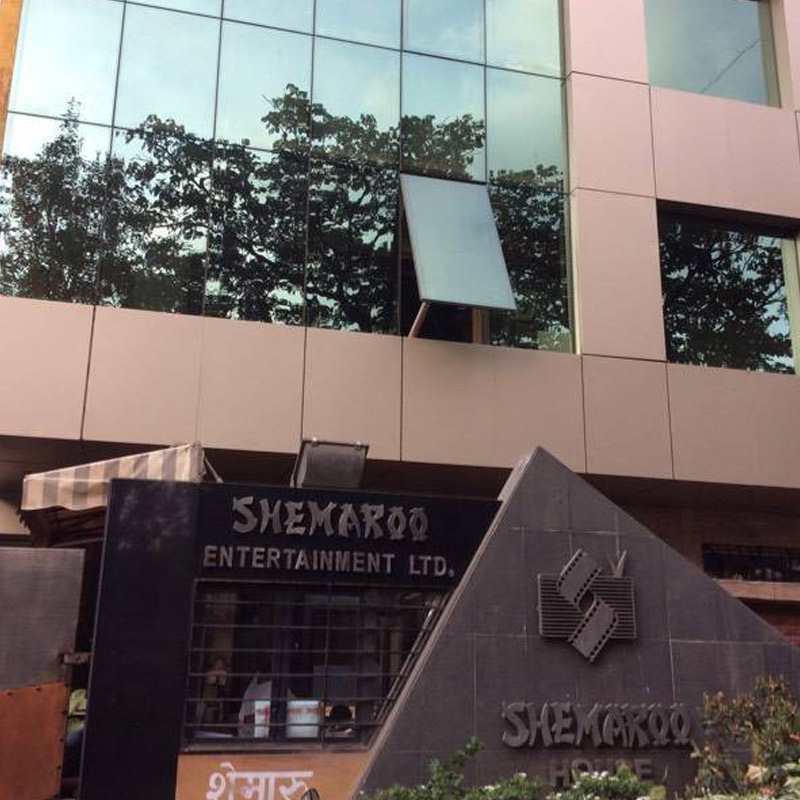
    Mumbai: Shemaroo has been a pioneer in the Indian media and entertainment space since its inception. With the advent of digital media, Shemaroo is spreading its wings throughout the market and showing robust growth in the digital space. This could not have been possible without Zubin Dubash, the real man behind Shemaroo’s digital growth story.

    In 2017, Shemaroo’s chief operating officer of digital businesses Zubin Dubash took charge of the position. Shemaroo’s digital platforms are growing stronger day by day. In the last five years, Zubin has been working tirelessly to increase the subscriber base of the company’s flagship streaming entertainment platform ShemarooMe and bestow content that matches the audience’s taste. ShemarooMe is available in over 150 countries. Its extensive content library includes Bollywood, regional, devotional, and children’s genres.

    During the first two years after its release, the app’s focus was on increasing reach and awareness through partnerships. In FY’22, the revenue breakdown of the company’s digital media contributed 48 per cent while traditional media contributed 52 per cent.

    The company has also launched ShemarooMe Gujarati, which includes an impressive slate of direct-to-digital movie releases, plays, and original web series starring leading actors. Over 52 new titles were released on the platform in 2021. ShemarooMe Gujarati also expanded its footprint outside India with its presence in the US, the largest market for the Gujarati diaspora.

    Shemaroo originals such as Yamraj Calling, Goti Soda, and Vaat Vaat Ma, released on the platform, were well received by the audience. They are gearing up with a new content lineup like 53 Mu Panu, Cash Che To Aish Che, MatsyaVedh, Leela Natwar Ni, What The Fafada Season 01, Rajyog, Baap No Bagicho and Yamraj Calling Season 02.

    The company reported that digital advertising revenue increased by 29 per cent in 2021 due to traditional advertisers’ increasing their investments in digital sales channels. 40 million households paid for 80 million video OTT subscriptions in 2021, contributing to 27 per cent growth in the number of subscriptions and 27 per cent growth in revenue. 322 million Indians consumed content that came bundled with their data plans.

    In an exclusive conversation with Indiantelevision.com, Dubash shared insights about Shemaroo’s legacy, its digital journey, the OTT market and its future, and digital media opportunities and challenges.

    Edited Excerpts:

    On the growth of ShemarooMe

    Zubin: Our focus is on the needs of the customer; it works for us. To effectively communicate with and serve the customers, it is important for us to fully comprehend their needs.

    We make sure that, whatever the issues are, we provide a solution. We also ensure that the solution is developed correctly and conveyed, as well as that the consumers receive service without any issues. We concentrate on what the customers’ desires are and, based on that, we develop our proposals and solutions.

    We have cutting-edge technology. The tech stack is based on numerous technological elements, and we are active on several online platforms. As a result, everything is available and distributed, and our technical support is excellent in terms of all the other elements, including analytics, technology, platform, transport, and back-end content. The entire technology stack is therefore extremely well-built to scale up at a 3x or 2x capacity within a week to 10-day period. Therefore, we developed our agile stack there.

    On the legacy of Shemaroo 

    Zubin: We have been in business for 60 years and are well-known to people of all ages, from 18 to 60. As a result, we cater to the audience’s various segments. Our strategy is also quite straightforward. We offer video content in a variety of genres and languages.

    Therefore, we follow the customer to ensure that we have a sufficient and increased presence on the platform where the client visits and utilises whatever device or technology to consume content. We are currently using our broadcast channels. As a result, we will be present to provide content to the user wherever they are. It is clearly reflected in our vision.

    On his journey

    Zubin: We’ve seen a multifold increase in business on all three platforms (YouTube, Facebook, and OTT). Since I joined, I have been part of building up everything, from setting up a team and planning strategy, to thinking about what the entire vision & roadmap is, and getting the tech on board, including everything. So it started with B2B to see what would happen, and then we moved on to B2C, where we have many other plans. So it has been a slow but spectacular ride since 2017. We’ve been riding the wave of digital adoption, ensuring that customers appreciate and discover every such platform across the digital landscape.

    On the model 

    Zubin: We are a subscription-based platform. And, of course, we began in 2019, where we continued to be B2B but focused on driving subscription video on demand (SVOD) through partnerships. If we want to go from B2B to B2C, we have to wait a couple of years to showcase the entire product and offers. Additionally, we ensure that our distribution is in place through all of the B2B partnerships with telecom, direct-to-home (DTH), Internet service providers (ISP), and other players.

    In 2021, we launched our B2C forum, where we began to learn about what customers wanted, as it was directly based on a specific cohort that we identified, and that cohort was that we wanted to focus on one regional market. We’ve been growing rapidly over the past five years at a rate of roughly 200 per cent annually. We’ve expanded more than 10 times in terms of utilisation, which is a really large increase in overall consumption.

    On the ShemarooMe Gujarati

    Zubin: There is a significant need in the Gujarati market to be driven by Gujarati content, and there are formidable players out there who can sustain and provide consistently excellent content. We devised a proposition that stated we would give you one piece of content every week, so whether it’s a blockbuster hit, a web series, or a play, we promised this weekly.

    From the Gujarati audience’s perspective, we speak to customers, understand what they want, and look at different types of profiles; what the overall family audience wants to watch; what individuals want to watch; and what YouTube viewers want to watch. Then, based on that, we configure our content strategy and proceed from there. So this will be the same formula that we’ll use for different cohorts and regions that we develop as we go.

    On content commissioning 

    Zubin: We operate under a variety of models. We commissioned our content on various models, and we worked with producers to get all of their films on the OTT platform and acquire them for long-term or perpetual rights. We also work on revenue share deals, so it’s a mixed bag of everything we work on, and we’re willing to collaborate with the entire ecosystem.

    I would say we work as good partners in a professional approach with the entire ecosystem of content providers and writers. We want to create a level playing field to provide a pitch for us, and we have an opportunity to select it with the customers. 

    On the challenges

    Zubin: Regional business is quite lucrative. There is such an acute need for content, that there will always be difficulties. As a result, you will need to manage your profit and loss appropriately. Additionally, every organisation will be considering the difficulty of acquiring customers while staying within the parameters necessary to maintain profit and loss. Every industry is dependent on the ROI and without profit do we have the appetite to burn?

    On the opportunities

    Zubin: We haven’t explored all areas of OTT and only got success in the Gujarat region as of now, there is enough room to expand and we will do that horizontally. We want to cater to all audiences who do not get enough content but can pay for it.

    Undoubtedly, 5G will be here over the next few years. As a result, many new modules will emerge, and so will numerous new revenue streams.

    On arrival of 5G  

    Zubin: We collaborate closely with telecommunications companies. For us, it is essentially about extending and cementing our relationships as well as providing more facilities, content, and quality. Without a doubt, 5G and any new technology for enhancing data gathering simply add a significant or exponential effect and a factor of growth to this business.

    On the competition 

    Zubin: There are 40 OTT players, and they all have different types of content and approaches to reaching out to consumers. So, in the end, it’s essentially a supply of digital content for consumers to consume. Each OTT will have a unique strategy for the audience they are attempting to reach, where there is enough and more room for everyone to participate and grow.

    I don’t see why there should be a contest. And in terms of competition, as of now, we’ve made sure that we’re playing a digitally original game, the Cohorts’ game, focusing on indie web series (that is, Indian web series). Bollywood is our forte and we will explore many more new categories. So competition is beneficial. It’s extremely useful. And it’s a good thing to have because it keeps you on your toes and forces us to make the entire industry grow.

    On the OTT market

    Zubin: It’s a lucrative market. There are about 80 to 90 million subscriptions in India, and at least about 40 to 50 million households have at least one OTT subscription. This is just the beginning. So the sky’s the limit. We’ve got 450 million video users or digital video users in India, and you have at least 850 million data consumers. So, as 5G comes in, there will be a huge impact on the overall streaming experience.

    The lessons have all been learned. Therefore, when OTT first emerged, it was about changing people’s viewing habits away from television to smaller screens and educating them on the possibility of viewing long-form material on these screens. Shemaroo started with an advertising-based model, but now it is a subscription-based model.

    On the devotional genre 

    Zubin: We have a lot of content on live shrines. So we take the live feed from the shrines and upload it directly to our OTT platform so that customers can access it. During the Ganesha festival, we live-streamed Lal Baug ka Raja, and these audiences aren’t being served by the market as a whole. Most of them are only getting an indie web series or south dub. However, this type of content is underserved. That’s where we come in to make sure customers get what they’re looking for.

  • Havas Media Group bags Firefox’s integrated media mandate

    Havas Media Group bags Firefox’s integrated media mandate

    Mumbai: In a multi-agency pitch, Havas Media Group India won the integrated media mandate for Firefox, the top premium bicycle brand in India and a subsidiary of the Hero Cycles Group.

    The mandate includes responsibilities for offline & online  media, and SEO. The account will be handled by Havas Media Group managing partner (head-North1) Roopali Sharma in the agency’s Gurgaon location, under the direction of the company’s president & chief client officer Uday Mohan.

    Firefox, a global leader in the premium and mid-premium bike categories since its establishment in 2004, offers an extensive and exclusive range of luxury motorcycles and accessories.

    The company sells high-end, stylish mountain bikes, road bikes, city bikes (or hybrid bikes), bikes for women, kids, & juniors, electric bicycles, and adventure & outdoor gear including backpacks, bike panniers & pouches, jerseys & t-shirts, and windcheaters & breakers.

    In addition to its e-commerce-enabled website, Firefox Bikes has more than 500 outlets and customer experience centres spread out across tier 1 and metro cities in India.

    Firefox Bikes CEO Sriram Sundresan said, “At Firefox, we are driven by a passion for biking and adventure. Being the pathbreakers, Firefox takes pride in revolutionising biking as a means of transformation, and we’ve seen tremendous growth in the adoption of biking as a preferred lifestyle choice. In Havas, we found a partner that shares a similar passion for connecting brands and consumers through meaningful media experiences. We are delighted to have them on board as our media partners and look forward to a great partnership.”

    Havas Media Group India CEO Mohit Joshi said, “We are proud to have bagged the integrated media mandate of Firefox, a niche category brand that has pioneered the growth of premium biking in India. With people getting increasingly aware of leading a healthy lifestyle and embracing sustainable ways of living, there has been a paradigm shift in the preferred mode of transportation – from conventional ICEs to EVs to bicycles. We look forward to an adventurous partnership by further strengthening the brand’s journey and its vision, as it forges meaningful connections with its consumers.”

  • MIB advises digital publishers, private channels against broadcast of online betting ads

    MIB advises digital publishers, private channels against broadcast of online betting ads

    Mumbai : The Ministry of Information and Broadcasting ( MIB) has advised digital media publishers, OTT platforms and private TV channels to refrain from broadcasting advertisements of online betting platforms and/or their surrogate news websites or any such product/service depicting these platforms in a surrogate manner. 

    The Ministry has observed that promotional content and advertisements of betting platforms are still visible on certain news platforms and OTT platforms. 

    The online advertisement intermediaries have also been advised not to target such advertisements towards the Indian audience. 

    The circular said ,”The advisory had been issued for the reason that betting and gambling is prohibited in most parts of the country, and pose significant financial and socio-economic risk for the consumers, especially youth and children. Accordingly, the promotion of offline or online betting/gambling through advertisements is not advised in larger public interest.”

    The ministry also observed that some online offshore betting platforms have started using news websites as a surrogate product to advertise betting platforms on digital media.

    “Betting and gambling is an illegal activity in most parts of India. In accordance with the Paragraph 9 of the Guidelines for Prevention of Misleading Advertisements and Endorsements for Misleading Advertisements 2022 under the Consumer Protection Act, 2019, it has been 
    observed that since betting and gambling is illegal, advertisements of online offshore betting and gambling platforms are prohibited,” the note said.

    The ministry reminded that according to the Information Technology (Intermediary Guidelines and Digital Media Ethics Code) Rules 2021,  advertisements of betting platforms, being an illegal activity, can not be shown on digital media.

    “In respect of the advertisements of the surrogate news websites operated by the online betting platforms, it may be mentioned that the logos of the concerned news websites are strikingly similar to the betting platform”, the note said.

    The concerned betting platforms and the corresponding news websites are also not registered with any legal authority under Indian laws. “Accordingly. the online offshore betting platforms appear to be promoting betting and gambling under the garb of news as surrogate advertising.”

    The Department of Consumer Affairs has also informed that online betting platforms have been advertising themselves as professional sports blogs, sports news websites, etc. while providing an indicative list of online betting platforms which are using news for surrogate advertising. 

    “The provisions of the Guidelines for Prevention of Misleading  Advertisements and Endorsements for Misleading Advertisements 2022 under the Consumer Protection Act, 2019 read with the Information Technology (Intermediary Guidelines and Digital Media Ethics Code) Rules 2021, it is informed that advertisements of concerned news websites, which are infact surrogate advertisements for online offshore betting platforms, do not appear to 
    be in strict conformity with these laws,” the ministry said.

  • GUEST ARTICLE: What is social entertainment and how can brands benefit from it?

    GUEST ARTICLE: What is social entertainment and how can brands benefit from it?

    Mumbai: Social entertainment is not just merely content creation and people interacting with each other; it includes different high-tech activities such as video streaming, video chat communication, multi-player gaming, music and video streaming with the help of different social networking services. Social media, as well, comes under the umbrella of social entertainment, covering almost 80 per cent of the market with applications such as Instagram, LinkedIn, Facebook, Twitter, etc. Users from across the world also confirmed that social entertainment is now even taking the place of television and cinema. In order to win the audience’s heart, brands must go to the roots and try being more creative with designing and content creation and communicating their message at the same time through collaboration with creators who have a good amount of fanbase. One of the biggest benefits to brands deals with the prolongation of content through digital collection of videos or posts.

    Social media and social entertainment are similar and yet distinct. The social media landscape has changed over the last several years, and these days, social media platforms are intended to be more than just a count of your friends. Viewing other people’s films and photos has become a kind of enjoyment in modern times. The material is being engaged with by more individuals than ever in the social media era. In the history of social media, what you watch and the desire to see is more important than what you follow.

    As we are aware, the pandemic in 2021 will greatly impact social media, particularly entertainment. The social platform and means of entertainment benefited from the pandemic.

    Now, let’s talk about how brands can benefit 

    1. Increase brand awareness

    In this era, everyone has a smartphone and is using social media platforms like Facebook, Instagram, Youtube, or Twitter, which is a natural place to reach new and highly targeted audiences.

    Every single person updates there to see and show their side of living and making money out of it.

    2. Humanise your brand

    One of the keys to social media for businesses is that it benefits their brands. Introduce your products to the public by highlighting the benefits of your products to your followers.

    Show how you embrace your brand values, how it works in people’s life and how you are interested in customers.  

    3. Establish your brand as a thought leader 

    No matter which industry your business is in, social media offers plenty of opportunities to establish thought leaders.

    4. Stay top of mind

    Keep your social media posts creative, entertaining, and informative. 80 per cent of people log in to their account once a day. Social media is a platform where you can connect with fans and followers every time.

    If we are talking about the growth 

    1. Increase website traffic

    The keys to increasing the traffic on social media are posts and ads. Sharing fantastic content from your album or website on your preferred social platform.

    Participating in social reviews/chats can also be a great way to increase your brand’s visibility in the market.

    2. Boost sales

    Social networks will become more vital for product search and e-commerce as the number of individuals utilising social media keeps expanding and social sales technologies develop. The moment has come to match your social marketing initiatives with your sales objectives.

    3. Partner with influencers

    People who have a large following of people who can draw the attention of their immense social media following to your brand.

    4. Promote content 

    Make sure you have a content marketing strategy in place to maximise the advantages of social media for the company.

    Conclusion 

    Social media is undoubtedly simpler to use and has a wider audience than conventional media, which is advantageous for both companies and gaming gear. Everyone is quite active when it comes to social interaction, whether they are one year old or 70 years old. It allows you the chance to advertise your goods while also communicating on many channels. Whether a blessing or a curse, social interaction among people has never been impacted by other environmental elements since it has such a strong grasp on society and people’s daily lives.

    The author of the article is Treasure Records managing director Deepak Gupta.

  • The-invERSITY signs Team Pumpkin for its the digital duties

    The-invERSITY signs Team Pumpkin for its the digital duties

    Mumbai: Team Pumpkin has successfully acquired the digital mandate for The-invERSITY, an upcoming brand that is empowering young minds to gain financial literacy and achieve financial independence in the future. The account will be handled by the agency’s team based out of Bengaluru.

    The-invERSITY is a one-of-a-kind location dedicated to increasing financial literacy and awareness among students aged 13 to 21. This platform is built to provide live interactive classes where educators will create awareness for kids about financial and investment-related terms and processes and instil a sense of responsibility from an early age to manage money.

    As a part of this digital mandate, Team Pumpkin will handle digital and performance marketing duties for The-invERSITY. In order to build and strengthen the brand’s digital presence, Team Pumpkin will focus on strategizing the brand’s digital activities, social media management, online reputation management, search engine optimization, and performance marketing responsibilities.

    Speaking of this partnership, Team Pumpkin co-founder and chief business officer Swati Nathani said, “Having won the mandate for The-invERSITY is a matter of pride. At Team Pumpkin, we believe in growing exponentially with upcoming trends and innovations while staying rooted in consistency. We plan to build a new and fulfilling path for The-invERSITY as per their vision and enhance the brand’s presence with our creative and strategic planning.”

    Commenting on the creative collaboration, The-invERSITY COO and co-founder Aditya Roy said, “We’re really excited to be working with Team Pumpkin to amplify our digital presence and start this journey together. We trust their approach and insights with our brand and hope to reach new heights and build it effectively.”

  • Vineet Nair rejoins Amazon India as head of media

    Vineet Nair rejoins Amazon India as head of media

    Mumbai: Amazon on Monday announced the appointment of Vineet Nair as head of media. Prior to this, he was associated with The Purple Family at Mindshare GroupM for nearly two years. He brings with him an experience of 15 years in handling traditional and digital media, brand development, media planning, buying, and strategy.

    This is Nair’s second stint at Amazon. He was a senior media manager at Amazon India for nearly two years before joining Mindshare.

    Nair shared this latest career update via a LinkedIn post. He wrote: “Excited to share that I have joined Amazon India as Media Head. It’s been a week now and everyone has been so welcoming. As I return to this organization, I am looking forward to continue working with an amazing set of people and #workhardhavefunmakehistory again!

    This news is also bittersweet as it meant leaving the Purple Family at Mindshare GroupM . Of my 15 years of experience, the majority of them have been spent at Mindshare where I have learnt and grown as a professional every single day with new challenges. Expressing his thanks to his ex co-workers, he added, “It’s what has led me to this point in my career, I am thankful for this organization and its people. Thank you Amin Lakhani, Harsh Deep Chhabra, for guiding and entrusting me with roles that challenged me and made me the leader that I am today. I am also grateful to all my team members who did outstanding work and had fun while doing it. I wish everyone the best, always!”

    Embed Link: https://www.linkedin.com/posts/vineetnair30_workhardhavefunmakehistory-amazon-mindshare-activity-6961949491025387520-0aFr?utm_source=linkedin_share&utm_medium=member_desktop_web

    He is an accomplished integrated media executive with over fifteen years of experience in the FMCG and e-commerce industries. He boasts a commendable track record as a thought leader, driving scalable growth for businesses through metrics-driven solutions, strong business acumen, adaptive strategic thinking, and deep market understanding.

  • Kohler India awards its digital media duties to Interactive Avenues

    Kohler India awards its digital media duties to Interactive Avenues

    Mumbai: Kohler India, a leading global lifestyle brand in the kitchen and bath space, has appointed Interactive Avenues—a Reprise Network company—as its digital agency following a multi-agency pitch. The account will be managed by the agency’s Gurugram office, with a strong emphasis on expanding digital footprints throughout India.

    Kohler has achieved luxury brand status among consumers by curating beautiful homes through its design and technology-led kitchen and bath products. With a strong presence in several cities around the world, the brand’s market presence appears to be expanding.

    With their digital expertise, Interactive Avenues is tasked with assisting the brand’s endeavour to inspire people to create artistic homes with their unique and aesthetic product offerings.

    Talking about the association, Kohler Kitchen & Bath India Parveen Gupta director – marketing said, “Kohler has already established itself as the most admired and recommended international brand when it comes to Bathroom products. We want to leverage Digital in the most constructive way and thereby make Kohler the brand of choice for consumers aspiring for luxury houses. Interactive Avenues’ robust understanding of the market and digital ecosystem made the mark for us.”

    Interactive Avenues sr. vice president (North & East) Abbhishek Chadha added, “Kohler is not just leading, it is leading with a vision. A vision to not just capture consumers but make them experience luxury via its aesthetic products and exceptional services for their homes.  Being a household name comes with its own set of expectations and we fully aim to meet those with our custom-made and client-first approach. Our understanding and experience as a full-service digital agency in crafting digital solutions along with our dedicated set of professionals will drive this partnership to great heights.”

  • Why did government retract Data Protection Bill

    Why did government retract Data Protection Bill

    Mumbai: Union IT Minister Ashwini Vaishnaw has withdrawn the Data Protection Bill from Lok Sabha on 3 August 2022. The centre will review the policy and come up with a ‘comprehensive legal framework’ for regulating online data privacy. The new regulation on data protection will help the overall internet ecosystem, safeguard against cybercrime, and secure non-personal data.

    The Data Protection Bill was first introduced on 11 December 2019. The bill was referred to the Joint Committee of the Houses for examination on 16 December 2021 & later, the committee presented the report in the Lok Sabha. The joint parliamentary committee raised concerns and provided 93 recommendations that explain why the government cannot invade one’s privacy. The government will introduce the new regulation during the winter session of the parliament this year.

    Why did political parties oppose the bill?

    In 2019, the opposition parties such as Congress and Trinamool Congress vehemently protested against this bill as it violated the fundamental rights of the citizens. The opposition believed that the bill provided power to the government to access the personal data of individuals, and it lacked transparency and was opaque.

    It is imperative to provide adequate protection to people on their privacy rights. Currently, India is the fastest growing data-generation nation in the world with over 700 million Internet users and more than 400 million smartphone users.

    Which data can the government have access to?

    Data is usually generated through four sources such as personal data, bank accounts data, medical records and employment data. Other data is generated from web searches and visits to any web portals. The data helps to understand and identify people’s choices, preferences and histories.

    It is also generated through a cache that comes from social media posts, tweets, phone calls, emails and videos. It is also generated through coordinates from the real-time location. Stacks of data are also collected from one’s spending patterns when an individual purchases online, via modes of payment used, and transactions made through payment gateways.

    It is that personal data many individuals would like to keep private and the government exercising control on accessing it- is a serious matter of concern. There needs to be a mechanism and policy in place to process such data without breaching people’s trust and protecting its safety & security.