Tag: digital media

  • “We are playing the role of a connector between talent and viewer”: Samir Bangara

    “We are playing the role of a connector between talent and viewer”: Samir Bangara

    Samir Bangara started his career in venture capital with IL&FS Venture Corporation and moved on to becoming an investment banker. Focusing on the tech space with Ernst & Young, he drove several US sell side mandates in the IT services BPO and wireless sector as a VP in the M&A team. Post that he held stints at Indiagames and The Walt Disney Company India (Disney UTV) as the chief operating officer and Managing Director-digital respectively. 


    Thereafter he decided to don the hat of an entrepreneur by collaborating with well known industry faces like Shekhar Kapur and music maestro A R Rahman, and co-founded Qyuki Digital Media. In 2012, it was reported that Cisco Systems pumped in Rs 27 crore into the social media platform thereby becoming a strategic investor. In a freewheeling chat, the man who has a keen knowledge about the digital ecosystem talks to Indiantelevision.com’s  Herman Gomes about the multi channel network and more.


    Excerpts: How did the three of you come together and what is the stake-holding pattern in the company?

    Cisco was an investor in my previous company. They helped me re-connect with Shekhar Kapur and through him I met A R Rahman. We started talking about my plans and saw a common interest and decided to do this together. It took close to four to six months to launch after that. I worked in digital media and content for seven years prior to this selling games and video content. Those learning’s helped shape what I am doing today at Qyuki. The three of us together hold a majority stake with Cisco as an investor.


    What is the investment pattern by the three of you in Qyuki?

    We are building a large scale media business and that requires significant investments. We have already spent a few million dollars and in the near future I see us investing close to $20-30 million additionally.


    What are the evolving opportunities you see in the digital ecosystem?

    The opportunities are very clear when you analyse the macro fundamentals. From 200 million internet users, we are set to grow to 450 million users over the next 12-15 months. The confluence of video and music is very compelling and now with better access to 4G, 3G and broadband I think the macro fundamentals are very strong in terms of consumption. Companies like us are looking at building the future digital broadcast networks. 
    On platforms like YouTube it can be hard to find good content because it is very vast and discovery is a problem. We are therefore looking at organizing this plethora of content for viewers by packaging content better and paralelly adding value to talent or the creators by empowering them with technology, production resources and distribution. Thus we are playing the critical role of a connector between the talent and the viewer without thrusting our brand before that of the creators. We are a creator brand first and then a consumer brand and not vice versa.


    How do you plan to pursue the role of a connector?

    The old philosophy used by traditional media platforms said please come to my destination. We are using our production capability, technology and distribution strength to connect the talent and the consumer and in doing so across thousands of creators and channels we are creating a digital broadcast network of the future. With regard to the business model let’s appreciate that every time you see a YouTube video I am sure you are waiting to click the skip button to avoid the ad. That space of putting an ad before the content is going to become passé. I think the real growth will come from branded content or content marketing where ads actually give way to real content to communicate the brands message. This is a multi billion dollar opportunity where brands will look towards creating talent driven content that will leverage the fan base of creators and thus deliver better engagement and reach. Research clearly shows that such ‘influencer’ based marketing is more effective than doing a plan vanilla ad.


    How do you see brands employing such talent?

    Brands want to employ talent to tell a story using digital influencers rather than produce just an ad. This also comes at a cheaper cost and is a win-win situation for all. So the talent benefits, we benefit as a network and the brand receives engagement and saves on cost.


    Which are the genres that Qyuki is focusing on?

    While music is our main focus it’s not the only thing we do. One example is a very popular show with Pooja Bedi and her daughter Aalia called Eff N Bedi. Our network consists of established artists like AR Rahman, Ranjit Barot, Salim-Sulaiman, Shweta Subram and Youtubers like Shraddha Sharma, Gaurav Dagaonkar, Siddharth Slathia and lifestyle and entertainment channels like Miss Malini, The Boss Dialogues etc. The Boss Dialogues has already moved from just being on digital to a prime time TV show on NDTV Prime and will soon have a sponsor on board. 


    Who does the digital IP rest with?

    There are two formats. When we produce the content we share the IP with the creator. But when the creator creates the content and we help them distribute, they retain the IP.


    What are the facilities offered by Qyuki?

    We have five studio facilities. Three of these are based in Mumbai and are solely designed for digital. We have in-house teams that shoot and edit content. Besides production facilities, we offer technology to distribute content online. Our network can actually help drive traffic online. The technology therefore helps in discovering and distributing content, the network helps in driving traffic and in some cases we also aid in production. We also bring in brands who are looking at communicating with audiences via digital influencers.


    While audiences who come to view content online are seen as ‘snackers’ and TV viewing is seen as appointment bound, do you see this as a challenge?

    Not at all! It  may be a challenge for TV producers who have to create content online or Ad film makers  who find it challenging to create content for digital and adapt to a digital scale of production vs. the significantly larger budgets they have in traditional mediums.  It’s important to remember that in digital the cost of production and quality of content are not necessarily co-related. Some of the largest content creators on Youtube have more views than large companies like Disney and Coca Cola and yet their production budgets are near zero per episode. It is hard for large scale media companies to come up with such guerilla ideas for content and frankly no one person or team can predict what can work. It needs to be something that naturally blossoms from the ecosystem. We are thus enabling and empowering the long tail of content creation to allow precisely this.


    Which are these brands you have been working with?

    The usual suspects! We have worked with OLX and Volkswagen and are currently working with some e-commerce labels and a major liquor brand. We are working across the spectrum in categories like automobiles, FMCG, financial services companies etc.


    What is the revenue model followed by the network?

    Just like a broadcast network we will have different revenue models. These models are constantly evolving and focused towards the future. One, there will be brand sponsored shows like Roadies, which was done for Hero Honda. Two, we are looking at syndicated content. For example, the way it is done via Netflix and Amazon through licensing of shows. Three, through ad funded programming. And finally the pay per download/pay per view model common to mobile operators. One has to look at all models including ad funded on YouTube.
  • Predictions: 2015 will see a spurt in the usage of digital media solutions

    Predictions: 2015 will see a spurt in the usage of digital media solutions

    Digital media has metamorphosed the whole advertisement industry, creating constant ripples in the market. Advertisers have started employing digital media to fulfill all their advertising needs as this has emerged as the best way to reach their target audience. Smart phone usage has increased manifold and hence, it has become the ideal option for advertisers to use them as a source to promote the products and services of companies.   With consumers becoming more app-driven and gadget-savvy, brands have begun to advertise themselves on the mobile platform for the ease and convenience of their patrons. The year 2014 witnessed phenomenal growth in the digital media segment and 2015 will also observe the same trend owing to the escalating use of digital media platforms like smartphones and related applications by consumers.


    As far as 2014 goes, the usage of mobile applications has increased tremendously hence companies invested hugely in developing innovative and user-friendly apps. Usage and sharing of digital content inflated substantially, leading to the development of an industry that specifically focuses on production and distribution of such content.   With digital advertising videos gaining popularity, companies started allocating a considerable budget for the same but limited it to a single player.  On the other hand, the conventional digital display media like banners saw a decline in interest and video, native (performance) and content platforms witnessed considerable growth, influencing a major chunk of the market.


    The year 2015 is sure to observe programmatic buying that people have been talking about. This will take over most of the display spends. Therefore, technology driven agency trading desks and consolidated programmatic buying by clients will experience an upsurge. In the digital ecosystem, programmatic buying simply refers to a broad spectrum of technologies that assist the buying, placement and optimisation of advertising. People usually get confused with this technical jargon. In layman’s terms, it means buying of any advertisement that gets processed through machines.


    Besides programmatic buying, 2015 will see a spurt in the usage of digital media solutions by companies. Mobile advertising will achieve a significant breakthrough, influencing and transforming the sphere of advertising to an extent where advertisements on smart phones will surpass any other kind of promotion on digital media. The umpteen advantages offered by mobile advertising like increased consumer engagement with the company, increasing traffic to web pages and reaching customers on the go make it a lucrative mode of advertising for marketers.


    Digital media advertising is here to stay as it helps advertisers attract the right audience. From elevating brand visibility to delivering the digital ads to the target audience, digital media embodies various online advertisements that are devised in conjunction with the needs and demands of the market. 


    The emergence of digital media has brought waves in the advertising sphere, resulting in companies embracing online and digital media solutions for all their marketing needs. In accordance with an observation made recently, the Indian telecom network is growing marvelously due to its high population and development potential. This proves that mobile advertising which is a form of digital advertising has a bright future in the country. 


    (These are purely personal views of SVG Media co-founder and CEO Manish Vij and indiantelevision.com does not necessarily subscribe to these views.)

  • DQE strengthens digital media strategy to monetise content

    DQE strengthens digital media strategy to monetise content

    MUMBAI: As part of its digital media strategy, entertainment production and distribution company DQ Entertainment have launched two YouTube channels- Power Kids and Tiny Toonz in association with leading multi channel network Whacked Out! Media (WOM).

    Power Kids will showcase animated content for children aged five and above while Tiny Toonz will be aimed at younger children. It will also launch its content and games on other platforms such as Google Play store, Amazon and iTunes.

    The reason for the new digital initiative is to make full use of its rich animated library and target all platforms including apps, smartphones, tablets, social media etc. DQ is banking on this to substantially add to grow revenue. WOM will be a strategic digital media partner for YouTube, allowing DQ to monetise its animated properties and mobile games.

    DQ Entertainment chairman and CEO Tapaas Chakravarti said, “The majority of our audience today are constantly online consuming large amounts of animated content through mobiles, tablets and smart TVs from YouTube and other digital media platforms. Having established our footprint globally, DQE is perfectly positioned to leverage our extensive resources and content library for this high growth sector of the entertainment industry. We hope this will help us to reach wider global audiences. We are excited to work with WOM who are a leading MNC with vast experience in the digital ecosystem. We are confident that WOM will help us expand our global digital presence and reach new markets.”

    Whacked Out! Media MD Ramkrishna Veerapaneni said, “We are delighted to be working with DQ Entertainment to create a new online platform for children. We hope that DQE Digital World will become the ultimate destination for catrtoons, games and lots of fun content for kids all over the world.”


    DQE content includes The Jungle Book, Peter Pan, Lassie, Iron Man, Robin Hood, Casper etc. It will also show exclusive online educational entertainment content.


  • Digital media eats into traditional media spend

    Digital media eats into traditional media spend

    MUMBAI: India’s low ad-spend-to-GDP ratio makes it one of the most promising ad markets globally, says IIFL’s Institutional Equities. In  a Media sector report titled “India: Ad-vert > Ad-word – Digital yet to come of age,” IIFL states that digital media is eating ad space with the other traditional forms of media like the print and television media and has been the fastest growing advertising media. This trend is likely to continue as the Internet user base expands at a brisk pace.


    India’s digital ad market grew at 43% CAGR over the past decade to ~Rs25bn, far in excess of the overall ad-spend growth of 13% during this period. Digital now accounts for 7% of the total ad spend, compared with 1% in CY03. A multi-fold rise in the Internet user base over CY03-13 (from 5m to 169m) and increasing acceptance of the digital platform among advertisers drove this growth. The supernormal growth in Internet penetration is likely to continue, driven by the Internet on mobile, the report states.


    However, India still is behind developed markets in terms of mobile technology and internet connectivity, hence there is no immediate threat to Print and Television advertising from the digital media ad spends, the report adds.


    Emergence of digital would materially harm the print industry in the medium to long term. English print is at a higher risk compared with regional print. Moreover, given the limited reach of the Internet, certain India-specific factors would help print to face competition from digital media. Ad spend on Indian print is expected to continue to increase in the medium term.


    “However, a larger audience base and diversified viewer profile make television advertising indispensable. Additionally television is a better-suited medium for certain types of ads such as new product launches or brand building. Hence, the impact of the Internet on television would be lower as compared with print. An analysis of ad spends for the past ten years reveals that print ad spend is more sensitive to economic growth. These factors make television ad spend more resilient,” says Bijal Shah and Jaykumar Doshi of IIFL Institutional Equities, authors of the report.


    Print media ad spends growth decelerated sharply from 16% CAGR during CY03-07 to a meagre 4.5% CAGR in the past three years. The slowdown in English was more pronounced than in vernacular languages. Vernacular papers benefited from continued strength in smaller towns and villages. A drop in ad spend from large national categories such as BFSI, telecom, and consumer durables, partly explains the weaker growth for print. Additionally, education and real estate, the two big categories, witnessed a sharp deceleration. Local advertisers maintained their higher spends, riding on the buoyancy in consumption.


    FMCG, Consumer durables and Auto constitutes to 65% of overall ad spends on television. Both FMCG and Auto ad spends have shown signs of slowing down, where as the Consumer durable companies are witnessing sluggishness in sales volumes, impacting the Television ad spend going forward and we can witness marginal growth in this segment. However Mobile handsets and e-commerce ad spends have supplemented in the overall as spends on television and have emerged as new categories. The television ad spend growth is expected to soften to high single digits.


    A sustained 6%+ GDP growth could accelerate ad-spend growth to 15%+, compared with 9% CAGR over CY10-13, as per IIFL’s Institutional Equities research report on media industry. The report further states that in medium term, TV and print should dominate ad budgets whereas digital would play a complementary role. Digital advertising is gaining traction, but limited reach and minimal fresh and vernacular content are limitations.


    Following the general elections, government ad spend, a key tailwind for print media in FY14, would taper. Thus, print media ad-spend growth could remain lacklustre in FY15 unless GDP growth picks up.


    Some key highlights from the report are:

    · India’s low ad-spend-to-GDP ratio and rising consumerism make it one of the most promising ad markets

    · A sustained 6%+ GDP growth could accelerate ad-spend growth to 15%+ compared with 9% Cagr over CY10-13.

    · Given its miniscule reach and slow Internet speed in India, digital is unlikely to emerge as a key advertising vehicle in the short-to-medium term

    · However driven by rising Internet penetration digital ad spends will continue to grow by 2-3 times the total ad spends  

    · TV would continue to be the mainstay for advertisers, given limited fresh content and absence of certain key target audience group such adult females on digital

    · Television ad spend is double that of digital in the US


    Few stocks recommended in the media industry:


    Zee Entertainment

    Zee Entertainment (Zee) is the best play on structural improvement in India’s pay television market and resilient consumption. Zee’s distribution joint venture with Star network, coupled with digitisation, would help secure its rightful share of subscription revenue. Furthermore, a diversified bouquet of channels and improving network market share would translate into above-industry ad-revenue growth. Meanwhile, Zee is investing in new channels and markets, which we believe lays the foundation for long-term growth.

    Call: ADD


    SUN TV Network

    Sun TV Network (Sun) is a strong player in the Rs36bn southern ad market with a leadership position in three of the four markets. Its diversified revenue stream and bouquet of channels, large movie library, and low-cost operations are advantages that are difficult to replicate. Subscription revenue is growing at a brisk pace and the momentum is likely to sustain. We expect ad revenue growth to resume following a drop for two consecutive quarters. At PER of 16x FY16ii, Sun is trading at ~15% its median multiple and at 33% discount to Zee. We believe the risk-reward is favourable.

    Call: ADD


    DB Corp

    DB Corp, through its flagship brands Dainik Bhaskar, Divya Bhaskar, and Divya Marathi, enjoys a well-entrenched franchise in several print media markets. Over the past two decades, it has evolved from a single-city newspaper to a strong player in several regional markets. DB Corp delivered double-digit ad-revenue growth even during periods of subdued ad spend. It has built a strong readership base and it is poised for gains in revenue market share. Healthy ad-revenue growth along with margin expansion would drive 20% EPS CAGR over FY14-16ii. At 16.4x FY15ii, scope for re-rating is limited; we expect returns in line with earnings growth.

    Call: BUY


    Jagran Prakashan

    Jagran Prakashan (Jagran), publisher of Dainik Jagran, India’s most read Hindi daily, enjoys a strong brand franchise in the key Hindi markets of Uttar Pradesh (UP), and Bihar and Jharkhand (BJH). Competitive intensity is on the rise in UP and BJH, which together contribute ~75% to Jagran’s ad revenue. DB Corp’s entry in Bihar and Hindustan’s readership gains in UP as per IRS 2013 are medium-term risks. In the interim, lower losses at subsidiaries would help margins. At 12.3x FY15ii P/E, Jagran is valued attractively and it is trading at ~35% discount to its three-year median multiple despite 17% EPS CAGR FY14ii-16ii.

    Call: ADD


    HT Media

    HT Media is one of the largest print media players in India with a well-entrenched franchise in the English and Hindi markets. We believe the long investment phase in new businesses is nearing an end. Two key properties, HT Mumbai and Hindustan UP, are at inflection points and should boost ad-revenue growth in a weak environment. Losses in digital would continue but will likely remain stable. At PER of 9.8x/7.9X FY15ii/FY16ii, valuations are compelling, given upside risks to our forecast of 20% EPS CAGR.

    Call: BUY

    Disclaimer: The views expressed in the research report accurately reflect such research analyst’s personal views about the subject securities and companies; and that no part of his or her compensation was, is, or will be directly or indirectly related to the specific recommendation or views contained in the research report.`

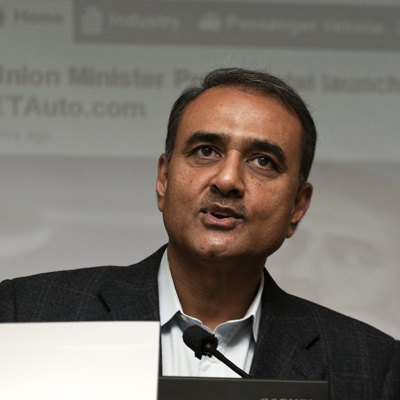
  • Hon’ble Union Minister Praful Patel launches ETAuto.com

    Hon’ble Union Minister Praful Patel launches ETAuto.com

    MUMBAI: Times Internet (TIL), India’s leading online network, continued its expansion into various niche verticals with the launch of ETAuto.com. The Economic Times Auto or ETAuto.com will provide the most comprehensive and in-depth coverage of news apart from being a platform for knowledge on automotive industry.


    Honourable Union Minister for Heavy Industries & Enterprises, Shri Praful Patel while unveiling the portal said, “Digital media is going to be the future.  I am delighted to launch the ETAuto.com and I think it is going to set a trend for serious business journalism online.”


    ETAuto.com has received widespread support and encouragement from top industry bodies like Society of Indian Automobile Manufacturers Association (SIAM), Automotive Component Manufacturers Association of India (ACMA), Federation of Automobile Dealers Association (FADA) and Automotive Tyre Manufacturers Association (ATMA) among others.


    Speaking on this occasion, Satyan Gajwani, Chief Executive Officer, Times Internet, said, “We hope that ETAuto.com will become the most preferred platform to read real time developments in the automotive industry in the form of news, views, blogs and interviews. We are happy to get associated with all the major auto industry associations. This initiative will serve as a platform for all the stake holders to exchange ideas and best practices.”


    The new venture envisages various segments of automotive business including components, OEMs, policy, Aftermarket and auto technology.


    Vishnu Mathur, Director General, SIAM said: “We are delighted to extend our support to ETAuto.com. Being a digital platform it will have the advantage of offering information in the most convenient form for the readers.”


    ETAuto.com also reaches to its readers through a comprehensive daily E- Newsletter, summarising day’s news and analysis and has got over 10,000 pre-launch readership of decision makers, policy makers, investors and professionals from automobile industry in India. “The daily E-Newsletter is a great source of information and helps us update with all the developments, this is something we always wanted,” said  Nikunj Sanghi, Director International Affairs & Global Relations, FADA.


    The industry currently accounts for almost 7% of country’s GDP and employs about 19 million people both directly and indirectly. Mr Vinnie Mehta, Executive Director, ACMA wished ETAuto.com all the success and said, “ACMA is indeed happy to have associated itself and supported this initiative from the beginning.”


    ETAuto.com deems to play pivotal role in facilitating B2B transactions by publishing relevant data, information, survey, reports and other material on the automotive industry in association with Knowledge Partner Ernst & Young.


    Rakesh Batra, Partner & National Leader – Automotive practice, E & Y said, “We at E & Y are privileged to be associated with ETAuto.com as the knowledge partner. Together, we shall strive to provide valuable industry updates with insightful analysis in developing a world-class automotive industry in India.”

  • Digital Media India to discuss issues relating to challenges of digital technology to print media

    Digital Media India to discuss issues relating to challenges of digital technology to print media

    NEW DELHI: Mediapersons from various parts of the world are converging on Chennai to attend the Digital Media India 2014 Conference next month.


    The meet is being held on 5 and 6 February and has been organised by WAN-IFRA in Asia Pacific, Europe, Latin America and India. 


    It will address various issues relating to the growth of the internet ad, its impact on newspaper publishers, leveraging content and technology sharing experiences, social and mobile, digital revenues, models and metrics, content monetisation, audience engagement, and opportunities and threats: copyright issues, owning the data, digital brand protection.


    The advent of internet has paved the way for newspaper publishers to develop into news publishers. The seismic shift brought in by the digital technology presented new opportunities.


    Internet subscribers in India are expected to surpass 380 million by 2017. Though this is still a long-way to go to reach all 1.27 billion people but it is clear that the Indian Internet market is growing at a pace of 22 per cent year on year in unique visitor terms and is now at 80 million unique visitors as of the end of September 2013 (ComScore Media Metrix).


    The total number of active wireless subscribers in India grew 5 per cent over the last year to reach 731.4 million in July 2013, while broadband subscription grew 4 per cent in the last one year to reach 15.24 million at the end of July 2013 (according to a Telecom Regulatory Authority of India report). Around 79 million mobile subscribers have access to the Internet on their mobile phone (as reported by IMRB I-Cube 2012 report).


    If predictions are true that more digital advertising will be purchased through automated exchanges at a lower price point, then higher traffic volumes are required to maintain or increase online revenues. To increase traffic on websites, more content is required but with limited newsroom staff, who has to maintain the daily print rhythm too. 


    Indian language dailies are in the forefront to deliver a ‘digital-first strategy’ for building a digital business in the long term. Limited reach of the Internet, incompatibility with regional languages and fewer audiences that kept vernacular Indian dailies from making the most out of digital are now becoming a thing of the past. 

    Innovative use of technology, diversity and more pictorial in content, more tabloid in look and feel, breaking news, pushing up trending stories, add-on applications such as classifieds real estate, online shopping, travel etc., have given a greater emphasis of digital content. With page views in crores and unique visits in millions for the news sites of Indian language dailies, the success story has been marked. 

    ‘Journalism in the age of digital surveillance’ is one of the discussions lined up for 5 February, and speakers will include Anant Goenka, head of New Media in the Indian Express Group; Hindustan Times Executive Rajesh Mahapatra, Adobe India Creative Consultant Rajesh Patil; America’s OPUBCO Communication Group (The Oklahoman) CIO and VP Audience Development Dan Barth, Norway’s Verdens Gang (VG) Chief of Staff Oyvind Naess, Israel’s RBG Media CEO Grig Davidovitz, and America’s Knight Foundation Journalism and Media Innovation Programme VP Michael Maness among others.


    Naess will also present a case study on how they made use of the opportunities that came up in the digital revolution to their advantage and the challenges they are going to face in the future. Apart from the dramatic changes in readership, VG also sees the possibilities for non-linear TV and has made up plans to double the staff, video inventory, acquisition of programs, series and shows, to give a bigger push to live-TV. To get a closer focus on this development, they have established VG TV as a subsidiary company, effective from 1 January 2014. 


    Davidovitz will also address a workshop on content monetization strategies in a pre-meet on 4 February.


    Mathrubhumi Deputy Editor N P Rajendran will present a case study on how Mathrubhumi ventured into online space and created a niche for itself. Rajendran is a journalist for the past 32 years and heads the online desk of Mathrubhumi since 2005. 


    Speakers from two other successful vernacular dailies from the North and East of India, Dainik Jagran and Anandabazar Patrika will share the stage with Rajendran thus providing a comprehensive picture on this topic. 

    There will be sessions on content monetization in a digital era; innovative uses of social media; creating blog communities; the use by Indian Express – which has received the Digital Media Award – of social media in news dissemination; Revenue models and tablet metrics; and whether advertising works best online, in print, or mobile or a combination.


    Other participants will also include Times of India Group CIO Sachin Gupta, Jagran Prakashan MMI Online CEO Sukriti Gupta, India Today Digital CEO Salil Kumar, and ABP India IT and Technology Practice – Digital Head Amitabha Sinha.

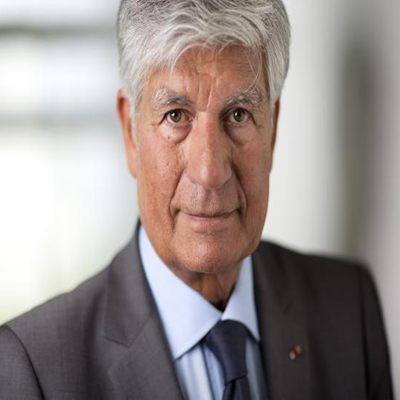
  • Publicis’ Levy gets bullish on India

    Publicis’ Levy gets bullish on India

    MUMBAI: If the chairman and CEO of a multinational advertising and public relations company comes to India, then canards are definitely going to gain currency.

    And that CEO happens to be Publicis Groupe’s Maurice Levy, who signed the deal with the Omnicom Group to create a $35 billion mega-agency, journos would not be faulted for wondering why. To everyone’s dismay, Levy told a select group of the media that his current trip to India falls in the category of a “regular visit”.

    “I was here last in 2011 and thought it’s high time I visited again. I have always said that India is a major market for us and we want to build the group here,” said Levy.

    Industry has been speculating whether that “building” includes possibly picking up equity in the fiercely independent Sam Balsara run Madison World who has recently stated that his agency is open to collaborations. Levy very intelligently deflected this question by saying that that the group has made investments in the country and will continue to do so as there is a cesspool of talent here.”

    Among the agencies Publicis runs in India include: Publicis India, Leo Burnett, Saatchi & Saatchi, Starcom, ZenithOptimedia, Razorfish and Digitas.

    Levy further elaborated that “according to the World Bank, India will have the largest number of middle class income group members by 2030, surpassing even China. Hence, we have to strategically make moves. India is a very strategic country for us.”

    He believes that since the country has a great deal of knowledge in IT and digital, it should take advantage of that skillset rather than just become an ‘outsourcing’ nation.

    When asked about the importance of digital media today and in the future, Levy quipped, “Publicis was the first group to invest in the sector. In 2006, we had said how digital is going to be one of the most important pillars of the emerging markets and started investing in it.”

    He pointed out that a large share of Publicis’ revenue comes courtesy the digital space and that the firm is heavily invested in it already. “In 2011, there were 100 people working in the digital sector in India and now there are around 1500 people. Globally, there are over 20,000 people devoted to the sector.”

    He also highlighted that “emerging markets contributed roughly 25 per cent” to the group’s turnover and his aim is to bring it to “35 per cent by 2017.”

    As everyone waits for the Publicis-Ominicom merger to get the official nod from the EU, the US and China, Levy too has big dreams and expectations from it. Without revealing too much on how progress the fusion process has made and who will head the combined entity in India, Levy said that it will only benefit the clients of both the companies.

    “The law doesn’t allow me to speak about it unless and until all procedures are done. And till then we will work as competitors but the future will be all about offering a wide range of platforms to the client. For me, it has always been how can I make it more valuable for the client. And it will continue to be so.”

    When asked if there have been any ‘disagreements’ with Ominicoms’s president and CEO John Wren, Levy laughingly responded by saying, “Yes of course. He’s American and I’m French.”

    He further added, “A French poet has written that boredom comes from uniformity and it will be true for me as well. Over and again, I have always said that collaborations is the way forward though they can be challenging. When we acquired Saatchi & Saatchi, all we had to do was cross the channel but it turned out to be a major challenge because of our differences. Such things are bound to happen but there is no fun if there aren’t such challenges.”

    However, the group’s number one competitor WPP CEO Sir Martin Sorrell has been very vocal about the merger and even gone on to call it the merger of ‘unequals’ and that it won’t last a long time. On it Levy responded that he only comments on what he knows best and that’s his company and work. “From the way he (Sorrell) has been speaking about it, it seems like it has become a part of his job!” he added wittily.

  • Game of Tunes  The Revolution Begins!

    Game of Tunes The Revolution Begins!

    MUMBAI: Music has always been an integral part of our lives, be it iPods, mobile phones, radio or even laptops…music always follows wherever we go! Giving fans an exciting new experience, Viacom 18 and Vh1 is all set to launch a rhythm based mobile game for its fans, one of the first for any music channel in the country. Available on Apple and Android phones and tablets, the gaming app which will be launched earlier next year will feature fresh, never heard before pieces of music that would play in the background and add power to the game. Making their fans an integral part in the development of this new app, Vh1 will be conducting a contest – ‘Game of Tunes’.

    The leading English music channel is calling out to some of the most talented independent DJs and musicians in the country who have worked on some original compositions in the electronic music genre, to be a part of this app. From all entries received, some artists and independent musicians will be selected to be a part of the game. Their music will power the game and the best bit; they will retain all rights to their music and will be credited for the same. The selected contestant’s original piece of music featured in the game would reach out to all gamers across the globe. Starting from November 23rd 2013, the ‘Game of Tunes’ will run for a 14 days, after which all the entries will be evaluated and the winners will be intimated for the further proceedings.

    Commenting on this innovative initiative, Rajneel Kumar – VP & Business Head- Digital Media, Viacom18 says, “This platform is to bring out fresh talent in the country and give them a chance to showcase their work. The gaming app being developed would attract a lot of audience across the world and the music would play a very crucial role in bringing the game alive. We really look forward to collaborating with some of the most talented musicians in India on this innovative project.”

    So if you love music and are also a gaming freak then here is your chance…be a part of the contest and showcase your talent to the world. Your music would then be just a click away!
    – Log on to http://www.vh1.in/gameoftunes and participate!

  • Now watch Nickelodeon on the go

    Now watch Nickelodeon on the go

    MUMBAI: Being a children’s television channel is no cakewalk; as most players in this space would tell you.

    Between makeovers, launching newer shows and newer applications, kids’ channels have enough going around between them to keep their viewers occupied.

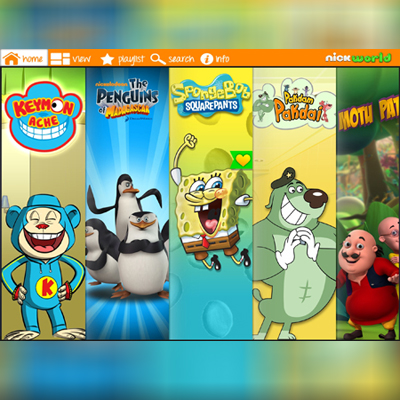
    A case in point is Nickelodeon India, which, after revamping its website recently, has, launched a first-of-its-kind application named Nickworld, developed by Robosoft, mobile app developer Robosoft, which allows audiences across Nick Jr, TeenNick and Sonic watch their favourite shows on the go.

    About the app, Viacom18 VP and business head – digital media Rajneel Kumar says: “We want to be very aggressive on the digital front as today, one can see how children are always on their parents’ devices, be they smart phones or tablets.”

    “It’s all about ‘what I want’ and ‘I want it now’ hence, if it isn’t available to the audience when they want it, it is only going to hamper itself in today’s day and age. Gaming, for instance, has become a part of everyone’s life.”

    It’s all about ‘what I want’ and ‘I want it now’, says Rajneel Kumar about audience attitude

    Nickworld is designed from a child’s perspective, which is why it is visually simple, graphically attractive and easy for kids to discover content on their own. Keeping in mind children’s online safety, the app does not connect to any social site. Also, parents needn’t worry about their mobiles/tablets as the screen gets locked once the video starts rolling. Nickelodeon plans to market the app on all franchises including TV and online destinations, along with the entire advertisement eco system.

    So how does the channel plan to monetise Nickworld, available on Android for free and for Rs 55 only on iOS for an ad-free experience? “For any app, it is the advertisement atmosphere that helps us get the money,” says Kumar about the app which will be available not only on phones with 3G but also low connectivity ones.

    With plans to make more and more on-air content available online and ramp up its gaming segment, doesn’t Kumar subscribe to the popular view that kids are already spending too much time watching TV or playing with gadgets rather than playing outside? “Our channel fully agrees with the view and that is why we have campaigns like ‘Let’s just play’ wherein we switch off content on TV with an aim to encourage ‘active play’ in children’s lifestyle,” quips Kumar.