Tag: digital media

  • Q2-17: New initiatives lower TV18 operating profit

    Q2-17: New initiatives lower TV18 operating profit

    BENGALURU: The Mukesh Ambani group-owned TV18 Broadcast Limited (TV18) reported operating profit of Rs 9.1 crore for the quarter ended 30 September 2016 (Q2-17, current quarter) as compared to Rs 10.8 crore in the corresponding year-ago quarter. The company says in its earnings release that excluding the impact of new initiatives, the operating profit for the quarter was Rs. 21.2 crore.

    The company’s consolidated gross revenue including proportionate share of joint ventures (JV) in Q2-17 increased 8.6 per cent year-over-year (y-o-y) to Rs 653.47 crore as compared to Rs 608.53 crore. TV18’s total income from operations (TIO) in the current quarter increased 5.3 per cent y-o-y to Rs 239.83 crore as compared to Rs 227,68 crore.

    Consolidated media operations segment revenue (including share of JV) in the current quarter increased 14.4 per cent to Rs 647.19 crore as compared to Rs 565.91 crore in the corresponding year-ago quarter. The segment’s operating profit was just a fraction of the corresponding year ago period at Rs 1.33 crore as compared to Rs 19.75 crore.

    TV18 says that during the quarter the group remained in investment mode to position it well for the future. The information and entertainment bouquet was revamped with new launches, talent pool beefed up and accent was placed on creating/curating high quality content for both TV and digital media. Segment loss before interest and tax on a consolidated basis including the performance of joint ventures stood at Rs. 3 crore for the quarter versus. segment profit of Rs. 24.7 crore in Q2-16. Excluding the impact of new initiatives and one-time expense, the segment profit for the quarter was Rs.70.1 crore

    Film Production and Distribution segment reported 79.8 percent y-o-y drop in revenue at Rs 8.60 crore in Q2-17 as compared to Rs 42.62 crore. The segment reported operating loss of Rs 2.90 crore as against an operating profit of Rs 1.90 crore in the quarter ended 30 September 2015.

  • Q2-17: New initiatives lower TV18 operating profit

    Q2-17: New initiatives lower TV18 operating profit

    BENGALURU: The Mukesh Ambani group-owned TV18 Broadcast Limited (TV18) reported operating profit of Rs 9.1 crore for the quarter ended 30 September 2016 (Q2-17, current quarter) as compared to Rs 10.8 crore in the corresponding year-ago quarter. The company says in its earnings release that excluding the impact of new initiatives, the operating profit for the quarter was Rs. 21.2 crore.

    The company’s consolidated gross revenue including proportionate share of joint ventures (JV) in Q2-17 increased 8.6 per cent year-over-year (y-o-y) to Rs 653.47 crore as compared to Rs 608.53 crore. TV18’s total income from operations (TIO) in the current quarter increased 5.3 per cent y-o-y to Rs 239.83 crore as compared to Rs 227,68 crore.

    Consolidated media operations segment revenue (including share of JV) in the current quarter increased 14.4 per cent to Rs 647.19 crore as compared to Rs 565.91 crore in the corresponding year-ago quarter. The segment’s operating profit was just a fraction of the corresponding year ago period at Rs 1.33 crore as compared to Rs 19.75 crore.

    TV18 says that during the quarter the group remained in investment mode to position it well for the future. The information and entertainment bouquet was revamped with new launches, talent pool beefed up and accent was placed on creating/curating high quality content for both TV and digital media. Segment loss before interest and tax on a consolidated basis including the performance of joint ventures stood at Rs. 3 crore for the quarter versus. segment profit of Rs. 24.7 crore in Q2-16. Excluding the impact of new initiatives and one-time expense, the segment profit for the quarter was Rs.70.1 crore

    Film Production and Distribution segment reported 79.8 percent y-o-y drop in revenue at Rs 8.60 crore in Q2-17 as compared to Rs 42.62 crore. The segment reported operating loss of Rs 2.90 crore as against an operating profit of Rs 1.90 crore in the quarter ended 30 September 2015.

  • GoQuest, Arre tie up for content syndication

    GoQuest, Arre tie up for content syndication

    MUMBAI: GoQuest Media has tied up with Arre, a multi-format, multi-genre digital media brand co-founded by B Sai Kumar, Ajay Chacko and Sanjay Ray Chaudhuri to distribute and monetize Arré’s vibrant content offering with the digital players & re-broadcasters across the world.

    Commenting on the association, GoQuest Media managing director Vivek Lath, said, “GoQuest Media has in the last few years generated great value in content monetization to some of the leading Indian broadcasters in GEC space. To continue to add value to our partners, we are glad to associate with Arré to distribute and syndicate its quality shows like Official Chukyagiri, A.I.SHA – My Virtual Girlfriend, I Don’t Watch TV and Arre Ho Ja Re-Gender which have gathered great response from the viewers in a very short span of time. Our aim is to best optimize revenue potential of such shows from Arre in the years to come through our network of affiliates and distribution partners across the world”.

    Arre co- founder and CEO Ajay Chacko stated, “We’re committed to bring quality infotainment and entertainment content to our audiences. Our recent video offerings across fiction, reality as well as our documentaries have shown very good traction with young audiences in India. Through this partnership, we hope to reach out to a wider and varied set of viewers in India as well as globally, across linear and non-linear platforms.

  • GoQuest, Arre tie up for content syndication

    GoQuest, Arre tie up for content syndication

    MUMBAI: GoQuest Media has tied up with Arre, a multi-format, multi-genre digital media brand co-founded by B Sai Kumar, Ajay Chacko and Sanjay Ray Chaudhuri to distribute and monetize Arré’s vibrant content offering with the digital players & re-broadcasters across the world.

    Commenting on the association, GoQuest Media managing director Vivek Lath, said, “GoQuest Media has in the last few years generated great value in content monetization to some of the leading Indian broadcasters in GEC space. To continue to add value to our partners, we are glad to associate with Arré to distribute and syndicate its quality shows like Official Chukyagiri, A.I.SHA – My Virtual Girlfriend, I Don’t Watch TV and Arre Ho Ja Re-Gender which have gathered great response from the viewers in a very short span of time. Our aim is to best optimize revenue potential of such shows from Arre in the years to come through our network of affiliates and distribution partners across the world”.

    Arre co- founder and CEO Ajay Chacko stated, “We’re committed to bring quality infotainment and entertainment content to our audiences. Our recent video offerings across fiction, reality as well as our documentaries have shown very good traction with young audiences in India. Through this partnership, we hope to reach out to a wider and varied set of viewers in India as well as globally, across linear and non-linear platforms.

  • YuppTV bags exclusive digital media rights for Asia Cup 2016

    YuppTV bags exclusive digital media rights for Asia Cup 2016

    MUMBAI: Over-The-Top (OTT) service provider YuppTV has acquired the digital media rights for the Asia Cup T20, 2016 to be held between 24 February – 6 March 2016.

    YuppTV has secured exclusive rights to stream Asia Cup 2016 live in USA, Canada, UK, Europe, Australia, New Zealand and Malaysia. Additionally, cricket fans in Singapore will also be able view the tournament via YuppTV app on multiple Internet enabled devices such as Smart TVs, Smart Blu-ray players, streaming media players, laptop, gaming console, smart phones and tablets.

    The Asia Cup 2016 is scheduled to take place in Dhaka, Bangladesh with the Indian T20 team taking on the host nation on the inaugural day. The much awaited match between India and Pakistan is scheduled for 27 February, while India faces the defending champions Sri Lanka on 1 March.

    YuppTV founder and CEO Uday Reddy said, “Cricket has always been a sport that has incited much passion and following amongst South Asians. By bagging the exclusive digital media rights for the Asia Cup 2016, we are enabling live, on-the-go access to the tournament for the expat community. This partnership will provide them with seamless, real-time access to all the matches and allow viewers to watch their favourite teams in action on their preferred device!”

    In addition to Sri Lanka, Bangladesh, India and Pakistan, non-test playing nations Afghanistan, Hong Kong, Oman and UAE will also be competing for a qualifying spot for the tournament. The qualifying round is scheduled to take place at the Khan Shaheb Osman Ali Stadium (KSOAS) in Narayanganj, Afghanistan, between 19 February to 22 February, with the winner of the qualifiers then joining the test playing nations in the main event.

  • YuppTV bags exclusive digital media rights for Asia Cup 2016

    YuppTV bags exclusive digital media rights for Asia Cup 2016

    MUMBAI: Over-The-Top (OTT) service provider YuppTV has acquired the digital media rights for the Asia Cup T20, 2016 to be held between 24 February – 6 March 2016.

    YuppTV has secured exclusive rights to stream Asia Cup 2016 live in USA, Canada, UK, Europe, Australia, New Zealand and Malaysia. Additionally, cricket fans in Singapore will also be able view the tournament via YuppTV app on multiple Internet enabled devices such as Smart TVs, Smart Blu-ray players, streaming media players, laptop, gaming console, smart phones and tablets.

    The Asia Cup 2016 is scheduled to take place in Dhaka, Bangladesh with the Indian T20 team taking on the host nation on the inaugural day. The much awaited match between India and Pakistan is scheduled for 27 February, while India faces the defending champions Sri Lanka on 1 March.

    YuppTV founder and CEO Uday Reddy said, “Cricket has always been a sport that has incited much passion and following amongst South Asians. By bagging the exclusive digital media rights for the Asia Cup 2016, we are enabling live, on-the-go access to the tournament for the expat community. This partnership will provide them with seamless, real-time access to all the matches and allow viewers to watch their favourite teams in action on their preferred device!”

    In addition to Sri Lanka, Bangladesh, India and Pakistan, non-test playing nations Afghanistan, Hong Kong, Oman and UAE will also be competing for a qualifying spot for the tournament. The qualifying round is scheduled to take place at the Khan Shaheb Osman Ali Stadium (KSOAS) in Narayanganj, Afghanistan, between 19 February to 22 February, with the winner of the qualifiers then joining the test playing nations in the main event.

  • 10 TV shows that can taste success in video gaming

    10 TV shows that can taste success in video gaming

    MUMBAI: In India, many a movies have touched new heights at the box office year after year. Filmmakers leave no stone unturned to promote their movies and making a video game around it has been just one way to create that added buzz and get the publicity juggernaut rolling. Over the years, the digital media has unleashed newer avenues to create more buzz for movies. Movies like Ra.One, Ghajini, Dhoom 3 or the very recent super hit flick Baahubali to name a few have rolled out video games to capture the pulse of the audience before the movie’s theatrical release.

    Video games have been a growing phenomenon since the mid 1980s and are still sprouting at a fast pace in India. From kids to teenagers to collegians to seniors, everyone is glued to their smart phone screens engrossed in playing games. With vast improvements in technology, the video gaming industry has evolved from a simple two dimensional games to realist, fast paced, life like experiences. Be it online or offline, gaming remains as the favourite past time for everyone to kill time or for plain entertainment.

    Movies aside, television shows too have the potential to be turned into video games and we at Indiantelevision.com put our heads together to chalk out ten television shows that can make a graceful transition into video games.

    From detective series to mythos, there’s something in here to cater to the tastes of one and all. Read on for the list of programmes, which we think deserve to join the glamorous realm of gaming:

    1) Agent Raghav

    This crime fiction television series if turned into a game would definitely earn a fortune seeing the craze amongst the young players in the society over a famous game becoming viral each passing day. The game would involve the player face personal challenges with non-stop adventure, tremendous pressure and risk, all in the name of duty, to find and catch the criminal(s) led by the smallest of clues. The video gamers would be the Indian Sherlock Holmes to deduce significant information from small insignificant looking clues.

    2. Byomkesh Bakshi

    The fictional detective series Byomkesh Bakshi revolves around a detective who takes up spine-chilling cases where he lets the perpetuator die by manipulating the circumstances. This ‘truth seeking’ show, if made into a game would yet again gain high popularity as the players would have to trigger their mental capability by observe every minute details attached with a case, studying it to the core, taking into account all perspectives and then finally coming to a conclusion. This brainstorming game would also give the players a push by using their own methods as redemption and to deliver justice for the victims in absence of evidence.

    3. CID

    Daya, kuch toh gadbad hai!! We’ve grown up watching this iconic television show, which has been running successfully for 18 years now on Sony Entertainment Television. It is now the Sony’s longest running show. Yet another detective television anthology series, CID is all about the Criminal Investigation Department and how do they solve a ‘not-so-easy’ case. The show if converted into a video game will also enjoy the same amount of followers as the television show has garnered over the years. In the CID game, players will have to study and observe the entire criminal case from the root to the tip thereby catching the accused or the criminal mind(s) behind it.

    4. Everest

    Everest was a TV show about a group of people undergoing training before attempting to climb Mount Everest. Think of a game wherein the players can have the control over the training that is required for the people who aspire to reach the peak of the highest mountain in the world. Hang on, why not try going international with this idea as well? A game with all possible obstacles, ups and downs, twists and twirls, replete with avalanches and snow storms that will also enable players with an option on which mountain they would want to climb! Now that’s an idea!

    5. Fear Factor: Khatron Ke Khiladi

    What fun would a video game be, which give its players an adrenaline rush in the veins! Fear Factor: Khatron Ke Khiladi is a stunt reality game show, which is full of adventure and breathtaking stunts. This show makes it to this list without any doubt. A powerful online video game full of action and bundles of surprises wherein gamers can overcome their fears when they face extreme situations, confronted with danger and challenges. The fears can be either given by the other players playing in that round or through a small smart quiz taken up by the player themself.

    6. Mahabharat

    Gaming draws inspiration from a variety of sources. Current socio-political issues, the works of established authors and to the delight of many I know, ancient cultures. One of the most important and the costliest TV show to be produced is Mahabharat.

    Based on the Hindu epic of the same name, Mahabharat is the epic story of the family feud between the noble Pandava princes and their scheming cousins, the Kaurava kings. This gigantic mythological TV show full of revenge, anger and fights can be converted into an episodic game, with each episode focusing on one of the multiple named characters. A game to see how they get along as the play shifts perspective from one group to the other, telling the myriad story from many sides. If made into a game, this will be a sure shot retreat to the gamers with its plush visual effects.

    7. Roadies

    Oh yes! Who hasn’t heard about this show?! Many people wish to and even have tried to be a part of this reality television show. The craze among the youth for this show, which has been running for the last 12 years is never-ending. Think of an online video game on a show you have followed crazily. A game full of travel, adventures, action, manipulation and also a slight touch of voyeurism wherein a player will have to do every possible thing to survive and win the ultimate title.

    8. Shaktimaan

    Andhera Kayam Rahe!! Yes, our very own superhero Shaktimaan. Everyone is a superhero fan. Some accept it, some don’t. Love for superheroes in Indians range from Batman to Shaktimaan with Krrish hanging somewhere in the middle. Imagine an opportunity where you can replace the superhero you have adored in your childhood days. A game wherein you will have all the superpowers trying to finish or may be at least reduce corruption and injustice in society and fight the evil prevailing in the world.

    9. The Adventures of Hatim

    Don’t we remember our childhood hero Hatim, the Prince of Yamen, who went on a journey to solve the seven riddles in order to destroy the evil sorcerer Zargam. Imagine how will it be if this TV show is turned into a video game. A fantasy game full of fights, mysteries, puzzles, magic and blood. Like Hatim, the player will have hands on a magical sword and will set out on a journey, which requires both mental and physical strength. How interesting will it be to discover this ultimate mission by solving the seven riddles to attain the seven virtues to be able to defeat the evil sorcerer? A game wherein you can fight against all the darkness striving toward light with bravery?

    10. 24

    24 is a series, which has penetrated successfully pan India airing 24 episodes covering 24 hours in the life of Jai Singh Rathore aka Anil Kapoor in the Indian version of the international show. Think of a game where a player has to race against the clock as he attempts to thwart multiple terrorist plots, including presidential assassination attempts, weapons of mass destruction detonations, bioterrorism, cyber attacks, as well as conspiracies, which deal with government and corporate corruption. Wouldn’t that be better than the same old games that we have been playing over a decade now?

    *The shows are listed alphabetically in ascending order

  • Both TV & digital mediums are here to stay: PromaxBDA

    Both TV & digital mediums are here to stay: PromaxBDA

    MUMBAI: With the advent of social media and new usage platforms, the way people consume media has changed and how.


    At the PromaxBDA conference, an interesting session with Google partnership director South Asia Ajay Vidyasagar and Discovery Networks VP marketing Rajiv Bakshi threw light on how media is consumed and is leading the way for television of tomorrow.


    Spatial Access founder Meenakshi Menon moderated the session.


    Vidyasagar said, “The space has moved from creating content to creating a fan base. The consumer uses content to express himself.” Citing an example of when he joined Google in 2010, he said, “In 2010, the Indian audience gave a total of 500 million views, while today it gives about 350 billion views for the content that is available on YouTube.”


    YouTube is a platform for creators to engage and communicate with audiences, which television lacks. Sharing his views on how television will continue to exist, Bakshi said, “We’re no longer a traditional medium. We’re a contemporary medium. In spite of having entered the phase of digitisation, we are growing. So even if digital exists, television will continue to be there for the audiences. It caters to different sets of audiences. Moreover, people like to consume content on all platforms.”


    “We started Discovery in India with two channels. Today we have 11 channels, including one GEC – ‘Investigation Discovery,’ which we launched recently. So there is an audience for all types of content. India is evolving and TV is robust and growing,” Bakshi added.


    Raising a question, Menon asked how TV reconciles with the fact that content cost on TV is very high, whereas on YouTube it is bare minimum and in spite of this, YouTube gets a million views and a billion fans to their content.


    Answering Menon’s question, Bakshi said, “From a short term business point of view, the YouTube model is fine. But from a long-term business point of view, one needs to have a 24-hour content model. Eventually, in India people want maximum entertainment and minimum effort and TV is giving exactly that.”


    Speaking about the evolution of media, Vidyasagar said, “When print came, the word of mouth publicity did not lose its business. Similarly, when radio and television came, print did not die. None of them have impacted the value of existing media. The need for one to consume news is increasing and hence every medium is here to stay. The only important point to keep in mind is that content is an asset and in today’s world it needs to be made relevant to different devices.”


    While we know that a lot of producers are creating content for digital and showing it on digital, Vidyasagar stated an example where Jimmy Fallon actually engages with audiences on digital to bring relevant content back on TV. In the end, it’s a loop of usage. Digital is not taking away from anybody, and neither is television. Both the mediums engage consumers.


    Vidyasagar added, “For instance, in India the highest searched channels on YouTube are that of television networks because their content is available on YouTube. Eventually, the consumer gets the core benefits of the content available on digital and on television.”

  • Indian ad spends to grow by 11.3% in 2016; digital to lead way: Carat

    Indian ad spends to grow by 11.3% in 2016; digital to lead way: Carat

    MUMBAI: Global media network Carat’s first forecast for worldwide advertising expenditure in 2016 shows that Indian advertising spend is poised to grow by 11.3 per cent in 2016.

    Following the formation of a stable government in 2014 led by Narendra Modi, the economic prospects look bright in India.While Indian advertising spends increased by +8.7 per cent in 2014, as per the agency’s forecast, it is poised to leap by double digits of +11 per cent in 2015.

    Carat’s also released its latest forecasts for 2015 and actual figures for 2014, with all markets ring-fencing digital media spending, even when faced with negative economic headwinds.

    Asia Pacific

    In the Asia Pacific market, advertising spend is forecast to grow by a solid +5.2 per cent in 2015. This has however been revised down from the +5.9 per cent previously forecast in September 2014, with its major market Japan moderating forecasts from +1.7 per cent to +0.9 per cent, alongside a number of other markets including Hong Kong, Taiwan, Malaysia and Vietnam. Growth is expected to pick up pace in 12 out of the 14 markets in 2016 with growth overall of+5.8 per cent in 2016. 

    Based on data received from 59 markets across the Americas, Asia Pacific and EMEA, Carat’s global advertising expenditure forecast showsthat digital media, with a predicted $17.1 billion or +15.7 per cent increase in spend in 2015, is outpacing previous Carat predictions from September 2014. Powered by a dramatic rise in mobile ad spending globally of +50 per cent and online video of +21.1 per cent predicted in 2015, Carat forecasts that digital will, for the first time, account for more than a quarter of all advertising spend in 2016 with a market share of 25.9 per cent.

    From a global perspective, Carat forecasts that in 2015, advertising spend across all media will increase by $23.8 billion to reach $540 billion, accounting for a +4.6 per cent year-on-year increase. Market optimism continues into 2016 with Carat’s first forecast for the year predicting a year-on-year global advertising growth of +5.0 per cent.

    Carat Advertising spend forecast -March 2015

    Digital media spend continues to be the star driver of growth in the global advertising market, with a predicted $17.1 billion increase in spend in 2015 corresponding to a 15.7 per cent year-on-year growth rate, outpacing previous Carat predictions from the September 2014 report.New predictions for 2016 highlight that digital will continue to grow at double-digit levels, at 13.8 per cent, and will account for more than a quarter of all advertising spend globally.

    Trend Highlights from the report:

    ·Digital’s unwavering positive trajectory is being powered by a dramatic rise in mobile, online video, social media and programmatic spending. Carat predicts that in 2015, global mobile spend will increase +50 per cent, and online video will be up +21.6 per cent. US programmatic display advertising spending is predicted to grow +137 per cent to reach $10 billion this year, accounting for 45 per cent of the US digital display ad market.

    ·Digital media spend is being ring-fenced by advertisers even in markets with significant negative economic headwinds.In Central & Eastern Europe for instance, while total advertising spend is predicted to decrease by 2.2 per cent this year, digital media will see a double-digit growth of +12.9 per cent. Digital media is the only media expected to grow in this region this year.

    ·Carat’s first advertising expenditure forecasts for 2016 show elevated confidence in the advertising market, a robust +5 per centgrowth despite a still-recovering economic climate boosted by a year of events- the UEFA European Football Championships, Rio 2016 Olympic Games and US presidential elections.

    ·Global forecasts for 2015 have been revised down from the +5.0 per cent previously forecast in the September 2014 report, to +4.6 per cent. This is due to a reduction in advertising spend predictions in key markets including Russia, Japan and Brazil.

    ·The recovery in Western Europe has driven a second consecutive year of growth in 2015, predicted at +2.8 per cent. This follows a +2.3 per cent increase in advertising spend in the region in 2014. Growth is driven by the UK market, which is predicted to grow strongly by +6.4 per cent, and Spain by +6.8 per cent following the improved economic climate and consumer sentiment there. Greece (+8.0 per cent), Ireland (+5.7 per cent) and Portugal (+9.4 per cent) are also showing relatively high growth rates this year recovering after suffering severely from the global economic recession. Growth of advertising spend in Western Europe in 2016 is forecast to continue at the predicted level for 2015 of +2.8 per cent.

    By media, whilst Digital is the star performer in terms of growth, achieving higher that predicted levels in 2014 of +17.4 per cent and accounting for 21.7 per cent of market share, TV will continue to command the majority of market share for the foreseeable future, reaching 42.7 per cent in 2014, and is predicted to grow by more than +3 per cent year-on-year in 2015 and 2016. The steady decline in Print is expected to continue, however Out-of-Home is now positioned as the second fastest growth media, behind Digital, with a global market share of spend of 7.1 per cent. For the first time, Out-of-Home is predicted to outpace Magazines global share of advertising spend, with Magazines forecast to achieve 6.9 per cent market share in 2015, and with continuing declines for this media, it is predicted to fall behind Radio for the first time in 2016.

    Commenting on the Carat Advertising Expenditure forecasts, Dentsu Aegis Network, CEO Jerry Buhlmann said, “The strength of Digital continues to dominate discussions and the new distribution of spending. With a quarter of the global population now owning and relying on their smartphones daily, they are our second brain in our hands. Mobile dominates the way consumers access information, view content, browse products and purchase goods and this is reflected in the innovative services and approach we are discussing with our clients.

    By media:

    Globally,digital media spend is forecast to increase by $17.1 billion this year to reach 23.9 per cent of total global media spend in 2015.Digital’s growth far outpaces all other media types with a forecast increase of +15.7 per cent in 2015 and +13.8 per cent in 2016.

    Growth in digital spend is high in all regions. The highest in Asia Pacific at +20.1 per cent in 2015, followed by an impressive +16.4 per cent in North America and +16.2 per cent in Latin America. Even in Central & Eastern Europe, which is showing overall sluggish ad market growth, digital spending is predicted to achieve double digit growth this year of +12.9 per cent. In Western Europe growth is in high single digits (+9.8 per cent) this year.

    Mobile spend is notably rising dramatically at +49.7 per cent in 2015 with circa 50 per cent growth in each of the regions – Western Europe, Asia Pacific, North America and double digit growth in Latin America and C&EE. With the rise in smartphone ownership rates and data usage, mobile is playing a huge role in the way consumers access information, view content, browse products and purchase services and goods.

    Carat is seeing a major shift in behaviour with internet usage on mobile devices catching up with PC usage and exceeding it in some markets yet at an investment level, there is still a significant discrepancy with the amount of time spent with mobile media disproportionate to the advertising share mobile attracts.A factor, which is holding back investment in mobile is the difficulty in proving the ROI for more traditional businesses. Much of the early investment in mobile advertising has been amongst pure-play, app economy brands and business for whom there is an easily demonstrable ROI for investing in mobile.

    Mobility is the primary reason behind social’s explosive growth. Facebook and Twitter will continue to be the big winners in the mobile social space. Facebook leads the way in mobile advertising investment with their cost effective solution to advertisers, non-intrusive native advertising experience to audiences, targeting capabilities and selection of ad formats. Twitter is moving up with an increase in spending behind promoted tweets, its Amplify pitches and improvements to its targeting options such as the development of its TV targeting offering. One of its big plays this year is the introduction of Promoted Video for advertisers – a new way for brands to post videos that users can play in their timelines with a single tap.

    Online Video demonstrates continuing strong growth, +21.6 per cent forecast for 2015, with growth partly driven by a shift of investment away from TV. Expectations are particularly high for original content. In the US, nearly half (48 per cent) of online video budgets will go to ’made for digital’ video.

    Display spends including Video and Social is forecast to increase by 15.8 per cent in 2015. However it is ‘Search’ that continues to command the highest share of total Digital spend at 45 per cent, with growth of+12.6 per cent this year and +11.5 per cent in 2016.

    TV continues to command the highest share of spend, 42.2 per cent globally in 2015, remaining popular particularly in Latin America and the Middle East with share of spend above the global average in APAC and C&EE.

    There are indications, however, of TV’s share slowly eroding as it has decreased by 1.2 per cent points over the past five years. Growth was boosted last year by a slew of events with +4.4 per cent growth. TV spend is predicted to increase by +3.6 per cent this year, picking up in 2016 a quadrennial year – to +3.9 per cent.

  • Indian AdEx to increase by 12.6 per cent in 2015: GroupM

    Indian AdEx to increase by 12.6 per cent in 2015: GroupM

    MUMBAI: India’s advertising investment is expected to reach an estimated Rs 48,977 crores in 2015, up 12.6 per cent from last year. This was revealed in GroupM’s biannual advertising expenditure futures report titled This Year Next Year (TYNY).


    As per GroupM, for the calendar year 2014, the ad spending stood at Rs 43,490 crores, which was an increase by 12.5 per cent over 2013. This growth was attributed to the heavy ad spending due to the General and State Elections and industry categories like e-commerce and Telecom. The FMCG sector, which contributes to nearly a third of the AdEx, had a steady year, growing broadly in line with the industry average.


    Last year began with uncertainties on the political and economic front. Once a stable government came to power the mood changed to one of cautious optimism.


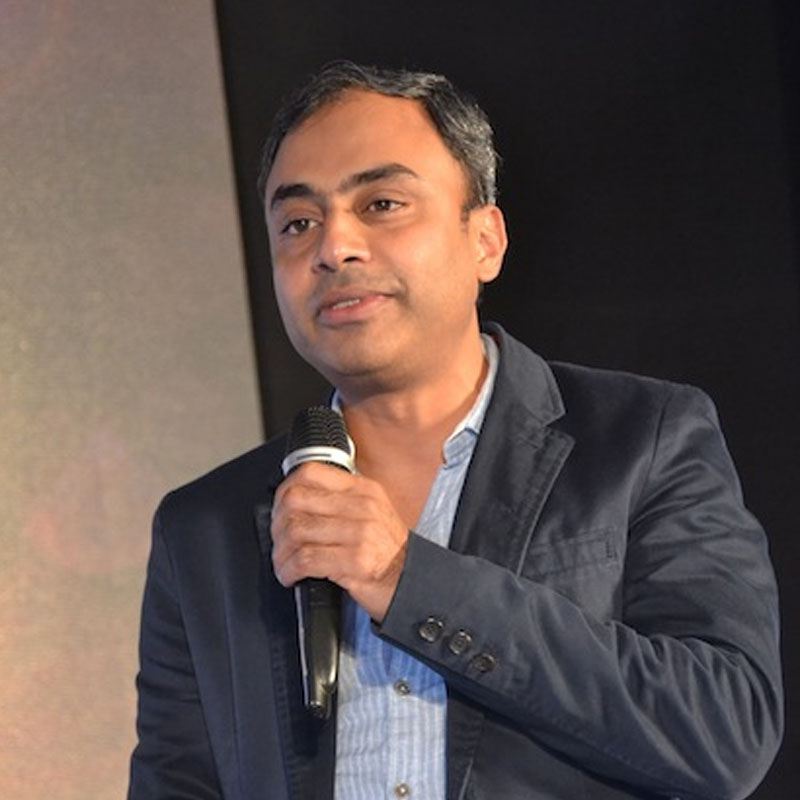
    GroupM South Asia CEO CVL Srinivas said, “With a new Government coming to power the negative sentiment has lifted but there is still some bit of caution amongst advertisers. We continue to operate in the same zone as last year at an overall level. Digital, TV and cinema are expected to be the high growth media channels. We are seeing a lot more confidence amongst local businesses to invest in brand building than before. This is a positive sign for the industry. Penetration of smartphones coupled with the popularity of online video is making FMCG spend more on digital. Another trend is the emergence of categories like e-commerce and the increased competition in telecom both of which are aiding the growth of traditional media channels including print and TV apart from digital.”


    As per the report, e-commerce is expected to lead the charge in 2015 in terms of ad spend growth although from a relatively smaller base than more established categories. There is increased competition in this sector and no dearth of funding. The FMCG, auto and telecom sectors are expected to do better than the previous year. More multinational entrants under single brand retail are likely to add to ADEX spending in the retail category.


    The report added that the recent rate cuts by the Reserve Bank of India (RBI) will stimulate the banking sector, reactions of which are evident on a buoyant stock market. This year will possibly see a number of IPOs as there is a sense of stability in policy and investors are willing to take more risks. The market will also see higher spends from the Central Government as they showcase their new initiatives.


    As per GroupM’s research of the Indian media industry, digital media continues to show the maximum growth with 37 per cent in 2015. Digital has been growing at an average rate of 35 per cent over the last two of years. Within digital media, video, mobile and social will be the biggest growth drivers this year.


    Television shows a higher growth percentage in 2015 compared to last year with 16 per cent. TV channels will especially be bullish with cross media integration via their own digital platforms. The big ticket event this year is the ICC Cricket World Cup in February and March, with scope for programming and advertising innovation during the tournament.


    Even with pressures on advertising revenues, the print medium shows an increase by 5.2 per cent as against the 2014 estimate of 7.6 per cent; however print magazines continue to be on the decline, as several are looking at digital delivery mechanisms.


    The surprise element in the media mix has been cinema advertising, which finally closed 2014 with a 25 per cent increase. This year too, GroupM estimates this media category to grow at 20 per cent, as multiplex chains consolidate, leading to a more organised and accountable environment. With technology fuelling exhibition and distribution, especially in smaller towns, consumers will get a better viewing experience.


    GroupM South Asia managing partner – Central Trading Group and Mindshare South Asia CEO designate Prasanth Kumar added, “Over the last few years, Indian media has been in a state of change. The next three to five years will be about embracing technology, which will allow both advertisers and media owners to customise distribution to a premium niche audience with very nominal margin of error. In 2015, programmatic buying will see an impetus, as all media in the future will see automation, backed by smart data and analytics.”