Tag: digital marketing

  • Digital transformation of OOH in India

    Digital transformation of OOH in India

    MUMBAI: Digital billboards, synchronized messaging across hoardings, real time trading, interactive digital displays, mobile convergence, geo-tagged tracking of impressions and measurement — digital is rapidly evolving how out-of-home advertising is perceived.

    A good look around and you will be amazed to see to what extent we are surrounded by advertisements–  on moving buses, at  public places like railways, bus stops, airports, malls and theatres and of course the billboards and hoardings beside every major building and driveway. Out of Home or ‘OOH’ is a ‘traditional’ as well as one of the oldest formats of advertising.

    Though the medium has only ever evolved gradually with time in the last few decades, currently it is at the cusp of a major overhaul that is riding the digital wave.

    http://www.indiantelevision.com/sites/drupal7.indiantelevision.co.in/files/styles/large/public/ooh%20%282%29.jpg?itok=yX7kDlRF

    OOH: The late entrant to digital

    Unlike other advertising mediums, OOH was the latest to feel the impact of the digital disruption here, be it in terms of innovation or revenue loss in ad spends. Where serious concerns were being raised on how digital’s advent will split the ad revenue pie of the market, and cannibalize other media, OOH to the most part was oblivious.

    Sharing his perspective on this transition, Kinetic India CEO South Asia and Middle East Suresh Balakrishnan informs indiantelevision, “The advent of digital in our country in all its form, whether it’s digital, or display or social, mobile has eaten away the budgets of most media.  Having said that, it has happened to India at a good time, for as a market India is growing. We are probably one of the only few markets that are growing at an average of 15 to 18 per cent. Therefore we have made space for digital.”

    “As far as OOH is concerned there has been some revenue loss to digital, but I don’t think it has been significant. I don’t remember a time when OOH was growing at 20 to 30 per cent year on year. It has always lingered around 10 to 13 percent year on year, which again is moderately good growth for OOH,” he adds.

    But that doesn’t mean that ‘change’ isn’t chasing OOH.  

    “OOH can’t sit on its haunches and think that digital will not affect it. Unless, OOH marries digital and adapts what digital has to offer to enhance its services and experience for the consumer, we won’t be able to fight the battle in the long run,” Balakrishnan explains.  

    And that battle is more than about mere survival. It is the way forward for the medium to be more relevant to the consumers, more useful to the clients and more creatively enriching for the agencies.

    Digital, the perfect partner

    To say that digital will aid OOH is an understatement.

    Digital innovation in OOH has enabled the medium to achieve what it was earlier unable to attempt.

    While the idea of a dynamic digital billboard in itself is attractive and engaging for consumers, agencies are now able to explore technology that helps target and track consumers in a better manner and even give a push to point of sale campaigns in malls and other retail outlets.

    http://www.indiantelevision.com/sites/drupal7.indiantelevision.co.in/files/styles/large/public/ooh%20%284%29.jpg?itok=ExgOdzkb

    “There are a lot of innovations that are happening in this area. For example, now digital technology allows users and consumers to scan bar codes from hoardings which directly lead to any product website through their devices,” points out Havas Media Group, India and South Asia CEO Anita Nayyar.

    “Whether it is in the way of ‘blipping’ the product from the hoardings, or digitally connecting an LED screen with some data source, there are various innovations that go hand in hand with billboards that are digitally enabled,” she adds.

    Balakrishnan on the other hand takes delight from the classier messaging that is made possible with digital. He cites an example of a campaign that Kinetic had earlier done for Mondelez’s popular chocolate brand Cadbury Bubbly.

    The crowd at Palladium Mumbai witnessed the experiential and innovative activation where in a digital screen was placed at all these places with a new motion sensor technology that transformed the normal Cadbury Silk chocolate into Cadbury Silk Bubbly with each and every movement around the screen. At metro stations in Mumbai, the screen was placed in such a way that the chocolate bubbled up with the movement of the train.

    http://www.indiantelevision.com/sites/drupal7.indiantelevision.co.in/files/styles/large/public/ooh.JPG?itok=jpwP5Ri8

    The number game: Measurability

    OOH as a medium had long struggled to measure the reach of campaigns. Therefore, very less accountability was placed on the medium and most of the money spent on the medium goes into brand building.

    “With the lack of a streamlined synchronised measurement system, there has been constant pressure from client to prove the effectiveness of the campaign,” Balakrishnan reveals.  But, to many creatives in OOH, digital is a great way to achieve that sense of measurability.

    Nayyar, having seen the Indian advertising scenario evolve, admits that while one medium (digital) is accountable, the other is almost immeasurable.

    “Apart from a couple of researches done, it is very hard to measure this medium. Thus, by clubbing the two medium, outdoor as a medium can gain huge credibility and measurability from digital,” asserts Nayyar.

    http://www.indiantelevision.com/sites/drupal7.indiantelevision.co.in/files/styles/large/public/ooh%20%283%29.jpg?itok=yH00fYXz

    Kinetic has, in fact, launched a tool called SAS or Social Amplification Score worldwide that can add some numbers to even an OOH campaign. The tool has so far been released globally by the Kinetic team and is expected to hit India in the next three months.  

    “The moment an OOH campaign is released, the tool tracks the buzz it creates by using 37 or more keywords like OOH, malls, bus shelter, etc. Basically wherever it is seen and spoken about, to tool automatically puts a score to that. It gathers the information by using geo-tagging technology that most social media platforms have enabled. With this tool therefore, we can put certain reachable numbers to an OOH campaign,” Balakrishnan informs about the effectiveness of the tool.

    Milestone Brandcom founder MD and a pioneer in the OOH business Nabendu Bhattacharyya however sheds a different light on the matter.

    “It is true that all mediums have their own struggle with measurements. Amongst all of them, OOH is the least measurable and most unorganised, Bhattacharyya opines.

    Pointing out that individual agencies have their own measurement systems that help provide clients with numbers, the veteran OOH man says, “If digital billboards become more mainstream, it will help us approach clients on a better ground as digital can incorporate those numbers.”

    Digital OOH: International VS Local

    In spite of some very obvious perks of the digital transformation, India has a lot of catching up to do when it comes to innovating OOH using technology.  Travel to any western country and one can easily spot the vast gap in the digital revolution of OOH.

    http://www.indiantelevision.com/sites/drupal7.indiantelevision.co.in/files/styles/large/public/ooh%20%281%29.jpg?itok=hxnGGHXB

    “If you look at the western markets, OOH is far more advanced and digitised than in our country. It’s also a question of infrastructure as installing these billboards needs a certain aesthetic upgradation as well. Broadband and connectivity also become an issue and do not allow the proposition to be completely seamless and workable,” Nayyar explains.

    Balakrishnan concurs with Nayyar and says, “The more mature markets have gone and beautifully adapted digital with OOH. In fact, I would say the west has shown us that one of the mediums that integrate with digital is OOH.”

    However, Bhattacharyya feels that aesthetically India isn’t far behind western markets in exploiting digital options.

    “In the last few years we have seen some major infrastructural changes in India like the airports have been modernised, fantastic looking metro rails have come up in different places, the malls that are coming up are engineered to look aesthetically good. Therefore these places have immense potential to support a digitally charged OOH campaign. Within the controlled environment, the look and feel of the architectures and the interior designs are at par with what we see internationally,” Bhattacharyya says.

    Challenges: what’s holding OOH back?

    Though each industry player has its own take where Indian OOH stands from a global perspective, most agree that the primary reason that holds them back to optimise the medium’s digital potential is the slow bureaucracy of the country.

    According to the industry, less than 10 per cent of the overall OOH inventory is digital. The reason for that is two-fold: firstly agencies have a hard time securing permissions to go digital in full throttle.

    “The government is slow and the municipal authorities take time to give us those permissions and update themselves,” Balakrishnan explains while highlighting the bureaucratic hurdles.

    The initial cost of setting up digital installations for a campaign is pretty high, and hence media owners who invest in it, think ten times before putting up money.  

    “The setup costs are high when it comes to digital, so naturally the clients also look to quickly amortise it within a year or two. That pushes up the cost of the entire campaign and sometimes clients back out in the end. Balakrishnan puts it bluntly, adding high immeasurability also puts a question mark on big budgets being sanctioned.

    Bhattacharrya goes a step further explaining that ‘real problems’ start beyond the controlled environment spaces.

    “As per government laws, for the most part, digital displays are not allowed in this country. Except for one or two places like Bangalore and Kolkata, it is hard to find legitimate space for putting up an LED display. But those too are in a slideshow format and not really as big as you see in other countries,” Bhattacharrya adds.

    Industry experts point out that if Mumbai and Delhi are taken as example, one has more than ten authorities to deal with before one can even think of a draft design of a campaign. “MMRDA, Mumbai Municipal Corporation, the railway authorities, PWDs –the complications are endless, and way more compared to other countries,” Bhattacharya complains.

    Even if permissions to innovate in the controlled environment space become more lenient budget becomes a hindering factor.

    http://www.indiantelevision.com/sites/drupal7.indiantelevision.co.in/files/styles/large/public/ooh8.jpg?itok=DpHb99t5

    “Out of overall spends in the industry, the budget allotted for controlled environment advertising is close to 20 percent only while the bulk of the budget goes to the uncontrolled environment.  And that 20 percent is further split into the different mediums with digital being one. It’s a small percentage that goes into digital,” Balakrishnan shares.

    International advertisers have another advantage over their Indian counterparts, though.

    Elaborating on what Balakrishnan opined, Bhattacharya says, “In other countries the tenders are done for a 10 to 15 year contract, whereas in India it is two to three years at the maximum. From a business perspective, this dissuades media owners from actively investing in the business, as it lacks the guarantee of a prolonged period. Add to that the fact that the initial investment to digitise the OOH infrastructure is high. Thus a short term contract is disadvantageous for a media owner.”

    Nayyar, however, feels if the technology works and gets the clients the desired results, advertisers are willing to pay and go that extra mile for  really effective storytelling.

    Indian OOH’s digital ‘jugaad’

    (Jugaad (alternatively Juggaar) is a colloquial Hindi-Urdu word that can mean an innovative fix or a simple work-around, used for solutions that bend rules, or a resource that can be used as such, or a person who can solve a complicated issue).

    Creatives here are trying to work around their limitations and adopt digital tools and services in their own way.

    From putting up digital billboards for a short period of three days to digitally enable a normal billboard, the ‘jugaads’ are many.

    Balakrishnan highlights the Indian mindset.

    “For example, creatives can use a CEE app that can be embedded into anything and works on an image recognition technology. If embedded in a brand’s app, every single static piece of communication would become interactive sans the use of barcodes, QR code. Just let your phone that has the CEE enabled app of a particular brand register its visual or logo, and it will take you to a large billboard or a small screen for that matter.”

    http://www.indiantelevision.com/sites/drupal7.indiantelevision.co.in/files/styles/large/public/ooh%209.jpg?itok=5l456I4p

    As always, when presented with adversity, the Indian ‘jugaad’ mindset easily kicks in and it seems to be working wonders for the industry so far.

    But that may not sustain it for too long if the country wants to compete and be at par with other mature markets and make the most of the double digit ad spend growth it’s currently experiencing with dollops of digital help from the government, of course.
  • Digital transformation of OOH in India

    Digital transformation of OOH in India

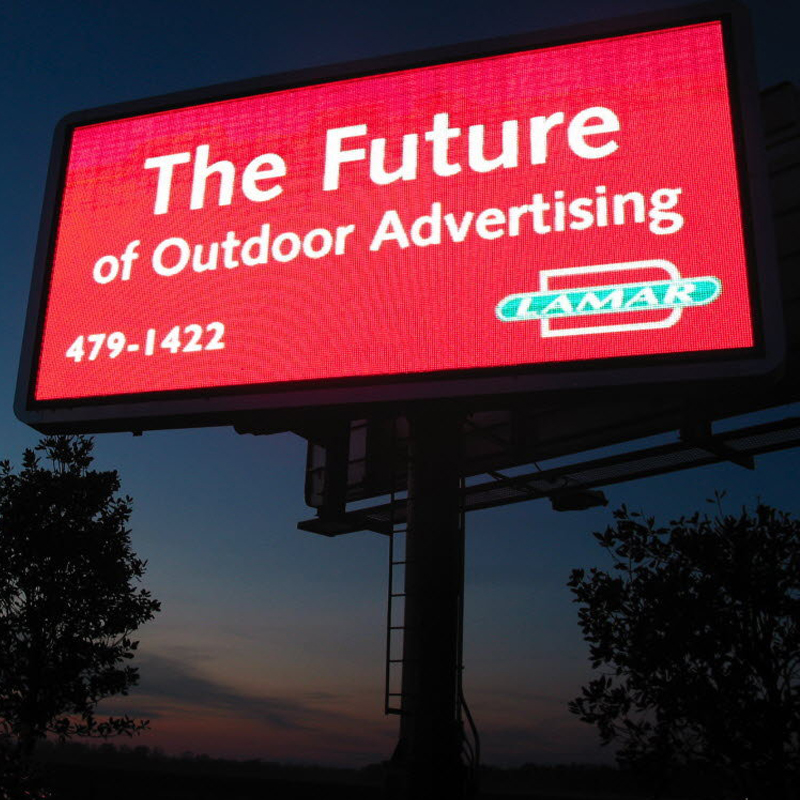
    MUMBAI: Digital billboards, synchronized messaging across hoardings, real time trading, interactive digital displays, mobile convergence, geo-tagged tracking of impressions and measurement — digital is rapidly evolving how out-of-home advertising is perceived.

    A good look around and you will be amazed to see to what extent we are surrounded by advertisements–  on moving buses, at  public places like railways, bus stops, airports, malls and theatres and of course the billboards and hoardings beside every major building and driveway. Out of Home or ‘OOH’ is a ‘traditional’ as well as one of the oldest formats of advertising.

    Though the medium has only ever evolved gradually with time in the last few decades, currently it is at the cusp of a major overhaul that is riding the digital wave.

    http://www.indiantelevision.com/sites/drupal7.indiantelevision.co.in/files/styles/large/public/ooh%20%282%29.jpg?itok=yX7kDlRF

    OOH: The late entrant to digital

    Unlike other advertising mediums, OOH was the latest to feel the impact of the digital disruption here, be it in terms of innovation or revenue loss in ad spends. Where serious concerns were being raised on how digital’s advent will split the ad revenue pie of the market, and cannibalize other media, OOH to the most part was oblivious.

    Sharing his perspective on this transition, Kinetic India CEO South Asia and Middle East Suresh Balakrishnan informs indiantelevision, “The advent of digital in our country in all its form, whether it’s digital, or display or social, mobile has eaten away the budgets of most media.  Having said that, it has happened to India at a good time, for as a market India is growing. We are probably one of the only few markets that are growing at an average of 15 to 18 per cent. Therefore we have made space for digital.”

    “As far as OOH is concerned there has been some revenue loss to digital, but I don’t think it has been significant. I don’t remember a time when OOH was growing at 20 to 30 per cent year on year. It has always lingered around 10 to 13 percent year on year, which again is moderately good growth for OOH,” he adds.

    But that doesn’t mean that ‘change’ isn’t chasing OOH.  

    “OOH can’t sit on its haunches and think that digital will not affect it. Unless, OOH marries digital and adapts what digital has to offer to enhance its services and experience for the consumer, we won’t be able to fight the battle in the long run,” Balakrishnan explains.  

    And that battle is more than about mere survival. It is the way forward for the medium to be more relevant to the consumers, more useful to the clients and more creatively enriching for the agencies.

    Digital, the perfect partner

    To say that digital will aid OOH is an understatement.

    Digital innovation in OOH has enabled the medium to achieve what it was earlier unable to attempt.

    While the idea of a dynamic digital billboard in itself is attractive and engaging for consumers, agencies are now able to explore technology that helps target and track consumers in a better manner and even give a push to point of sale campaigns in malls and other retail outlets.

    http://www.indiantelevision.com/sites/drupal7.indiantelevision.co.in/files/styles/large/public/ooh%20%284%29.jpg?itok=ExgOdzkb

    “There are a lot of innovations that are happening in this area. For example, now digital technology allows users and consumers to scan bar codes from hoardings which directly lead to any product website through their devices,” points out Havas Media Group, India and South Asia CEO Anita Nayyar.

    “Whether it is in the way of ‘blipping’ the product from the hoardings, or digitally connecting an LED screen with some data source, there are various innovations that go hand in hand with billboards that are digitally enabled,” she adds.

    Balakrishnan on the other hand takes delight from the classier messaging that is made possible with digital. He cites an example of a campaign that Kinetic had earlier done for Mondelez’s popular chocolate brand Cadbury Bubbly.

    The crowd at Palladium Mumbai witnessed the experiential and innovative activation where in a digital screen was placed at all these places with a new motion sensor technology that transformed the normal Cadbury Silk chocolate into Cadbury Silk Bubbly with each and every movement around the screen. At metro stations in Mumbai, the screen was placed in such a way that the chocolate bubbled up with the movement of the train.

    http://www.indiantelevision.com/sites/drupal7.indiantelevision.co.in/files/styles/large/public/ooh.JPG?itok=jpwP5Ri8

    The number game: Measurability

    OOH as a medium had long struggled to measure the reach of campaigns. Therefore, very less accountability was placed on the medium and most of the money spent on the medium goes into brand building.

    “With the lack of a streamlined synchronised measurement system, there has been constant pressure from client to prove the effectiveness of the campaign,” Balakrishnan reveals.  But, to many creatives in OOH, digital is a great way to achieve that sense of measurability.

    Nayyar, having seen the Indian advertising scenario evolve, admits that while one medium (digital) is accountable, the other is almost immeasurable.

    “Apart from a couple of researches done, it is very hard to measure this medium. Thus, by clubbing the two medium, outdoor as a medium can gain huge credibility and measurability from digital,” asserts Nayyar.

    http://www.indiantelevision.com/sites/drupal7.indiantelevision.co.in/files/styles/large/public/ooh%20%283%29.jpg?itok=yH00fYXz

    Kinetic has, in fact, launched a tool called SAS or Social Amplification Score worldwide that can add some numbers to even an OOH campaign. The tool has so far been released globally by the Kinetic team and is expected to hit India in the next three months.  

    “The moment an OOH campaign is released, the tool tracks the buzz it creates by using 37 or more keywords like OOH, malls, bus shelter, etc. Basically wherever it is seen and spoken about, to tool automatically puts a score to that. It gathers the information by using geo-tagging technology that most social media platforms have enabled. With this tool therefore, we can put certain reachable numbers to an OOH campaign,” Balakrishnan informs about the effectiveness of the tool.

    Milestone Brandcom founder MD and a pioneer in the OOH business Nabendu Bhattacharyya however sheds a different light on the matter.

    “It is true that all mediums have their own struggle with measurements. Amongst all of them, OOH is the least measurable and most unorganised, Bhattacharyya opines.

    Pointing out that individual agencies have their own measurement systems that help provide clients with numbers, the veteran OOH man says, “If digital billboards become more mainstream, it will help us approach clients on a better ground as digital can incorporate those numbers.”

    Digital OOH: International VS Local

    In spite of some very obvious perks of the digital transformation, India has a lot of catching up to do when it comes to innovating OOH using technology.  Travel to any western country and one can easily spot the vast gap in the digital revolution of OOH.

    http://www.indiantelevision.com/sites/drupal7.indiantelevision.co.in/files/styles/large/public/ooh%20%281%29.jpg?itok=hxnGGHXB

    “If you look at the western markets, OOH is far more advanced and digitised than in our country. It’s also a question of infrastructure as installing these billboards needs a certain aesthetic upgradation as well. Broadband and connectivity also become an issue and do not allow the proposition to be completely seamless and workable,” Nayyar explains.

    Balakrishnan concurs with Nayyar and says, “The more mature markets have gone and beautifully adapted digital with OOH. In fact, I would say the west has shown us that one of the mediums that integrate with digital is OOH.”

    However, Bhattacharyya feels that aesthetically India isn’t far behind western markets in exploiting digital options.

    “In the last few years we have seen some major infrastructural changes in India like the airports have been modernised, fantastic looking metro rails have come up in different places, the malls that are coming up are engineered to look aesthetically good. Therefore these places have immense potential to support a digitally charged OOH campaign. Within the controlled environment, the look and feel of the architectures and the interior designs are at par with what we see internationally,” Bhattacharyya says.

    Challenges: what’s holding OOH back?

    Though each industry player has its own take where Indian OOH stands from a global perspective, most agree that the primary reason that holds them back to optimise the medium’s digital potential is the slow bureaucracy of the country.

    According to the industry, less than 10 per cent of the overall OOH inventory is digital. The reason for that is two-fold: firstly agencies have a hard time securing permissions to go digital in full throttle.

    “The government is slow and the municipal authorities take time to give us those permissions and update themselves,” Balakrishnan explains while highlighting the bureaucratic hurdles.

    The initial cost of setting up digital installations for a campaign is pretty high, and hence media owners who invest in it, think ten times before putting up money.  

    “The setup costs are high when it comes to digital, so naturally the clients also look to quickly amortise it within a year or two. That pushes up the cost of the entire campaign and sometimes clients back out in the end. Balakrishnan puts it bluntly, adding high immeasurability also puts a question mark on big budgets being sanctioned.

    Bhattacharrya goes a step further explaining that ‘real problems’ start beyond the controlled environment spaces.

    “As per government laws, for the most part, digital displays are not allowed in this country. Except for one or two places like Bangalore and Kolkata, it is hard to find legitimate space for putting up an LED display. But those too are in a slideshow format and not really as big as you see in other countries,” Bhattacharrya adds.

    Industry experts point out that if Mumbai and Delhi are taken as example, one has more than ten authorities to deal with before one can even think of a draft design of a campaign. “MMRDA, Mumbai Municipal Corporation, the railway authorities, PWDs –the complications are endless, and way more compared to other countries,” Bhattacharya complains.

    Even if permissions to innovate in the controlled environment space become more lenient budget becomes a hindering factor.

    http://www.indiantelevision.com/sites/drupal7.indiantelevision.co.in/files/styles/large/public/ooh8.jpg?itok=DpHb99t5

    “Out of overall spends in the industry, the budget allotted for controlled environment advertising is close to 20 percent only while the bulk of the budget goes to the uncontrolled environment.  And that 20 percent is further split into the different mediums with digital being one. It’s a small percentage that goes into digital,” Balakrishnan shares.

    International advertisers have another advantage over their Indian counterparts, though.

    Elaborating on what Balakrishnan opined, Bhattacharya says, “In other countries the tenders are done for a 10 to 15 year contract, whereas in India it is two to three years at the maximum. From a business perspective, this dissuades media owners from actively investing in the business, as it lacks the guarantee of a prolonged period. Add to that the fact that the initial investment to digitise the OOH infrastructure is high. Thus a short term contract is disadvantageous for a media owner.”

    Nayyar, however, feels if the technology works and gets the clients the desired results, advertisers are willing to pay and go that extra mile for  really effective storytelling.

    Indian OOH’s digital ‘jugaad’

    (Jugaad (alternatively Juggaar) is a colloquial Hindi-Urdu word that can mean an innovative fix or a simple work-around, used for solutions that bend rules, or a resource that can be used as such, or a person who can solve a complicated issue).

    Creatives here are trying to work around their limitations and adopt digital tools and services in their own way.

    From putting up digital billboards for a short period of three days to digitally enable a normal billboard, the ‘jugaads’ are many.

    Balakrishnan highlights the Indian mindset.

    “For example, creatives can use a CEE app that can be embedded into anything and works on an image recognition technology. If embedded in a brand’s app, every single static piece of communication would become interactive sans the use of barcodes, QR code. Just let your phone that has the CEE enabled app of a particular brand register its visual or logo, and it will take you to a large billboard or a small screen for that matter.”

    http://www.indiantelevision.com/sites/drupal7.indiantelevision.co.in/files/styles/large/public/ooh%209.jpg?itok=5l456I4p

    As always, when presented with adversity, the Indian ‘jugaad’ mindset easily kicks in and it seems to be working wonders for the industry so far.

    But that may not sustain it for too long if the country wants to compete and be at par with other mature markets and make the most of the double digit ad spend growth it’s currently experiencing with dollops of digital help from the government, of course.

  • Flipkart spends 80 percent of its digital marketing budget on mobile: Flipkart Ads business head Prakash Sikaria

    Flipkart spends 80 percent of its digital marketing budget on mobile: Flipkart Ads business head Prakash Sikaria

    MUMBAI: While addressing a session at a marketing conclave in Mumbai, that debated the relevance of mobile marketing and the need to go app first for brands, Flipkart Ads business head Prakash Sikaria shared that the  eCommerce giant spends almost 80 percent of its digital marketing budget on mobile.

    Sikaria’s confidence in the medium stems from the data the eCommerce site has gathered as an advertising and eCommerce platform that tracks its consumers’ usage behaviour on multiple screens.

    When posed with the question ‘is mobile a minor or a major screen’ Sikaria simply asked, ‘Is that even a  debate’. To back his astonishment at the topic of debate, Sikaria shared that for a eCommerce company such as Flipkart going mobile first was only natural, given that more and more of the site’s consumers are switching to spending more time on their smartphones.

    “Just to put things in perspective, 3 hrs of mobile in India is equatable to 92 mins of television, which is in turn equatable to 31 minutes of  desktop usage by viewers. What we see as a consumption pattern for several businesses mobile is the only screen in India, and going forward a large proportion of the time spent on any medium by consumers would be on mobile,” Sikaria shared, highlighting how India is unique in its mobile friendliness.

    Sharing some data the eCommerce platform has gathered from its own consumer research and data and analysis of consumer behaviour on the platform, around 50 per cent of the time spent on mobile is used for communication.  According to the consumer pattern gathered from traffic on Flipkart’s mobile app and its  web usage analysis, Sikaria inferred that usually customers try the mobile app first, and once they are convinced with the services and have grown loyalty towards the brand, they move to web. This places mobile marketing as the supreme most important requirement for a brand that functions mostly digitally, as it introduces the service to new consumers.

    “We have also noticed that across metrics there is better customer engagement and better customer experience on mobile from how much time consumers spend on the site per visit, to how many successful transactions they complete per visit,” Sikaria shared.

    As per Sikaria, once the user has jumped the hurdle of downloading the app the engagement is far higher on mobile than on other medium like desktop, provided the app is designed conveniently for them. That is the reason every ecommerce site, every travel startup or web based business wants their app to by in everyone’s phones.

    It is to be noted that between the four to five major eCommerce players in the country, television media raised about Rs 1,200 crores in advertising revenue in a single quarter, albeit it was before Diwali last year.

    Now with a key player such as Flipkart thinking mobile first, should television advertisement slot seller be worried about the smaller screen stealing away the advertisers which are native to the medium? 

  • Flipkart spends 80 percent of its digital marketing budget on mobile: Flipkart Ads business head Prakash Sikaria

    Flipkart spends 80 percent of its digital marketing budget on mobile: Flipkart Ads business head Prakash Sikaria

    MUMBAI: While addressing a session at a marketing conclave in Mumbai, that debated the relevance of mobile marketing and the need to go app first for brands, Flipkart Ads business head Prakash Sikaria shared that the  eCommerce giant spends almost 80 percent of its digital marketing budget on mobile.

    Sikaria’s confidence in the medium stems from the data the eCommerce site has gathered as an advertising and eCommerce platform that tracks its consumers’ usage behaviour on multiple screens.

    When posed with the question ‘is mobile a minor or a major screen’ Sikaria simply asked, ‘Is that even a  debate’. To back his astonishment at the topic of debate, Sikaria shared that for a eCommerce company such as Flipkart going mobile first was only natural, given that more and more of the site’s consumers are switching to spending more time on their smartphones.

    “Just to put things in perspective, 3 hrs of mobile in India is equatable to 92 mins of television, which is in turn equatable to 31 minutes of  desktop usage by viewers. What we see as a consumption pattern for several businesses mobile is the only screen in India, and going forward a large proportion of the time spent on any medium by consumers would be on mobile,” Sikaria shared, highlighting how India is unique in its mobile friendliness.

    Sharing some data the eCommerce platform has gathered from its own consumer research and data and analysis of consumer behaviour on the platform, around 50 per cent of the time spent on mobile is used for communication.  According to the consumer pattern gathered from traffic on Flipkart’s mobile app and its  web usage analysis, Sikaria inferred that usually customers try the mobile app first, and once they are convinced with the services and have grown loyalty towards the brand, they move to web. This places mobile marketing as the supreme most important requirement for a brand that functions mostly digitally, as it introduces the service to new consumers.

    “We have also noticed that across metrics there is better customer engagement and better customer experience on mobile from how much time consumers spend on the site per visit, to how many successful transactions they complete per visit,” Sikaria shared.

    As per Sikaria, once the user has jumped the hurdle of downloading the app the engagement is far higher on mobile than on other medium like desktop, provided the app is designed conveniently for them. That is the reason every ecommerce site, every travel startup or web based business wants their app to by in everyone’s phones.

    It is to be noted that between the four to five major eCommerce players in the country, television media raised about Rs 1,200 crores in advertising revenue in a single quarter, albeit it was before Diwali last year.

    Now with a key player such as Flipkart thinking mobile first, should television advertisement slot seller be worried about the smaller screen stealing away the advertisers which are native to the medium? 

  • Manveer Singh Malhi joins Digital Marketing and Technology Company iGenero as Partner

    Manveer Singh Malhi joins Digital Marketing and Technology Company iGenero as Partner

    NEW DELHI: Experienced brand strategist Manveer Singh Malhi has come on board Hyderabad-based digital interaction agency iGenero to focus on scaling up the business, expand the team and ensure the teams stays up to date on the latest digital and technological innovations and initiations. 

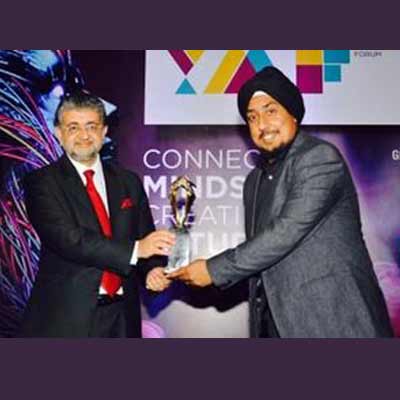
    Singh, trained in creating online strategies for businesses and entertainment houses, has in the recent past been  awarded as Top Social Media Professional of India by CMO Asia in 2015 and Digital Marketing Professional of the Year in 2016 by Global Youth Marketing Forum.

    In his career of more than eight years he has conceptualized and devised online media strategies and solutions for brands like Zapak, BigFlix, MTV, Reliance, Imagine TV, Iproperty.com, PIX Television, Fun Cinemas, Costa Cruises India, Everest Entertainment and many more. Manveer has efficiently helped more than 100+ brands adopt new media to derive strong and trackable business results. He was also the faculty for digital at SAE Institute and was invited to speak at various digital media workshops. 

    iGenero Co-Founder Karan S Kumar said, “We have been able to provide vital and measureable digital marketing plans and web development solutions to our clients. Manveer’s in depth knowledge and experience in digital marketing will enable us to enrich our delivery to existing clients and also serve exceptional plans to future clients.”

    “Manveer will be able to manoeuvre the team towards increasing their capacity to achieving robust business results for our clients. He has worked with us at SocialSamosa.com as business head in past where he helped to scale the business within a short span of one year”, added iGenero co-founder Aditya Gupta.

    Malhi said: “I’m delighted to join iGenero and am looking forward to sharing my expertise with the team. Digital has now become an integral part of all marketing and business initiatives for brands, it is no longer a secondary choice. At such a crucial stage of the digital industry’s growth, by using iGenero’s technological strength I hope to contribute in amplifying the output for all the clients. “

  • Manveer Singh Malhi joins Digital Marketing and Technology Company iGenero as Partner

    Manveer Singh Malhi joins Digital Marketing and Technology Company iGenero as Partner

    NEW DELHI: Experienced brand strategist Manveer Singh Malhi has come on board Hyderabad-based digital interaction agency iGenero to focus on scaling up the business, expand the team and ensure the teams stays up to date on the latest digital and technological innovations and initiations. 

    Singh, trained in creating online strategies for businesses and entertainment houses, has in the recent past been  awarded as Top Social Media Professional of India by CMO Asia in 2015 and Digital Marketing Professional of the Year in 2016 by Global Youth Marketing Forum.

    In his career of more than eight years he has conceptualized and devised online media strategies and solutions for brands like Zapak, BigFlix, MTV, Reliance, Imagine TV, Iproperty.com, PIX Television, Fun Cinemas, Costa Cruises India, Everest Entertainment and many more. Manveer has efficiently helped more than 100+ brands adopt new media to derive strong and trackable business results. He was also the faculty for digital at SAE Institute and was invited to speak at various digital media workshops. 

    iGenero Co-Founder Karan S Kumar said, “We have been able to provide vital and measureable digital marketing plans and web development solutions to our clients. Manveer’s in depth knowledge and experience in digital marketing will enable us to enrich our delivery to existing clients and also serve exceptional plans to future clients.”

    “Manveer will be able to manoeuvre the team towards increasing their capacity to achieving robust business results for our clients. He has worked with us at SocialSamosa.com as business head in past where he helped to scale the business within a short span of one year”, added iGenero co-founder Aditya Gupta.

    Malhi said: “I’m delighted to join iGenero and am looking forward to sharing my expertise with the team. Digital has now become an integral part of all marketing and business initiatives for brands, it is no longer a secondary choice. At such a crucial stage of the digital industry’s growth, by using iGenero’s technological strength I hope to contribute in amplifying the output for all the clients. “