Tag: digital marketing

  • White Rivers Media celebrates 6th anniversary

    White Rivers Media celebrates 6th anniversary

    MUMBAI: In India, one of the fastest growing independent agencies White Rivers Media has recently completed its six years in social media and digital marketing industry.  To celebrate the same, it has sent personalised thank-you messages to all individuals who have been a part of the journey.

    The company founded in 2012, has been the only digital marketing agency to be awarded the Deloitte’s Technology Fast 50 twice, consecutively in 2016 and 2017. The core verticals of the company are digital, design, social and video to clients in B2B and B2C space, across industry verticals.

    As a give back to the industry, the agency has launched an e-book on Everything a marketer needs to know about #Hashtags. The book contains essentials, best practices and some crazy global bloopers. The same has been chosen given the fact, that a lot of brands across the globe still make hashtag errors or don’t use it optimally across digital and in adaptations in offline.

    Link to e-book: http://whiteriversmedia.com/eBook

    Speaking on the occasion White Rivers Media CEO Shrenik Gandhi said, “As we complete six years in the industry, we would like to thank everyone who has been a part of growth journey and helped us reach here. The industry has grown with break-neck speed and I strongly believe, this is just the beginning. Exciting times ahead!”

    White Rivers Media co-founder Mitesh Kothari added,“We have done some interesting work for brands across sectors in the last six years, and we look forward to building more meaningful and stronger connections with stakeholders across the industry. We look forward to this year as becoming one of the top mar-tech driven communication partner to brands across the country. The past years have been of learning un-learning and re-learning and we are eager to know what is stored for us in the future.”

    This e-book is one of the many to follow which White Rivers Media shall launch in due course of time, covering various topics concerning Indian and global digital marketers.

    Along with this the agency also ran an extension to its award-winning digital campaign, Honesty Breaks Clutter.

  • Facebook aims to be first choice for movie marketing, fan engagement

    Facebook aims to be first choice for movie marketing, fan engagement

    MUMBAI:  Thursday morning Twitter was flooded with Karan Johar’s teaser tweet on his upcoming film Takht. Film marketing has changed so much over the time that fans are going gaga over a film which will be released after two long years. Not only Twitter but also other social media giants like Facebook and Instagram are becoming highly relevant for Hindi film marketing. Long gone are those days when the audience used to get information about an upcoming movie before a fortnight. Indian film industry, especially Bollywood, is optimising social media assets as much as possible.

    Research company Ormax Media and Facebook India have launched a report titled ‘Media Effectiveness in Hindi Film Marketing’ that studies and correlates the actual box office collections to a movie’s marketing mix. The research done independently by Ormax Media tracked the performance of nine media from both digital and traditional genre –  Facebook, YouTube, Instagram, Twitter, television, print, in-theatre, radio & OOH. Six film campaigns including Judwaa 2, Secret Superstar, Golmaal Again, Ittefaq, Tiger Zinda Hai and Pad Man were tracked using the research.

    The research went beyond analysing a film’s marketing success, basis the elementary media metrics like impressions and readership, and also focused on evaluating awareness or buzz among the audience and their intent to watch or appeal of the movie.

    The study found Facebook is one of the top three mediums among nine sample mediums in driving buzz and appeal for a film campaign. While buzz power stands for incremental awareness or discovery driven by the platform, appeal power stands for incremental interest in the audience via campaigns or content. Moreover, Facebook and Instagram combined proved to have delivered the highest impact with 21 per cent contribution to a Hindi film’s first-day box office sales.

    “The analysis was done for all nine media by extracting the buzz and appeal scores among those not aware of the film through that media. If the film’s actual first-day was X and the first-day without a particular media was projected as Y, the contribution of that media to the opening is X-Y. This contribution was calculated for all nine media,” the report reads.

    While organic methods like link shares and conversations helped to achieve the success, initiatives like Facebook Live also played an important role. Dharma Productions, the producer of recent hit Dhadak created an event on the platform using the feature Scheduled Live for the trailer launch of the movie. The trailer got 8.9 million video views. Other than that, several movies including Padman, Tiger Zinda Hai used Facebook Stories to engage fans.

    Akshay Kumar, a loyal Facebook user recently launched the trailer for his upcoming movie Gold on IGTV along with using Facebook Live.

    “Facebook is a great place for fans to directly connect with their favourite stars and movies and drive reach and more engagement. We aim to become the go-to destination for celebrities and movie marketers to promote and connect with their followers in an authentic way and experience the power of organic content and first-hand interactions,” Facebook APAC entertainment partnerships head Saurabh Doshi said.

    In case of any movie marketing campaign, Facebook typically divides it into three phases. While the first phase is about making users aware of the movie’s existence, second is about making relevant people engaged and the final phase is converting those users as actual moviegoers.

    Production houses leverage various Facebook features to create more engagement. Yash Raj Films uses Facebook for premium music through its weekly jukebox property where it streams full-length albums and music videos over a Facebook live. Red Chillies Entertainments experimented with the messenger bot for its movie Jab Harry Met Sejal where it used Shah Rukh Khan as the voice and face of the bot. Fox Star India also markets its films with gamification of the bot with videos, music, dialogues, and quizzes. Even the company created an AR Filter for movie Sanju where fans could get into the look of Sanjay Dutt using the filter.

    Facebook also partnered with PVR Cinemas to create a medium where celebrities could engage with the audience sitting in theatres. Under the partnership, the Facebook live of celebrities were broadcast on cinema screens. To make the engagement lively, Facebook also leveraged technology using physical cameras in cinema screen itself where the screen was tilted half and half so the celebrity also could see the audience sitting in the theatre. It launched the product with Dharma Productions for the film Raazi.

    Facebook’s relevance for marketing is not limited to big shot production houses, celebrities like Priyanka Chopra, Akshay Kumar and film fraternity.  Anupama Chopra’s movie review company Film Companion, MissMalini, Pink Villa, also leverage the Facebook community to engage in active conversations. The musician community of record labels, bands, independent artists also use the platform. Top examples include Maatibani, Sona Mahapatra, T Series who have created buzz and increased discoverability of their content through various initiatives on Facebook.

    It is no wonder given the rapid growth of internet and smartphone users that social media platforms will emerge as key players in digital marketing. Facebook standing with 217 million users every month is definitely going to acquire stronger foothold in near future.

  • How Google views India’s internet landscape

    How Google views India’s internet landscape

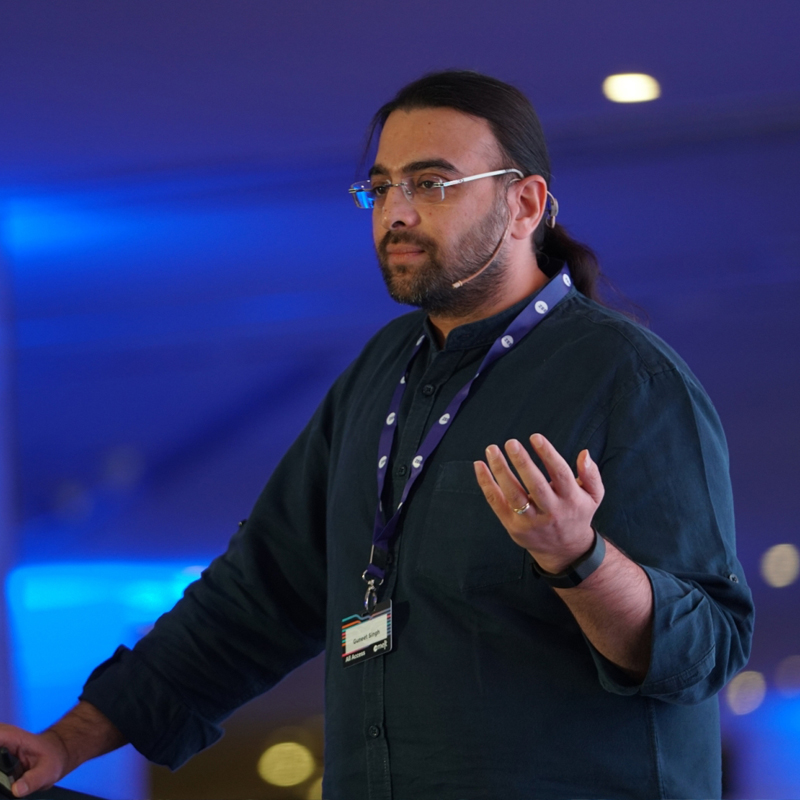
    MUMBAI: After having worked with three tech giants of today – Google, Microsoft and Samsung – Guneet Singh is not hesitant to speak of the power of digital. The Google head of marketing solutions for India and SEA was speaking at the Zee Melt 2018 conference.

    At Google since the time digital market was a minuscule fraction in the country, he believes that digital empowers people to market their products providing equal chance. As the industry transformed from TV to digital, creative ecosystem needs to change to understand how the consumption is happening.

    “Internet market is led by two things. It’s led by the smart device which has to process and the good network. Both of those were struggling. The first big shift came between 2012-15 when prices were going down and quality of data improved. The next shift came after Jio entered the market,” he revealed in an interaction with Indiantelevision.com.

    Owing to the large population, even when only 10 per cent of Indians were on the internet, India was a priority market for Google. Though India’s vast cultural and linguistic diversity makes it a challenging market, Singh thinks every company has to be ready to able to be flexible and appeal to users across the country. According to him, the best way to look at India is not as a country but as a region which has eight to nine geo-clusters or small countries.

    India being a priority market, Google has a large marketing team in India. It likes to keep a multi-cultural team in every office. Along with a high number of local population, it also encourages people from other parts of the world to come and work in different countries paving the way to knowledge-sharing.

    One of the major areas Google focuses on India is always having more people on the internet, to really get the value of the internet which is beyond funny videos. It is also working with manufacturers to look at ways to get great performance at affordable prices on Android devices. In 2016, Google launched, in collaboration with Indian Railways, its free high-speed public wi-fi service at five railway stations which has now reached around 400 stations.

    “The second part is that as you grow beyond the first 100 million users, we have so many different languages, cultures, there’s an effort on trying to build a vernacularity. The focus is on the content on the internet which is primarily in English and then goes to Hindi, Punjabi, Telugu, Malayalam, Bengali, whatever India needs and next generation of Indian users comes up from that effort. That’s another big initiative we are taking,” Singh said.

    While with the recent Cambridge Analytica scandal, GDPR roll out in Europe, protection of consumer data has become a burning issue worldwide, Singh also considers the issue very important. “The internet empowers people. Therefore the way data can be used should be a choice of that individual,” he said. However, he thinks it should not become a rightist movement. People should be given a choice if they are okay with sharing data for getting something better.

    With an experience of more than 15 years in the industry, he thinks digital advertising needs to evolve to grab the eyeballs of an audience which has a very short attention span. Six-second videos aren’t always the goal but the right engagement. The optimistic man, however, firmly believes creativity is not dead.

  • Star Sports bags two golds at Digixx Awards 2017

    MUMBAI: Star Sports has bagged two golds at the recently held annual Digixx Awards. The awards aim to recognize and celebrate excellence in digital marketing and advertising that creates an exceptional user experience that is deeply engaging and interactive.

    The Awards categories were broadly divided into three major groups – Industry Sector Awards, Discipline Awards for Campaign and Special Awards.

    Star Sports has won in the two categories at the prestigious awards – Digital Marketing Excellence In Media for their overall digital initiatives and campaigns in 2016 and an individual award Young Guns of The Year to Janessa Fernandes from Star Sports for Kabaddi – an individual award given to the best young digital marketeer.

    “It’s a recognition to the consistent and dedicated efforts put by our Digital Marketing team throughout the year. It’s a great beginning to 2017 and awards like this continue to inspire us in our endeavor of achieving excellence in the digital space. Star Sports would like to convey its best wishes to the other winners as well who have been doing exceptional work”, said a Star India spokesperson on winning the awards.

  • Pumpkin pockets ShopCJ mandate

    Pumpkin pockets ShopCJ mandate

    MUMBAI: Team Pumpkin, a leading Digital Marketing & PR Agency, has won digital marketing mandate for ShopCJ, a teleshopping platform.

    Team Pumpkin’s mandate includes execution of several digital activities such as content marketing, social media management and creation of digital assets among others.

    Team Pumpkin chief business officer Swati Nathani said, “ShopCJ’s consumer base has a growing percentage of the digitally active audience. Our strategy will be to bridge this gap and bring ShopCJ to its consumers, organically. We aim to deliver most topical content which is a key factor behind successful digital marketing.”

    Shop CJ head of marketing & CRM Mahesh Patel said, “In this digital age, we need a team, which is creative and fast-moving. Brand engagement for us will always be at the intersection of content and technology in the digital medium. We are sure that their team will be able to synergise with our marketing efforts.”

  • Pumpkin pockets ShopCJ mandate

    Pumpkin pockets ShopCJ mandate

    MUMBAI: Team Pumpkin, a leading Digital Marketing & PR Agency, has won digital marketing mandate for ShopCJ, a teleshopping platform.

    Team Pumpkin’s mandate includes execution of several digital activities such as content marketing, social media management and creation of digital assets among others.

    Team Pumpkin chief business officer Swati Nathani said, “ShopCJ’s consumer base has a growing percentage of the digitally active audience. Our strategy will be to bridge this gap and bring ShopCJ to its consumers, organically. We aim to deliver most topical content which is a key factor behind successful digital marketing.”

    Shop CJ head of marketing & CRM Mahesh Patel said, “In this digital age, we need a team, which is creative and fast-moving. Brand engagement for us will always be at the intersection of content and technology in the digital medium. We are sure that their team will be able to synergise with our marketing efforts.”

  • Pumpkin to deliver Pizza Hut ideas online

    Pumpkin to deliver Pizza Hut ideas online

    MUMBAI: Team Pumpkin, a leading digital marketing and PR agency, has won the digital marketing mandate of one of the leading casual dining and delivery restaurant chain, Pizza Hut.

    The digital marketing responsibilities will include online reputation management, social media management and digital creative services for Pizza Hut’s Indian business.

    As Team Pumpkin graduates towards winning more global clients, bagging the Pizza Hut (voted as most trusted brand for 11 years in a row) mandate is another feather in its cap.

    Team Pumpkin creative head Puja Nathani said that their aim would be to make sure that Pizza Hut trust was maintained and it continues to engage with the young audience in the digital space.

    Team Pumpkin co-founder Ranjeet Kumar said their strategy revolved around capturing micro-moments for the youth and expressing them through their digital assets.

  • Pumpkin to deliver Pizza Hut ideas online

    Pumpkin to deliver Pizza Hut ideas online

    MUMBAI: Team Pumpkin, a leading digital marketing and PR agency, has won the digital marketing mandate of one of the leading casual dining and delivery restaurant chain, Pizza Hut.

    The digital marketing responsibilities will include online reputation management, social media management and digital creative services for Pizza Hut’s Indian business.

    As Team Pumpkin graduates towards winning more global clients, bagging the Pizza Hut (voted as most trusted brand for 11 years in a row) mandate is another feather in its cap.

    Team Pumpkin creative head Puja Nathani said that their aim would be to make sure that Pizza Hut trust was maintained and it continues to engage with the young audience in the digital space.

    Team Pumpkin co-founder Ranjeet Kumar said their strategy revolved around capturing micro-moments for the youth and expressing them through their digital assets.

  • Mobile surpasses TV in watch-time: Kantar IMRB-MMA Study

    Mobile surpasses TV in watch-time: Kantar IMRB-MMA Study

    MUMBAI: An average consumer spent three hours per day on their smartphones (an increase of 55% from 2015), which surpasses time spent on television or any other media. The Mobile Marketing Association (MMA), in association with Kantar IMRB, has released a report on smartphones and feature phones usage and behaviour 2016-17 in India that studies the evolving nature of the Indian mobile consumers, and provides insights and behaviors individually on smartphones and feature phones.

    “MMA India has collaborated with Kantar IMRB to deep-dive into the dynamics implications and impact of smart phones and feature phones India focusing on each category separately and giving each their due focus. The insights of this study will be published in a series of industry reports that will go a long way in helping marketers use the medium effectively and efficiently. It is a great data set for marketers to reassess and optimize their spending with the most impactful allocations in their marketing mix, while leveraging mobile with double digit spend,” said Mobile Marketing Association India country manager Preeti Desai.

    A few key facts from the study are as follows:

    On Smartphones

    I. An average consumer spends 3 hours per day on their smartphones (an increase of 55% from 2015), which surpasses time spent on TV or any other media. Social media and messaging apps were the clear leaders accounting for almost 50% of all time spent on smartphones.

    II. The study shows that Women spend 2x more time on their smartphones compared to Men – on YouTube and games. They also spent 80% more time on Facebook than their male counterparts.

    III. Another finding revealed the rise of online shopping category, which now has 15% higher reach than the entertainment – making it the second most popular category in terms of reach.

    On feature phones:

    I.  The study shows a whopping 75% of feature phone users were from the upper SECs, while only 25% of respondents were from SEC C, D and E (NCCS).

    II. A big revelation has been that almost 85% feature phone users do not intend to switch to smartphones on their next purchase indicating that the functional benefits of feature phones combined with their durability, battery life and ease of repair were highly coveted by these users.

    III. Feature  phone  users  spend  more  money  on  their  mobile  plans.  The  ARPUs  was  almost  20%  higher compared to the national average.

    The Mobile  Marketing Association chairman D Shivakumar said, “A thorough understanding of the differential usage and consumer segments that are using smartphones and feature phones will only help marketers use their monies more efficiently. While most designing and applications  are  being  targeted  at  smartphones,  this  report  is  a  wake-up  call.  Today,  the  mobile  is undeniably the closest we can get to our consumers, and it is this that will help marketers seek to understand – and leverage – a consumer’s path to purchase.”

    “With the advent of 4G, reduced data costs and free voice and SMS, we expect to see even more rapid changes in the mobile landscape. It is, therefore, important to keep a continuous pulse on the way consumers interact with and use their mobile phones. Along with MMA, we at Kantar IMRB have embarked on a journey to help marketers understand the impact of these changes and to identify emerging trends. The Smartphone and Feature phone reports are a step in this direction – providing an unbiased and insightful view on the evolution of mobile usage in India,” Kantar IMRB SVP Hemant Mehta added.

    The report enables all members of the ecosystem to stay updated with consumer mobile trends and media consumption  habits.  Also  at  the  same  time,  it  elaborates  the  role  of  mobile  as  an  influencer  in  the consumer path-to-purchase.

  • Mobile surpasses TV in watch-time: Kantar IMRB-MMA Study

    Mobile surpasses TV in watch-time: Kantar IMRB-MMA Study

    MUMBAI: An average consumer spent three hours per day on their smartphones (an increase of 55% from 2015), which surpasses time spent on television or any other media. The Mobile Marketing Association (MMA), in association with Kantar IMRB, has released a report on smartphones and feature phones usage and behaviour 2016-17 in India that studies the evolving nature of the Indian mobile consumers, and provides insights and behaviors individually on smartphones and feature phones.

    “MMA India has collaborated with Kantar IMRB to deep-dive into the dynamics implications and impact of smart phones and feature phones India focusing on each category separately and giving each their due focus. The insights of this study will be published in a series of industry reports that will go a long way in helping marketers use the medium effectively and efficiently. It is a great data set for marketers to reassess and optimize their spending with the most impactful allocations in their marketing mix, while leveraging mobile with double digit spend,” said Mobile Marketing Association India country manager Preeti Desai.

    A few key facts from the study are as follows:

    On Smartphones

    I. An average consumer spends 3 hours per day on their smartphones (an increase of 55% from 2015), which surpasses time spent on TV or any other media. Social media and messaging apps were the clear leaders accounting for almost 50% of all time spent on smartphones.

    II. The study shows that Women spend 2x more time on their smartphones compared to Men – on YouTube and games. They also spent 80% more time on Facebook than their male counterparts.

    III. Another finding revealed the rise of online shopping category, which now has 15% higher reach than the entertainment – making it the second most popular category in terms of reach.

    On feature phones:

    I.  The study shows a whopping 75% of feature phone users were from the upper SECs, while only 25% of respondents were from SEC C, D and E (NCCS).

    II. A big revelation has been that almost 85% feature phone users do not intend to switch to smartphones on their next purchase indicating that the functional benefits of feature phones combined with their durability, battery life and ease of repair were highly coveted by these users.

    III. Feature  phone  users  spend  more  money  on  their  mobile  plans.  The  ARPUs  was  almost  20%  higher compared to the national average.

    The Mobile  Marketing Association chairman D Shivakumar said, “A thorough understanding of the differential usage and consumer segments that are using smartphones and feature phones will only help marketers use their monies more efficiently. While most designing and applications  are  being  targeted  at  smartphones,  this  report  is  a  wake-up  call.  Today,  the  mobile  is undeniably the closest we can get to our consumers, and it is this that will help marketers seek to understand – and leverage – a consumer’s path to purchase.”

    “With the advent of 4G, reduced data costs and free voice and SMS, we expect to see even more rapid changes in the mobile landscape. It is, therefore, important to keep a continuous pulse on the way consumers interact with and use their mobile phones. Along with MMA, we at Kantar IMRB have embarked on a journey to help marketers understand the impact of these changes and to identify emerging trends. The Smartphone and Feature phone reports are a step in this direction – providing an unbiased and insightful view on the evolution of mobile usage in India,” Kantar IMRB SVP Hemant Mehta added.

    The report enables all members of the ecosystem to stay updated with consumer mobile trends and media consumption  habits.  Also  at  the  same  time,  it  elaborates  the  role  of  mobile  as  an  influencer  in  the consumer path-to-purchase.