Tag: Digital India

  • Budget allocations for Digital India, northeast go up for Communication and Information Technology Ministry

    Budget allocations for Digital India, northeast go up for Communication and Information Technology Ministry

    New Delhi: The allocation for capital outlay on telecommunication and electronic industries is Rs 125 crore for the Departments of Telecommunications Communications and Information Technology (DeiTY), according to the Union Budget presented by Finance Minister Arun Jaitley on February 29.

    While the capital outlay on telecommunication and electronic Industries has been sharply increased for the telecommunications department from Rs 16 crore in the revised budget of 2015-16 to Rs 80 crore for 2016-17, it had been cut from Rs 69 crore in the revised estimates of the DeiTY for 2015-16 to Rs 45 crore for 2016-17.

    Interestingly, this works against the interests of the broadcasting industry, since set top boxes, antennae, headends and other equipment would fall under the DeiTY’ help to public or private industry under the head of  ‘capital outlay on telecommunication and electronic Industries.’

    The total budgetary outlay for the Telecommunication Department is Rs 21214.66 crore, while it is Rs 3328.82 crore for DeiTY for 2016-17

    Under Digital India programme, there are separate allocations for the Manpower Development Programme to ensure availability of trained human resources; Electronics Governance to deliver all Government services electronically to the citizens in his/her locality through integrated and inter-operable systems via multiple modes, while ensuring efficiency, transparency and reliability of such services at affordable costs; the National Knowledge Network with multiple gigabit bandwidth to connect Knowledge Institutions across the country; Promotion of Electronics/IT Hardware Manufacturing;  R&D in IT/Electronics/CCBT; and Foreign Trade and Export Promotion to reimburse Central Sales Tax to Electronics Hardware Technology Parks (EHTP) and Software Technology Park (STP) units.

  • GST Bill crucial for Start-Up India, Digital India success: IAMAI

    GST Bill crucial for Start-Up India, Digital India success: IAMAI

    MUMBAI: Industry body – Internet and Mobile Association of India (IAMAI) has urged the Parliament to pass the crucial GST (Goods & Services Tax) Bill in the forthcoming budget session. The industry body has said that the smooth passage of GST Bill is crucial for the success of mega economic and social projects, especially Digital India and Start-Up India.

    The GST Bill, which subsumes all indirect taxes to create one rate and integrate the country into a single market, is the biggest tax reform that is being undertaken since Independence, but is pending approval of the Rajya Sabha.

    The Digital India plan is about connecting, empowering and enabling citizens and encouraging local electronic manufacturing. Similarly, Start-Up India is focused on promoting entrepreneurship, and through small entrepreneurs, generating employment.

    Local manufacturing, NoFN, e-Gov, as a part of Digital India, where private sector is involved, crucially rests on the successful passage of GST Bill in Parliament, which seeks to create one market through one tax system. Similarly, start-ups, online market places, and other online service providers, all require a single market plan.

    IAMAI president Subho Ray said, “The extant tax structure of India is heavily fragmented, with multiple indirect taxes levied by different authorities at different stages of a transaction. Fiscal federalism has led to different procedures and rates of VAT and other forms of LBTs across the states. This creates logistical challenges for the industry, besides giving rise to compliance related complications. Conflict of interests between tax authorities in case of inter-state transaction is a major pain point for the industry today. GST will help the digital industry business model flourish by providing uniformity in tax rates and regulations across the country. This will help doing business in India easier, allow free-play to market dynamics and allow deeper penetration of these services.”

    Given that much of the developments in the digital industry are disruptive innovations, business models like online platforms, aggregators, etc are essentially services provided by intermediaries. Such services are revolutionising the existing markets of both goods and services. Thus, online ticketing services or e-tailing are providing newer modes of access for consumers to existing goods and services, said IAMAI.

    The digital industry unequivocally stands for the smooth passage of GST and hopes that the bill will be passed in the upcoming budget session, as any further delay will push back the transformative projects of the government.

  • GST Bill crucial for Start-Up India, Digital India success: IAMAI

    GST Bill crucial for Start-Up India, Digital India success: IAMAI

    MUMBAI: Industry body – Internet and Mobile Association of India (IAMAI) has urged the Parliament to pass the crucial GST (Goods & Services Tax) Bill in the forthcoming budget session. The industry body has said that the smooth passage of GST Bill is crucial for the success of mega economic and social projects, especially Digital India and Start-Up India.

    The GST Bill, which subsumes all indirect taxes to create one rate and integrate the country into a single market, is the biggest tax reform that is being undertaken since Independence, but is pending approval of the Rajya Sabha.

    The Digital India plan is about connecting, empowering and enabling citizens and encouraging local electronic manufacturing. Similarly, Start-Up India is focused on promoting entrepreneurship, and through small entrepreneurs, generating employment.

    Local manufacturing, NoFN, e-Gov, as a part of Digital India, where private sector is involved, crucially rests on the successful passage of GST Bill in Parliament, which seeks to create one market through one tax system. Similarly, start-ups, online market places, and other online service providers, all require a single market plan.

    IAMAI president Subho Ray said, “The extant tax structure of India is heavily fragmented, with multiple indirect taxes levied by different authorities at different stages of a transaction. Fiscal federalism has led to different procedures and rates of VAT and other forms of LBTs across the states. This creates logistical challenges for the industry, besides giving rise to compliance related complications. Conflict of interests between tax authorities in case of inter-state transaction is a major pain point for the industry today. GST will help the digital industry business model flourish by providing uniformity in tax rates and regulations across the country. This will help doing business in India easier, allow free-play to market dynamics and allow deeper penetration of these services.”

    Given that much of the developments in the digital industry are disruptive innovations, business models like online platforms, aggregators, etc are essentially services provided by intermediaries. Such services are revolutionising the existing markets of both goods and services. Thus, online ticketing services or e-tailing are providing newer modes of access for consumers to existing goods and services, said IAMAI.

    The digital industry unequivocally stands for the smooth passage of GST and hopes that the bill will be passed in the upcoming budget session, as any further delay will push back the transformative projects of the government.

  • NOFN being revamped to improve broadband connectivity, Rs 110,000 crore earned from spectrum auctions: Mukherjee

    NOFN being revamped to improve broadband connectivity, Rs 110,000 crore earned from spectrum auctions: Mukherjee

    NEW DELHI: President Pranab Mukherjee today said the architecture and design of the National Optical Fiber Network (NOFN) is being revamped to rapidly take broadband connectivity to Indian villages under Bharat Net.

    In his address to the joint sitting of both houses of Parliament on the first day of the Budget Session, the President said, “Transparent and efficient auction of spectrum has fetched highest ever price of about Rupees one lakh ten thousand crore.”

    He said policies like Spectrum trading and sharing have been finalised for optimum utilisation of resources.

    Mukherjee added that the recent interventions and subsequent rationalisation of duty structure in mobile handset manufacturing industry has led to near doubling of mobile handset production in the current year.

    According to Mukherjee, setting up world-class infrastructure for Electronics manufacturing across the country remains a priority for the Government. As many as 29 Electronic Manufacturing Clusters are under development.

    The country recorded the highest ever software exports during 2015. “By spreading the network of Common Service Centers and setting up BPOs in small towns and linking land record modernization with the use of space technology, my Government is taking the benefits of Digital India to common citizens. The Digital India Programme will give a big boost to citizen empowerment and knowledge economy,” the President added.

    Building upon the success over the past year, the Government’s endeavour is to scale new heights in Space. “Focus will be on completing the constellation of the Indian navigational satellites in 2016 to cater to indigenous navigation and location-based services,” Mukherjee said.

    Noting that “radio has once again emerged as the people’s medium,“ Mukherjee said the good response to the successful and transparent bidding for the first batch of private FM Radio for phase III “augurs well for the medium.”

    He noted that establishment of new radio stations has received a fresh impetus. The bidding of the first batch of private FM Radio for phase III comprised 135 channels in 69 cities.

    The Government had taken several measures to improve the quality of governance. People’s participation in policy making through initiatives like MyGov had taken firm roots, he said, adding that the Government had taken up an initiative for providing 500 e-governance services through Public Private-Partnership in 12 states of the country.

    Noting that youth are the future of the country, Mukherjee said ensuring Yuvaon ko Rojgaar through massive employment generation is a top goal for the Government. “We are driving job creation through an integrated set of initiatives including Make in India, Start up India, Mudra, Skill India, etc.”

    A series of reforms have been initiated to help convert job seekers into job creators. The Government has launched the Start-Up India campaign, which would deepen, expand and support the innovation eco system in the country.

    The Government’s innovative initiatives have helped India jump up 12 places in the latest rankings by the World Bank on Ease of Doing Business. “Notably, the Make in India initiative has achieved a 39 per cent increase in FDI inflow despite an adverse global investment climate.”

    Noting that sports is the best way to Swasth India, he said the Government “successfully hosted the 12th South Asian Games from 5 to 16 February, 2016 at Guwahati and Shillong in which more than 3500 sportspersons from all the SAARC countries participated. The games were the biggest ever sporting event in North East India.”

  • NOFN being revamped to improve broadband connectivity, Rs 110,000 crore earned from spectrum auctions: Mukherjee

    NOFN being revamped to improve broadband connectivity, Rs 110,000 crore earned from spectrum auctions: Mukherjee

    NEW DELHI: President Pranab Mukherjee today said the architecture and design of the National Optical Fiber Network (NOFN) is being revamped to rapidly take broadband connectivity to Indian villages under Bharat Net.

    In his address to the joint sitting of both houses of Parliament on the first day of the Budget Session, the President said, “Transparent and efficient auction of spectrum has fetched highest ever price of about Rupees one lakh ten thousand crore.”

    He said policies like Spectrum trading and sharing have been finalised for optimum utilisation of resources.

    Mukherjee added that the recent interventions and subsequent rationalisation of duty structure in mobile handset manufacturing industry has led to near doubling of mobile handset production in the current year.

    According to Mukherjee, setting up world-class infrastructure for Electronics manufacturing across the country remains a priority for the Government. As many as 29 Electronic Manufacturing Clusters are under development.

    The country recorded the highest ever software exports during 2015. “By spreading the network of Common Service Centers and setting up BPOs in small towns and linking land record modernization with the use of space technology, my Government is taking the benefits of Digital India to common citizens. The Digital India Programme will give a big boost to citizen empowerment and knowledge economy,” the President added.

    Building upon the success over the past year, the Government’s endeavour is to scale new heights in Space. “Focus will be on completing the constellation of the Indian navigational satellites in 2016 to cater to indigenous navigation and location-based services,” Mukherjee said.

    Noting that “radio has once again emerged as the people’s medium,“ Mukherjee said the good response to the successful and transparent bidding for the first batch of private FM Radio for phase III “augurs well for the medium.”

    He noted that establishment of new radio stations has received a fresh impetus. The bidding of the first batch of private FM Radio for phase III comprised 135 channels in 69 cities.

    The Government had taken several measures to improve the quality of governance. People’s participation in policy making through initiatives like MyGov had taken firm roots, he said, adding that the Government had taken up an initiative for providing 500 e-governance services through Public Private-Partnership in 12 states of the country.

    Noting that youth are the future of the country, Mukherjee said ensuring Yuvaon ko Rojgaar through massive employment generation is a top goal for the Government. “We are driving job creation through an integrated set of initiatives including Make in India, Start up India, Mudra, Skill India, etc.”

    A series of reforms have been initiated to help convert job seekers into job creators. The Government has launched the Start-Up India campaign, which would deepen, expand and support the innovation eco system in the country.

    The Government’s innovative initiatives have helped India jump up 12 places in the latest rankings by the World Bank on Ease of Doing Business. “Notably, the Make in India initiative has achieved a 39 per cent increase in FDI inflow despite an adverse global investment climate.”

    Noting that sports is the best way to Swasth India, he said the Government “successfully hosted the 12th South Asian Games from 5 to 16 February, 2016 at Guwahati and Shillong in which more than 3500 sportspersons from all the SAARC countries participated. The games were the biggest ever sporting event in North East India.”

  • Govt respects free discourse & social media via internet: Ravi Shankar Prasad

    Govt respects free discourse & social media via internet: Ravi Shankar Prasad

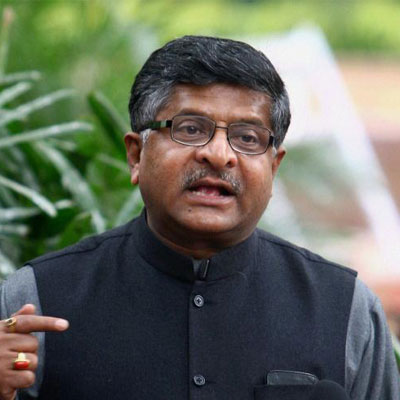
    NEW DELHI: Communications and Information Technology Minister Ravi Shankar Prasad has said the government fully respects the freedom of expression and discourse on social media and interned adding that “Our government is committed towards digital inclusion.”

    Welcoming the Telecom Regulatory Authority of India’s (TRAI) decision on discriminatory pricing, he said, “We very much appreciate this decision of TRAI whereby differential tariff in case of data services has been rejected. The view of our government from the beginning has been very clear, which I have also articulated in the Parliament, that is, internet is one of the finest creations of human mind and it should not become the monopoly of few.”

    “Differential pricing on data, whether it is Free Basics or any other mode, is plainly not acceptable,” the minister said, adding that the internet “must be available without discrimination.”

    Prasad said that the government was expanding Digital India into every “nook and corner of the country, and taking extraordinary steps to empower the people through technology, to create a knowledge economy, the very concept,” in order to bring about digital inclusion.

  • Govt respects free discourse & social media via internet: Ravi Shankar Prasad

    Govt respects free discourse & social media via internet: Ravi Shankar Prasad

    NEW DELHI: Communications and Information Technology Minister Ravi Shankar Prasad has said the government fully respects the freedom of expression and discourse on social media and interned adding that “Our government is committed towards digital inclusion.”

    Welcoming the Telecom Regulatory Authority of India’s (TRAI) decision on discriminatory pricing, he said, “We very much appreciate this decision of TRAI whereby differential tariff in case of data services has been rejected. The view of our government from the beginning has been very clear, which I have also articulated in the Parliament, that is, internet is one of the finest creations of human mind and it should not become the monopoly of few.”

    “Differential pricing on data, whether it is Free Basics or any other mode, is plainly not acceptable,” the minister said, adding that the internet “must be available without discrimination.”

    Prasad said that the government was expanding Digital India into every “nook and corner of the country, and taking extraordinary steps to empower the people through technology, to create a knowledge economy, the very concept,” in order to bring about digital inclusion.

  • Innovations needed to meet ‘Digital India’ goals

    Innovations needed to meet ‘Digital India’ goals

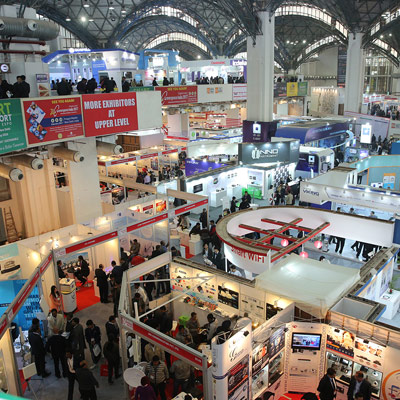
    NEW DELHI: While the telecom industry is on track, there is need for innovation to meet the goals of Digital India. This was the general outcome of discussions at South Asia’s largest ICT, broadcast and digital media event, which ended today.


    The expo witnessed 434 companies from 29 countries around the world showcasing the latest technologies and innovations. Over 125 eminent speakers took the dais to deliberate on the theme ‘Digital India’ – roadmap, opportunities, challenges, infrastructure and investments.


    The third day of the expo deliberated on affordable broadband for rural India at the third Telecom Summit, powered by Microsoft, thus facilitating Prime Minister Narendra Modi’s vision of making India a digitally empowered economy.


    Microsoft group director, government affairs & public policy S. Chandrasekhar said, “Exhibitions India and Convergence India provide a good platform for all telecom and ICT eco-systems to come together and exchange ideas, best practices and the best of technology.”


    A presentation on ‘Internet of Things in Mobile Workforce Management’ was given by Cyient – India senior manager Venkata Satyadeep Mane. “Technology is an enabler to build smart solutions for rapid growth. Industries in India are therefore aiming to build cutting-edge technology solutions and services that will shape the digital revolution. Accordingly, the Indian ICT marketplace is going to experience substantial shifts in the coming days! In this content, I believe Convergence India is a fantastic platform to share and learn not just technology but various other elements of business solutions,” he said.


    Key session on ‘Opportunities in telecom sector arising from Big Data & Cloud’ panelist HP India country leader – future cities & CTO – technology services Lux Rao said, “The promise of Digital India has been successful in capturing the aspirations of a young India and the unbridled optimism is palpable. Smart Cities & Digital India is lending traction to the country’s modernisation agenda.”


    He added, “Convergence India holds a mirror to the current state of programmes and their progress and is a convergence of philosophy, ideas and action. The three-day program packs in an eclectic combination of knowledge and experience sharing, networking opportunities and a deep dive into fast emerging ethos of an empowered nation – Truly Digital, Truly India.”


    Exhibitions India Group chairman Prem Behl, who conceived Convergence India, said, “The exhibitors have received quality visitors and have had a positive response on all three days of the expo. The concurrent conferences were productive with detailed discussions and presentations on Digital India.”


    A landmark session on the third day included the SCTE India Awards for Technical Excellence and Innovation in Digital Cable and Broadband.


    ‘GSMA India open day 2016’ hosted a discussion on India’s mobile industry growth trends and forecasts, challenges in this fast changing market, mechanisms being used to ease efforts in monetising this market and the innovations India will need to deliver a Digital India from industry leaders.


    Participating exhibiting names included Broadcom, C-Dot, Conax, Cyient, Ericsson, EMC, Harmonic, MediaTek, Microsoft, M-Star, Nagra, Sandisk, Telenor, and Thomson to name a few.


    Convergence India 2016 expo was endorsed by the Department of Electronics & Information Technology, the Communications & Information Technology, and the Information and Broadcasting Ministries.


    Exhibitions India Group (EIG) has been organising the annual International Convergence India series of expos since 1992, and will witness its silver jubilee edition at Pragati Maidan, New Delhi from 8 to 10 February next year.
  • Innovations needed to meet ‘Digital India’ goals

    Innovations needed to meet ‘Digital India’ goals

    NEW DELHI: While the telecom industry is on track, there is need for innovation to meet the goals of Digital India. This was the general outcome of discussions at South Asia’s largest ICT, broadcast and digital media event, which ended today.


    The expo witnessed 434 companies from 29 countries around the world showcasing the latest technologies and innovations. Over 125 eminent speakers took the dais to deliberate on the theme ‘Digital India’ – roadmap, opportunities, challenges, infrastructure and investments.


    The third day of the expo deliberated on affordable broadband for rural India at the third Telecom Summit, powered by Microsoft, thus facilitating Prime Minister Narendra Modi’s vision of making India a digitally empowered economy.


    Microsoft group director, government affairs & public policy S. Chandrasekhar said, “Exhibitions India and Convergence India provide a good platform for all telecom and ICT eco-systems to come together and exchange ideas, best practices and the best of technology.”


    A presentation on ‘Internet of Things in Mobile Workforce Management’ was given by Cyient – India senior manager Venkata Satyadeep Mane. “Technology is an enabler to build smart solutions for rapid growth. Industries in India are therefore aiming to build cutting-edge technology solutions and services that will shape the digital revolution. Accordingly, the Indian ICT marketplace is going to experience substantial shifts in the coming days! In this content, I believe Convergence India is a fantastic platform to share and learn not just technology but various other elements of business solutions,” he said.


    Key session on ‘Opportunities in telecom sector arising from Big Data & Cloud’ panelist HP India country leader – future cities & CTO – technology services Lux Rao said, “The promise of Digital India has been successful in capturing the aspirations of a young India and the unbridled optimism is palpable. Smart Cities & Digital India is lending traction to the country’s modernisation agenda.”


    He added, “Convergence India holds a mirror to the current state of programmes and their progress and is a convergence of philosophy, ideas and action. The three-day program packs in an eclectic combination of knowledge and experience sharing, networking opportunities and a deep dive into fast emerging ethos of an empowered nation – Truly Digital, Truly India.”


    Exhibitions India Group chairman Prem Behl, who conceived Convergence India, said, “The exhibitors have received quality visitors and have had a positive response on all three days of the expo. The concurrent conferences were productive with detailed discussions and presentations on Digital India.”


    A landmark session on the third day included the SCTE India Awards for Technical Excellence and Innovation in Digital Cable and Broadband.


    ‘GSMA India open day 2016’ hosted a discussion on India’s mobile industry growth trends and forecasts, challenges in this fast changing market, mechanisms being used to ease efforts in monetising this market and the innovations India will need to deliver a Digital India from industry leaders.


    Participating exhibiting names included Broadcom, C-Dot, Conax, Cyient, Ericsson, EMC, Harmonic, MediaTek, Microsoft, M-Star, Nagra, Sandisk, Telenor, and Thomson to name a few.


    Convergence India 2016 expo was endorsed by the Department of Electronics & Information Technology, the Communications & Information Technology, and the Information and Broadcasting Ministries.


    Exhibitions India Group (EIG) has been organising the annual International Convergence India series of expos since 1992, and will witness its silver jubilee edition at Pragati Maidan, New Delhi from 8 to 10 February next year.

  • FMCG, e-commerce, telecom & auto to boost Indian AdEx by 15.5% in 2016: GroupM

    FMCG, e-commerce, telecom & auto to boost Indian AdEx by 15.5% in 2016: GroupM

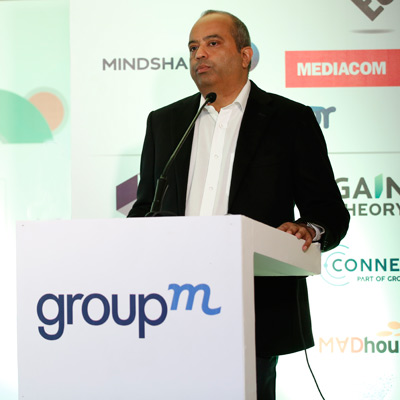
    MUMBAI: India’s advertising investment is predicted to reach an estimated Rs 57,486 crore in 2016, which is a growth of 15.5 per cent for the calendar year 2016 over the corresponding period in 2015, according to GroupM’s bi-annual advertising expenditure futures report This Year Next Year (TYNY).

    The last calendar year closed on a promising note, with the advertising expenditure in India closing at Rs 49,758 crore, growth of over 14.2 per cent over 2014.

    The growth will come from the FMCG sector as it continues to remain the most dominant sector with a 28 per cent share of the AdEx. Despite facing volume pressure, the sector is expected to continue ad investment aided by the softening of commodity prices.

    In 2016, e-commerce ad spends are expected to be high on the back of increasing competition, market expansion and newer players entering the space. Many leading traditional retailers will be expanding their e-commerce presence in 2016 even as consolidation continues in the sector. Another exciting development is the opening up of e-commerce as a platform for advertising, which will see further traction in 2016.

    What’s more, with the advent of 4G services in India, telecom service providers are expected to roll out extensive marketing campaigns across media. This roll out will also see global and domestic handset manufacturers launching new models of 4G/ LTE handsets. Another big contributor to the Indian AdEx this year will be the Auto sector, on the back of multiple launches across both four-wheelers and two-wheelers.

    GroupM South Asia CEO CVL Srinivas said, “India is the fastest growing ad market among all the major markets of the world. 2015 was the best year for ad spend growth we’ve had in the last five years. While global headwinds are building up in the new year, there are a number of positive factors that will help the Indian ad sector grow at higher levels in 2016. The GroupM TYNY report released today highlights these factors. While FMCG, Auto and e-commerce, which have been the top sectors contributing to ad growth in 2015 will continue to invest, Telecom, BFSI and the Government sector will see a ramp up. Events like the T20 World Cup, IPL and many state assembly elections will give a further impetus to ad spends. While digital will remain the fastest growing platform, India is one of the few large markets where all traditional media platforms will show positive growth.”

    GroupM South Asia chief growth officer Lakshmi Narashimhan added, “With significant number of users accessing internet primarily from a mobile device, ad-spend on mobile will become as large as the digital AdEx from two years ago. With digital media achieving audience reach numbers that are next only to television, multi-screen planning is the order of the day. We have seen focused targeting of digital and native advertising with programmatic buying over the last two years, and this momentum will continue in 2016, as automation increases.”

    GroupM estimates the Digital AdEx to grow by 47.5 per cent in 2016 to Rs 7,300 crore from the earlier Rs 4,950 crore. A significant part of this growth is on the back of higher investments in cross-screen campaigns. The digital AdEx is estimated to take a 12.7 per cent share of the total AdEx in 2016. However TV still leads the pack with 47.1 percent contribution to the total AdEx, which is a growth from 46.3 per cent in 2015. On the otherhand print advertising will see a slight decline in AdEx from 32.4 per cent share of the total pie in 2015 to 29.7 percent in 2016.

    2016 will see Video on Demand (VOD) services gaining popularity in India. The Asia Pacific region is expected to overtake Western Europe as the second largest market for VOD services by 2020, fuelled by rapid growth of smart phones in China and India. With the recent Netflix service launch in India, several domestic and international players will actively market their VOD services and acquire customers in the next 12 to 24 months.

    2016 is estimated to be a better year for newspapers than 2015. The increase in ad spends expected from print heavy sectors like Auto, BFSI and the Government sector augurs well for newspapers. Regional advertising of Telco and FMCG brands will benefit language dailies. While print as a medium is facing a lot of pressure from digital there is still headroom for growth in certain pockets and amongst certain audience clusters.

    While Radio is expected to grow at a little over 10 per cent, there is scope for the medium to pick up towards end 2016 when most of the new stations (set up after Phase III licenses, round I were issued) are fully operational. Digital audio platforms are gaining in popularity, opening up a new format for radio.

    There has been an upswing in Cinema Advertising in the last few years, which will continue in 2016 with an estimated 25 per cent growth in ad spends. Recent acquisitions by larger multiplex chains will help create a far richer viewing experience for consumers, giving brands another avenue to capture their target audience. The medium can expect more brands to come on board with longer term deals if they invest in measurement and build more accountability. At present Cinema advertising is less than one per cent of the total ad spend.