Tag: Digital India

  • India’s IT enabled services footprint in 80 countries, 56% of global IT outsourcing: Prasad

    India’s IT enabled services footprint in 80 countries, 56% of global IT outsourcing: Prasad

    NEW DELHI: Asserting the government’s ambitious Digital India programme is empowering people, Communication & Information Technology minister Ravi Shankar Prasad has said JAM () today reaches 310 million (31 crore) beneficiaries with 59 schemes involving Rs 61,822 crores.

    Addressing a Vikas Parv event organized by his ministry in Mumbai, he said India’s IT and IT enabled services has footprint in 80 countries covering 200 cities. He said India accounted for 56 percent of global IT outsourcing.

    The Minister said the Direct Benefit Transfer has helped save Rs 36,500 crores. Prasad said all the schemes are being implemented on digital technology platforms.

    The Minister said digital technology had also promoted ‘jan bhaagidari’ (people’s participation), where two million people interact with the government on the MyGov platform giving suggestions and sharing their thoughts.

    He said the government was able to auction spectrum worth Rs 1,09,000 crores without fingers being pointed at it. Jan Dhan – Adhaar – Mobile

    Prasad said the Public Sector Bharat Sanchar Nigam Limited which had posted a loss of Rs 8,000 crore in 2014 had managed to post an operating profit of Rs 672 crores and its mobile phone subscription has shot up from 800,000 to 2.3 million (23 lakh)

  • FY-16: Vodafone’s data revenue grows 45 percent; service revenue up 5 percent

    FY-16: Vodafone’s data revenue grows 45 percent; service revenue up 5 percent

    BENGALURU: Vodafone India reported 45.2 percent growth in revenue from data (browsing) for the year ended 31 March 2016 (FY-16, current year) as compared to the previous year. The telecom major’s total and service revenues in the current year increased 5 percent each as compared to FY-15. Vodafone’s reported data revenue for the current year at Rs 8,263 crore as against Rs 5,690 in Fy-15. Service revenue in the current year was Rs 44,303 crore as compared to Rs 42,204 crore in FY-15.

    Note: The unit of currency in this report is the Indian rupee – Rs (also conventionally represented by INR). The Indian numbering system or the Vedic numbering system has been used to denote money values. The basic conversion to the international norm would be:
    (a) 100,00,000 = 100 lakh = 10,000,000 = 10 million = 1 crore.
    (b) 10,000 lakh = 100 crore = 1 arab = 1 billion.
    (c) All numbers are standalone. The Financial results for Vodafone India have been derived from the consolidated financial results of Vodafone Group Plc. and this may differ from Vodafone India’s financial statements prepared in Indian GAAP, Ind (AS) or IFRS.

    Vodafone reported total revenue in the current year at Rs 44.490 crore as compared to Rs 42,378 crore in the previous year. EBIDTA in FY-16 at Rs 13,115 crore (29.5 percent EBIDTA margin) grew 4.1 percent from Rs 12,598 crore (29.7 percent margin) in the previous year. Vodafone says that underlying service revenue growth percentage is adjusted for regulatory impacts.

    Vodafone India managing director and CEO Sunil Sood, commented,“We continue to deliver healthy double digit underlying revenue growth of 10 percent and a healthy EBITDA margin. There is a strong uptake in data and our usage has gone up 63 percent YoY. Last year, we also embarked on an ambitious initiative to invest, modernize and expand our network to launch Vodafone SuperNetTM –providing a seamless voice and data experience for our customers. Shortly, our 4G services will be available in 1000 towns across 9 circles in India. We remain committed to fulfil the evolving needs of our customers and leverage our global experience plus rich understanding of India to play a meaningful role in enabling Digital India.”

    Subscription numbers

    Vodafone’s customer base in FY-16 grew 7.7 percent to 19.79 crore from 18.38 crore in FY-15. Data users consuming more than 1 MB data in FY-16 grew 12 percent to 4.48 crore from 4 crore in the previous year.  Data Users grew 5.9 percent in FY-16 to 6.75 crore from 6.38 crore in FY-15. 3G users in FY-16 grew 43.3 percent to 2.78 crore from 1.94 crore in FY-15.

    Vodafone reported overall annualized subscriber churn of 51.8 percent as compared to 52.6 percent in the previous year. Post-paid subscriber churn in FY-16 increased to 21.7 percent from20.9 percent in the previous year, while post-paid subscriber churn increased to 54.1 percent from 52.6 percent from the previous year.

    Vodafone India is a 100 percent fully owned subsidiary of the Vodafone Group Plc. with operations across the country serving approximately 19.8 crore customers (over 10.7 crore in rural areas).


  • FY-16: Vodafone’s data revenue grows 45 percent; service revenue up 5 percent

    FY-16: Vodafone’s data revenue grows 45 percent; service revenue up 5 percent

    BENGALURU: Vodafone India reported 45.2 percent growth in revenue from data (browsing) for the year ended 31 March 2016 (FY-16, current year) as compared to the previous year. The telecom major’s total and service revenues in the current year increased 5 percent each as compared to FY-15. Vodafone’s reported data revenue for the current year at Rs 8,263 crore as against Rs 5,690 in Fy-15. Service revenue in the current year was Rs 44,303 crore as compared to Rs 42,204 crore in FY-15.

    Note: The unit of currency in this report is the Indian rupee – Rs (also conventionally represented by INR). The Indian numbering system or the Vedic numbering system has been used to denote money values. The basic conversion to the international norm would be:
    (a) 100,00,000 = 100 lakh = 10,000,000 = 10 million = 1 crore.
    (b) 10,000 lakh = 100 crore = 1 arab = 1 billion.
    (c) All numbers are standalone. The Financial results for Vodafone India have been derived from the consolidated financial results of Vodafone Group Plc. and this may differ from Vodafone India’s financial statements prepared in Indian GAAP, Ind (AS) or IFRS.

    Vodafone reported total revenue in the current year at Rs 44.490 crore as compared to Rs 42,378 crore in the previous year. EBIDTA in FY-16 at Rs 13,115 crore (29.5 percent EBIDTA margin) grew 4.1 percent from Rs 12,598 crore (29.7 percent margin) in the previous year. Vodafone says that underlying service revenue growth percentage is adjusted for regulatory impacts.

    Vodafone India managing director and CEO Sunil Sood, commented,“We continue to deliver healthy double digit underlying revenue growth of 10 percent and a healthy EBITDA margin. There is a strong uptake in data and our usage has gone up 63 percent YoY. Last year, we also embarked on an ambitious initiative to invest, modernize and expand our network to launch Vodafone SuperNetTM –providing a seamless voice and data experience for our customers. Shortly, our 4G services will be available in 1000 towns across 9 circles in India. We remain committed to fulfil the evolving needs of our customers and leverage our global experience plus rich understanding of India to play a meaningful role in enabling Digital India.”

    Subscription numbers

    Vodafone’s customer base in FY-16 grew 7.7 percent to 19.79 crore from 18.38 crore in FY-15. Data users consuming more than 1 MB data in FY-16 grew 12 percent to 4.48 crore from 4 crore in the previous year.  Data Users grew 5.9 percent in FY-16 to 6.75 crore from 6.38 crore in FY-15. 3G users in FY-16 grew 43.3 percent to 2.78 crore from 1.94 crore in FY-15.

    Vodafone reported overall annualized subscriber churn of 51.8 percent as compared to 52.6 percent in the previous year. Post-paid subscriber churn in FY-16 increased to 21.7 percent from20.9 percent in the previous year, while post-paid subscriber churn increased to 54.1 percent from 52.6 percent from the previous year.

    Vodafone India is a 100 percent fully owned subsidiary of the Vodafone Group Plc. with operations across the country serving approximately 19.8 crore customers (over 10.7 crore in rural areas).


  • FICCI’s reaction to IPR Policy

    FICCI’s reaction to IPR Policy

    NEW DELHI: The Federation of Chambers of Commerce and Industry has said the Intellectual Property Rights Policy correctly identifies IP as a strategic tool for furthering India’s economic goals and therefore recommends for the effective protection of IP rights as an essential element for making optimal use of innovative and creative capabilities of its people.

    Welcoming the much-awaited IPR Policy for India, FICCI President Harshvardhan Neotia said, “”the national policy contains many encouraging recommendations including the need to create awareness on the importance of IPRs through a nation-wide promotional campaign and linking it to other national initiatives like ‘Make in India’ and ‘Digital India’, undertaking a baseline survey across sectors to evaluate the IP potential in specific sectors.”

    “Other significant policy announcements include making the DIPP as the nodal department for all IPR related developments in India, the emphasis to make the Indian Patent Office an increasingly service oriented organization and to improve IP enforcement and the adjudication mechanism, among others, Neotia added.


  • FICCI’s reaction to IPR Policy

    FICCI’s reaction to IPR Policy

    NEW DELHI: The Federation of Chambers of Commerce and Industry has said the Intellectual Property Rights Policy correctly identifies IP as a strategic tool for furthering India’s economic goals and therefore recommends for the effective protection of IP rights as an essential element for making optimal use of innovative and creative capabilities of its people.

    Welcoming the much-awaited IPR Policy for India, FICCI President Harshvardhan Neotia said, “”the national policy contains many encouraging recommendations including the need to create awareness on the importance of IPRs through a nation-wide promotional campaign and linking it to other national initiatives like ‘Make in India’ and ‘Digital India’, undertaking a baseline survey across sectors to evaluate the IP potential in specific sectors.”

    “Other significant policy announcements include making the DIPP as the nodal department for all IPR related developments in India, the emphasis to make the Indian Patent Office an increasingly service oriented organization and to improve IP enforcement and the adjudication mechanism, among others, Neotia added.


  • FICCI FRAMES: Prasad says -Indian broadcast industry needs an improved rating system

    FICCI FRAMES: Prasad says -Indian broadcast industry needs an improved rating system

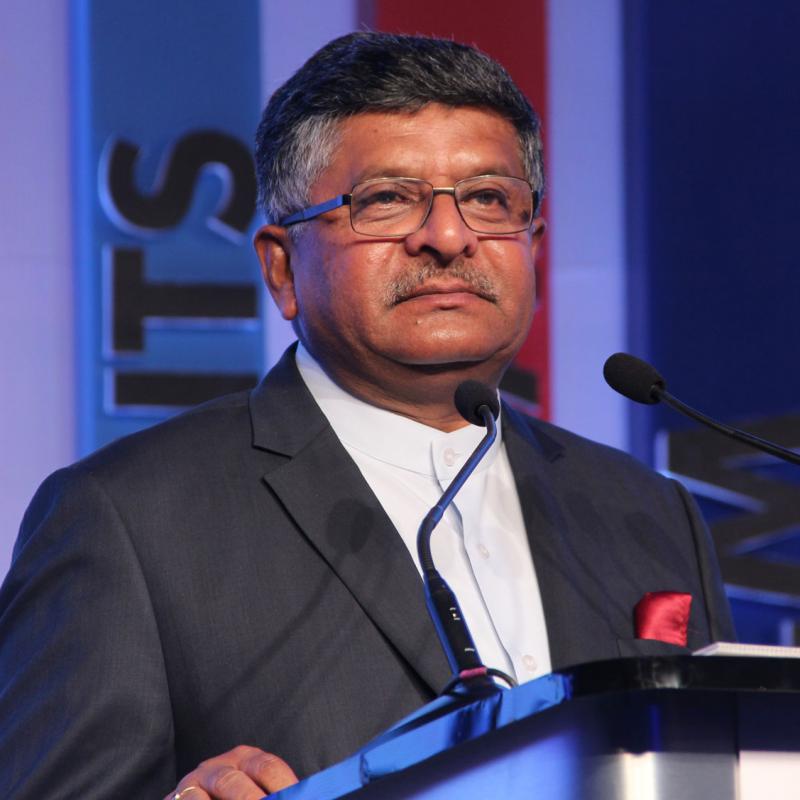
    Mumbai, 30 March: Communication & IT Minister Ravi Shankar Prasad today said the Digital India initiative of the Government is a $ 1 trillion business opportunity across IT and IT enabled services, telecom and electronics manufacturing.

    Speaking at the inauguration of the 17th edition of FICCI Frames Media & Entertainment Industry Conclave, Prasad said Digital India is aimed at empowering the citizens of India digitally.

    He said nearly $400 billion will be added from the electronics manufacturing including mobile phones, solar panels etc, while a $ 350 billion opportunity will be presented by the IT and ITES sector. The Communication services will provide business opportunities of $ 250 billion.

    The Minister said: “the aspirational urge of Indians is driving the digital world in a phenomenal way. And the Government’s job is to create an enabling eco-system for its growth.”

    Speaking about the Media & Entertainment Industry, Prasad who had been the Information Minister under Mr Atal Behari Vajpayee said Indian content has a global reach and “we must utilize its strength to depict virtues of our rich cultural heritage”. Prasad suggested that the epic stories of Ramayana and Mahabharata should be taken to the world via quality film making.

    Prasad said the Government recognized the importance and relevance of promoting media and entertainment industry. Hence, visa processes were being eased for film shootings.

    A National Centre of Excellence was coming up for the media and entertainment industry and a new film facilitation office was also being set up.

    He added that a new category in the National Film Awards – Most Film Friendly State – had been introduced to felicitate the state that provides greater access to the film industry.

    He said with the spread of internet new platforms were emerging which would lead to change in business models.

    The Minister asserted at the same time that Internet should remain democratic, plural and inclusive. “Internet is the finest creation of human mind, it should not be abused by few,” he said.

    Stressing that the television rating system must improve, Prasad said he was not impressed with TAM’s alternative – BARC – either.

    It was imperative for the television rating data to be more fair and reasonable. “I was not impressed by the TAM, and I am not impressed by the alternative too. How can a few thousand boxes determine what India is watching?” he asked. He said there was a need for a structured, fair and reasonable system to allow creation of quality content.

    He said several of his government initiatives like Skill India, Stand Up India, Aadhar roll out, Make in India, and Smart Cities involve enormous use of digital technology.

    “If the industry needs more policy initiatives, the government is open to it,” the Minister asserted.

    Prasad said with 250,000 gram panchayats being connected through Optic Fiber Network, the entire country was being brought under the broadband regime.

    He claimed that India is now the second largest mobile phone market. The internet penetration had reached 400 million, with 60% of it being mobile internet. He also said that India with one billion mobile phone connections had overtaken the United States to becomethe second largest mobile phone market in the world behind China.

    He asserted that with successful Aadhar enrolment, the government has been able to save Rs 15,000 crore through direct delivery of subsidies.

    Driving home the importance of Digital India and the opportunities it was offering, the Minister cited examples of a mathematics teacher-cum-App maker from Rajasthan, and a 68 year old person from Telangana who became digitally literate in order to communicate with her grandson in Dubai through skype. He said “Indians first watch, then adopt, enjoy and become empowered”.

     India’s talent combined with the power of Information Technology would act as a springboard to launch India into the big league, said Prasad.
    He ended by expressing his unhappiness towards the rating system in India, “I was never happy with TAM and I am not very happy with BARC either, I request Uday and the industry to have an improved rating system” he concluded
     

  • FICCI FRAMES: Prasad says -Indian broadcast industry needs an improved rating system

    FICCI FRAMES: Prasad says -Indian broadcast industry needs an improved rating system

    Mumbai, 30 March: Communication & IT Minister Ravi Shankar Prasad today said the Digital India initiative of the Government is a $ 1 trillion business opportunity across IT and IT enabled services, telecom and electronics manufacturing.

    Speaking at the inauguration of the 17th edition of FICCI Frames Media & Entertainment Industry Conclave, Prasad said Digital India is aimed at empowering the citizens of India digitally.

    He said nearly $400 billion will be added from the electronics manufacturing including mobile phones, solar panels etc, while a $ 350 billion opportunity will be presented by the IT and ITES sector. The Communication services will provide business opportunities of $ 250 billion.

    The Minister said: “the aspirational urge of Indians is driving the digital world in a phenomenal way. And the Government’s job is to create an enabling eco-system for its growth.”

    Speaking about the Media & Entertainment Industry, Prasad who had been the Information Minister under Mr Atal Behari Vajpayee said Indian content has a global reach and “we must utilize its strength to depict virtues of our rich cultural heritage”. Prasad suggested that the epic stories of Ramayana and Mahabharata should be taken to the world via quality film making.

    Prasad said the Government recognized the importance and relevance of promoting media and entertainment industry. Hence, visa processes were being eased for film shootings.

    A National Centre of Excellence was coming up for the media and entertainment industry and a new film facilitation office was also being set up.

    He added that a new category in the National Film Awards – Most Film Friendly State – had been introduced to felicitate the state that provides greater access to the film industry.

    He said with the spread of internet new platforms were emerging which would lead to change in business models.

    The Minister asserted at the same time that Internet should remain democratic, plural and inclusive. “Internet is the finest creation of human mind, it should not be abused by few,” he said.

    Stressing that the television rating system must improve, Prasad said he was not impressed with TAM’s alternative – BARC – either.

    It was imperative for the television rating data to be more fair and reasonable. “I was not impressed by the TAM, and I am not impressed by the alternative too. How can a few thousand boxes determine what India is watching?” he asked. He said there was a need for a structured, fair and reasonable system to allow creation of quality content.

    He said several of his government initiatives like Skill India, Stand Up India, Aadhar roll out, Make in India, and Smart Cities involve enormous use of digital technology.

    “If the industry needs more policy initiatives, the government is open to it,” the Minister asserted.

    Prasad said with 250,000 gram panchayats being connected through Optic Fiber Network, the entire country was being brought under the broadband regime.

    He claimed that India is now the second largest mobile phone market. The internet penetration had reached 400 million, with 60% of it being mobile internet. He also said that India with one billion mobile phone connections had overtaken the United States to becomethe second largest mobile phone market in the world behind China.

    He asserted that with successful Aadhar enrolment, the government has been able to save Rs 15,000 crore through direct delivery of subsidies.

    Driving home the importance of Digital India and the opportunities it was offering, the Minister cited examples of a mathematics teacher-cum-App maker from Rajasthan, and a 68 year old person from Telangana who became digitally literate in order to communicate with her grandson in Dubai through skype. He said “Indians first watch, then adopt, enjoy and become empowered”.

     India’s talent combined with the power of Information Technology would act as a springboard to launch India into the big league, said Prasad.
    He ended by expressing his unhappiness towards the rating system in India, “I was never happy with TAM and I am not very happy with BARC either, I request Uday and the industry to have an improved rating system” he concluded
     

  • Digital India is CASBAA India Forum 2016’s theme

    Digital India is CASBAA India Forum 2016’s theme

    MUMBAI: On March 22 CASBAA will host local and international speakers at the India Forum 2016, its annual discussion panel. The speakers will focus on the fast-evolving Indian broadcasting industry in the advent of the Digital India initiative.

    “The Government of India’s Digital India initiative has brought about a revolution in the country’s economy and has ushered in a plethora of opportunities for sectors to drive the overall digital revolution in India,” said  CASBAA CEO Christopher Slaughter. “We see that digital content in India is at an inflection point and the nation is at the top of digital and high-definition (HD) adoption. Further, we have observed that the content creators and broadcasters are increasingly evaluating new media and content delivery alternatives and are planning significant capital expenditure to upgrade their infrastructure in the coming years.”

    This year, corporate partners for the CASBAA India Forum 2016 include SES (Supporting Sponsor), AsiaSat, Diagnal, Eutelsat, MEASAT, Verimatrix, Videocon d2h and WWE Network (Sponsors).

    “Digital India – The Four Phases of Cable Enlightenment” is this year’s theme for the CASBAA India Forum 2016. A diverse roster of expert speakers will discuss India’s continued growth, including such topics as digitization challenges, security aspects, Indian OTT industry, advertising trends in Digital India, impact of digital advertising on traditional media, satellite industry in India among others.

    Several industry experts are expected to attend this event.   Trai chairman R.S. Sharma is expected to deliver the opening keynote address.  The inaugural address will be made by MIB Special Secretary J S Mathur and the industry keynote address will be delivered by  Tata Sky MD and CEO Harit Nagpal (Industry Keynote). Others attending the event include TRAi’s  Principal Advisor, Broadcast & Cable S K Gupta,  MIB Joint Secretary -Broadcasting R. Jaya, APT Satellite sales director for Indian and Middle East Thomas Antony ,   AsiaSat CEO William Wade,  BBC Global News COO Naveen Jhunjhunwala,  Disney India Media Networks vice president Nikhil Gandhi, Eutelsat UK MD  Nicholas Daly,  Google India Industry director   Nitin Bawankule,  Hathway CEO Jagdish Kumar, Media, Hinduja Group CEO Anthony D’Silva, Intelsat India country manager Gaurav Kharod, MEASAT CEO Paul Brown-Kenyon, MEC South Asia managing director T. Gangadhar and  Viacom18 Digital Ventures COO Gaurav Gandhi.  

  • Digital India is CASBAA India Forum 2016’s theme

    Digital India is CASBAA India Forum 2016’s theme

    MUMBAI: On March 22 CASBAA will host local and international speakers at the India Forum 2016, its annual discussion panel. The speakers will focus on the fast-evolving Indian broadcasting industry in the advent of the Digital India initiative.

    “The Government of India’s Digital India initiative has brought about a revolution in the country’s economy and has ushered in a plethora of opportunities for sectors to drive the overall digital revolution in India,” said  CASBAA CEO Christopher Slaughter. “We see that digital content in India is at an inflection point and the nation is at the top of digital and high-definition (HD) adoption. Further, we have observed that the content creators and broadcasters are increasingly evaluating new media and content delivery alternatives and are planning significant capital expenditure to upgrade their infrastructure in the coming years.”

    This year, corporate partners for the CASBAA India Forum 2016 include SES (Supporting Sponsor), AsiaSat, Diagnal, Eutelsat, MEASAT, Verimatrix, Videocon d2h and WWE Network (Sponsors).

    “Digital India – The Four Phases of Cable Enlightenment” is this year’s theme for the CASBAA India Forum 2016. A diverse roster of expert speakers will discuss India’s continued growth, including such topics as digitization challenges, security aspects, Indian OTT industry, advertising trends in Digital India, impact of digital advertising on traditional media, satellite industry in India among others.

    Several industry experts are expected to attend this event.   Trai chairman R.S. Sharma is expected to deliver the opening keynote address.  The inaugural address will be made by MIB Special Secretary J S Mathur and the industry keynote address will be delivered by  Tata Sky MD and CEO Harit Nagpal (Industry Keynote). Others attending the event include TRAi’s  Principal Advisor, Broadcast & Cable S K Gupta,  MIB Joint Secretary -Broadcasting R. Jaya, APT Satellite sales director for Indian and Middle East Thomas Antony ,   AsiaSat CEO William Wade,  BBC Global News COO Naveen Jhunjhunwala,  Disney India Media Networks vice president Nikhil Gandhi, Eutelsat UK MD  Nicholas Daly,  Google India Industry director   Nitin Bawankule,  Hathway CEO Jagdish Kumar, Media, Hinduja Group CEO Anthony D’Silva, Intelsat India country manager Gaurav Kharod, MEASAT CEO Paul Brown-Kenyon, MEC South Asia managing director T. Gangadhar and  Viacom18 Digital Ventures COO Gaurav Gandhi.  

  • Budget allocations for Digital India, northeast go up for Communication and Information Technology Ministry

    Budget allocations for Digital India, northeast go up for Communication and Information Technology Ministry

    New Delhi: The allocation for capital outlay on telecommunication and electronic industries is Rs 125 crore for the Departments of Telecommunications Communications and Information Technology (DeiTY), according to the Union Budget presented by Finance Minister Arun Jaitley on February 29.

    While the capital outlay on telecommunication and electronic Industries has been sharply increased for the telecommunications department from Rs 16 crore in the revised budget of 2015-16 to Rs 80 crore for 2016-17, it had been cut from Rs 69 crore in the revised estimates of the DeiTY for 2015-16 to Rs 45 crore for 2016-17.

    Interestingly, this works against the interests of the broadcasting industry, since set top boxes, antennae, headends and other equipment would fall under the DeiTY’ help to public or private industry under the head of  ‘capital outlay on telecommunication and electronic Industries.’

    The total budgetary outlay for the Telecommunication Department is Rs 21214.66 crore, while it is Rs 3328.82 crore for DeiTY for 2016-17

    Under Digital India programme, there are separate allocations for the Manpower Development Programme to ensure availability of trained human resources; Electronics Governance to deliver all Government services electronically to the citizens in his/her locality through integrated and inter-operable systems via multiple modes, while ensuring efficiency, transparency and reliability of such services at affordable costs; the National Knowledge Network with multiple gigabit bandwidth to connect Knowledge Institutions across the country; Promotion of Electronics/IT Hardware Manufacturing;  R&D in IT/Electronics/CCBT; and Foreign Trade and Export Promotion to reimburse Central Sales Tax to Electronics Hardware Technology Parks (EHTP) and Software Technology Park (STP) units.