Tag: Digital India

  • Dist. National Informatics Centres to be of international standards

    Dist. National Informatics Centres to be of international standards

    NEW DELHI: Electronics and Information and Technology Minister Ravi Shankar Prasad has said the National Informatics Centre is the “technological bridge of India and is best placed to lead the way for a Digital India”

    He urged the District Information Officers (DIOs) to be innovative and proactive. NIC must adopt a transformative approach to make a difference at the grassroots level. He appealed to the NIC to connect with the Common Service Centres (CSCs), who have successfully provided training on digital payment systems to over 19.6 million of rural citizens and 6,15,000 merchants.”

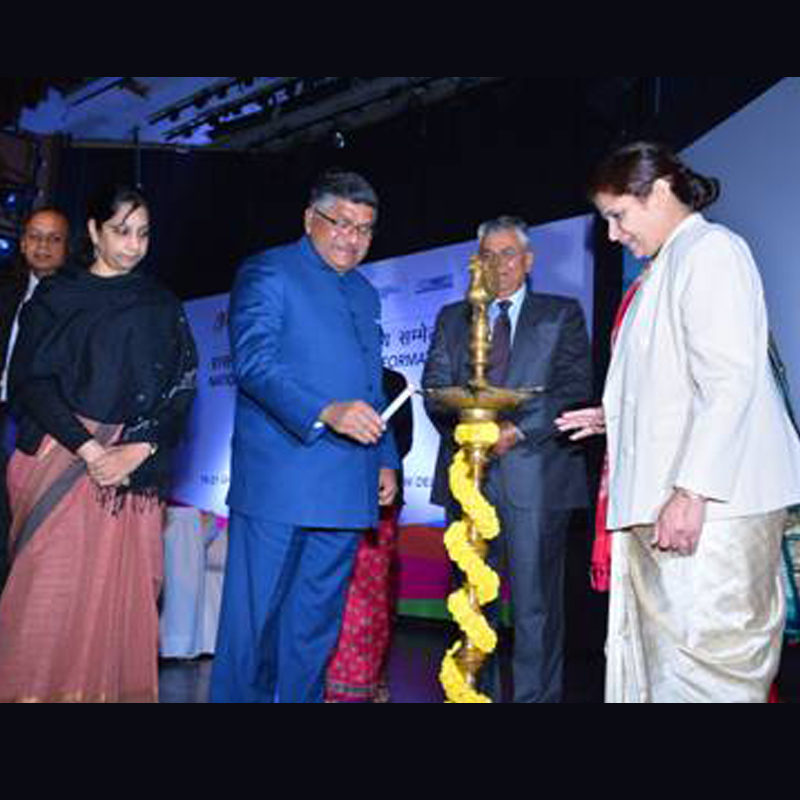
    He was speaking at an event where the NIC kicked off the National Meet on Grassroot Informatics – VIVID: Weaving a Digital India here.

    The inauguration of the three-day event was also attended Minister of State P P Chaudhary, Secretary Ms Aruna Sundararajan, Additional Secretary Ajay Kumar, NIC DG Ms Neeta Verma, and Deputy DG Ms Rama Nagpal.

    Prasad announced the Government’s plan to set up a Government Security Operation Centre and a Data Centre for Cloud in Bhopal. He also announced that the Government is going to enhance the infrastructure of district NIC offices to international standards. As a pilot project, 150 District NIC offices would be upgraded during the period 2017-18, while rest will follow soon.

    He instructed the ministry to develop a training module for the NIC officials to keep pace with the ever evolving technologies. He also announced the introduction of annual awards for the DIOs of the NIC for taking up exemplary innovative approach in their respective districts. The top three best innovators will get a reward of Rs 2,00,000, Rs 1,00,000 and Rs 50,000 respectively.

    Chaudhary said, “The threshold of the year 2017 will always be remembered for heralding in several transformative changes to benefit the economy as well to the citizens, amongst them the Digital India initiative has been the most significant one. I must congratulate NIC and DIOs for playing a pivotal role in preparing the country for a successful Digital transformation of our ecosystem.

    NIC also introduced two new portals – District Collector’s Dashboard and NIC Service Desk, which were launched by Prasad and Chaudhary respectively.

    The National Meet on Grassroots Informatics is aimed at showcasing the various initiatives of NIC in creating and enhancing the Digital Infrastructure in the country. Some of these are – setting up of ICT infrastructure, developing state of the art products to enable the government and empower the citizens, its initiatives at state and district level along the lines of Digital India initiatives along with the various awareness campaigns on Digital Payment Systems encompassing DBT, PFMS, Cashless Payment, Aadhaar etc.

    The individual sessions during these three days would throw lights on NIC’s journey so far, the best practices it follows, the Digital India programme, Digital India initiatives from NIC State Units, success stories from the districts, Financial Inclusion, its technology awareness programmes and ICT Infrastructure being provided by NIC.

  • Youth for Digital India: Theme of National Youth Festival starting on 12 Jan

    Youth for Digital India: Theme of National Youth Festival starting on 12 Jan

    NEW DELHI: ‘Youth for Digital India’ will be the theme of the National Youth Festival commencing this week. The department of youth affairs of the youth affairs and sports ministry organises the festival every year on the birth anniversary of Swami Vivekananda.

    Youth affairs and sports minister Vijay Goel said the Festival from 12 to 16 January at Rohtak in Haryana will also be addressed by the prime minister Narendra Modi via video conferencing during the opening ceremony. Home Minister Rajnath Singh will be the chief guest in the presence of Haryana chief minister Mahohar Lal.

    The theme had been chosen keeping in view the most critical and crucial importance of the thrust accorded to the area of Digitalisation and Skill Development by Government of India and realise the proclaimed national goal for ‘Make in India Campaign’ and the PM’s vision of ‘Youth Led Development’.

    To achieve the proclaimed national goal, it has been decided to project the various widely acclaimed initiatives of Ministry of Skill Development and Entrepreneurship, NSDA, NSDC, DGET & MoMSME etc. through Skill Development Exhibition, Lectures and Workshops for the benefit of thousands of participants of the Festival and local youth.

    The Mascot of the festival was decided in view of the long standing skewed sex ratio, especially in a state like Haryana. The selection of ‘Lado’ reflects the sensitivity of the state government towards the gender inequality in the state and to bring women at par with men which both the government is committed to combat.

    The Festival will also witness a Defence exhibition where various aspects and initiatives of the defence forces, display of equipment, and avenues for recruitment into Armed Forces will be projected for the benefits of thousands of young participant.

    A performance by a renowned artist on the life and ideology of Swami Vivekanand on the opening ceremony will be the highlight of the festival. During 13 to 16 January 2017, the Festival will have a variety of cultural programmes (both competitive and non-competitive), Youth Convention, Suvichar (a lecture series), Exhibitions and adventure programmes, Hasya Kavi Sammelan, Haryanavi Nights etc. followed by Cultural Evening by Hansraj Hans and Raftaar.

    India being one of the youngest nations in the world with about 65% of its population under the age of 35, Goel expects that this “demographic dividend’ offers a great opportunity for the country to revolutionize itself and achieve the vision of a clean India, a skilled India and most importantly an incredible India . He urges the Youth of the Nation to strive and work endlessly in the process of nation building following the paths shown by Swami Vivekanada.

    The delegates from the different states have already started arriving for the event. It is expected that about 5000 youth delegates from different States/UTs will attend.

    Also Read:

    TRAI ideas on public WiFi in three weeks; Mumbai gets 500 hotspots

    MAM 2016: When marketing, advertising hopped on to Digital India

  • Youth for Digital India: Theme of National Youth Festival starting on 12 Jan

    Youth for Digital India: Theme of National Youth Festival starting on 12 Jan

    NEW DELHI: ‘Youth for Digital India’ will be the theme of the National Youth Festival commencing this week. The department of youth affairs of the youth affairs and sports ministry organises the festival every year on the birth anniversary of Swami Vivekananda.

    Youth affairs and sports minister Vijay Goel said the Festival from 12 to 16 January at Rohtak in Haryana will also be addressed by the prime minister Narendra Modi via video conferencing during the opening ceremony. Home Minister Rajnath Singh will be the chief guest in the presence of Haryana chief minister Mahohar Lal.

    The theme had been chosen keeping in view the most critical and crucial importance of the thrust accorded to the area of Digitalisation and Skill Development by Government of India and realise the proclaimed national goal for ‘Make in India Campaign’ and the PM’s vision of ‘Youth Led Development’.

    To achieve the proclaimed national goal, it has been decided to project the various widely acclaimed initiatives of Ministry of Skill Development and Entrepreneurship, NSDA, NSDC, DGET & MoMSME etc. through Skill Development Exhibition, Lectures and Workshops for the benefit of thousands of participants of the Festival and local youth.

    The Mascot of the festival was decided in view of the long standing skewed sex ratio, especially in a state like Haryana. The selection of ‘Lado’ reflects the sensitivity of the state government towards the gender inequality in the state and to bring women at par with men which both the government is committed to combat.

    The Festival will also witness a Defence exhibition where various aspects and initiatives of the defence forces, display of equipment, and avenues for recruitment into Armed Forces will be projected for the benefits of thousands of young participant.

    A performance by a renowned artist on the life and ideology of Swami Vivekanand on the opening ceremony will be the highlight of the festival. During 13 to 16 January 2017, the Festival will have a variety of cultural programmes (both competitive and non-competitive), Youth Convention, Suvichar (a lecture series), Exhibitions and adventure programmes, Hasya Kavi Sammelan, Haryanavi Nights etc. followed by Cultural Evening by Hansraj Hans and Raftaar.

    India being one of the youngest nations in the world with about 65% of its population under the age of 35, Goel expects that this “demographic dividend’ offers a great opportunity for the country to revolutionize itself and achieve the vision of a clean India, a skilled India and most importantly an incredible India . He urges the Youth of the Nation to strive and work endlessly in the process of nation building following the paths shown by Swami Vivekanada.

    The delegates from the different states have already started arriving for the event. It is expected that about 5000 youth delegates from different States/UTs will attend.

    Also Read:

    TRAI ideas on public WiFi in three weeks; Mumbai gets 500 hotspots

    MAM 2016: When marketing, advertising hopped on to Digital India

  • “There would be  a lot on TRAI’s plate in 2017” – RS Sharma

    “There would be a lot on TRAI’s plate in 2017” – RS Sharma

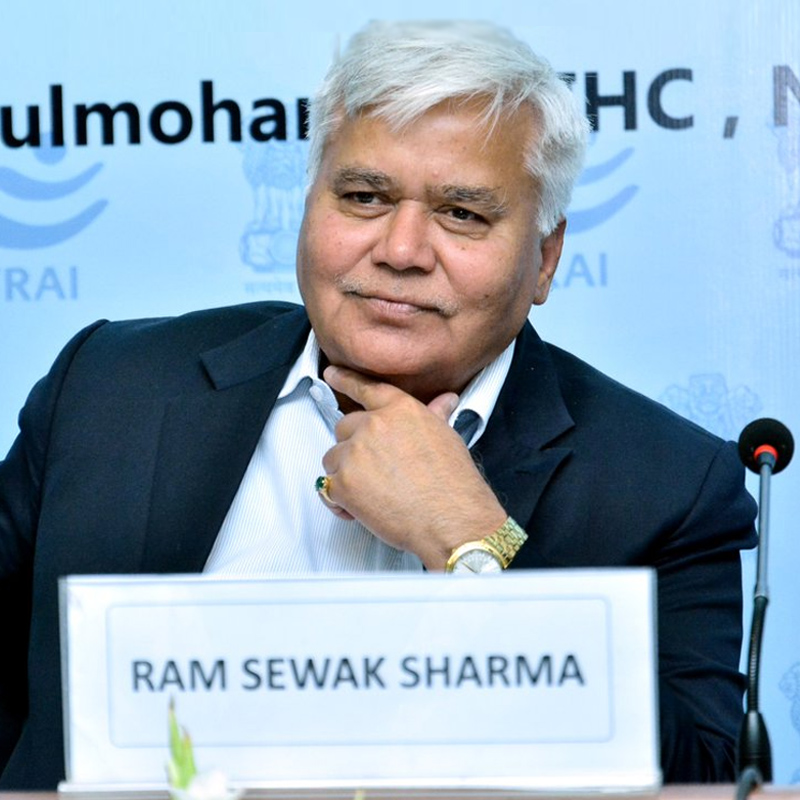
    RS Sharma, chief regulator of India’s telecoms and broadcast carriage services, is a plain-speaking person who doesn’t mince words. He is forthright inhis thoughts on the Telecom Regulatory Authority of India (TRAI)’s role, which, according to several reiterations, is work towards creating a regulatory environment to remove ambiguities and litigations. While doing so, if the regulator has over-reached, Sharma says, he and his colleagues are willing to correct themselves if stakeholders convince them of their viewpoints as part of a healthy and democratic process of debateand discussions.

    A senior-level bureaucrat, whose last assignment in the government was Secretary, Department of Electronics and Information Technology, Sharma as the Chairman of TRAI is convinced that pressures notwithstanding, it’s the job of a regulator to be not only technology agnostic, but also stakeholder-neutral in its efforts to create a level-playing field for all for the growth of telecoms and broadcast sectors. Being tech-savvy (he is one of those in the government who was active on Twitter much before it became a buzzword as a communication tool within government setups) helps in a highly technological world.

    Indiantelevision.com’s Consulting Editor Anjan Mitra engages Sharma on various issues and Sharma, true to his self, doesn’t flinch away from answering the queries, even those critical of TRAI’s role.

    Edited excerpts from the interview:

    As the chief regulator what would be your overview of the telecom and the broadcast sectors?

    Both the sectors are very vibrant in our country.  In the telecoms sector, we have almost a billion plus people connected through mobile phones and other devices. However, we need to essentially now focus on the issue of data speed and availability. In this regard we have already given various recommendations to the government, both in the wireless as also in the fixed line segments.

    The focus is on implementation of Bharat Net (taking broadband to all parts of India, including rural areas, via fibre optics), promotion of digital cable TV for supply of broadband, facilitating an environment for creating Wi-Fi hotspots and liberalizing the satellite bandwidthregime so satellites can also be used to provide broadband services, which also means an Open Sky policy. All these initiatives,if implemented, are expected to increase availability and improvement of internet infrastructure for the people of this country, which is the first most important prerequisite of Digital India — broadband as a utility to the citizens. We see telecom space developin that direction.

    The broadcasting sector too is vibrant where we now have about 900 plus TV channels, which have a wide range of programming catering to a wide section of the people through various delivery platforms. Fortunately, by the end of this calendar year, the fourth phase of digitization (of TV services) could be completedwhere all stakeholders have contributed and participated equally. We should also not forget the Indian TV network is one of the largest networks in the world and when it gets fully digitized, it would be a real achievement.

    So, to facilitate further smoothening of the digitization path, we would be bringing out three important guidelines on issues relating to tariff, interconnection and quality of service. After having worked almost through the year (2016) and examining the broadcast and cable sector comprehensively, the final guidelines on the three issues would be issued that will herald a new, but common framework for all platforms.

    When are these final guidelines likely to be issued by TRAI now that legal hurdles to implementation of digitization or DAS have been cleared by courts?

    The final recommendations will be issued at the end of this month, which will also coincide with end of this year and the guidelines, hopefully, will bring about more harmony in the TV sector and various delivery platforms prevalent in the country.

    At TRAI, we can only create an environment for TV (carriage) services, while it’s the Ministry of Information and Broadcasting (MIB)’s role to actually push networks and stakeholders to adhere to the digital deadlines and enforce the schedule. But we are ready to provide any assistance to MIB if asked for.

    (This interview was taken earlier in December after the Delhi High Court had dismissed all cases relating to extension of  deadline of Phase III of digitization. Subsequently on December 23, 2016, MIB extended the deadline for Phase IV of DASto 31 March, 2017 owing to uncertainties in the market.  The last and fourth phase was to have been completed on 31 December, 2016. Same day, Madras High Court passed an interim order, valid till next hearing mid-January 2017, directing TRAI to maintain status quo and refrain from issuing any further guidelines relating to the broadcast sector, especially if those guidelineshad any bearing on copyright issues raised by petitioner Star India and Vijay TV, amongst other things.)

    A regulator’s job is to be a facilitator and help create a business environment that’s win-win for all stakeholders. But why is it that many directives and guidelinesare legally challenged by the industry?

    Everybody in this country has a right to take recourse to legal help and I would not like to comment at all on the issue as to why our directives are challenged by the industry. However, all that I would say is that there is a due process of law and which takes care of many such issues. While many of our directives are upheld by the courts and TDSAT(the Telecoms Disputes Settlement & Appellate Tribunal), some of them are struck down too. It’s a process available to Indians under the Constitution.

    What were the underlying objectives of TRAI when it started drafting a new set of guidelines for the broadcast and cable sector?

    Our main objective — and purpose for all guidelines for both the broadcast and telecoms sectors — is to reduce ambiguity in regulations. The broadcast segment is no exception.The aim is to create a kind of regulatory environment where there is less ambiguity and lesser scope for litigations. Litigations take place because of ambiguity (in rules and regulations).Especially in the broadcasting sector there are no or few contracts (amongst stakeholders), which result in people going to courts of law. So, TRAI is trying to streamlinethe sector. It is not only the TRAI regulations that are (legally) challenged, but stakeholdersalso litigate amongst themselves. We want to create a much more rational level playing field for all stakeholders, including the consumer.

    However critics, including domestic and foreign industry bodies, say TRAI ends up over regulating. What do you have to say about this criticism?

    In sectors where there are multiple stakeholders litigating amongst themselves, somebody will have to establish basic rules. If stakeholders interact among themselves without any rules, that is fine with us. However, we also have to understand that the most important stakeholder in all this is the consumer and it should not happen that the consumer ultimately is the sufferer. Though TRAI doesn’t believe in unnecessary regulations, at the same time some regulation defining the playing area isnecessary for an orderly growth of the industry.

    When industry bodies do benchmarking of Indian regulations versus FCC or Ofcom or some other Asian markets, India and China emerge as highly regulated markets. Comment.

    I don’t want to comment on those benchmarks as I am not really aware of them or the methodology used. But I certainly don’t agree that we are regulating when regulation is not necessary. We also believe in minimal regulation. Because of high level of litigation-related activities happening in the Indian broadcast sector, we feel there is a need to clarify issues. It is better to have some basic rules of the game rather than having ambiguous situations, which results into too many litigations and waste of time.

    So, you feel the draft broadcast regulations are aimed at streamlining the sector and bring about more transparency?

    Certainly yes and that’s what we hope will be achieved ultimately. Recent courtjudgments have also clearly held that the processes in this kind of interconnection environment should be transparent. So, less ambiguity and more transparency are two guiding principles that have helped us in draftingthose regulations, though we are still open to amendments.

    Why is the Indian Broadcasting Foundation (IBF)critical of many TRAI stands if the regulatory bodyis working towards transparency?

    We have had very intense and vibrant engagement with the industry on all the consultation papers.Stakeholders’ comments have been very precise and in a way it has been an enriching experience for TRAI. So, as and when we do come out with final recommendations, we hope to have plugged any loopholes in the drafts.Every stakeholder has a right to be critical and IBF too is expressing its views. I think it is all part of a healthy democratic and transparent process of interaction.

    What is TRAI’s stand on new technologies being introduced in the telecom and broadcast sectors?

    Our view on technology is that we must promote innovation and technology in these sectors. We should not try to throttle them (new techs) just because there are legacy business models. Business models must adapt to technology, rather than technology being stifled in order to protect business models. That essentially has been our approach to technology.

    There’s lot of fusion taking place in the technological world and India must not shy away from embracing them. For example, in certain countries 4G is passé and they are talking about 5G, which too would ultimately arrive in India. As both our telecom and broadcast and cable networks would be one of the largest in the world soon, if infrastructure development is robust, why should India or its consumers be five years behind in technology and be deprived of latest marvels of technology? As a developing country we need technology more. Reason is simple: a better technology is not only cost-effective, but also helps in more productive use of resources. Technology will help the country in more efficient use of bandwidth, for example, which is not a commodity that’s in unlimited supply.

    Why then a new content delivery tech like OTT, for example,is being attempted to be regulated with a legacy mindset?

    TRAI is not looking at any extra regulation as we feel regulations, in general, should be technology agnostic. However, if there are any barriers to adoption of a technology, TRAI would try to either remove those or work towards relaxing those barriers. For example, there is a consultation paper on sharing of infrastructure in the broadcasting sector. At present,sharing of infrastructure is not permitted essentially because of certain licence conditions. On this issue,we feel — though final recommendations are awaited— a broadcast carriage company need not necessarily share infrastructure even after TRAI comes out with guidelines.But if there is a condition in thelicence that prohibits sharing, we may, probably, have to relax those conditions. Our broader approach is if some licence conditions stop a business from optimal utilization of resources, we should try to remove such regulatory barriers.

    We should facilitate adoption of new technologies, not really regulate or mandate them. If there are regulatory barriers, then appropriate action for introduction of newer technologies should be taken.

    Though TRAI has dealt with it in a piecemeal fashion earlier, what is the regulator’s overall stand on the contentious issue of Net Neutrality?

    We have already dealt with the issue of Net Neutrality from the zero tariff perspective sometime in February. Now the government has asked us to provide it with comprehensive recommendations on the issue. We are in the process of further studying the feedback from people and stakeholders on the issue after which some additional consolations would take place. As the drafting of our final position may take a couple of months more, I am unable to spell out TRAI’s stand on Net Neutrality at this point of time. But I hope it should suffice when I say TRAI is not against any new technology whether it is OTT or 5G or anything else.

    Q: Earlier, you referred to an issue relating to Open Sky policy aimed at making leasing of capacity on Indian and foreign satellites liberal. That matter is not moving within the government. Any comment?

    I don’t want to comment on that as ultimately it is for the government to act on TRAI’s recommendations. We have recommended a number of times (in favour of a more liberalized satellite policy).On such policy matters, it’s the government’s prerogative to take some action. However, TRAI will keep tracking the issue. But there’s no denying for the success of Digital India, providing broadband via satellites in difficult geographical terrains like India’s North-Eastern states is a crucial aspect. But on such matters the government’s decision is final.

    Don’t you think that the time has come for India to have a comprehensive convergence law and a fully converged regulator?

    I certainly agree we need to, probably, have alaw on convergence. But I am not the competent authority to comment on such a regulatory regime’s structure and mandate as it is the government’s job and prerogative to do so. However, I do feel because of technological developments, a lot of convergence is happening in various sectors, including telecom and broadcast segments. Probably, we need to revisit our regulatory structures. But, as I said earlier, it is the government’s prerogative.

    As the chief regulator you must be coming in for pressure from many sides, including political. How do you keep yourself neutral?

    For the last 15-16 months that I have been at TRAI, I have not been subject to any pressure. I am very happy that we at TRAI are doingour job of being a facilitator and see that both the segments grow in an unhindered fashion.

    What would are the achievements of TRAI in 2016 and what is the agenda for 2017?

    As we are not an operation agency, we don’t have quantifiable targets,unlike the Aadhaar (unique identity for Indians) project, of which I was a crucial part, where we had a measurable target of for a particular period of time.TRAI primarily has three functions. Function No. 1 is to advise government on issues referred to us. Function No. 2 is that TRAI can also take up issues suo moto and advise the government accordingly. Function No. 3 is to issue regulations related to tariff. I think, we have discharged our duty in a satisfactory manner during 2016.

    What we plan to do in 2017 is something interesting. While there will be always issues that willneed TRAI’s urgent attention — for example, the government may ask foradvice on spectrum prices — we are trying to create a calendar for the next year. So we hope by the end of this year we will come up with calendar highlighting the works that need to be taken up in 2017 and which will act as a roadmap.

    What are the issues likely to figure in that roadmap?

    There are many issues. For example, various issues relating to data and bandwidth are important and TRAI would like to examine those, including data and  consumer protection. Then there are matters like Internet of Things (IoT) and other new areas where our approach will always remain to regulate minimally. I would also like TRAI to take up the implementation of the framework that we are putting in place for the broadcast sector. Then there are issues like audience measurement and digital terrestrial broadcasting. There would be lots on the plate in 2017 for TRAI.
  • “There would be  a lot on TRAI’s plate in 2017” – RS Sharma

    “There would be a lot on TRAI’s plate in 2017” – RS Sharma

    RS Sharma, chief regulator of India’s telecoms and broadcast carriage services, is a plain-speaking person who doesn’t mince words. He is forthright inhis thoughts on the Telecom Regulatory Authority of India (TRAI)’s role, which, according to several reiterations, is work towards creating a regulatory environment to remove ambiguities and litigations. While doing so, if the regulator has over-reached, Sharma says, he and his colleagues are willing to correct themselves if stakeholders convince them of their viewpoints as part of a healthy and democratic process of debateand discussions.

    A senior-level bureaucrat, whose last assignment in the government was Secretary, Department of Electronics and Information Technology, Sharma as the Chairman of TRAI is convinced that pressures notwithstanding, it’s the job of a regulator to be not only technology agnostic, but also stakeholder-neutral in its efforts to create a level-playing field for all for the growth of telecoms and broadcast sectors. Being tech-savvy (he is one of those in the government who was active on Twitter much before it became a buzzword as a communication tool within government setups) helps in a highly technological world.

    Indiantelevision.com’s Consulting Editor Anjan Mitra engages Sharma on various issues and Sharma, true to his self, doesn’t flinch away from answering the queries, even those critical of TRAI’s role.

    Edited excerpts from the interview:

    As the chief regulator what would be your overview of the telecom and the broadcast sectors?

    Both the sectors are very vibrant in our country.  In the telecoms sector, we have almost a billion plus people connected through mobile phones and other devices. However, we need to essentially now focus on the issue of data speed and availability. In this regard we have already given various recommendations to the government, both in the wireless as also in the fixed line segments.

    The focus is on implementation of Bharat Net (taking broadband to all parts of India, including rural areas, via fibre optics), promotion of digital cable TV for supply of broadband, facilitating an environment for creating Wi-Fi hotspots and liberalizing the satellite bandwidthregime so satellites can also be used to provide broadband services, which also means an Open Sky policy. All these initiatives,if implemented, are expected to increase availability and improvement of internet infrastructure for the people of this country, which is the first most important prerequisite of Digital India — broadband as a utility to the citizens. We see telecom space developin that direction.

    The broadcasting sector too is vibrant where we now have about 900 plus TV channels, which have a wide range of programming catering to a wide section of the people through various delivery platforms. Fortunately, by the end of this calendar year, the fourth phase of digitization (of TV services) could be completedwhere all stakeholders have contributed and participated equally. We should also not forget the Indian TV network is one of the largest networks in the world and when it gets fully digitized, it would be a real achievement.

    So, to facilitate further smoothening of the digitization path, we would be bringing out three important guidelines on issues relating to tariff, interconnection and quality of service. After having worked almost through the year (2016) and examining the broadcast and cable sector comprehensively, the final guidelines on the three issues would be issued that will herald a new, but common framework for all platforms.

    When are these final guidelines likely to be issued by TRAI now that legal hurdles to implementation of digitization or DAS have been cleared by courts?

    The final recommendations will be issued at the end of this month, which will also coincide with end of this year and the guidelines, hopefully, will bring about more harmony in the TV sector and various delivery platforms prevalent in the country.

    At TRAI, we can only create an environment for TV (carriage) services, while it’s the Ministry of Information and Broadcasting (MIB)’s role to actually push networks and stakeholders to adhere to the digital deadlines and enforce the schedule. But we are ready to provide any assistance to MIB if asked for.

    (This interview was taken earlier in December after the Delhi High Court had dismissed all cases relating to extension of  deadline of Phase III of digitization. Subsequently on December 23, 2016, MIB extended the deadline for Phase IV of DASto 31 March, 2017 owing to uncertainties in the market.  The last and fourth phase was to have been completed on 31 December, 2016. Same day, Madras High Court passed an interim order, valid till next hearing mid-January 2017, directing TRAI to maintain status quo and refrain from issuing any further guidelines relating to the broadcast sector, especially if those guidelineshad any bearing on copyright issues raised by petitioner Star India and Vijay TV, amongst other things.)

    A regulator’s job is to be a facilitator and help create a business environment that’s win-win for all stakeholders. But why is it that many directives and guidelinesare legally challenged by the industry?

    Everybody in this country has a right to take recourse to legal help and I would not like to comment at all on the issue as to why our directives are challenged by the industry. However, all that I would say is that there is a due process of law and which takes care of many such issues. While many of our directives are upheld by the courts and TDSAT(the Telecoms Disputes Settlement & Appellate Tribunal), some of them are struck down too. It’s a process available to Indians under the Constitution.

    What were the underlying objectives of TRAI when it started drafting a new set of guidelines for the broadcast and cable sector?

    Our main objective — and purpose for all guidelines for both the broadcast and telecoms sectors — is to reduce ambiguity in regulations. The broadcast segment is no exception.The aim is to create a kind of regulatory environment where there is less ambiguity and lesser scope for litigations. Litigations take place because of ambiguity (in rules and regulations).Especially in the broadcasting sector there are no or few contracts (amongst stakeholders), which result in people going to courts of law. So, TRAI is trying to streamlinethe sector. It is not only the TRAI regulations that are (legally) challenged, but stakeholdersalso litigate amongst themselves. We want to create a much more rational level playing field for all stakeholders, including the consumer.

    However critics, including domestic and foreign industry bodies, say TRAI ends up over regulating. What do you have to say about this criticism?

    In sectors where there are multiple stakeholders litigating amongst themselves, somebody will have to establish basic rules. If stakeholders interact among themselves without any rules, that is fine with us. However, we also have to understand that the most important stakeholder in all this is the consumer and it should not happen that the consumer ultimately is the sufferer. Though TRAI doesn’t believe in unnecessary regulations, at the same time some regulation defining the playing area isnecessary for an orderly growth of the industry.

    When industry bodies do benchmarking of Indian regulations versus FCC or Ofcom or some other Asian markets, India and China emerge as highly regulated markets. Comment.

    I don’t want to comment on those benchmarks as I am not really aware of them or the methodology used. But I certainly don’t agree that we are regulating when regulation is not necessary. We also believe in minimal regulation. Because of high level of litigation-related activities happening in the Indian broadcast sector, we feel there is a need to clarify issues. It is better to have some basic rules of the game rather than having ambiguous situations, which results into too many litigations and waste of time.

    So, you feel the draft broadcast regulations are aimed at streamlining the sector and bring about more transparency?

    Certainly yes and that’s what we hope will be achieved ultimately. Recent courtjudgments have also clearly held that the processes in this kind of interconnection environment should be transparent. So, less ambiguity and more transparency are two guiding principles that have helped us in draftingthose regulations, though we are still open to amendments.

    Why is the Indian Broadcasting Foundation (IBF)critical of many TRAI stands if the regulatory bodyis working towards transparency?

    We have had very intense and vibrant engagement with the industry on all the consultation papers.Stakeholders’ comments have been very precise and in a way it has been an enriching experience for TRAI. So, as and when we do come out with final recommendations, we hope to have plugged any loopholes in the drafts.Every stakeholder has a right to be critical and IBF too is expressing its views. I think it is all part of a healthy democratic and transparent process of interaction.

    What is TRAI’s stand on new technologies being introduced in the telecom and broadcast sectors?

    Our view on technology is that we must promote innovation and technology in these sectors. We should not try to throttle them (new techs) just because there are legacy business models. Business models must adapt to technology, rather than technology being stifled in order to protect business models. That essentially has been our approach to technology.

    There’s lot of fusion taking place in the technological world and India must not shy away from embracing them. For example, in certain countries 4G is passé and they are talking about 5G, which too would ultimately arrive in India. As both our telecom and broadcast and cable networks would be one of the largest in the world soon, if infrastructure development is robust, why should India or its consumers be five years behind in technology and be deprived of latest marvels of technology? As a developing country we need technology more. Reason is simple: a better technology is not only cost-effective, but also helps in more productive use of resources. Technology will help the country in more efficient use of bandwidth, for example, which is not a commodity that’s in unlimited supply.

    Why then a new content delivery tech like OTT, for example,is being attempted to be regulated with a legacy mindset?

    TRAI is not looking at any extra regulation as we feel regulations, in general, should be technology agnostic. However, if there are any barriers to adoption of a technology, TRAI would try to either remove those or work towards relaxing those barriers. For example, there is a consultation paper on sharing of infrastructure in the broadcasting sector. At present,sharing of infrastructure is not permitted essentially because of certain licence conditions. On this issue,we feel — though final recommendations are awaited— a broadcast carriage company need not necessarily share infrastructure even after TRAI comes out with guidelines.But if there is a condition in thelicence that prohibits sharing, we may, probably, have to relax those conditions. Our broader approach is if some licence conditions stop a business from optimal utilization of resources, we should try to remove such regulatory barriers.

    We should facilitate adoption of new technologies, not really regulate or mandate them. If there are regulatory barriers, then appropriate action for introduction of newer technologies should be taken.

    Though TRAI has dealt with it in a piecemeal fashion earlier, what is the regulator’s overall stand on the contentious issue of Net Neutrality?

    We have already dealt with the issue of Net Neutrality from the zero tariff perspective sometime in February. Now the government has asked us to provide it with comprehensive recommendations on the issue. We are in the process of further studying the feedback from people and stakeholders on the issue after which some additional consolations would take place. As the drafting of our final position may take a couple of months more, I am unable to spell out TRAI’s stand on Net Neutrality at this point of time. But I hope it should suffice when I say TRAI is not against any new technology whether it is OTT or 5G or anything else.

    Q: Earlier, you referred to an issue relating to Open Sky policy aimed at making leasing of capacity on Indian and foreign satellites liberal. That matter is not moving within the government. Any comment?

    I don’t want to comment on that as ultimately it is for the government to act on TRAI’s recommendations. We have recommended a number of times (in favour of a more liberalized satellite policy).On such policy matters, it’s the government’s prerogative to take some action. However, TRAI will keep tracking the issue. But there’s no denying for the success of Digital India, providing broadband via satellites in difficult geographical terrains like India’s North-Eastern states is a crucial aspect. But on such matters the government’s decision is final.

    Don’t you think that the time has come for India to have a comprehensive convergence law and a fully converged regulator?

    I certainly agree we need to, probably, have alaw on convergence. But I am not the competent authority to comment on such a regulatory regime’s structure and mandate as it is the government’s job and prerogative to do so. However, I do feel because of technological developments, a lot of convergence is happening in various sectors, including telecom and broadcast segments. Probably, we need to revisit our regulatory structures. But, as I said earlier, it is the government’s prerogative.

    As the chief regulator you must be coming in for pressure from many sides, including political. How do you keep yourself neutral?

    For the last 15-16 months that I have been at TRAI, I have not been subject to any pressure. I am very happy that we at TRAI are doingour job of being a facilitator and see that both the segments grow in an unhindered fashion.

    What would are the achievements of TRAI in 2016 and what is the agenda for 2017?

    As we are not an operation agency, we don’t have quantifiable targets,unlike the Aadhaar (unique identity for Indians) project, of which I was a crucial part, where we had a measurable target of for a particular period of time.TRAI primarily has three functions. Function No. 1 is to advise government on issues referred to us. Function No. 2 is that TRAI can also take up issues suo moto and advise the government accordingly. Function No. 3 is to issue regulations related to tariff. I think, we have discharged our duty in a satisfactory manner during 2016.

    What we plan to do in 2017 is something interesting. While there will be always issues that willneed TRAI’s urgent attention — for example, the government may ask foradvice on spectrum prices — we are trying to create a calendar for the next year. So we hope by the end of this year we will come up with calendar highlighting the works that need to be taken up in 2017 and which will act as a roadmap.

    What are the issues likely to figure in that roadmap?

    There are many issues. For example, various issues relating to data and bandwidth are important and TRAI would like to examine those, including data and  consumer protection. Then there are matters like Internet of Things (IoT) and other new areas where our approach will always remain to regulate minimally. I would also like TRAI to take up the implementation of the framework that we are putting in place for the broadcast sector. Then there are issues like audience measurement and digital terrestrial broadcasting. There would be lots on the plate in 2017 for TRAI.
  • TRAI: Give 100 MB a month free data to rural area subs

    TRAI: Give 100 MB a month free data to rural area subs

    NEW DELHI: India’s telecoms and broadcast carriage regulator Telecom Regulatory Authority of India (TRAI) has recommended to the government to provide limited free data to rural subscribers as part of efforts to boost e-payments and digital economy.

    “In order to bridge the affordability gap for the persons residing in rural areas and to support government’s efforts towards cashless economy by incentivising digital means, the Authority recommends that a scheme under which a reasonable amount of data, say 100 MB per month, may be made available to rural subscribers for free,” TRAI said in a set of recommendations on Monday on `Encouraging Data Usage in Rural Areas Through Provisioning of Free Data’.

    TRAI further stated that greater broadband access, particularly for large parts of the rural population can be the force to drive integration of the “unconnected and the underserved in economy”, thereby helping to enhance the overall value of the network.

    “Greater broadband access has the power to augment productivity of the agricultural sector as well as small enterprises, facilitate easier and more efficient participation of the rural population in governance, generate new employment opportunities and enable a host of services like e-commerce, e-learning, e-banking etc. As an increasing number of government services are also being electronically delivered, expanding rural Internet access has become a matter of urgency and is essential in fulfilling the vision of Digital India,” TRAI said.

    The regulator further suggested that the cost of implementation of the scheme may be met from the fund that telecom operators contribute to spread telecom connectivity in rural areas or known as USOF.

    TRAI also suggested that to increase participation of other entities for incentivizing free data, there is a need to introduce third party (aggregator) to facilitate schemes that are TSPs or telecom service provider agnostic and non-discriminatory in their implementation and that this scheme for free data must not involve any arrangement between the TSP and the aggregator/content provider and should not be designed to circumvent TRAI directives banning discriminatory tariffs for data.

    As part of the process, TRAI has suggested that the aggregators will need to register with Department of Telecoms (DoT); the registrant must be a company registered under Indian Companies Act, 1956; the validity of registration shall be for five years; the registrant shall not either directly or indirectly assign or transfer the registration in any manner whatsoever to a third party either in whole or in part.

  • TRAI: Give 100 MB a month free data to rural area subs

    TRAI: Give 100 MB a month free data to rural area subs

    NEW DELHI: India’s telecoms and broadcast carriage regulator Telecom Regulatory Authority of India (TRAI) has recommended to the government to provide limited free data to rural subscribers as part of efforts to boost e-payments and digital economy.

    “In order to bridge the affordability gap for the persons residing in rural areas and to support government’s efforts towards cashless economy by incentivising digital means, the Authority recommends that a scheme under which a reasonable amount of data, say 100 MB per month, may be made available to rural subscribers for free,” TRAI said in a set of recommendations on Monday on `Encouraging Data Usage in Rural Areas Through Provisioning of Free Data’.

    TRAI further stated that greater broadband access, particularly for large parts of the rural population can be the force to drive integration of the “unconnected and the underserved in economy”, thereby helping to enhance the overall value of the network.

    “Greater broadband access has the power to augment productivity of the agricultural sector as well as small enterprises, facilitate easier and more efficient participation of the rural population in governance, generate new employment opportunities and enable a host of services like e-commerce, e-learning, e-banking etc. As an increasing number of government services are also being electronically delivered, expanding rural Internet access has become a matter of urgency and is essential in fulfilling the vision of Digital India,” TRAI said.

    The regulator further suggested that the cost of implementation of the scheme may be met from the fund that telecom operators contribute to spread telecom connectivity in rural areas or known as USOF.

    TRAI also suggested that to increase participation of other entities for incentivizing free data, there is a need to introduce third party (aggregator) to facilitate schemes that are TSPs or telecom service provider agnostic and non-discriminatory in their implementation and that this scheme for free data must not involve any arrangement between the TSP and the aggregator/content provider and should not be designed to circumvent TRAI directives banning discriminatory tariffs for data.

    As part of the process, TRAI has suggested that the aggregators will need to register with Department of Telecoms (DoT); the registrant must be a company registered under Indian Companies Act, 1956; the validity of registration shall be for five years; the registrant shall not either directly or indirectly assign or transfer the registration in any manner whatsoever to a third party either in whole or in part.

  • Broadband Forum report links incentives under GST to Digital India success

    Broadband Forum report links incentives under GST to Digital India success

    NEW DELHI: As online media consumption in India has shown growth over the past few years with mobile devices having taken over as the preferred medium of consuming online media, the government needs to incentivise further mobile handset manufacturing under the proposed Goods and Services Tax (GST), according to a new study.

    The Broadband India Forum (BIF), in association with knowledge partner Ernst & Young (EY), in a research paper unveiled yesterday said that it becomes important to grant incentives to domestic manufacturing in order to set off the “local disabilities” in manufacturing, including the booming mobile handset manufacturing.

    Wider deployment of 4G networks along with affordability and indigenisation, smartphones are going to drive mobile broadband to the next level of penetration, the BFI-EY report stated, adding that mobile handset manufacturing in India has gained fresh momentum in the past two years with a number of OEMs and third-party contract manufacturers setting up facilities in the country. The number of mobile handset manufacturing facilities reached 40 in August 2016 from just three in 2014 driven by the increase in duty differential in Union Budget 2015 to 11.5 per cent from five per cent, the report highlighted.

    According to Partner EY Bipin Sapra, “(Mobile) Handset manufacturing industry has seen a tremendous growth in past few years driven by government’s ‘Make in India’ initiative and policy changes such as duty reduction on domestically manufactured handsets. It is expected that the adoption of smartphones in India will go up to 688 million by 2020 as compared to 238 million in 2015. With the introduction of GST, most of the current central and state taxes/duties will be subsumed under GST. Thus, it is expected that the incentives available to domestic manufacturers under the current regime would decrease and there is need to continue the incentives under the GST regime to meet the increasing demand through domestic production.”

    The report, which notes the country has embarked on one of the world’s most ambitious broadband project with the `Digital India’ programme seeking to transform India into a digitally empowered society and knowledge economy, suggested the government may walk the extra mile to extend similar benefits to the component manufacturers that would encourage more investment in India and give a boost to the handset manufacturing eco-system.

    Pointing out that once the eco-system is created, the prices of parts and components may also become more competitive that in turn will reduce the cost of mobile handsets and make Indian handset manufacturers more competitive globally, BIF president T.V. Ramachandran said, “The broadband device today is a smartphone. We need to increase smartphone penetration as India today has less than 30 per cent smartphone penetration. This can only happen through local manufacturing and by further increasing local value addition.”

    The GST alone will by itself not be the driver for incentivising manufacturing in a country and some of the essential factors for a sustained manufacturing environment in the country are infrastructure, a robust manufacturing ecosystem, skilled manpower, technology, R&D facilities, etc., the report said.

    The report has also come out with a formula that may be adopted to hand out incentives to domestic manufacturing under GST.

    Electronics and Information Technology secretary Aruna Sundararajan, who was present during unveiling of the report, said, “This complementary study by EY-BIF, providing how incentives can be continued under GST to the domestic handset industry, will be helpful for the government to frame a better policy and boost local handset manufacturing.”

  • Broadband Forum report links incentives under GST to Digital India success

    Broadband Forum report links incentives under GST to Digital India success

    NEW DELHI: As online media consumption in India has shown growth over the past few years with mobile devices having taken over as the preferred medium of consuming online media, the government needs to incentivise further mobile handset manufacturing under the proposed Goods and Services Tax (GST), according to a new study.

    The Broadband India Forum (BIF), in association with knowledge partner Ernst & Young (EY), in a research paper unveiled yesterday said that it becomes important to grant incentives to domestic manufacturing in order to set off the “local disabilities” in manufacturing, including the booming mobile handset manufacturing.

    Wider deployment of 4G networks along with affordability and indigenisation, smartphones are going to drive mobile broadband to the next level of penetration, the BFI-EY report stated, adding that mobile handset manufacturing in India has gained fresh momentum in the past two years with a number of OEMs and third-party contract manufacturers setting up facilities in the country. The number of mobile handset manufacturing facilities reached 40 in August 2016 from just three in 2014 driven by the increase in duty differential in Union Budget 2015 to 11.5 per cent from five per cent, the report highlighted.

    According to Partner EY Bipin Sapra, “(Mobile) Handset manufacturing industry has seen a tremendous growth in past few years driven by government’s ‘Make in India’ initiative and policy changes such as duty reduction on domestically manufactured handsets. It is expected that the adoption of smartphones in India will go up to 688 million by 2020 as compared to 238 million in 2015. With the introduction of GST, most of the current central and state taxes/duties will be subsumed under GST. Thus, it is expected that the incentives available to domestic manufacturers under the current regime would decrease and there is need to continue the incentives under the GST regime to meet the increasing demand through domestic production.”

    The report, which notes the country has embarked on one of the world’s most ambitious broadband project with the `Digital India’ programme seeking to transform India into a digitally empowered society and knowledge economy, suggested the government may walk the extra mile to extend similar benefits to the component manufacturers that would encourage more investment in India and give a boost to the handset manufacturing eco-system.

    Pointing out that once the eco-system is created, the prices of parts and components may also become more competitive that in turn will reduce the cost of mobile handsets and make Indian handset manufacturers more competitive globally, BIF president T.V. Ramachandran said, “The broadband device today is a smartphone. We need to increase smartphone penetration as India today has less than 30 per cent smartphone penetration. This can only happen through local manufacturing and by further increasing local value addition.”

    The GST alone will by itself not be the driver for incentivising manufacturing in a country and some of the essential factors for a sustained manufacturing environment in the country are infrastructure, a robust manufacturing ecosystem, skilled manpower, technology, R&D facilities, etc., the report said.

    The report has also come out with a formula that may be adopted to hand out incentives to domestic manufacturing under GST.

    Electronics and Information Technology secretary Aruna Sundararajan, who was present during unveiling of the report, said, “This complementary study by EY-BIF, providing how incentives can be continued under GST to the domestic handset industry, will be helpful for the government to frame a better policy and boost local handset manufacturing.”

  • Wi-fi proliferation: Discussion on 20 Dec

    Wi-fi proliferation: Discussion on 20 Dec

    NEW DELHI: In view of the importance attached to public Wi-Fi systems, the Telecom Regulatory Authority of India will be holding an open house discussion on 20 December 2016 in the capital on its consultation paper on “Proliferation of Broadband through Public Wi-Fi Networks” issued on 13 July 2016.

    The issuance of this paper was followed by reactions and then a workshop in Bengaluru.

    Through a set of 12 questions, the Authority had sought to get the opinion of stakeholders including internet and telecom service providers on how best Wi-fi (an acronym for Wireless Fidelity) can grow in the country.

    At the outset, the regulator had noted that the growth of Internet penetration in India and realisation of its full potential is closely tied to the proliferation of broadband services. “Broadband” is currently defined to mean a data connection that is able to support interactive services, including Internet access, with the capability of a minimum download speed of 512 kbps. It therefore refers to a means of delivering high-speed Internet access services.

    Later, on 16 November, TRAI issued a second paper on model for nation-wide interoperable and scalable wi-fi networks.

    Earlier, TRAI had said it realised the importance of public Wi-Fi networks as complementary to existing landline and cellular mobile infrastructure in improving broadband penetration and adoption of Digital India.

    The objective of the new paper issued last month posing six questions was two-fold:

    a) To explore whether the model proposed in this Note can be incorporated in Public Wi-Fi networks to promote appropriate monetization and business models for sustainable and scalable infrastructure deployment.

    b) To explore the roles of different stakeholders in the Public Wi-Fi network value chain and build an ecosystem for promoting scalable and sustainable partnerships for large scale nation wide deployment.

    Also read:

    Public Wi-Fi: TRAI plans to evolve model, releases paper