Tag: Digital India

  • DD to hold second e-auction in April for upgraded FreeDish

    NEW DELHI: Doordarshan’s free-to-air direct to home platform FreeDish will hold its second auction on 11 April 2017 after its decision to cross the 100-mark from the capacity of 80 channels as on mid-February. 

    After final trials of MPEG4 and the success of the 32nd auction last month, the reserve price for the next auction has been raised to Rs 80 million from Rs 48 million per slot. Until last year, the reserve price was Rs 43 million but one channel fetched the bid of Rs 70 million in the auction held on 14 February 2017. Earlier last year, the price for one channel went up to Rs 53 million and gave DD the confidence to raise the price which had been Rs 37 million till 2015 but was raised to Rs 43 million for the 25th e-auction in January 2016.

    The e-Auction will be conducted by M/s. C1 India Pvt. Ltd., Noida which also conducted the FM Radio Phase III auctions on behalf of Prasar Bharati.  DD refused to disclose the number of slots being put up for e-auction as officials claim this leads to unhealthy practices.

    Doordarshan had in October last year formally announced that Free Dish was capable of carrying 104 television channels and 24 channels would be added to the existing 80 channels after the launch of MPEG4 technology.

    DD officials also confirmed to indiantelevision.com that FreeDish will soon be capable of carrying up to 250 channels.

    In line with the ‘Digital India’ and ‘Make in India’, DD has implemented Indian CAS (iCAS) on DD Free Dish Platform. iCAS (which is an initiative of the central government) was introduced in the auction held last month. The introduction of iCAS will provide enhanced viewing experience.

    DD officials said the existing viewers will continue to get 80 SDTV channels, but will have to obtain iCAS-enabled authorized set-top boxes for accessing all new channels.

    Although FreeDish will remain free to air with no monthly or periodic fee, the viewers will be required to register with DD Free Dish on getting the new STB from Doordarshan authorized STB dealers.

    FreeDish was launched with a modest bouquet of 33 channels in December 2004, and now carries eighty TV channels and 32 radio channels. This includes 22 Doordarshan channels and two parliamentary channels, seven general entertainment channels, 18 movie channels, 13 news channels, seven music channels, three religious channels and eight channels of other genres. All All India Radio stations also piggy-back on the platform.

    The participation amount (EMD) in the e-Auction is Rs.15 million which has to be deposited in advance before or by 12 noon on the date of auction along with processing fee of Rs.10,000 (non-refundable) in favour of PB (BCI) Doordarshan Commercial Service, New Delhi.

    Incremental amount for the auction will be Rs one million and the time for every slot e-auction will be of fifteen minutes duration. This may be extended by five minutes if a bid is received before the closing time.

    Of the reserve price, Rs 11 million will be deposited within one month of placement and another Rs 11 million within two months along with service tax of 15 per cent on the bid amount. The balance bid amount will be deposited within six months, failing which the deposited amount will be forfeited and the channel discontinued after a 21-day discontinuation notice.

    DD officials said implementation of iCAS and authorisation of STB original equipment manufacturers (OEMs) by Doordarshan will give a major thrust to ‘Make in India’ and ‘Digital India’. At present, a majority of STBs are imported. However, the introduction of iCAS will help in standardisation of STBs and encourage quality STB manufacturing in India.

    Also read:   

    Three new TV channels join DD FreeDish bouquet; 24 get extension

    Next FreeDish auction after MPEG4 operationalisation

    FreeDish’s first e-auction after upgradation in Mar

  • Ambani advocates ‘Keep in India’ agenda for PM

    NEW DELHI: Industrialist and Reliance Industries Chairman Mukesh Ambani, has made a strong pitch for “Keep In India” – an addition to the to-do list of the Modi government after Make in India, and Digital India

    Speaking at the India Today conclave in Mumbai over the weekend, Ambani spelt out a vision for how technology can provide solutions to the most challenging problems that India is facing –from education, financial inclusion, healthcare to job creation and entrepreneurship.

    But, he said, there was need to protect Indian data as India emerges as one of the leaders in steering the fourth industrial revolution. “As we enter the digital age, we must remember data and information is power. If the benefits of the Indian technology revolution are to be fully captured –we need to ensure that data remains in India…like Digital India, Make in India, we need Keep in India initiative to ensure data remains within India.”

    He said: “We cannot be arrogant about technology, it has to always serve the common man and we have to learn from the common man.” Apart from connecting 99 per cent Indians digitally, Ambani will be focusing on the education sector, along with his wife Nita Ambani in 2017.

    In his wish list for the prime minister Narendra Modi, Ambani said the challenge is now for execution. He said that India’s lack of existing physical, digital infrastructure is a boon. It takes away the burden of replacing or upgrading existing technology. The most challenging problems facing humanity in India will be solved using technology.

    He felt that India could be a leader in the fourth industrial revolution but the time was now to seize the opportunity to make India a prosperous nation.

    The real impoverishment he said is the denial of opportunity. “We should not allow any Indian to suffer from that poverty.”

  • Bharat Net first phase nears completion, provides b’band to village admin

    NEW DELHI: E-commerce services, including e governance, education and even reaching television services to far flung areas will get a fillip with the completion of the first phase of Bharat Net and BSNL’s target of providing 100,000 gram panchayats with broadband connectivity by laying underground optic fibre cable (OFC) lines by the end of this month.

    Bharat Net is supposed to provide broadband in urban areas but has extended its work to reach out to rural India as well. The project is a Centre-State collaborative project, with the States contributing free rights of way for establishing the OFC.

    Congratulating the Communications Minister Manoj Sinha, Vihaan Networks Limited (VNL) founder and chairman Rajiv Mehrotra said: “As creators of digital villages, we assure the government that we stand by the government’s vision of Digital India and are committed to helping connectivity reach rural and remote locations through initiatives such as BharatNet through indigenously developed and manufactured, sustainable wireless access technology.”

    BharatNet is a project to establish a highly scalable network infrastructure accessible on a non-discriminatory basis to provide on demand affordable broadband connectivity of 2 Mbps to 20 Mbps for all households and on demand capacity to all institutions, in partnership with States and the private sector.

    The entire project is being funded by Universal Sservice Obligation Fund (USOF), which was set up for improving telecom services in rural and remote areas of the country. The objective is to facilitate the delivery of e-governance, e-health, e-education, e-banking, Internet and other services to the rural India.

    The second phase will provide connectivity to all 2,50,500 grampanchayats in the country using an optimal mix of underground fibre, fibre over power lines, radio and satellite media. It is to be completed by December 2018. For success in phase-2, which will also involve laying of OFC over electricity poles, the participation of States will be important. This is a new element of the BharatNet strategy as the mode of connectivity by aerial OFC has several advantages, including lower cost, speedier implementation, easy maintenance and utilization of existing power line infrastructure. The last mile connectivity to citizens was proposed to be provided creating Wi-Fi hotspots in grampanchayats or village administration.

    In the third phase from 2018 to 2023, state-of-the-art, future-proof network, including fibre between districts and blocks, with ring topology to provide redundancy would be created.

    Earlier in September last year, the government completed roll out of a telecom network in areas worst affected by left-wing extremism across 10 States in record time as part of a major initiative to boost development in areas dominated by Left-wing extremists.

    Working with the Bharat Sanchar Nigam Limited (BSNL) , Vihaan Networks Limited (VNL) set up the lion’s share of the world’s largest solar-powered green mobile network in Left-wing extremist affected regions using indigenously designed and manufactured technology in a record time of less than 18 months and is now operating and managing it for a period of five years.

    Around 100 districts across 10 states—Bihar, Jharkhand, Andhra Pradesh, Maharashtra, Telangana, West Bengal, Madhya Pradesh, Odisha, Uttar Pradesh and Chhattisgarh—are considered to be Left-wing extremists-infested areas where school buildings, roads, railways, bridges, health infrastructure and communication facilities in these areas are disrupted or sought to be disrupted.

  • Cisco & Jio to build world’s largest all-IP 5G-ready platform

    MUMBAI: Reliance Jio is collaborating with Cisco to further expand Jio’s existing multi-terabit capacity, first all-IP converged network.

    With this network, Jio offers a unique combination of high-speed data, mobile video, VoLTE, digital commerce, media, cloud, and payment services. It is the first network of its kind globally with the fastest growth to 100 million broadband and VoLTE customers, reaching the milestone within six months of launch. With the Cisco All-IP network, Jio will help deliver the vision of Digital India and transform the delivery of citizen services from transportation, utilities and financial inclusion to entertainment, agriculture, education, and healthcare in the country.

    Cisco forecasts that mobile data traffic will grow 7-fold from 2016 to 20211. Technology has become the biggest driver of economic development in India. Jio network has exceeded consumption of more than 1 exabyte of data per month, establishing its clear leadership as the dominant data network.

    The Jio All-IP digital platform is a result of co-innovation around product and services between the two companies. It is built on Cisco’s Open Network Architecture and Cloud Scale Networking technologies featuring IP/MPLS, spanning areas including Data Center, Wi-Fi, Security and Contact Center solutions.

    The All-IP network is built for the ever-increasing volumes of data, and its promise to shape the future of India, with end-to-end digital solutions and broadband for all. Jio has more than 185,000 miles (or 300,000 KM) of fiber, and built India’s largest cloud data center to build platforms for applications and vertical solutions. Since its launch, Jio has accelerated India’s monthly user data consumption 40 times, the highest in the world. With the advanced All-IP network, Jio offers a premium broadband service at U.S. $0.15/GB, making it the most affordable in the world.

    Jio’s infrastructure and CDN extends beyond geographical boundaries of India into Singapore, France, London, New York, Los Angeles, Amsterdam, and Frankfurt. With this Jio has direct interconnect with global carriers and content providers enabling low-latency and high-quality experience for users in India.
    “We at Jio have been able to fundamentally impact how people leverage technology in their everyday lives by delivering inclusive and affordable broadband across India,” said Reliance Jio president Mathew Oommen.

    “As part of our journey in fulfilling the aspirations of the nation to be a key transformational agent in Digital Adoption and Leadership, Cisco has been a great partner for in building this highly scalable cloud centric All-IP Digital Services Network Platform meeting unprecedented data growth.”

    “We share the vision with Reliance Jio for an open, programmable infrastructure to simplify, automate and virtualize core network functions in order to digitize faster,” said Cisco senior vice president & general manager – service provider business Yvette Kanouff. “This network marks a milestone, transforming the mobility business in India by delivering a broad range of mobile apps and services from one common platform.”

    Cisco is building the simplified, automated and virtualized network platform of the future based on industry-leading software, systems, silicon and services. This enables service providers, media and web companies worldwide to reduce costs, speed time-to-market, secure their networks and sustain profitable growth.

    Also Read :

    http://www.indiantelevision.com/iworld/enews/convergence-17-planetcast-plans-virtualised-broadcast-cyient-lauds-jam-170210

    http://www.indiantelevision.com/dth/dth-operator/videocon-d2h-enhances-video-expereince-with-cisco-virtual-dcm-160902

  • Digital India: Jio & Samsung shift LTE mobile landscape

    MUMBAI: Samsung has announced its innovative “I&G (Infill & Growth) Project” for Reliance Jio Infocomm Ltd in India. This joint project was established to upgrade current LTE mobile communication services across India by expanding both the current network capacity as well as network coverage.

    Jio has built a world-class all-IP data strong future proof network with latest 4G LTE technology. It is the only network conceived and born as a Mobile Video Network from the ground up and supporting Voice over LTE technology. Samsung Electronics Co., Ltd. inspires the world and shapes the future with transformative ideas and technologies.

    The new project sets a high benchmark for LTE services in India through wider coverage, inbuilding penetration and the highest speeds, regardless of the user’s location. Utilizing spectrum in the 850, 1800 and 2300MHz bands, it will enable seamless indoor and outdoor coverage in dense urban areas. The project will also extend Jio’s superiority in rural areas by expanding its reach to over 90 per cent of the population.

    Previously, Samsung provided the LTE core, base stations and solutions required for VoLTE services, as well as massive deployment services for establishing a nationwide network for Jio. The two companies have successfully established the world’s largest greenfield LTE network.

    Reliance Jio Infocomm president Jyotindra Thacker said, “Samsung and Jio successfully achieved 100 million subscribers in 170 days, making us the fastest-growing company in the world, and the numbers continue to rapidly grow. It was possible because we introduced a truly effective LTE service, Pan-India. We are committed to bringing game-changing digital experiences to India with superior ecosystems,mobile content, all-IP networks and ongoing process innovations.”

    “As Jio’s end-to-end LTE solutions partner, it is a great pleasure for Samsung to contribute to Jio’s tremendous success,” said Samsung Electronics president and head of networks business Youngky Kim. “The massive deployment of over a million cells across India is especially remarkable. We will strive to create new paradigms for LTE-Advanced Pro and 5G by closely cooperating with Jio as a unified workforce.”

    Jio stands as an innovator which transformed the telecommunications sector in India last year. The company has already established itself as the leading data service provider in the country within a few months of commencing operations. It was also India’s first operator to introduce free-of-charge High Definition calls (VoLTE). This is especially notable, as this
    approach is now becoming a new market rule in India.

    Samsung, as Jio’s strategic partner, has established a foundation for Indians to enjoy exclusive services, including voice calls, with data as their engine. It has also gone a step further, enabling Jio to offer a superior service to its users by providing professional solutions such as Samsung VoLTE, Quality Monitoring and Analysis (VoMA) and Cognitive Traffic
    Monitoring and Optimizer for a superior user experience. Further, it was through Samsung’s VoMA that the steady management of high traffic in data-dense environments was enabled.

    The tools monitor and optimize mobile data services, and have successfully contributed to enabling Jio to provide its subscribers with a stable and improved user experience. The relationship between Jio and Samsung goes back to 2012, when the two companies signed a turn-key agreement covering the entire scope of network, ranging from equipment to establishment and maintenance services.

  • DEN to launch 4k, ‘open’ STBs, give a leg-up to HD, b’band services

    NEW DELHI: The Sameer Manchanda-promoted DEN Networks Ltd is planning to launch feature-rich 4k and `open’ set-top-boxes in the near future, apart from continuing to push its HD STBs. The reason: enrich consumer experience and keep pace with evolving global trends, which have started reflecting in a price-sensitive Indian market too.

    As digitisation of Indian cable TV services rolls on with the final analog sunset date of 31 March 2017 not far off, DEN is also aiming to push its broadband service in approximately 20 more towns and cities over an year.

    Speaking to Indiantelevision.com, DEN CEO SN Sharma said, “We do plan to launch 4k boxes over the next six months and are also working on an ‘open’ box to keep pace with evolving technologies and global trends very much visible in markets like the US and Europe. Such boxes would be rich in features like digital video recorder, in-built apps and go a long way in changing consumer experience.”

    Would the strategy to launch 4k and feature-rich boxes work in a price sensitive market like India? While admitting limitations to such boxes in terms of gaining mass popularity, especially as supply of 4K programming is still scarce, Sharma added, “As consumer behaviour has changed and is still changing, we feel there would be a sizable number of buyers for high-end boxes, including HD, if properly marketed to consumers.”

    Further explaining the reason behind this renewed push for HD and other consumer-enriching boxes, though comparatively costlier than the present ones, he said DEN is attempting to “keep pace” with DTH services, which had an advantage of starting off as a digital service unlike analog cable trying to convert to digital and other technologies like OTT.

    “We aim to seed in the market at least one million HD boxes over the next 12 months,” Sharma elaborated, adding, “I was surprised to get feedbacks from consumers and partner LCOs after touring small towns. There’s a fairly good demand for HD boxes in such places too. And, sitting in metros, we used to think consumers in small places of India would not be able to afford HD boxes, which are certainly costlier than the normal boxes given to them earlier. Our HD initiative has started.”

    According to figures available with the government and some investors, DEN has deployed 200,000 boxes in digitisation’s phase 3 and 4 with digital subscribers of the company contributing Rs. 10.2 crore or Rs 102 million in Q3 of FY 2016-17 to the overall quarterly revenue kitty. Overall subscriber base is 10+ million.

    The vigour with which cable services, especially digital, are being pushed is not without reason too. Apart from evolving with times, financial results too have shown concentration on the company’s core business (cable TV services) yields dividends. For example, amongst the few other highlights of FY17Q3, cable subscriptions registered a strong growth of 15 per cent quarter-on-quarter. Not only digital addressable system (DAS) phase 1 EBITDA stood at 30+ per cent, DAS phase 3’s monetisation was Rs. 65 (inclusive of taxes) as on December ’16.
    Expanding cable business also throws up other options at revenue generation. Sharma’s remit from the company board and investors is also to focus on increasing the broadband business of DEN bringing hi-speed broadband network to consumers’ homes, which is perfectly in line with PM Modi’s vision of `Digital India’.

    DEN plans to launch its broadband services in 15 to 20 new towns over the next six to nine months. And the confidence to give this segment of the business a leg up has come from the fact that broadband EBITDA got even for Q3 FY’17 despite the freebie blitz unveiled by Reliance Jio and other telcos during that time.

    According to data available, DEN added 20k broadband subscribers in Q3 FY’17 with the total subscriber base being 159,000; the figure for homes-passed standing at 864,000. While the year-on-year growth for broadband business was 82 per cent as on Q3, the total revenue and ARPU for the quarter were Rs 210 million and Rs 752, respectively.

    Keep tuned in for Sharma’s full-length interview coming soon on Indiantelevision.com where he speaks on an array of subjects from reasons behind renewed focus on core business of the company, shedding loss-making investments, the way Indian landscape has changed with digitisation, DEN’s insistence on cable subscription collections, getting future-ready to whether M&A is an option to fuel company’s growth.

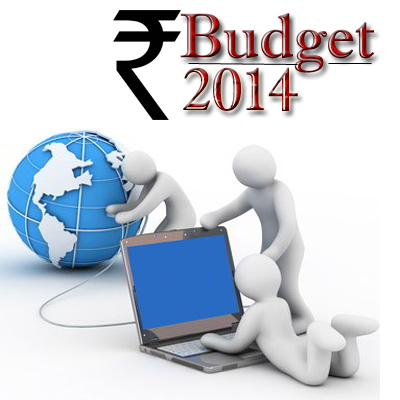
  • Rs 12 billion budgeted for ‘Digital India’ ’17-18

    Rs 12 billion budgeted for ‘Digital India’ ’17-18

    NEW DELHI: With the Government’s emphasis on cashless and paper-less working, electronic governance gets the highest chunk of Rs 4.0055 billion out of the overall budget of Rs 12.1642 billion set aside for Digital India for 2017-18.

    Of the total allocation for electronics governance, Rs 3.8555 billion has been set aside as programme component.

    According to the budget for the electronics and information technology ministry, the objective of e-governance is to deliver all government services electronically to the citizens in his/her locality through integrated and inter-operable systems via multiple modes, while ensuring efficiency, transparency and reliability of such services at affordable costs. 

    The World Bank supported India: e-Delivery of Public Services project is an externally aided project under Electronic Governance Scheme under which financial support is extended for various e-governance initiatives of the Centre and States/UTs in the broad areas of policies, human resources, technology, project development, etc.

    Manpower development gets Rs 3.0676 billion while the National Knowledge Network has been allocated of Rs 1.5 billion.

    The objective of manpower development is to ensure availability of trained human resources for the manufacturing and service sectors of electronics and IT industry. Initiatives include identifying gaps emerging from the formal sector and planning programmes in non-formal and formal sectors for meeting these gaps.

    The National Knowledge Network has been initiated with multiple gigabit bandwidth to connect Knowledge Institutions across the country

    Promotion of electronics and IT HW Manufacturing (MSIPS, EDF and Manufacturing Clusters) will get Rs 7.45 billion. The ministry says electronics manufacturing is one of the important pillars of Digital India Programme and target to achieve net zero imports is a striking demonstration of intent. 

    Ministry sources said the demand for electronics hardware is expected to rise rapidly and India has the potential to become an electronics hardware manufacturing hub and contribute significantly to the GDP, employment opportunities and exports.

    For Promotion of IT/ITeS Industries, the total allocation is Rs 60 million while Cyber Security Projects (NCCC & Others) get Rs 210.8 million.

    Two schemes (NEBPS and IBPS) under IT for Jobs pillar have been launched under Digital India Programme to incentivise BPO/ITES operations across the country, particularly digitally deficit areas for creation of employment opportunities for the youths and the balanced regional growth of IT/ITES Industry.

    The objective of the Cyber Security scheme is to adopt a holistic approach towards securing the cyber space of the country by pursuing multiple initiatives like Security Policy, Compliance and Assurance, Security, Incident-Early warning & Response, Security Training, Security specific R&D, Enabling Legal Framework and 
    Collaboration.

    A sum of Rs 1.01 billion has been set aside for research and development in IT/Electronics/CCBT. Proliferation and absorption of emerging technology by supporting R&D is one of the important objectives, apart from creating essential R&D infrastructure and scientific & technical human capital. 

    The allocation for Foreign Trade and Export Promotion is a mere Rs 30 million to reimburse Central Sales Tax (CST) to Electronics Hardware Technology Parks (EHTP) and Software Technology Park (STP) units according to the Foreign Trade Policy.

    Also Read:

    Budget ’17: Encourage digital economy to make tax system globally competitive

    Dist. National Informatics Centres to be of international standards

    How Digital India will foster VoD growth: Spuul Global CEO

  • Budget ’17: Encourage digital economy to make tax system globally competitive

    Budget ’17: Encourage digital economy to make tax system globally competitive

    MUMBAI: Various industry sectors are of course expecting the budget to ease stress in the business environment with tax rebates, restructuring of slabs or incentives. The advertising and communication industry is seeking some incentive announcements to further popularise the digital initiatives of the government. In the backdrop of demonetisation, every addressable transaction may be charged which may ideally move in the direction of becoming a zero-tax nation.

    Pulp Strategy Communications Founder & MD Ambika Sharma says, “The upcoming budget announcement I hope will focus on providing incentives such as better tax slabs to ‘Make in India’ companies in the technology space. A relaxation in the corporate tax rate will give a great boost to the startups in the tech sector in India, and will encourage tech companies to contribute more actively to the vision of ‘Digital India’.”

    She recommends that “Provisions must also be made for carry forwarding losses to be set off against any future income.”

    Sharma feels, “The growth in smartphone penetration and better internet connectivity means that more consumers are now leveraging the online channels of media consumption. However, players in the segment currently have to deal with different taxation slabs, leading to multi-layered problems such as effective tax rates, dual tax levies, and multiplicity of indirect taxes. This calls for a standardisation of tax and implementation on online media in the latest budget. Implementation of the tax should be standardized and made simpler with all players following a standard structure with no ambiguity.”

    Vertoz Media CEO and founder Ashish Shah says, “There is hope that there will be some incentive announcements to further popularise the digital initiatives of the government. Being a pure AdTech firm, we are very optimistic on the government’s vision of ‘Digital India’. We expect to see a growth oriented budget.”

    “The government has been encouraging entrepreneurship among the younger generation with its flagship initiative – ‘Startup India’ and keep up the momentum this time as well. More entrepreneurs in the ecosystem will drive sustainable economic growth and generate more job opportunities,” Shah added.

    Dentsu Aegis Network chairman & CEO – South Asia said, “A Union Budget that is growth oriented and puts more money in the pocket of the common man will benefit the advertising industry. Research has shown that, as a rule of thumb, every percentage point added to the GDP growth adds 1.5 – 2 per cent points to the advertising Industry growth. So, I hope that there is a growth oriented budget, which in turn spurs economic growth all around in India, particularly in the rural areas.”

    He is forthcoming on the fact that “the advertising industry doesn’t really mind paying legitimate taxes. It is actually the on-ground implementation and the complexities of the taxation system that causes huge amounts of productive time to be wasted in unproductive red-tape. In that context, any simplification of the taxation processes, both in the direct and in the indirect tax areas will be welcome. Even GST, which was supposed to simplify indirect taxation, is likely to inadvertently make it much more tedious for the services sector. The Government needs to address this urgently. Service tax on advertising is already very high at 15 per cent, including surcharges. I hope, particularly given the slowdown caused due to demonetisation, the finance minister will consider not taking it up any further and reducing it if possible.”

    Chrome Data Analytics & Media MD Pankaj Krishna says, “Post-demonetisation, the government would be looking at increasing demand, hence we can expect people-friendly measures being introduced in this budget. There will also be a focus on more spends on infra, utilizing the gains from demonetisation. The prime minister’s laudable schemes, including smart cities and digital India should stand to gain more fund allocation. Rural connectivity too will be in focus, given the govt.’s push towards cashless transactions.”

    Krishna feels, “This is an ideal time to see a cut in corporate tax, given the unprecedented collections for banks, to the tune of Rs 14 lakh crore. Personal taxes too should see a cut and a more simplified structure. The exchequer would generate it from charging a percentage per transaction, since these will be addressable transactions. Ideally, this will be a move in the direction of becoming a zero-tax nation.”

    moneycontrol editor Santosh Nairbelieves, “Due to the buoyant tax collections — both direct and indirect, the numbers for the current fiscal are likely to be healthy. Most economists expect the fiscal deficit target of 3.5 per cent to be maintained.”

    He feels, “The big challenge for the FM is going forward is to forecast revenues and spending without a clear handle on the impact of demonetisation.”

    “To help create more jobs without adding to its own wage bill,” he opines, “the government is likely to announce incentives for start-ups by way of friendly tax structures and fewer approvals to set up a business.”

    Viacom18 group CEO & CII media and entertainment committee chairman Sudhanshu Vats is expectant of a high-impact budget, as he says, “This budget will be a ‘transformational’ budget. The government has already showcased its commitment to alter the status quo by changing the classification of expenditure, subsuming the rail budget and advancing the date of the announcement.”

    He says, “I have always maintained that as an industry, we have a lot to gain from an economy that is buoyant in the aggregate sense. This year’s budget will enable just that – a revitalized economy that’s raring to go. Demonetisation is sure to expand the tax base in the medium term. I am certain that the government will use this added fire-power in a prudent manner. Hopefully, we’ll get to hear policy measures that encourage the digital economy, make India’s tax system globally competitive and put more money in the hands of Indians. As the saying goes, ‘the best is yet to come’.”

    SABGROUP CEO Manav Dhanda says, “From a media industry perspective, I feel that a change in the definition of industrial undertaking for the services industry as well as a push to define the GST roadmap would be sector-positive. There is a landmark attempt in the budget to simplify the tax administration, which should herald a friendlier tax regime.”

    “Not increasing the service tax,” he said, “is a positive, particularly for the advertising and media sector.” “The general expectation will be that service tax may go up in anticipation of higher GST rates. Controlling the fiscal deficit and several steps to invigorate the rural economy and rural consumption are positive signals. A rural consumption revival will help the economy and the advertising and media sector tremendously,” he feels.

    There will an expectation based on what the finance minister said in the past, that the corporate tax rate would come down, Dhanda said.

    In balance, there seems an expectation of a mixed bag budget with a positive bias.

    “Digitisation, in my opinion,” he said, “is the most important factor for the broadcast sector — change in excise duty changes proposed for set-top-boxes might help in the last mile infrastructure of Digital Addressable System (DAS).”

    “The proposal for a more conducive excise duty regime for STBs and other ‘entertainment-access devices’ would be welcome,” he said.

    Jack in the Box Worldwide president Kaizad Pardiwalla says,”I hope this budget is a growth-oriented budget, one that incentivises consumption. If GST comes in that will also aid India Inc. and will hopefully see an upswing in media spends. Digitalisation is and should remain a priority for the government as it is leading to an opening up of the economy and driving profitable growth.”

    Contiloe COO Anup Vijai says, “I think there will a reduction in the overall tax rate. And also, GST was supposed to be implemented come 1 April, but now they are talking about 1 July. So we are expecting a road map around that. Right now, the GST slab rates have come up.”

    “Going forward,” he said, “we are expecting the rates of movie tickets to go down say by 15 to 20 per cent in the state of Maharashtra where we have a very high entertainment tax. Moreover, high rates of entertainment tax and lack of uniformity in tax rates across different states, is adding on. A uniform taxation across product categories will benefit the entertainment sector on the whole,” he added.

  • Budget ’17: Encourage digital economy to make tax system globally competitive

    Budget ’17: Encourage digital economy to make tax system globally competitive

    MUMBAI: Various industry sectors are of course expecting the budget to ease stress in the business environment with tax rebates, restructuring of slabs or incentives. The advertising and communication industry is seeking some incentive announcements to further popularise the digital initiatives of the government. In the backdrop of demonetisation, every addressable transaction may be charged which may ideally move in the direction of becoming a zero-tax nation.

    Pulp Strategy Communications Founder & MD Ambika Sharma says, “The upcoming budget announcement I hope will focus on providing incentives such as better tax slabs to ‘Make in India’ companies in the technology space. A relaxation in the corporate tax rate will give a great boost to the startups in the tech sector in India, and will encourage tech companies to contribute more actively to the vision of ‘Digital India’.”

    She recommends that “Provisions must also be made for carry forwarding losses to be set off against any future income.”

    Sharma feels, “The growth in smartphone penetration and better internet connectivity means that more consumers are now leveraging the online channels of media consumption. However, players in the segment currently have to deal with different taxation slabs, leading to multi-layered problems such as effective tax rates, dual tax levies, and multiplicity of indirect taxes. This calls for a standardisation of tax and implementation on online media in the latest budget. Implementation of the tax should be standardized and made simpler with all players following a standard structure with no ambiguity.”

    Vertoz Media CEO and founder Ashish Shah says, “There is hope that there will be some incentive announcements to further popularise the digital initiatives of the government. Being a pure AdTech firm, we are very optimistic on the government’s vision of ‘Digital India’. We expect to see a growth oriented budget.”

    “The government has been encouraging entrepreneurship among the younger generation with its flagship initiative – ‘Startup India’ and keep up the momentum this time as well. More entrepreneurs in the ecosystem will drive sustainable economic growth and generate more job opportunities,” Shah added.

    Dentsu Aegis Network chairman & CEO – South Asia said, “A Union Budget that is growth oriented and puts more money in the pocket of the common man will benefit the advertising industry. Research has shown that, as a rule of thumb, every percentage point added to the GDP growth adds 1.5 – 2 per cent points to the advertising Industry growth. So, I hope that there is a growth oriented budget, which in turn spurs economic growth all around in India, particularly in the rural areas.”

    He is forthcoming on the fact that “the advertising industry doesn’t really mind paying legitimate taxes. It is actually the on-ground implementation and the complexities of the taxation system that causes huge amounts of productive time to be wasted in unproductive red-tape. In that context, any simplification of the taxation processes, both in the direct and in the indirect tax areas will be welcome. Even GST, which was supposed to simplify indirect taxation, is likely to inadvertently make it much more tedious for the services sector. The Government needs to address this urgently. Service tax on advertising is already very high at 15 per cent, including surcharges. I hope, particularly given the slowdown caused due to demonetisation, the finance minister will consider not taking it up any further and reducing it if possible.”

    Chrome Data Analytics & Media MD Pankaj Krishna says, “Post-demonetisation, the government would be looking at increasing demand, hence we can expect people-friendly measures being introduced in this budget. There will also be a focus on more spends on infra, utilizing the gains from demonetisation. The prime minister’s laudable schemes, including smart cities and digital India should stand to gain more fund allocation. Rural connectivity too will be in focus, given the govt.’s push towards cashless transactions.”

    Krishna feels, “This is an ideal time to see a cut in corporate tax, given the unprecedented collections for banks, to the tune of Rs 14 lakh crore. Personal taxes too should see a cut and a more simplified structure. The exchequer would generate it from charging a percentage per transaction, since these will be addressable transactions. Ideally, this will be a move in the direction of becoming a zero-tax nation.”

    moneycontrol editor Santosh Nairbelieves, “Due to the buoyant tax collections — both direct and indirect, the numbers for the current fiscal are likely to be healthy. Most economists expect the fiscal deficit target of 3.5 per cent to be maintained.”

    He feels, “The big challenge for the FM is going forward is to forecast revenues and spending without a clear handle on the impact of demonetisation.”

    “To help create more jobs without adding to its own wage bill,” he opines, “the government is likely to announce incentives for start-ups by way of friendly tax structures and fewer approvals to set up a business.”

    Viacom18 group CEO & CII media and entertainment committee chairman Sudhanshu Vats is expectant of a high-impact budget, as he says, “This budget will be a ‘transformational’ budget. The government has already showcased its commitment to alter the status quo by changing the classification of expenditure, subsuming the rail budget and advancing the date of the announcement.”

    He says, “I have always maintained that as an industry, we have a lot to gain from an economy that is buoyant in the aggregate sense. This year’s budget will enable just that – a revitalized economy that’s raring to go. Demonetisation is sure to expand the tax base in the medium term. I am certain that the government will use this added fire-power in a prudent manner. Hopefully, we’ll get to hear policy measures that encourage the digital economy, make India’s tax system globally competitive and put more money in the hands of Indians. As the saying goes, ‘the best is yet to come’.”

    SABGROUP CEO Manav Dhanda says, “From a media industry perspective, I feel that a change in the definition of industrial undertaking for the services industry as well as a push to define the GST roadmap would be sector-positive. There is a landmark attempt in the budget to simplify the tax administration, which should herald a friendlier tax regime.”

    “Not increasing the service tax,” he said, “is a positive, particularly for the advertising and media sector.” “The general expectation will be that service tax may go up in anticipation of higher GST rates. Controlling the fiscal deficit and several steps to invigorate the rural economy and rural consumption are positive signals. A rural consumption revival will help the economy and the advertising and media sector tremendously,” he feels.

    There will an expectation based on what the finance minister said in the past, that the corporate tax rate would come down, Dhanda said.

    In balance, there seems an expectation of a mixed bag budget with a positive bias.

    “Digitisation, in my opinion,” he said, “is the most important factor for the broadcast sector — change in excise duty changes proposed for set-top-boxes might help in the last mile infrastructure of Digital Addressable System (DAS).”

    “The proposal for a more conducive excise duty regime for STBs and other ‘entertainment-access devices’ would be welcome,” he said.

    Jack in the Box Worldwide president Kaizad Pardiwalla says,”I hope this budget is a growth-oriented budget, one that incentivises consumption. If GST comes in that will also aid India Inc. and will hopefully see an upswing in media spends. Digitalisation is and should remain a priority for the government as it is leading to an opening up of the economy and driving profitable growth.”

    Contiloe COO Anup Vijai says, “I think there will a reduction in the overall tax rate. And also, GST was supposed to be implemented come 1 April, but now they are talking about 1 July. So we are expecting a road map around that. Right now, the GST slab rates have come up.”

    “Going forward,” he said, “we are expecting the rates of movie tickets to go down say by 15 to 20 per cent in the state of Maharashtra where we have a very high entertainment tax. Moreover, high rates of entertainment tax and lack of uniformity in tax rates across different states, is adding on. A uniform taxation across product categories will benefit the entertainment sector on the whole,” he added.

  • Dist. National Informatics Centres to be of international standards

    Dist. National Informatics Centres to be of international standards

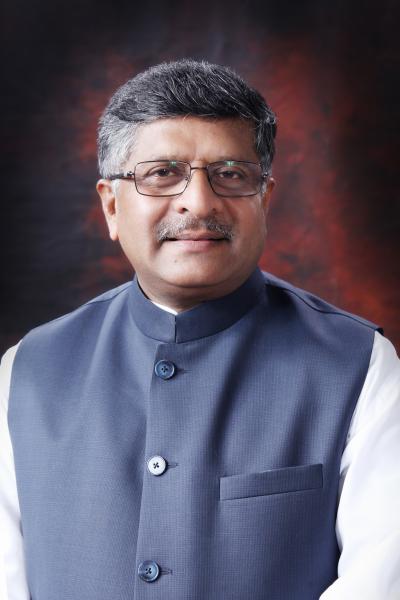
    NEW DELHI: Electronics and Information and Technology Minister Ravi Shankar Prasad has said the National Informatics Centre is the “technological bridge of India and is best placed to lead the way for a Digital India”

    He urged the District Information Officers (DIOs) to be innovative and proactive. NIC must adopt a transformative approach to make a difference at the grassroots level. He appealed to the NIC to connect with the Common Service Centres (CSCs), who have successfully provided training on digital payment systems to over 19.6 million of rural citizens and 6,15,000 merchants.”

    He was speaking at an event where the NIC kicked off the National Meet on Grassroot Informatics – VIVID: Weaving a Digital India here.

    The inauguration of the three-day event was also attended Minister of State P P Chaudhary, Secretary Ms Aruna Sundararajan, Additional Secretary Ajay Kumar, NIC DG Ms Neeta Verma, and Deputy DG Ms Rama Nagpal.

    Prasad announced the Government’s plan to set up a Government Security Operation Centre and a Data Centre for Cloud in Bhopal. He also announced that the Government is going to enhance the infrastructure of district NIC offices to international standards. As a pilot project, 150 District NIC offices would be upgraded during the period 2017-18, while rest will follow soon.

    He instructed the ministry to develop a training module for the NIC officials to keep pace with the ever evolving technologies. He also announced the introduction of annual awards for the DIOs of the NIC for taking up exemplary innovative approach in their respective districts. The top three best innovators will get a reward of Rs 2,00,000, Rs 1,00,000 and Rs 50,000 respectively.

    Chaudhary said, “The threshold of the year 2017 will always be remembered for heralding in several transformative changes to benefit the economy as well to the citizens, amongst them the Digital India initiative has been the most significant one. I must congratulate NIC and DIOs for playing a pivotal role in preparing the country for a successful Digital transformation of our ecosystem.

    NIC also introduced two new portals – District Collector’s Dashboard and NIC Service Desk, which were launched by Prasad and Chaudhary respectively.

    The National Meet on Grassroots Informatics is aimed at showcasing the various initiatives of NIC in creating and enhancing the Digital Infrastructure in the country. Some of these are – setting up of ICT infrastructure, developing state of the art products to enable the government and empower the citizens, its initiatives at state and district level along the lines of Digital India initiatives along with the various awareness campaigns on Digital Payment Systems encompassing DBT, PFMS, Cashless Payment, Aadhaar etc.

    The individual sessions during these three days would throw lights on NIC’s journey so far, the best practices it follows, the Digital India programme, Digital India initiatives from NIC State Units, success stories from the districts, Financial Inclusion, its technology awareness programmes and ICT Infrastructure being provided by NIC.