Tag: Digital India

  • Digital suffers due to lack of common metric system: Ashish Bhasin

    Digital suffers due to lack of common metric system: Ashish Bhasin

    MUMBAI: Dentsu Aegis Network, one of the biggest marketing agencies in India, released the third edition of its annual Digital Report recently predicting a wholesome 31.96 per cent CAGR growth of digital advertising in India. An exhausting and thoroughly researched report, this initiative by DAN is probably the singular attempt being made by any agency in India. Therefore, it was definitely a proud moment for Ashish Bhasin, the chairman and chief executive officer for DAN South Asia. In an exclusive conversation with Indiantelevision.com, Bhasin reveals how working on this report serves the larger goal of maintaining a leading position in the market and how other marketers can learn from the insights revealed.

    Talking about the launch, Ashish Bhasin proudly says, "We are very excited and very happy with the way the whole report has come out. What's very clear to us at DAN is that there is no business that is not going to be affected by digital. And as leaders of digital communication and advertising in India, we see it as our responsibility to make sure that authentic research on that is available, which, unfortunately, has not been revealed in India so far."

    Bhasin is of the view that creating such reports serve the dual purpose of driving the cumulative growth of the digital ecosphere as well as preparing the team within the agency for opportunities and challenges forward. He notes, "We forecast the trends and lead the markets towards those trends. Now, that we know what the market is thinking and what our clients are aspiring, we have already started building capabilities in those areas which other agencies haven't even thought of."

    The report reveals a number of key marketing trends that will rule the digital industry in the coming years. Most important of them being the three Vs – voice, vernacular, and video. As far as the voice part is concerned, DAN made a fine move by launching the report on Google's voice assistant Alexa. Video is already a stronghold for the agency as many of its campaigns have already been bringing national and international honours.

    Asserting on the need for viable vernacular content, Bhasin shares, "In the next few years, around 200 to 300 million more people are going to be on the internet. Now, from these, very few will be coming from the metropolitan cities as the penetration there is very good. The people will be joining from tier 2 and tier 3 cities, all the way down from rural areas."

    But not many agencies are creating vernacular advertisements. "At best, they take a Hindi or English ad and translate it into other languages. That might be better than putting an English ad into a vernacular setting but it is not good enough. You have to start building the ability to create advertisements in local languages because that's where your audiences are."

    Bhasin also lauds the effort of the Indian government in starting initiatives that are augmenting this influx of larger population on digital platforms. He says, "I think digital is going to be key to governance, forget anything else and thus, the infrastructure for digital needs to be created and administered by the government. At the moment, there are between 400 and 450 million Indians who are on the internet. This is a large number but the more exciting part to me is that in the next two to three years we are probably going to see something like 200 to 300 million more people coming on to the internet. And that can be possible only if the government helps put up the right infrastructure, which they have been very good at so far."

    While the pouring in of new online customers is a positive sign, the digital ecosphere still faces the absence of a unified metric system to measure and evaluate the impact of online content. Sharing his thoughts, Bhasin elaborates, "I think that is the single biggest problem that digital advertising in India faces today. For a medium that is so measurable, we don't have an agreed common metric like Broadcast Audience Research Council is for television. The medium suffers because of that. If we are to get that right, I think that will make a huge difference."

    However, he is optimistic that this challenge will eventually be solved. He says, "We need to have common industry-accepted viewership parameters and I am hopeful that these metrics in the next couple of years will be in place. I believe that in the next two years, as an industry, we collectively will evolve a common metric system as not having that is a big disadvantage."

  • Nokia partners GTPL for broadband deal

    Nokia partners GTPL for broadband deal

    MUMBAI: Nokia confirmed its partnership with GTPL, a cable TV and broadband service provider company. In order to upgrade its networks, GTPL will use and install Nokia’s fixed access and core technology.

    GTPL’s ethernet-based access network will be replaced by the upgraded fibre cables capable of supporting ultra broadband speed. The broadband provider will also utilise Nokia Broadband Network Gateway (BNG) solutions for reliable ultra broadband access in residential areas. This will promote a faster internet experience for the subscribers.

    As per the agreement, Nokia’s GPON technology will be used by GTPL, also along with that, the currently deployed Nokia BNG’s. This move will boost existing service speeds and drop-ship new ultra-broadband services including high speed internet, linear TV and video-on-demand (VoD) services.

    As per ET Telecom, Nokia’s GPON equipment will be deployed across various cities in the Gujarat state by the end of this year.

    Speaking to ET Telecom, managing director at GTPL Hathway, Anirudh Jadeja said, “India is recording a massive increase in broadband consumption, and as people begin using digital platforms to complete a number of day-to-day tasks they will demand an even better broadband network. We believe our partnership with Nokia is crucial to our growth. The modernised network will allow us to provide a world-class broadband experience to our subscribers. It is also in keeping with the Indian government’s drive to promote the use of the digital platform as part of its Digital India vision”.

    Ahead of the partnership, head of emerging business at Nokia, Vinish Bawa looked excited as he stated, “We are delighted to work with GTPL to transform its networks to deliver an improved network experience for its subscribers. This deployment will enable GTPL to meet fast-growing demand for a better and faster network experience. Our technology solutions will allow GTPL to differentiate itself from other market players to attract more customers”.

  • Google’s Sundar Pichai bats for free flow of cross-border data

    Google’s Sundar Pichai bats for free flow of cross-border data

    MUMBAI: At a time when the Indian government is highly focussed on data localisation, Google CEO Sundar Pichai has advocated free flow of cross-border data. The Google exec wrote a letter to Union Minister of Electronics and Information Technology Ravi Shankar Prasad where he said such a step would encourage global companies to contribute to India’s digital economy. However, he also mentioned the importance of data privacy and security.

    “Free flow of data across borders – with a focus on user privacy and security – will encourage startups to innovate and expand globally and encourage global companies to contribute to India’s digital economy,” he said.

    Thanking Prasad for his visit to Google’s Mountain View campus last month Pichai said the company shares the vision of creating a truly ‘Digital India’ and remains firmly committed to being part of the India growth story.

    Recently, the Justice BN Srikrishna Committee recommended in a report that every data fiduciary in India shall ensure the storage of at least one serving copy of personal data on a server or data centre located in India. Along with that, it also stated that the government can notify some categories of personal data as critical personal data that have to be stored in a server or data centre located only in India. The government has extended the date to submit public feedback on the draft bill to 30 September.

  • BharatNet project will boost rural broadband services: Telecom Minister

    BharatNet project will boost rural broadband services: Telecom Minister

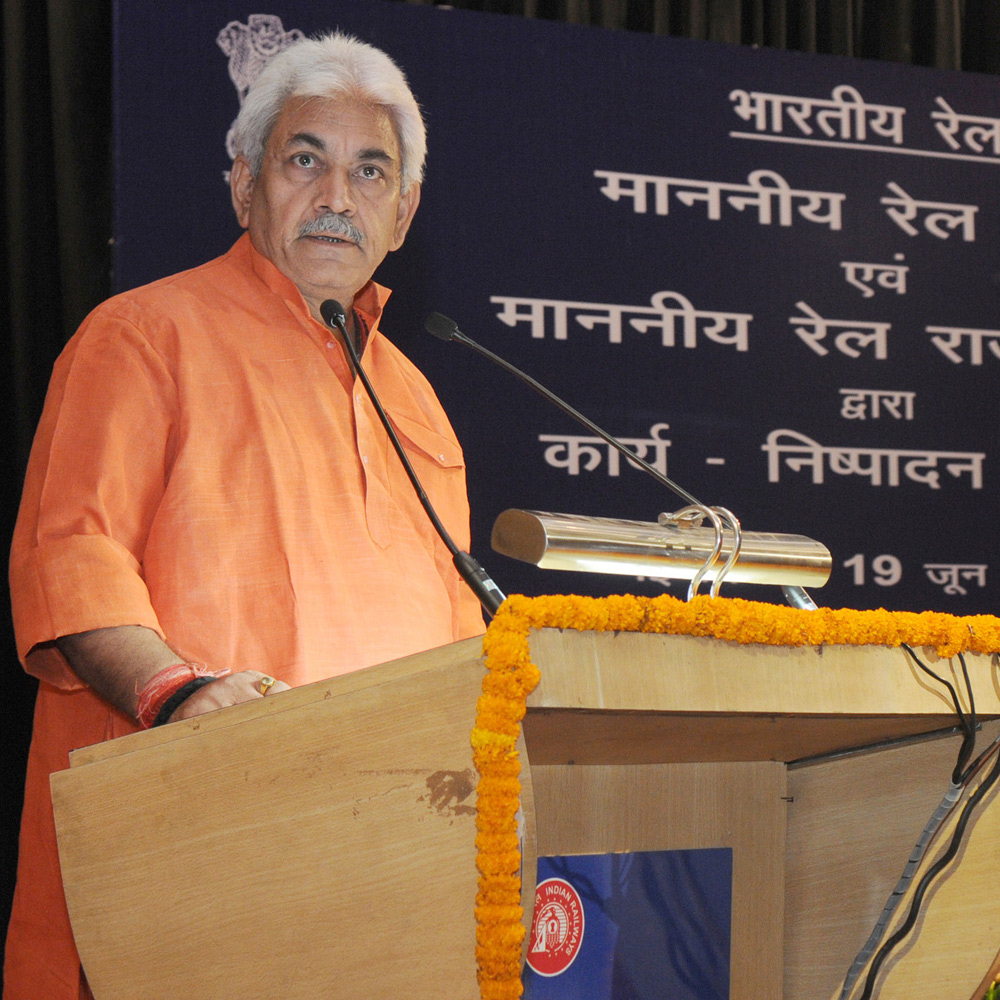
    NEW DELHI: There are 412.60 million broadband connections in the country of which 106.52 million are in rural areas, Communication Minister Manoj Sinha said yesterday.

    Sinha said in the Lok Sabha or India’s Lower House of Parliament that broadband services in rural areas have seen good progress on the back of substantial development in the telecommunication sector.

    “The number of broadband connections in the country as on 31 March 2018 stood at 412.60 million out of which rural broadband connections are 106.52 million, which constitutes 25.82 per cent of total connections,” he said, adding that the government is implementing the flagship BharatNet project to link each of the 250,000 gram panchayats or the local village administrations in the country through optical fibre network.

    This is the largest rural connectivity project of its kind and is the first pillar of the Digital India programme, he said.

    Phase-I of the project has been completed in December 2017 and over 100,000 village administrations have been made service-ready. Phase II of BharatNet project, which aims to connect 150,000 gram panchayats (GPs) through high speed broadband, has been launched and is targeted to be completed by March 2019.

    The optical fibre being laid under the BharatNet project is expected to be the primary means for internet backhaul, which can be leveraged to service the telecommunications towers in the rural areas. This, in turn, will give a boost to mobile internet availability and adoption in the rural areas. 

    As part of BharatNet project, the last mile connectivity, through Wi-Fi or any other suitable broadband technology is being provided at all the GPs in the country. At each GP, on an average five access points are envisaged that include three points for government institutions and two for public places.

    Overall mobile Internet penetration in the country has seen major changes in the last four years. The total number of Base Transceiver Stations (BTS) across the country has increased from 790,000 in 2014 to more than 18,00000 as of March 2018 of which 905,000 BTS are of 4G. The increased number of BTS has resulted in greater adoption of mobile internet across the country, the Minister said. 

  • Launch of SES-12 to assist Digital India vision

    Launch of SES-12 to assist Digital India vision

    MUMBAI: The successful launch of SES-12, which provides coverage over Asia will assist the acceleration of the country’s push towards a digital India and financial inclusion initiatives, according to a leading satellite industry expert as per a report by the Press Trust of India from London.

    SES Video EVP global sales Deepak Mathur said, “The successful launch of SES-12 recently would help support India’s growing direct-to-home (DTH) TV market, as more and more consumers in rural India embrace the medium.”

    The government’s vision to digitally empower India and transform connectivity in the country will see a push through the launch of the satellite, Mathur informed.

    The senior executive at SES, one of the world’s leading satellite operators, also pointed out that the satellite’s concentrated beams could also provide highly cost-effective capacity to enable in-flight connectivity services in line with the recent directive to allow mobile and internet services in Indian airspace by Telecom Regulatory Authority of India.

    SES-12, which is uniquely designed with state-of-the-art wide beams and high throughput beams, was successfully launched onboard a flight-proven SpaceX Falcon 9 rocket from Cape Canaveral in Florida, US, on 4 June 2018. Together with SES-8, it is expected to reach 18 million homes.

    This satellite will provide coverage from the Middle East to Australia. The combination of two satellites will offer powerful Ku-band wide beams for broadcast and media applications, and high throughput spot beams for providing internet connectivity, reliable cellular services and content targeted at specific language groups.

    The ever-increasing demand of audience will be addressed by the pay-TV operators as the satellite will provide reliability and scalability to elevate the viewing experience by adding more content and delivering good picture quality for high definition (HD) and ultra HD content.

    Mathur explained, “With its dual capabilities of both wide beams and high throughput spot beams, SES-12 will serve to enhance connectivity for people and businesses in remote and unconnected parts across Asia, where providing rural connectivity and eliminating the digital divide is a key priority for many governments. SES-12 also brings augmented capacity to enable satellite broadcasting and DTH services across Asia-Pacific.”

    Specifically over India, SES has five satellites – NSS-12, SES-8, NSS-6, SES-7 and SES-9 – currently operational. SES-12 will be replacing NSS-6 as the largest satellite to offer services and capacity over India.

    The company’s primary customer in the Indian market is Antrix, the commercial arm of the Indian Space Research Organisation (ISRO), with whom it has worked to help augment the enormous demand for satellite connectivity over India.

    Mathur also mentioned that ISRO has a pivotal role to play in the development of new space technologies and in making space more accessible, and affordable. SES is also exploring potential areas of collaboration with Indian partners to see how they both can work together to advance the development of space technologies.

  • Regional content consumption overtakes Eng on digital: report

    Regional content consumption overtakes Eng on digital: report

    MUMBAI: Times Internet has released a study titled ‘The Changing Lingual Face of Digital India’ highlighting the rapid shift of digital users towards regional content consumption. With this study, Times Internet has validated the rising trend of online content consumption across the eight most widely consumed regional languages in the country. To map the magnitude of this trend, online content consumption patterns of over 90 million netizens were evaluated, unveiling many future possibilities and the impact of content in regional languages.

    According to the study, out of the 90 million plus surveyed digital users, more than half of the Indian internet user base is non-English. More than two thirds of Hindi readers are also reading English. Regional languages have surpassed English with a 66 per cent share in overall content consumption.

    Across all regional languages, news as a genre sees the highest content consumption at 67 per cent, followed by Sports at 17 per cent and Entertainment at 16 per cent. Whereas, News in Bangla language tops the chart with 72 per cent.

    Out of the 66 per cent, the ratio of specific regional language consumption is that 4.49 per cent user base consumes Kannada, 5.61 per cent Tamil, 5.61 per cent Telugu, 7.44 per cent Bangla, 8.98 per cent Marathi, 3.08 per cent Malayalam, 4.49 per cent Gujarati, 35.6 per cent Hindi and 24.57 per cent in English.

    The regional language user base in India has grown at a CAGR of 41 per cent between 2011 and 2016 to reach the current 234 million. This is expected to grow by 18 per cent CAGR to reach 536 million by 2021 versus English, which is expected to grow at 3 per cent CAGR to reach 199 million by 2021. By 2012, regional language users will account for 75 per cent of India’s internet user base.

    Regional language content consumption is not limited to native state/cities anymore but it is a countrywide trend now. Delhi consumes 52 per cent in English, 47 per cent in Hindi, 0.4 per cent in Marathi, 0.4 per cent in Bangla and 0.2 per cent in Kannada. Mumbai consumes 62 per cent in English, 18 per cent in Hindi, 19 per cent in Marathi, 0.4 per cent in Gujarati and 0.6 per cent in Kannada.

    The study highlights that content consumption in regional languages among younger audiences is fast growing, with consumption among Indians in the 25-34 age group being the highest.

    Currently, women are consuming regional language content highest than ever before. Among female users, Gujarati language sees the highest online content consumption at 44.78 per cent. Whereas, 22.02 per cent of Hindi content, 29.22 per cent of Marathi content, 29.75 per cent of Kannada content, 30.61 per cent of Bangla content, 22.37 per cent of Tamil content, 23.95 per cent of Telugu content and 38.83 per cent of Malayalam content is consumed by women.

    Mobile is fast becoming the primary screen for regional language content consumption with Hindi consumed for 69.7 per cent, Marathi consumed for 40.3 per cent, Kannada consumed for 61.8 per cent, Bangla consumed for 66.3 per cent, Telugu consumed for 65.6 per cent and Malayalam consumed for 72.7 per cent.

    The report states that India is inching closer to becoming a digital-first nation as affordable smartphones and low priced 3G and 4G connections are driving internet penetration and digital literacy in the country. Access to high-speed Internet connectivity is no longer restricted to metro cities, which is causing a massive shift in online content consumption patterns, across the country.

    Also Read :

    Chanpreet Arora appointed CEO of Vice Media India

    Times Internet buys MX Player for $200 million

    Garbage, A gritty socio-political drama directed by Q,the only Indian film, to premiere at Berlinale 2018

  • WEF, Reliance join hands for digital excellence centre

    WEF, Reliance join hands for digital excellence centre

    Mumbai: In what could give a major fillip to PM Modi’s Digital India dream, which also envisages making available broadband and related services to over 60,000 village administrations, the World Economic Forum has announced a new digital technology centre in Mumbai that would be executed by the Indian government and Reliance Industries Ltd (Reliance) jointly.

    Dubbed the Center for Fourth Industrial Revolution (C4IR), it “will operate as the sister centre to the World Economic Forum Center for the Fourth Industrial Revolution in San Francisco, allowing policymakers and thought leaders in India to stay ahead of the curve through unique insights in new forms of governance and new technology applications, and connections with cutting-edge technology innovators globally,” Reliance said in a statement.

    The WEF identified India as a partner since it is a key economic, political and social shaper of the 21st century’s global, regional and industry systems.

    The WEF initiative is also a recognition of Modi’s Digital India vision and Startup India programme to encourage young entrepreneurs. It is the first centre opened outside of Silicon Valley in the US.

    “The capability for India to maximise the potential and minimise the risks of the Fourth Industrial revolution, both domestically for its economy and society, and globally as a major economic and social innovator — and cultural influencer– will be one of the foremost drivers for prosperity and peace over the coming decades,” the WEF said.

    The new economy will greatly benefit from the Fourth Industrial Revolution in a digital age and is expected to create significant value to countries that embrace them quickly by accelerating their GDP and job growth. These opportunities include artificial intelligence and machine learning, internet of things (IoT) and blockchain, among many others, according to the WEF.

    The WEF, which has been championing the Fourth Industrial Revolution, established C4IR in the Silicon Valley at San Francisco as Silicon Valley was already home to several of these exciting developments.

  • CASBAA lauds India; calls for more broadcast, satellite reforms

    CASBAA lauds India; calls for more broadcast, satellite reforms

    NEW DELHI: Asian pay TV industry organisation CASBAA, while applauding the Indian government for ease of doing business, exhorted policy makers to further streamline norms relating to the broadcast and satellite industries as it led to procedural delays impacting business.

    Speaking at the India Satcom 2017 forum here on Wednesday, Hong Kong-based CASBAA chairman Joe Welch said a great deal of attention has been paid to the power and infrastructure sectors, but “the key to … realisation of the prime minister’s vision of taking India up to a top-50 ranking (in ease of doing business) lies in improving business conditions in other sectors of the economy”, specifically satellite communications and broadcasting.

    Welch, who was chairing a session relating to ease of doing business in the broadcast and satellite sectors, observed that broadcasting business is heavily dependent on satellite links, and that “the single most crucial measure the government could take … would be to create conducive conditions for both the satellite operators and the broadcasters to be able to enter into long-term service agreements”.

    Currently, contracts for satellite capacity for DTH broadcasters are limited to a three-year term by Indian government regulation.

    “Striking long-term commercial deals in a marketplace that is less government-constrained would help increase business certainty for all the stakeholders”, he said.

    Satellite services are also important to achieving the Digital India dream – championed by prime minister Modi – as satellite services can help bring broadband and other related services to the hinterland of India, digitally connecting thousands of villages where cable or other modes of broadband delivery may pose logistic and financial challenges.

    Also Read:

    Govt assures ease in licensing norms to TV channels, satellite operators

    CASBAA forms ‘Coalition Against Piracy,’ hires content protection veteran Neil Gane

    Louis Boswell appointed CASBAA CEO 

    Fox’s Asia SVP Joe Welch named CASBAA board chairman

  • Spectrum payment limit eased, NTP to facilitate data and security

    Spectrum payment limit eased, NTP to facilitate data and security

    MUMBAI: The Telecom Commission has approved the extension of time period for the payment of spectrum bought in auctions by telcos to 16 years from the existing 10 years. This may ease out stress from the industry laden with around Rs 4500 billion debt.

    The Telecom Commission also cleared path for formulating a draft of new National Telecom Policy (NTP) by according its approval. The NTP will focus on affordable and good quality of service, consumer protection, data and cyber security etc, a government source told PTI.

    The draft of the policy may be sent to the union cabinet by January, and its approval could come by March, the source added. NTP’s guiding principal will be a vision as per the ‘Digital India’ programme, and telecom will act as the enabler.

    The commission also approved recommendation of the inter-ministerial group (IMG) — responsible for finding a solution to the financial difficulties of the telecom sector — to lower interest rate charged over penalties imposed on service providers with slight modification, the source said.

    The IMG has given approval to grant Rs 12.3 billion to the Telangana government for rolling out the second phase of Bharat Net (along with its Mission Bhagiratha).

    The IMG also okayed TRAI’s recommendation to mandate that every building plan should have duct for telecom cable and the completion certificate be given only if it has been incorporated.

  • FreeDish creates record, sells 11 slots for Rs 851 million

    NEW DELHI: Doordarshan’s FreeDish earned a record Rs 851 million in the 36th e-auction, auctioning eleven slots including three news channels.

    For the first time, the reserve price for general entertainment channels was Rs 80 million but the reserve price for news and current affairs channels was reduced to Rs 65 million.

    Doordarshan netted Rs 67 million as the highest for one of the news channels through the auction of the news channels, DD Director-General Supriya Sahu informed indiantelevision.com.

    Among the eight general entertainment channels, the highest bid received was for Rs 84 million.

    The channels that have successfully bid for a slot on FreeDish this time round include News18 India, Zee Hindustan, Zee News, Star Utsav, Zee Anmol, Rishtey, B4U Music, Housefull Movies and Bhojpuri Cinema.

    With the completion of MPEG4 trials, the total strength of the platform will go up to 104, expectedly the end of July. Earlier this year, Parliament was informed FreeDish had got approval to increase this capacity to 250 channels and DD sources had told indiantelevision.co that will happen in the third quarter of 2018.

    In line with the ‘Digital India’ and ‘Make in India’, DD has implemented Indian CAS (iCAS) on DD FreeDish Platform. iCAS (which is an initiative of the central government) was introduced in the auction held last month. The introduction of iCAS will provide enhanced viewing experience.

    DD officials said the existing viewers will continue to get 80 SDTV channels and 32 radio channels, but will have to obtain iCAS-enabled authorized set-top boxes for accessing all new channels.

    Although Free Dish will remain free-to-air with no monthly or periodic fee, the viewers will be required to register with DD FreeDish on getting the new STB from Doordarshan authorized STB dealers.

    DD officials said implementation of iCAS and authorisation of STB original equipment manufacturers (OEMs) by Doordarshan will give a major thrust to ‘Make in India’ and ‘Digital India’. At present, a majority of STBs are imported. However, the introduction of iCAS will help in standardization of STBs and encourage quality STB manufacturing in India.

    Also read

    FreeDish: English news channel among two come aboard (Updated)

    FreeDish auction on 4 July, different reserve prices for GEC and news