Tag: Digital India

  • US and Indian experts agree to work on strengthening Digital India

    US and Indian experts agree to work on strengthening Digital India

    NEW DELHI: Indian and American experts have agreed to continue exploring opportunities for collaboration on implementing India’s ambitious Digital India initiative, with the goal of enhancing digital infrastructure, deploying e-governance and e-services, and expanding the diffusion and use of ICT as a tool to expand economic opportunity, boost productivity, create jobs and empower citizens. 


    This was decided at the meeting of the United States-India Information and Communication Technology (ICT) Working Group, which promotes development in the ICT sector for mutual benefit was held in Washington, D.C. earlier this week.


    The participants noted that the ICT Working Group aims to strengthen collaboration between the governments and private sectors of the two countries in the field of Information and Communications Technology. 


    During the two-day working group meeting, US and Indian government representatives held extensive discussions on ICT and telecommunication policy issues, focusing on accelerating broadband deployment, aligning spectrum policy for the mobile era and exchanging views on internet governance and best practices in ICT and telecommunications regulatory policy.


    They also discussed issues relating to the international mobility of Indian skilled professionals. The joint government-and-industry discussions included panels on promoting manufacturing and investment; IT and telecom policy developments; Internet governance; mobility of skilled professionals and other issues related to trade, investment, and the ease of doing business. A panel of non-government experts also shared insights on strategies that may help India achieve the goals outlined in the ‘Make in India’ and ‘Digital India’ initiatives. 


    Broad agreement was reached on the importance of policies that promote innovation in the ICT sector, facilitate the flow of data across borders, and foster the global and open nature of the Internet as a platform for economic growth. 


    Participants agreed to continue discussion of policies that stimulate rapid diffusion and use of ICT products and services and facilitate cross border trade that reduces costs to consumers and businesses. In this context, the US side noted the Indian concerns with regard to mobility of skilled Indian professionals, and agreed that the US government will continue to engage on visa issues for skilled professionals. In addition, the Indian side noted the US concerns relating to equipment testing and certification, and agreed to engage on issues relating to equipment testing. 


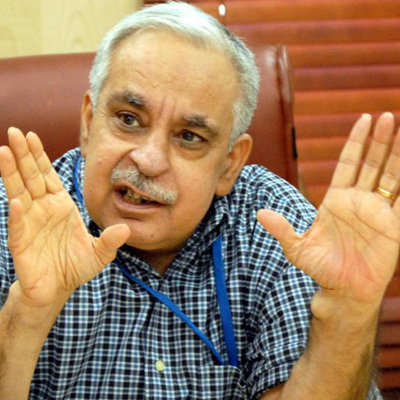
    Ambassador Daniel A. Sepulveda, who is Coordinator for International Communications and Information Policy at the US Department of State, and R S Sharma who is secretary of the Department of Electronics and Information Technology, Communications and Information Technology Ministry, led their respective delegations. 


    The United States-India ICT Working Group was hosted by the US Department of State and included representatives from the Federal Communications Commission, the National Telecommunications and Information Administration (NTIA), the National Institute of Standards and Technology (NIST), the Office of the US Trade Representative, the US Trade and Development Agency, the US Department of Homeland Security, and the Federal Bureau of Investigation. The Indian delegation included officials from the Department of Electronics and Information Technology (DeitY), the Department of Telecom, and the Embassy of India to the United States. 


    The United States and India plan to hold the next US-India ICT Working Group in India later this year.
     

  • Modi’s ‘Make In India’ effect: Xperio Labs mulling Indian manufacturing unit

    Modi’s ‘Make In India’ effect: Xperio Labs mulling Indian manufacturing unit

    MUMBAI: Prime Minister Narendra Modi’s ‘Make In India’ initiative, which is designed to transform India into a global manufacturing hub, has started attracting various companies.


    Xperio Labs, an emerging market focused ‘Devices and Services’ company, is now evaluating the prospects of setting up a manufacturing unit in India.


    The company will be showcasing its products at the upcoming 23rd Convergence India 2015, which is being held in Delhi from 21-23 January. Speaking to Indiantelevision.com, Xperio Labs VP sales Paul Avery said, “We have both sales and support staff in Mumbai, Delhi and Bengaluru. We have also set the ball rolling for a small development team in Chennai. We look at India as our ‘hub’ for software and services and China for our manufacturing. We are also evaluating the prospects of manufacturing in India given the call for ‘Make in India’ by the Prime Minister Narendra Modi.”


    According to Avery, India is not only a significant contributor to the company’s revenue, but is a high growth market for them.


    Talking about the products that the company will showcase at Convergence 2015, Avery said, “At Convergence 2015, we will be exhibiting our range of devices namely MPEG 2 and MPEG 4 Set Top Boxes (STB), Docsis-2 and Docsis-3 wired and wi-fi modems. We also plan to run live demonstrations of our Platform as a Service (PaaS) that allows service providers to offer OTT/TV Everywhere services on a pay as you go basis.”


    Xperio Labs has worked together as a team under different brands like Scientific Atlanta/Cisco and has contributed to the transformation of the Indian cable industry since 2003. “We have seen this industry grow by leaps and bounds. We have also learnt over the years that Indian Service Providers are value conscious (not price conscious) and cable has offered stiff competition to DTH and has been able to provide a credible alternative to DTH,” he added.  


    The service company, which currently has offices in Hong Kong, Atlanta, Bengaluru, Delhi, Dubai, Mumbai, Surrey and Shanghai is initially focusing on markets in south Asia, south east Asia and middle east regions. “In the very near term, we would like to do deeper, rather than wider coverage in these markets and then look at other emerging markets such as Africa, Eastern Europe and Latin America,” said Avery.


    According to him, in the broadcast space, service providers have now started moving their focus from just offering video services to more data and voice globally and very soon next generation services, such as home security and automation services will also begin. “We plan to offer these services as part of our PaaS platform,” he informed.


    Elaborating further on PaaS, Xperio Labs CTO Ajith Nair said, “This platform allows service providers to quickly launch OTT/TV Everywhere services with minimum capex and mostly on an opex model i.e pay as you go. It also helps reduce service providers’ Time To Market (TTM) and focus on customer acquisition and retention, without being concerned about the technology and its management. Service providers can offer services like broadcast TV, on demand TV, internet radio and concierge services to name a few.”


    Xperio Labs, which has been involved with service providers for more than two decades, has seen the international service providers evolve from single service companies to triple pay, and in some cases quad play. “During this transition they have had to undergo several operational challenges and we anticipate that in the emerging market service providers will face similar challenges, and there is a broad dearth of technology companies that can help them with such challenges,” Nair opined.


    The company, according to Nair, can provide a Tier-1 engagement model at an Asia Inc price. “We also believe we can provide close-in product and operational support with an India based support team. In this way service providers can take advantage of the best of both the worlds,” he said.


    Since its inception in September 2013, Xperio Labs has been successful with a number of Tier-1 and 2 service providers in several markets like India, Nepal, Maldives, Vietnam and Philippines.


    The company has been working on providing OTT/TV Everywhere service. When asked about the progress, Nair said, “It is still in its infancy in emerging markets, it is similar to what Digital TV was 8-10 years ago, but slowly and surely we have seen a huge upswing in consumers purchasing more mobile devices namely smartphones, tablets and Phablets and hence their need to consume content on the move, or consume content on multiple screens in the home.”


    “We have made considerable progress with the technology and we are currently in the midst of launching a tier-1 MSO go TV Everywhere. Our target group is tier-1/2 MSO’s who appreciate the need to launch such services but don’t want to make a capex investment and also don’t want to build and manage the OTT infrastructure,” informed Nair.


    Xperio Labs, in order to meet the requirements of its growth plans in India is always on a lookout for strategic partners, who can, not only help them grow their reach in the market but also invest/co-develop in some of its services and technologies.


    Avery is confident about the products the company makes. “Our devices and services are built not just keeping a consumer, but also the service provider in mind, a B2B2C (Business to Business to Consumer) approach to the market. The industrial design, user interface, along with the software design and architecture of our products reflect our understanding that technology is only as good as it is useful to the people using it. In short it is an experience that we provide our customers,” he informed.


    According to Nair, digital STBs may soon cease to exist in its current form. “In the years to come, it would just be an application residing on a mobile device or television, or it would have to transform into a set of devices; a  gateway for home entertainment, communication, security, automation and health care with one or many display devices,” concluded Nair.


    Organised by Exhibitions India Group (EIG), the 23rd edition of Convergence India 2015 is themed around ‘Connecting India.’ The event is set to bring together the best minds in the ICT ecosystem under one roof to create an interactive platform for the companies to showcase their technical prowess, and tap into new business opportunities. The expo which will focus on growth opportunities, future trends and upcoming technologies for the ICT ecosystem stakeholders, will feature a wide spectrum of ICT verticals including telecom, mobility, broadcast, cable, satellite, entertainment, IT and information security etc.

  • “Digitisation will boost GDP growth” – Ravi Shankar Prasad

    “Digitisation will boost GDP growth” – Ravi Shankar Prasad

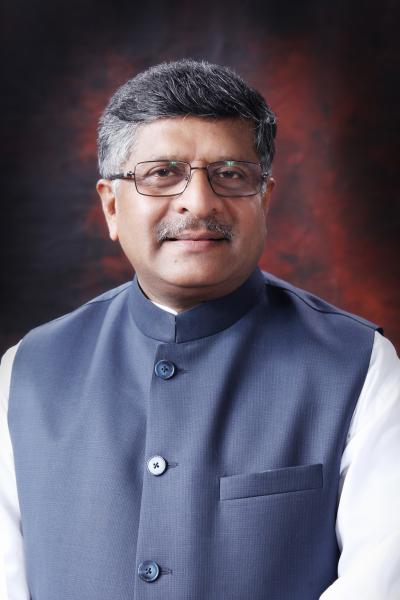
    MUMBAI: Taking a leaf out of Prime Minister Narendra Modi’s Digital India initiative, Union Minister of Communication and Information Technology Ravi Shankar Prasad today stressed on how the country’s growth is interlinked to this programme.
    “The government is dedicated to creating a digital ecosystem that will enable internet to touch the lives of all Indians,” Prasad, who was speaking at the 9th India Digital Summit of IAMAI, said.
    He further pointed out how it was imperative to create hubs in rural India that will help the growth of e-commerce, which remains unexplored so far. “Unless connectivity reaches every village of India, the dynamics of growth will remain unchanged,” he said.
    Speaking on access, Prasad said, “It took 30 years to cover 10 lakh kilometres of optic fibre laying, and in just next three years, seven lakh kilometres will be added, making rural connectivity a reality.”
    Releasing the IAMAI &The Boston Consulting Group (BCG) report India@Digital.Bharat, Prasad said, “For the internet economy to touch $200 billion by 2020 that will contribute five per cent of GDP, we need to move at a fast pace towards computer literacy. The other key areas which will help the internet economy to grow is mobile internet. The government is committed to digitisation and we look at extensive public-private partnerships (PPP) to the have successful implementation.”
    The India@Digital.Bharat report establishes that India is headed towards an internet economy worth $200 billion by 2020, that will contribute five per cent of the GDP growing at 23 per cent compared to 13 per cent overall.

    As the following chart shows, Internet in India by 2018 will be more mature and mobile will be more predominant.

    The number of internet users in rural areas will touch 210 million by 2018, aiding India’s internet user base to cross 500 million by 2018.

    Speaking at the launch of the report, BCG senior partner and director Alpesh Shah said, “India will have more than half a billion internet users in the next three years – this growth has the potential to fundamentally change the way in which consumers save, learn, play, move and work. However, the extent of shift will depend a lot on how the government and the industry come together to unlock the true potential of the internet.”
    IAMAI chairman and Google India managing director Rajan Anandan, stressed on the growth of internet in India and successful roll-out of the government’s Digital India programme. “India is the third country in the world to have over five Internet companies valued at over $1 billion. India is the fastest growing Internet country but we need to move from narrow band to broadband at the earliest,” Anandan said.


  • Government should set aside Rs 10,000 crore for cable modernisation: Arvind Prabhoo

    Government should set aside Rs 10,000 crore for cable modernisation: Arvind Prabhoo

    MUMBAI: The seed of the dream of seeing a ‘Digital India’ was sown by Prime Minister Narendra Modi, as he took charge to make India a better and developed country. And now to make this dream come true are the cable TV operators, who are looking at achieving this through cable TV transformation.


    In keeping with this, Maharashtra Cable Operators Foundation (MCOF) president Arvind Prabhoo has already sent a presentation to the Information and Broadcasting Ministry (I&B) to not only update them of the needs of the industry, but also how the government could help push the agenda.


    According to Prabhoo, the sector needs regulatory support. This includes cable Internet Service Provider (ISP) licence on soft terms, last mile cable operator licensing, price control on content and level playing field for domestic voice over IP (VoIP). The MCOF president has also requested the Ministry for infrastructure support including long haul fibre and BSNL networking sharing, innovative per customer/month fees and cable modernisation fund. With the industry moving to a whole new system of cable TV viewing, the industry needs re-skilling and incentives for innovations.    


    MCOF in its proposition to the I&B has also said that the government needs to become the national data pipe in order to act as a digital courier. “Set one country, one service, one price,” informed Prabhoo. 


    Not only this, the government should look at setting aside a cable modernisation fund of around Rs 10,000 crore. Of this, according to Prabhoo, Rs 4000 crore will be used in set top box (STB) financing at Rs 300 per SD STB, Rs 5500 crore at Rs 600 per home passed will be used in infrastructure upgrade and Rs 500 crore will be used towards technology R&D. “The Ministry could fund the industry for a tenure of five years. With this funding, the government will be the biggest beneficiary as it would be collecting taxes on the funds,” opined Prabhoo.


    Cable TV currently reaches to close to 60 per cent homes (12 crore) of which around 9 crore are in DAS phase III and IV areas. “The sector which has a workforce of close to 300,000, has the potential to serve some 50 crore data users,” he added.


    In the presentation to the Ministry, MCOF has also highlighted the challenges faced by the digital India. These include the high customer acquisition cost, resulting in unavailability of basic data services, shortages in last mile local loop and predominance of concrete in civil structures which is eroding fidelity of wireless services.


    “We had sent the presentation to the Ministry for a robust cable TV industry, but have not heard from them so far,” concluded Prabhoo.

  • India SatCom-2015: Ushering in a new era

    India SatCom-2015: Ushering in a new era

    MUMBAI: Accounting for approximately 17 per cent of the global population and with a growing middle class and a large population still living in rural & remote areas, India presents large market opportunities for satellite communication services. With the government’s focus on ‘Digital India’, one of the significant market enablers for broadband penetration shall be over satellite, as a large share of the population still remain beyond the reach of the terrestrial broadband network including fiber and cable.

    To shake off  the inertia and cynicism and bring about an awakening call to the policy makers for the need to refocus on satellite communication policy and to realise the dream and vision of our Hon’ble Prime Minister – Narendra Modi to make  “ Digital India “ –India’s road map for providing inclusive growth & development for its entire population of 1.3 billion, we are organising a unique day long seminar about Satellite Communication and how we can use this technology to transform  the lives of the people of India. On behalf of Broadband India Forum ( BIF ), we are pleased to invite you to attend this gala event to be held on 16 January 2015 at  Hotel Le Meridien , Janpath, New Delhi  from 10am.  The theme of the conference is India Satcom-2015: Ushering in a new era.

    The chief architect of the ‘Digital India’ program- Hon’ble Minister of Communications & IT-Shri Ravi Shankar Prasad ji has been invited to grace the occasion by inaugurating the conference and delivering the inaugural address.

    The dignitaries who have been extended the invitation to be a part of the conference are Rahul Khullar, Chairperson- TRAI, Rita Teotia, Special Secretary- Dept. of Telecom and Kiran Karnik prominent Indian administrator chiefly known for his work in the broadcasting and outsourcing industries, RK Arnold, Member TRAI besides leading industry veterans viz. Vern Fotheringham-CEO & MD, Kymeta Corp, USA who shall be delivering the keynote address & David Hartshorn-Secretary General, Global VSAT Forum ( GVF ) who shall be bringing an international perspective  to the discussions.

    The occasion will also see the release of the White Paper on Satellite Vision – 2020 besides the launch of the India SatCom Forum under the aegis of Broadband India Forum. This will be entrusted to take the recommendations of the conference forward and work diligently to provide industry inputs in the New Satcom Policy-2015.

    The conference is expected to be attended by eminent visionaries, technocrats, industry specialists and bureaucrats from Telecom Regulatory Authority of India, Ministry of Information and Broadcasting, Doordarshan, Prasar Bharati, Bharat Sanchar Nigam Limited, Department of Telecommunications, Government of India, Telecom Engineering Center, Indian Space research Organization / ANTRIX,WPC (Wireless Planning & Coordination Wing) and from the Broadcasters, Satellite Service Providers,Satellite Operators, Telecom Service Providers, Broadband Service Providers / Internet service Providers, DTH Operators , VSAT Service Providers, System Integrators, Technology Providers  and Users.

    The conference has been supported by two large international organisations- the Global VSAT Forum (GVF)  and the Cable & Satellite Broadcasters Association (CASBAA).


  • Rs 18000 crore worth investments received for ‘Digital India’: Prasad

    Rs 18000 crore worth investments received for ‘Digital India’: Prasad

    NEW DELHI: The Prime Minister Narendra Modi’s mandate of ‘Digital India’ will be a game changer for the country and will have a cascading effect on the entire system said Communications and Information Technology Minister Ravi Shankar Prasad.


    Chairing the consultative committee meeting attached to his Ministry, he informed the members that about 700,000 kilometer of cable for broadband is proposed to be laid in the next three years as against one million kilometers already laid in the country, so far.


    The Minister informed members that 50,000 gram panchayats will be provided broadband facility in the first tranche and 2.5 lakh in the next three years. Prasad also assured the members that the government is giving priority to the production of electronic goods as part of the ‘Make in India’ programme.


    Reacting to the concern of some of the members about poor services of the BSNL network in the country, he said more funds are proposed to be provided to the public sector telephone service providers during the VII phase to improve their functioning and make them commercially active.


    The Department of Electronics and Information Technology secretary RS Sharma, made a presentation on the ‘Digital India’ programme before the members of the consultative committee. Earlier at the FICCI, Prasad said Rs 18000 crore worth investments proposals have been received till now for the ‘Digital India’ programme, of which Rs 4000 crore worth have been approved and more are in the pipeline.


    Speaking at the session on ‘The role of ICT and ‘Digital India’ initiative in India’s growth’ at the 87th AGM of FICCI, Prasad said that while there are issues of spectrum to provide high speed connectivity and regulatory control, India will become an exciting place as far as ‘Digital India’ is concerned. E-commerce, he said, was worth billions of dollars and will help increase India’s GDP in a big way.


    Prasad said that the huge postal network can be used for various services like banking, insurance etc. The postal services earn Rs 280 crore from e-commerce, he said, and urged the private sector to take the initiative to develop India digitally.


    Stating that digital connectivity is needed for good governance, Prasad said India had more than $100 billion turnover in IT industry. All fortune companies connect with India’s IT. India has the potential of becoming number two after China and surpass the United States.


    Spelling out the initiatives that have already been taken under the Digital India Programme, the Minister said mygov.in portal has been launched to allow India to interact on various government programmes. Suggestions received on various programmes like ‘Clean Ganga’, ‘Swachh Bharat’ through the portal and designing, logo, slogan etc have been prepared. Under the ‘Jan Dhan Yojna’ – name for the programme was coined with the help of suggestions received through the portal, eight crore bank accounts have been opened till now with a total deposit amount of Rs 8000 crore. This is an ideal example of financial inclusion through digital technology.


    Additionally, programmes such as ‘Jeevan Pramaan’, a  biometric-enabled digital service for pensioners has been launched. Besides, through IT, two lakh schools were connected (two crore children) on the eve of Teacher’s Day.


    Prasad said the digital divide between those who have and those who don’t needs to be plugged. For this the government has initiated the programme – National Optical Fibre Network (NOFN) – which proposes to connect seven lakh kilometers optical fiber to be laid to connect 250 gram panchayats in three years. Wi-fi spots will be provided around the clusters after that and all villages to be provided with internet connectivity.


    He said that to promote ‘Digital India’ it is proposed to set up a broadband duct which is a pre-requisite for getting sewer, water and electricity connections.

  • Broadband target by government needs to be evaluated, says Khullar

    Broadband target by government needs to be evaluated, says Khullar

    MUMBAI: Telecom Regulatory Authority of India (TRAI) chairman Rahul Khullar said the target set by the government for providing broadband network for all was unrealistic and called for evaluating it. He said it would be simpler to first connect the metros and then look at connecting cities and talukas in a gradual manner.

     “Right now we are sort of deluding ourselves by saying we will achieve 100 per cent and all of you know exactly what has been achieved,” said Khullar. “This can’t be an infrastructure project. Focus on just building the infrastructure is wrong. The entire ecosystem – from applications to services — needs to be developed. The approach should be more practical and realistic,” Khullar added.

     The government plans to link 2.5 lakh village panchayats across the country by December 2016 through the national optical fibre network (NOFN) programme, while promoting initiatives like e-governance, e-education and e-health. The project also aims to ensure that all villages in India have high speed internet.

     In an interview with the Economic Times in August this year, telecom minister Ravi Shankar Prasad had said the government of Prime Minister Narendra Modi wants to ensure a smartphone in the hands of every citizen by 2019. Currently, nearly 74 per cent of the population has mobile phones, most of which though are in the hands of urban Indians.


  • Jaitley launches mobile app of the GoI calendar 2015 for the first time

    Jaitley launches mobile app of the GoI calendar 2015 for the first time

    MUMBAI: Two of the biggest initiatives taken by the new government since it took charge in June this year have been – Swachch Bharat and Digital India.

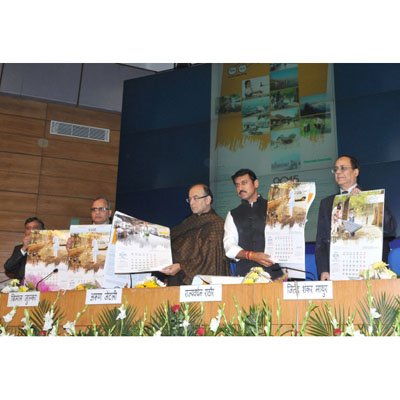
    And taking the philosophy forward in the coming years will be the new calendar launched by the government. The calendar was unveiled by Union Minister for Finance, Corporate Affairs and Information and Broadcasting Arun Jaitley.

    The calendar combines the conventional and technological modes of communicating the initiatives of the government. While the theme of ‘Swachh Bharat’ is portrayed visually in the conventional mode, the mobile application of the calendar reiterates the government’s vision of taking the idea of ‘Digital India’ forward.

    Jaitley said, “The digital version of the calendar 2015 reflects the vision of the government in taking forward the benefit of technology in information dissemination as no one could defy the growth and movement of technology. Technology today was operating on a real time basis.”

    The Minister also lauded the efforts of Directorate of Advertisement and Visual Publicity, DAVP, for developing the digital version of the calendar with socially relevant messages which would be accessible on real time basis through mobile phones.

    The mobile app of the calendar provides access to the latest tweets from the PMO, the YouTube channel of the Ministry of Information and Broadcasting, and the news/updates on PIB website. In addition to being a window for all websites of government of India, this informative application would serve as a planner to the users bringing news updates from AIR and DD News. The app was developed for android platforms initially which would be made available on other mobile platforms also in due course of time.

    The calendar has been developed on the theme of “Clean India Green India” with focus on “Swachhta” and environment issues. For instance, the January page of the calendar displays the launch of the “Swachh Bharat Mission by Prime Minister Narendra Modi.”

    Minister of State for Information and Broadcasting Rajyavardhan Rathore, and Ministry of I&B secretary  Bimal Julka along with senior officials of the I&B Ministry were also present at the unveiling.


  • ‘Digital India Conclave 2014’ to intensify the ‘Digital India’ initiative

    ‘Digital India Conclave 2014’ to intensify the ‘Digital India’ initiative

    MUMBAI: The Narendra Modi led Indian government officially clicked through the ambitious ‘Digital India’ programme a few months ago. The vision is simple: to usher India into the digital age where each and every citizen can experience the impact. But this simple vision will require a lot of hard graft and investment towards the right kind of infrastructure.

    As a bridge between this vision and reality, India Inc. along with FICCI, Invest India and Chase India is organising a ‘Digital India programme’, a series of online and offline activities pivoting around two roundtables in New Delhi and Washington DC.

    India Inc. has created its own ‘Digital India’ initiative which ties in with the India-US Partnership Hub to bring in a series of online and offline programmes. It will explore the ‘Digital India’ vision and trigger dialogue to plug into this bold new programme.

    This online-offline integrated programme brings in perspectives and participation from senior policy decision makers within government and industry around a discourse to achieve the following objectives:

     • Identify the challenges and opportunities in the ‘Digital India’ initiative
    • Identify synergies that can be created between industries and the government to successfully implement the initiative
    • Explore how the India US collaboration could help achieve the ‘Digital India’ vision
    • Involve key stakeholders in defining a roadmap that will lead to a truly ‘Digital India’
    • Produce a series of online and offline activities to facilitate discourse culminating in a bespoke online publication
    • India is finally coming of digital age and we aim to provide an incisive new digital hub for this new age.

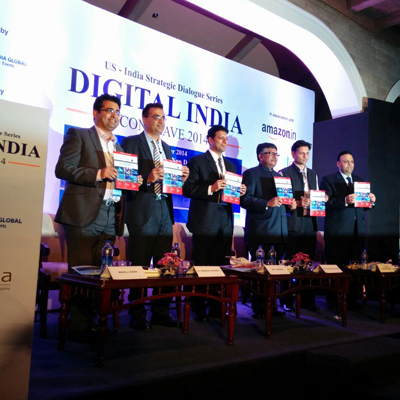
     Commenting on the initiative, Avian Media CEO and Chase India director Nitin Mantri said, “We are proud of this association with India Inc and a key aspect of this initiative is our first Digital India Conclave to be held in New Delhi on 5 December 2014. The sessions will focus on the prominence of the digital advancement across sectors and the requirement to streamline digital with the core business in order to initiate the Digital India initiative.”

    The conclave is in association with Amazon.in, Google and Qualcomm is supported by TCIL and NIXI and is the first phase of the programme which will bring together around 100 -150 key stakeholders across government/public sector, the private sector as well as other influencers such as think tanks, media and specialist experts.

    The first conclave of the ‘Digital India’ Programme is on 5 December 2014 in Delhi while the second conclave will be held in Washington in January 2015.


  • Govt of India joins hands with Google for a ‘Digital India’

    Govt of India joins hands with Google for a ‘Digital India’

    MUMBAI: Working towards the Prime Minister Narendra Modi’s vision for a digital India, the Government of India has partnered with the online giant Google.


    Announcing the initiative Department of Information Technology secretary RS Sharma said, “The Digital India programme has been launched with the vision of transforming India into a digitally empowered society and knowledge economy. It can bring India at par with other developed countries.”


    “I’m happy Google is coming forward to roll out initiatives that will contribute to the Digital India vision. I’m sure others will come forward and join this movement.”


    As a part of the plan, Google is going to run a number of campaigns in collaboration with the Indian government. Google would also develop a mobile application for the Prime Minister’s Office (PMO) aiming to bring the PMO to every citizen. The app will be developed through a contest to be soon launched by Google and MyGov, the citizen engagement platform of the government.


    According to Google, the motive behind the contest is to showcase that ‘Indians can build a world class app’.


     Google would also build a multi-language ecosystem on the web to help the government transition into the increasingly ‘mobile’ India.


    In a bid to promote the digital empowerment of citizens, the company will push programmes like Helping Women get Online and getting Indian SMEs Online. This will also continue to map and photograph heritage and culture sites to bring them online.


    Additionally, to encourage digital literacy and internet safety, Google will introduce curriculums for schools, officials and elected representatives.


     Google India vice president and managing director Rajan Anandan added, “India is already home to the third largest number of internet users globally with 245 million users as of June 2014.  We are on track to become the second largest user market by 2015 and a 500 million-user market by 2016. Yet, there are more than a billion people who will need to be brought online for India to realise the vision of a digitally connected, knowledge economy. Prime Minister Modi’s Digital India programme will play a transformational role in achieving this.”