Tag: Digital India

  • TV industry to touch Rs 975 billion in 2019: FICCI KPMG Report

    TV industry to touch Rs 975 billion in 2019: FICCI KPMG Report

    MUMBAI: There is some good news for Indian broadcasters, who even after digitisation of phase I and II cities, have not been able to reap its full benefits. According to the ‘FICCI KPMG Indian Media and Entertainment Industry Report 2015,’ the sector will see a higher subscription revenue growth, which will outstrip advertising revenue increases.


    The report, which was released on 25 March highlights that the subscription revenue will grow at an annualized 16 per cent; higher than ad revenue’s 14 per cent annualised growth. This will be on account of better monetisation, courtesy digitsation. According to the FICCI KPMG report, television industry in India, which is estimated at Rs 475 billion in 2014, will grow at a CAGR of 15.5 per cent to reach Rs 975 billion in 2019. 


    Highlights of the report: 


    Paid C&S penetration of TV households 


    The number of TV households in India increased to 168 million in 2014, implying a TV penetration of 61 per cent, even as the Cable and Satellite (C&S) subscribers increased by 10 million in 2014, to reach 149 million. Excluding DD Freedish, the number of paid C&S subscribers is estimated to be 139 million, implying a paid C&S penetration of 82 per cent. The paid C&S subscriber base is expected to grow to 175 million by 2019, representing 90 per cent of TV homes. 


    DTH ARPU Growth


    While subscriber addition for direct to home (DTH) operators was muted in 2014, they had a healthy revenue growth due to sustained increase in the average revenue per user (ARPU). DTH operators have seen an ARPU increase of around 12 to 15 per cent in 2014. While some of the ARPU increase was driven by DTH operators’s ability to continue to push price hikes, the more promising trend is that DTH operators are able to increase collections from customers by providing additional services such as HD channels, premium channels and other value added services (VAS).


    There are close to four million HD subscribers, accounting for 10 per cent of all DTH subscribers, while 15 to 20 per cent of incremental subscribers in 2014 were HD subscribers. 


    Broadcasting


    Television advertising revenue bounced back in 2014 led by the Indian general elections and the improved macro economic outlook due to a stable government at the centre. 


    The total TV advertising market is estimated to have grown at 14 per cent in 2014 to Rs 155 billion. Going forward, TV advertising in India is expected to grow at a CAGR of 19 per cent to reach Rs 299 billion by 2019. 


    In 2014, the subscription revenues for broadcasters grew at only 10 per cent to Rs 75 billion. This is expected to grow at a CAGR of 22 per cent from 2014 to 2019 to Rs 201 billion. 


    The increase in declared subscriber base and increase in revenue share of broadcasters of the subscription pie is expected to drive up the share of subscription to total broadcaster revenue from 33 per cent in 2014 to 40 per cent in 2019.


    Content Production


    The size of Indian TV content production industry is RS 30 billion, excluding news, animation and sports. Of this, Hindi language content contributes to two-third of the market, with regional languages contributing the rest. 


    Digital Media


    Digital ad spends accounted for 10.5 per cent of the total ad spends of Rs 414 billion in 2014. Digital media advertising in India grew around 45 per cent in 2014, and continues to grow faster than any other ad category.


    The number of internet users in India is closing on to 300 million, thus dethroning USA as the second largest internet enabled market, the largest being China. The year on year growth stands at 31 per cent. 


    The total number of wired internet connection stands at 20 million, whereas there are 210 million wireless internet connections in the country. Smartphone penetration is 10 per cent, which is lower than the average global penetration which stands at 25 per cent. Driven by reduction in tariffs of 2G, 3G and introduction of 4G, the number of wireless internet connections is estimated to reach 402 million by 2017 and 528 million by 2019. 


    It is estimated that 52 million new internet users will login to the digital world by mid-2015. India is expected to reach 640 million internet users by 2019. 


    Internet users to grow faster than TV viewers


    In 2014, the number of TV viewers in India was 825 million, as compared to the number of internet user at 281 million. The CAGR for TV viewership is estimated to be around three per cent from 2014 to 2019, whereas the number of internet users is expected to grow by 18 per cent during the same period.


  • Tata Sky awaits MIB approval for Rs 250 crore investment

    Tata Sky awaits MIB approval for Rs 250 crore investment

    MUMBAI: Direct to home (DTH) operator Tata Sky has been applying a wait and watch policy not only for transponder space, but also for an approval from the Information and Broadcasting Ministry (I&B), for an additional Rs 250 crore investment.


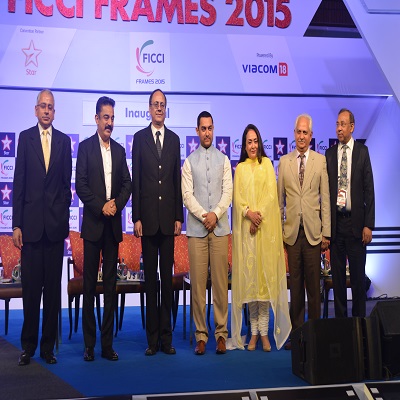
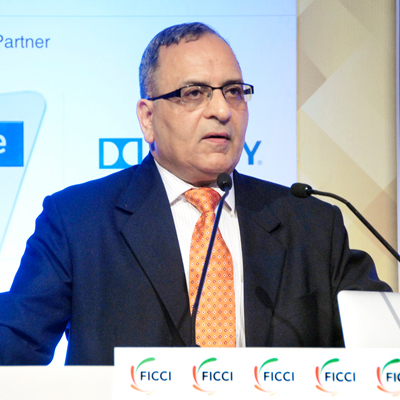
    “The money for the project has already come. But, if the approval doesn’t come in the next 48 hours, I will have to return that money to the foreign investors,” said Tata Sky MD & CEO Harit Nagpal, while addressing the inaugural session at FICCI FRAMES 2015.


    Responding to this, I&B Ministry additional secretary JS Mathur said, “Well, we had granted the approval a month back, and then Tata Sky realized that for the route it wanted to take with the investment, it had to reapply and this is the reason it is taking time.”


    Taking cue from Prime Minister Narendra Modi’s ‘Digital India’ campaign, Nagpal said, “The enabler of connectivity is broadband.”


    As per Nagpal, with low Average Revenue Per User (ARPU), putting fresh wires in the country would not give any return on investment. “Otherwise, there are enough hungry entrepreneurs, who would have used the opportunity. And if they haven’t, means that conditions are not viable in the country,” opined Nagpal.


    The country, though has hundreds miles of wires all over, which can carry broadband, and all it’s waiting for is an enabling and uniform environment, to use this infrastructure and deliver broadband to the consumer. “The rest as has happened in telecom, will happen,” he added.


    According to Nagpal, the industry lacks new thinking. “If anybody finds a successful format, 20 others follow and copy. I have seen general entertainment channels (GECs) being launched as pay TV, churning out the same content, and then either vanishing or becoming free to air (FTA). They lose viewership and distribution and then they are forced to carry 20-22 minutes of advertisement, which the regulator starts questioning and they are then seen sitting in courts,” he said.


    The problem, as per Nagpal, is not the producers, but the economics of the business, the restrictions and the permissions needed to do business. “All this restricts the producer from taking risks and choosing a safe and successful path,” he said.


    Nagpal, further went on to say, “I don’t think there is room for more Stars, Zees and Sonys. Also there is one Arnab and one Barkha, you can’t have too many of them. It is the niche, which will take us forward, and they are low investment and high return product.”


    Flair of creativity and new ideas is the key ingredient in the media and entertainment sector. “The deeper I travel, the more gems I see, but the production centres in the country are all located in the big cities. There is need to take production centres in smaller towns, where the talent is and create more self employed professionals in those areas,” he added.


    According to Nagpal, while the rules for setting up, funding and running the business are in place, one still needs to follow rules and ask for permission at every step. “Things have improved in the past few months and the government is keen to clear files, faster than ever before,” he said.


    The only way the industry can grow, as per Nagpal, is by allowing the businesses to inform and not seek approvals and also by self regulation. “In case we violate the law, issue penalties, cancel the licence,” he announced.


    Touching upon the movie business, Nagpal said that while we make the highest number of films, the industry is still not making money. “We have reached a choking point in terms of adding screens and it is marred by either high cost of real estate or the long list of approvals,” he said.


    According to Nagpal, the increasing number of digitized homes will help more producers to monetize their production. “This has already started, a lot of films are breaking even only on the basis of selling their rights to cable and satellite,” he said.


    The country has seen digitisation of 42 cities. Touching upon the condition in the digitized cities, Nagpal said, “The local cable operators are running the digitised area and the multi system operators (MSOs) are watching. Customers are not getting packages they want and neither are they getting value added services. The customers are willing to pay, unlike what is being projected by LCOs.”


    Digitisation is equal to automation. “The new role of the LCO is to be of a service provider to the MSO and not a partner. I think this needs to be thought about,” concluded Nagpal. 

  • Major strides in National Fibre Optic Network programme, Digital India: Jaitley

    Major strides in National Fibre Optic Network programme, Digital India: Jaitley

    NEW DELHI: Finance Minister Arun Jaitley said on Saturday, that the National Optical Fibre Network Programme (NOFNP) of 7.5 lakh kms networking 2.5 lakh villages is being further speeded up by allowing willing states to undertake its execution, on reimbursement of cost as determined by Department of Telecommunications.


    Andhra Pradesh is the first state to have opted for this manner of implementation. 


    Jaitley also said that the ‘Digital India’ programme had been announced to take technology from grassroot to the space and make India a knowledge and innovation based society with broadband connectivity being taken to all villages.


    He said in his budget for 2015-16 that India has a well-regarded and world-class IT industry with revenues of about $150 billion, over $100 billion of exports, employing nearly 40 lakh people directly. The country was ‘now seeing a growing interest in start-ups.’


    “Experimenting in cutting edge technologies, creating value out of ideas and initiatives and converting them into scalable enterprises and businesses is at the core of our strategy for engaging our youth and for inclusive and sustainable growth of the country. Concerns such as a more liberal system of raising global capital, incubation facilities in our Centres of Excellence, funding for seed capital and growth, and ease of doing business etc. need to be addressed to create lakhs of jobs and hundreds of billion dollars in value,” he said.


    With this objective, the government will establish a mechanism to be known as SETU (Self-Employment and Talent Utilisation). SETU will be a Techno-Financial, Incubation and Facilitation Programme to support all aspects of start-up businesses, and other self-employment activities, particularly in technology-driven areas. Jaitley set aside Rs 1,000 crore initially in NITI Aayog for this purpose.

  • Online start-ups pin hopes from Budget 2015

    Online start-ups pin hopes from Budget 2015

    MUMBAI: The Digital India idea conceptualised by Prime Minister Narendra Modi has caused some excitement within established and start up companies in the technology and e-commerce space. Some of these start-ups are of the belief that Budget 2015 will be the start of a new era of higher growth.


    It may be also recalled that Finance Minister Arun Jaitley had invited CEOs of Indian software and hardware companies for a meeting along with various e-commerce companies and prominent start-ups for pre-Budget consultations in January this year. Online start-ups like iTiffin.in, iSpyprice.com and Youshine.in are some of these start-ups that have raised their hopes ahead of the upcoming budget.


    iTiffin.in (Intelligent Tiffin) CEO and co-founder Tapan Kumar Das is of the opinion that ‘Nutrition services and Health food,’ should be brought under the gamut of health services, thus qualifying those services for service tax.


    According to Das, the cost of healthcare in the country should be reduced in order to regulate the increasing number of lifestyle disorder cases in India. He further wished that food technology is made free of import duty and income tax benefits are allocated to the Nutrition and Health Food sector. “I also wish that people are recruited from the skill development academy while Nutrition and Diet plan services should be brought under Mediclaim policy of General Insurance,” he said.


    On the other hand, price comparison website, iSpyPrice.com founder and director Suresh Sharma desires that GST (Goods and Services Tax) is implemented in the budget for this year as he feels it will solve various taxation issues. Besides this, he stated that if service tax on online advertisements is abolished, it would motivate internet-based publishing companies to create more valuable content and application for websites. Sharma said that the government should give proper clarifications on service tax levied on advertising income that is earned by Indian publishers in foreign currency. Also, he hoped that MAT (Minimum Alternate Tax) is abrogated from the e-commerce landscape.


    Meanwhile, VIA.com chief executive officer Swaminathan Vedaranyam said that as far as the travel industry is concerned, there is an urgent need for well-defined policies and clear commitments to ensure that all cultural heritage points are given more attention with improved infrastructural facilities. “There is a recent spurt in domestic travel as well as a higher influx of foreign tourists in India and with dedicated upkeep of the tourist hotspots, we can ensure higher growth for the travel industry,” he informed.


    On a concluding note, he wished for allocation towards revitalising all unused airports in tier II and III cities as, according to him these geographies hold immense potential today.

  • National Optic Fibre Network cost escalates by Rs 10,000 crore

    National Optic Fibre Network cost escalates by Rs 10,000 crore

    NEW DELHI: A total of 97,480 km of National Optic Fibre Network (NOFN) is planned in the first phase out of the total envisaged – 244,729 km – in 36 states and union territories in the country.


    The government had set a budget of Rs 20,000 crore for the project, but Ministry sources informed Indiantelevision.com that the cost had already escalated to Rs 30,000 crore.


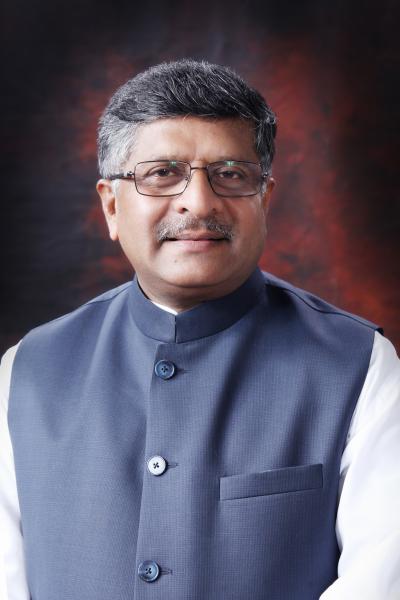
    Communications Minister Ravi Shankar Prasad told the Parliament that work was at various stages in all the planned regions.


    The NOFN aims to connect all Gram Panchayats in the country through optical fibre cable (OFC) by bridging the connectivity gap between Gram Panchayats and Blocks for providing broadband.


    Meanwhile, the number of fibre to the home (FTTH) and fibre to the building (FTTB) subscribers in Europe has soared, increasing by 50 per cent over the 12 months ending December 2014, according to the latest update to the FTTH Ranking announced at a press conference held at the FTTH Conference in Warsaw.


    There are now nearly 15 million FTTH/B subscribers in the European continent (14.5 million) – not including Russia and the Ukraine, which would add a further 14.8 million homes to the total (Source: FTTH market panorama prepared by IDATE for FTTH Council Europe).

  • ‘Festivals of India’ to focus on Digital India & its gains: Culture Ministry

    ‘Festivals of India’ to focus on Digital India & its gains: Culture Ministry

    NEW DELHI: Digital India and its gains will form a highlight of the next round of ‘Festivals of India’ during 2015-16.


    The Culture Ministry has set the ball rolling for holding the next round of ‘Festivals of India’ abroad with Culture secretary Ravindra Singh holding a video conference with Ambassadors/High Commissioners of South Korea, Australia, Mauritius and Myanmar in this regard. Similar festivals have already been organised successfully in various countries like Malaysia, China, Indonesia, South Africa and Japan among others. 


    The secretary emphasised that social media should be utilised to the maximum extent possible. Discussing the details with the Ambassadors and High Commissioners, the secretary pointed out that these festivals can be used to showcase Indian art, culture, life and achievements.


    The Ambassadors and High Commissioners favoured the idea of projecting the face of modern India by showcasing the rise of Digital India and other modern technological developments in the field of space. They were also of the opinion of showcasing the journey of Indian civilization from 5000 years ago to the modern India. Singh shared the experience of the festivals held in other countries recently like South Africa and China and various themes of these festivals like Buddhism, Yoga, exhibitions on cricket etc. He also asked these countries to collaborate among themselves and schedule the activities in such a way that the artistic performances and exhibitions being run in a particular country can be presented in the neighboring countries too. Each country decides the events and themes of a festival. Ambassador to South Korea was in favour of festival theme based on Buddhism since it has a large Buddhist population.


    Ambassador to Myanmar emphasised that the Yoga and Ayurveda can be of special interest in Myanmar. Representative of Indian High Commission in Australia favoured the theme based on Tribal Art. The ambassadors were of the opinion that the states should also be involved actively in these festivals. 


    Senior officials of the Ministry of Culture and representatives from National Museum, National Council of Science Museums, National Gallery of Modern Art and other organizations involved in these festivals were also present during the Video Conference.  

  • Digital India will bridge gaps between haves & have-nots: Ravi Shankar Prasad

    Digital India will bridge gaps between haves & have-nots: Ravi Shankar Prasad

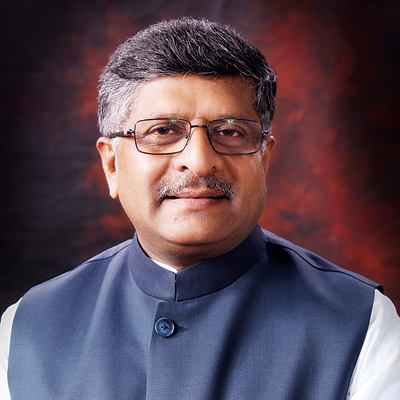
    NEW DELHI: Digital India is a tool to bridge the divide between the haves and have-nots, according to Communications and Information Technology Minister Ravi Shankar Prasad.


    In his address at the Times Networks Digital India meet, Prasad said that a floodgate of opportunities are going to open in India. “I welcome concrete suggestions from all for making Digital India a grand success – we have to work together. Wherever it is possible digging will be done, cables will be laid, if we can supplement by satellite or balloon or drones, we will consider that,” he said. 


    Prasad added that a ‘skilled India’ is one of the three priority areas for the government that would complement the ongoing ambitious Digital India and Make in India programmes. “The three pillars of digital India that our government will focus on is digital infrastructure, digital service delivery and digital empowerment,” Prasad said. 


    According to him, Digital India is an enabling platform for change and will not be fulfilled without the Make in India initiative.


    Times Television Network, part of the Times of India Group, hosted the ‘Digital India Summit 2015’ on the theme – ‘Digital India: Bits & Bytes of a Billion Dreams’. The summit brought key policy makers, digital leaders and influential thinkers face-to-face to deliberate suggestions to prepare India to face technological challenges and devise solutions to contribute towards realizing the implementation objectives of Digital India.


    The two-day conclave saw discussions on vital subjects including Broadband Highways, Universal Access to Mobile Connectivity, Public Internet Access Programme; E-governance: Reforming the Government through Technology; Net Neutrality; Digital Wallet, E-Kranti: Electronic Delivery of Services; Information for all; Electronic manufacturing; IT for jobs and Early Harvest Programme.

  • Digital advertising spend to see 35% growth in India

    Digital advertising spend to see 35% growth in India

    MUMBAI: India’s booming digital advertising market has “reached a tipping point” and is set for double-digit growth driven by global investment in the country and policy reforms under the new Narendra Modi administration, according to ad:tech head of EMEA & India James Drake-Brockman.


    Led by mobile, social media and the emergence of new technologies, digital advertising spend in India is expected to increase by an impressive 35 per cent in 2015 and further growth is predicted as Prime Minister Narendra Modi’s ‘Digital India’ policy enhances India’s internet infrastructure.


    As global industry leaders prepare to gather in Gurgaon for ad:tech New Delhi conference on 19-20 March, Brockman feels that India’s burgeoning advertising technology sector is experiencing unprecedented investment as advertisers switch on to the growing need to allocate digital resource. “A strong digital presence is no longer a ‘nice to have’ – those who don’t will struggle to keep up with the ever evolving relationship between brand and consumer,” he said.


    Last year’s ad:tech New Delhi happened at a time when India had reached a tipping point of investment. Rather than attendees using the event to gather information and understand what is out there, they were coming to the event and treating it as a marketplace with serious budgets to invest.  


    “The surge in number of brands sending groups of marketers to the event in 2015 reflects this trend and demonstrates the fact that India’s marketing community is serious about digital,” added Brockman.


    The ‘Digital India’ policy and the prospect of getting India’s 1.3 billion people online has compounded interest in the sector: “Advertisers realise that increased internet access combined with changing consumer behaviour and spending have created a unique window of opportunity. They realise that they need the right digital advertising tools to capitalise and are turning to technology companies here in India and overseas for solutions and partners,” said ad:tech New Delhi head of content and marketing Vinish Joshi.


    “All of this is good news for the advertising technology industry, good news for the economy and good news for India,” added Joshi.


    Featuring a ‘Digital Ahead’ theme, over 5,000 people are expected to attend ad:tech New Delhi where industry leaders speaking include Unilever VP media for Asia, Africa, Middle East, Turkey and Russia Rahul Welde, Group M chief digital officer Rob Norman and Flipkart head of fashion Mukesh Bansal.

  • Govt. offers incentives under ‘Make in India’ programme to electronics manufacturers

    Govt. offers incentives under ‘Make in India’ programme to electronics manufacturers

    NEW DELHI: More than 50 multi-national companies as well as Indian business houses had come forward with proposals to set up manufacturing units for electronic goods including set top boxes after the government announced relaxations to promote the ‘Make in India’ policy. 


    Taking part in the section on Electronic Manufacturing at the Times Television’s Digital Summit here, Communications and Information Technology joint secretary Ajay Kumar said that the whole process will mean recreating the IT industry and changing the eco-system as Indians had got used to importing cheap equipment from overseas.


    However, he said that the IT industry was on the verge of ‘explosive growth’ because it had huge brain power, demographic profile, and a government determined to promote the ‘Make in India’ and ‘Digital India’ programmes.


    Kumar claimed that the government was giving several incentives including a 25 per cent incentive in the manufacturing sector for electronic goods. Training programmes had been created for in-house human resources and there was focus on innovation and research and development.


    However, Manufacturers’ Association for Information Technology (MAIT) vice president Nitin Kunkdienker said, “The government’s policies are still not helpful to the growth of the sector. A mere announcement of a national policy is not enough if states do not encourage to collaborate on various issues.”


    He said even the central ministries did not talk to each other, referring specifically to the IT Ministry, the Information and Broadcasting Ministry, the Home Ministry, the Finance Ministry and the External Affairs Ministry.


    In many states, the Chief Ministers had no control over the affairs relating to the industry. There was also need for process improvement such as customs etc. and the government should be able to optimize its advantages. It should also bring in the educational institutions on the programmes to create a system that sets standards.


    Amar Babu R K of Lenovo referred to a general mistrust between the government and the industry.


  • Major initiatives of the I&B Ministry in 2014

    Major initiatives of the I&B Ministry in 2014

    The Ministry of Information & Broadcasting (I&B) has undertaken key initiatives in the different sectors aimed at enhancing the outreach of policies and programmes across platforms. Some of the initiatives undertaken have been innovative, involving people’s participation, enhancing government’s presence on the social media platforms and strengthening communication at the grassroots. Some of the key initiatives are as under:


    Initiatives under Swachh Bharat Mission

    As part of the Swachh Bharat Mission, the Ministry initiated a 360 degree multimedia campaign to enhance the outreach and impact of the Mission. All media units were involved in outlining audience specific content, tools and action plan. Intensive discussions were held with key stakeholders of the mission and innovative strategies were incorporated across media platforms for greater visibility and impact. Some of the key initiatives undertaken by the Ministry are as follows:
     

    Three Day Rashtriya Bal Film Mela on the theme “Swachhta”

    Organized by the Children’s Film Society of India (CSFI) on the occasion of National Children’s Day celebrations, the three day festival provided an opportunity for children to appreciate high-quality film content, experience value-based entertainment, and to trigger their imagination about environment conservation and cleanliness. The festival showcased a bunch of internationally acclaimed children’s films on the theme of cleanliness.

    The Festival featured interactive workshops on film-making, film appreciation, animation, Charlie Chaplin’s Mimes and storytelling. Live dance performances, magic act, sand act, and puppetry along with various competitions such as painting on the theme, ‘Swachhta’, and digital collage on the theme ‘Clean India’ and the craft of making utility items from waste materials, were being organized on the sidelines of the festival.


    1. Creation of Audio-Visual Spots on Swachh Bharat Mission.
    2. Animation / short video competition (less than three minute duration) organized on the digital volunteer platform of the Ministry with 15 October as deadline.
    3. Launch of Photo-Competition depicting “before and after pictures of cleanliness” on the digital volunteer platform with 15 October as deadline.
    4. Creation of an animation film by New Media Wing
    5. Crowd sourcing for the design of print advertisements
    6. Developing platform specific content on social media
    7. Creation of banners, logos and e-mailers for spreading of the message through social media
    8. Jingles on All India Radio
    9. Community Radio Mobilization to effectively reach the grass root communities
    10. Advisory to private TV & FM channels to become part of the campaign so as to enhance impact and outreach of the mission
    11. Anchor based and in-house serials on DD & AIR
    12. News bulletins through special success stories on DD & AIR
    13. Interactive programmes on DD & AIR
    14. Public Information Campaigns to focus on the core issues of the mission.
    15. Interpersonal communication strategies through field units of the Ministry.


    Launch of the DAVP Calendar, “Clean India, Green India”: The year 2015 calendar has been developed on the theme of “Clean India Green India” with focus on “Swachhta” and environment issues. The January page of the Calendar displayed the launch of the “Swachh Bharat Mission by Hon’ble Prime Minister Shri Narendra Modi. While the February page carried the message of ‘Swachh Vidyalaya’ and ‘Bal Swachhta Abhiyan’, the March page was designed on the theme, ‘Rejuvenating Rivers.’ The April Page of the Calendar portrayed “Clean Hospitals: A Healthy India,” May depicted the cleanliness drive of Railways, June focused on Rejuvenation of the River Ganges, ‘Namami Gange’, and July on people’s participation in Swachh Bharat Movement. The August page was on the theme of Clean Villages; the month of September highlighted Solar Energy as clean and renewable source of energy; October depicted Wind Power as pollution free source of energy and November emphasized the need to preserve Himalayan Ranges. Wildlife conservation was the theme for December.


    For the first time ever, a mobile app of the calendar has been developed. The mobile App would provide access to the latest tweets from the PMO, the YouTube channel of the Ministry of Information and Broadcasting, and the press releases on the PIB website. In addition to being a window for all websites of Government of India, this informative application would serve as a planner to the users bringing news updates from AIR and DD News. The mobile app was developed for Android platforms initially, which would be made available on other mobile platforms also in due course of time.


    Organising Press Conferences to highlight achievements and initiatives of the Government:The strategy adopted has been extremely successful in positioning the visibility of Government’s initiatives across media platforms.


    Multimedia Exhibition on Former Prime Minister Shri Atal Bihari Vajpayee:The Ministry of I&B has mounted a multimedia exhibition under the aegis of DAVP on the former Prime Minister Shri Atal Bihari Vajpayee. The exhibition would serve as an inspiration and learning to the people in understanding the life and contributions of Shri Vajpayee as a politician, statesman, and poet. The exhibition was inaugurated by Union Minister of Finance, Corporate Affairs, and Information & Broadcasting Shri Arun Jaitley on 20 December, 2014.


    The exhibition portrays the life of Shri Vajpayee, through a display of around 250 photographs, which reflect his vibrant personality. These rare pictures not only take the visitors through the political journey of this visionary leader, but also provide a glimpse into the diverse phases of his life – as a poet and a great thinker. At this event, different facets of his life will be showcased through photo and electronic exhibition. Scrollers, translites, LED walls, large fascia and title boards are the major attractions of the exhibition. The exhibition was open to public from 20 – 25 December, 2014.


    Establishment of Social Media Presence of Government of India: In order to facilitate Ministries/Departments in registering their presence on social media by utilizing the services of the Communications Hub established by the Ministry of Information & Broadcasting, the ministry organized a half day training workshop on 11 July, 2014 at the National Media Centre. The response was very encouraging as about 150 officers representing 59 Ministries/Departments attended the workshop. An interactive Q&A session was also held before concluding the workshop and induction material including a handbook on social media was also distributed to all the participants.


    Third and fourth phase of digitization: A Task Force has been constituted with the approval of MIB to steer the remaining two phases i.e., Phase III and Phase IV of digitization in India. The Task Force is headed by the Additional Secretary of the Ministry and comprises stakeholders from various ministries, departments and industry representatives. The constitution of the Task Force paves the way for implementation of digitization initiative in India, which will see digitization of about 8 crores cable TV homes in India. This will bring India in the league of developed nations. It is also a step towards the Prime Minister’s dream of a Digital India, as digitization will enable quick penetration of broadband connectivity in India.


    Government of India vide Notification dated 11 September, 2014 has revised the timeframe for digitization for Phase-III and IV of the Cable TV. As per revised guidelines, Phase-III and IV of Cable TV would be completed by December 2015 and December 2016 respectively.


    Third phase of FM radio auction: The Cabinet Note on third phase of FM has been moved for cabinet approval. This decision of the Ministry of I&B will pave the way for e-auction of FM Phase-III channels.


    Goa declared the permanent destination for International Films Festival of India: In order to develop the “Brand IFFI” on the lines of other international film festivals, Goa has been declared as the permanent destination for International Films Festival of India (IFFI). The IFFI platform propagated the theme “Green India, Clean India” at all the major events organized under its banner.


    North East Film Festival: For the first time, a three-day North East Film Festival was held in Delhi (Siri Fort Complex) on a grand scale. It will henceforth be an annual feature, a prominent event in the film festival calendar of the Directorate of Film Festivals. The Festival concluded on 24 August, 2014.


    FTII, SRFTII to be institutes of national importance: In order to provide statutory backing through an act of Parliament to declare both the institutes as Institutes of National Importance the government has proposed a Bill. The proposed Bill would enable both the institutes to award its own degrees and diplomas and start new activities on the lines of IITs and IIMs. Cabinet Note has been moved.


    Meeting with stakeholders related to Set-Top-Boxes to promote indigenization of digitization: Efforts were taken to fulfill the long pending demand of domestic manufacturers of Set-Top-Boxes (STBs) to get tax concession (C Form benefit) in order to compete with imported STBs. A letter was written by Hon’ble MIB to Hon’ble Finance Minister to resolve the issue of C-Form concession to domestic manufacturers. This was followed by a meeting by Hon’ble MIB with senior officials from Ministry of Finance, Ministry of Commerce, Ministry of Micro, Small and Medium Enterprises, Department of Electronics and Information Technology, Department of Telecom, Bureau of Indian Standards etc., and other industry stakeholders like indigenous STB manufacturers, DTH Association and MSO Associations etc. As a result of continuous follow up, Department of Telecom has confirmed Set Top Box as “Telecom Network Equipment”. The proposal has also been approved by the Ministry of Finance and a letter has already been issued to all the State Governments, Commissioners of Taxes and other concerned that STB will get the facility of ‘Form C’.


    e-initiatives: The Office of Registrar of Newspapers for India, M/o I&B has streamlined its Single Window Public dealing mechanism at its office. The RNI has achieved 100% success in online e-filing of Annual statements by publishers for 2013-14. The software module has been finalized for online filing of title verification application. It has also started sending automatic SMS intimation about status of title and registration application to publishers.


    Boost to Community Radio movement in the Country:Hon’ble MIB has been given a lot of emphasis on reaching out to the people especially in rural and marginalized areas with effective development communication. Community Radios are one of the best tools to touch the lives of millions of people as it is the platform, which provides an opportunity to community to not only receive messages from Government but also provide its feedback, which ensures two-way communication. An announcement has been made by Hon’ble Finance Minister in his budget speech allocating an amount of Rs 100 crores for “Supporting Community Radio Movement in India.” This would enable setting up of 600 community radio stations across the country in the 12th Five Year Plan. The resources would also be utilized for enhancing awareness, building capacities of community radio operators and promoting innovations in the sector. Funds would also be provided to various CR operators as a matching grant for setting up /upgrading community radio stations. At present 170 community radios are operating in various parts of India and about 200 are in the pipeline. This major initiative of the new government will strengthen the connect with the population living in rural and marginalized areas.


    A monitoring mechanism is also being set up to monitor community radio stations live at Electronic Media Monitoring Centre.


    Simplification of Procedures for granting Television licenses for starting additional television channels: Ministry of I&B grants permission to private television channels in India. At present about 800 TV channels have already been permitted by the Ministry of I&B. India has a huge broadcasting industry, thanks to the large number of television channels providing news and entertainment in various languages both at the national and regional level. Many companies desirous of starting new television channels have been approaching the Ministry to simplify procedures for launch of additional television channels. The issue of grant of additional television channels had become complicated as previously it was decided that for starting every additional TV channel security clearance would be required even for the same company and same set of Directors, who had been security cleared earlier, within the period of validity of such security clearance.


    Proposal cleared for Rs 600 crore National Film Heritage Mission (NFHM) to preserve India’s film legacy: The revised EFC proposal for a Rs 600 crore National Film Heritage Mission project to preserve India’s filmic legacy was cleared by the Expenditure Finance Committee in the Ministry of Finance on 3 July, 2014. The modalities are being worked out to launch it at the earliest.


    Peoples’ participation in Government Advertising through Crowd-Sourcing of Advertisements: The advertisement for the important events being designed on the crowd-sourcing model. Independence Day advertisement designed on these lines and DAVP has invited suggestions for the proposed advertisement to be brought out on 5 September to observe “Teachers Day”.


    Adopting 360 degree approach to information dissemination: Designing integrated campaigns based on the 360 degree approach, the core theme touching all tools including the contemporary as well as new media. For Independence Day, the advertisements were crowd-sourced for the first time and coverage was extended to all media platforms.


    Transparency Steps have also been taken by the Ministry to enhance transparency and expedite approvals for which Open House Meetings have been started for Community Radio applicants on the first of every month. For Multi System Operators (MSOs), Open House meetings are held every week on Tuesday. For television applicants, Open House meetings are held every fortnight i.e., on 5th and 20th of every month. This provides an opportunity to applicants to have a direct interaction with the Ministry officials and clarify their doubts as well as to get the status of their pending applications. This has enhanced transparency and accountability in the grant of various permissions to applicants of Community Radios, television channels, MSO permissions etc.


    Screening of rare archival footage: A half an hour film, “Road To Freedom,” was produced by the Ministry of Information & Broadcasting, based solely on rare archival footage. It was screened on DD (National) on 15 August, 2014. More such films will be produced and screened on days like 2nd October, 26th January and such like.


    Organisation of One Day Workshop on ‘Crisis Communication’:  In pursuance of the decision taken in Committee of Secretaries (CoS) meeting held on 1 July 2014 to consider measures to upgrade the efficacy of control and response system of Government in crisis situation, Ministry of Information organized a one day training session for senior officers of various Ministries/ Departments on ‘Communicating with Media’ through Indian Institute of Mass Communication (IIMC) on 22 September, 2014 at National Media Centre.


    (These are purely personal views of I&B Ministry secretary Bimal Julka and indiantelevision.com does not necessarily subscribe to these views.)