Tag: Digital India

  • 9 incentives that digital start-ups need: IAMAI

    9 incentives that digital start-ups need: IAMAI

    MUMBAI: To recognise Prime Minister Narendra Modi’s vision of ‘Digital India,’ the industry body Internet and Mobile Association of India (IAMAI) has come up with specific fiscal and non-fiscal measures that India’s Internet scene requires. According to the association, the digital start-up ecosystem in India should be systematically encouraged by focusing on specific fiscal interventions.


    The suggestions are as follows: 


    1) Improve Investment Environment: India’s entrepreneurs need early stage venture capital, which is why the domestic venture capital sector needs to develop further. In the US, the VC industry took off when their government allowed the large pension funds to put 5-10 per cent of their assets into VC firms.


    2) Angel Tax: Angel Tax under Sec 56 (2) of the Income Tax Act has not been tailored to restrict start-up funding but it has put start-ups under the the Income Tax scanner, questioning the valuation by domestic individual investors. The criteria to qualify as an angel fund are stringent and need to be eased to support the start-up ecosystem in the country. The association suggests that there should be tax breaks and incentives for individuals supporting start-ups with capital.


    3) Incentivize Internet services start-ups: Internet services based start-ups form the bulk of internet companies in India. Comprising aggregators, digital advertisers and online classifieds, bring in a lot of efficiency, and are the largest employment generators. They are either enabling businesses, or they are creating lot of employment in the country, resulting in many people are earning a lot of money than they should otherwise have.


    4) Service Tax: Start-ups end up paying a huge amount over the first three years in way of service tax. Survival then takes a back seat and penalties just make a struggling start-up’s life harder. The association recommends that for the first three years, the service tax could be waived off or incentivizes the start-ups, if they pay their service taxes on time.


    5) Streamline taxation for e-commerce: Online marketplaces are changing the way businesses are done in India. Small players are setting up niche businesses in India and are attracting lot of investments in India. Online marketplaces bring in a lot of efficiency in the entire retail value chain from customer experience to payments and delivery.


    6) Taxes on e-commerce transactions: The e-commerce marketplace industry is being subjected to onerous VAT demands from several states. They should be recognised as marketplaces and exempt from VAT demands in states. As market places they provide a service to online sellers and pay the service tax on that account. The State of Rajasthan for example treats e-commerce players as market places.


    7) Boost FinTech Start-ups: FinTech plays a significant role in serving those underserved or not served by formal institutional mechanisms. They are also likely to play a significant role in various financial inclusion programmes of the government. Various forms of FinTech services such as pre-paid instruments, wallets and others create efficiency, transparency and wider reach in financial transaction.
     

    8) P2P lending and crowd-funding need contribution from government: While some early inroads have been made in the P2P lending segment in the country, individual efforts have not translated into a policy from the government. The lack of clarity of rules and regulations has meant the industry is shooting in the dark. In the absence of dictated policy or scriptures, it is quite plausible that misguided individuals may fall prey to unscrupulous operators that may look to make a quick buck.


    9) Easy KYC through Aadhar: This will allow innovators to build new services, which in turn will help bring more people under the ambit of financial services. Various forms of digital payments such as pre-paid instruments, wallets and others create efficiency, transparency and wider reach in financial transaction.
  • ‘Digital India’ working towards empowered Digital Village: Prasad

    ‘Digital India’ working towards empowered Digital Village: Prasad

    NEW DELHI: The transformative and ambitious ‘Digital India’ programme of the Government of India has started bearing fruits after six months of its inception and e-services have begun to pick up momentum and reaching the bottom of the pyramid, which is digitally empowering the people of the country.

     
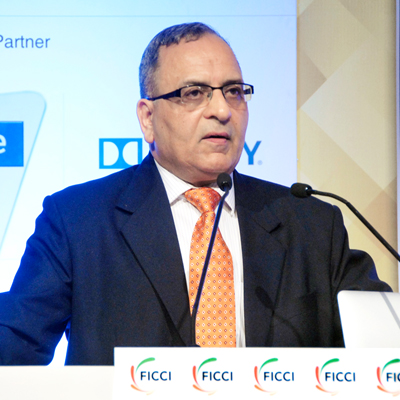
    Making this claim, Communications and Information and Technology Minister Ravi Shankar Prasad said today that the governments at the Central and state levels, industry and academia need to work in tandem to accelerate the pace of digitisation.
     

    He was addressing the second edition of the international conference ‘i-Bharat’ organised by FICCI in partnership with the Department of Electronics & IT (DeitY) of the Ministry.
     

    Highlighting the progress of Digital India, Prasad said more than 12,000 rural post office branches had been linked digitally and soon payment banking would also become a reality for the post offices. As part of Digital India, the government had also planned to make Digital Village across the country by linking all schemes with technology. The digital village would be powered by LED lighting, solar energy, skill development centres, e-services like e-education and e-health. To make this programme a success, District Collectors will have to play an important role.
     

    Speaking about e-Taal, Prasad said the web portal disseminates real time statistics of the e-transactions taking place at the national and state level e-Governance Projects. He added that the National e-Governance Plan of the Government sought to provide impetus for long-term growth of e-Governance within the country.
     

    On promoting electronic manufacturing in India, Prasad said the progressive policies and aggressive focus on ‘Make in India’ initiative have played a significant part in the resurgence of the electronics manufacturing sector. Investment in the electronics manufacturing has increased, giving a quantum jump to the sector.
     

    Elaborating on the headway made in connecting gram panchayats of the country with the optical fibre network, Prasad said 18 states were on board and the work was on at a rapid pace. To script a success story with ‘Digital India,’ the government and industry had to look for innovative ways to expedite the process of connecting India digitally, he added.
     

    FICCI President Harshavardhan Neotia said the Government has embarked on a reforms programme focused on making India an easy place to do business. The emphasis has been on simplification and rationalisation of the existing rules and introduction of information technology to make governance more efficient and effective. Jan Dhan Yojana, Aadhaar and Mobile number (JAM) trinity is acting as a game changing reform that is allowing transfer of benefits in a leakage-proof, well-targeted and cashless manner.


    FICCI-IT Committee chairperson Debjani Ghosh said technology was changing the world and its transformative powers were evidently visible in India. New technologies were deeply impacting governance, society, and security and this year’s i-Bharat conference aimed to bring together leaders from all segments of industry and government to explore and demystify the complex technology trends and reach at solutions and execution techniques of the programs to connect India digitally. She added that the government and industry needed to figure out new solutions to speed up the process of making India digital. 

  • IAMAI to host summit on Digital Money for Digital India

    IAMAI to host summit on Digital Money for Digital India

    MUMBAI: India’s internet economy is flourishing rapidly. With over 350 million internet users and over 213 million mobile internet users the future of digital in India seems to be bright.


    With the growth of digital commerce, the digital payment industry has shown steady growth. According to IAMAI-IMRB’s Digital Commerce 2015 Report, 45 per cent of the online shoppers prefer cash on delivery as a mode of payment, 21 per cent prefer payment through debit card and 16 per cent via credit card. The other modes of payment, which are used are Internet Banking (10 per cent) as well as prepaid cash cards, mobile wallets etc (8 per cent).


    With this framework, Digital Money 2015 Summit with the theme – Digital Money for Digital India – organized by the Internet and Mobile Association of India (IAMAI), gains significance.


    The digital economy cannot be overlooked as various forms of digital payment are taking significance in India. digital payment is no longer restricted to e-commerce transactions now. White label ATMs, payment banks, mobile wallets, POS are all part of the digital payment ambit.


    With different social sectors schemes by government and digital India gaining prominence and priority, this year’s Digital Money Summit has relevance like never before. While there are many industry leaders who will be speaking at the summit, the special address by eminent economist and Niti Ayog member Bibek Debroy is significant, as very few can be expressive like him on the importance of digital payment in the backdrop of digital India.


    The Digital Money Summit will have industry representation from bankers, payment banks, and mobile wallets among others. The day long summit will have speakers like Bank of India chairman G Padmanabhan; PayTM founder Vijay Shekhar Sharma; ItzCash Card chairman and managing director Naveen Surya; RBL Bank head – strategy Rajeev Ahuja and Fino Paytech managing director and CEO Rishi Gupta. 


    Speaking about the Digital Money 2015 Summit, IAMAI president Dr. Subho Ray said, “India is in the cusp of digital revolution. No longer is digital payment a phenomenon of the urban elite. Today, the digital payment platform is the biggest enabler of financial inclusion. The summit this year will be interesting from the perspective of emergence of the platform and its relevance in digital India program.”


    By keeping accord with the theme, Digital Money 2015 Summit will have sessions like Investor’s view on digital payments industry in India. They sessions will focus on Digital Money for Digital India – How can both complement each other?; E-Commerce – paving the way for digital money in India; Mobile money in India – the road map for growth; Payments banks – moving towards differentiated banking; etc.

  • Modi convinces Silicon Valley about Digital India, lauds Facebook & Google

    Modi convinces Silicon Valley about Digital India, lauds Facebook & Google

    NEW DELHI: As he entered the extensive office of Facebook in California, he was greeted with the song ‘Chak de India’ and when he left, Prime Narendra Modi left a huge impression about India’s seriousness ongoing digital.


    The euphoria was the same when he visited Google, or addressed a meeting of persons from LinkedIn or start-ups.


    In various speeches during his visit, Modi said Facebook, Twitter and Instagram were the new neighbourhood.


    “If Facebook were a country, it would be the third most populous one and the most connected,” he said. 


    Similarly, he said Google “has made teachers less awe-inspiring and grandparents more idle. Twitter has turned everyone into a reporter. The traffic lights that need to work the best are on CISCO routers.” 


    The status that now matters, he said, “is not whether you are awake or asleep but whether you are online or offline. The most fundamental debate for our youth is the choice between Android, iOS or Windows.”


    From computing to communication, entertainment to education, from printing documents to printing products, and, now to Internet of Things, it’s been a long journey in a short time. 


    Referring to digital networks, he said, “We have attacked poverty by using the power of networks and mobile phones to launch a new era of empowerment and inclusion: 180 million new bank accounts in a few months; direct transfer of benefits to the poor; funds for the unbanked; insurance within the reach of the poorest; and, pension for the sunset years for all.”


    By using Space technology and internet, the country had been able to identify in the last few months 170 applications that will make governance better and development faster. 


    “The pace at which people are taking to digital technology defies our stereotypes of age, education, language and income,” he added.


    “Customers, more than creators, are defining the use of a product. The world may be driven by the same ancient impulses. We will continue to see human struggles and successes. We will witness human glory and tragedies,” Modi said. 


    He added that in this digital age, there was an opportunity to transform lives of people in ways that was hard to imagine just a couple of decades ago. 


    “Today, technology is advancing citizen empowerment and democracy that once drew their strength from Constitutions. Technology is forcing governments to deal with massive volume of data and generate responses, not in 24 hours but in 24 minutes. When you think of the exponential speed and scale of expansion of social media or a service, you have to believe that it is equally possible to rapidly transform the lives of those who have long stood on the margins of hope. So out of this conviction was born the vision of Digital India,” he said. 


    “It is an enterprise for India’s transformation on a scale that is, perhaps, unmatched in human history. Not just to touch the lives of the weakest, farthest and the poorest citizen of India, but change the way our nation will live and work,” he said. “We will transform governance, making it more transparent, accountable, accessible and participative. I spoke of E-Governance as a foundation of better governance – efficient, economical and effective.” 


    After MyGov.in, Modi said he had just launched the Narendra Modi Mobile App.


    Information, education, skills, healthcare, livelihood, financial inclusion, small and village enterprises, opportunities for women, conservation of natural resources, distributed clean energy – entirely new possibilities have emerged to change the development model. 


    “We want our 1.25 billion citizens to be digitally connected. We already have broadband usage across India go up by 63 per cent last year. We need to accelerate this further,” he further said. 


    An aggressive expansion of the National Optical Fibre Network had been launched that will take broadband to our 600,000 villages. “We are expanding our public Wi-Fi hotspots. For example, we want to ensure that free Wi-Fi is not only there in airport lounges, but also on our railway platforms. Teaming up with Google, we will cover 500 railway stations in a short time. We are also setting up Common Service Centres in villages and towns. We will also use information technology to build smart cities,” Modi informed. 


    “We are also setting up an Electronics Development Fund to support design, development and launch of new products,” he added. 


    Indians account for 15 per cent of startups in the United States. “Hundreds of thousands of Indian professionals here and in India are contributing to the global success of US enterprises. Many are leading them today. This is the possibility of the digital bridge – to connect distant lives and change fortunes and future,” he said.


    Modi said he was delighted that Qualcomm announced a fund of $150 million for startups in India.

  • BSNL leaps towards Digital India, to upgrade broadband speed

    BSNL leaps towards Digital India, to upgrade broadband speed

    NEW DELHI: In an effort to fulfil its aim of linking the nation through the Internet, Bharat Sanchar Nigam Ltd is upgrading broadband speed by a minimum 2 Mbps at no additional cost for consumers pan India from 1 October.


    Earlier, BSNL had offered free night calling from BSNL landlines to all operator networks from 9 pm to 7 am and free incoming roaming services for its mobile customers. 


    BSNL is also offering 1 Gb free E-Mail box to customers from the existing 50 Mb mail box.


    Minister of Communications and Information Technology Ravi Shankar Prasad made this announcement at a function in Gurgaon. Minister of State for Planning Rao Inderjeet Singh was also present along with BSNL CMD Anupam Srivastav, director (CFA) N K Gupta, director (HR) Sujata Ray, and Haryana CGM R C Arya.


    The speed upgradation will benefit all existing and new BSNL broadband customers. Under this scheme, BSNL is upgrading the speed of existing broadband plans of 512 Kbps and 1 Mbps to 2 Mbps speed. With this upgradation, BSNL customers can access and surf the internet at high speed.


    BSNL is the first service provider to provide the Broadband Access to the country. The company launched broadband services over its landline in India in 2005 with speed of 256kbps and above over the Multi Protocol Label Switching (MPLS) based IP infrastructure in urban as well as rural areas.


    Since then BSNL is constantly working to increase the broadband speed for enhanced customer experience in urban and rural areas as envisaged in the New Telecom Policy 2012. Now, BSNL offers Broadband services with various plans ranging from 2 mbps to 100 mbps speed using ADSL/VDSL and fibre based GPON technology in a very affordable price range. The company currently has around 10 million broadband customers including about 1.1 million rural customers.


    This upgradation shall enhance customer experience while surfing on internet and enjoying live video streaming by all customers even in the low price range. This scheme is expected to attract new customers for subscribing BSNL broadband customers in an affordable manner.


    BSNL has more than 77 million mobile customers, more than 16 million wired line telephone connections and around 10 million wired broadband connections.

  • Despite Digital India talk, broadband subscribers less than 109 million by June

    Despite Digital India talk, broadband subscribers less than 109 million by June

    NEW DELHI: Following a growth of 4.21 per cent in mobile users, the number of broadband subscribers increased from 104.96 million at the end of May to 108.85 million at the end of June with monthly growth rate of a mere 3.71 per cent, despite the emphasis on Digital India. 


    The Mobile devices users (phones and dongles) went up from 88.96 million to 92.7 million.  Fixed Wireless subscribers (Wi-Fi, Wi-Max, Point-to-Point Radio & VSAT) users went up from 440,000 to 450,000, showing an increase of 1.96 per cent, while wired subscribers rose from 15.56 million to 56.7 million, showing a rise of just 0.9 per cent.


    The top five service providers constituted 83.83 per cent market share of total broadband subscribers at the end of June. These service providers were Bharti Airtel (24.56 million), Vodafone (22.08 million), BSNL (18.20 million), Idea Cellular (16.67 million) and Reliance Communications Group (9.74 million). 


    According to the figures released by the Telecom Regulatory Authority of India (TRAI), some wireless service providers exclude incidental data users from their subscriber base, based on minimum usage decided by them.


    As on 30 June, the top five Wired Broadband Service providers were BSNL (9.91 million), Bharti Airtel (1.47 million), MTNL (1.13 million), Atria Convergence Technologies (720,000) and You Broadband (460,000). 


    The top five Wireless Broadband Service providers were Bharti Airtel (23.09 million), Vodafone (22.07 million), Idea Cellular (16.67 million), Reliance Communications Group (9.63 million) and BSNL (8.29 million) as on 30 June.

  • I&B secy Bimal Julka stresses value of social media in reaching out to people

    I&B secy Bimal Julka stresses value of social media in reaching out to people

    NEW DELHI: Information and Broadcasting Ministry Secretary Bimal Julka has said social media initiatives of the government had provided people a platform to communicate directly with the government through methods such as Crowdsourcing, which encouraged such innovations.


    He stressed the need for qualitative information flow and interface of citizens with the communication strategy of the government. “This has led to people centric communication and facilitated enhanced outreach and visibility of government communication across platforms,” he said.


    Julka said this in discussions with Queensland University of Technology, Australia vice chancellor Professor Peter Coaldrake, here today.

    “The communication paradigm has undergone a shift with a 360 degree approach being adopted to address the communication needs and challenges,” he said.


    He also referred to flagship schemes of the government namely Digital India, Skill India, Make In India, which had provided an opportunity to media units to reach out to defined target audiences. 


    He specifically highlighted the use and effectiveness of initiating Talkathons, which provided a direct interface with the people leading to effective citizen centric communication. “Such initiatives would encourage a culture of inclusive and participative decision making,” he said.
     

    During the meeting, Julka and Professor Coaldrake reviewed the current training mechanism between the Ministry and QUT with regard to in-service training of Indian Information Service officers. Both agreed that the future training agenda should include contemporary issues related to media and communication studies. They emphasized that Skill Development was critical for in-service training of officers handling government communication.

  • Sonakshi Sinha roped in as brand ambassador of Digisol

    Sonakshi Sinha roped in as brand ambassador of Digisol

    MUMBAI: After doing a wide variety of endorsements, actress Sonakshi Sinha has signed her very first tech brand. Sinha has been roped in as the brand ambassador for Digisol’s wireless and networking products.


    Sinha’s appointment comes at a time when Digisol plans to magnify its presence in consumer segment and this association is expected to boost the brand’s visibility in India.


    Sinha, who has been one of the most followed celebrities on social media, said, “I am happy to represent a brand like Digisol, which is playing a major role in making Digital India a reality. Now, that I’m associated with Digisol, I look forward to be a part of their initiative.”