Tag: Digital India

  • Explurger steps up to PM Modi’s call for homegrown tech

    Explurger steps up to PM Modi’s call for homegrown tech

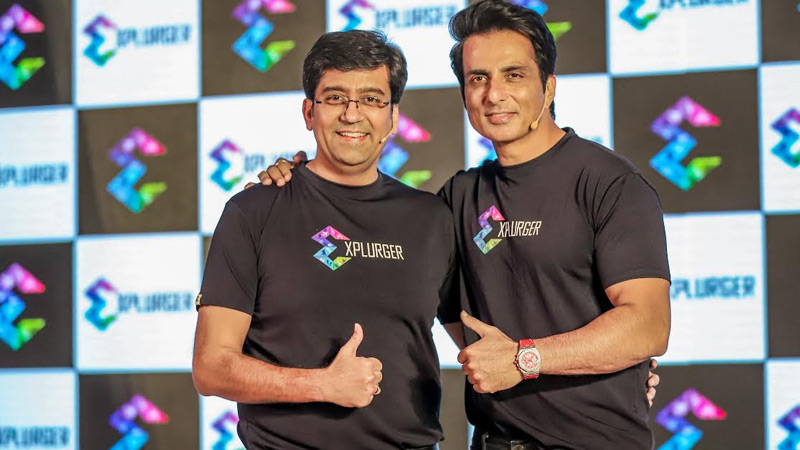
    MUMBAI: Time to log off and step out! Responding to prime minister Narendra Modi’s call for indigenous innovation, Explurger, a proudly made-in-India social media app, is reimagining how we connect online, and offline.

    Launched with the mantra “Get out – get social,” Explurger encourages users to explore the world, meet people in real life, and share authentic travel and lifestyle experiences. Every journey, check-in, or post automatically creates a digital travelogue, making social media as much about living life as sharing it.

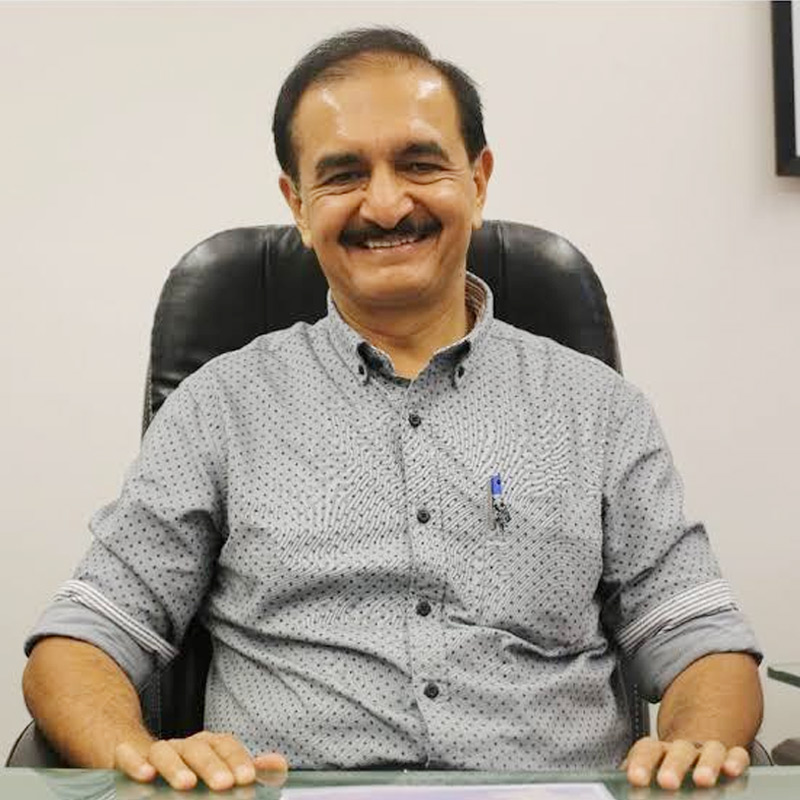
    “The prime minister’s call underscores India’s growing confidence in building its own tech frameworks,” said Explurger founder and CEO Jitin Bhatia. “Our app is entirely developed in India, powered by Indian talent, and designed to resonate globally. Explurger shows that Indian technology can inspire, innovate, and compete on the world stage.”

    Rooted in the Make in India and Digital India missions, Explurger reflects the spirit of self-reliance. With over 17 million users, it signals a new era of homegrown digital innovation, one where technology doesn’t just connect, it empowers and enriches real-world experiences.
     

  • Deadline extended for Pmvision2art creative contest

    Deadline extended for Pmvision2art creative contest

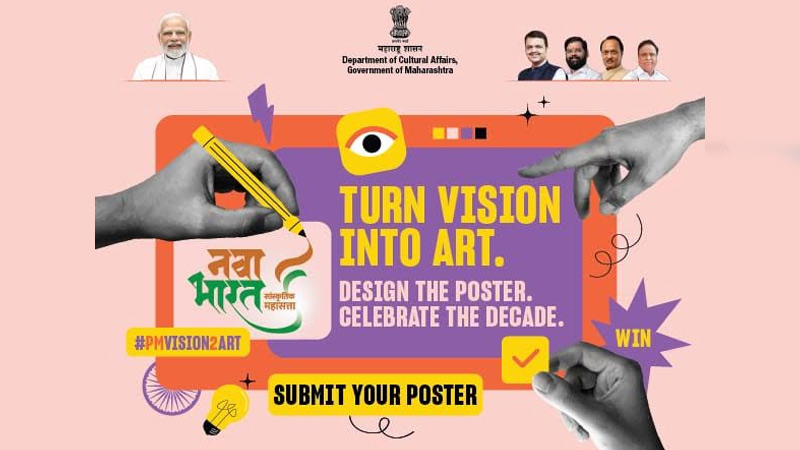
    MUMBAI: Brush up your creativity. The government of Maharashtra’s department of cultural afairs, in collaboration with the Advertising Agencies Association of India, has extended the deadline for the Turn Vision into Art: Pmvision2art campaign to 15th October 2025.

    The nationwide initiative invites designers, agencies, and creators to craft iconic posters celebrating India’s transformative programmes over the past decade, from Make in India and Digital India to Swachh Bharat AbhiyanAtmanirbhar Bharat, Beti Bachao Beti Padhao, Skill India, and the International Day of Yoga.

    Seventy-five winning entries will be showcased at major art galleries, featured in a commemorative coffee-table book, and highlighted on national platforms to inspire millions. Poster submissions should be A2 size and entries can be made via www.pmvision2art.com.

    Minister of cultural affairs Ashish Shelar said, “Creativity has the power to shape how we remember history and imagine the future. Turn Vision into Art is our invitation to the nation’s creative minds to capture the essence of India’s progress through art.”

    With this extension, the campaign offers artists a golden opportunity to make their mark while celebrating a decade of India’s visionary initiatives.

  • KDM wins Zee Bharat Ki Udaan Award for powering faith with 1080 charging points at Maha Kumbh

    KDM wins Zee Bharat Ki Udaan Award for powering faith with 1080 charging points at Maha Kumbh

    MUMBAI: In a country where missing a Whatsapp call from family during a spiritual pilgrimage could cause panic, KDM made sure that devotion met innovation. The lifestyle and mobile accessories brand has been conferred with the Zee Bharat Ki Udaan Award for its Bharat Ka Charger Maha Kumbh initiative—recognised for powering up millions of mobile phones at the world’s largest spiritual gathering.

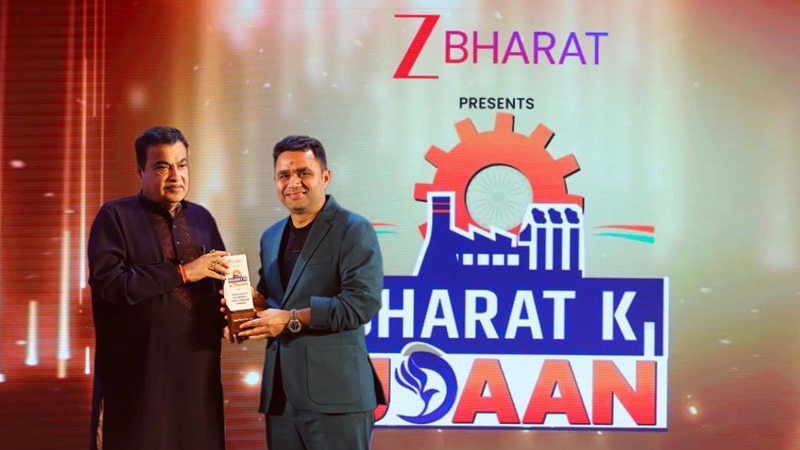
    KDM was felicitated by Union minister of Road Transport and Highways Nitin Gadkari during Zee Bharat’s flagship programme ‘Bharat Ki Udaan’. The award highlighted KDM’s unique contribution at Maha Kumbh 2025, where it installed 1,080 mobile charging stations equipped with its indigenous KDM-T Technology. These stations helped over 23 lakh pilgrims keep their phones and connections alive through the 45-day religious congregation.

    The initiative seamlessly plugged into the government’s vision for a ‘divya and digital’ Maha Kumbh and aligned with the broader Digital India narrative. Beyond the buzzwords, KDM’s solution addressed a pressing need—connectivity for devotees, many from rural areas, who relied on their phones to stay in touch with their loved ones amid the chaos and crowds.

    ‘KDM Bharat Ka Charger’ employs Kinetic Dynamic Mobile Charging Testing Technology (KDM-T Technology), a fully Made-in-India solution designed to prevent overheating, overcharging, and voltage issues—ensuring safety alongside service.

    Acknowledging the honour, KDM founder N D Mali said, “Extremely honoured and privileged to receive the ’Zee Bharat Ki Udaan Award’ from the hands of Shri. Nitin Gadkari ji which is making me feel charged, inspired and motivated to take Bharat Ka Charger campaign ahead… This award motivates us to continue our efforts to charge both mobile and the economy with KDM Bharat Ka Charger”.

    Mali added that the company’s vision—“Har Ghar KDM” by 2030—targets reaching 10 crore households while creating direct and indirect employment for 50,000 women.

  • Why India’s Tech Industry is Positioning Itself as the New Major Player on the Global Market

    Why India’s Tech Industry is Positioning Itself as the New Major Player on the Global Market

    India is home to some of the world’s biggest tech companies, and over the past few years, the country has repositioned itself as a new major player on the global tech scene. 

    With that said, let’s dive straight in to discover why the Indian tech scene here is currently burgeoning and why it has become a key market for innovation and investment. 

    Where are the key tech hubs in India?

    Key Indian cities such as Bangalore, Hyderabad, and Chennai are the country’s major tech hubs for various reasons, and the digital economy here is rapidly growing due to its large pool of highly talented and skilled developers and engineers. 

    The key tech sectors with thriving and robust ecosystems in India are the following:

    . Data centers and semiconductors

    . AI (artificial intelligence)

    . Cloud computing

    . Cybersecurity

    . Gaming

    Other tech sectors in India that are also currently growing are IT services, mobile technology, and eCommerce.  
    The epicentre of India’s technology industry is Bangalore, which has been compared to Silicon Valley in the United States. It’s home to a growing number of tech startups and major tech companies, and it has a well-matured framework fostering growth and innovation. 

    Tech companies receive plenty of government support via numerous initiatives, and over the coming years, experts predict that India’s tech scene will continue to reposition itself as a key player on the global stage. 

    Chennai has become a hub of Software as a Service (SaaS) and currently has a burgeoning IT sector. Other Indian cities, such as Noida, Ahmedabad, Kochi, Kolkata, Mumbai, and Pune, have also emerged as key technology hubs thanks to continued investment, a well-matured ecosystem, and a tech-savvy population. 

    The iGaming scene, which is home to countless legally permitted websites with online slot machines and classic table and card games, also continues to grow thanks to the latest ground-breaking technologies and better regulations. 

    How has India become a major tech hub?

    India has a huge pool of graduates specialising in Science, Technology, Engineering, and Mathematics (STEM), which is helping its tech sector grow, and a significant portion of India’s talented workforce is proficient in English. 

    The lower labour costs here compared to other developed nations make India an ideal destination for offshoring and outsourcing, and there is continued investment in various key tech sectors, such as cloud computing, blockchain technology, the Internet of Things (IoT), and artificial intelligence. 

    Government-backed initiatives, such as Digital India and Startup India, have helped foster innovation and support tech startup companies, and according to recent statistics, India is now home to around 130,000 startup companies and more than 110 ‘unicorns.’

    There is a huge focus here on nurturing digital infrastructure to help support the continued growth of the tech sector, and India is starting to emerge as a leader in setting high standards on the global stage for data ethics and governance. 

    Expert analysts who follow the industry closely project that India’s Compound Annual Growth Rate (CAGR) will climb by around 6.5% between now and 2028, and by the end of last year (2024), India’s tech industry achieved an impressive 5.90% (year-over-year) growth. 

    Final thoughts

    Over the coming years, the future looks bright for India’s tech sector. Most of the revenue will be generated from significant exports to other countries in the IT and BPM sectors. It will also continue growing because of internet penetration and an ever-increasing population. 

    There’s no denying that India has become a true tech powerhouse on the global stage, and it is poised for unprecedented growth over the next decade. 

    However, there are still many challenges the country must overcome to assert itself as a true global tech leader, so it will be interesting to see what happens as the industry continues to evolve.

    Disclaimer: This article does not have journalistic/ editorial involvement of indiantelevision.com. indiantelevision.com group or its websites does not endorse/ subscribe to the contents of the article/advertisement and/or views expressed herein.

    The reader is further advised that Online Casino, Betting, Online Gaming , Crypto products, Financial Investments/Engagement , NFTs, Products associated with health, wellness, and food are unregulated and can be highly risky. There may be no regulatory recourse for any loss from such transactions or risk associated with health conditions.

    Indiantelevision.com group shall not in any manner, be responsible and/or liable in any manner whatsoever for all that is stated in the article and/or also with regard to the views, opinions, announcements, declarations, affirmations etc., stated/featured in the same. The decision to read hereinafter is purely a matter of choice and shall be construed as an express undertaking/guarantee in favour of indiantelevision.com (indiantelevision.com group) of being absolved from any/ all potential legal action, or enforceable claims. The content may be for information and awareness purposes and does not constitute financial advice. 

  • ITU Kaleidoscope 2024 kicks off showcasing global tech innovations

    ITU Kaleidoscope 2024 kicks off showcasing global tech innovations

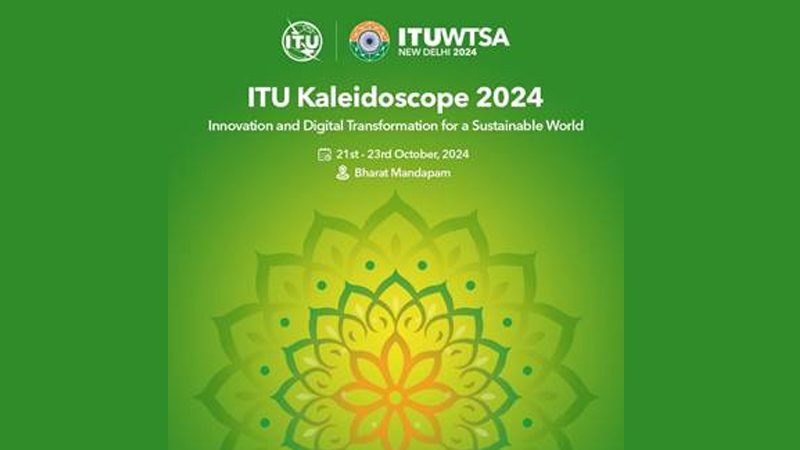
    Mumbai: The 15th ITU Kaleidoscope Academic Conference, themed ‘Innovation and Digital Transformation for a Sustainable World’, has commenced today at Bharat Mandapam, New Delhi, spotlighting India’s role in shaping the global digital landscape. Organised by the International Telecommunication Union (ITU), the event will run from 21-23 October 2024, featuring discussions on 5G, AI, IoT, quantum communications, and other groundbreaking technologies, with more than 140 record-breaking paper submissions highlighting the world’s growing interest in digital infrastructure and telecommunications standards.  

    The top three selected papers will each be awarded CHF 2000 in recognition of their contributions to advancing the field of telecommunications. These winning papers, chosen by an expert panel, cover pivotal topics including quantum communication, network security, and 5G applications.  

    In a move to foster the next generation of researchers, ITU will recognise young authors from the selected papers with certificates of excellence, reaffirming its commitment to encouraging fresh talent in the field of telecommunications research.  

    The conference will feature numerous technical sessions and panel discussions covering diverse topics such as 6G network architectures, AI in healthcare, IoT for smart cities, and quantum cryptography. Key stakeholders and industry leaders will tackle the challenges and opportunities presented by emerging technologies, providing thought leadership on the future of telecommunications.  

    As part of the World Telecommunication Standardisation Assembly (WTSA-24), the event will emphasise the need for international collaboration in setting global standards for next-generation technologies. Kaleidoscope 2024 aims to ensure these technologies are developed inclusively, securely, and sustainably.  

    On 23 October, two important panel discussions will take place. The first will address connecting the remaining 3 billion, while the second will explore the role of youth in global standards development, focusing on enhancing participation in telecommunications and technology standards.  

    By hosting Kaleidoscope 2024, India continues to assert its leadership in the global digital ecosystem. With initiatives like ‘Digital India’ and ‘Make in India’, the country positions itself as a hub for innovation in digital infrastructure, highlighting advancements in 5G deployment and the development of indigenous technologies for global markets.  

  • PM Modi launches 5G services in India

    PM Modi launches 5G services in India

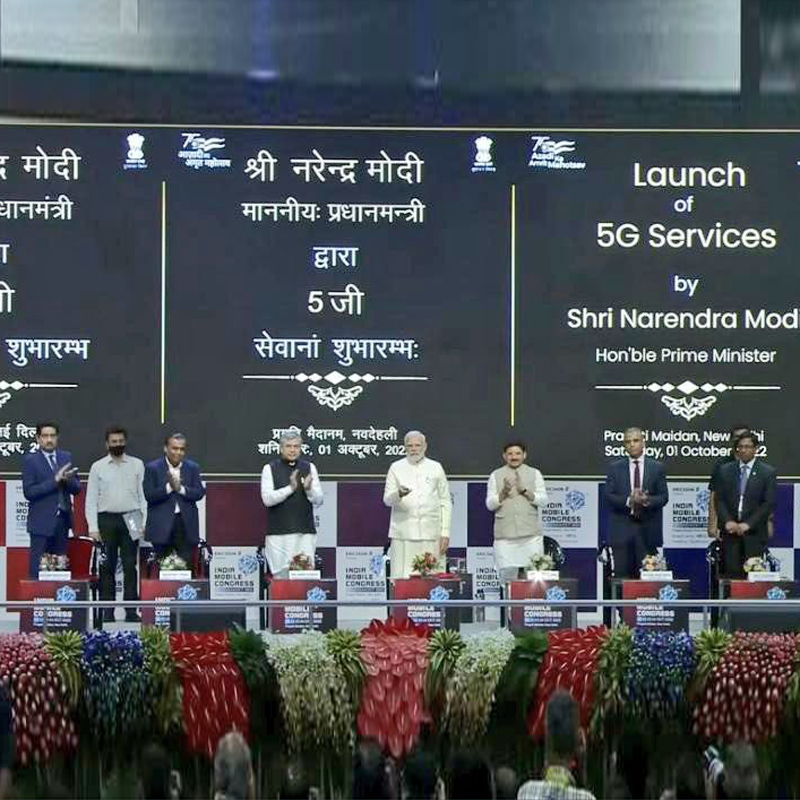
    Mumbai: On Saturday, prime minister Narendra Modi launched 5G services in India at the India Mobile Congress in New Delhi.

    At the launch, while addressing the nation, Modi said that 5G technology will revolutionise the telecom sector and that it is a historic day for India in the twenty-first century. “The launch of 5G is a gift from the telecom industry to 130 crore Indians. It is a step toward a new era in the country, and is the beginning of infinite opportunities.”

    He emphasised how digital India’s success is based on four pillars, including the cost of a device, digital connectivity, data costs, and the digital first approach.

    Over the next few years, the services will gradually expand to cover the entire country. The fifth generation (5G) service, capable of supporting ultra-high-speed internet, is expected to open up new economic opportunities and societal benefits, serving as a transformative force in Indian society.

    Also read: Reliance Jio to roll out 5G services in major cities by Diwali

    “Earlier, the cost of one GB of data was about Rs 300. It has come down to about Rs 10 per GB now. On average, a person in India consumes 14 GB per month. This would have cost about Rs 4,200 per month but costs Rs 125-150. It’s the efforts of the government that led to this,” he added.

    Speaking further, Modi said, “With developments in technology and telecom, India will lead the industry’s 4.0 revolution. This is not the decade of India, but the century of India.”

    At the event, Modi was accompanied by telecom minister Ashwini Vaishnaw, junior telecom minister Devusinh Chauhan, and Reliance Industries chairman Mukesh Ambani, Bharti Enterprises founder & chairman Sunil Bharti Mittal, and Aditya Birla Group chairman Kumar Manglam Birla.

    After officially opening the show, Modi visited pavilions set up by several telecom carriers and technology providers to get a first-hand look at what 5G is capable of. He began at the Reliance Jio booths.

    Reliance chairman Mukesh Ambani thanked the prime minister for inspiring the vision of a developed nation by 2047. “Every action and policy of the government is skillfully crafted to propel India towards that goal. Steps taken to fast-track India’s march into the 5G era provide compelling proof of our prime minister’s determination.”

    He narrated the possibilities of 5G in key areas like education, education, and climate change, etc. “Your leadership has raised India’s prestige, profile, and power globally like never before. In today’s fast-changing world, there will be no stopping a resurgent India from soaring to the top,” Ambani concluded.

    Bharti Enterprise chairman Sunil Bharti Mittal remarked that the launch of 5G is the beginning of a new era and since it is happening during “Azadi Ka Amrit Mahotsav,” it makes it even more special. “With the efforts of the prime minister, this will usher in new energy in the country. We are fortunate to have a leader in the prime minister who understands technology very well and has deployed it to the development of the country in an unmatched manner,” he noted.

    Mittal further said that it will open up a sea of opportunities for people, especially in our rural areas. He recalled the PM’s initiatives in the fields of infrastructure and technology from his Gujarat CM days. He said that during the pandemic, traffic shifted to villages and homes and the country’s heartbeat did not stop even for a second. Credit for that goes to the digital vision. He also praised the audacity and achievement of the vision of “Make in India.” “Along with “Digital India,” the prime minister also took forward the “Start-up India” campaign and, soon enough, India started producing unicorns,” Shri Mittal added. “With the advent of 5G, I’m sure that the country will add many more unicorns to the world.”

    Aditya Birla Group Chairman Kumar Mangalam Birla called the advent of 5G a transformational event that proves India’s prowess on the global stage and reiterates the role of telecom technology as the bedrock of India’s growth. He thanked Modi for his vision and leadership for a generational leap in technology that has resulted in India’s making a mark on the global stage. He also thanked the PM for his inspirational role in supporting the telecom industry during the ongoing pandemic and for the path-breaking telecom reforms in the industry.

    Birla said that the launch of 5G marks the beginning of an exciting journey for India. “We will see limitless potential for 5G development and use cases in the years to come,” he added.

    Reliance Jio connected a teacher from a school in Mumbai with students in three different locations in Maharashtra, Gujarat, and Odisha.

    The Vodafone Idea test case demonstrated the safety of workers in an under-construction tunnel of the Delhi Metro through the creation of a ‘Digital-Twin’ of the tunnel on the dias.

    In the Airtel demo, students from Dankaur, Uttar Pradesh, witnessed a lively and immersive educational experience to learn about the solar system with the help of virtual reality (VR) and augmented reality (AR).

  • GUEST COLUMN: Online gaming is India’s fastest growing digital entertainment

    GUEST COLUMN: Online gaming is India’s fastest growing digital entertainment

    Mumbai: Entertainment has become democratised and accessible as a necessity for all walks of life in India. In today’s ‘Digital India,’ the average Indian has found solace in some form of online gaming at some point in time during the day. There are various types of gamers, ranging from hyper-casual to strategic games to real-money gaming. The surge in the online gaming ecosystem in India has validated that Indians have definitely selected online gaming as a medium of entertainment. The common motivation to entertain across OTT and gaming remains constant across all media, old and new: it is a temporary escape from reality.

    The pandemic saw an unprecedented increase in gaming activity, especially on old favourites like ludo, carrom or any other classic board game on their mobile to enjoy playing with friends and family. The soon-to-be multi-billion dollar online gaming industry has a lot to offer in terms of the diversity of products, services, technological developments, job opportunities, and more.

    Although it still faces perspective biases in India from key sections of society on issues ranging from addiction to taboo, the behavioural shift of the consumer is here to stay. There are valid concerns surrounding the stigma of gaming being harmful or dangerous owing to investments of time or money, depending on the segment of the users, and the ecosystem will need to work with key government stakeholders to address that.

    Needless to say, anything in excess has adverse effects, be it binge eating, shopping or gaming. This brings in the need for higher levels of self-control from a user, which can happen if more power is shifted to the user’s hands. Spain has recently mooted the idea of making it mandatory for all real-money gaming businesses to ensure that players select options on time and money limits at the beginning of every week so that they stick to their limits. Since it is hard to unilaterally shift power back to the players owing to a conflict of business interests, there is a need for regulations and policies to force operators to do so.

    These issues don’t necessarily stem only from real money gaming, as there have been numerous reported unfortunate incidents of young children and families being impacted by other forms of online gaming, such as first person shooter games. India will need to come up with some kind of framework to address various segments of the gaming ecosystem to ensure that these businesses remain a mode of entertainment and not an unaccounted escape from reality. Having said that, there are some self-regulatory bodies that are proactively trying to keep operators in check by adhering to certain standards of integrity, transparency, and responsible play for users. While these are the right steps in the right direction, there needs to be more to follow.

    With significant financial integration in online gaming, cyber fraud, foreign capital flow, the nature of advertisements, etc., have been major pain points to solve. Industry players have been on their toes and have put these issues much ahead of anyone on their radar. Like every growing industry, there is a need for incubation and support rather than rejection. In terms of annual mobile game app downloads, India leads the global charts behind China. The sector is a significant contributor to the economy and is set to create more than 12,000 new job opportunities by 2023. While the industry is mature and has put self-regulatory measures in place, it is important to build and develop a robust framework in collaboration with the government, not only to sustain, boost, and track growth but also to check irregularities and unfair practices that are detrimental to the Indian gamer.

    The author of this article is Head Digital Works vice president – business strategy Siddharth Sharma.

  • NXTDIGITAL reports total income of Rs 938.68 cr for 9 months ended 31 Dec

    NXTDIGITAL reports total income of Rs 938.68 cr for 9 months ended 31 Dec

    MUMBAI: NXTDIGITAL Ltd on Monday reported its financial results for the third quarter and nine months ended 31 December 2019. On a consolidated basis, the company reported a total income of Rs 938.68 crore for the nine months ended 31 December, 2019 as against a total income of Rs 527.36 crore for the corresponding period of the previous year recording a growth of close to 78 per cent.

    For the same period, the company reported a Profit After Tax of Rs 100.10 crore as against a loss of Rs 344.04 crore for the corresponding period of the previous year. The company reported a consolidated net profit after tax of Rs 33.63 crore for the quarter as against a net loss after tax of Rs 122.84 crore for the quarter ended December 31, 2018.

    The company claims that the main growth driver has been the smart turnaround of the media business of the company carried out through its significant subsidiary IndusInd Media & Communications Limited (“IMCL”). IMCL is one of India’s leading digital content distribution companies, delivering digital content via cable as well as through satellite on its Headend-In-The-Sky (HITS) platform – through a vast network of established Local Cable Operators.

    IMCL continues to set the trend for innovation, driven by its superior HITS technology that delivers nearly 700 television services to consumers in the most remote regions across India; irrespective of the weather or terrain.

    “The vision and mission of the government viz. ‘Digital India’, ‘Skill India’ and ‘Make in India’ is embodied in our principles for success. We are proud to partner with over 50,000 individuals comprising Local Cable Operators and their teams across India – who are well trained and skilled in digital service delivery; whilst employing world-class yet native technology at our partners premises. This remains a significant edge in our endeavor to perform.”  IMCL chief executive officer Vynsley Fernandes says.

    Recently, several multi-system operators (MSOs), including one of India’s biggest has signed up for managed services via IMCL’s HITS platform – in semi-urban and rural markets. To support the MSO’s regional requirements, IMCL is augmenting its satellite capacity that will allow it to carry a greater number of regional channels. “Our HITS platform was designed specifically to help MSOs and LCOs deliver services across India seamlessly; with excellent uptimes and a high quality of service, through significant investments in technology. This will encourage infrastructure sharing – to ultimately bring down cost of operations and ensure customers across the country benefit from the quality of service, the choice of channels and the effective delivery pricing,” says Fernandes.

    On the satellite front, IMCL continues to remain the leader in innovation. After being the first satellite platform in the world to adopt and implement 16APSK modulation in 2016 – which ensures a higher throughput and optimal use of satellite capacity; IMCL is currently implementing the next generation 32APSK technology; cementing its leadership position globally, in technology lead.

    IMCL has recorded profits consistently over the last four quarters driven by its focused business strategy of growth in size – in the smaller towns and villages; and growth in ARPU through value added services and other offerings in the metro towns and cities. Consumer viewership experience and quality of service continue to drive IMCL’s business strategy as is evidenced by the very low customer churn ratio and pre-paid collection percentages at close to 100% per cent.

  • Den Networks CEO SN Sharma takes over from Hathway’s Rajan Gupta as AIDCF president

    Den Networks CEO SN Sharma takes over from Hathway’s Rajan Gupta as AIDCF president

    New Delhi: All India Digital Cable Federation (AIDCF), the apex body of digital cable television players, announces the appointment of Mr. S N Sharma (CEO – Den Networks Limited) as the new President of the Federation with effect from 1st  April 2019 post expiration of term of Mr. Rajan Gupta – current President.

    Mr. Gupta commented that, “I am delighted to handover the presidency to Mr. Sharma.  It had been an event filled last couple of years at AIDCF, where we successfully migrated into the digital regime and ensured that New Tariff Regime becomes a reality, thereby empowering the consumers. I would like to thank all the members of AIDCF, without whose support this journey would not have been possible” Commenting on his appointment as the new AIDCF President, Mr. S.N. SHARMA said, “It is an honour for me to take the baton of leading AIDCF from Mr. Gupta and carrying it forward in the direction of realizing ‘The dream of Digital India’. All the esteemed members and I will continue to work as a team to resolve the issues and enhance the overall growth of Cable Television. Our priority will be making the new Tariff Regime hassle free so that that there is no inconvenience to the consumers. We will encourage and value the constructive suggestions and feedbacks.

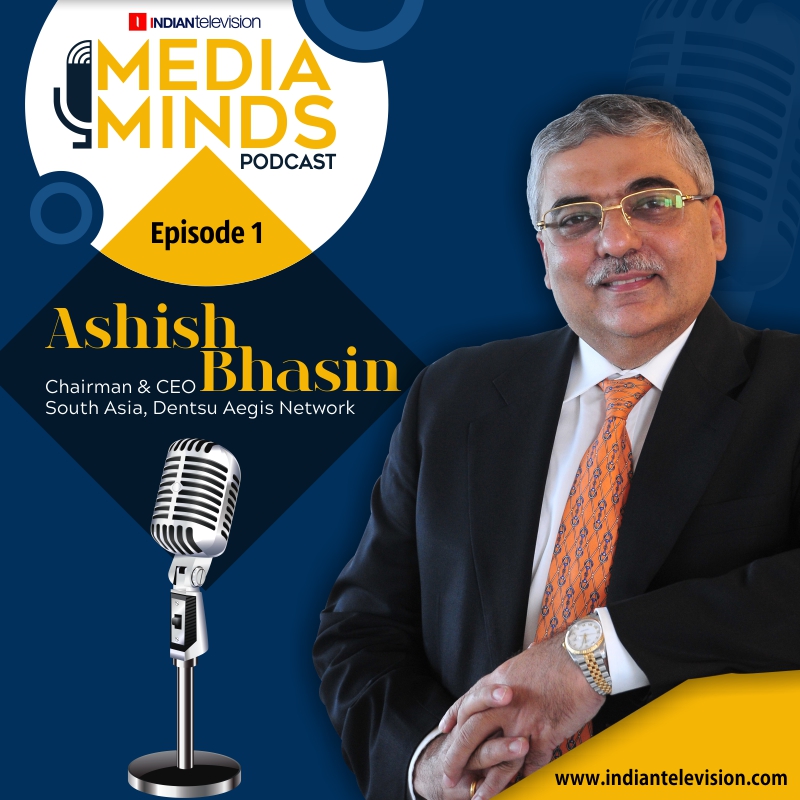
  • [Podcast] Media Minds: Dentsu Aegis Network’s Ashish Bhasin talks about everything digital

    [Podcast] Media Minds: Dentsu Aegis Network’s Ashish Bhasin talks about everything digital

    MUMBAI: As one of the biggest digital marketing agencies in India, Dentsu Aegis Network has been at the forefront of leveraging the digital content sphere and also establishing a robust ecosystem for this fast-growing industry. For the past two years, it has also been releasing a comprehensive Digital Advertising in India 2018 report that gives an insight into the numbers, trends and the general ecosphere of the industry.

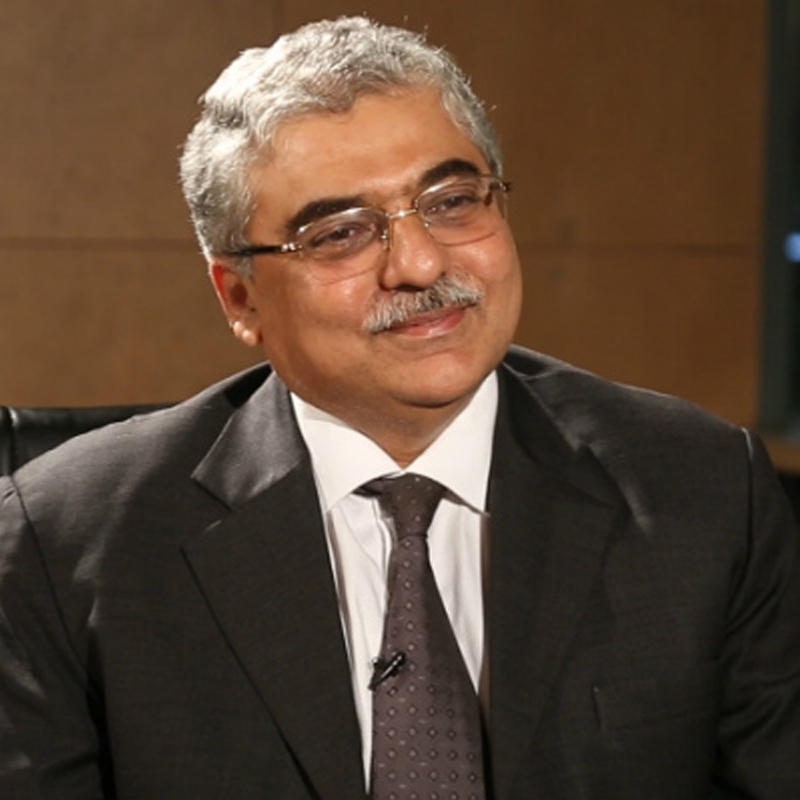
    The third edition of the report was launched earlier this year. On the occasion, Indiantelevision.com spoke to DAN South Asia chairman and chief executive officer Ashish Bhasin for the first-ever episode of our podcast: Media Minds.

    We talked to Bhasin about the report and why it is important for brands to use the digital medium smartly and responsibly. Talking about the launch, Bhasin proudly says, "We are very excited and very happy with the way the whole report has come out. What's very clear to us at DAN is that there is no business that is not going to be affected by digital. And as leaders of digital communication and advertising in India, we see it as our responsibility to make sure that authentic research on that is available, which, unfortunately, has not been revealed in India so far."

    He also shared how government intervention has helped the digital ecosphere to boom, the implications of the growth of programmatic advertising, the efficient use of video platforms, and the general perception of the brands and agencies towards digital in 2019 and beyond.

    Listen to the complete interaction on the first episode of ‘Media Minds’ here: