Tag: digital first

  • Havas Worldwide India strengthens strategy team with three new appointments

    Havas Worldwide India strengthens strategy team with three new appointments

    Mumbai: Havas Worldwide India has strengthened its strategy team by appointing Dhananjoy Ray, Aniruddh Subramanian, and Jahan Nargolwala as associate vice presidents – planning & strategy. All three will report to Havas Creative Network India’s Chief Strategy Officer, John Thangaraj and will be based in Gurgaon.

    John Thangaraj commented, “I am thrilled to welcome Dhananjoy, Aniruddh and Jahan to the Havas family. The world is changing and so are we. Strategy needs to be more business forward, digital first and data driven than ever before and our journey towards creating a more converged, multi-disciplinary team begins now. Each of them brings a deep and divergent level of expertise and experience to the table. Dhananjoy brings a deep passion and excitement for all things tech and auto. Aniruddh’s understanding and experience on the CPG category is second to none. And Jahan’s digital-first expertise across multiple categories nicely rounds out the team. Their hires underscore Havas’ deep commitment to delivering insight & data backed strategic solutions that focus on keeping our clients ahead of the curve. That said, we’ve only just begun – watch this space!”

    With over a decade of experience, Dhananjoy Ray has worked with agencies such as FCB India and Publicis India, contributing to brands like Horlicks, Uber, Pernod Ricard, Vivo, BMW, Google, Maggi, and Nokia. His expertise lies in communication and brand strategy.

    Jahan Nargolwala brings nearly 13 years of experience from agencies including Creativeland Asia, Yaap Digital, and Law & Kenneth. His work spans brands like Pizza Hut, Uniqlo, Godrej, Taj Hotels, Coca-Cola, UPI, and RuPay. Jahan specialises in creative strategy, brand planning, and cross-functional project management.

    Aniruddh Subramanian joins FCB India, with experience at L&K Saatchi & Saatchi and Famous Innovations. He holds a Master’s in Marketing from the University of Cincinnati and has worked across FMCG, FMCD, healthcare, and tech sectors with brands like Horlicks Plus, All Out, Bata, Honda Motorcycle & Scooter India, and Google Pixel.

  • IdeateLabs ropes in Dr. Bhaskar Das as new chairperson

    IdeateLabs ropes in Dr. Bhaskar Das as new chairperson

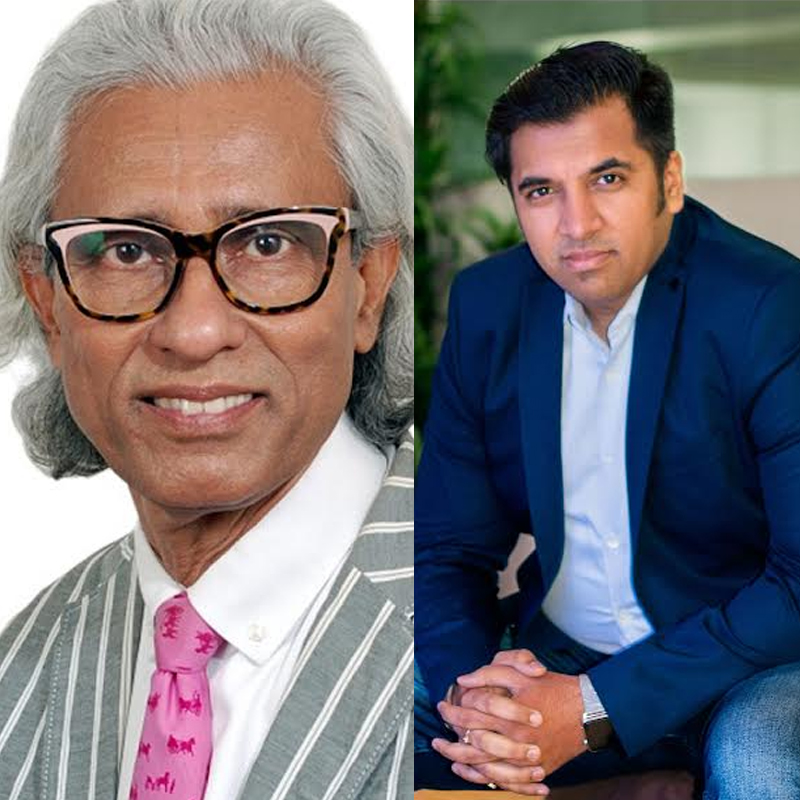
    Mumbai: Digital-first marketing solutions provider IdeateLabs has announced that Dr. Bhaskar Das has joined the company as chairman. He will be mentoring the senior leadership team in augmenting the company’s offerings across data, content, and community solutions.

    IdeateLabs works across a body of clients, offering turnkey digital transformation solutions that enable brands to embrace the ever-evolving business environment. The company said that it operates as a preferred partner for brands, taking up the responsibility of impacting business outcomes using web 3.0 technologies and direct-to-consumer conversations for the brands.

    IdeateLabs MD Amit Tripathi said, “IdeateLabs is enhancing capabilities across functions to build the most comprehensive solutions stack for the brands we work with. In order to navigate the challenges that such growth brings, it was imperative to bring an experienced eye to guide the company’s journey toward becoming a true marketing partner. Having known Dr. Das for more than a decade, we are absolutely delighted at his acceptance of working with the company to build the company’s vision as we diversify solutions with a customer first digital transformation strategy.”

    Das added, “I am glad to have joined hands with this rapidly growing organisation. The company is committed to bringing innovative solutions for building brand conversations and is at par with the current market trends, especially in the world of metaverse and web 3.0 trends. I look forward to working cohesively with the senior management to sketch growth strategies for the group’s expansion in the Indian and international markets.”

    Das is a well-known professional in the marketing and advertising industry. He has been associated with The Times of India (BCCL) as president and board member for over three decades; Zee Media as the group CEO; and Republic TV as the group president. Prior to joining IdeateLabs, Das was associated with Unica Token as director of content creation.

  • UK based broadcaster BBC plans to build ‘digital-first’ focused services

    UK based broadcaster BBC plans to build ‘digital-first’ focused services

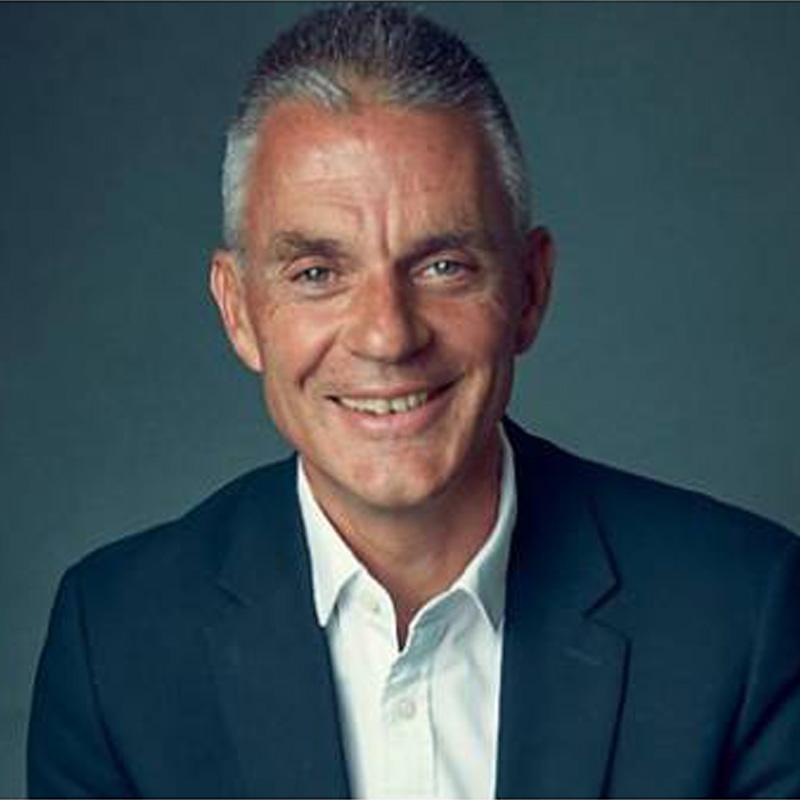
    Mumbai: UK pubcaster BBC director-general Tim Davie shared his plan to build a “digital-first” British Broadcasting Corporation (BBC). The plan will see the broadcaster prioritising its apps and websites over traditional broadcasting channels, said in a company statement.

    In the statement, BBC revealed closing its children-focused channel CBBC and art-skewing BBC-Four including slashing 1,000 jobs over time while putting more investment into digital services like iPlayer.

    Davie also said, “Quite simply, the success of our online services is the success of the BBC over the next five years. Each needs to be in the top two or three in their market in the UK, with our online services growing globally too.”

    Elaborating on iPlayer he said, “Today, iPlayer reaches less than 50 per cent of BBC viewers on average per week. Our ambition is to grow this to 75 per cent. We’ll do this by re-allocating significant amounts of money every year into video that delivers on iPlayer, across a broad mix of genres.”

    “We will propose to Ofcom to expand boxsets and archive, to have more BBC series available on demand. And we want to ensure that news and current affairs is as important to iPlayer as it is on broadcast, which means new on-demand content and formats to build new audience habits.”

    “We will continue to personalise iPlayer to make it much more relevant to every age group and different parts of the UK.”

    While speaking about budget slashing he said, “What we are laying out today is a £500 million plan for the next few years. This is made up of two things: £200 million a year of cuts which are necessitated by the two-year licence fee freeze. This represents the majority of our £285 million a year challenge by 2027-28. £50 million of this £200 million is already baked into our current budgets. The rest is delivered by stopping things and running the organisation better where we can. Then there’s a further £300 million a year which is about moving money around the organisation and delivering additional commercial income. This means that we are not just cutting money everywhere but making choices where to invest.”

    He also said that the plan is not to simply deploy flat savings targets across every department but to act more deliberately. “Focussing resources on frontline areas where we can maximise the value we deliver to those that pay for us.”

    Davie is clear that the future is digital. “The market challenge is clear. Though broadcast channels will be essential for years to come, we are moving decisively to a largely on-demand world. Today around 85 per cent of the time people spend with the BBC is with linear broadcasts. Too many of our resources are focused on broadcast and not online. And less than 10 per cent of our usage is signed in, so we can’t offer a properly tailored service, unlike all our global competitors. If we do not respond faster to these changes we will cede too much ground to those who are not driven by public service values.”

    “The vision is simple: from today we are going to move decisively to a digital-first BBC. We have a chance to do something that no-one else is doing: build a digital media organisation that makes a significant positive impact, culturally, economically and socially. A global leader driven by the search for truth, impartiality, outstanding creativity, and independence.”

    So what will happen to linear broadcast with the enhanced focus on digital? “As we move money into digital, we will inevitably have to spend less on linear distribution. But we will do this with great care – our big channels will be popular for the next decade, at least, and they are incredibly powerful.”

    Davie added: “We do plan to stop scheduling separate content for Radio 4 Long Wave, consulting with partners, including the Maritime and Coastguard Agency, ahead of the closure of the Long Wave platform itself. 5Live on medium wave will also close no later than December 2027, in line with a proposed industry-wide exit from the platform.”

    “Over time we expect to consolidate and share more content between services, and expect to stop broadcasting some of our smaller channels on linear. This will include services like BBC Four, CBBC and Radio 4 Extra. But we won’t do this for at least the next three years because for the moment they are still delivering value to millions of viewers and listeners, at low extra cost.”

    He further said that when it comes to network TV, the UK pubcaster will reduce the volume of hours commissioned a year by around 200. “We’ll still offer thousands of originated hours and a very broad range, but fewer hours will mean we are not constantly thinning programme budgets.”

    “We will focus our money where we are distinctive and more uniquely BBC. We will make tough choices about titles which may be performing on linear but are not doing enough to drive viewers to on-demand. A number of them will be cancelled this year. Importantly, higher-impact content will attract more investment from third parties to make our money go further.”

    “And while we will continue to play a vital role in classical music in this country, we must be realistic about the resources we use. We will continue to support the classical music sector, invest in Radio 3 and improve our educational impact. However, we will look to reduce licence fee funding in our performing groups – preferably by looking for alternative sources of income where possible.”

    In terms of news one of the things he mentioned was that putting digital first applies just as much to its international news services. The world service he pointed out is critical to the BBC, and its growing digital reach means bigger impact with audiences, more brand value for the BBC and the UK, and bigger opportunities for commercial growth.

    “Broadcast services will continue to play a vital role but unfortunately the licence fee settlement means that we cannot offer every service on all the platforms we do today. So we propose to move some of our broadcast radio and television services off linear where digital provides the better future route to audiences. This builds on the model we’re already using in Latin America and parts of Europe. Of course, we will protect broadcast services where that’s likely to remain the best way of reaching people in the long term.”

    He said that the government’s commitment to extend its £94 million annual funding for the world service for a further three years is very welcome. But he also noted that UK licence fee funding for the world service, which has been around £254 million in recent years, is now running at over £290 million including world news – a level that is unsustainable following the licence fee settlement.

    “We will set out plans in the coming weeks for how we will initially reduce licence fee spending on the World Service by around £30 million by the start of 2023/24, while protecting the full breadth of languages.”

    “At the same time, our strategic review will identify the right longer-term model for a digital-first world service and lay out a strong case for more investment from the government over the coming years. This case for a strengthened world service is compelling but we can only expect UK licence fee payers to fund so much.”

    One of the challenges in digital is that on the tech front there is work to be done. “Around 30 million UK adults come to BBC online on average per week, and 200 million globally on digital platforms. We are now up to over 45 million UK accounts, with over 25 million signed in monthly. But we have much work to do to be a leading-edge player in functionality, user experience and data.”

    “We’ve already begun investing more in product development, with an extra £10 million this year. From 2025 we expect to be investing up to an additional £50 million per year, transforming our level of personalisation and our use of real time data, and making our services as easy to use as possible.”

    “In news, we will fully roll out and continuously improve the new News app as a signed-in experience. We will grow our live news pages and transform the quality, prominence and impact of local news.”

    “In sounds, we will continue to improve our on-demand music offer. We will showcase some of the best non-BBC podcasts from British creators and host more of our podcasts on sounds first, before distributing more widely. We want to deliver local and network news better across Sounds and ensure we are securing distribution in connected cars.”

    He concluded by saying, “This is our moment to build a digital-first BBC. Something genuinely new, a Reithian organisation for the digital age, a positive force for the UK and the world. Independent, impartial, constantly innovating and serving all. A fresh, new, global digital media organisation which has never been seen before. Solely driven by the desire to make life and society better for our licence fee payers and customers in every corner of the UK and beyond. They want us to keep the BBC relevant and fight for something that in 2022 is more important than ever. To do that we need to evolve faster and embrace the huge shifts in the market around us.”

    “I believe in a public service BBC for all, properly funded, relevant for everyone, universally available, and growing in the on-demand age. This plan sets us on that journey.”

  • India Today Group’s digital-first brand Tak unveils ‘Karnataka Tak’

    India Today Group’s digital-first brand Tak unveils ‘Karnataka Tak’

    Mumbai: India Today Group launched its first-ever Karnataka-focussed channel ‘Karnataka Tak.’ The channel will fall under the group’s digital-first mother brand, Tak. A regional channel, Karnataka Tak aims to cater to the Kannada-speaking population with content offerings in their native language.

    “As per the last census, there are over 600 million people in India whose native language is not Hindi,” remarked Tak managing editor Milind Khandekar. “As a brand, we want to move ahead from this linguistic barrier and in the last two years, we have gradually expanded beyond Hindi and launched in regional markets like Gujarat, Punjab & Maharashtra. With Karnataka Tak, we aim to follow the same approach.”

    Tak already has 19 Tak channels covering 11 content genres including sports, lifestyle, fitness, fiction, literature, astrology, crime, business, history and regional news. The app is built on artificial intelligence and machine learning to customise content in accordance with the user’s preference.

    The content is exclusively curated for a more progressive and technologically-aware audience.

  • Gozoop wins digital mandate for Villain Lifestyle

    Gozoop wins digital mandate for Villain Lifestyle

    MUMBAI: Digital-first integrated marketing company Gozoop has successfully won the digital duties for Villain Lifestyle, a men’s fashion brand. Gozoop has taken over the reins of social media management for the brand, along with aspects of creative communication and influencer outreach. The company will craft a social media strategy to strengthen brand recall and build a strong social media community.

    Villain is a men’s fashion and lifestyle brand that celebrates the antagonist’s story through products that are trend-making, masculine and strong. The brand is founded by ex-bad boys Beardo, Ashutosh Valani & Priyank Shah, in brand partnership with KGF-famed Rocking Star Yash. The trio came together to introduce the brand with a vision of making it a cool brand for the youth, exclusively for men. Villain aims to make style statements more accessible and affordable for the youth with a wide range of products like fragrances, hoodies, t-shirts and so on. It is perfect for all men who believe in styling and keeping the vibe of their style alive, the brand said. 

    Gozoop CEO  & co-founder Ahmed Aftab Naqvi said, “It was a privilege to work alongside Ashutosh and team while helping build and scale Beardo – from its early stages into a category leader. We are honoured and humbled to be chosen once again as partners, this time for Villain. We look forward to leveraging our experience, expertise and team chemistry to #BreakTheBox for the brand”

    Villain Lifestyle co-founder & director Ashutosh Valani said, “With Gozoop, we are looking forward to creating a legacy for Villain that’s bigger than ever. Having worked with them in the past, we know the kind of unique solutions they bring to the table and are sure that this partnership will be mutually exciting. We trust them to do their best work for the brand and are ready to launch some kickass campaigns with them!”