Tag: digital economy

  • Why India’s Tech Industry is Positioning Itself as the New Major Player on the Global Market

    Why India’s Tech Industry is Positioning Itself as the New Major Player on the Global Market

    India is home to some of the world’s biggest tech companies, and over the past few years, the country has repositioned itself as a new major player on the global tech scene. 

    With that said, let’s dive straight in to discover why the Indian tech scene here is currently burgeoning and why it has become a key market for innovation and investment. 

    Where are the key tech hubs in India?

    Key Indian cities such as Bangalore, Hyderabad, and Chennai are the country’s major tech hubs for various reasons, and the digital economy here is rapidly growing due to its large pool of highly talented and skilled developers and engineers. 

    The key tech sectors with thriving and robust ecosystems in India are the following:

    . Data centers and semiconductors

    . AI (artificial intelligence)

    . Cloud computing

    . Cybersecurity

    . Gaming

    Other tech sectors in India that are also currently growing are IT services, mobile technology, and eCommerce.  
    The epicentre of India’s technology industry is Bangalore, which has been compared to Silicon Valley in the United States. It’s home to a growing number of tech startups and major tech companies, and it has a well-matured framework fostering growth and innovation. 

    Tech companies receive plenty of government support via numerous initiatives, and over the coming years, experts predict that India’s tech scene will continue to reposition itself as a key player on the global stage. 

    Chennai has become a hub of Software as a Service (SaaS) and currently has a burgeoning IT sector. Other Indian cities, such as Noida, Ahmedabad, Kochi, Kolkata, Mumbai, and Pune, have also emerged as key technology hubs thanks to continued investment, a well-matured ecosystem, and a tech-savvy population. 

    The iGaming scene, which is home to countless legally permitted websites with online slot machines and classic table and card games, also continues to grow thanks to the latest ground-breaking technologies and better regulations. 

    How has India become a major tech hub?

    India has a huge pool of graduates specialising in Science, Technology, Engineering, and Mathematics (STEM), which is helping its tech sector grow, and a significant portion of India’s talented workforce is proficient in English. 

    The lower labour costs here compared to other developed nations make India an ideal destination for offshoring and outsourcing, and there is continued investment in various key tech sectors, such as cloud computing, blockchain technology, the Internet of Things (IoT), and artificial intelligence. 

    Government-backed initiatives, such as Digital India and Startup India, have helped foster innovation and support tech startup companies, and according to recent statistics, India is now home to around 130,000 startup companies and more than 110 ‘unicorns.’

    There is a huge focus here on nurturing digital infrastructure to help support the continued growth of the tech sector, and India is starting to emerge as a leader in setting high standards on the global stage for data ethics and governance. 

    Expert analysts who follow the industry closely project that India’s Compound Annual Growth Rate (CAGR) will climb by around 6.5% between now and 2028, and by the end of last year (2024), India’s tech industry achieved an impressive 5.90% (year-over-year) growth. 

    Final thoughts

    Over the coming years, the future looks bright for India’s tech sector. Most of the revenue will be generated from significant exports to other countries in the IT and BPM sectors. It will also continue growing because of internet penetration and an ever-increasing population. 

    There’s no denying that India has become a true tech powerhouse on the global stage, and it is poised for unprecedented growth over the next decade. 

    However, there are still many challenges the country must overcome to assert itself as a true global tech leader, so it will be interesting to see what happens as the industry continues to evolve.

    Disclaimer: This article does not have journalistic/ editorial involvement of indiantelevision.com. indiantelevision.com group or its websites does not endorse/ subscribe to the contents of the article/advertisement and/or views expressed herein.

    The reader is further advised that Online Casino, Betting, Online Gaming , Crypto products, Financial Investments/Engagement , NFTs, Products associated with health, wellness, and food are unregulated and can be highly risky. There may be no regulatory recourse for any loss from such transactions or risk associated with health conditions.

    Indiantelevision.com group shall not in any manner, be responsible and/or liable in any manner whatsoever for all that is stated in the article and/or also with regard to the views, opinions, announcements, declarations, affirmations etc., stated/featured in the same. The decision to read hereinafter is purely a matter of choice and shall be construed as an express undertaking/guarantee in favour of indiantelevision.com (indiantelevision.com group) of being absolved from any/ all potential legal action, or enforceable claims. The content may be for information and awareness purposes and does not constitute financial advice. 

  • Airtel joins undersea cable consortium SEA-ME-WE-6

    Airtel joins undersea cable consortium SEA-ME-WE-6

    Mumbai: Bharti Airtel has announced that it has joined the SEA-ME-WE-6 undersea cable consortium to scale up its high-speed global network capacity to serve India’s fast-growing digital economy.

    The 19,200 Rkm SEA-ME-WE-6 will connect Singapore and France and will be amongst the largest undersea cable systems globally. Airtel is participating as a major investor in the SEA-ME-WE-6 and is anchoring 20 per cent of the overall investment in the cable system, which will go live in 2025. The 12 other consortium members of SEA-ME-WE-6 include Bangladesh Submarine Cable Company, Dhiraagu (Maldives), Djibouti Telecom, Mobily (Saudi Arabia), Orange (France), Singtel (Singapore), Sri Lanka Telecom, Telecom Egypt, Telekom Malaysia, Telin (Indonesia).

    Through SEA-ME-WE-6 Airtel will add a significant amount of 100 TBps capacity to its global network. Airtel has acquired one Fiber Pair on the main SEA-ME-WE-6 system and will co-build four Fiber Pairs between Singapore–Chennai–Mumbai as part of the cable system. Airtel will land the SEA-ME-WE- 6 cable system in India at new landing stations in Mumbai and Chennai.

    SEA-ME-WE-6 will be fully integrated with Nxtra by Airtel’s large data centers in Mumbai and Chennai to enable global hyperscalers and businesses to access seamless integrated solutions and strengthen India’s position as an emerging data center hub in the region.

    “Undersea cable systems along with data centers are vital infrastructure for supporting 5G and the digital economy,” said Airtel Business director and CEO Ajay Chitkara. “Airtel has been ahead of the curve on this front and already operates the largest undersea cable network out of India in addition to the biggest network of data centers. Our investment in SEA-ME-WE-6 is another step in our journey to future-proof our network and build large integrated capacities to enable India’s digital ecosystem.”

    Airtel global network spans over 365,000 Rkms and reaches 50 countries across five continents. Nxtra by Airtel, the data center unit of Airtel, operates the largest network of data centers in India with 11 large and 120 edge data centers.

    Airtel Business serves over one million businesses through its integrated portfolio of – connectivity, conferencing, cloud and data centers, cyber security, IoT, Ad-tech, CPaaS (Airtel IQ), and more. It is the market leader in India’s enterprise connectivity segment.

  • Google pledges Rs 75,000 cr for Indian digital economy

    Google pledges Rs 75,000 cr for Indian digital economy

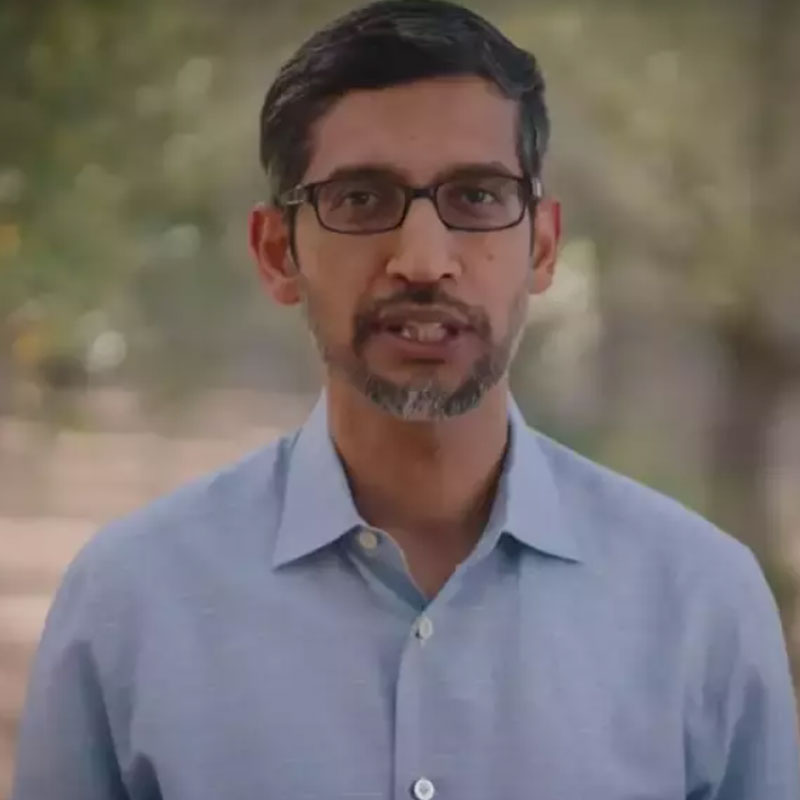
    NEW DELHI: Google has announced that it will invest around Rs 75,000 crore ($10 billion) in India over the next five to seven years. The announcement was made by Google and Alphabet CEO Sundar Pichai.

    “Google will do this as a mix of equity investments, partnerships and operational infrastructure in the ecosystem investments. Investments will focus on four areas: enabling affordable access to information to every Indian in their own language, building products and services that cater to India's needs, empower businesses to transform digitally and lastly leveraging technology and AI for social good in health, agriculture and education,” Pichai announced.

    “This is a reflection of our confidence in the future of India and its digital economy," Pichai said during the annual 'Google for India' event.

    The CEO thanked prime minister Modi for the Digital India vision. He said, “Low-cost smartphones, affordable data, and world-class telecom infrastructure has helped digital India become a reality.”

    Pichai shared, “India is setting the global standards on how to digitise payments and now it’s helping us to build the global product. Our AI-powered Bolo app is another example of technology build specifically for Indian users. Today, Indians do not have to wait to use the latest technology any longer.”

    He also mentioned that the digitisation of small business has been a success story. Just four years ago, one-third of small businesses in India had an online presence, but today 26 million SMBs in India are searchable on Google platforms. 

    “Digitisation of SMBs has increased greatly in India; small businesses are now joining the formal economy by using digital payments. India’s digital economy is far from complete. There is still more work to do in order to make the internet affordable and useful for billions of Indians,” Pichai added.

    In the last year's summit, Google unveiled tokenised cards, an artificial intelligence lab in Bengaluru, BSNL partnership, Google Pay for Business app for merchants and expanded Indian language support across its products such as Google Assistant, Discover, Lens and Bolo. 

  • Budget ’17: Leading digital players hail sectoral  boost

    Budget ’17: Leading digital players hail sectoral boost

    MUMBAI: “Digital economy helps in cleaning up the system, has transformational impact, energises private investment through low-cost credit, and benefits the common man,” asserted finance minister Arun Jaitley while announcing the Union Budget 2017 on 1 February. The budget 2017 emphasised a lot on the promotion of digital economy and strengthening the country’s cashless economy.

    Apart from launching two new schemes, Referral bonus for citizens and cashback for merchants, the government has also announced the launch of Aadhaar Pay. For the financial year 2017-18, the government targets around 2,500 crore digital transactions through UPI, USSD, Aadhaar Pay, IMPS and debit cards.
    The government’s focus on growing the digital footprint in India, enhancing digital infrastructure, capping cash transactions and enabling Aadhaar Pay crucial measures were laudable. Let’s take a look at what the digital, payment solution, e-commerce platforms and payment wallets have to say about the Union Budget 2017:

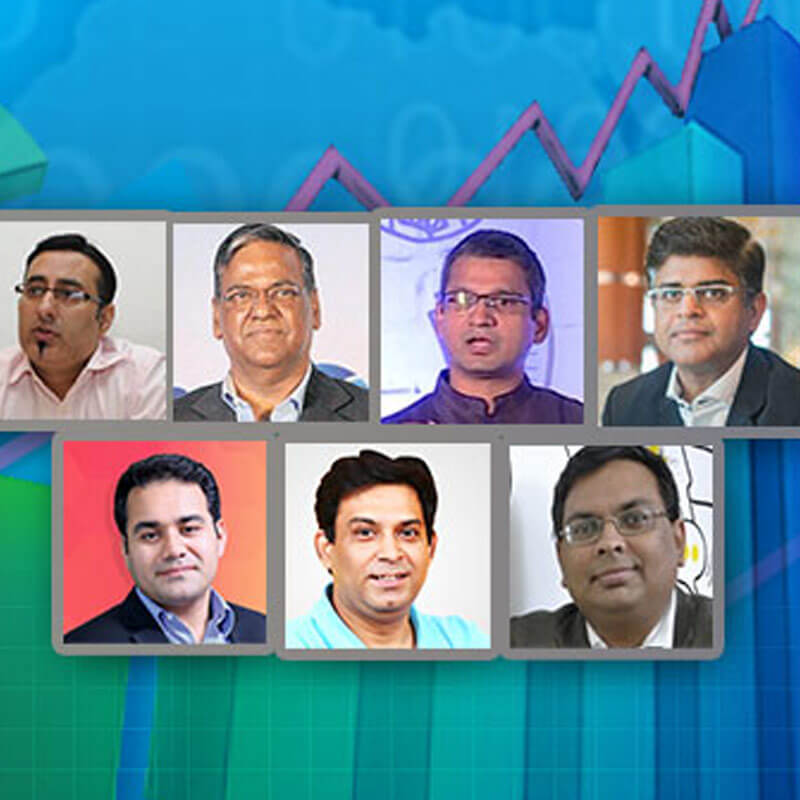
    Hungama.com CEO Siddhartha Roy said, “Focus on digital infrastructure in the current budget is extremely encouraging. Greater reach of broadband and data services into urban and rural India will lead to an inclusive digital economy, encouraging more people to embrace digital, driving consumption and transactions across the medium. Better quality of data is also set to give an impetus to the digital entertainment industry lead by video which is certainly poised for massive growth.” 
    Payment Wallets: FreeCharge & Oxigen
    Oxigen Services CMD Pramod Saxena says: “The budget 2017-18 reflects the government’s continuous efforts to move towards less cash economy and bringing transparency in value chain through digital payments & GST. The budget has stressed upon the importance of strengthening India’s digital economy by bringing down cost of digital infrastructure. The acceleration of PoS infrastructure with 10 lakh PoS machines by March 2017 and  another 20 lakh Aadhaar-based PoS by September 2017 is a reflection of pushing digital payments at last mile by 300 per cent from the current base of 15 lakh PoS achieved so far in last 20 years. The decision to exempt duty on various POS machines will help in reducing cost of digital infrastructure implementation and benefit companies like Oxigen.” 
    FreeCharge CEO Govind Rajan shared: “FreeCharge welcomes the policy measures aimed at accelerating the adoption of a digital economy in India. The incentives for adoption of fintech equipment, expansion of digital infrastructure in under-served areas, Aadhar Pay for wider adoption by merchants and capping cash transactions at Rs 3 lakh, all together have kept the spotlight on building a less-cash India. In doing so, we will all help build a transparent and efficient future for our country”
    Payment Solution Platforms: AGS & Telr

    AGS Transact Technology group chief marketing officer Pratik Seal added, “The Union Budget 2017 has seen a host of incentives to boost India’s digital economy.  However, the budget has not been a very populous one with incentives for the startup fraternity per se. Reduction of income tax for companies with a turnover of Rs. 50 crore to 25 per cent is a welcome move, and will aid many emerging companies. The three-year tax holiday in the first seven years (extended from five years) since inception of startups is a measure which will provide some relief to them. 

    Furthermore, he added, the surcharge of 10 per cent levied on individuals earning between Rs 50 lakh to Rs 1 crore may impact startups in the process of scaling-up, to attract senior talent on  their usual cash and ESOP/stocks packages, as the taxation gap over and under the Rs. 1 crore mark is now practically non-existent. The instant gratification “of being in the Rs 1-cr plus CTC and still be in the sub Rs-1 crore tax bracket” part is effectively eliminated. One would rather demand a fatter, all-cash pay-cheque now. Unfortunately, no policies have been announced providing relief for the aspiring Indians in the Rs 10-30 lakh bracket while heavier taxation for Rs 50-100 lakh is also a serious “aspiration dampener!”

    Telr founder and CEO Sirish Kumar said, “The budget looks well-rounded and in favour of digital economy, something we had anticipated following the demonetisation drive. There are policies to take internet to rural masses, including Bharat Net and ensure security of same via BHIM app and setting up CERT. Furthermore, limiting cash transactions to three lakh is going to work in favour of payment solution-providers, having the provision to handle payments of bigger ticket sizes. The increased emphasis on AadhaarPay, tax exemptions on Iris scanners, MicroATMs and POS machines, in addition to iris scanners, is further going to democratise digital economy in India. Taxes have been lowered for more than 67 per cent of MSME. This will make these businesses more viable.”

    E-commerce Platforms: Craftsvilla & Snapdeal

    Craftsvilla co-founder Manoj Gupta added, “There is nothing big bang in this Union Budget. There is very little for startups and ecommerce. Abolition of FIPB would hopefully make FDI easier. I was looking forward for the Government to take more proactive actions on areas like handloom and tourism that has huge potential for India. I would have also loved it if they announced developing handloom parks or heritage parks across the country with better facilities.”
    Snapdeal Kunal Bahl co-founder & CEO Kunal Bahl said, “We commend the focus on growing the digital footprint in the country — enhancing digital infrastructure, capping cash transactions, reducing cash donations, using Adhaar Pay to enable more digital payments are significant measures. Initiatives make an impact when there is continued attention and the new announcements build on the demonetisation efforts. We also welcome the emphasis on skill development and technical education – this will enable India to successfully harness the demographic dividend. The attention to affordable housing, greater employment in rural areas are the right interventions to build a more equitable society.”

  • Budget ’17: Leading digital players hail sectoral  boost

    Budget ’17: Leading digital players hail sectoral boost

    MUMBAI: “Digital economy helps in cleaning up the system, has transformational impact, energises private investment through low-cost credit, and benefits the common man,” asserted finance minister Arun Jaitley while announcing the Union Budget 2017 on 1 February. The budget 2017 emphasised a lot on the promotion of digital economy and strengthening the country’s cashless economy.

    Apart from launching two new schemes, Referral bonus for citizens and cashback for merchants, the government has also announced the launch of Aadhaar Pay. For the financial year 2017-18, the government targets around 2,500 crore digital transactions through UPI, USSD, Aadhaar Pay, IMPS and debit cards.
    The government’s focus on growing the digital footprint in India, enhancing digital infrastructure, capping cash transactions and enabling Aadhaar Pay crucial measures were laudable. Let’s take a look at what the digital, payment solution, e-commerce platforms and payment wallets have to say about the Union Budget 2017:

    Hungama.com CEO Siddhartha Roy said, “Focus on digital infrastructure in the current budget is extremely encouraging. Greater reach of broadband and data services into urban and rural India will lead to an inclusive digital economy, encouraging more people to embrace digital, driving consumption and transactions across the medium. Better quality of data is also set to give an impetus to the digital entertainment industry lead by video which is certainly poised for massive growth.” 
    Payment Wallets: FreeCharge & Oxigen
    Oxigen Services CMD Pramod Saxena says: “The budget 2017-18 reflects the government’s continuous efforts to move towards less cash economy and bringing transparency in value chain through digital payments & GST. The budget has stressed upon the importance of strengthening India’s digital economy by bringing down cost of digital infrastructure. The acceleration of PoS infrastructure with 10 lakh PoS machines by March 2017 and  another 20 lakh Aadhaar-based PoS by September 2017 is a reflection of pushing digital payments at last mile by 300 per cent from the current base of 15 lakh PoS achieved so far in last 20 years. The decision to exempt duty on various POS machines will help in reducing cost of digital infrastructure implementation and benefit companies like Oxigen.” 
    FreeCharge CEO Govind Rajan shared: “FreeCharge welcomes the policy measures aimed at accelerating the adoption of a digital economy in India. The incentives for adoption of fintech equipment, expansion of digital infrastructure in under-served areas, Aadhar Pay for wider adoption by merchants and capping cash transactions at Rs 3 lakh, all together have kept the spotlight on building a less-cash India. In doing so, we will all help build a transparent and efficient future for our country”
    Payment Solution Platforms: AGS & Telr

    AGS Transact Technology group chief marketing officer Pratik Seal added, “The Union Budget 2017 has seen a host of incentives to boost India’s digital economy.  However, the budget has not been a very populous one with incentives for the startup fraternity per se. Reduction of income tax for companies with a turnover of Rs. 50 crore to 25 per cent is a welcome move, and will aid many emerging companies. The three-year tax holiday in the first seven years (extended from five years) since inception of startups is a measure which will provide some relief to them. 

    Furthermore, he added, the surcharge of 10 per cent levied on individuals earning between Rs 50 lakh to Rs 1 crore may impact startups in the process of scaling-up, to attract senior talent on  their usual cash and ESOP/stocks packages, as the taxation gap over and under the Rs. 1 crore mark is now practically non-existent. The instant gratification “of being in the Rs 1-cr plus CTC and still be in the sub Rs-1 crore tax bracket” part is effectively eliminated. One would rather demand a fatter, all-cash pay-cheque now. Unfortunately, no policies have been announced providing relief for the aspiring Indians in the Rs 10-30 lakh bracket while heavier taxation for Rs 50-100 lakh is also a serious “aspiration dampener!”

    Telr founder and CEO Sirish Kumar said, “The budget looks well-rounded and in favour of digital economy, something we had anticipated following the demonetisation drive. There are policies to take internet to rural masses, including Bharat Net and ensure security of same via BHIM app and setting up CERT. Furthermore, limiting cash transactions to three lakh is going to work in favour of payment solution-providers, having the provision to handle payments of bigger ticket sizes. The increased emphasis on AadhaarPay, tax exemptions on Iris scanners, MicroATMs and POS machines, in addition to iris scanners, is further going to democratise digital economy in India. Taxes have been lowered for more than 67 per cent of MSME. This will make these businesses more viable.”

    E-commerce Platforms: Craftsvilla & Snapdeal

    Craftsvilla co-founder Manoj Gupta added, “There is nothing big bang in this Union Budget. There is very little for startups and ecommerce. Abolition of FIPB would hopefully make FDI easier. I was looking forward for the Government to take more proactive actions on areas like handloom and tourism that has huge potential for India. I would have also loved it if they announced developing handloom parks or heritage parks across the country with better facilities.”
    Snapdeal Kunal Bahl co-founder & CEO Kunal Bahl said, “We commend the focus on growing the digital footprint in the country — enhancing digital infrastructure, capping cash transactions, reducing cash donations, using Adhaar Pay to enable more digital payments are significant measures. Initiatives make an impact when there is continued attention and the new announcements build on the demonetisation efforts. We also welcome the emphasis on skill development and technical education – this will enable India to successfully harness the demographic dividend. The attention to affordable housing, greater employment in rural areas are the right interventions to build a more equitable society.”

  • TRAI to play peacemaker on telecoms interconnect issues

    NEW DELHI: Telecom Regulatory Authority of India (TRAI) chairman R S Sharma yesterday said it will facilitate a meeting of telecoms companies soon with an aim to resolve the raging debate regarding interconnection issues between operators.

    Addressing an inter-active meeting of the FICCI-ICT and Digital Economy Committee here on Tuesday, Sharma said that issues can be resolved through an across-the-table discussion with the CEOs of telecom companies.

    It is learnt that the meeting was held in the backdrop of recent changes in different telecom plans after Reliance Jio unveiled a slew of disruptive marketing initiatives. The new entrant has also been claiming its subscribers were experiencing massive call-drops as incumbents were not providing adequate points of interconnect.

    As to why the industry finds itself in this position, and whether it was due to lack of proper regulation and certain licensing issues, the chief regulator refused to comment. However, he added regulations do not leave scope for ambiguity.

    Sharma spoke on a range of issues, including the 20 consultation papers released in the last 18 months, and that were in various stages of study. These, according to Sharma, were necessary for removing ambiguity in the telecoms sector, and allowing stakeholders to function in harmony.

    TRAI felt the need for consultation papers in order to bring about a comprehensive regulatory framework that will plug gaps in the system and facilitate the industry to grow seamlessly.

    Sharma told the members that, with the advent of technology such as cloud computing and internet of things (IOT), ICT was transforming every sector and telecoms players should leverage the opportunities. Earlier, technology was on the periphery, but, in the last decade, with disruptive technologies coming in, it had become a central tool, Sharma said, adding that ICT also brough with it efficiency and cost-effectiveness.

    Speaking on competition issues in general in the telecoms sector, Sharma said TRAI promoted healthy competition while safeguarding interest of the consumers as it was “paramount”.

    India, he said, already had a world-class telecom network, and with new technologies coming in, services too should become world class. India should strive for next-generation network by employing new technologies such as Loons, Solar Planes and White Spaces, he said emphasising that there was a need to harmonize issues of business interest with disruptive technologies.

    To achieve this, it was necessary to put down licensing rules, norms and quality aspects through regulation, Sharma asserted.

    Responding to queries raised by industry regarding restrictions on experimentation, innovations and use of new technologies, Sharma said TRAI was in favour of new technologies with appropriate permissions. However, he added that these technologies should be interoperable without being in silos.

  • TRAI to play peacemaker on telecoms interconnect issues

    NEW DELHI: Telecom Regulatory Authority of India (TRAI) chairman R S Sharma yesterday said it will facilitate a meeting of telecoms companies soon with an aim to resolve the raging debate regarding interconnection issues between operators.

    Addressing an inter-active meeting of the FICCI-ICT and Digital Economy Committee here on Tuesday, Sharma said that issues can be resolved through an across-the-table discussion with the CEOs of telecom companies.

    It is learnt that the meeting was held in the backdrop of recent changes in different telecom plans after Reliance Jio unveiled a slew of disruptive marketing initiatives. The new entrant has also been claiming its subscribers were experiencing massive call-drops as incumbents were not providing adequate points of interconnect.

    As to why the industry finds itself in this position, and whether it was due to lack of proper regulation and certain licensing issues, the chief regulator refused to comment. However, he added regulations do not leave scope for ambiguity.

    Sharma spoke on a range of issues, including the 20 consultation papers released in the last 18 months, and that were in various stages of study. These, according to Sharma, were necessary for removing ambiguity in the telecoms sector, and allowing stakeholders to function in harmony.

    TRAI felt the need for consultation papers in order to bring about a comprehensive regulatory framework that will plug gaps in the system and facilitate the industry to grow seamlessly.

    Sharma told the members that, with the advent of technology such as cloud computing and internet of things (IOT), ICT was transforming every sector and telecoms players should leverage the opportunities. Earlier, technology was on the periphery, but, in the last decade, with disruptive technologies coming in, it had become a central tool, Sharma said, adding that ICT also brough with it efficiency and cost-effectiveness.

    Speaking on competition issues in general in the telecoms sector, Sharma said TRAI promoted healthy competition while safeguarding interest of the consumers as it was “paramount”.

    India, he said, already had a world-class telecom network, and with new technologies coming in, services too should become world class. India should strive for next-generation network by employing new technologies such as Loons, Solar Planes and White Spaces, he said emphasising that there was a need to harmonize issues of business interest with disruptive technologies.

    To achieve this, it was necessary to put down licensing rules, norms and quality aspects through regulation, Sharma asserted.

    Responding to queries raised by industry regarding restrictions on experimentation, innovations and use of new technologies, Sharma said TRAI was in favour of new technologies with appropriate permissions. However, he added that these technologies should be interoperable without being in silos.