Tag: digital advertising

  • Face of M&E industry in the next 5 years

    Face of M&E industry in the next 5 years

    KOLKATA: Overall advertising spend took a hit in 2020 due to the unprecedented Covid2019 crisis. With hints of recovery, experts are upbeat about adex growth this year as well as in the long term. India’s advertising market is estimated to post a CAGR of 16 per cent over the next five years factoring Covid2019 impact. While digital advertising is estimated to double its share in the overall ad pie, TV spends will largely remain stable, according to a report from Elara Capital.

    However, it mentions that TV advertising may witness a decline in the ad share pie post-2025, if digital scales up further. Globally, digital advertising accounts for 61 per cent of ad spend whereas TV is 23 per cent, given demographics in India (the big mass market with several languages), it is believed that the share of mediums like TV and print will remain higher than the global average.

    Elara Capital VP research analyst (media) Karan Taurani said huge pent-up demand in some sectors (travel, retail & tourism), which were negatively affected during Covid2019, an increase in the number of SME-led advertisers, and the surge in digital advertising led by favourable demographics will drive the growth.

    “Facebook, Google and YouTube will continue to dominate the social, search and video advertising segment within digital advertising. Video advertising, which accounts for almost 30 per cent of digital advertising spend, has outperformed with a 50 per cent growth rate in CY19; however, the larger share keeps moving toward Hotstar and YouTube as they account for almost two thirds of this video advertising pie,” he stated.

    During a panel discussion in Vibes 3.0, The Everywhere Content, Elara Media & Entertainment Conference, experts also reflected similar optimism. They said broader advertising trends within the TV vertical indicate a good recovery, backed by IPL after a big blow during the lockdown. Currently, ad spend stands in good stead after a K-shaped recovery, with some new ad verticals coming up while some old ones are drying up, they added.

    The panellists added that digital will trigger new opportunities as millions of advertisers have moved to digital. SMEs do their own digital advertising, but their adoption is much slower. However, gradually these businesses have been shifting, in line with trends overseas a few years back.

    Digital adoption has been noticeable in consumption patterns too, especially as it has leapfrogged during Covid times. In India, around 10 million viewers have cut chords during Covid2019 lockdown, choosing OTT platforms largely due to a variety of content. The key remains to keep up the engagement of audiences on the OTT platform. TV and OTT can coexist at least for the next eight-ten years. While men used to explore OTT content and women preferred daily soaps on TV, this trend has changed during the pandemic, where family viewing has grown significantly.

    According to the panellists, the value of a revenue-paying subscriber is going to increase significantly. Earlier, with 30-40 OTT platforms and several TV networks, content demand was high. But now, the audience has become quality content-specific and is willing to spend on marquee shows and content. Partnerships with telecom service providers (TSP) will continue to account for a larger chunk of SVOD revenue for broadcaster and other OTTs in the near term; smart TV and smartphones too will support the growth of India’s SVOD ecosystem in the medium term, Taurani added.

    Among other trends in media and entertainment industry, Taurani said cinema remains an outing and socialising trend in Asian countries, such as Singapore, Taiwan, China, the UAE and India. This means there is relatively low or no threat of OTT, unlike the West (US and UK) wherein consumers visit a cinema only to watch a movie. In terms of screen openings too, APAC has 88 per cent of screens open, whereas the US and the EMEA have opened up only 38 per cent and 24 per cent of screens, respectively, until now.

  • Ad fraud: The aftermath of digital advertising

    Ad fraud: The aftermath of digital advertising

    NEW DELHI: In the past four months due to the Covid2019 crisis, customers have been compelled to embrace technology in their daily lives whether it's ordering grocery, food, rapid adoption of OTT, VoD, or games. Hence, leading to an influx in the digital economy. As the adoption of digitisation happens at a large scale, the chances of ad frauds increase and programmatic advertising is no exception. Ad fraud is probably one of the most poignant points of fraud in any industry. Programmatic digital advertising fraud is a deliberate, malicious activity that manipulates with the delivery of ad content and prevents its serving to the targeted audience.

    Xaxis India country lead Bharat Khatri, in a web meet, discussed how ad fraud is denting programmatic advertising in the digital landscape. 

    The general conception about digital advertising is that display ads on digital have a benchmark of viewability around 60-65 per cent in India which means if you’re serving 100 impressions on display ads, only 60 per cent of the ads are being seen.

    Digital has stronger power because digital brands can actually measure which half of the advertising is viewable and which half is not working. Every impression served on digital can be measured on all three aspects – viewability, engagement or the impression served with the audience.

    In today’s context, BAV serves as a key benchmark for buying quality inventory because it gives, ‘human viewable impression’, ‘decreased invalid traffic’, and contextually relevant ad placements.

    Brand safety 

    Brand safety refers to considerations, practices, and tools to ensure that advertising does not appear in a context that is inappropriate for a brand. Digital brings power in terms of brand suitability and brand safety.

    YouTube is one of the channels that come under scrutiny because YouTube as a publisher has a lot of user-generated content. YouTube has a brand safety channel YouTube has partnered with 3rd party tech & data companies to help with brand suitability aspect on YT Videos, Channel factory is one of the partners called the channel factory, it is focused on measuring the role of content, its quality level, safety level, and relevance. Contextual targeting is available on ad-supported by YouTube channels using proprietary guard and graph technology.

    Custom targeting slates can be applied to YouTube ad buys.

    Ad fraud

    Ad frauds mean invalid traffic, which either comes from non-human activity or there are devices that are accessed by humans but controlled by machines.

    Impressions generating from a deliberate activity to stop the proper delivery of ads to the relevant audience at the right time. There are different ways ad frauds are taking place be it human or non- human. Hackers use code to create bots able to take orders from botnet centers. Users unknowingly download and install bot engines on their computers. Bots are instructed to visit premium sites, picking up desirable cookies, and then visit fraudulent sites.

    The highly trafficked fraudulent sites use exchanges and networks to attract advertisers, ads are continuously served to bots, and botnet operators get paid.

    People have also started doing domain spoofing on digital for quite a long time

    Viewability

    MRC or Media Rating Council is a body that tells about the viewability aspects of the digital. As per MRC if you are running a digital ad, display viewable impressions are counted if at least 50 percent of pixels on screen for one continuous second. Video viewable impressions are counted if at least 50 percent of pixels are on screen for a continuous second.

    However, as per Group M viewability standards, Display viewable impressions are counted if at least 100% of pixels are on screen for 1 continuous second. Video viewable impressions are counted if at least 100% of pixels are on screen for 50% of the video duration (capped at 15 secs) with sound on.

    An ad that is not viewable has no value. Viewable ad impressions are a measurement of true reach. Optimising towards viewable inventory allows us to sieve out low-quality sellers and buy more efficiently.

    Viewability is all about the type of place you buy, and the pricing you pay to the publisher.

    Follow Tellychakkar for the consumer facing news & entertainment

  • The Minimalist to go global; invest in in-house video production capacity

    The Minimalist to go global; invest in in-house video production capacity

    MUMBAI: Started a little more than four years ago as a Facebook page, The Minimalist today is one of the most sought-after digital agencies within the country working with brands like Google, Coca Cola, Saint Gobain, HDFC, Kotak Mahindra, etc., and now the founders are planning to embark on a global expedition. Co-founder Sahil Vaidya in a telephonic conversation with Indiantelevision.com revealed that the creative solutions company is already working with a number of start-ups based in New Zealand, Australia, and Singapore, amongst others, and is willing to expand its footprints across the globe.

    Talking about how the global industry is more evolved when it comes to advertising and marketing, Vaidya said that though the Indian brands are quite similar to foreign ones when it comes to a hard-core focus on customer experience, the latter subjects are much advanced when it comes to technology. “The approach essentially differs depending upon the size and nature of the brand and not because of geography. Working with hi-tech startup industries abroad, we have noticed that they have a very similar approach as Indian startups. It’s just that they are pretty much new-age and their usage of technology is very advanced.”

    The Minimalist is also looking forward to investing more in its in-house video production capacities to capitalise onto the surging trend of video advertising. Vaidya believes that even when some brands do not have enough money to create large-scale TV campaigns, they are willing to spend on tactical video efforts that give them the required reach.

    He said, “Transition into videos was a big trend in 2019. People realise that videos are the next big thing and that too not high-budget, large-scale productions but snackable content that can be rolled out on a day-to-day basis. That’s where we have our own propriety called ‘Mideos’, short form for Minimalist Videos. We have our own in-house production arm that helps the brands in creating short videos to generate engagement and virality.”

    Vaidya is of the view that another big thing that is going to rule the roost in the coming times is geofencing that will help the brands to deliver targetted ads based on the consumer’s location. This is going to especially help those brands who have an offline retail presence.

    He was also excited about the creative opportunities the rise of audio-based apps is going to serve the marketing and advertising community. He said that the skills required to create good voice spots are going to be the same as creating good radio ads.

    Vaidya concluded, “I think a lot of creative strengths needed to create good ads are going to remain the same but the mediums are going to evolve.” 

  • Brands to rebalance media spends between online and offline: Kantar

    Brands to rebalance media spends between online and offline: Kantar

    MUMBAI: Many online-first and disruptor brands will be investing in offline modes of advertising, as they seek to “redress the balance between short-term performance marketing and long-term brand building,” reveals the latest Media Predictions 2020 report, released by Kantar. Not just this, multimedia advertisers will make efforts to better integrate their marketing efforts with offline experiences.

    In the report, Kantar expert Duncan Southgate writes, “This rebalancing will take many forms across the marketing landscape, so let’s consider a few different perspectives. For online players this will mean more attempts to bring their brands to life in the real world and build closer connections with consumers.”

    Southgate shares the examples of Mozilla, owner of Firefox browser, which had recently reduced digital marketing spend by 10 per cent and shifted more dollars to offline marketing efforts including events and content marketing.

    “Brands like eBay are rebalancing their media spend in favour of brand-building traditional channels. This makes sense, as we know from our CrossMedia database that digital media spend is far less likely to be cost-effective for brands where digital exceeds over half of the budget.”

    With the trend to getting back to reality taking shape in 2020, it is expected that a slowdown in the global digital advertising growth. However, with 31 percent of the marketers struggling to integrate their media and non-media touchpoints, it will be important for them to break down down the silos to achieve the desired growth.

    Other important trends highlighted in the report included an upsurge in ‘voice search’ thus heralding a new age of audio advertising.

    “We expect podcasts to be one of the fastest growing channels for ad spend: according to our Getting Media Right 2019 study, 63% of marketers say they plan to increase spend in podcast advertising over the next 12 months,” writes Kantar North America’s Heather O’Shea.

    Another trend shaping up in the year, with many browsers disabling cookies that were a prime source of data collection for digital advertisers, and countries taking stand for data privacy, would be an influx of direct integrations between publishers and measurement partners, which will enable true cross-publisher measurement for the first time.

    “What is certain is that campaign measurement will become ever more complex. Marketers will need to future-proof their measurement frameworks and reduce their reliance on cookies for tracking. And many will turn to third-party measurement providers like Kantar to help them navigate the evolving media landscape,” shares Jane Ostler.

    Campaign measurements will surely get tougher during the year, therefore prompting the marketers to seek for new and innovative ways to keep a tab of their ROI. 

  • Digital agency execs approve stricter social media control for upcoming general election

    Digital agency execs approve stricter social media control for upcoming general election

    MUMBAI: Digital media has taken the world by storm. The last elections of the two biggest democracies of the world – India and the US – showed the power of efficient digital campaigns in political battles. However, as easy as it is to use social media platforms for campaigning, it is equally capable of being misused.

    With the general elections of India just a month away, the doubt about the power of programmatic advertising on election results is obviously bothering everyone. The involvement of Facebook in the manipulation of election results in the US only thickens the clouds of uncertainty.

    Indiantelevision.com asked a few people in the industry what these measures would mean to the political parties and the election process. Ethinos Digital Marketing MD Siddharth Hegde said, "This is a much-needed move. Most countries across the world already have such policies in place and this will be a first for India for its forthcoming elections. We are likely to see more transparent conversations and campaigns and a decrease in the number of companies/ pseudo-individuals who were earlier running fake campaigns. Fake news has been a huge challenge for social media and such policies will serve as a huge deterrent.”

    To assuage growing criticism from users and investors, global digital media giants, Facebook, Twitter, and Google recently announced new policies to make political advertising more transparent and reliable. Measures like not allowing anonymous ads to run on user feed, making the acquisition of a pre-certificate issued by the Election Commission of India or a source it authorises and getting valid authorisations are a bid to solve a few of these problems.

    TRA Research CEO N Chandramouli called for stronger governmental control on false information. He said, “The ability to manipulate voters with messages that create fear, uncertainty and doubt (known as FUD in communication) has grown manifold after the proliferation of social media. Such messages polarise voters with strong, often inflammatory messages that seem to audiences to be from authentic sources. The need for all social media regulation at a governmental level on areas of misinformation and false information is necessary. This is especially needed when elections and other important events are due in a country, but also needed in all other times when incorrectly motivated citizens can be aroused by false news to cause harm to their own country and society.”

    On the other hand, Monk Media Networks founder and CEO Ashish Patkar felt the measures are being implemented too late. He said, “We are heading into an era where a Facebook 'Like' today will be an equivalent of an EVM machine button tomorrow. Social media on the positive side has politically engaged the millennial generation which has till now stayed away from voting but on the flip side, the Us V/s Them debate is being fuelled by fake media at all levels. The new controls by Facebook, Google, and Twitter is a small start towards putting out endorsed and verified messages but, frankly, I believe it is too little too late. In terms of spending, the official spending will go down but the unaccounted spends through supporter accounts and influencer accounts will continue unabated and in my view actually go up.”

    With over 556 million Indians on the internet this time around, the spectacle will be one to witness as to how political parties harness the power of the medium while at the same time ensure its fair usage.

  • Countering the industry-wide challenge of digital ad frauds

    Countering the industry-wide challenge of digital ad frauds

    Digital advertising has brought with it an array of unique benefits like precise targeting, measurable and trackable performance indicators, and the ability to provide extremely personalised customer experiences. Advertisers can now practically do things that they could only dream of earlier. However, it has also brought with it the menace of ad frauds. Advertisers are struggling with ad frauds since quite some time. All ad frauds can be loosely defined as any deceitful online activity meant to mislead the advertisers, making them pay for low-quality or fake traffic. Ad frauds wipe out huge chunks of advertising budgets, causing huge losses to the companies. This has created negative connotations about digital advertising solutions in the minds of businesses.

    A few years ago, the advertising industry witnessed two of the greatest ad frauds ever – Hyphbot and Methbot. They decimated gigantic volumes of ad dollars. Methbot churned out revenue of $3 to $5 million each day by targeting premium video advertising ecosystem. Hyphbot was 3-4 times the extent of Methbot and generated up to 1.5 billion ad requests each day. These figures speak for themselves about the urgency to address these problems.

    It is about time to fix this. But, unfortunately, it is easier said than done. As technology evolves, the nature and sophistication of ad frauds evolve with it. It is a game of whack-a-mole, between the industry and the fraudsters, wherein as soon as one problem is addressed, they continuously come up with new and different ways to continue the menace. In order to solve the problem, we first need to understand it well by getting into its nitty-gritty. So let’s take stock of the situation and have a look at the different types of ad frauds advertisers are facing.

    Bot Traffic/Non-Human Traffic (NHT)
    Ad consumption or other online traffic generated by bots or automated websites

    Click Farms
    These consist of a large group of human workers who view or click on the ads on behalf of a third-party, who gain economic benefits from those illegitimate clicks. To do this, these workers are given minimal compensation.

    Sourced Traffic
    It is a way by which publishers acquire more visitors to their sites through third-parties. It is basically artificially generated inorganic traffic.

    Domain Spoofing
    It facilitates passing off a low-quality website as a premium website. Thus, when a user clicks the link, the fraudsters get access to the ads, which are run on the illegitimate site.

    Ad Injection
    It is the practice of inserting ads into any online inventory like a website or an app without the knowledge and consent of the publisher or the owner of that property.

    The ones mentioned above are only a few ways in which ad frauds are perpetrated. The field of digital advertising is highly dynamic. With the addition of new technologies each day it keeps evolving continuously. Fraudsters are constantly coming up with ingenious ways to adapt to these advancements and fulfill their objectives. As a result, brands have to be constantly alert and have to match the pace of technology, in order to be a step ahead of the curve. However, unsurprisingly, it becomes difficult for them to be constantly updated about everything.

    One of the ways to address this problem is to ensure that advertisers partner with the right kind of programmatic platform. A platform which provides a good level of security on-boarding fraud detection and fraud prevention partners, that helps to filter out fraudulent ads and illegitimate traffic in real-time. The platform must also follow the standards set by industry watchdogs like The Internet and Mobile Association of India (IAMAI), Trustworthy Accountability Group (TAG), The Interactive Advertising Bureau (IAB), etc.

    Next, brands must make sure that they measure the conversions and goals instead of measuring clicks.  Measuring clicks as an indicator of performance makes the brand more susceptible to bots and NHT. Also, they must work with publishers who have implemented ads.txt – IAB’s protocol designed to help keep ad frauds in check. It involves publishers hosting a text file on their web servers. This file lists all the authorised dealers of the publisher’s inventory. Also, publishers should be transparent with advertisers about the source of their traffic.

    Ad frauds are a problem not only for advertisers but they also harm publishers. Ad frauds devour a huge chunk of their revenues and also raise a question in the publishers’ credibility. Thus, ad frauds are affecting the entire ecosystem at large. Industry-wide standards are necessary to control this industry-wide challenge. It calls for all the entities across all parts of the advertising ecosystem to launch concerted efforts in fighting-off ad frauds.

    (The author is CEO and Founder, Vertoz. The views expressed here are his own and Indiantelevision.com may not subscribe to them)  

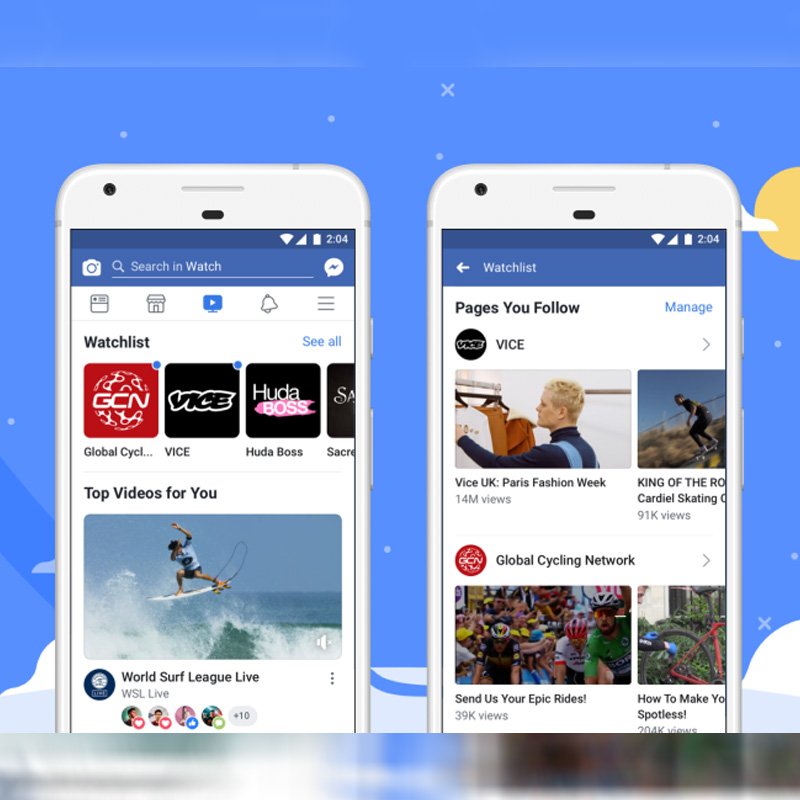
  • Facebook Watch has its work cut out in video content creation

    Facebook Watch has its work cut out in video content creation

    MUMBAI: Tech giant Facebook, with over 2.2 billion monthly active users, is quickly reshaping the world’s digital ecosystem. Despite Wall Street’s disappointment with its Q2 results, the company generated $13 billion in ad revenue during the period. Now, Facebook has opened up another avenue to increase its advertising revenue by gaining a stronger foothold in the crowded online video space. It is very evident that the Mark Zuckerberg-led organisation is investing in video more seriously than ever before, rolling out Facebook Watch globally. This, at a time when video viewing has become a core digital activity among internet users. A recent Zenith report forecast that global consumers are bound to spend 84 minutes a day watching videos online by 2020.

    While Facebook remains the unquestioned king of social media, Facebook Watch has had its work cut out with the likes of Amazon, Netflix and YouTube dominating the online video space. Despite the challenge, the sizable user base of the platform is a worthy asset to enhance its new product. Moreover, Facebook’s latest offering is likely to delight digital marketers and advertisers.

    Last year, Facebook launched this video viewing hub in the US. Initially, it tested with a limited group of publishers and creators. The early aim was to offer longer form episodic content many of which were created by traditional media and production companies and social media stars. Later, it expanded the range of content as well as options for content creators.

    After experimenting with the service for one long year, the social media giant finally made it available everywhere. As the Indian market holds a very important position in the company’s business, its foray into India’s streaming market is a good move at a time when digital advertisement revenues are growing rapidly. According to KPMG 2018 report, digital advertising saw a 35 per cent growth in FY18 over FY17.

    As YouTube is the largest digital video platform in the country with 225 million monthly active users (MAUs), it is undoubtedly the main rival for Facebook Watch. While YouTube is the go-to place for video, users log on to the social networking platform to connect to peers and family rather than to watch video. On the other hand, users log on to Facebook several times every day but YouTube is not a habit of users. In addition to that, Facebook knows users emotions far more than the Alphabet-owned video hub, making it easier for targeted marketing. Hence, it is certain that the new video service of the platform is going to throw a potential challenge to YouTube.

    “Obvious advantages aside, Facebook will have to up the ante pretty quickly to seriously compete with YouTube. Competition is good for the industry. And this development bodes well for both, advertisers and audiences,” The 120 Media Collective founder and CEO Roopak Saluja commented on the upcoming war.

    Several people are speculating about the future market share of Watch in online video space but what matters more is user engagement. To increase overall profitability, higher user attention is highly co-relatable as it signals they are finding value in the service.

    “Indian digital consumption market is growing at breakneck speed. While market share remains to be one of the top tracked parameters for a brand’s success, one must understand, if the market has grown by 10x in the past two years, adaptation, acceptance and stickiness to the app matters more than the market share,” said White Rivers Media chief executive officer and co-founder Shrenik Gandhi.

    However, Facebook wants to differentiate its new video service with altered formula. It wants to connect people through videos rather than focusing on passive consumption. The aim is to turn Facebook Watch into a service where people can watch videos together, discuss about content, even if they are accessing it from different corners of the world through separate devices. For example, it has features like Watch Party which lets people watch alongside friends.

    “Facebook Watch is a big move which shall lead to more aggressive video viewing habits of Indians. As Mark Zuckerberg had predicted, 90 per cent content on social media shall become video content in a few years, it makes sense to have a separate section dedicated to curated and fan videos. It’s high time brands make video content creation as a part of not only hero strategy, but also hub and hygiene.  Time will come, when brands will have to adapt to videos or perish on social media,” Gandhi commented on Facebook Watch’s impact on digital advertisers and marketers.

    Vidooly co-founder and CEO Subrat Kar also thinks that from a marketing angle, it will be a great medium for advertisers to run a mid roll ad for the right audience, just like on YouTube. Facebook only allowed running ads in the newsfeed. He also adds after global rollout of Watch now the platform is actually taking the option to original content producers.

    “Facebook uses a lot of AI and algorithm to figure out what is the most interesting point of content. While watching a video on Facebook, the ad comes on exactly at the most interesting point. This is one interesting thing you can experience on Facebook, not on YouTube. Facebook knows well what the emotion of an audience is.  Going forward, it will open new avenues for marketers and lot of traction because metric on Facebook is 3-second viewing,” Kar added.

    While established content creators or media houses with a good number of followers can leverage the new service well, it remains to be seen how it will help small-scale content creators to create a fan base from scratch. User-generated content attracts a large number of users to Facebook, even more than YouTube. But since the monetisation model of Watch is not clear yet, it would take time to pick up the interest of content creators.

    “For content creators, the monetisation model for YouTube is very clear. You could be a massive media company or you could be a creator in a room with a fan following, YouTube will take 45 per cent tax on whatever the revenue. I believe Facebook’s rev share split is along the same lines. At the moment, Facebook Watch is more geared towards monetisation for organised content creators and media companies or established content creators who command a sizable audience, whereas YouTube has advantages in terms of building a following from scratch. Will Facebook be able to do the same thing? That is the question. They have everything aligned to be able to, that is for sure,” Saluja said.

    Saluja said that five years ago YouTube had the largest bouquet of content from broadcasters like Star, Sony, Viacom and Zee. They aren’t present on the platform any longer because they did not want to share a good amount of earnings with Google. “So what remains to be seen is whether Facebook will open up easy monetisation for amateur content creators looking to build a fan base. Because, much like they’ve done over the past few years, there are latent possibilities waiting to be leveraged. Facebook needs to open up the tap another notch every now and then,” he added.

    This move also could be Facebook’s secret weapon to drive into live sports streaming more actively. In theUS,  Watch already streams popular sporting events including some baseball and basketball games. The platform even got an exclusive WWE show. Already, the social media giant acquired the right of the streaming premier football tournament La Liga in India. Last year also, the social network made a $600 million bid to acquire digital rights to show Indian Premier League cricket games in the country, but failed. There’s a possibility that the company could get more aggressive about acquisitions now.

    Facebook Watch, the new asset of the tech leader definitely has promising opportunities to emerge as a service to watch videos. With a user-friendly interface, it can attract more consumers also. But the very first thing Facebook needs to do is proper marketing to create more awareness about the video service, especially when users from its domestic market are also not totally aware of it. It can be said YouTube’s new rival has a long way to go.

  • Turner International creates digital advertising unit to connect brands with fans

    Turner International creates digital advertising unit to connect brands with fans

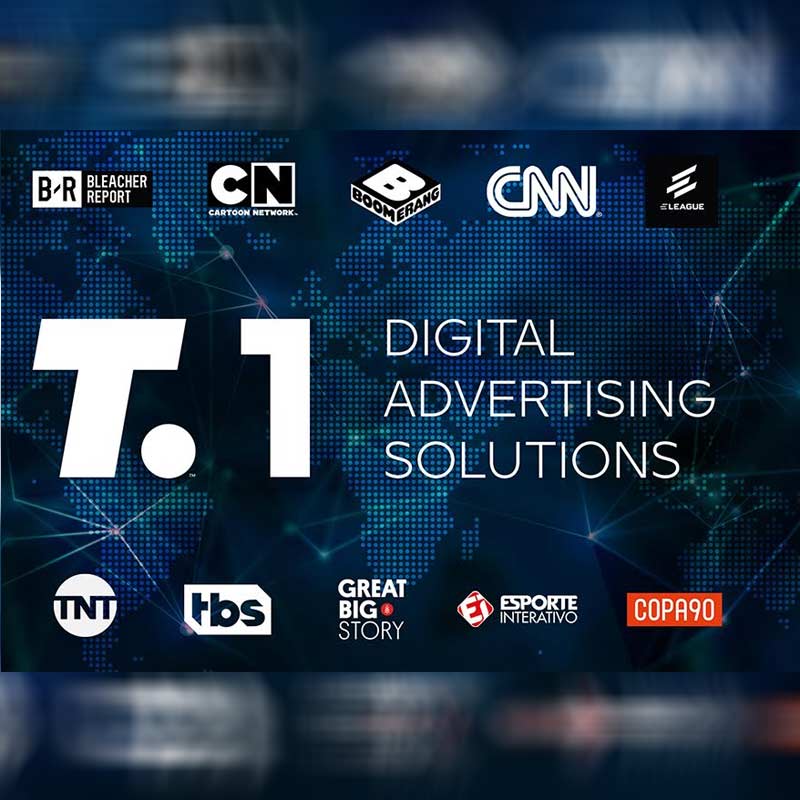
    MUMBAI: Turner International is for the first time providing advertisers with a single way to activate a full suite of global, regional and local campaigns that connect with fans across Turner’s digital properties spanning over 200 countries.

    The launch of Turner International Digital Advertising Sales – T1 – consolidates Turner’s international digital advertising capabilities into a single division, complementing existing local digital and linear advertising sales and CNN International Commercial (CNNIC) operations across Latin America, EMEA and APAC. T1’s focus is on connecting global advertisers based outside the US with audiences across Turner’s entertainment, kids, news and sports digital portfolio including Bleacher Report, Cartoon Network, Boomerang, CNN, ELEAGUE, TNT, TBS, Great Big Story, Esporte Interativo as well as COPA90, which Turner has a stake in.

    T1 offers brands a rich suite of creative and data-driven advertising solutions – from forging far-reaching strategic partnerships to creating bespoke campaigns that include branded content, native and product placement, as well as pre-roll and display inventory across the Turner International digital portfolio. The unit is designed to work with major brands on a wide range of campaigns that can scale multiple regions, be highly targeted to specific countries, or utilise particular Turner properties to reach defined audience demographics and clusters in brand-safe premium mobile, desktop and social environments.

    T1 is borne out of the successful digital strategy devised by CNNIC – the arm of Turner International that monetises all CNN properties outside of the US – to combine data and content solutions to grow partnerships between CNN and international advertisers. Using this blueprint, T1 is created and led by Rani Raad, President of CNNIC.

    The unit comprises a specialist team of sales, consultancy and operations experts working closely with Turner International’s leadership, technology, advertising, product and editorial teams to increase monetisation opportunities around digital properties. Overseeing T1 operations is Rob Bradley, Vice President of Digital Commercial Strategy and Digital Advertising Sales for both CNNIC and T1.

    Underpinning T1 is a unified advertising technology platform to enable creative campaigns that reach highly defined premium audiences at huge scale. The division also draws on existing Turner solutions such as Launchpad, the social media amplification tool which leverages data across the company’s 750M global social followers to deliver branded content to like-minded groups on social media. 

    “T1 is the embodiment of the ‘One Turner’ philosophy at the heart of our company as we create new ways to best serve our audiences and commercial partners,” said Rani Raad. “The creation of this division unlocks a vast premium digital portfolio in order to bring new, innovative solutions to the market. Drawing on the multi-platform strategy that has driven growth at CNNIC, we look forward to establishing ground-breaking partnerships with brands who want to be part of the new content frontiers that Turner brands are pushing right across the world.”   

  • 2018 will be a year of video campaigns: WATConsult’s Rajiv Dhingra

    2018 will be a year of video campaigns: WATConsult’s Rajiv Dhingra

    MUMBAI: If you see an advertisement on a website or your app, you are a well defined consumer of digital advertising. Thet ads on the website you visit are primarily revenue source for internet companies.

    Digital advertising is no longer a joke. The emails were considered pointless and annoying and banner ads used to be laughed at but today, with smartphone penetration being higher than ever and decreasing low data costs, digital advertising needs to be done and done well as the market is highly saturated and consumer’s attention span is shorter than ever.

    Some twenty years ago, digital advertising was just a couple of banners placed cleverly on websites. They were considered super annoying, as if you happened to click on one of them intentionally or unintentionally, you would soon be bombarded with banners all over your website. Today, digital advertising has become extensive with different types of online ads being produced based on the website content and target audience. Online advertising is one of the fastest growing way to reach an audience which includes banner ads to social media networking, email marketing, site takeovers, online classified ads, Search Engine Optimisation (SEO) and even

    SPAM.

    With the accessibility of internet on smartphones and low data cost, companies are now spending millions of rupees trying to find a way to advertise on digital platforms without creating an unpleasant experience for the consumer.

    Digital advertising doesn’t come cheap but it is far more affordable for marketers than traditional advertising model. There are over hundreds of different digital advertising models available today and every ad we see on digital platforms today is paid by one of those models. The most popular method though are CPA (Cost Per Action), PPC (Pay Per Click) and CPM (Cost Per Mille).

    To get some insights on the changing face of digital industry in India, Indian Television Dot Com got talking to WATConsult founder and CEO Rajiv Dhingra who has seen and been a part of the digital revolution in India and recently completed 11 years in digital advertising business.

    The company which started off as a social media specialist in 2007 has expanded its reach and portfolio to become the most sought after full service digital agency in the country. WATConsult today specialises in digital marketing, social media marketing, search marketing, mobile marketing, digital analytics and digital video production.

    How has the digital ecosystem in India evolved along with WATConsult?

    When I look back to the industry’s growth in context of the past 11 years, there has been a tremendous change in the digital industry. Digital industry has become so large today in terms of advertising yet it is only 15 per cent of the overall market advertising and there is so much more growth opportunity left. While digital has been around for around 20 years, the industry has just started to become significant in terms of advertising efficiently on the platform.

    Since the market is highly competitive today, how does associating oneself with a bigger network help since WATConsult was also acquired by Dentsu Aegis Network back in 2015?

    It is the comfort of being associated with a large network that helps in getting global processes in line. That is the core level where a global network helps. Beyond that, every agency is unique and every agency has to work hard to earn its bread. I don’t think you can credit any agency or network all the accolades they achieve and if that was the case, all agencies under a network would work equally efficiently which is not the case.

    How is the Indian digital ecosystem different from the rest of the world as it sure does have its own challenges and uniqueness?

    India is still a very small market for advertising and within the small market, it has an even smaller advertising pie for digital. But what is similar is that Indian marketers are now open to new ways of leveraging digital. Execution and creative wise digital is not a very backward market as we see some amazing work happening in digital which is globally comparable as well.

    and the challenges…?

    In India, we need to up our ante when it comes to our creative and overall work level. Only that will help in bringing more clients and get them to spend more money. Digital still needs to simplify in our country as to what it is that an agency or marketer is trying to tell and achieve. Today, there are too many people selling digital in 100 different ways. We need to focus on business and brand objectives rather than focusing on 100 different t metrics that digital brings.

    How much do you project the ad spends to increase by 2020?

    There are no doubts about it that ad spends will definitely increase on digital. Ad spends will increase by 32 per cent CAGR y-o-y  and by 2020 it is going to be 24 per cent of the market which is almost 1/4 of the advertising market.

    How soon will the shift happen where digital becomes a dominant medium over television?

    I believe for digital to become dominant over television medium will take another 5-6 years in my mind and it is not going to happen by 2020. Although it is definitely going to happen by 2022-23 and that is when it will come very close to the advertising share of television.

    We have been hearing a lot about AI, Big data and Machine Leaning and the buzzwords lately. Is the Indian media ready and understands the concepts or we still have a long way to go?

    I don’t see these as buzzwords or jargons. Social media 10 years ago was considered a jargon and a buzzword but today it is an accepted reality. 10 years from today, AI, big data and machine learning will become accepted reality. Although they may not be called what they are called today and will be referred to as something else entirely. For instance, when social media was launched, it was called, Web 2.0. Similarly, 10 years from now, these new technologies will have a huge impact not only on digital adverting but on businesses in general.

    But why are marketers still reluctant on investing in these newer technologies?

    That is imply because marketers were also reluctant about social media 10 years ago. Marketers are always reluctant because they don’t want to spend their money on or betting on future technology which may or may not happen. They want results of today and hence they will always stay reluctant. Technology moves faster than marketing moves and users move even faster as far as technology adoption is concerned. Globally marketers have got there and back in India, some mature marketers have started experimenting with the technologies. Some of the large FMCG companies in India are looking to create their own data repository data lake to make sure they have detailed data analytics. One of our own automobile client has insisted that we get a data scientist on board for their brand. These are early but significant times of how data, AI and machine learning are going to be big part of digital advertising as we go forward.

    Do you believe influencer marketing is here to stay was that just a passing phase in 2017?

    Influencer marketing is becoming more and more of a professional industry and it is going to only grow. Three to four years from now, marketers will end up spending so much more on this medium and as internet grows and the frequency grows, word of mouth is going to be even more important than paid media as it has its own challenges in terms of cost and credibility.

    Facebook recently announced that it will filter the newsfeed by removing marketing ads to ensure better user experience. Will this hamper businesses in any way?

    Facebook has always focussed on user experience. I am sure they will find other ways to make sure marketers who spend money do reach their audiences. But yes, marketers who would like to use Facebook as a free tool will be hit because clearly Facebook doesn’t think that free advertising should be allowed on Facebook itself.

    What would be the game-changer in digital adverting this year ? How does 2018 look to you?

    Video has been a huge growth factor in 2017 and it is going to continue at a break next speed in 2018. With data consumption going through the roof, you wont see a digital campaign that does not have a video. 2018 looks like a year which has a lot of opportunities and it could be the best year for digital industry ever with so many interesting things happening in the industry.

    ALSO READ:

    How iProspect’s Vivek Bhargava foresaw a digital future two decades ago

    2017 – The year of long-format ads

    Going from clicks to bricks

    Martin Sorrell on how WPP is combating ad world slowdown

    BFSI’s changing communication in the digital era  
  • VoD, OTT music & gaming to overtake Indian traditional media by ’22: EY

    MUMBAI: Digital media may take over traditional by 2021-22, when broadband and smartphone penetration increases in India, according to EY India. The second factor is when broadband is equal to one-third of the smart phone penetration, which in India’s case will happen only by 2021-22, according to EY estimate. EY India media and entertainment advisory leader Ashish Pherwani said that the third factor was parity between cost of the two services.

    Market research firm e-Marketer has estimated that Indians spend around two-and-a-half hours a day on traditional media — radio, television, newspapers, and magazines, compared to an hour they spend on digital media on an average, PTI reported. Pherwani pointed out that the cost of a cable pack in the U.S. is US$ 80-90 a month and that of broadband is $25-30, while in India, it is the other way round, with cable costing Rs 250 and broadband at Rs 500-1000.

    That equation would change by 2020-2021. Therefore, one would see a big uptick in digital and a downfall of traditional media. In traditional media, English (print) was likely to get affected first because that shift was already pretty strong, he said. With the hike in regional media print circulation, Pherwani said that it had scope to grow.

    From Rs 8,490 crore at present, India’s digital sector market is projected to cross Rs 20,000 crore in the next three years. The industry includes the four key areas of digital revenues — OTT and digital advertising, music OTT subscription, video OTT subscription, and gaming (in app and paid).

    EY estimated that the smart phone penetration was expected to be up to 59 per cent by 2020, from 31 per cent in 2015, and digital ad-spend is slated to be Rs 18,500 crore by 2020, constituting a larger pie of the overall media spend. The real uptick, where the Rs 20,000 crore becomes Rs 30,000 crore, might happen between 2020 and 2022, Pherwani added.