Tag: Digital

  • LiveU Unveils Nexus Cloud-Native Universal Gateway for IP Video Workflows

    LiveU Unveils Nexus Cloud-Native Universal Gateway for IP Video Workflows

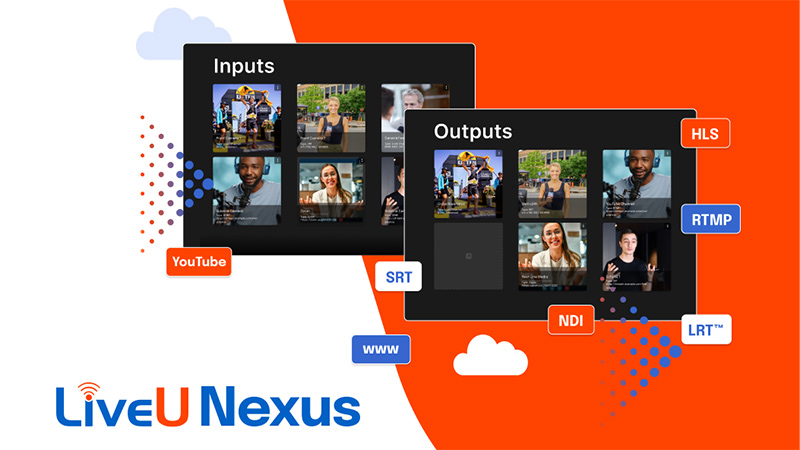
    MUMBAI: LiveU, the global leader in IP-video solutions, has today announced the release of LiveU Nexus, a powerful cloud-native universal gateway for digital and IP-based workflows, enabling customers to create even more value from their LiveU EcoSystem setup. LiveU Nexus seamlessly moves IP-video content in and out of different platforms and environments, including SDI, SMPTE 2110 and NDI-based production systems, using existing and new workflows.

    Designed to simplify complex IP workflows – especially digital video capturing – LiveU Nexus acts as an efficient and reliable universal gateway for all IP-based feeds within the LiveU EcoSystem. It offers unlimited access to live feeds to and from any systems, letting users bring in, transform, route and output any stream in seconds. Any types of feeds can be seamlessly connected from anywhere, to anywhere, including LiveU’s own LRT™ (LiveU Reliable Transport), SRT, RTMP, HLS and more to on-premises and cloud-based infrastructure. Producers can pull in live content from Zoom, YouTube and other social media platforms with a simple URL or meeting link – no converters or workarounds required.

    Matt Zajicek, VP Product, LiveU, said, “Broadcasters are under mounting pressure to integrate a growing number of IP and digital video sources. LiveU Nexus changes the game, accelerating their digital transformations and future-proofing their digital and IP-video workflows. By cutting technical barriers and costs, production teams can focus on creating great content faster and smarter – while maximizing existing investments. It’s already been successfully tested by customers, and we’re excited about the potential ahead.”  

    Key features include:

    Protocol conversion – Transforming any IP format to LRT™ and other leading protocols, LiveU Nexus pushes any live stream into the LiveU EcoSystem or third-party solutions without any additional hardware or converter.

    Digital/social media capturing and routing – includes Zoom meetings, YouTube videos and Facebook Lives into broadcast workflows, and a web browser as an input inside.

    Elastic cloud scalability – built to grow with production demands in the cloud, as workflows evolve.

    Resolutions, frame rates, aspect ratio, and codec differences are automatically normalized across the feeds, ensuring every signal is instantly compatible with the downstream tools. In addition, any IP stream can be sent into LiveU’s IP cloud solutions, including LiveU Studio for cloud production, LiveU Ingest for recording, or LiveU Matrix for IP distribution, and integrated with an installed base of LiveU receivers, without the need for additional hardware or configurations.

    Zajicek summed up, “Interoperability is at the heart of the LiveU EcoSystem – and this latest innovation illustrates it even further. By streamlining workflows and deepening integration across the platform, we’re making it easier than ever for storytellers to maximize the value of their video content.”

    See how LiveU Nexus works. Book a demo at the LiveU stand, Hall 7, Stand 7.C19: https://get.liveu.tv/ibc-2025/
     

  • Reliance hits record Q1 FY26  EBITDA as Jio and retail fire on all cylinders

    Reliance hits record Q1 FY26 EBITDA as Jio and retail fire on all cylinders

    MUMBAI: Reliance Industries has kicked off FY26 with a blockbuster first quarter, posting its highest-ever consolidated quarterly EBITDA of Rs 58,024 crore ($ $6.8 billion), a sharp 35.7 per cent leap over last year, fuelled by robust performances across digital, retail and energy verticals.

    Group net profit soared 76.5 per cent year-on-year to Rs 30,783 crore ($3.6 billion), aided by operational gains and a Rs 8,924 crore windfall from its stake sale in Asian Paints. Total revenue rose 6 per cent to Rs 2.73 lakh crore ($31.9 billion), with EBITDA margins improving by a stellar 460 basis points to 21.2 per cent.

    Reliance Jio continued to dominate the digital landscape, crossing a jaw-dropping 200 million 5G subscriber milestone and 20 million home broadband connections. Jio Platforms’ revenue jumped 19 per cent to Rs 35,032 crore, while EBITDA climbed 24 per cent to Rs 18,135 crore, with margins expanding 210 basis points to a best-in-class 51.8 per cent.

    ARPU rose to Rs 208.8, driven by premium subscriber additions and deepening data consumption, which reached 54.7 billion GB this quarter. Jio also unveiled its next-gen tech stack—JioGames Cloud, JioPC, and the proprietary UBR fixed wireless platform—taking a firm aim at India’s AI and home computing future.

    Reliance Retail cemented its pole position, clocking Rs 84,171 crore in revenue (up 11.3 per cent), and EBITDA of Rs 6,381 crore (up 12.7 per cent), marking an industry-leading margin of 8.7 per cent. The business added 388 new stores, taking the total footprint to 19,592 outlets spanning 77.6 million sq ft.

    JioMart’s hyper-local push paid off with daily order volumes exploding 175 per cent year-on-year. AJIO continued to thrive in the online fashion segment with its new 4-hour delivery service and strong traction for Shein, while the FMCG arm doubled revenue to Rs 4,400 crore.

    Reliance’s Oil-to-Chemicals (O2C) segment, despite a 1.5 per cent drop in revenue due to crude price softness and planned shutdowns, posted a solid 10.8 per cent EBITDA gain at Rs 14,511 crore. Jio-bp’s aggressive retail fuel push contributed significantly, with volumes of petrol and diesel up 38.6 per cent and 34.2 per cent respectively.

    With net debt remaining flat at Rs 1.17 lakh crore and capital expenditure of Rs 29,875 crore this quarter, the group is doubling down on its “golden decade” growth strategy across tech, consumption, and energy. Chairman Mukesh Ambani said, *“Reliance will continue its stellar track record of doubling value every four to five years.”

    From superfast data to doorstep delivery and clean fuels, Reliance is firing on all fronts—and showing no signs of slowing down.

  • Bright Outdoor outdoes itself in FY25

    Bright Outdoor outdoes itself in FY25

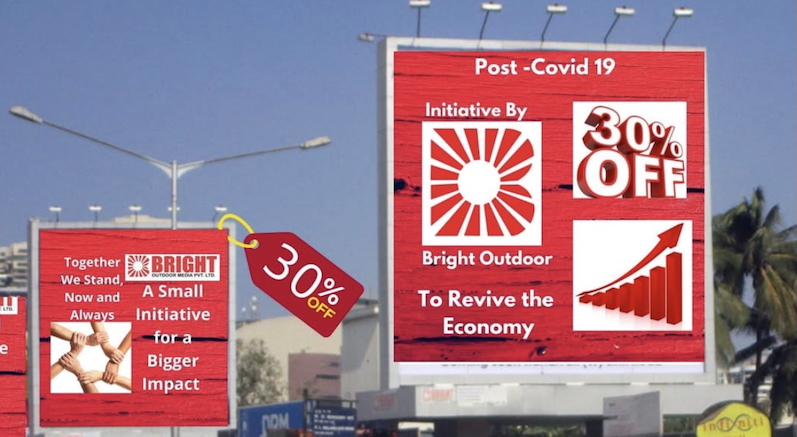
    MUMBAI: The lights are definitely on and someone’s at home at Bright Outdoor Media. India’s first listed out-of-home advertising firm has delivered a corker of a year, with total income soaring 19 per cent to Rs 128 crore and net profit jumping nearly 19 per cent to Rs 19 crore in the fiscal year ending March 2025.

    The numbers tell a gleaming story. Earnings per share climbed to Rs 13.11 from Rs 11.45, whilst EBITDA expanded a healthy 18 per cent to Rs 27 crore. The second half proved particularly bright, with income surging 22 per cent half-on-half to Rs 70 crore—suggesting the company’s momentum is accelerating rather than dimming.

    For a firm that started life in 1980 flogging billboard space, Bright Outdoor has certainly illuminated its path to prosperity. The Mumbai-based outfit now commands over 400 hoardings nationwide, including a hefty chunk of the city’s 85 large digital LED displays. That’s no small feat in a market where prime real estate comes at a premium and visibility is everything.

    The company’s recent coups read like a property developer’s wishlist. Bright Outdoor has bagged exclusive advertising rights for the entire Navi Mumbai Metro Line 1—a decade-long deal covering 85,000 square feet of prime eyeball territory. Not content with underground domination, it also secured a seven-year contract with Western Railways, adding another 17,555 square feet of high-visibility real estate to its empire.

    Chairman & managing director Yogesh Lakhani is clearly more than pleased with the results. His company has been on a billboard-buying spree, unveiling 13 new LED displays across Mumbai’s most coveted spots—from the Goregaon flyover to the Eastern Express Highway. The digital expansion adds 12,569 square feet of advertising space to Bright’s already impressive portfolio.

    Shareholders have reason to smile beyond the robust financials. The board has recommended a five per cent dividend (Rs 0.50 per share) and proposed a generous 1:2 bonus issue—one free share for every two held. It’s a clear signal that management believes the good times will keep rolling.

    The outdoor advertising market has been riding high on India’s economic growth and urbanisation boom. Digital displays, in particular, have become the new battleground as advertisers seek more dynamic, targeted campaigns. Bright Outdoor’s focus on high-traffic transit corridors and tech-savvy solutions appears to be paying dividends—quite literally.

    From cinema slides to full train wraps, the company’s diverse offerings have attracted over 5,000 corporate clients and facilitated campaigns for more than 200,000 movies, TV shows and events. Its claim to fame includes being the first globally to install solar panels on hoardings, supplying electricity back to Indian Railways—proof that being green can indeed mean more greenbacks.

    Trading on the BSE SME platform since March 2023, Bright Outdoor has certainly lived up to its billing as a “game changer” in the IPO landscape. With urban India’s appetite for advertising showing no signs of dimming, this billboard baron looks set to keep the lights on—and the profits flowing.

  • Saregama snaps up more of Pocket Aces, goes all in on youth initiative

    Saregama snaps up more of Pocket Aces, goes all in on youth initiative

    MUMBAI: Saregama has snapped up a further 36.63 per cent of Pocket Aces for a cool Rs 127.47 crore. This latest splurge, a second tranche if you will, pushes Saregama’s ownership to a dominant 90.37 per cent, leaving little room for anyone else at the digital buffet.

    The deal, finalised on 29 March  2025, sees Saregama hoovering up a veritable smorgasbord of shares, from equity to an array of convertible preference shares. Pocket Aces, boasting a digital empire of 175 million followers across its FilterCopy, Dice Media, Nutshell and Gobble channels, and a talent roster of over 215 influencers via Clout, is now firmly under Saregama’s wing. The company declared this to the BSE through a regulatory filing on Saturday. 

    Pocket Aces, with a back catalogue of over 35,000 content pieces, from digital originals  to those ubiquitous reels, is a digital goldmine for Saregama, keen to woo the 18-35 demographic.

    Pocket Aces’ financials reveal a turnover of Rs 8859.17 lakhs for FY 24, a slight dip from the previous year’s Rs 10267.93 lakhs, but Saregama is betting on synergies, not just spreadsheets. The acquisition, which includes a related party transaction with a Pocket Aces director – all done “at arm’s length”, naturally – is being touted as a strategic masterstroke.

    “This isn’t just about owning content; it’s about owning the conversation,” an industry observer chirped, with the knowledge that  Pocket Aces’ vast network can be used by Saregama to turbocharge its music library.

    With influencers, long-form content, and snackable reels all under one roof, Saregama is clearly aiming to be the king of the digital jungle.

  • Digital media dethrones television as India’s M&E king, Ficci M&E report  report reveals

    Digital media dethrones television as India’s M&E king, Ficci M&E report report reveals

    MUMBAI: India’s media and entertainment sector has hit a milestone, crossing the Rs 2.5 trillion mark in 2024, but it’s digital media that’s stealing the show, according to the latest FICCI-EY report. The digital realm, growing by a stonking 17 per cent, has officially overtaken television, which has held the crown for two decades. Think of it as a digital coup, a right royal shake-up.

    While the overall sector grew by a respectable 3.3 per cent, reaching Rs  2.5 trillion ($29.4 billion), growth has slowed compared to the previous year, thanks to a 2 per cent dip in subscription revenues and a global slump in animation and VFX outsourcing. Still, it’s a hefty contribution to India’s GDP, at a solid 0.73 per cent.

    Advertising revenues, however, are booming, surging by 8.1 per cent, driven by digital performance advertising and a surge in premium OOH media. “The digital revolution has not only transformed how content is created and consumed but has also redefined the very essence of the M&E industry,” said Ashish Pherwani, media & entertainment leader and partner at EY India, rather grandly.

    Kevin Vaz, chairman of FICCI’s media and entertainment committee, declared the industry is at a “defining moment,” predicting it will surpass Rs 3 trillion by 2027. “The future is brimming with untapped potential,” he said, sounding positively chuffed.

    Key takeaways? Digital advertising is booming, live events are back with a bang (up 15 per cent), and OOH media is getting a digital makeover. However, subscriptions are taking a bit of a hammering, and online gaming is struggling under the weight of a 28 per cent GST and illegal offshore competition. “The online gaming segment could struggle unless illegal offshore platforms are not curbed,” the report warns, a rather pointed observation.

    Looking ahead, the report predicts a 7.2 per cent growth in 2025, reaching Rs 2.7 trillion, and a 7 per cent CAGR to Rs  3.1 trillion by 2027. AI is tipped to play a major role, bringing efficiencies across content production and distribution. “Artificial intelligence will play a large role in bringing efficiencies,” the report states, sounding rather futuristic.

    In short, India’s M&E sector is in a state of flux, with digital leading the charge and traditional models facing a bit of a squeeze. But with a bit of innovation and a dash of good old-fashioned British grit, the industry is poised for further growth. Quite right, too.

  • Kerala Vision unveils Rs 200 crore plan to boost tourism and connectivity

    Kerala Vision unveils Rs 200 crore plan to boost tourism and connectivity

    MUMBAI: Kerala Vision, the state’s leading digital services provider, has announced an ambitious Rs 200 crore investment plan aimed at transforming Kerala’s rural tourism landscape whilst significantly enhancing the region’s digital infrastructure.

    The comprehensive initiative, unveiled at the Invest Kerala Global Summit, focuses on developing undiscovered tourist destinations throughout Kerala’s villages and establishing a state-of-the-art underground optical fibre network along national highways. This dual approach aims to boost both tourism potential and telecommunications infrastructure across the state.

    Kerala visio hq

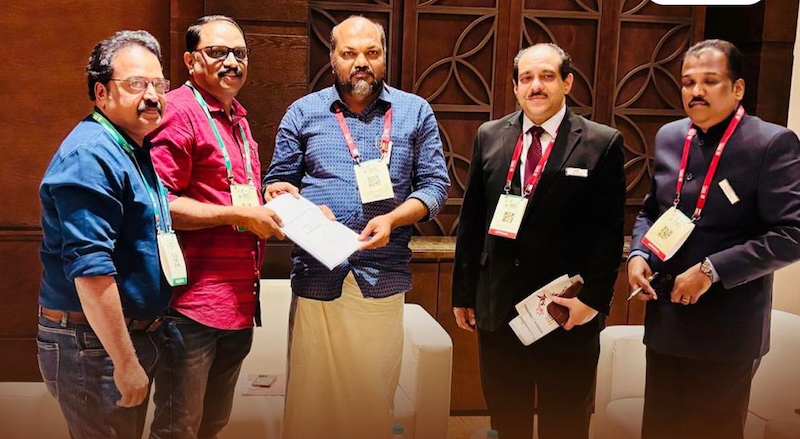
    Kerala Vision managing director Suresh Kumar P.P, and chief operating officer  Padmakumar N,  presented the detailed project report to a distinguished panel including industries minister P Rajeev, principal secretary A P M Mohammed Hanish IAS, and Kinfra  managing director Santhosh Koshy Thomas.

    Kerala Vision, which currently serves more than one million internet subscribers, brings considerable expertise to the project. The company operates the state’s largest optical fibre network, providing high-speed internet connectivity even to remote locations, alongside its digital television service offering up to 155 channels across various entertainment packages.


    KeralaVision BB

    The investment marks a significant step in Kerala’s digital transformation, combining tourism development with infrastructure enhancement. By leveraging its extensive network capabilities, Kerala Vision aims to create a more connected and accessible state for both tourists and residents, supporting the region’s long-term economic growth.

  • ITV Network Appoints Abhay Ojha as CEO

    ITV Network Appoints Abhay Ojha as CEO

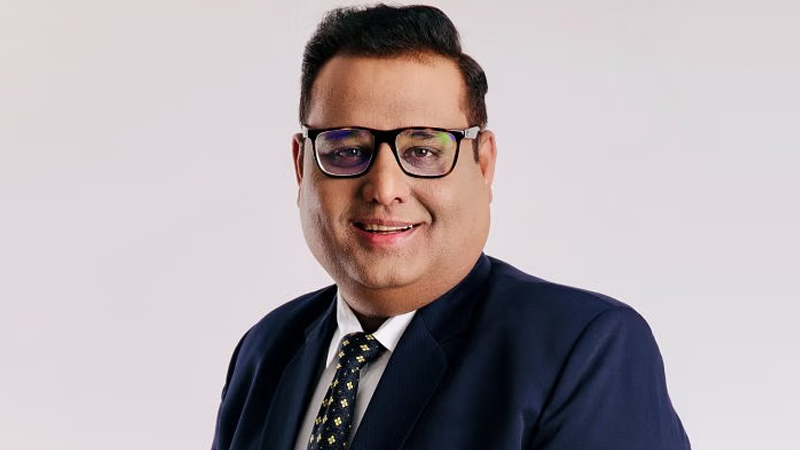
    MUMBAI: ITV Network has appointed Abhay Ojha as chief executive officer for its television, print, digital and sports league business.

    Abhay brings over 25 years of experience across media and FMCG sectors, having previously worked with Zee Media, Star India, Zee Entertainment, Turner and Hindustan Unilever.

    Abhay’s expertise spans multiple industries, including media, FMCG, e-commerce, and financial modeling. He is a skilled change catalyst and financial strategist with a strong background in business management, digital transformation, investments, new business acquisition, and startups.

    Throughout his career, Abhay has successfully led multiple companies through digital transformations, resulting in millions of dollars in profit. His entrepreneurial spirit, passion for innovation, and strong business acumen have enabled him to achieve unprecedented success in launching new businesses.

    “His exceptional leadership skills and business acumen make him ideal to drive our organisation’s growth,” said ITV Foundation chairperson Aishwarya Pandit.

    “It’s an honor to join ITV network, an institution I have long admired and respected. I am drawn to ITV network because of the organisation’s clarity and consistency of purpose and am very excited to partner with the outstanding leadership team to lead the company into the future,” expressed Abhay.

    Abhay  holds a bachelor’s degree in science from Indore and a master’s in business management from IGNOU. In his new role, he will oversee the network’s expansion across multiple platforms and lead its digital transformation initiatives

  • UFO Moviez promotes Siddharth Bhardwaj as CEO digital cinema

    UFO Moviez promotes Siddharth Bhardwaj as CEO digital cinema

    MUMBAI: UFO Moviez, a network for in-cinema advertising and digital cinema distribution, has announced change at the top.

    Siddharth Bhardwaj, currently the group CMO and national sales head, has been promoted to chief executive officer of the digital cinema business. A qualified mechanical engineer with an MBA in marketing, Bhardwaj brings over 28 years of experience across various industries. Since joining UFO Moviez in 2012, he has been instrumental in establishing the company’s advertising revenue and advocating for cine-media as a preferred platform for impactful advertising.

    In his new role, Bhardwaj will oversee the company’s digital cinema business, focusing on leveraging competitive advantages to drive growth. He will continue to report to UFO Moviez executive director & group CEO Rajesh Mishra.

    “Siddharth’s experience and strategic acumen have been instrumental in shaping UFO Moviez’s success over the years,” said Mishra. “His elevation to CEO of the digital cinema business reflects our confidence in his ability to lead the company into the next level of growth. I am certain that under his leadership, UFO Moviez will continue to innovate and deliver value to all our partners and stakeholders.”

  • AI to AR: Key trends driving the next era of branding in India

    AI to AR: Key trends driving the next era of branding in India

    MUMBAI: In an era where digital transformation is reshaping every aspect of business, marketing, and branding are undergoing revolutionary changes. With India’s digital consumer base projected to reach 900 million by 2025, the convergence of technology, changing consumer behaviours, and evolving market dynamics are creating new paradigms that will define the future of how brands connect with their audiences.

    The rise of hyper-personalisation through AI

    Gone are the days when segmentation meant dividing consumers into broad demographic groups. Today’s marketing is moving towards individual-level personalisation, powered by sophisticated AI algorithms. According to recent studies, 76 per cent of consumers are more likely to purchase from brands that personalise their experiences.

    Indian success stories

    – Myntra’s “Style Squad” AI engine analyses over 15 million fashion products to provide personalised recommendations, resulting in a 25 per cent increase in customer engagement
    – HDFC Bank’s EVA AI assistant handles over 50,000 customer queries daily with a 95 per cent accuracy rate
    – Swiggy’s AI algorithm processes over 40 data points per customer to customise food recommendations, leading to a 30 per cent increase in order values

    Immersive technologies reshaping brand experiences

    The metaverse and augmented reality (AR) are no longer futuristic concepts but present-day marketing tools. The global AR market in retail is expected to reach $45 billion by 2025, with India showing one of the fastest adoption rates.

    Notable Indian implementations

    – CaratLane’s “Perfect Look” AR feature has increased online conversion rates by 40 per cent
    – Lenskart’s AR try-on technology serves over 10 million virtual trials monthly
    – IKEA’s AR app in India has reduced furniture returns by 35 per cent

    – Flipkart’s “Camera, Your Story” AR feature enables users to virtually place furniture in their homes, with 30 per cent of furniture buyers now using this feature

    Purpose-driven branding takes centre stage

    Modern consumers, particularly Gen Z and millennials, are increasingly aligning with brands that demonstrate genuine commitment to social and environmental causes. Research shows that 88 per cent of Indian consumers want brands to help them make a positive difference.

    Indian brand initiatives

    – Tata Tea’s “Jaago Re” campaign increased brand loyalty by 45 per cent while raising social awareness
    – Hindustan Unilever’s “Water Conservation Program” saved over 900 billion litres of water while strengthening brand trust
    – Patagonia India’s “Repair, Reuse, Recycle” initiative has led to a 60 per cent increase in brand advocacy among young consumers

    Emerging technologies transforming marketing

    Blockchain in marketing

    Supply chain transparency: ITC’s “Know Your Product” blockchain initiative allows customers to trace product origins
    Digital assets: Tata Motors’ NFT collection generated ₹5.2 crore in revenue while building brand engagement
    Loyalty programs: Mahindra’s blockchain-based rewards program has increased customer retention by 40 per cent

    Internet of things (IoT) integration

    Smart packaging: Dabur’s IoT-enabled packages track freshness and usage patterns
    Retail analytics: Reliance Retail’s IoT sensors analyse customer movement patterns, optimising store layouts
    Connected experiences: Asian Paints’ IoT-enabled colour visualisation system has increased conversion rates by 35 per cent

    Advanced data analytics and predictive marketing

    The future of marketing relies heavily on predictive analytics and real-time data processing. Indian brands are investing heavily in these technologies:

    Implementation examples

    – Marico’s predictive demand forecasting has reduced inventory costs by 25 per cent
    – BigBasket’s real-time analytics engine processes over 15 million data points daily to optimize delivery routes and inventory
    – PepsiCo India’s AI-driven market analysis has improved campaign ROI by 45 per cent

    Voice and visual search optimization

    Voice commerce in India is expected to reach $40 billion by 2025, with 82 per cent of smartphone users regularly using voice search features.

    Market leaders

    – Amazon India reports 3x growth in voice shopping queries in regional languages
    – Google Lens processes over 50 million visual searches daily in India
    – Flipkart’s visual search feature has improved product discovery by 50 per cent

    Sustainability and circular economy

    Environmental consciousness is driving major changes in brand strategies. Studies show that 79 per cent of Indian consumers prefer sustainable brands.

    Brand initiatives

    – Hindustan Unilever’s plastic waste collection program has recycled over 100,000 tons of plastic
    – Flipkart’s sustainable packaging initiative has reduced plastic usage by 50 per cent
    – Godrej’s circular economy program has created a new market for recycled products

    The integration of online and offline experiences

    Omnichannel presence is becoming crucial, with 74 per cent of Indian consumers using multiple channels before making a purchase.

    Success stories

    – Reliance Digital’s integrated shopping experience has increased cross-channel sales by 45 per cent
    – DMart’s hybrid model has shown 60 per cent higher customer retention compared to single-channel shoppers
    – Tata CLiQ’s phygital presence has reduced customer acquisition costs by 30 per cent

    Social commerce evolution

    Social commerce in India is projected to reach $70 billion by 2025, revolutionising how brands engage with consumers.

    Platform innovation

    – Meesho’s social commerce model has enabled over 15 million resellers
    – Instagram Shopping has seen a 120 per cent growth in Indian merchant adoption
    – WhatsApp Business’s shopping feature processes over 1 million orders daily

    The future of marketing and branding is being shaped by technological advancement, changing consumer values, and evolving market dynamics. India’s unique position as a rapidly digitalising economy with a strong traditional retail presence creates opportunities for innovative marketing approaches.

    For brands in India and globally, success lies in leveraging these trends while maintaining authentic connections with consumers. The most successful brands will be those that can:

    – Implement technology thoughtfully and purposefully
    – Maintain strong ethical and sustainable practices
    – Create seamless omnichannel experiences
    – Build genuine connections with their audience through personalization and purpose

    As we move forward, the key to success will be balancing innovation with authenticity, technology with human touch, and global trends with local relevance.

    (This article has been authored by Thinkin’ Birds CEO Bhavik Mehta. The views expressed here are his own and indiantelevision.com need not subscribe to them)

  • Campus launches mixed-reality print ad, merging innovation & style

    Campus launches mixed-reality print ad, merging innovation & style

    MUMBAI: In a bustling Delhi café, a group of friends are sharing stories of their favourite sneakers, but one conversation takes an unexpected turn when a QR code on a magazine cover transforms their discussion into an interactive experience.

    Welcome to world of interactive marketing as defined by Campus Shoes, The company recently launched its first-ever mixed-reality print advertisement, inviting shoppers to step into a digital realm where their beloved sneakers come alive, showcasing the future of athleisure marketing.

    As part of the Move Your Way campaign, sports and athleisure brand  Campus unveiled this innovative initiative, marking a leap in marketing technology. 

    The ad launched in eight major cities—Delhi, Bangalore, Mumbai, Kolkata, Chennai, Hyderabad, Ahmedabad, and Pune—inviting readers to scan a QR code to unlock an immersive experience. Once scanned, the sneakers appeared on the screen, followed by brand ambassador Vicky Kaushal, who shared insights about his favourite pair of Campus shoes. This interactive moment culminated in a direct link to the Campus Shoes website, allowing consumers to browse and shop easily, transforming the journey from discovery to purchase.

    Campus Activewear chief innovation officer Prerna Aggarwal said, “Our first-ever mixed reality print ad reflects Campus Shoes’ commitment to embracing technology to enhance consumer experiences. By integrating mixed reality with traditional print, we are creating immersive and meaningful interactions for consumers who are truly phygital, tech-driven, and looking to explore footwear that helps define their unique, authentic selves. It’s a step forward in connecting with our audience in innovative and impactful ways.”

    With Campus putting its best foot forward, hopefully GenZ will too.