Tag: Differential pricing

  • Indian broadcasters push for separate commercial TV rates as streaming bites

    Indian broadcasters push for separate commercial TV rates as streaming bites

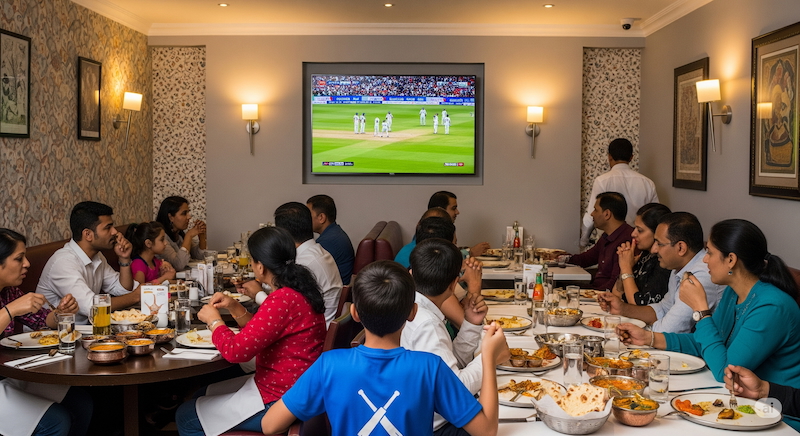
    MUMBAI: Indian television broadcasters are mounting a fierce campaign to restore separate pricing for commercial and household subscribers, arguing that forcing hotels and restaurants to pay the same rates as ordinary homes is killing their business. 

    The Indian Broadcasting and Digital Foundation (IBDF), which represents the country’s main TV networks, has petitioned the Telecom Regulatory Authority of India (TRAI) to scrap uniform pricing rules introduced in 2015. The lobby group contends that charging a Mumbai hotel chain the same rates as a middle-class family is not just outdated—it is commercial suicide. 

    “Like every other industry, TV services should recognise the higher value and different use cases in commercial environments,” the IBDF argued in its submission to TRAI. Before 2015, broadcasters enjoyed the freedom to charge premium rates to businesses and negotiate terms directly with commercial customers. That changed when TRAI imposed a one-size-fits-all pricing regime, stripping away broadcasters’ ability to set distinct commercial tariffs. Now, as television viewership plummets in favour of digital streaming platforms like Netflix,  Amazon Prime Video, JioHotstar, Z5 and SonyLiv,  broadcasters are fighting for their financial lives. 

    They argue that restoring separate, higher tariffs for commercial users could help the traditional TV industry weather the streaming storm. 

    TRAI has launched a review of the pricing structure and is consulting stakeholders—including broadcasters, direct-to-home providers, and cable operators—on whether uniform rates should continue. The regulator has not indicated when it might reach a decision. 

    The IBDF has branded the current rules as “too restrictive” and wants a return to flexible, market-driven negotiations with commercial subscribers. For an industry grappling with declining reach and stagnant subscription revenues, every rupee counts.

     The outcome of TRAI’s review could reshape India’s television landscape, determining whether broadcasters can extract more value from their dwindling commercial customer base or remain trapped in a uniform pricing straitjacket as viewers continue their exodus to streaming services.  

  • Free data, net neutrality: Discussion on TRAI paper to be held

    Free data, net neutrality: Discussion on TRAI paper to be held

    NEW DELHI: Given the complicated issues around net neutrality, an open house discussion is to be held in Hyderabad this month on Telecom Regulatory Authority of India’s consultation paper on free data. The OHD will be held at Hotel Trident in the Telangana capital on 24 October 2016.

    On 14 June, TRAI had given more time to stakeholders to send in their comments and counter comments to the paper issued on 19 May 2016 with final replies to come in by mid-July.

    Stretching the discussion on net neutrality, TRAI wants to know whether there is a need to have TSP agnostic platform to provide free data or suitable reimbursement to users without violating the principles of Differential Pricing for Data laid down by TRAI.

    It also wants to know if free data or suitable reimbursement to users should be limited to mobile data users only or could it be extended through technical means to subscribers of fixed line broadband or leased line.

    The paper says that in the recent past, some data services plans of the Telecom Service Providers (TSPs) came to the notice of TRAI which amounted to discriminatory tariff through offering zero or discounted tariffs to certain contents of certain websites/applications/platforms. The objective of offering such plans was claimed to be the desire of various service providers/content providers or platform providers to enable people of this country, especially the poor, to access certain content on the internet free of charge.

  • Free data, net neutrality: Discussion on TRAI paper to be held

    Free data, net neutrality: Discussion on TRAI paper to be held

    NEW DELHI: Given the complicated issues around net neutrality, an open house discussion is to be held in Hyderabad this month on Telecom Regulatory Authority of India’s consultation paper on free data. The OHD will be held at Hotel Trident in the Telangana capital on 24 October 2016.

    On 14 June, TRAI had given more time to stakeholders to send in their comments and counter comments to the paper issued on 19 May 2016 with final replies to come in by mid-July.

    Stretching the discussion on net neutrality, TRAI wants to know whether there is a need to have TSP agnostic platform to provide free data or suitable reimbursement to users without violating the principles of Differential Pricing for Data laid down by TRAI.

    It also wants to know if free data or suitable reimbursement to users should be limited to mobile data users only or could it be extended through technical means to subscribers of fixed line broadband or leased line.

    The paper says that in the recent past, some data services plans of the Telecom Service Providers (TSPs) came to the notice of TRAI which amounted to discriminatory tariff through offering zero or discounted tariffs to certain contents of certain websites/applications/platforms. The objective of offering such plans was claimed to be the desire of various service providers/content providers or platform providers to enable people of this country, especially the poor, to access certain content on the internet free of charge.

  • TRAI extends time for responses to issues on availability of free data

    TRAI extends time for responses to issues on availability of free data

    NEW DELHI: Given the complicated issues around net neutrality, stakeholders have now been given more time to reply to a consultation paper on Free Data which also touched on this subject.

    Comments on the paper, issued by the Telecom Regulatory Authority of India on 19 May 2016, will have to be sent by 30 June 2016 with counter-comments on 14 July 2016. The earlier dates were 16 June and 30 June respectively.

    Stretching the discussion on net neutrality, TRAI had wants to know whether there is a need to have TSP agnostic platform to provide free data or suitable reimbursement to users without violating the principles of Differential Pricing for Data laid down in TRAI Regulation.

    It also wants to know if free data or suitable reimbursement to users should be limited to mobile data users only or could it be extended through technical means to subscribers of fixed line broadband or leased line.

    The paper says that in the recent past, some data services plans of the Telecom Service Providers (TSPs) came to the notice of TRAI which amounted to discriminatory tariff through offering zero or discounted tariffs to certain contents of certain websites/applications/platforms. The objective of offering such plans was claimed to be the desire of various service providers/content providers or platform providers to enable people of this country, especially the poor, to access certain content on the internet free of charge.

  • TRAI extends time for responses to issues on availability of free data

    TRAI extends time for responses to issues on availability of free data

    NEW DELHI: Given the complicated issues around net neutrality, stakeholders have now been given more time to reply to a consultation paper on Free Data which also touched on this subject.

    Comments on the paper, issued by the Telecom Regulatory Authority of India on 19 May 2016, will have to be sent by 30 June 2016 with counter-comments on 14 July 2016. The earlier dates were 16 June and 30 June respectively.

    Stretching the discussion on net neutrality, TRAI had wants to know whether there is a need to have TSP agnostic platform to provide free data or suitable reimbursement to users without violating the principles of Differential Pricing for Data laid down in TRAI Regulation.

    It also wants to know if free data or suitable reimbursement to users should be limited to mobile data users only or could it be extended through technical means to subscribers of fixed line broadband or leased line.

    The paper says that in the recent past, some data services plans of the Telecom Service Providers (TSPs) came to the notice of TRAI which amounted to discriminatory tariff through offering zero or discounted tariffs to certain contents of certain websites/applications/platforms. The objective of offering such plans was claimed to be the desire of various service providers/content providers or platform providers to enable people of this country, especially the poor, to access certain content on the internet free of charge.

  • Dish TV aims to boost ARPU with differential pricing strategy

    Dish TV aims to boost ARPU with differential pricing strategy

    MUMBAI: Taking the path that cable operators often do, Direct To Home (DTH) operator Dish TV has decided to offer differential pricing across different cities.


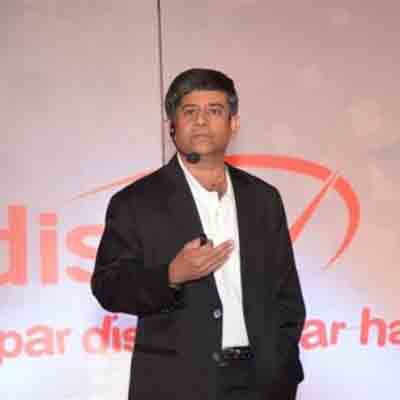
    Dish TV chief operating officer Salil Kapoor tells Indiantelevision.com that with the DTH operator having over 40 High Definition (HD) channels and superior quality, the consumers would not mind the “marginal jump.”


    According to Kapoor, Indian consumers can no longer be treated as “one size fits all,” especially in metro segments. Kapoor believes that the consumer today has the capacity to pay slightly more for a quality product. “This differential pricing is our strategy to give a boost to our Average Revenue Per User (ARPU),” Kapoor informs.


    As part of the first phase, metro cities such as Delhi, Mumbai, Kolkata and Pune will be targeted. Each pack in these four cities will now cost an additional Rs 10. The revised prices came into effect from 26 February, 2015.  


    Dish TV has already introduced differential pricing for its regional brand, Zing. While in Maharashtra, the pack price is pegged at Rs 189, in the state of Odisha it has been priced at Rs 175. Since the strategy worked successfully for its sub brand Zing, Kapoor is of the opinion that it would also work for Dish TV. 


    While the packages have currently been introduced for the metros, no decision on other cities has been taken as yet.