Tag: dies

  • Raj Kamal Singh, sports television’s reluctant pioneer passes on

    Raj Kamal Singh, sports television’s reluctant pioneer passes on

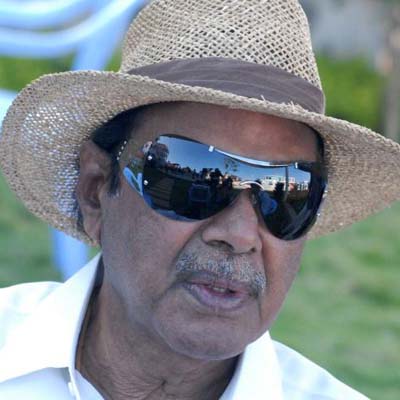
    Raj Kamal Singh, known simply as RK to friends and protégés, never quite fit the mould he was born into. A Haryana-cadre bureaucrat with the air of a genial civil servant, he somehow found himself reshaping Indian broadcasting in the 1990s. First came DD Metro, conjured up with Rathikant Basu and Urmilla Gupta to inject a dash of freshness into the government-owned Doordarshan’s lumbering edifice Then came ESPN India, and later ESPN Star Sports — ventures that took him from government files to live sport, a journey no “babu” had probably attempted before.

    At ESPN’s makeshift south Delhi office in the early days — a converted garment-export bungalow with half a floor to itself — Singh presided over what would become a generation-defining team. “He was the reason I found my calling in television,” recalls Anurag Dahiya, now the ICC’s chief commercial officer, who was one of the early recruits. RK, he said, was the avuncular figure in a scrappy start-up atmosphere, a mentor who mixed bureaucratic calm with private-sector mischief. He helped build up a pay television business for ESPN in cable television’s infant days. 

    “For us, he was an approachable CEO. (We could) walk into his cabin – just like a friend. (He was fond of) taking us for bowling…Opening his house for parties along with his loving wife and kids. (We went for) river rafting trips, His famous lassi During lunch that was open to all – endless memories that we all forever cherish with him – shining our careers,” adds NDTV special projects associate vice-president Rachna Oberoi. 

    Later came Zee Telefilms, where Singh sparred with cable operators, shrugged off boardroom spats and, with a trademark guffaw, told anyone who fretted: “It’s all part of business. You can’t take it very seriously. It will get sorted out.” It usually did.

    Colleagues remember a man who taught by example rather than sermon. Many he hired went on to lead, or to found, sports businesses across the globe. His greatest legacy was not the channels he ran, but the people he groomed.

    Eventually he walked away from the industry altogether, setting up a lodge in the forest  (if we have got it right) — a suitably idiosyncratic ending for a man who had long made light of television’s supposed seriousness. On 15 August he died of a heart attack, aged 75.

    The sports-broadcasting world owes him more than it realises. RK would probably chuckle at the thought, suited and booted as he was vaunt to be, dismiss the fuss, and pour another drink.

  • Comcast founder Ralph Roberts dies at 95

    Comcast founder Ralph Roberts dies at 95

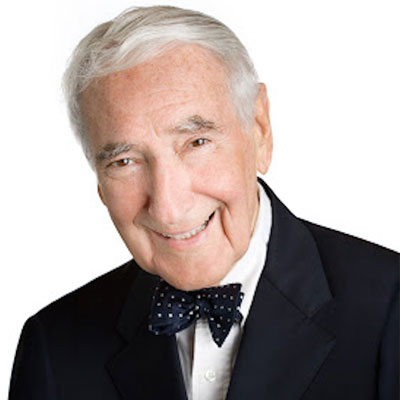
    MUMBAI: Ralph J. Roberts, the cable television pioneer, who founded Comcast Corporation died of natural causes last night in Philadelphia, PA. He was 95.


    Roberts served as chairman emeritus of Comcast, which is now the parent company of NBCUniversal.


    Comcast said in a statement, “Ralph was a born entrepreneur, a visionary businessman, a philanthropist and a wonderful human being. Ralph built Comcast into one of America’s greatest companies and his vision and spirit have been at the heart of Comcast and our culture for 50 years. He will be truly missed. Ralph’s greatest love was his family, and our deepest sympathies go to his wife Suzanne and the entire Roberts family.”


    Time Warner Cable chairman and CEO Rob Marcus said, “Ralph Roberts was a pioneer, a visionary and a role model. He exemplified the value of working hard and treating others with kindness and respect. His influence has extended far beyond Comcast and Cable. His life’s work, and the legacy he leaves, helped shape the way consumers use content today and how they communicate with one another. On behalf of everyone at Time Warner Cable, I send our sympathy and love to Ralph’s family and to everyone at Comcast.”


    Roberts was a born entrepreneur, great American businessman and philanthropist, who played a key role in the development of the cable television business. He founded Comcast in 1963 with the purchase of a 1,200-subscriber cable system in Tupelo, Mississippi. He grew the company from its humble roots as a small, regional cable company into the global Fortune 50 media and technology leader it is today.


    During his more than five decades at Comcast, Roberts became one of the most well-regarded executives in America. He was widely respected and admired for his visionary leadership and spirit, his passion for the business and his deep sense of integrity and courtesy. Most importantly, he was a kind and humble man who has been the heart and soul of Comcast for over 50 years.


    Roberts is survived by Suzanne Roberts, his wife of over 70 years. An actress, director and host of Seeking Solutions with Suzanne, Suzanne has spent a lifetime seeking to help others.


    In addition to his wife, Roberts is survived by four of his children and their spouses: Catherine R. Clifton and Anthony A. Clifton, Lisa S. Roberts and David Seltzer, Ralph Roberts Jr. and Kim Roberts, Brian L. Roberts and Aileen K. Roberts and Diane Roberts, widow of Ralph and Suzanne’s son Douglas Roberts, who passed away in September 2011. He is also survived by his eight grandchildren.

  • Legendary filmmaker D Ramanaidu is no more, mourned by film industry

    Legendary filmmaker D Ramanaidu is no more, mourned by film industry

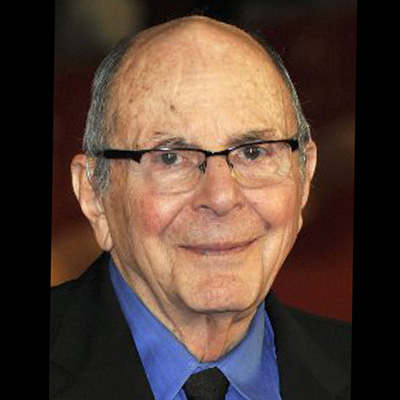
    NEW DELHI: Popular multilingual film producer D Ramanaidu died this morning of prostate cancer, aged 79.


    He had been suffering for the few days and is survived by his sons Suresh Babu who took over the Ramanaidu Studios in Hyderabad and younger son Venkatesh Daggubati who is a prominent actor, daughter Daggubati Lakshmi and grandsons Rana, Abhiram, Arjun, Naga Chaitanya, granddaughters Malavika, Hayavahini, Ashritha and Bhavana.


    Ramanaidu made his production debut with Ramudu Bheemudu in 1964 with NTR in the lead role. The movie was a blockbuster. He founded Ramanaidu Studio in Hyderabad in 1989. He also donned grease paint and did few roles, guest appearances in several films.


    He also forayed into politics and joined the Telugu Desam Party. He represented Bapatla Lok Sabha constituency (1999-2004) and lost the seat in the subsequent elections and then stayed away from politics.


    Winner of the Dadasaheb Phalke Award for lifetime achievement in 2009, he produced more than 150 films in 13 Indian languages. Ramanaidu was the 41st recipient of the award instituted in 1969 (the birth centenary of D. G. Phalke, who is generally regarded as the father of Indian cinema) and the 10th producer to have received the award.


    Born in June 1936, Ramanaidu was founder of Suresh Productions and holds the Guinness Book of World Records for the most films produced by an individual.


    In 2012, Ramanaidu was conferred with the third highest civilian award in the Republic of India, the Padma Bhushan in recognition for his contribution to Telugu cinema.


    Ramanaidu had contributed a substantial part of his earnings to numerous philanthropic purposes including the Ramanaidu Charitable Trust that was founded in 1991.


    Suresh Productions was started with his childhood friends including G Rajendra Prasad (Madhavi Combines).


    In 1968, B Nagireddy’s sons and Ramanaidu combined to form a company called Vijaya Suresh Combines and Suresh Movies. They did 4 movies together and in 1970, when they suffered a few losses, they decided to break up the partnership and go their separate ways.


    While producing the movie Secretary, he visited Hyderabad for shooting. He had never before considered moving to Hyderabad but during the shoot, he thought of building a studio in Hyderabad. Back then, Hyderabad was an underdeveloped and hilly area and many criticised him for risking his fortune on building a studio there.


    Premnagar by him in 1971 was a huge success under the Suresh Productions banner and then he produced up to 74 films from 1993 to 2005 in several languages.


    Brahmaputrudu was a big commercial hit and ended up helping him pay off the debts for his studio launched in 1989. In 1990, Ramanaidu Colour Lab was launched, and in 1994 he launched Cine Village in Nanakramguda, which was used by the entire industry for outdoor shoots.


    During his career as a producer, he introduced 24 directors and several actors and music directors who have since become very famous and owe their success to him. The Andhra Pradesh Government nominated him and director Bapu in November 2012.


    Ramanaidu has received an honorary doctorate from Sri Venkateswara University, Tirupati.


    Preminchu movie won 5 Nandi Awards during the year 2001 – 2002,


    He played different roles in various films under his own banner. For the first time he played a full-length role in a film named Hope which dealt with teenage suicides, educational stress in South India. This film also won the National Film Award on other social causes in the year 2007.


    He won the National Film Award for Best Feature Film in Bengali – Asukh – 1999; the Filmfare Best Film Award (Telugu) – Jeevana Tarangalu (1973); Filmfare Best Film Award (Telugu) –Soggadu (1976) and Filmfare Lifetime Achievement Award – South (2000).


    His 17 Hindi films include Kuch tum kaho kuch hum kahein, Aghaaz, Hum aapke dil me rehte hain, Santaan, Pem Quaidi, Tohfa, Dildaar and Prem Nagar.

  • ‘Rebel Without A Cause’ screenwriter Stewart Stern dies at 92

    ‘Rebel Without A Cause’ screenwriter Stewart Stern dies at 92

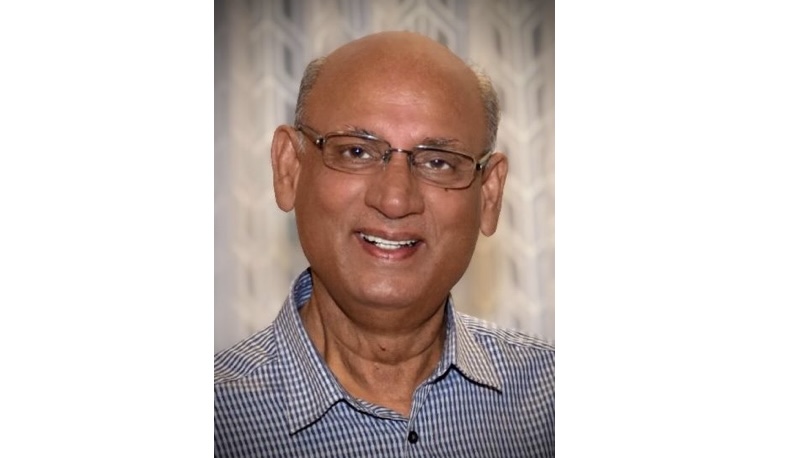
    MUMBAI: Two-time Academy Award-nominated screenwriter and Emmy-winning television writer Stewart Stern (Rebel Without a Cause, The Last Movie, TV’s Sybil) died on 2 February, at the Swedish Hospital in Seattle, Washington, at age 92 after a battle with cancer.


    According to his family, he was “surrounded by the next generation of filmmakers and screenwriters he had mentored and inspired, as well as friends and family who came from all parts of the country for a two-week vigil before his death.”


    Over the course of his career, Stern’s screenwriting credits included the iconic ’50s teen rebellion drama, Rebel Without a Cause as well as a related documentary feature on the late actor, The James Dean Story (1957), 1971’s notorious counter-culture indie drama, The Last Movie, The Ugly American starring Marlon Brando, which earned him a Writers Guild Award nomination for Best Written American Drama, Rachel, Rachel starring Joanne Woodward, for which he earned an Oscar nomination (Best Writing, Screenplay Based on Material from Another Medium) as well as a WGA nomination for Best Written American Drama.


    His other screenwriting credits included Summer Wishes, Winter Dreams (1973), The Rack (1956, From a Teleplay by Rod Serling), The Outsider (1961), Thunder in the Sun (1959) and his debut feature film, Teresa, for which he earned his first Oscar nomination for Best Writing, Motion Picture Story, shared with Hayes. He also wrote the Oscar-winning short film, Benjy (1951).


    “Stewart Stern lived so many lives! He was a great screenwriter, a tireless mentor, a WWII hero, an interlocutor with the primates at the Woodland Park Zoo in Seattle – and a man possessed of greater generosity of spirit than most anyone I’ve ever met. He had such access to his feelings, and in his presence you had the same. In so many conversations I can recall having with him I ended up near tears – not in sorrow, but in recognition of the truths he so wisely and gently shared. This is the saddest thing. He was 92 but should have been with us forever,” said WGAW vice president Howard A. Rodman.


    On the small screen, Stern also wrote several telefilms, including the acclaimed 1976 miniseries Sybil (From the book by Flora Rheta Schreiber) starring Sally Field, which memorably explored multiple personality disorder, earning Stern an Emmy Award for Outstanding Writing in a Special Program – Drama or Comedy – Adaptation, as well as a lead actress Emmy Award for Field and the program (Outstanding Special – Drama or Comedy), as well as the holiday TV movie A Christmas to Remember (1978), which earned Stern a Writers Guild Award for Anthology Adaptation.


    During the ’50s, Stern also wrote several productions for TV drama anthologies such as Playhouse 90, Goodyear Playhouse and The Gulf Playhouse.


    Born on March 22, 1922, Stern was raised in New York City. After graduating from the University of Iowa, he served in the U.S. Army during World War II in the 106th Infantry Division and fought in the Battle of the Bulge. For his military service, Stern received a Purple Heart, a Bronze Star, and Combat Infantry Badge. According to his family, Stern felt his writing “was always informed by that profound experience and the relations formed with his Army buddies.”


    A WGAW member since 1951, Stern served on the Guild’s Screen Council Branch (1970-72). Stern is survived by his wife, Marilee Stiles Stern.