Tag: died

  • Remembering Pritish Nandy – the  poet, journalist, filmmaker, painter and a humanist

    Remembering Pritish Nandy – the poet, journalist, filmmaker, painter and a humanist

    MUMBAI: Around two years and eight months ago, the following post appeared on Pritish Nandy’s timeline on social media.

    “You relax on a plane, even if you don’t know the pilot. You relax on a ship even if you don’t know the captain. You relax on a bus even if you don’t know the driver. Why don’t you relax in life knowing that the universe is in control?”

    To which Pritish  responded. 

    Loved this post by @malini_ramani Perhaps I am trying to tell myself this as well. I have lived my whole life chasing stress. Stress brought forth poetry. Stress inspired my journalism. Stress informs all my creative work. Yet I yearn to relax, to switch off and go on a long vacation. Someday perhaps… when life expects less from me.”

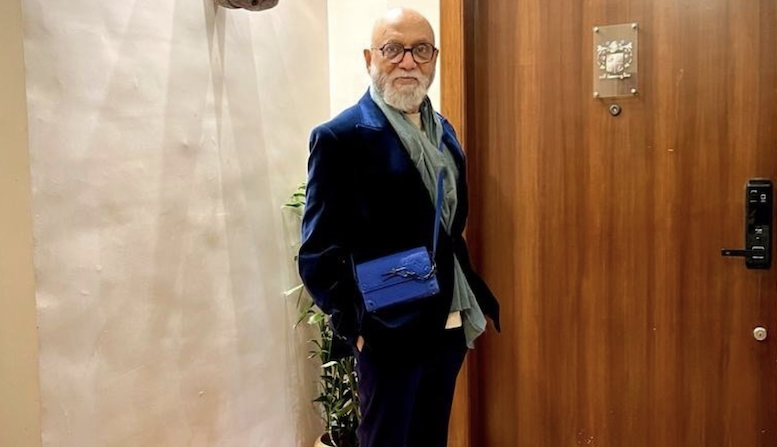
    Pritish Nandy did realise his dream to go for a vacation five months later after that post when he got a chance to travel through Italy. He roamed the streets of Rome like a commoner, visited Harry’s Bar, soaked in the sights, the Vatican, appreciating and admiring art and the sculpting finesse of Michaelangelo’s David and the unknown Pieta. He looked relaxed and like he was having a good time. But the trip was relatively short and his thoughts kept him busy and they were probably racing a hundred a dozen through that vast and deep mind of his.

    And that’s exactly how Pritish Nandy lived his life:  busy.  He kept himself busy, as a poet in his younger days in Calcutta, a city he fled from around 40 years ago for the city of dreams. He published his own works and translated the works of other great poets – altogether more than 40 of them.  

    In Mumbai, he kept himself pre-occupied as publishing director of Bennett Coleman & Co between 1982-91 working on all its magazines but he got the most known for what he did as the editor of The Illustrated Weekly, which he transformed into a publication that stood out and made every one stand up too. Whether they were authors or politicians or  painters or film stars or beauty queens or musicians.

    Pritish Nandy in Italy

    President Gen Zia ul Haq invited him to his residence in Pakistan and gave him an explosive interview just a short while before he was assassinated. Then he and Rajat Sharma secretly recorded an off the record interview with the godman Chandraswami in London, which led to political explosions in India. Actress Neena Gupta  never forgave him for picking up Masaba Gupta’s birth certificate and identifying Viv Richards as the father of their love child. 

    Pritish did a stint with the Observer of Politics & Business, which was Reliance Industries’ Anil Ambani’s attempt at getting into media with his father Dhirubhai’s blessings. It floundered soon, despite first Prem Shankar Jha’s initial editorial guidance and then Pritish’s but it gave him an impetus to launch his own company which he set up in the offices of OBP, if I remember correctly.

    Thus Pritish Nandy Communications (PNC) was born. Which then again kep him busy as it went on to make television shows for Doordarshan, Zee TV, Star and Sony. Among them were current affairs shows, business chat shows, comedies, daily entertainment bulletins, Marathi dramas, Hindi dramas. Some of these he hosted himself. 

    From television PNC transitioned to films making some memorable titles like Jhankar Beats,  Kaante, Sur, Hazaaron Khwaishein Aisi., Pyaar ke side effects, Chameli and  Mastizaade. Some of the biggest names worked with him Amitabh Bachchan, Juhi Chawla, Sanjay Dutt, Kareena Kapoor, Aishwarya Rai in his films.
     
    And then of course came the era of streaming.  That got him busy again, it got his creative juices flowing. He, along with his daughters Rangita and Ishita, ploughed right in. Their first original approved by Prime Video Four More Shots Please was among the top shows of the year, in terms of viewership. It also went to get nominated for an international Emmy, which pleased Pritish no end.  Of course, what gave him a lot of pride was that his was amongst the first few production companies to be listed on the stock exchanges, way back in 2000.  And that the company was celebrating 25 years of its listing in 2025.

    Pritish got recognition very early at the age of 26 when he was given the Padma Shri. And he did hobnob with the powers that be. Indira Gandhi the then prime minister came to the release of his book of poems Lonesong Street and appreciated his work. This was much before he became a power house courtesy his journalistic endeavors.
    Pritish with his Pet

    He  has been a recipient of many awards: the EM Forster Literary Award, the Unesco Asia Pacific Heritage Award, the International Association Award from the Humane Society of the United States, the Friends of Liberation War Honour from Bangladesh, and hundreds  of award nominations for the films PNC has produced, from all over the world.

    A lot has been written about Pritish’s  caring for animals and how he along with Maneka Gandhi set up People for Animals much before its time. For him his pets were his children. His caring for strays on the street led him to strike a friendship with Ratan Tata who also shared with him his love for animals. In fact, so close was their friendship that Ratan Tata also picked up a chunk of  PNC shares from the open  stock market.

    Pritish was elected to the Rajya Sabha on a Shiv Sena ticket in 1998 from Maharashtra with the support  from both Sena and the BJP members without either of them knowing it.

    His pen shall write no more. Nor will his brush make the strokes on canvas. Pritish Nandy wielded both strongly. As a poet. As an editor. As a painter. As the script doctor or writer of the shows or flms that he gave his creative inputs for. With his passing away following a cardiac arrest, all that has been silenced.  He breathed his last on 8 January 2025 at the age of 73 at his south Mumbai residence, leaving behind his  two daughters who he doted on – Ishita and Rangita – his son Kushan, his pets and many a stray on the streets of Mumbai. 

    (Even as this piece is being written another Bennett, Coleman & Co legend Bhaskar Das continues to be critical in a Mumbai hospital. His family is counting down the days as the doctors have given up, surrendered to the cancer that has spread and ravaged his body)
  • Remembering Osamu Suzuki the auto executive who transformed the Indian auto industry

    Remembering Osamu Suzuki the auto executive who transformed the Indian auto industry

    MUMBAI: The eulogies and tributes are pouring in from far and wide for this Japanese gent who left an indelible mark on the Indian auto – actually business  and economic – landscape and passed on at the ripe age of 94 on 25 December 2024 following complications due to  malignant lymphoma. So much was his contribution that to India that the government  conferred on Osamu Suzuki  the highest civilian honor – a Padma Bhushan.

    Born Osamu Matsuda he was referred to as Osamu Suzuki after marrying into the family that owned Suzuki Motor Corp. When he joined the company, it was a loom maker. Four decades of his leadership saw it being transformed into the world biggest automaker.

    Read on for the tributes that have poured in:  

    “Without his vision and foresight, his willingness to take a risk that no one else was willing to take, his deep and abiding love for India, and his immense capabilities as a teacher, I believe the Indian automobile industry could not have become the powerhouse that it has become. Millions of us in this country are living better lives because of Osamu San,” said Maruti Suzuki chairman RC Bhargava.

    “His leadership was transformational. He pioneered small car manufacturing and expanded into India with the iconic Maruti 800. That was the first car I owned,”  said Indian government official Amitabh Kant.

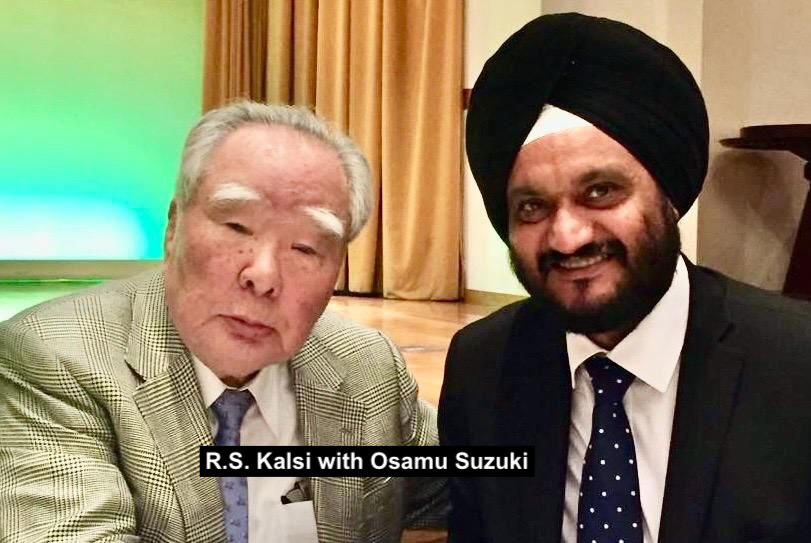
    “From his group addresses to department managers during his visits to India to board meetings and review sessions in Japan, every moment in his presence was a masterclass in leadership, foresight,and wisdom. On several occasions, I had the honor of interacting with him one to one. Each interaction was a profound learning experience, underscored by his ability to ask the right questions, guide with clarity, and motivate with his vision,” said Maruti Suzuki former board member RS Kalsi.

    “A visionary leader and extraordinary partner, Osamu Suzuki San laid the foundation of the Indian automotive and auto-component industry. Your visionary leadership not only drove innovation but also cultivated strong alliances that have propelled the industry forward, creating a legacy of collaboration that impacts current and future generations,” said Subros CMD & Acma president Shradha Suri Marwah .

    “The world mourns the loss of Padma Bhushan Osamu Suzuki San, a visionary leader whose unwavering dedication revolutionized the global automotive landscape. From humble beginnings, he transformed Suzuki Motor Corporation into a global powerhouse, renowned for its innovative and fuel-efficient vehicles. His commitment to quality, customer satisfaction, and environmental sustainability left an indelible mark on the industry,” said Uno Minda CMD Nirmal Minda .

    “As I watched you from sidelines for more than 25 years , hearing you at Saim and Acma conventions , couple of times at SMC – Hamamatsu , spellbound by your vision and purpose and simple but powerful thoughts ! How you helped India become powerhouse of the world in frugal car manufacturing … With several thousand more of my professional clan in automotive sector , I give my respectful tribute . Suzuki San you will live forever … and you are one of the reasons we thought aautomotive sector was a great place to be .. as you built one of the biggest car manufacturing companies in world Maruti Suzuki India Limited Suzuki Motor Corporation  Rest in Peace ,” said  Vikas Marwah CEO Lumax Auto Technologies on Linkedin.

    I have not met many global CEOs who took personal accountability when their India business hit a rough patch, but Suzuki-san did. On 18 July 2012, militant workers armed with iron rods and wooden sticks went on a rampage at Maruti’s Manesar factory in what the Indian unit of Japan’s Suzuki Motor Co. then described as “orchestrated mob” violence that didn’t seem to stem from a dispute over wages or working conditions.  One person, senior human resources manager Awanish Kumar Dev, died after his legs were broken and his office was set on fire. Some 100 more, both Indian and Japanese employees, were attacked and injured. Why did Awanish have to die?”, he asked his management, who presented a slew of labor welfare schemes to him. He kept asking that question in subsequent board meetings before cracking the whip to rewrite Maruti’s 30-year-old history since 1982,”  said Zetwerk chief marketing officer Amrit Raj.

    “Under his leadership, Suzuki championed small, affordable cars that revolutionized mobility for millions in India, case in point being Maruti 800 His vision bridged nations and brought technological excellence to the forefront of the Indian automotive landscape.Rest in peace Mr. Suzuki,” said IILM Institute for Higher Education economics professor Gurpreet Singh Bhatia.

    “His foresight was instrumental for the birth of Maruti Suzuki in 1981, paving the way and reshaping the Indian automotive landscape. We, at Sunvisors India, are grateful for having adopted Japanese manufacturing processes and a work culture that has benefited so many of us auto component manufacturers,” said Sunvisors India managing director Anish Chanana. 

    “His passion, humility, and unwavering commitment to innovation left an indelible impression on me.O Suzuki-san’s leadership and vision not only defined Suzuki as a global brand but also deepened the bond between India and Japan, particularly through the Maruti Suzuki partnership, which transformed the automotive landscape in India. His legacy will continue to inspire us at Maruti Suzuki and beyond, as we strive to uphold the values he cherished,” opined Maruti Suzuki general manager Raman Kochhar.

    “As the driving force behind the Maruti-Suzuki alliance, he took a leap of faith in India at a time when the concept of a “people’s car” was still a dream for many.Under his leadership, Suzuki not only became a household name but also empowered millions of Indians to own their first car, giving them freedom, mobility, and a new sense of independence. His contributions have touched every corner of this country, influencing not just automobile ownership but also the growth of the Indian economy and employment through Maruti Suzuki’s expansive presence. For every car owner in this country, Suzuki-san’s legacy lives on in the vehicles we drive, the memories we create, and the roads we traverse, “ said Dr Wheelz & RoamPrime founder Balaji Mohan.

    “Mr. Suzuki’s pivotal role in partnering with the Indian government for the Maruti project in the early 1980s turned India into a significant auto market. This bold move, driven by his ambition “to be number one somewhere in the world,” led to the creation of the iconic Maruti 800 in 1983, a car that became synonymous with affordability and reliability for millions of Indian families. Today, Maruti Suzuki commands a dominant 40% share of India’s car market. Beyond the automobiles, Mr. Suzuki championed a professional workplace culture in class-conscious India. He insisted on open-plan offices, shared canteens, and equal uniforms for executives and workers, fostering unity and inclusivity. His leadership also extended to innovative business strategies, cost efficiency, and building global collaborations. Even in his 80s, he made strategic decisions, including a partnership with Toyota to advance electric vehicles, underscoring his forward-thinking approach. Mr. Suzuki’s legacy is not just about cars; it’s about reshaping industries, empowering people, and creating opportunities. His contributions will forever be etched in the history of India’s automotive journey,” highlighted former Maruti Suzuki senior manager Virendra Bhatnagar.

    (Picture courtesy RS Kalsi’s Linkedin page)
     

  • Former Indian President and renowned space scientist APJ Abdul Kalam passes away

    Former Indian President and renowned space scientist APJ Abdul Kalam passes away

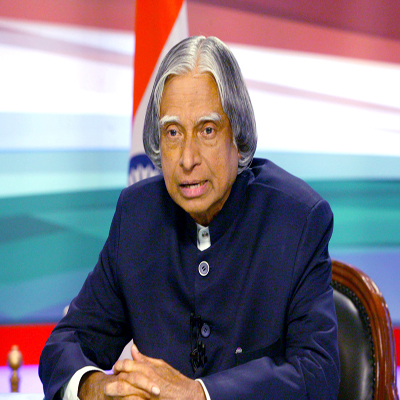
    NEW DELHI: Former Indian President APJ Abdul Kalam, one of the country’s foremost aerospace scientists, passed away in Shillong this evening. He was 83 years old.
     
    Kalam was rushed to the hospital earlier in the day when he collapsed while giving a public lecture at Indian Institute of Management (IIM) Shillong. His condition was said to be critical and was kept under observation in the ICU.
     
    It is reported that he suffered a cardiac arrest during the lecture and was admitted at the Bethany Hospital.
     
    Kalam was born on 15 October, 1931 and served as the 11th President of India from 2002 to 2007. He received several prestigious awards, including the Bharat Ratna. After serving a term of five years as President, he returned to civilian life of education, writing, and public service.
     
    Born and raised in Rameswaram, Tamil Nadu, he studied physics and aerospace engineering in 1960.
     
    Kalam spent the next four decades as a scientist and science administrator, mainly at the Defence Research and Development Organisation (DRDO) and Indian Space Research Organisation (ISRO) and was intimately involved in the India’s civilian space programme and military missile development efforts. He thus came to be known as the Missile Man of India for his work on the development of ballistic missile and launch vehicle technology. He also played a pivotal organizational, technical and political role in India’s Pokhran-II nuclear tests in 1998, the first since the original nuclear test by India in 1974.
     
    Kalam started his career by designing a small helicopter for the Indian Army, but remained  unconvinced with the choice of his job at DRDO. Kalam was also part of the INCOSPAR committee working under Vikram Sarabhai, the renowned space scientist. In 1969, Kalam was transferred to ISRO where he was the project director of India’s first indigenous Satellite Launch Vehicle (SLV-III), which successfully deployed the Rohini satellite in near earth’s orbit in July 1980. 
     
    Kalam first started work on an expandable rocket project independently at DRDO in 1965. In 1969, he received the government’s approval and expanded the programme to include more engineers.
     
    During the period between the 1970s and 1990s, Kalam made an effort to develop the Polar Satellite Launching Vehicle (PSLV) and SLV-III projects, both of which proved to be success.
     
    In the 1970s, a landmark was achieved by ISRO when the locally built Rohini-1 was launched into space, using the SLV rocket. In the 1970s, Kalam also directed two projects, namely, Project Devil and Project Valiant, which sought to develop ballistic missiles from the technology of the successful SLV programme.
     
    Kalam’s research and educational leadership brought him great laurels and prestige in the 1980s, which prompted the government to initiate an advanced missile programme under his directorship. Kalam and Dr V S Arunachalam, metallurgist and scientific adviser to the Defence Minister, worked on the suggestion by the then Defence Minister, R Venkataraman on a proposal for simultaneous development of a quiver of missiles instead of taking planned missiles one after another. Venkataraman was instrumental in getting the cabinet approval for allocating Rs 388 crores for the mission, named Integrated Guided Missile Development Programme (IGMDP) and appointed Kalam as the chief executive. 
     
    Kalam played a major part in developing many missiles under the mission including Agni, an intermediate range ballistic missile and Prithvi, the tactical surface-to-surface missile, although the projects have been criticised for mismanagement and cost and time overruns.
     
    Kalam was the chief scientific adviser to the Prime Minister, and the Secretary of DRDO from July 1992 to December 1999. 
     
    In 1998, along with cardiologist Soma Raju, Kalam developed a low cost coronary stent, named the “Kalam-Raju Stent”. In 2012, the duo, designed a rugged tablet computer for health care in rural areas, which was named the “Kalam-Raju Tablet”.
  • The day the music died – Channel [V] GM Prem Kamath

    The day the music died – Channel [V] GM Prem Kamath

    One of the most frequent questions I am asked is why Channel [V] is abandoning music. It is probably a question that can be asked as equally of several other ‘music channels‘.

    On the face of it, it‘s a pretty relevant question – in large measure because channels like ours have built their reputation on playing music and a large part of our fan base tuned in to hear it. So if the average viewer is often left perplexed by why a music channel would suddenly start beaming a host of reality shows, their befuddlement is entirely understandable.

    A big part of the answer to that question lies in how music consumption itself has changed.

    Firstly, TV is no longer the primary medium for consuming music. Gone are the days when one would eagerly wait for the next episode of BPL Oye or Timex Timepass (for those of you old enough to remember these) to check out the latest in music. Today the newest track is a torrent away and the newest video, a youtube click. When one has such options of video-on-demand and personalised playlists, little reason why the classical music channel should be relevant anymore.

    Secondly, the dynamics on the Indian music industry are uniquely skewed against conventional music television. The Indian music scene is entirely dominated by Bollywood. This is at once a boon and a curse for the industry. On the plus side, Bollywood brings with it an almost unlimited demand for new music. All of it is pre-paid for and this minimises the risks for artists and musicians. However, on the flip side, it has become an 800-pound gorilla the might of whom few independent bands can stand up against. What this has led to is the commoditisation of content from a television perspective.

    As any television executive will tell you, the greatest monetisation in television comes from differentiation. The biggest limitation of the music television model has been that there is no scope whatsoever in differentiating the content of one channel from another. Every channel has access to the same pool of music and, hence, very little differentiates one channel from another.

    Finally, whether or not a channel restricts itself to music depends on what business they define themselves to be in. Channel [V] has always been iconic to the youth of this country. More than a music channel, we have always seen ourselves as a youth entertainment channel. Time was when music was the best way for a channel to connect with the youth of this country. That time has passed – probably for good.

    Youth entertainment tastes go well beyond music today and content has to follow suit. Testament is borne to this by the astounding success we have met with post our re-launch. Channel [V] has increased its share five-fold in a span of 12 months and today leads the youth entertainment genre. Over 80 per cent of our content today is non-music and we are much the richer for it. Music continues to be a not entirely insignificant 20 per cent still and will remain so as long as we believe that it is an integral youth hot-button. As we have often said, we are faithful to the viewer and not the genre. If youth entertainment tastes shift in this country, our content will shift along with it.Of course, to keep up with youth trends and remain a relevant and sought-after youth channel is easier said than done.

    Too much has been said about how India is a country of the young. Too little has been done about it.

    Few categories in the country have seen as much of a sea change as television has. A young and nascent industry by any standards, changes that took 50 years in the West have been compressed into just over a decade here. From DD to DTH, the changes have come in the form of newer technology, global exposure and exploding choice. And the young consumers of this country have been at the very epicenter of this whirl-wind. Whereas most marketers, including the TV industry, have ironically been on the outside looking in.

    The trouble with marketing to the young is that those doing the marketing are far from young. It‘s a problem that the gaming industry in the West recognised very early on – after all over 90 per cent of its sales were to people below 20 years of age. Their solution was to hire their prospective customers – as consultants, game-testers, designers and evangelists. They rightly believed that to create a game that truly captured the imagination of a 14-year-old, you need a 14-year-old to tell you how.

    But unlike gaming, the challenge of programming television for the young goes beyond just understanding their needs. Youth Television‘s challenge is a lot more fundamental – it is to stay relevant to a generation of digital natives who are increasingly gratifying their entertainment needs from a variety of sources outside TV.

    Television is no longer the young, sexy and alluring medium it once was. Sure, it‘s still the largest and most cost effective medium to reach out to any segment of the population including the young. And yes, in sheer numbers, the quantum of reach it offers is truly staggering. But it is in its role as an agent of change, as a definer of trends and as a lighthouse to the young that TV has been lagging of late.

    From being the only window that beamed in those wonderfully hypnotizing images from all around the world, it is now so ubiquitous and so ingrained into our lives as to be often taken for granted and overlooked. For the young who have grown up with television, it holds hardly any charm as a lifestyle medium – after all they haven‘t known or seen a world without it.

    Nor is TV the beacon of information it once was. That space has quickly and irrevocably been usurped by the Internet. Granted, the overall net penetration numbers in this country still remain abysmal. But among the young, the access rates are not only higher but also growing at a blistering pace. What‘s more, mobile phones are ensuring that the net is well and truly available to anyone who wishes to access it.

    TV once was the sole repository of everything cool and glamorous – from fashion to lifestyle to relationships. An entire generation of people looked up to it to tell them what to wear, how to look, how to speak and where to hang out. That‘s a position it has vacated over a period of time to various media – to a resurgent movie industry with its new-found urban acceptance, to one-for-every whim lifestyle magazines and even to newspapers in their dolled up page 3 avtaars.

    And finally to top it all, even in its most functional gratification, as a means for just killing time, the young are finding options that are newer, more alluring and certainly much cooler. Ask any teenager and he‘ll tell you how much more fun it is to while away at the mall than to be watching TV at home. Or how much cooler it is to be hanging out with friends at the local Barista than to be watching it on TV.

    So is TV doomed to exist as a once cool has been medium with as much relevance to youngsters as the blocky black telephone that still sits in the corner of some living rooms? Or is there really a way that TV can reinvent itself to once again be a central part of every teenagers and young adult‘s life?

    At Channel [V] we believe there is.

    The only way to counter change is paradoxically through change.

    When Apple decided to stray from its mainstay of computing and venture into the ultra competitive world of personal electronics, few gave them a chance against the might of giants like Sony. But the iPod has not only gone on to redefine the way people consume music, it has changed the very face of the music industry and its commerce for ever. It did so through some audacious imagination and some good, old-fashioned trend spotting.

    Exactly what television needs if it has to fire the imagination of the young again.

    The trends are all around us for anyone who cares to look.

    Today‘s youth are characterised by their ambition and their impatience. It‘s really an ‘AND‘ generation not an ‘OR‘ generation. It‘s career and personal life; it‘s work and fun, it‘s this and that. TV cannot buck this trend. We cannot expect people to choose between TV and hanging at the mall. We‘ll have to make both possible. It‘ll have to be TV at the mall, TV on the Internet, TV on the mobile and TV while driving. Thankfully, we have the technology today that makes this possible. What we now need is the mindset to see it through.

    This is also the ‘NOW‘ generation. When impatience is a virtue, attention spans can only be non-existent. Bollywood has recognised this and our movies are getting shorter. TV will need to reinvent its format too. Mobisodes have often been written about but not really been worked upon. If 30-minute episodes are the norm merely to aid commercial scheduling, I‘m afraid we‘ll get little sympathy from the viewer. We‘ll have to find ways of monetising formats that our consumer prefers rather than the other way round. Once again, streaming video on the net has been a step ahead of TV in this regard.

    Other signs and trends abound. The rise of user generated content, the voracious appetite for reality, the extreme need for self-expression and individuality, unbounded ambition, the increasingly transactional nature of relationships, friends being the new family, urban atomization – the list goes on.

    It is said that those in the midst of great change rarely recognise the momentous nature of it. India and its young are in the midst of exactly such a change. It is change that will leave very few things in its path untouched – including the way we buy, organise and consume our television. And there are untold spoils for those who recognise this and exploit it.

    To remain relevant and preferred, Youth TV will have to constantly reinvent and recharge itself.

    And oh, by the way, those who mourn the passing away of music channels would do well to not shed a tear. The music hasn‘t died. It has merely shifted screens.