Tag: DID Super Moms

  • Why do we need sub-franchises of popular shows?

    Why do we need sub-franchises of popular shows?

    MUMBAI: Over the years, television has spawned a slew of successful non-fiction franchises which in turn have given birth to a riot of sub-franchises that are equally popular if not more.

    In our quest to find out why sub-franchises have mushroomed when there are enough and more franchises to provide entertainment and whether franchises are mightier than their off-spring, Indiantelevision.com spoke to a cross-section of industry to get to the bottom of the matter.

    Zee TV

    In 1995, Zee TV created a home-grown music-based non-fiction format titled Sa Re Ga Ma Pa that went on to capture a country’s imagination.

    What started back then under the aegis of Gajendra Singh, went on for 16 seasons till 2004 when the brand name was changed to Sa Re Ga Ma Pa Challenge and audience interaction was incorporated through a voting system. It was in 2011 that the channel infused kids’ participation to revisit the show as Sa Re Ga Ma Pa L’il Champs.

    Recalling the journey of the show, it was post 2001 that it became a brand, giving talented, albeit anonymous singers a platform and giving Bollywood much of its current talent including Shreya Ghoshal, Kunal Ganjawala and even Sonu Nigam, who was relatively unknown back then.

    In 2009, Zee created another big non-fiction property, this time in the dancing space, called Dance India Dance (DID). Till date, DID has seen four successful seasons while also giving birth to four sub-brands: DID Super Moms, DID Tashan, DID Doubles and DID Li’l Masters.

    What made Zee launch sub-franchises in the first place? “The key for any broadcaster today is to create for viewers an umbrella brand and then do a lot of exciting things under that,” says Zee TV programming head Namit Sharma. “It was a chance that Zee took and it worked. The audience at Zee is always hungry to watch new and fresh talent. Each of these shows has its own type of audience. There is a core DID audience and additionally, a different audience for each of the sub-franchises.”

    Sharma believes only successful shows make for franchises and franchises work on three things: firstly, how successful the original brand is; secondly, how innovative the creative team is; and thirdly, how receptive the audience is. Speaking of the many seasons of DID, he says the beauty of it is that with every season, the look, feel and talent can be sharpened.

    Explaining the need for sub-brands, he says, “It is fuelled by two things – one is the desire to keep doing well to want more viewership. So you know, if you are doing a DID sub-brand, it might get you more audience than a fresh show. Two – the audience enjoys it, so why not? Three – every sub-brand is actually like a new show under a mother brand. So these are all different shows. They are under one umbrella.”

    Sharma feels Zee is lucky to have two strong franchises that allow the channel to attract very good talent and showcase it in the best possible fashion.

    “There was a desire to fulfill in the singing space with Sa Re… and in the dancing space, DID took over and fulfilled that desire for talent to have a platform and the audience to watch that platform. So DID completed that wish. One of the challenges I have as a new person is to create more such franchises in different spaces,” he says.

    While Nitin Keni of Essel Vision Productions that produces DID feels that offering the same product to viewers back-to-back might erode brand value. “One is not happy about doing it back-to-back, but if audiences are seeing it as a different show altogether, then there we win. But if audiences start feeling a sense of fatigue and see that we are doing the same thing, then it loses value. So far from the ratings, it does not feel so, but yes, as a producer, we should not be repetitive,” he says. Besides, a whole lot of work goes in with every season.

    “Conceptually, every time some new twist is given to the show, we use it as a USP. There are creative people who work on it. Also in terms of finding talent, one has to scout around and find talent across the nation, which is another big task,” he adds.

    Star Plus

    In 2010, Star Plus produced MasterChef India, Colosceum Media’s cooking reality show.

    Star Plus senior vice president – programming (non-fiction) Ashish Golwalkar, who, during his earlier stint with Zee, created sub-franchises like Sa Re Ga… L’il Champs and DID L’il Masters, opines that creating a sub-brand helps a channel to leverage the popularity of the parent brand without killing it unlike adding an indiscriminate number of seasons. “Sub-franchises play a major role if you want to use the strength of the brand without overkill. For viewers also, it is easier. They are watching a bit of the same without over killing the particular kind of content,” he says. “When you go out into the market, if it is a successful sub-brand, advertisers who have earlier had a good experience with us and the brand, will be more than happy to associate with the brand again.”

    Golwalkar gives the example of MasterChef India, where Amul was the title sponsor of both the mother brand and the sub-brand, MasterChef Junior.

    So what distinguishes the sub-brand from the parent brand? “We have to understand the elements wanted in common with the original brand and those that will be brought new to the sub-brand. But there has to be a limit to it. Sometimes, channels just get carried away by doing five versions of the same brand,” says Golwalkar.

    Sony Entertainment Television

    Sony has three non-fiction franchises: Boogie Woogie, Indian Idol and Comedy Circus.

    The channel launched Boogie Woogie in 1995 with Naved Jaffrey, Javed Jaffrey and Ravi Behl. During the time it aired, the show was very well received and provided a platform for unknown talent. Only recently, Sony telecast Boogie Woogie kids’ championship, four years after the last Boogie Woogie was telecast.

    Speaking of the franchise model in general, Fremantle Media India managing director Anupama Mandloi, says: “The franchise model has worked globally and it is that success which encourages other territories including India to invest in the proven blueprint. It is like bringing in any other branded product into the country. There is a surround sound already built around the ‘product’, which enables an effective pre-sell.”

    What about the sub-franchise? “The franchise has been built very effectively over the past 10 years in India. Most television viewers would be familiar with this property today and with the need to innovate and build the brand. A sub-franchise like Idol junior opened a new gateway of contestants, music and content. In fact, we have gone as far as creating another franchise called the Idol Academy, which provides a platform for learning and building music talent,” explains Mandloi.

    The original brand, Indian Idol, launched in 2004, was a channel driver, with its opening episode garnering a TVR of 5.4. This raised expectations from the brand and it became imperative to innovate and introduce visible changes that would keep interest and loyalty alive.

    Idol has made several changes over the years, be it in terms of positioning, scheduling, changing the way the show is consumed, its approach to music, ranging from purist singing to performance and entertainment, different modes of auditioning and creating diverse touch points with the brand and the channel on-ground and various creative innovations in the journey of finding that one ‘Indian Idol’,” reveals Mandloi.

    Season after season, there was a lesson to be learnt by every content creator. “Some of those innovations were received well and some were completely dismissed by the viewer. At the end of the day, the viewer decides and with every show that you put out there for consumption, there is a lesson to be learnt by every content creator,” says she.

    After dancing and singing, it was the turn of comedy and the channel launched non-fiction property Comedy Circus in 2007. Not only did Comedy Circus see 18 successful seasons, the brand gave rise to tons of sub-brands including Comedy Circus -Kaante Ki Takkar, Comedy Circus – Chinchpokli To China, Comedy Circus 3 Ka Tadka, Comedy Circus – Maha Sangram, Jubilee Comedy Circus, Comedy Circus Ke Taansen, Comedy Circus Ke Ajoobe and Comedy Circus Ke Mahabali, among others.

    MediaSpeak

    Big Synergy director Anita Kaul Basu who has given new dimension to Indian television by producing Kaun Banega Crorepati (KBC) on Sony believes one needs to keep re-inventing to bring in the fresh perspective to the show. KBC never had a sub-franchise when it started in the Hindi space, but it brought a lot of changes within the format with each season. Whether it is in terms of format or creative, with every season it has enthralled the audiences with its content.

    Basu explains: “For long running shows like KBC, which is a knowledge-based show, you need to bring in variations so that people don’t get bored of watching the same thing which has happened 10-12 years back. Every time you bring in a new creative, while the main show remains the same in terms of structure, but these are creatives that need to come in to bring in a certain amount of dynamics into the show. In KBC, we have introduced small changes, since it started in 2000, yet its core remains the same, because its format is incredible.”

    According to media professionals, mother brands have worked better than sub-brands; some working wonders for the channel and others not. “Frankly, I don’t think any of the franchise models have worked. Indian Idol Junior didn’t do that well for the channel. Comedy Circus was variation, but more of, it was about making themes out of the show and as a viewer; it looked like a regular show. It wasn’t a separate franchise to that extent in its pure format. Dance India Dance is the only one which has done variations, but it is always the pure form that gets the maximum ratings. From a ratings perspective, I don’t think these shows have stood out like a typical franchise,” says Helios Media managing director Divya Radhakrishnan.

    According to Radhakrishnan, a sub-franchise is just a placeholder so that the channel does not have to do the same thing over and over again. The channels have to keep the interest going for any show as a product. “You cannot run it like a daily soap for years and years. The channel has to keep the brand alive and for that, they have to always keep innovating. Then it makes sense for the channels to make a sub-franchise. The main property within that umbrella will always be an original show.”

    Investment

    Advertisers in India spend around Rs 20,000 crore on TV ads and almost a third of this money goes to Hindi GECs. Reality shows can never go wrong, reveals a TV executive on the condition of anonymity. Moreover, the channels also sell spots; a 10-second one could cost anything between Rs 3.5 lakh and Rs 5 lakh and the production cost of an hour ranges anywhere between Rs 80 lakh to Rs one crore.

  • Sony back at no five; Star continues to lead the pack

    Sony back at no five; Star continues to lead the pack

    MUMBAI: The war for ‘the best among the rest’ continues even as the top three positions see no change in week 35 of TAM TV ratings. In week 35 of TAM TV ratings, most of the GECs saw a good amount of growth in its viewership. 

     Sab, a sister channel of Sony Entertainment Television maintains its stability on the number four spot with 319,158 GVTs (295,176). On the other hand, Sony which was at the sixth position last week props up to fifth position this week with no major difference in the ratings: recording 291,074 GVTs (292,684). Life OK is at sixth position this week with 269,927 GVTs (293188). 

    Star Plus continues to lead the pack when it witnessed a rise and reported 495,509 GVTs (470,197). Colors also saw growth in its ratings when it generated 452,921 GVTs (435,673). Zee TV holds the number three slot notching up 395,024 GVTs (377,685). Sahara One continues to be at the bottom scoring 29,645 GVTs (30,527).
    Let us take a look at the leader, Star Plus channel’s popular show Diya aur Baati Hum saw a huge rise in its ratings and rated 10,175 TVTs (9,483). Another prime time show, Yeh Rishta Kya Kehlata Hai saw a slight fall taking its score to 7,024 TVTs (7,124). Pyar Ka Dard Hai reported 6,515 TVTs (6,482) and Saathiya registered 6,127 TVTs (5,374). Reality show Junior Master Chef witnessed a drop and rated 2,671 TVTs (2,804).

    Zee TV‘s reality dance show DID Super Moms witnessed a huge drop in its viewership and rated 4,653 TVTs (5,664) on Saturday and 4,490 TVTs (5,635) on a Sunday. Its fictional offering Qubool Hai scored 6,492 TVTs (6,618). Pavitra Rishta generated 5,078 TVTs (4,990).  It’s long running series Sapne Suhane Ladakpan Ke scored 4,785 TVTs (4,361). The channel’s historical show Jodha Akbar seems to attract audiences by its interesting track taking its tally to 4,785 TVTs (4,361).
    Colors‘ popular celebrity dance reality show Jhalak Dikhhla Jaa is on the losing side this week when it generated 5,979 TVTs (6,869) on Saturday and increased marginally reporting 5,730 TVTs (5,540) on Sunday. Long running fiction series Balika Vadhu registered 6,127 TVTs (6,294), Madhubala – Ek Ishq Ek Junoon rated 5,329 TVTs (4,646) and Uttaran scored 5,069 TVTs (4,736). The comedy show Comedy Nights with Kapil seems to enjoy good viewerhip when it generated 7,072 TVTs (6,988).

    Fourth placed, Sab‘s fiction show Taarak Mehta Ka Ooltah Chashmah continues to be the channel leader with 7,094 TVTs (7,048). Chidiya Ghar lost its audiences when it scored 2,777 TVTs (3,069). Lapataganj reported 2,093 TVTs (2,318). Other fictional shows witnessed marginal rise and fall as well.

    Fifth placed, Sony’s long running crime series CID scored 4,758 TVTs (5,061) and Crime Petrol saw a healthy rise when it rated 4,783 TVTs (3,500). On the other hand, Comedy Circus ke Ajoobe Mahabali maintained its stability and reported 3,070 TVTs (3,071). The channel‘s historical show Maharana Pratap generated 2,993 TVTs (3,068). Other fiction shows either held on to their viewership or dipped marginally during the week. Sony‘s Indian Idol Junior had a good viewership on Saturday and reported 4,751 TVTs (4,064) but lost its viewership when it rated 4,348 TVTs (4,617) on Sunday.

    Sixth placed, Life OK’s top series Mahadev rated 2,995 TVTs (3,020). Do Dil Ek Jaan stood at 1,721 TVTs (1,554), Savdhan India rated 2,271 TVTs (2,526), whereas Shapath generated 2,455 TVTs (3,330) and the new entrant Gustakh Dil rated 1,372 TVTs (1,238).

    In the movie channel‘s genre: Zee Cinema reported 246,750 GVTs (248,031); Star Gold witnessed a fall with 194,992 GVTs (207,543) and Movies OK rated 118,643 GVTs (131,215). On the other hand, Max witnessed a rise with 223,692 GVTs (218,449).

    Well, it seems the GECs are having a good roller coaster ride. Let’s see what is instore for the GECs in the coming weeks.

  • Clash of the Titans

    Clash of the Titans

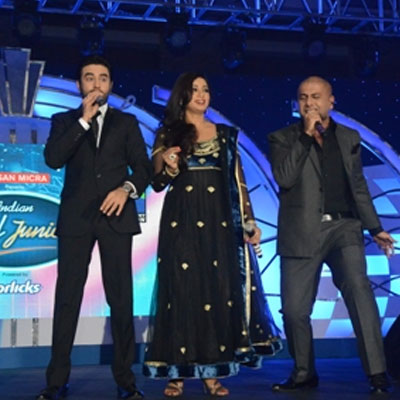
    Sony, on the other hand, is all geared up to strike a chord with family viewers through Indian Idol Junior (IIJ), which will be running for 14 weeks. Title sponsor being Nissan Micra and powered by Horlicks, this new kids singing reality show has Real Fruit, 99acres.com, Kellog’s Oats and Alpenliebe as other associate sponsors. According to the channel, over 6,000 promos spots have been played for IIJ.

    “IIJ has one thing going for it,” says a media observer. “It is commencing at 8:30 pm, half an hour before the rest. This could well work in its favour in terms of it getting viewers tuning into it Whether it will manage to make them sticky will depend on the show’s content.”

    Indian Idol Junior judges Shekhar, Shreya & Vishal will be innovating while dealing with kids on the show

    That is a legacy story, says Sony Entertainment Television (SET) marketing head Gaurav Seth. But what sets IIJ apart from the rest is its brand positioning, he adds. He further elaborates: “It is a brand extension of the very popular Indian Idol format on SET. We believe children have a lot of potential and talent on offer and hence, we wanted to explore this segment and showcase it to pan Indian audiences. We conducted a massive nationwide hunt to search for these kids through our eminent judges and we believe our viewers are going to be stunned with the talent on display through the rounds. Kids have a lot to offer in terms of their innocent, spontaneous and completely endearing actions which makes for compelling television viewing.”

    Sony’s Seth has marketing for Indian Idol Junior covered from all angles

    Launching an extensive campaign revolving around kids, Sony is comprehensively promoting the newest branch of its much loved franchise. Seth explains: “We have executed a huge national communication roll-out to inform TV viewers across India about the show and what to expect. This has been across all major media platforms and has succeeded in building immense recall for the show prior to launch. As it progresses, we believe that the talent on display will continue to attract loyal viewers interested in following the fortunes of their favourite contestants.”

    Sony plans to sustain viewer interest through city concerts, activation and celebrity episodes designed to keep highlighting the high-points in the show throughout the current season. Says Seth: “It has been one of the most popular talent shows on television and we hope to keep the success of its past editions alive with this new and fresher avatar. Indian Idol is a profit maker and the latest offering has received a favorable response from our advertising partners.”

    Zee TV is counting on its all new concept of DID Super Moms derived from one of its most successful properties – Dance India Dance (DID) to do the trick for it. For the first time, mothers, who always have been seen supporting their children in DID, take center-stage in this unique dance reality show focused on moms.

    DID Super Moms team are looking at replicating DID’s success

    Zeel marketing head Akash Chawla asserts: “With DID Super Moms we wanted to capture the emotions of the audiences where a mother is a very important part of our lives and she always played a crucial role in our success. Our communication revolved around the fact that now it’s time for mothers to be in the spot light and we should cheer them and support them helps them to fulfill her dreams.”

    Coming back to JDJ, one of the innovative strategies launched by Colors exclusively for the show is a promotional tie-up with YRF’s upcoming Ranbir Kapoor- Deppika Padukone starrer Yeh Jawani Hai Deewani. “We will be running JDJ promos during YJHD. We have targeted 900+ screens in over 40 cities. While in terms of amplifying the campaign with the help of cable TV, we have planned a 10 Day activity in 130 cities and have bought over 1,000 spots,” adds Rajesh Iyer.

    Movie promotions are what IIJ will be banking on too to rope in celebrities and also heighten viewer engagement. Seth reveals: “There will be movie integrations at a later stage once gala rounds begin. We will also form strategic tie-ups with news channels to promote content and/or activation and concerts.”

    Season six of JDJ is being lauded for its aesthetically beautiful promos directed by Colors’ in-house team led by Monica Nair. JDJ is being heavily promoted on the channel with promos not only seen during the ad breaks but within shows as well. “In order to increase the recall value of the viewers, we’re trying this different mode of in-show promotion wherein we show a JDJ promo even before the advertisement break – between the show and the coming – up of the next segment,” asserts Iyer.
    Creatives

    Colors- Marching Ants

    Sony- Leo Burnett

    Zee TV- Draft FCB Ulka

    Sony’s IIJ also has commendable creatives designed by Leo Burnett, with a strong positioning- Gaanon ka wohi jaadu ab bachchon ki awaaz mein. The promos, directed by the creative team at SET along with Fremantle Media, depicting young kids singing old classics have become quite popular. It has been an immensely clutter breaking campaign on all media especially TV with the spots getting high salience and recall,” says Seth.

  • Clash of the Titans

    Clash of the Titans

    JDJ has targeted the space of ambient marketing as well, with over 500 hoardings across 12 cities. The creatives – both outdoor and print, are spearheaded by creative agency Marching Ants. Iyer says: “Last year we focused on the symbolic shining disco ball as a promotable. The idea this year was to take JDJ outside the environment of the studio to outdoors build scale. You will see that both in our launch promos as well as creatives.”

    Ambient Marketing:

    Colors-500 horadings across 12 cities
    Sony- 4000 horadings across 24 towns
    However, in terms of ambient marketing, Sony is way ahead as it claims to have stationed over 4,000 outdoor advertising units across 24 towns promoting IIJ.

    Seth elaborates: “We have targeted our viewers across their daily touch points from whenever they step out of their houses to when they return. This includes innovative branding and presence on major roads and arteries across 24 key towns of India through large and small format billboards. In addition, we have taken branding inside and outside major transport hubs and vehicles such as trains and buses both intercity and intra-city. We have also targeted malls and shopping centers and even cinemas to ensure all touch points are covered extensively.”

    Sony also has several out-of-box promotional campaigns planned for IIJ. “We will be carrying out an activation titled “Society Idol Junior” across 12 cities in which we will be conducting mini auditions and talent performances judged by local celebrities in various residential societies and colonies. We will then be crowning individual winners from this age group from each of these. In addition we will also be having mega Idol city concerts featuring our final contestants and of course our talented judges,” informs Seth.

    On the online, digital and mobile front, Colors has created a dedicated microsite, web chat and dance tutorials wherein it has tied-up with dancewithmadhuri.com, which is Madhuri Dixit’s online dance academy. There are also plans to create a mobile application for the show.

    “This year we are taking the brand JDJ and our promise to make non-dancer’s dancers to the next level by giving them a taste of true dance with Dance Tutorials & Dance with Madhuri contest,” says Iyer.

    He adds: “Throughout the season every day, we will release one dance tutorial for our viewers. This will be from different dance forms for example seven steps salsa in a week etc. These videos will be released every week on our website, JDJ app and Colors Facebook page for viewers to easily access while on the go. To make this more even more exciting we have tied up with dancewithmadhuri.com. Viewers can now learn practice and upload their videos. Madhuri Dixit will herself select one lucky winner who will get a chance to dance with the Diva herself.”

    Apart from all of the above, Colors has a lot in store for online viewers before the grand premiere- a Live Chat with Madhuri, the video of which will be uploaded on the channel’s official website. A web premiere is also on the lines, wherein 20 minutes of the grand premiere will be uploaded on the channel’s official YouTube channel at 3.00 pm on Saturday. All in all, the online buzz around #Jhalak (the official hash-tag) will be kept alive through live chats, web premiere, contests and the works!

    Sony has also launched several web/digital initiatives for its debutante property. Myindianidoljunior.com is the official website for all news, views and happenings from the show. Seth says: “Exclusive content regarding the contestants, engaging apps etc will only be available there. In addition we launched the IIJ audition app which allowed smartphone users to enter the selection process by auditioning through their mobile device. There are lots of other interesting features on our social media pages and handles as well.”

    Social Media

    Colors- dancewithmadhuri.com
    Sony- Myindianidoljunior.com
    Zee TV: DID Super Moms’mobile App
    Zee TV has also launched several interesting social media initiatives for promoting DID Super Moms. Chawla states: “For Zee, the consumer has always been at the centre of business decisions. The channel has pioneered many digital and mobile initiatives with the intention of interacting with the consumers at every touch point. Committed to presenting out of the box ideas to market its shows, this time around some innovative features have been added in the DID Super Moms mobile app”.

    To amplify viewer engagement, a new feature called Tap on has been introduced. Here a user can hold the phone to capture the songs played during ‘DID Super Moms.’ Every time he does that, some exclusive content that is high on engagement would unlock on his phone giving him additional interesting information about the show. This content can be an exclusive live tutorial, images or some trivia from the show.

    Another feature is a chat room called Check In where everybody watching the show can check in and shares their viewpoints with each other. With the pattern of content consumption becoming more dynamic, the features introduced in the mobile app will keep the viewer engaged throughout the show via his/her mobile phone. This is a more personal way of interaction, engagement and entertainment.

    Talking about a recent online promotional activity, Chawla says: “The Masters of Zee TV’s DID Super Moms, Farah Khan and Marzi Pestonji along with skippers, Raghav, Prince, Jai and Siddhesh kicked off a virtual conversation on Google Hangout with 10 of their lucky fans on 24 May! These lucky winners were selected via a twitter contest where the ‘netizens’ were asked to use #dancingtome and write what dancing meant to them. In this online event, the masters and skippers not only shared interesting trivia’s and anecdotes but also showcased their signature moves to their admirers. For those who didn’t get a spot in the lucky 10, watched the hangout LIVE on Zee TV’s YouTube page.”