Tag: Dhoom 2

  • Fevicol sticks it to the Louvre heist with witty real-time masterstroke

    Fevicol sticks it to the Louvre heist with witty real-time masterstroke

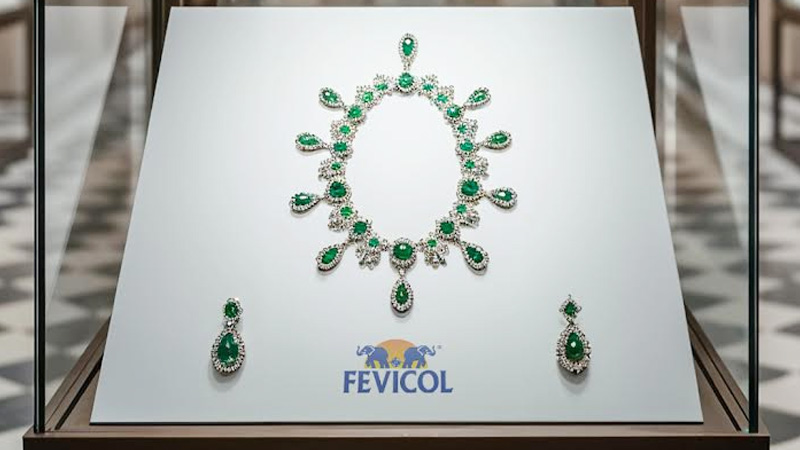
    MUMBAI: Paris lost a jewel, but Fevicol stole the moment! In a stroke of sticky brilliance, Fevicol turned the recent Louvre Museum jewel heist into a marketing masterpiece, proving once again that no global moment escapes its famously “mazboot jod” (strong bond).

    As social media buzzed with Dhoom 2 and Mission Impossible references after the theft, Fevicol, crafted by Schbang, slid smoothly into the conversation. Their cheeky post read, “Ab Dhoom machane ki hamari baari” (Now it’s our turn to make an impact), suggesting that if the display case had been sealed with Fevicol, the heist would’ve been, quite literally, impossible.

    The tongue-in-cheek ad glued together global pop culture and local wit, making audiences chuckle while subtly flexing the brand’s promise of unbreakable bonds. And the numbers spoke louder than any art critic, over 41 million views, 73,000 shares, and 165,000 interactions in just five days.

    Fevicol’s vice president of marketing Rajiv Subramanian, put it best, “Every global moment is a canvas for creativity and we love adding Fevicol’s sticky twist.”

    Senior creative strategist Sanyukta Jamkhedkar revealed that the idea came naturally, “When the team saw the news, someone joked, ‘Fevicol laga diya hota!’ That’s how seamlessly it began.”

    By blending topical humour with desi flair, Fevicol once again proved that it doesn’t just join conversations, it cements them. From furniture to fandoms, if it’s trending, Fevicol’s got it stuck.
     

  • Skype partners YRF & ErosNow to develop custom Bollywood Mojis

    Skype partners YRF & ErosNow to develop custom Bollywood Mojis

    MUMBAI: Skype has partnered with Indian filmed entertainment companies namely Yash Raj Films and Eros International’s over the top (OTT) platform ErosNow to develop custom Bollywood specific mojis for its users.


    Mojis are short clips from movies and TV shows that Skype users can put directly into a Skype chat.


    In addition to the existing worldwide Mojis content, now users can react to Skype messages with clips from Bollywood movies like Dilwale Dulhania Le Jayenge, Ra.One, Dhoom 2, Dhoom 3, Tanu Weds Manu Returns and Devdas; and actors such as Shah Rukh Khan, Amitabh Bachchan, Aishwarya RaiBachchan, Anushka Sharma and Ranveer Singh.


    Yash Raj Films vice president digital Anand Gurani said, “Sometimes when words aren’t enough, a popular film dialogue often fills in. YRF has a rich library of films and content that caters to a wide audience base. The introduction of Skype Mojis is an extremely innovative addition to instant messaging that should get instant traction!”


    Eros Digital CEO Rishika Lulla added, “We are delighted to join hands with Skype and tap their massive consumer base in this ever evolving digital landscape. With Eros’ vast film content library, we are equipped to provide the best in entertainment for Skype users on their smart phones, tablets, laptops or any internet-enabled devices.”


    Skype has also created new emoticons highlighting some of the food, gestures and daily expressions honouring the Indian culture Bollywood stems from.


    “We’re hugely excited about our partnership with Yash Raj Films and Eros International studios to bring more exciting content to our users. Our goal is to provide the best possible messaging experience on Skype, and tapping into India’s extremely active and vibrant film culture is a perfect way to do that,” added Skype corporate vice president Gurdeep Pall.

  • Vidya Balan sheds extra kilos for her next movie

    Vidya Balan sheds extra kilos for her next movie

    Vidya Balan who started her Bollywood career with Parineeta, has been simultaneously lauded and criticised for her full-figure.


    The talented actress is undergoing a transformation for her upcoming film opposite Emraan Hashmi. Directed by Mohit Suri, the Vishesh Films production will see Vidya play a florist working with a posh hotel. The role demanded Vidya to shed a few kilos to fit the mould, and Vidya readily complied.


    The filmmakers did not ask Vidya to lose weight, but she knew that the role demanded so. She is an intelligent artiste who puts in a lot of effort to portray characters convincingly, so she is on a strict diet and exercise regime.


    This has not happened for the first time, many actors have actually shaped up as and when the role demands for. Best example would be Kareena Kapoor for her film Tashan, Aishwarya Rai Bachchan for Dhoom 2 and many more.

    Vidya Balan was last seen opposite Emraan in Ghanchakkar. Prior to that, the two worked together in Milan Luthria’s The Dirty Picture.

  • ‘80% of activity where brands are engaging themselves with films is in associative marketing’ : CEO Navin Shah

    ‘80% of activity where brands are engaging themselves with films is in associative marketing’ : CEO Navin Shah

    This year the Indian film industry has entered the spotlight with release after release that has caused a stir in the media. Amidst all this, there have also been several others contributing to the noise and much like ‘parasites’ seem to be clinging on to the fame! In short, brands are increasingly riding the tide of Bollywood, transforming this activity into a more organised format by investing ‘big monies’ towards it. This trend seems to be gaining ground in the Indian sub-continent with a whole host of advertisers jumping in the ‘brand-wagon’ of blockbusters including Krrish, Lage Raho Munnabhai, Don and the latest addition Dhoom 2.

    Highlighting the potential of this relatively new yet burgeoning industry, P9 Integrated CEO Navin Shah took some time out to speak with Indiantelevision.com’s Renelle Snelleksz.

    Excerpts:

    What are the various options available to advertisers when associating with a film?
    A product placement is only one aspect of what a brand can do with a film. In fact, product placement only forms 10 per cent of all the activity. Actually a lot happens outside the film, in what is popularly called associative marketing or co-promotion, where the film rides on the brand to get promoted and in turn the brand rides on the euphoria of the film.

    Firstly, there is no lag in the time period, like for Salaam-e-Ishq, which is releasing on 24 January, the planning can be done now. Secondly, even if there is a high integration of the creative of the brand footage and the film, it is only outside and is short lived. It is irrespective of the fate of the film, because you are doing an outside association you are assured of your ROI as it is media linked. The association can be amplified via other mediums like television, print, cinema hoardings.

    Therefore, 80 to 90 per cent of activity in which brands are engaging themselves with films is in associative marketing.

    Is it not a big risk that brands are taking with in film associations, especially if the movie doesn’t do well?
    If you look at it from purely a visibility perspective, while it is a risk, when you have product placement x amount of viewership is guaranteed. However, today there are a couple of more avenues where the brand is going to be seen, most importantly is satellite television because sooner or later the movie will be released on TV, not just once but at multiple times so in that case visibility is assured. In addition, in the Indian context, the home video segment is really growing so even the shelf life of the film is largely increased with the sale of DVDs. To that extent, the risk gets slightly amortized but in-film per se is a ‘high risk high return model’ because if it works then the returns can go as high as Rs 20 to 30 crores. Therefore, the marketer is always aware of the fact that he is pumping in on something that can give him a disproportionate return.

    Brand associations are then a viable option and filmmakers stand to gain as it not only provides additional revenue but also helps to market his film?
    In fact this is what most of the advertisers think. But if you look at it from a filmmaker’s perspective he makes a mutli-million rupee film, the brand monies are inconsequential in terms of its overall PNI. In this scheme of things. the brand actually rides on a Rs 15-40 crore project. It’s not only the producer that benefits from this activity. If done right it’s a win-win situation. In fact, for a client it’s a huge opportunity because in India films are such a big passion that if something works, the magic can help reap benefits for years to come.

    A classic example is ICICI and Baghban, that’s a four year old story while the shelf life of that can grow to be about 20 years as satellite TV keeps replaying it over and over again. Thus, it is a disproportionately skewed equation for the brand and if brands realise this they can use it to their advantage.

    How much are brands willing to spend on the medium?
    Worldwide there are brands, including automobile companies, glass manufactures, mobile phone companies that spend almost 20-30 per cent of their marketing budget on product placement, like for instance new versions of the Audi have been launched via films. In India, there are at least 40 brands that spend more than Rs 100 crores in a year.

    This year’s blockbuster Krrish is often sighted as a popular case study, but what happens when there are more than 10 brands incorporated in a film, in that case how does it prove to be a ‘clutter breaking’ approach?
    It’s not about whether there are four brands or 500 brands in a film. If the brand is shown in the right context, then I think there is place for even 100 brands where every brand will stand out in three hours. If you take the example of a Bond film, there are about 20 brands placements and each one gets its own glory so there is no question of ‘clutter’, it’s the context and the way you portray the brand.

    Among several brands in film, will a particular brand have to pay a greater premium for more visibility?
    It’s more about the idea and not about the show time measured in seconds that a brand came in. An example is a product placement I had done for Kodak in Hum Tum where it was as small as 10 seconds in which Saif remembers Rani getting married to Abhishek and the thought freezes as a photograph on which he scribbles “Maybe a perfect Kodak moment?” That in my mind is more than a brand trying to tout his product for 10 minutes in a film. So it’s not about one trying to outdo the other, everybody can be equally good as long as the idea behind the placement is imaginative.

    The biggest role to my mind is that of expectation management

    Who implements the placement in this set up? How does it work?
    It is the director’s prerogative, he is the final decision maker. One can however give inputs and suggestions.

    For an organization like P9 Integrated, what is their hand in the whole process?
    Firstly, we are match makers and secondly the biggest role to my mind is that of ‘expectation management’. The client may often think that by putting a certain amount of money he owns the film, while the filmmaker is any which way making a film on his terms, so P9 would ideally bring the two parties to a common platform and manage their expectations to start with, help the brand in ideating and help the producer in execution as expectation managers.

    Do several media agencies come to the table with different brands to be integrated in a film, or does one agency handle all the placements for a film?
    There have been instances where we have taken up the exclusive rights for the film and so we become a ‘toll gate’ so anybody in the market ranging from a media agency to a client will have to come to us. A case in point is the recently acquired exclusive rights for Salaam-e-Ishq for any co-promotional activity.

    Internationally, what is the scope of the market? What is being done in that space?
    Globally the industry is a three decade old business making it a mature market, today it is growing at a pace of 6-8 per cent, which would be almost 5 per cent of the overall advertising pie used on this medium. Growth will continue until it reaches a critical mass which it has not yet achieved.

    We have done several co-promotional marketing tie-ups in India for Hollywood movies including the work on Superman and Mother Dairy cheese, we had also done MI3 and Gabanna and likewise we are in talks with many films, one of the big films which is slated for December is Happy Feet on which we will be doing something interesting.

    What can we expect in the coming months?
    We have just finished working on an association for Kinetic for Apna Sapna Money Money. We also did Mentos and Jaaneman.

    There are three key films in the pipeline with a huge amount of stuff being done – for Guru, some mind blowing activity on our home production Traffic Signal which Madhur Bhandarkar is directing and of course Salaam-e-Ishq. In addition, we are also working in the regional market with Telegu films.

    What do you identify as being the way head for the industry in India?
    The future for this industry is that brands for a particular target audience and particular style and stature will require experts like us to be their entertainment AOR experts, not only for implementation but to play a complete advisory and consultancy role and give them a blue print of the strategy for the whole year of how entertainment will play a role in their brand.

    Secondly, there is some amount of measurement emerging in terms of effectiveness and impact. Companies like Media e2e are attempting to put in those measures into place.

    Measurement should become an integral part of the any project exercise so we should actually have a directional tool of getting a report card at the end of every activity to determine what worked and what didn’t work.

    Thirdly, we need to bring a lot more discipline into the whole business of branded entertainment. The biggest drawback is the lack of trained talent in this business. Additionally, there is a need to train even the professionals and the practitioners of marketing to talk of a common currency in terms of best practices, category knowledge, trends, ROI, economics and legal aspects of branded entertainment as it is an option that probably allows one to marry their passion with their career.

  • Exim Bank puts Rs 2 billion behind films in FY07, mulls equity in animation companies

    Exim Bank puts Rs 2 billion behind films in FY07, mulls equity in animation companies

    MUMBAI: For the Bollywood industry which is keen to tap the overseas market, there is good news. The Export-Import Bank of India (Exim Bank) is willing to loosen its purse strings and has extended funding to the tune of Rs 2 billion for eight movies during the current fiscal.

    Exim Bank, in fact, has funded the recently released Yash Raj Films’ big ticket movie Dhoom 2. “We have lent Rs 2 billion to the film industry this fiscal,” Exim Bank chairman & managing director TC Venkat Subramaniam tells Indiantelevision.com. “Our total exposure to the sector is Rs 4 billion.”

    Of the other Yash Chopra movies funded by Exim Bank are Veer Zaara, Hum Tum, Bunty Aur Babli and Dum. The Bank has also financed Don (Rs 100 million) and Mangal Pandey – The rising (Rs 80 million). Exim Bank has been funding Hindi movie projects which have a potential to earn foreign currency revenues in the overseas market.

    Animation is another area in the entertainment sector that has drawn the attention of Exim Bank. It is eyeing the option of picking up equity in start-up animation companies. “With their outsourcing models, animation companies in India have the potential to grow. Apart from prividing debt, we may consider equity participation in the start-ups. But for the companies which are listed and are already enjoying high valuations, it doesn’t make sense for us to enter as equity partners because they are already highly valued,” says Subramaniam.

    Exim Bank is in talks with an animation company to provide finance for the expansion needs. With Crest Animation Studios Ltd, it has already agreed to lend $7 million to Crest Animation Studios Ltd.

    The Bank has extended lending to over Rs 4 billion for film projects which have potential to earn foreign exchange. “We are not only financing on production but also on the overseas distribution side.

    Noted film producer Bobby Bedi will approach Exim Bank to discuss his new project Mahabharata for which he plans to invest Rs 3-4 billion. Bedi is considering institutional financing for the epic project which will extend to a talent hunt, TV series, film trilogy, gaming, animation and a theme park. “Bedi is looking at an innovative financial structuring. He is taking the project to financial institutions. He is also going to approach Exim Bank for this,” an industry source says.

    Exim Bank will examine the cash-flow situation of the project as it spans over different formats and will take a longer period to complete.