Tag: Dharmendra

  • ‘Rocky Aur Rani Kii Prem Kahaani’ to premiere on 24 December on COLORS Cineplex

    ‘Rocky Aur Rani Kii Prem Kahaani’ to premiere on 24 December on COLORS Cineplex

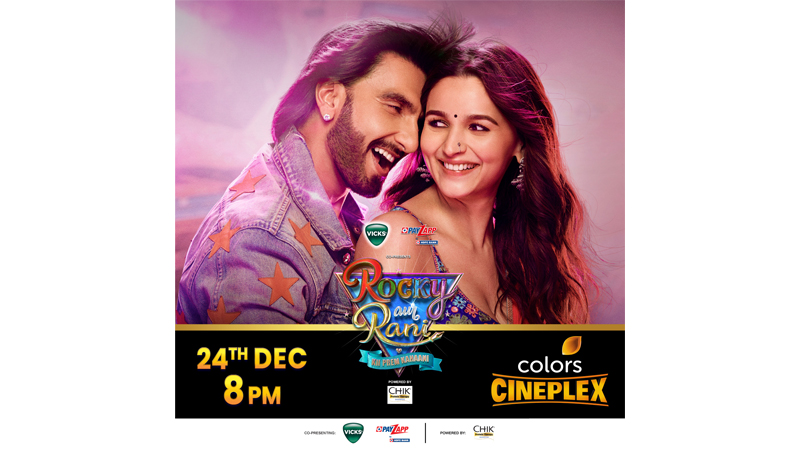
    Mumbai: As we draw curtains to another fantastic year, get ready to celebrate the festivities in a blockbuster way, this Christmas with the world television premiere of ‘Rocky Aur Rani Kii Prem Kahaani’. Solidifying its status as the preferred choice for a diverse selection of films spanning different genres, COLORS Cineplex is all set to present ‘Rocky Aur Rani Kii Prem Kahaani’ on 24 December 2023 at 8:00 pm. ‘Rocky Aur Rani Kii Prem Kahaani’ encapsulates everything that will brighten your day – from the timeless charm of Bollywood music and classic romance to abundant comedy and, of course, a touch of glamour. Upholding its commitment to delivering top-notch entertainment, the addition of this blockbuster movie is poised to be a thrilling inclusion to the channel’s robust lineup of films. Let’s grab some popcorn, find a comfy spot on the couch, and remember, as Rocky wisely puts it, Ab full check out maarne ka time aa gaya hai—kyuki Rocky Randhwa and Rani Chatterjee are coming to spend the Christmas with you!

    Produced by Hiroo Yash Johar, Karan Johar and Apoorva Mehta, the romance dramedy ‘Rocky Aur Rani Kii Prem Kahaani’ is spearheaded by Ranveer Singh, Alia Bhatt, Dharmendra, Jaya Bachchan, Shabana Azmi alongside Tota Roy Chowdhury, Churni Ganguly, Aamir Bashir, and Kshitee Jog. Directed by Karan Johar, the blockbuster is a modern love tale, underpinned by an old-word love story. It traces the journey of Rocky, a spirited Punjabi, and Rani, a sharp Bengali journalist, who fall in love and decide to live with each other’s families determined to prove that they’re a perfect match. Peppered with laughter and thought-provoking moments, the Karan Johar directorial delves into the complexities of love, family, and the daring choice to defy generations of tradition for the sake of love.

    “We are delighted to usher in the festive season with the World Television Premiere of ‘Rocky Aur Rani Kii Prem Kahaani,’” said Viacom18 business head – Hindi movies cluster Rohan Lavsi. “At COLORS Cineplex, we have always taken pride in being the go-to destination for viewers seeking non-stop entertainment, especially during festive moments that bring families together. This Christmas, we are overjoyed to introduce another enduring love story into our collection, reinforcing our steadfast commitment to delivering best of entertaining content. ‘Rocky Aur Rani Kii Prem Kahaani’ is a heartwarming addition to our robust lineup of films, promising viewers a delightful and joyous experience. We look forward to riding the festive wave of love and laughter, as we invite our audience to join us on the 24th of December at 8:00 pm for an extraordinary celebration of cinema and the spirit of Christmas.”

    Sharing his thoughts on the world television premiere of ‘Rocky Aur Rani Kii Prem Kahaani’ Karan Johar said, “Rocky Aur Rani Kii Prem Kahaani marked my return to the cinemas after seven years and I was taken aback by all the unanimous love it received in theatres. It proved that this era of love is all about ‘love hain toh sab hain’. Its world television premiere on COLORS Cineplex brings back the joy of collaborating with incredible stars – Dharmendra ji, Jaya Bachchan ji, Shabana Azmi ji, Ranveer Singh and Alia Bhatt. My treasured dream team of Pritam Da and Amitabh Bhattacharya created wholesome tracks for this album. Get ready to experience all of it once again and cozy up with your squad with some popcorn! I invite the viewers to take to the steering wheel of entertainment with their family and friends doing the backseat driving this Christmas.”

    Ranveer Singh said, “The film’s reception during its theatrical release was overwhelming, and now, as it reaches the homes of millions with the world television premiere on COLORS Cineplex, I am quite thrilled as viewers across the nation will embark on this unforgettable rollercoaster ride of emotions and romance. This film holds a special place in my heart, as it exalts the strength of love and its ability to bind souls together, weaving a tale of an unbreakable familial bond. May this Christmas be a tapestry of abundant warmth, happiness, and the enchanting magic of ‘Rocky aur Rani Kii Prem Kahaani’ brings to all hearts.”

    Alia Bhatt said, “Christmas is one of my favourite times of the year and I couldn’t think of a better way to celebrate this with all my fans. The season is all about joy, love, and togetherness and that’s what our film ‘Rocky Aur Rani Kii Prem Kahaani’ is all about. This movie is very close to my heart and as it makes its world TV premiere on COLORS Cineplex – I hope it adds an extra sparkle and loads of warmth to your celebrations!”

    Stay tuned to COLORS Cineplex for the world television premiere of ‘Rocky Aur Rani Kii Prem Kahaani’ on Sunday, 24 December at 8:00 pm.

  • Surrogate liquor advertising: Time for change?

    Surrogate liquor advertising: Time for change?

    MUMBAI: Remember the famous ‘‘Oh la la la la…Le O’’ jingle by Kingfisher for its calendar, the “No.1 Yaari” catchphrase by McDowell’s for its club soda or the “Men will be men,” a 19-year old prominent tagline for Seagram’s Imperial Blue CDs?

    What do all of these brands have in common? A lot, and nothing!

    While all these brands are prominently into selling liquor and spirits, they position and market themselves for the products/services that contribute insignificantly to their sales.

    And, why is that you ask?

    Well, since there is a ban on advertising alcohol, tobacco and cigarettes in India, liquor companies leverage the power of surrogate advertising to convey their brand identity/message.

    First things first! Let’s understand surrogate advertising to begin with and its prominence in the Indian advertising industry. Surrogate advertising is a form of advertising which is used to promote banned products, such as cigarettes and alcohol, in the guise of another product.

    India has held a strong stance on the ban of advertising tobacco and liquor products on all media platforms since 1995. The ban was enforced after extensive research from the Indian ministry of health found that cigarettes and liquor have adverse effect on a person’s health.

    However, the increase in population saw the sales of tobacco and liquor increase at an exponential rate. Therefore, companies were forced to seek alternative means of advertising, which lead to the eventual creation of surrogate advertising in India, and that is why we see major liquor brands promoting and advertising themselves for their club sodas, mineral water, CDs or playing cards to hammer the brand name into the heads of consumers.

    public://63yqljiy.jpgBagpiper was one of the earliest brands that took to surrogate advertising. The brand introduced the slogan of “Khoob jamega rang jab mil bhaitenge teen yaar. Aap, main aur Bagpiper” in 1993 and got the-then famous Bollywood celebrities such as Dharmendra, Jackie Shroff and others to feature in its ‘soda’ campaigns.

    Today, India is the third largest liquor market in the world, with an overall retail market size of US$ 35 billion per annum. The annual consumption rate has been increasing steadily over the past six years, and stands at 8.9 per cent as of 2017.

    But how has the marketing and advertising evolved for such brands with time?

    Earlier, marketing for these brands involved largely print and television where they communicated a lifestyle and an attitude but consumers today have multiple personalities, and are more evolved, resulting in brands using digital and social media platforms in a big way to communicate and be in tune with the audience.

     “Today, it’s the age of everyday heroes rather than mega celebrities and alcoholic brands and tobacco brands are increasingly leveraging this trend,” says WATConsult AVP – strategy and account planning Sabiha Khan. “Additionally, sponsorship of events was used earlier to reach the mass audience, but now brands are directing energies towards acquiring audiences via targeted messages online.”

    United Breweries Limited (UBL), which manufactures India’s most loved Kingfisher beer, controls 60 per cent of the total manufacturing capacity for beer in India and is the market leader with the national market share in excess of 50 per cent; which explains the company’s major investments and association with various events, sports and other entities.

    Marketing head Samar Singh Sheikhawat affirms that the marketing spends in the industry for spirits and beer have gone up because all players are leveraging major platforms to connect with the consumer but television still works best since it creates a better chance of brand visibility and salience. UBL gets its biggest revenue from sponsorships and associations with various events and gigs and spends typically about six to seven per cent of its net revenues on marketing in a year.

    While surrogate advertising may work for leading brands that have been in the Indian market for years and have big bucks to spend on advertising, sponsoring events, fashion tours and sports, it is the new entrants and smaller players who run the risk of missing out on brand communication and visibility.

    “It is a challenge for the new entrants and the agencies because, as a new brand, they first have to create brand awareness, inform about the product details, flavour, taste and brand ethos and spirit which they want to convey to the consumers. A new player will not be able to communicate well with surrogate and takes years to build the brand image — first through word of mouth promotion,” adds iProspect India branch head – south Krishna Kumar Revanur.

    Surrogacy has come around in a big way to support promotion of liquor brands but it has its own diluted drawback. You would not want to market something as prominent as Blender’s Pride just for its fashion tour or Royal Challenge as merely bottled water. The core challenge for agencies while creating a campaign for such brands lies in not damaging the brand image and managing to promote it to the right audience.

    Dentsu Webchutney creative strategist — general management Pranav Sabhaney notes, “No creative person ever wants to be told that this is the boundary that you have to work around but it is an interesting challenge for the creatives as they know they have to work with restrictions yet find the best communication possible. The constraint might irritate creatives at some point as spirits is an interesting sector to work on but they don’t have an opportunity to do anything.”

    Giving a brand’s point of view, Sheikhawat adds, “It is complex and challenging since we are not allowed to display the product, mention the word liquor or beer or show consumption in the campaign, and that is the reason why agencies that work on such products have been agencies that work with those brands for the last 20-25 years. It’s a very complex, hard task and takes a lot of money to build brand imagery in India as opposed to the other parts of the world.”

    Is there a need for the rules to be more accommodating and liberal so that brands can promote and advertise the products in a better way?

    With an opinion that adults should be given the freedom to be adults and to make their own choices, Publicis Worldwide managing director and chief creative officer Bobby Pawar says: “The fake rules and regulations by the government for the liquor industry are not great, and while I do understand that when you advertise these products freely, underage people will get to see it but the government needs to find a way around it. It is sheer hypocrisy of the government which states that you can sell liquor and build your brand but you can’t advertise it.”

    Adding on to Pawar’s point, Krishna Kumar mentions: “If the government allows the product to be sold in the country but not advertise it, that means the government is following dual standards.

    United Breweries spends 20 per cent of its marketing budget on television and a mere 10 per cent on digital but that is changing, and the company now has a separate team assigned for digital along with a separate digital agency on board. The company leverages all social media and digital platforms while also creating user-generated content. “The audience today is not interested in brand advertising or brand stories but are only interested in stories that suit their line of thinking, and are looking for content and narratives that involve them,” concludes Sheikhawat.

    Whether the ban on displaying alcoholic products will ever be lifted or not is a story for another day but brands and agencies do know how to work around the restrictions and create some of the most memorable ads that click with the audience right away.

    McDowell’s No.1 soda TVC:


  • Dharmendra releases Shemaroo’s ‘Dastaan-E-Rafi’ docu DVD

    MUMBAI: Shemaroo Entertainment has released Dastaan-E-Rafi, an award winning documentary film based on Mohd. Rafi’s life on DVD to mark his 37th death anniversary. It was launched by the legendary actor Dharmendra who is a self-confessed fan of Mohd. Rafi and for whom Rafi sang several popular songs.

    Recalling his struggling days, Dharmendra shared that he always wished for Rafi Sahab to sing for him. His happiness knew no bounds the day Rafi Sahab sang his first song for him in “Shola Aur Shabnam”. He actually wanted to shout from rooftops telling the world that Rafi Sahab sang for him. He always found him to be a saintly and a simple man. In fact, when other singers started to give playback for him, Dharmendra used to become very uncomfortable and took a long time to adjust. Such was his unconditional love for Rafi Sahab.

    Dastaan-E-Rafi was subsequently presented to Anandji (of Kalyanji Anandji fame), Pyarelal (of Laxmikant Pyarelal fame), singers Anuradha Paudwal and Usha Mangeshkar at their respective residences.

    Dastaan-E-Rafi, directed by Acharya and Vinay Patel, features Bollywood personas who have worked closely with Rafi Sahab including Shammi Kapoor, Manoj Kumar, Rishi Kapoor, Randhir Kapoor, Jeetendra, Khayyam, Pyarelal, Shamshad Begum, Ghulam Ali, Pandit Jasraj, Bappi Lahiri, Uttam Singh, Amit Kumar, and many more. His brother and children also share their memories about the great man. Prakask Karlekar is the cinematographer of the film.

    The documentary is an introspective attempt to discover the real human being behind the glory of legendary singer Mohd. Rafi as industry celebs and his dear ones recall his life journey. The film traces his beginnings, right from his birth in Amritsar to his entry in Bombay; his days of struggle to his achieving stardom; the various ups and downs in his life including differences with Lata Mangeshkar over royalty issue; his being sidelined after the emergence of Kishore Kumar as a playback singer post 1969 to his powerful comeback in the mid-1970s and then his untimely death in 1980. Even decades after his death, Mohd. Rafi is fondly loved and remembered by fans all over the world and that proves his genius and greatness.

  • ‘Ghayal Once Again:’ Much mellowed

    ‘Ghayal Once Again:’ Much mellowed

    Ghayal Once Again can be termed as a true sequel as the film connects with Sunny Deol starrer Ghayalreleased in 1990. In that era, a suppressed common man’s outburst against a mighty criminal (Amrish Puri inGhayal) who has the politicians and the system at his command was palatable.

    Sunny is back after serving 14 years in prison. He gets flashbacks of past which Soha Ali Khan, a doctor keeps in control with instant medication. Sunny has now turned a vigilante, runs a newspaper called Satyakam, which publishes real news sans sensationalism. He has a loyal team around him, which shares his spirit and purpose. Sunny is now a much admired person with a great following among youth.

    Om Puri is now a retired cop who has become an RTI activist. Puri has come across some material, which can virtually destroy the tycoon, Narendra Jha, who accumulates wealth through illegal means. Jha has the local home minister and, through him, the entire police force in his pocket. Puri is called for a meeting where an argument ensues and Jha’s drug addict and violent son, Abhilash Kumar, shoots down Puri. This is made to look like a road accident. 

    Unknown to Jha and company the whole shooting incident has been shot on a cell phone of a bunch of students out to take pictures and videos of some rare birds. But, the guardians of the kids know how powerful Jha is and handover the video to him.

    However, one of the girls from this group of four, thought it prudent to make a copy of the video, which they plan to handover to Sunny. But, it seems Jha has the entire city under video surveillance as well as the phones taped of anybody who can harm him. As Sunny and the students decide to meet up, Jha lets loose his foreign mercenaries, no less, on the kids. There is a long chase through the city roads in cars and later through a shopping mall. All beamed live in Jha’s room. But, Sunny reaches in time and saves kid. 

    A lot follows, the students are now kidnapped and kept under vigil at Jha’s fortress like mansion surrounded by Jha’s own army as well as the entire police force of the city. Now it is for Sunny to get them out. And, as Sunny is wont to do, he becomes a one man army, as usual, preferring hand to hand fight against multiple guns.

    The problem with Ghayal Once Again is that it follows the same theme that worked in 1990 when a lot of anti-establish feelings prevailed. Also, Sunny was the leading action hero around as his contemporaries, Anil Kapoor and Jackie Shroff, did varied roles. Now, just about everybody does action films thanks to technology. The story is old-fashioned about one powerful man calling shots in a major metropolis like Mumbai; it does not convince anymore. 

    From the moment film begins till the chase sequence the film holds only to become predictable thereafter. The action scenes become repetitive. Cinematography by veteran Ravi Yadav is competent. Editing wise, the film needed some sharp trimming. Music, having no scope, does not quite work. Performance wise, the Sunny – Soha pair is odd despite their love being silent. Sunny is his usual self doing Ghayal again while Soha has little scope. While the students all do well, Ramesh Deo, Manoj Joshi, Tisca Chopra, and Sachin Khedekar are okay. The villain duo, Jha and Abhilash, is effective. 

    Ghayal Once Again hasn’t had an encouraging opening. It caters to single screen masses mainly of which not many are left.

    Producer: Dharmendra
    Director: Sunny Deol
    Cast: Sunny Deol, Soha Ali Khan, Om Puri, narednra Jha, Manoj Joshi, Tisca Chopra, Sachin Khedekar, Nadira Babbar, Abhilash Kumar

    ‘Sanam Teri Kasam:’ Of unseen villain

    An early cancer as a part of a love story was Dil Ek Mandir, a Meena Kumari, Rajendra Kumar, Rajkumar film. There it was a love triangle. However, the Hollywood hit, Love Story (1970), based on Erich Segal’s novel of the same name, set a trend for star-crossed romances where one of the protagonists is afflicted by cancer. Immediately thereafter in 1971, there followed a film with cancer as the main theme in Hrishikesh Mukherjee’sAnand, though this was not a love story or a triangle. Love Story finally inspired Rajshri’s musical hit, Ankhiyon Ke Jharokhon Se in 1978.

    Hrishikesh Mukherjee’s other foray in this theme, Mili, failed despite a memorable musical score and the reigning stars of the day, Amitabh Bachchan and Jaya Bachchan, in the cast. There may have been a few more films on the theme but none made a mark. 

    In Sanam Teri Kasam, Harshwardhan Rane inherits a flat from one Julie aunty in a building society occupied by creatures from era gone by. No explanation is offered for the deceased aunt’s largesse. Rane is projected as some sort of a stud for he has a new woman in his bed each night and they are Page 3 girls. How, why? 

    Rane is like a 1950s romantic hero. He is never seen making a living. All he does is guzzle alcohol, chase romance and is busy suppressing his past tragedies. He has spent eight years in jail for being accused of a murder at the age of 14. Cinematic liberty allows you to consign a 14 year old to eight years in prison. 

    Luckily for him, there lives a Tamil-Brahmin family in his society, the head of which also lives in 1950 or probably before that. The family has two daughters of which the older one, Mawra Hocane (Mawra Hussain originally) looks like what we call a geek today. She is bespectacled, with a figure like a walking stick, and her father adds to the unpalatable look by rubbing incense stick ash on her forehead. She works as a librarian. 

    To cut a story short, Mawra’s younger sister can’t marry till Mawra does, but there are no takers for her. She promises her sister that she will clear her way and visits Rane at 4 am in the morning to seek his help to get her a makeover from one of his girls who figures as a top rated makeover artist. What follows is a scandal. Mawra is branded for being in a debauch’s house at an unearthly hour. She is disowned by her family! 

    Rane now becomes her caretaker.

    The rest of the film is like a silent movie since none of the characters say what they want to say but say everything else. It is hackneyed to say the list. Mawra is supposed to be a very intelligent girl, well read, but can’t read Rane’s feelings for her. Rane has been with numerous girls but can’t express his love for Hocane. He even works on getting her married to an IIT-IIM guy because that was what her family wanted! 

    Finally, when they realize they are in love, cancer plays the villain. Mawra has limited time to live. Hence, in what has become traditional now, Rane marries her before she dies.

    The script of the film is like a remix thing as is done with music albums. It borrows from a number of films from the past. This is not limited to just the script; direction also follows the beaten path, hugely clichéd. For this film with newcomers with little of known supporting cast, its 155 minute run is not justified and, what is more, makes it feel like never-ending. Dialogue is mundane except on two occasions. With limited locations, the cinematography is average. The one positive with the film is the musical score by Himesh Reshammiya if it can help at all. Editing is non-existent. 

    While Mawra is a perpetual wronged crybaby in the film, Rane refuses to either cry or laugh; he prefers to carry one single expression throughout. Rest in the cast are incidental.

    Sanam Teri Kasam is an insipid movie with scant appeal.

    Producer: Deepak Mukut
    Directors: Radhika Rao, Vinay Sapru
    Cast: Harshvardhan Rane, Mawra Hocane, Murli Sharma, Vijay Raaz, Sudesh Berry

  • ‘Ghayal Once Again:’ Much mellowed

    ‘Ghayal Once Again:’ Much mellowed

    Ghayal Once Again can be termed as a true sequel as the film connects with Sunny Deol starrer Ghayalreleased in 1990. In that era, a suppressed common man’s outburst against a mighty criminal (Amrish Puri inGhayal) who has the politicians and the system at his command was palatable.

    Sunny is back after serving 14 years in prison. He gets flashbacks of past which Soha Ali Khan, a doctor keeps in control with instant medication. Sunny has now turned a vigilante, runs a newspaper called Satyakam, which publishes real news sans sensationalism. He has a loyal team around him, which shares his spirit and purpose. Sunny is now a much admired person with a great following among youth.

    Om Puri is now a retired cop who has become an RTI activist. Puri has come across some material, which can virtually destroy the tycoon, Narendra Jha, who accumulates wealth through illegal means. Jha has the local home minister and, through him, the entire police force in his pocket. Puri is called for a meeting where an argument ensues and Jha’s drug addict and violent son, Abhilash Kumar, shoots down Puri. This is made to look like a road accident. 

    Unknown to Jha and company the whole shooting incident has been shot on a cell phone of a bunch of students out to take pictures and videos of some rare birds. But, the guardians of the kids know how powerful Jha is and handover the video to him.

    However, one of the girls from this group of four, thought it prudent to make a copy of the video, which they plan to handover to Sunny. But, it seems Jha has the entire city under video surveillance as well as the phones taped of anybody who can harm him. As Sunny and the students decide to meet up, Jha lets loose his foreign mercenaries, no less, on the kids. There is a long chase through the city roads in cars and later through a shopping mall. All beamed live in Jha’s room. But, Sunny reaches in time and saves kid. 

    A lot follows, the students are now kidnapped and kept under vigil at Jha’s fortress like mansion surrounded by Jha’s own army as well as the entire police force of the city. Now it is for Sunny to get them out. And, as Sunny is wont to do, he becomes a one man army, as usual, preferring hand to hand fight against multiple guns.

    The problem with Ghayal Once Again is that it follows the same theme that worked in 1990 when a lot of anti-establish feelings prevailed. Also, Sunny was the leading action hero around as his contemporaries, Anil Kapoor and Jackie Shroff, did varied roles. Now, just about everybody does action films thanks to technology. The story is old-fashioned about one powerful man calling shots in a major metropolis like Mumbai; it does not convince anymore. 

    From the moment film begins till the chase sequence the film holds only to become predictable thereafter. The action scenes become repetitive. Cinematography by veteran Ravi Yadav is competent. Editing wise, the film needed some sharp trimming. Music, having no scope, does not quite work. Performance wise, the Sunny – Soha pair is odd despite their love being silent. Sunny is his usual self doing Ghayal again while Soha has little scope. While the students all do well, Ramesh Deo, Manoj Joshi, Tisca Chopra, and Sachin Khedekar are okay. The villain duo, Jha and Abhilash, is effective. 

    Ghayal Once Again hasn’t had an encouraging opening. It caters to single screen masses mainly of which not many are left.

    Producer: Dharmendra
    Director: Sunny Deol
    Cast: Sunny Deol, Soha Ali Khan, Om Puri, narednra Jha, Manoj Joshi, Tisca Chopra, Sachin Khedekar, Nadira Babbar, Abhilash Kumar

    ‘Sanam Teri Kasam:’ Of unseen villain

    An early cancer as a part of a love story was Dil Ek Mandir, a Meena Kumari, Rajendra Kumar, Rajkumar film. There it was a love triangle. However, the Hollywood hit, Love Story (1970), based on Erich Segal’s novel of the same name, set a trend for star-crossed romances where one of the protagonists is afflicted by cancer. Immediately thereafter in 1971, there followed a film with cancer as the main theme in Hrishikesh Mukherjee’sAnand, though this was not a love story or a triangle. Love Story finally inspired Rajshri’s musical hit, Ankhiyon Ke Jharokhon Se in 1978.

    Hrishikesh Mukherjee’s other foray in this theme, Mili, failed despite a memorable musical score and the reigning stars of the day, Amitabh Bachchan and Jaya Bachchan, in the cast. There may have been a few more films on the theme but none made a mark. 

    In Sanam Teri Kasam, Harshwardhan Rane inherits a flat from one Julie aunty in a building society occupied by creatures from era gone by. No explanation is offered for the deceased aunt’s largesse. Rane is projected as some sort of a stud for he has a new woman in his bed each night and they are Page 3 girls. How, why? 

    Rane is like a 1950s romantic hero. He is never seen making a living. All he does is guzzle alcohol, chase romance and is busy suppressing his past tragedies. He has spent eight years in jail for being accused of a murder at the age of 14. Cinematic liberty allows you to consign a 14 year old to eight years in prison. 

    Luckily for him, there lives a Tamil-Brahmin family in his society, the head of which also lives in 1950 or probably before that. The family has two daughters of which the older one, Mawra Hocane (Mawra Hussain originally) looks like what we call a geek today. She is bespectacled, with a figure like a walking stick, and her father adds to the unpalatable look by rubbing incense stick ash on her forehead. She works as a librarian. 

    To cut a story short, Mawra’s younger sister can’t marry till Mawra does, but there are no takers for her. She promises her sister that she will clear her way and visits Rane at 4 am in the morning to seek his help to get her a makeover from one of his girls who figures as a top rated makeover artist. What follows is a scandal. Mawra is branded for being in a debauch’s house at an unearthly hour. She is disowned by her family! 

    Rane now becomes her caretaker.

    The rest of the film is like a silent movie since none of the characters say what they want to say but say everything else. It is hackneyed to say the list. Mawra is supposed to be a very intelligent girl, well read, but can’t read Rane’s feelings for her. Rane has been with numerous girls but can’t express his love for Hocane. He even works on getting her married to an IIT-IIM guy because that was what her family wanted! 

    Finally, when they realize they are in love, cancer plays the villain. Mawra has limited time to live. Hence, in what has become traditional now, Rane marries her before she dies.

    The script of the film is like a remix thing as is done with music albums. It borrows from a number of films from the past. This is not limited to just the script; direction also follows the beaten path, hugely clichéd. For this film with newcomers with little of known supporting cast, its 155 minute run is not justified and, what is more, makes it feel like never-ending. Dialogue is mundane except on two occasions. With limited locations, the cinematography is average. The one positive with the film is the musical score by Himesh Reshammiya if it can help at all. Editing is non-existent. 

    While Mawra is a perpetual wronged crybaby in the film, Rane refuses to either cry or laugh; he prefers to carry one single expression throughout. Rest in the cast are incidental.

    Sanam Teri Kasam is an insipid movie with scant appeal.

    Producer: Deepak Mukut
    Directors: Radhika Rao, Vinay Sapru
    Cast: Harshvardhan Rane, Mawra Hocane, Murli Sharma, Vijay Raaz, Sudesh Berry

  • ‘Pro-Wrestling League will do for wrestling what IPL did for cricket:’ Anurag Thakur

    ‘Pro-Wrestling League will do for wrestling what IPL did for cricket:’ Anurag Thakur

    NEW DELHI: The Indian Premier League (IPL) changed the dynamics of how the game of cricket was perceived and played, not to forget the dollops of entertainment quotient it added.

    Amongst the various sports gaining prominence in India, is the game of wrestling. The maiden Pro-Wrestling League’s (PWL) second semi-final match at the Indira Gandhi Stadium, New Delhi, saw Haryana Hammers fight against CDR Punjab Royals. Haryana Hammers makes an entry to the finals, which commenced today with Revanta’s Mumbai Garuda.

    The Board of Cricket Control in India (BCCI) Secretary and Member of Parliament Anurag Thakur, who was present at the semi-final tie, lauded the wrestlers taking part in the inaugural Pro Wrestling League (PWL). He said, “Like the Indian Premier League changed the cricket scenario in India, I am sure Pro Wrestling League will also do the same for wrestling in India. The participating wrestlers have shown such competitive spirit, kudos to them. The atmosphere at the stadium can be compared to the India vs Pakistan tie in cricket.”

    What’s more, Bollywood stars have always been closely connected with different kinds of sport in India, be it through making films on sports or having a shareholding in a team.

    Expectedly, the PWL has got the glamour quotient in addition to providing Indian wrestlers with a great platform to showcase their talent. From CDR Punjab Royals team owner Dharmendra to actress Sonali Bendre, the star power was also strong.

    Bendre, who supports her husband Goldie Behl’s team – Haryana Hammers, said, “I had a great time watching the semi-final match. My whole family is following the league closely, right from my son to the elders. I truly feel that Pro Wrestling League based on the spirit of ‘Khel Fauladi’ is a great platform for wrestlers to show their prowess.”

    The wrestling area had almost 5,000 fans to see the second semi-final.

  • Zee Classic to air multi-star period drama ‘Raaj Tilak’

    Zee Classic to air multi-star period drama ‘Raaj Tilak’

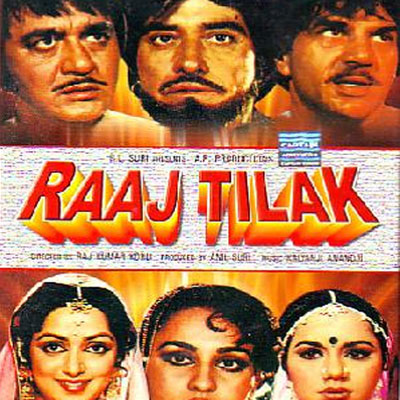
    MUMBAI: Zee Classic, India’s only classic Hindi movie channel, adhering to its core proposition ‘Woh Zamaana Kare Deewana’ will present Rajkumar Kohli’s Raaj Tilak for the first time on Sunday, July 12 at 9 PM. Raaj Tilak, an action period drama, boasts of an incredible starcast including Dharmendra, Sunil Dutt, Raaj Kumar, Kamal Hassan, Hema Malini, Ranjeeta Kaur, Reena Roy, Yogeeta Bali and Sarika.


    Raaj Tilak revolves around a King who has many enemies including his own trusted men: Bhavani Singh (Ajit) and Ranjeet (Madan Puri). The lust for power makes Bhavani Singh do the unthinkable. He ends up killing the King and is the catalyst in abducting the only legal heir to the throne. The devastated queen is consoled by her rakhi brother Arjun Singh (Pran) who offers his son to her, but falls prey to the evil plans of Bhavani Singh who switches his own child Shamsher Singh (grown up- Raj Kiran) with Arjun Singh’s newborn Jai Singh (grown up- Sunil Dutt).


    Years later, the King’s chief Samadh Khan (Raaj Kumar) who had been falsely accused as a traitor and exiled from the land returns to amend everything that was wrong. With the help of two warriors Jai Singh (Sunil Dutt) and Zohravar Singh (Dharmendra) and a gypsy Suraj (Kamal Hassan), Samadh Khan is on a mission to find the true heir.


    Will the real prince surface to set things right or will he continue to live the life of a gypsy without knowing his true legacy?

  • ‘ABCD 2’ continues to rise at the BO

    ‘ABCD 2’ continues to rise at the BO

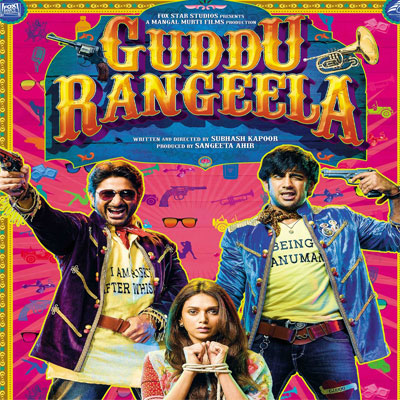
    MUMBAI: Guddu Rangeela, coming from the same director of Jolly LLB, Subhash Kapoor, which was much appreciated and did well at the box office, proves to be a dud. Rather than a solid script, the film looked more like an attempt to cash in on the goodwill of the past film using Arshad Warsi again as a talisman.


    Warsi may be a good performer but what use is a performer without a well-defined role or a script that holds? The film remained in the Rs one crore plus range through its first weekend to collect Rs 5.1 crore in its first three days.


    Second Hand Husband, counting totally on Dharmendra to impact its box office, fails badly. With rest of the cast being inconsequential and the film having nothing in the name of a cogent story or script, the film just does not work. The movie hardly makes an impact at the box office remaining far short of a crore mark on any of its weekend days. The movie has collected Rs 1.85 crore for its opening three days.


    BezubanIshq struggles through a legal hurdle and change of distributor before it finally sees the arc light. The film, budgeted at Rs 5 crore initially, finally reaches the cinemas at a cost of Rs 18 crore to face a disastrous fate. 


    Miss Tanakpur Haazir Ho fares poorly. Catering to no particular set of audience, the film manages to collect a poor Rs 1.4 crore in its first week.


    ABCD 2 holds strongly in its second week backed by youth audience and finding favour with the elite multiplex crowd. The film has added a healthy Rs 24.9 crore taking its two week total to Rs 96.05 crore.


    Hamari Adhuri Kahani drops to a meager Rs 1.35 crore in its third week to take its three week tally to Rs 32.3 crore.


    Dil Dhadakne Do adds Rs 1.45 crore in its fourth week taking its four week total to Rs 75.1 crore.


    Tanu Weds Manu continues to regale the audience in its sixth week. The film collects Rs 1.8 crore to take its six week total to Rs 151.42 crore. 

  • ‘Guddu Rangeela’…Faded patches

    ‘Guddu Rangeela’…Faded patches

    MUMBAI: Subhash Kapoor’s last film was Jolly LLB, which was enjoyable and hence quite a success. Being a journalist operating in North India before he got down to making films, with his latest, Guddu Rangeela, he tries to cash in on his experience. He blends the subject of Khap panchayats with comedy. But the theme of Khap soon overshadows comedy as the film progresses. The problem is that while Jolly LLB had identification for many and where Arshad Warsi, the protagonist, was supported by two great performers in Saurabh Shukla and Boman Irani, here Arshad is left to fend for himself. Khap is not a matter the general public either identifies with or cares for.


    Arshad and Amit Sadh are petty conmen. They earn their bread performing modern bhajans like ‘Mata ka email…’ at people’s houses. On the side, they add butter to their bread by acting as informers for robbers, giving them information about the financial standing of big shots at whose homes they perform. However, Arshad’s need for money is greater than his main client pays him and he sells the same information to three gangs of robbers. He gets into trouble with all of them.


    The money Arshad needs is for a court battle he is fighting against Ronit Roy, a Khap leader and a local MLA. It turns out that Arshad had married a girl, Shriswara, from a Khap based community and both were shot at by Ronit. While Arshad survived, his Shriswara was assumed to be dead. Arshad had an axe to grind with Ronit and the Khap. What is strange is that, while Ronit advocates the cause of Khap he has himself married outside his community!


    Guddu Rangeela gets multi-layered here on in. The duo of Arshad and Amit are talked into kidnapping Aditi Rao Hyderi. It turns out that Aditi is the sister in law of Ronit and she also wants to get even with Ronit for killing his wife and Aditi’s sister.


    Halfway through, the film turns into a revenge drama. While Arshad, Amit and Aditi use wit and wisdom, Ronit counts on his might. After all, he is known as the pehelwan by people. And, sadly, things become predictable from this point. Both sides concerned keep challenging each other while playing cat and mouse games. But, villains always have an ace hidden up their sleeve. Shriswara is reincarnated; she did not die of her bullet wound after all and was spared death by Ronit. Arshad has to come out and face Ronit if he wants his wife back!


    The climax takes place in a stone quarry, the kind seen very often before where, in the final bout of hand to hand fight, Arshad takes down the mighty Ronit.


    The film tries to cram in many angles failing to stick to one agenda for its hero. Direction lacks a purpose. Turning Arshad into an angry man from petty conman using his wit to survive does not work. It does not help as Arshad carries the same look he did in his earlier films. Amit is okay as Arshad’s sidekick. Ronit Roy wears the same stern look throughout like a mask. Rajendra Kala is good as usual. Shriswara has little to do. Aditi is the only one who comes up with a decent performance. The film has a popular number in ‘Mata ka email…’ while ‘Sooyian…’ is appealing.


    Guddu Rangeela brings no relief for cinema chains starved of strong content.


    Producer: Sangeeta Ahir.

    Director: Subhash Kapoor.

    Cast: Arshad Warsi, Amit Sadh, Aditi Rao Hyderi, Ronit Roy, Shriswara, Amit Sial, Rajendra Kala.


    ‘Second Hand Husband’…Third rate idea!


    Second Hand Husband has ‘enthusiastic new producers’ written all over it. Since the inception of filmmaking, there have always been people drawn by the glamour of the films and wanting to belong. The film would be called a half-baked idea even in the last century. The film’s only USP is that it stars Dharmendra who still enjoys a fair amount of goodwill and, hence, some following. 


    Dharmendra owns a four star-hotel, is married to Rati Agnihotri but is childless, and is a compulsive flirt besides being a drunkard. Gippy Grewal is the manager at Dharmendra’s hotel and, often, his drinking partner. Gippy is a divorcee and is now planning to marry Tina Ahuja. However, the impediment is a court ruling according to which he is supposed to pay an alimony of rupees 30,000 to his ex-wife, Geeta Basra, out of his monthly salary of 45,000. His prospective in-laws don’t mind him being a divorcee but want him to earn enough to support their daughter and his wife-to-be.


    Gippy pleads with Geeta to be generous and reduce her alimony so that he can marry Tina. Geeta is not game for this idea. Realising that he has to pay alimony only till Geeta marries again, he gets after finding a match for her. The basic idea may sound similar to a 1979 film starring Amol Palekar where a hypochondriac Amol thinks he is about to die and seeks his friend’s help to find another man for his wife, Ranjeeta Kaur, so that she is not lonely after he is gone.


    A lot of footage is spent chasing guys who are rejected by Geeta or vice versa.


    Now comes the time to bring Dharmendra into the story. He is caught flirting with Deepshikha by his wife Rati. Her brother Mukesh Tiwari and sister-in-law, Supriya Karnik, suggest she divorce Dharmendra. Gippy realises that a divorced Dharmendra would be an ideal match for Deepshikha: He is rich, generous and emotional. And Deepshikha is totally sold on the idea of handsome, rich, and generous Dharmendra as her second husband. So what if he is much older to her?  He and Tina get working on Dharmendra, a man who also loves his wife Rati very much, but cannot hold himself back from flirting.


    Gippy, meanwhile, is also trying to fix up Rati with Vijay Raaz, a local cop, so that she learns to forget about Dharmendra (now that is in poor taste and belittles the very idea of matchmaking!). But, divorce is not for everybody so Dharmendra and Rati reach an out of court compromise after both blaming each other but also realising they are still very much in love.


    The film has an amateur story with script and direction to match. It could have at best been an amateur stage play at school level albeit with diluted theme. Dharmendra still looks his debonair self. Gippy fits the ’pind da puttar’ image. Tina is not born to be an actor. Ravi Kishan pretends to be a loudspeaker; he keeps yelling even within earshot. Geeta needs to try a few more expressions next time. Rati is okay.


    Second Hand Husband is for Dharmendra fans, whatever a few are still around.

    Producers: Iqbal Singh, Palwinder Singh, Manwinder Singh, Gurvinder Singh.

    Director: Smeep Kang.

    Cast: Dharmendra, Gippy Grewal, Tina Ahuja, Geeta Basra, Deepshikha, Vijay Raaz, Mukesh Tiwari, Ravi Kissen. 

  • Zee Classic to air cult favourite ‘Sholay’ for the first time

    Zee Classic to air cult favourite ‘Sholay’ for the first time

    MUMBAI: Even after 40 years of its release, the characters and dialogues of Ramesh Sippy’s Sholay are etched into our memories. Be it Basanti chatting away nines to the dozen but at the end claiming breathlessly, ‘Kyunke mujhe befuzool baat karne ki aadat to hai nahin’ or Gabbar Singh’s booming voice philosophizing, ‘Jo darr gaya samjho margaya’ or the sound of the swing squeaking after the dacoits have inflicted their reign of terror on the household of Thakur Baldev Singh, the movie continues to be a favourite throughout generations. Bringing alive its core proposition – ‘Woh Zamaana, Kare Deewana’ – Zee Classic brings the greatest epic ever told with the finest starcast ever assembled on Saturday, 20 June at 7:30 pm.


    The movie starring Amitabh Bachchan, Dharmendra, Hema Malini and Jaya Bachchan in lead roles holds a first-time record of running successfully for five years at Mumbai’s Minerva theatre. Not many know that initially Dharmendra was keen to play the role of Thakur Baldev Singh, which was immortalised by Sanjeev Kumar. He agreed to play Veeru only when the director told him, if he didn’t do it, Sanjeev Kumar would get the part and Basanti, too. Since Sanjeev Kumar had just proposed marriage to Hema Malini, Dharmendra didn’t want him sharing screen space with her let alone romancing her. And as they say rest is history, he quickly took on Veeru’s role.


    During the making of Sholay, four of the leads became romantically involved. While Amitabh Bachchan married Jaya Bhaduri four months before filming started, Dharmendra had begun wooing Hema Malini during their earlier film Seeta Aur Geeta and used the location of Sholay to help further his case. During their romantic scenes, he would pay the light boys to spoil the shot, thereby ensuring retakes.


    Exalted more than a religious scriptures for characterisation in Bollywood, Sholay tells a story of Amitabh Bachchan (Jai) and Dharmendra (Veeru) the two outlaws hired by a traumatized police officer (Sanjeev Kumar) to avenge the brutal murder of his family by Gabbar Singh (Amjad Khan), the most feared villain in Hindi film.


    Everything about Sholay attained classic status and quickly entered the pop culture mainstream: the music by R.D. Burman, the dialogue by Salim-Javed and the characters, who also include garrulous female horse cart driver Basanti (Hema Malini) and the wistful widow Radha (Jaya Bhaduri).