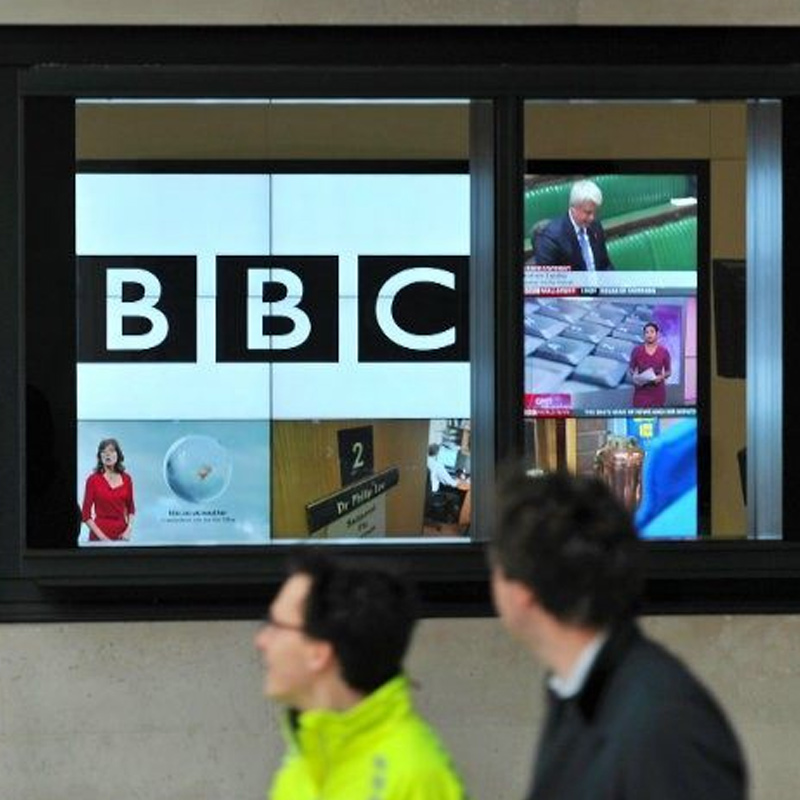
Tag: DG Mark Thompson

  • Strike time for BBC journos

    Strike time for BBC journos

    MUMBAI: Journalists at the BBC staged a 48-hour strike on Friday and Saturday to oppose proposed cuts to their pension scheme.

    Another strike is set for 15-16 November. Further strike dates, including Christmas Eve/Christmas Day and New Years Eve/New Years Day, are now under consideration.

    The National Union Of Journalists (NUJ) says that for many journalists the new pension scheme will mean being tens or even hundreds of thousands of pounds worse off in retirement. It says that the BBC‘s rationale for the move – that a potential ?2 billion hole in the pensions fund means that they have no choice – has been blown apart by reports they‘ve commissioned from independent financial experts, which show the figure to be closer to ?1bn. The NUJ has outlined its approach to dealing with the deficit.

    The NUJ says that it has consistently offered to suspend strike action, if BBC management agree to negotiate a deal once the state of the funds is properly assessed next April, instead of forcing through a new scheme now. “At that time, we will all finally know what the actual deficit is – rather than an inflated guesstimate.”

    The NUJ says that right now, it is not asking the BBC to spend any more money than the BBC has already committed to spend on CAB2011. In fact, for less money it could well be possible to retain the existing scheme with a longer period to repay the deficit – just as many large UK companies have done. That, the NUJ says, would deliver winners all round – better value for money for the licence-fee payer, fair pensions for BBC staff, and an amicable settlement for BBC management.

    However BBC DG Mark Thompson has held his ground and says that the new pension plans are fair and have already been modified after talks with staff.

    NUJ CEO Jeremy Dear, though, says that the BBC has got so many things wrong, from executive pay to the freezing of the licence fee as well as the cuts to journalists‘ pensions.

  • BBC licence fee to rise by 3%

    BBC licence fee to rise by 3%

    MUMBAI: UK Culture Secretary Tessa Jowell has announced that the BBC licence fee will rise by three per cent over each of the next two years. The deal will see the current fee of ?131.50 rise to a maximum ?151 by 2012.
    Borrowing limits will also be tighter than requested. The BBC had wanted an above-inflation hike in the licence to boost programmes and digital services.
    Not surprisingly BBC DG Mark Thompson expressed “real disappointment” at the Government’s final licence fee level settlement but said it was a privilege to receive and gave certainty in planning to create the best possible content and services for all audiences.
    Thompson said that no commercial rival enjoyed that certainty of funding. While the BBC could argue that the benefits that extra funding would bring to the wider creative industries as well as audiences, he said that it was ultimately for the Government to decide the level in the broader context of inflation and the wider public sector.
    He also welcomed the longer settlement at six years enabling efficient planning for digital switchover, rapidly changing audience expectations and new creative initiatives.
    “Our vision for the future, broadly endorsed by a Government White Paper, as well as their own requirements and ambitions, especially around digital switchover, plus not wanting existing, valued BBC services to be squeezed as we invest for the future, led us to bid for a settlement that would increase in real terms.
    “The settlement announced means the BBC still receives substantial, guaranteed income of more than ?20billion over the next six years, which is financial security denied to any other media player. But it leaves a gap of around ?2 billion over the next six years between what we believed we needed to deliver our vision and what will actually be available. That’s not a gap many organisations can swallow comfortably.”
    Thompson said there were three ways the organisation could now move to reduce the gap:
    1 – Simply not make some new investments, do them later or do them more modestly;
    2 – Increase self help targets. This would mean: increasing licence fee efficiencies in collection and evasion; maximising commercial revenues and continuing reform, modernisation and productivity;
    3 – Move resources inside the BBC from existing content and services to new ideas.
    The BBC’s executive board and senior managers across the organisation will now review investment plans in the light of the settlement and explore the options.
    The executive will then make initial recommendations to the BBC Trust who will take decisions later in the year in the best interests of licence fee payers, drawing on the framework of the BBC’s public purposes and public value.
    Thompson adds, “The BBC faces challenges to find enough money to create the fantastic content our audiences want. After seven years of funding that has grown in real terms, we now face not just a tight settlement but daunting investment challenges in distribution, infrastructure and technology that risk diverting money away from content creation. These challenges call for some new thinking about how we produce content and how we create value.”
    Thompson said that the BBC’s vision for content in the digital world, Creative Future, was never fundamentally about spending new money:
    “It is about flexing, adapting, liberating all content, but above all, content we already make. It’s about unlocking the full value of existing investment.”