Tag: Devdutt Pattanaik

  • Kuku FM and Penguin India launch 15 exclusive Hindi audiobooks

    Kuku FM and Penguin India launch 15 exclusive Hindi audiobooks

    MUMBAI: Kuku FM has joined hands with publishing giant Penguin Random House India (PRHI) to launch 15 exclusive Hindi audiobooks adapted from Penguin’s bestselling titles.

    This partnership not only expands both brands’ storytelling universe but also caters to India’s booming demand for regional audio content. With digital audio consumption skyrocketing, the collaboration brings a treasure trove of literary works to life in a more immersive and accessible format.

    The curated collection includes works by some of India’s most celebrated voices Gaur Gopal Das, Devdutt Pattanaik, Harish Bhat, Indra Nooyi, Raghuram Rajan, Ankur Warikoo, and Neena Gupta, among others. These audiobooks, produced and adapted by Kuku FM, promise high-quality narration, cultural resonance, and a deeply engaging listener experience.

    “Our customers have higher expectations from us every day, and at Kuku FM, we love rising to that challenge. They know what they want and need plenty of choices. We aim to bring the best books to them in their language and give them a unique yet engaging listening experience,” said Kuku FM CEO & co-founder  Lal Chand Bisu.

    “We are excited to partner with an iconic publisher like Penguin to not only expand our library but also ensure that we’re opening up a whole new world of entertainment and knowledge for every Indian in more accessible formats.”

    Titles will be available on the Kuku FM Android app from April 2025, priced from Rs 175 making bestselling reads more affordable than ever in audio format.

    PRH India vice president  & product Vijesh Kumar added, “At Penguin, we are committed to making books more accessible and inclusive, ensuring they reach readers in the formats they love. Our exclusive partnership with Kuku FM marks an exciting milestone as we bring some of our most celebrated titles to Hindi audiobooks for the first time. With storytelling evolving beyond the page, audiobooks offer a dynamic and immersive way to experience books welcoming both avid readers and new audiences alike.”

    The collaboration aligns perfectly with the projected growth of India’s OTT audio market expected to hit $1.8 billion by 2025 with over 100 million users.

    “The collaboration is a critical extension of Kuku FM’s highly curated portfolio of stories and we are excited to expand this universe further with PRH India who are known to have some of the most storied authors and books in their library,” said Kuku FM head of content acquisition Prerna Vohra.

    PRH India manager & audio Vidhi Nangia added, “Audiobooks are seeing tremendous growth globally, and India is no exception, with the market expected to grow over 30 per cent annually. Recognising this shift in how audiences engage with literature, Penguin is thrilled to partner with Kuku FM to introduce 15 Hindi audiobooks by beloved authors such as Bhat, Warikoo, and Nooyi. Kuku FM’s commitment to exceptional curation and production ensures that our cherished works are presented with the utmost quality. This collaboration marks the beginning of a promising journey to make our stories accessible to an even broader audience.”

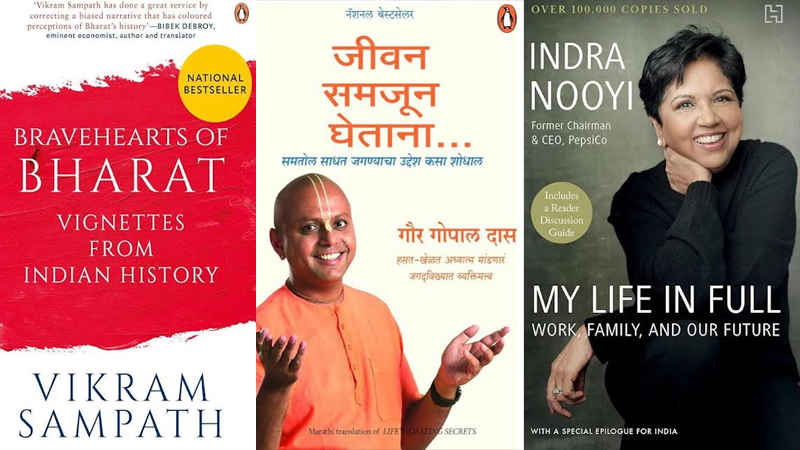
    The exclusive collection of Hindi audiobooks includes Tata Stories by Bhat, Bravehearts of Bharat by Vikram Sampath, and My Life in Full by Nooyi. Listeners can also enjoy Jeevan ke Adbhut Rahasya and Energise Your Mind by Das, along with India’s Most Fearless 1 and India’s Most Fearless 2 by Shiv Aroor and Rahul Singh. The line-up features Mythakon se Vigyan Tak by Gauhar Raza, Jaya and The Book of Ram by Pattanaik, and Breaking the Mould by Rajan and Rohit Lamba. Also included are Make Epic Money and Build an Epic Career by Warikoo, Sach Kahun Toh by Gupta, and Manoj Bajpayee by Piyush Pandey.

  • Breaking the ad code ASCI Global Adda 2025 sparks bold brand conversations

    Breaking the ad code ASCI Global Adda 2025 sparks bold brand conversations

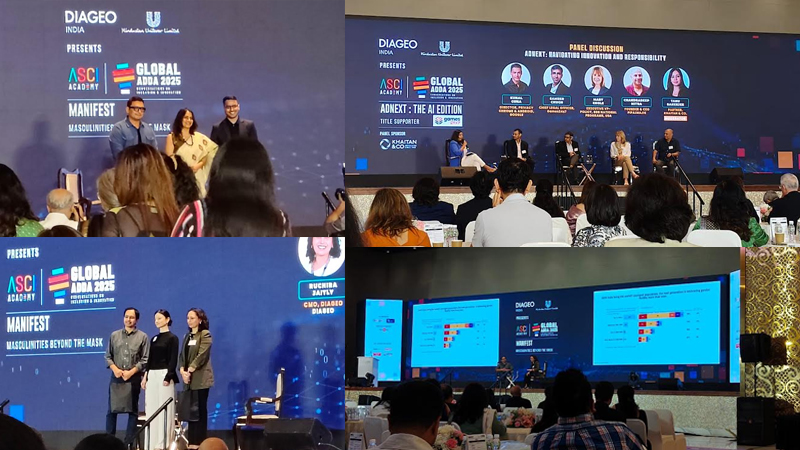
    MUMBAI: Advertising isn’t just about selling products anymore, it’s about shaping the world we live in. That was the resounding message at Asci Global Adda 2025, where industry leaders, marketing pioneers, and policy experts gathered to discuss the power of advertising to drive meaningful change. From redefining masculinity in Indian media to harnessing AI’s potential responsibly, the event sparked thought-provoking discussions on the evolving role of brands in an increasingly complex digital world.

    Masculinity in advertising is getting a reality check, The event kicked off with a powerful discussion on gender representation in Indian advertising with the unveiling of Manifest: Masculinities Beyond the Mask. The report, presented by Arvind Mohan of Religious Brands, explored how masculinity has evolved in Indian media and the advertising industry’s role in shaping it.

    Taking the conversation further, renowned mythologist Devdutt Pattanaik analysed how traditional archetypes of masculinity rooted in mythology and historical narratives continue to influence modern media. He argued that while Indian advertising has made progress in challenging outdated gender roles, the industry still has a long way to go in truly redefining masculinity for contemporary audiences.

    A panel discussion followed, featuring actor Abhishek Banerjee, filmmaker Paromita Vohra, and Unilever’s Anila Vinayak. They debated whether advertising should simply reflect societal changes or actively drive progress. With Indian cinema still dominated by hyper-masculine narratives (like Kabir Singh and Animal), the advertising industry faces a critical choice, should it play it safe or push for progressive storytelling?

    The consensus? Stereotypes might sell, but inclusivity builds long-term brand loyalty. As the panelists pointed out, modern audiences—especially Gen Z—are demanding more authentic, diverse, and inclusive portrayals of gender in advertising.

    How brands Can Drive Real Change? Well, brands have immense power in shaping culture, but inclusivity in advertising must go beyond token gestures. That was the key takeaway from the Insights & Action: Brand Case Studies session, featuring Diageo India’s Ruchira Jaitly and L&K Saatchi & Saatchi’s Kartik Smetacek.

    Jaitly highlighted Diageo’s commitment to unstereotyping, showcasing campaigns that do more than just tick diversity checkboxes. For example, Royal Challenge’s gender-equitable jersey campaign broke stereotypes in sports marketing, while Johnnie Walker’s ‘Keep Walking’ campaign told stories of resilience and reinvention that resonated across diverse identities.

    “We’re not just talking about representation,” Jaitly stated. “It’s about depth, agency, and authentic storytelling—because consumers can see through empty gestures.”

    Joining the discussion, Bajaj Auto’s Sumeet Narang and Ogilvy’s Sukesh Nayak explored how brands can strike the right balance between mass appeal and progressive storytelling. In a country where traditional masculinity still dominates pop culture, brands must navigate the fine line between commercial success and meaningful representation.

    The discussion underscored that progressive storytelling isn’t just ethical, it’s profitable. Diageo’s research with Kantar and Asci revealed that ads promoting inclusivity drive higher brand distinctiveness, purchase intent, and long-term sales. However, the challenge lies in ensuring authenticity, as performative inclusivity can backfire and damage a brand’s credibility.

    As the day progressed, the spotlight turned to AdNext: The AI Edition, a deep dive into how artificial intelligence is reshaping the advertising industry.

    Kunal Guha (Google) set the tone, describing AI as both “overhyped and underappreciated”. He compared it to having “the world’s greatest polymath in your pocket”, a tool that enhances human creativity, decision-making, and efficiency at an unprecedented speed.

    But with great power comes great responsibility. Sameer Chugh (Games24x7) raised concerns about AI-driven hyper-personalisation, warning that while AI can enhance consumer experiences, it also poses risks from privacy violations to manipulative targeting.

    Meanwhile, Mary K Engle (BBB National Programs, US) highlighted the urgent need for self-regulation in AI-driven advertising, arguing that proactive industry standards must be established before government intervention becomes inevitable.

    One of the most heated debates of the day revolved around whether AI-generated content should be labelled.

    While panelists agreed that AI-generated content in high-risk industries (like healthcare and finance) should be clearly labelled, they cautioned against over-labeling in advertising. Excessive disclaimers could create consumer fatigue, making audiences less likely to trust AI-generated content altogether.

    AI is set to contribute nearly $1 trillion to India’s digital economy, but for India to lead globally, panelists emphasised the need for strong collaboration between businesses, regulators, and policymakers.

    To truly harness AI’s potential, the advertising industry must prioritise the development of ethical AI frameworks that strike a balance between innovation and responsibility, ensuring that technological advancements do not come at the cost of consumer trust. Additionally, AI literacy among consumers must be actively promoted, helping them understand how AI-driven content and recommendations work, thereby fostering greater transparency and trust in digital interactions. Equally important is the commitment to inclusive, unbiased AI-driven advertising, ensuring that automated decision-making does not reinforce stereotypes or exclude marginalised voices. By integrating these principles, the industry can leverage AI’s transformative power while maintaining ethical integrity and consumer confidence.  

    Whether it was Diageo’s commitment to breaking gender stereotypes in advertising or the transformative role of AI in reshaping marketing strategies, Asci Global Adda 2025 made one resounding point, brands are no longer just selling products; they are actively shaping the world we live in. The discussions at the event underscored how companies must move beyond traditional storytelling and embrace purpose-driven marketing to connect meaningfully with modern consumers. With AI becoming the driving force behind hyper-personalised advertising, ethical considerations around transparency, bias, and consumer trust took centre stage. Industry leaders agreed that AI is as disruptive as the internet was in its early days, bringing both unprecedented opportunities and complex challenges.

    As Tanu Banerjee of Khaitan & Co. aptly put it, “AI is the new internet, we must decide now how we want it to shape our lives.”

    This powerful statement highlighted the urgency for businesses to take proactive steps in defining ethical AI frameworks, ensuring inclusive narratives, and fostering consumer education to build trust in AI-powered advertising. With marketing standing at a pivotal crossroads, the question remains: will brands take charge and lead this transformation, or risk being left behind? Judging by the insights and commitments made at Asci Global Adda 2025, the industry is already racing towards a future where innovation and responsibility must go hand in hand.  

  • Ad Standards take centre stage as India hosts Global Summit

    Ad Standards take centre stage as India hosts Global Summit

    MUMBAI: India is set to become the epicentre of global advertising conversations as the Advertising Standards Council of India (ASCI) gears up to host the ICAS Global Summit ICAS Global Dialogues 2025 from 17 to 19 March 2025, in Mumbai. This marks a historic first, with the prestigious event being held outside Europe and the US, signalling India’s increasing influence in shaping global advertising self-regulation.

    The by-invite-only summit will convene self-regulatory leaders from 16 countries, alongside global advertising associations, regulators, and top Indian industry players. With AI and emerging technologies rapidly reshaping the industry, the summit aims to foster discussions on ethical, progressive, and consumer-first advertising practices.

    The summit will feature a series of thought-provoking sessions addressing key industry shifts. It will kick off with the ICAS Global Self-Regulation Awards (March 17), celebrating the most innovative and impactful advertising self-regulation initiatives worldwide. This will be followed by the ICAS Think Tank & Panel Discussion, where ASCI, alongside Hindustan Unilever, Marico, Cipla Health, and Kenvue, will shape the future of global advertising standards. On March 18, the session ‘Tomorrow’s Regulation Today’ will explore emerging consumer vulnerabilities and the evolving role of advertising regulations in tackling them. The final day, March 19, will see ASCI Academy’s Global Adda, unveiling two major research studies, ‘Manifest: Masculinities Beyond the Mask’, a deep dive into male representation in media, and ‘AdNext: The AI Edition’, which explores AI’s transformative impact on advertising.  

    With over 250 attendees expected, including industry leaders, regulators, and marketing professionals, the event promises insightful discussions, knowledge-sharing, and future-focused advertising strategies.

    ASCI CEO & secretary general Manisha Kapoor said, “Hosting the ICAS Global Summit in India is a proud milestone for ASCI and the Indian advertising industry. We look forward to collaborating with global experts and gaining insights that will help us navigate new complexities while strengthening consumer trust.”

    ASCI chairman Partha Sinha added, “The timing of this summit is crucial as AI and other technologies rapidly reshape advertising. Bringing global perspectives together will help us collectively design forward-looking approaches that balance innovation with responsibility.”

    The summit will host a star-studded lineup of speakers, bringing together influential voices from across industries. Key speakers include Abhishek Singh, additional secretary, MeitY; Devdutt Pattanaik, renowned mythologist and author; Michael Todd, global director at Google, and Guy Parker, president of ICAS. Adding to the distinguished roster are Mary K Engle, EVP-policy at BBB National Programs, USA; Mohan Jayaraman, partner at Bain & Company; Ruchira Jaitly, CMO of Diageo India and Paromita Vohra, acclaimed filmmaker and writer. Their collective expertise promises to drive meaningful discussions on the future of advertising and self-regulation.  

    Supported by Diageo India, Hindustan Unilever, Google, United Breweries, Makemytrip, Games24x7, Khaitan & Co., and Lexplosion, the ICAS Global Summit 2025 is poised to drive progressive, ethical, and future-ready advertising practices with India leading the charge.

  • Embrace the rich tapestry of Hindu mythology on Audible

    Embrace the rich tapestry of Hindu mythology on Audible

    Mumbai: As we revel in the joy of Navratri and draw closer to the auspicious occasion of Dussehra, it is only fitting to expand our understanding of our rich heritage and culture through religious epics such as Mahabharata, Ramayana and the tales of Durga. Embrace the power of religion and culture with these audiobooks and podcasts centered around Mahabharata, Ramayana, and the stories of Durga and Lord Krishna. Get inspired by these articulate re-tellings of timeless tales and embark on a fascinating journey for a better understanding of these tales passed down through generations.

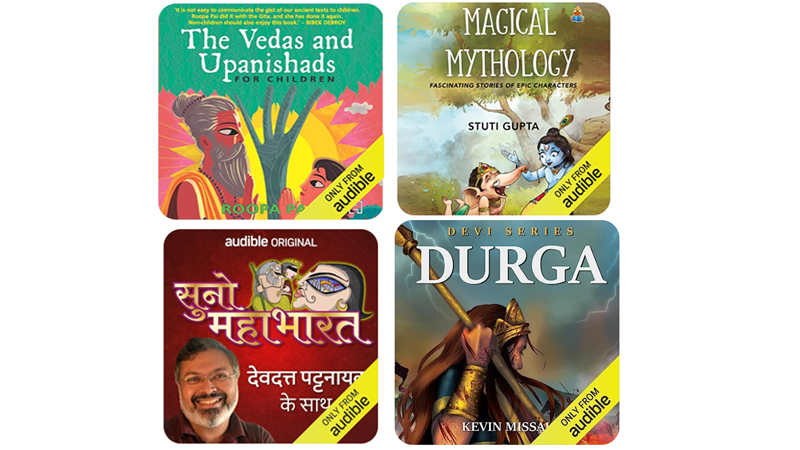
    Durga: Devi Duology

    Written by: Kevin Missal; Narrated by: Preeti Gupta

    The audiobook Durga by Kevin Missal is the fictitious tale of a battle between the demon king Mahisha – ruler of Jambudvipa, and a group of incorrigible women. Inspired by the mythological epic of the battle between Devi Durga and Mahishasura during Navratri, this story is a modern adaptation of the original epic. Ruling with an iron fist and committing outnumbered atrocities, the demon king leaves no stone unturned in killing Durga’s parents. Durga then finds strength in a coven of women who team up to fight with her for nine nights to triumph over the unprecedented evil that haunts their city. An interesting listen for fiction and mythology enthusiasts, Durga: Devi Duology is the first part of this series by Kevin Missal.  

    The Vedas and Upanishads for Children

    Written by: Roopa Pai; Narrated by: Sharanya Gopinath

    Reinterpreting the deep ancient wisdom of India’s greatest religious philosophers around 3000 years ago, author Roopa Pai brings to us the deepest insights from Vedas and Upanishads. The audiobook explores concepts of the universe, nature, and wisdom from these ancient texts in easy-to-understand language even for children. These simplified thought-provoking insights from Vedic literature  expound on the deeper meaning of life and spiritual purpose,  making this audiobook ideal for engaging your children to tune into. Vedas and Upanishads For Children on Audible is suitable for all age groups seeking to expand their Vedic knowledge.

    Suno Mahabharat Devdutt Pattanaik Ke Saath

    Written by: Devdutt Pattanaik; Narrated by: Devdutt Pattanaik

    Looking for a podcast on Mahabharata that is easy to comprehend? In that case, Suno Mahabharat Devdutt Pattanaik Ke Saath is the ideal fit. This podcast is a  retelling of the grand epic Mahabharata. Devdutt Pattanaik draws parallels between the superhumans in this epic and the 21st-century humans and highlights the lessons from the epic we can apply to our own lives to become karma yogis. Suno Ramayan, a second installment of Devdutt Pattanaik’s series of Suno Mahabharat is set to launch on Audible in the month of November. Immerse yourself in the eternal love of Lord Rama and Sita from the Sanskrit epic Ramayana with this 12-episode Audible Original podcast series.

    Magical Mythology

    Written by: Stuti Gupta; Narrated by: Lavanya Krishna

    Get a glimpse into the innocent and whimsical moments experienced by our Hindu Gods during their childhood before they set out to battle evil and destroy the demons. Isn’t it wonderful how Lord Rama played with the moon as a child? Or how little Krishna defeated a big black snake to get his ball? Hanuman and Ganesha also have a plethora of adventurous stories to entertain and inspire. Embark on a magical and mythical journey with these superhumans to understand their heroic, curious, and creative personalities. Magical Mythology on Audible is a collection of over 20 fascinating and unheard-of stories from rich Indian mythology that will enthrall you.

  • ‘Costume drama is not everybody’s cup of tea:’ Nikhil Sinha

    ‘Costume drama is not everybody’s cup of tea:’ Nikhil Sinha

    With the increase in the number of television channels in India, the demand for content producers has gone up, which in turn has seen many a new players making their entry into the industry that was once monopolised by a handful few. One such new production house is Triangle Film Company helmed by Nikhil Sinha, which has made its mark in a short-period with its social, historical and mythological shows.


    After producing shows like Baba Aisa Var Dundho, Akbar Birbal, Adventure of Hatim and Devo Ke Dev Mahadev, Sinha’s Triangle Film Company is now busy with its new show Siya Ke Ram on Star Plus.


    In conversation with Indiantelevision.com’s Sonam Saini, Sinha shares his views on the television content space in India, his experience of producing costume dramas and more. 


    Excerpts:


    From director of photography to producer of ‘Baba Aisa Var Dundho,’ how has been the journey so far?

    The journey has been superb and amazing so far from director of photography to director to producer. It has been like an accreditation from one to another.


    What according to you is the most challenging genre for television production?

    The entire production game itself is a very challenging task. From direction to production everything is a task. When it comes to genres, then obviously costume dramas are the most challenging ones because they are more elaborate and scaled.


    While in social dramas, you can make a show with 70 – 80 people in a unit, in costume dramas no less than 200 – 300 people are involved. Moreover, a lot of aspects are involved from pre-production to set-designing to shooting and graphics. So there are more layers here and hence it’s more challenging.


    Apart from television, has Triangle Film Company started creating content for other platforms?

    We are working on a few concepts for the digital platform but there’s nothing concrete as yet. We believe that when we do something for the digital platform, it needs to have a unique proposition and we’re waiting to find that.


    From the company’s launch to now, how would you rate yourself in terms of creating unique concept shows?

    From the time I started my company, we have worked on five shows including Baba Aisa Var Dundho, Devo Ke Dev Mahadev, Adventure of Hatim, Akbar Birbal and Siya Ke Ram. Moreover, we produced four shows in five years and they all are quite unique. They have been the most talked about shows for their concept and production. Therefore, we have been able to fulfil the vision that the company was launched with. I am happy with the way we are producing shows, which will be remembered over the years.  


    What sets Triangle Film Company apart from the other content production houses in the industry?

    The desire to deliver quality content, which oozes positivity. In all our shows, we have tried to cover different strata of society. We are not only making shows for the masses but also for the elite and niche classes.


    Our show Mahadev was watched by everyone across the country. The idea is to create the content for the entire family and the society as a whole and that’s what makes us different from the others.


    We have set the bar high and that I believe is the most important thing. So every time we create a show, we set a higher benchmark in the industry so that we can compete with the western world. That is the basic philosophy that we follow.


    Mythology has become a popular genre on Indian television and you’ve also dabbled in the genre. What’s the lure there given that they are more expensive in terms of production?

    The more expensive the show, the more hard work it requires. You have to have more scale, bigger sets and a host of people are required. It is basically the nature of accepting challenges that is what drives us towards the mythological genre. Moreover, costume drama is not everybody’s cup of tea. It takes a lot of courage and hard work to produce such shows. 


    Are mythological shows a profitable proposition?

    Whether you do a social, fantasy or mythological show, the profit is always calculated in terms of ratio or percentage. If you have Rs 1 lakh and the profit margin is five per cent, then you end up making a profit of Rs 5 lakh. It is a percentage, which is important and that percentage remain the same, no matter what the production is. So the kind of return one gets depends on the kind of money spent.


    To produce a costume drama, you have to invest lot of money. People talk about the revenue generated from costume dramas but nobody sees the amount of investment that a producer puts in. 

    But like I said, whether it is social drama or a costume drama, the percentage remains the same.


    Siya Ke Ram is a story from Sita’s perspective. What was the idea behind coming up with a show like this and how is it different from other traditional mythological shows?

    Conceptually, Ram and Sita’s story has always been seen in a very typical format, which has been like a bakhti-rass. So to touch the story at a micro level from a human point of view was very important. So far the show has been doing that and it has been accepted by the audience. 


    In terms of approach and visuals, not a lot of money was invested in the show. However, what is more important is how the show is conceived and not much was spent on making it. You can have all the money in the world and no product, and at the same time limited money can give you good output. Siya Ke Ram is that kind of show, which doesn’t have too much money in it but looks rich. The idea was to create a very different show, which was the biggest challenge because we created a benchmark with Mahadev.


    Siya Ke Ram has created a new trend in terms of visuals, and how a production can look grand on Indian television.


    This is the second time you are working with Devdutt Pattanaik. How was the experience working with him? 

    Enlightening! With the kind of answers, philosophy and insights that he has, it has been a great experience working with him.


    Can you elaborate on the association? Is he helping you out with his insights on screenplay given that he has penned a book called ‘Sita’?

    On shows like Mahadev and Siya Ke Ram, it is philosophy that matters and these characters are made out of that philosophy of life. In order to decode, understand and make it in a story format, you need someone who can explain it to you and that’s the role he played in the show. He provides the philosophy on the subject.  


    In just a few weeks, the show gained immense popularity. Did you expect that response? What according to you has worked in the show’s favour?

    Yes, we put a lot of hard work into it and we went many extra miles. We are expecting more popularity from this. I think we’ve only just started and in coming days, this show has the potential to become the biggest show in India. The visuals and unique story line is getting a lot of traction and people are now getting connected with the characters.


    Is the company also looking at producing non-fiction shows?

    I have never restricted myself to any one kind of genre. I am open to all the genres as a director also and as a producer too. If something interesting comes up, then I will definitely do that it.


    How has 2015 been for Triangle Film Company?

    It was good but it was mostly a year of preparing for Siya Ke Ram.


    What is your opinion on Intellectual Property staying with the channel? Don’t you think it should be remain with the production house?  

    Certainly, it should. The IP should remain with the person who conceived the idea.


    Nowadays they have a different definition and our previous generation has given away this right to the channel because 25 years back, the IP of a show vested with the production house. However, somehow it went to channels and now we are the victims.


    The IP should remain with the producer or at least should be shared with the producer because the person who is creating and putting in all the hard work doesn’t get anything out of it. Whereas the person who is providing the platform for telecast gets everything. It’s not very fair but I hope it will change soon. 


    With the number of channels increasing every year, how is Triangle poised to cater to the increasing content demand?

    We have to expand ourselves and create many more programmes now. The need of the hour is immense and we will certainly rise up to the occasion and churn out more content for multiple platforms.


    According to you, what is lacking in the television content production space in India? And how does Triangle aim to fill that void?

    Television is one place where we can the herd mentality being followed. If one channel creates a trend, others immediately start chasing the same and it becomes the routine. What’s more, the audience also laps up these trends. I believe that the audience hasn’t created us but we have created the audience. Twenty years back people loved shows likeBuniyad or Bharat Ek Khoj, which were intelligent shows even when the literacy rate was much lower. Now, even though the literacy rate is much higher and people have advanced and are modern, they still tend to like clichéd shows. I would say the fault is ours because the audience sees what we throw at them.


    I have realised that since a couple of years, television viewership has also declining because of poor content. We should take the responsibility of delivering quality content. While it might not reap us benefits immediately, it will definitely help us to build the platform in the future.


    What according to you were the key production highlights and landmarks on Indian television in 2015?

    According to me, nothing happened good. There were no remarkable or promising launches on Indian television in 2015.


    With so many production companies in the fray, making and selling content to broadcasters is a fragmented business. How difficult is it to sustain growth in such a scenario?

    Earlier, it was a monopolised business but competition was inevitable. Television production is a space for everybody and anybody. Competition is good as it only makes you work hard in order to sustain.


    Content production is an expensive proposition. Has the company broken even since launch?

    Yes, certainly… long back. We are not a channel where the investment is huge and the reward is good. Production houses work on a project basis and not on a yearly basis.


    What can we expect from Triangle in the coming year?

    Good, nice and bigger shows in the future, which are a class apart and will raise the level of our industry.

  • ‘Costume drama is not everybody’s cup of tea:’ Nikhil Sinha

    ‘Costume drama is not everybody’s cup of tea:’ Nikhil Sinha

    With the increase in the number of television channels in India, the demand for content producers has gone up, which in turn has seen many a new players making their entry into the industry that was once monopolised by a handful few. One such new production house is Triangle Film Company helmed by Nikhil Sinha, which has made its mark in a short-period with its social, historical and mythological shows.


    After producing shows like Baba Aisa Var Dundho, Akbar Birbal, Adventure of Hatim and Devo Ke Dev Mahadev, Sinha’s Triangle Film Company is now busy with its new show Siya Ke Ram on Star Plus.


    In conversation with Indiantelevision.com’s Sonam Saini, Sinha shares his views on the television content space in India, his experience of producing costume dramas and more. 


    Excerpts:


    From director of photography to producer of ‘Baba Aisa Var Dundho,’ how has been the journey so far?

    The journey has been superb and amazing so far from director of photography to director to producer. It has been like an accreditation from one to another.


    What according to you is the most challenging genre for television production?

    The entire production game itself is a very challenging task. From direction to production everything is a task. When it comes to genres, then obviously costume dramas are the most challenging ones because they are more elaborate and scaled.


    While in social dramas, you can make a show with 70 – 80 people in a unit, in costume dramas no less than 200 – 300 people are involved. Moreover, a lot of aspects are involved from pre-production to set-designing to shooting and graphics. So there are more layers here and hence it’s more challenging.


    Apart from television, has Triangle Film Company started creating content for other platforms?

    We are working on a few concepts for the digital platform but there’s nothing concrete as yet. We believe that when we do something for the digital platform, it needs to have a unique proposition and we’re waiting to find that.


    From the company’s launch to now, how would you rate yourself in terms of creating unique concept shows?

    From the time I started my company, we have worked on five shows including Baba Aisa Var Dundho, Devo Ke Dev Mahadev, Adventure of Hatim, Akbar Birbal and Siya Ke Ram. Moreover, we produced four shows in five years and they all are quite unique. They have been the most talked about shows for their concept and production. Therefore, we have been able to fulfil the vision that the company was launched with. I am happy with the way we are producing shows, which will be remembered over the years.  


    What sets Triangle Film Company apart from the other content production houses in the industry?

    The desire to deliver quality content, which oozes positivity. In all our shows, we have tried to cover different strata of society. We are not only making shows for the masses but also for the elite and niche classes.


    Our show Mahadev was watched by everyone across the country. The idea is to create the content for the entire family and the society as a whole and that’s what makes us different from the others.


    We have set the bar high and that I believe is the most important thing. So every time we create a show, we set a higher benchmark in the industry so that we can compete with the western world. That is the basic philosophy that we follow.


    Mythology has become a popular genre on Indian television and you’ve also dabbled in the genre. What’s the lure there given that they are more expensive in terms of production?

    The more expensive the show, the more hard work it requires. You have to have more scale, bigger sets and a host of people are required. It is basically the nature of accepting challenges that is what drives us towards the mythological genre. Moreover, costume drama is not everybody’s cup of tea. It takes a lot of courage and hard work to produce such shows. 


    Are mythological shows a profitable proposition?

    Whether you do a social, fantasy or mythological show, the profit is always calculated in terms of ratio or percentage. If you have Rs 1 lakh and the profit margin is five per cent, then you end up making a profit of Rs 5 lakh. It is a percentage, which is important and that percentage remain the same, no matter what the production is. So the kind of return one gets depends on the kind of money spent.


    To produce a costume drama, you have to invest lot of money. People talk about the revenue generated from costume dramas but nobody sees the amount of investment that a producer puts in. 

    But like I said, whether it is social drama or a costume drama, the percentage remains the same.


    Siya Ke Ram is a story from Sita’s perspective. What was the idea behind coming up with a show like this and how is it different from other traditional mythological shows?

    Conceptually, Ram and Sita’s story has always been seen in a very typical format, which has been like a bakhti-rass. So to touch the story at a micro level from a human point of view was very important. So far the show has been doing that and it has been accepted by the audience. 


    In terms of approach and visuals, not a lot of money was invested in the show. However, what is more important is how the show is conceived and not much was spent on making it. You can have all the money in the world and no product, and at the same time limited money can give you good output. Siya Ke Ram is that kind of show, which doesn’t have too much money in it but looks rich. The idea was to create a very different show, which was the biggest challenge because we created a benchmark with Mahadev.


    Siya Ke Ram has created a new trend in terms of visuals, and how a production can look grand on Indian television.


    This is the second time you are working with Devdutt Pattanaik. How was the experience working with him? 

    Enlightening! With the kind of answers, philosophy and insights that he has, it has been a great experience working with him.


    Can you elaborate on the association? Is he helping you out with his insights on screenplay given that he has penned a book called ‘Sita’?

    On shows like Mahadev and Siya Ke Ram, it is philosophy that matters and these characters are made out of that philosophy of life. In order to decode, understand and make it in a story format, you need someone who can explain it to you and that’s the role he played in the show. He provides the philosophy on the subject.  


    In just a few weeks, the show gained immense popularity. Did you expect that response? What according to you has worked in the show’s favour?

    Yes, we put a lot of hard work into it and we went many extra miles. We are expecting more popularity from this. I think we’ve only just started and in coming days, this show has the potential to become the biggest show in India. The visuals and unique story line is getting a lot of traction and people are now getting connected with the characters.


    Is the company also looking at producing non-fiction shows?

    I have never restricted myself to any one kind of genre. I am open to all the genres as a director also and as a producer too. If something interesting comes up, then I will definitely do that it.


    How has 2015 been for Triangle Film Company?

    It was good but it was mostly a year of preparing for Siya Ke Ram.


    What is your opinion on Intellectual Property staying with the channel? Don’t you think it should be remain with the production house?  

    Certainly, it should. The IP should remain with the person who conceived the idea.


    Nowadays they have a different definition and our previous generation has given away this right to the channel because 25 years back, the IP of a show vested with the production house. However, somehow it went to channels and now we are the victims.


    The IP should remain with the producer or at least should be shared with the producer because the person who is creating and putting in all the hard work doesn’t get anything out of it. Whereas the person who is providing the platform for telecast gets everything. It’s not very fair but I hope it will change soon. 


    With the number of channels increasing every year, how is Triangle poised to cater to the increasing content demand?

    We have to expand ourselves and create many more programmes now. The need of the hour is immense and we will certainly rise up to the occasion and churn out more content for multiple platforms.


    According to you, what is lacking in the television content production space in India? And how does Triangle aim to fill that void?

    Television is one place where we can the herd mentality being followed. If one channel creates a trend, others immediately start chasing the same and it becomes the routine. What’s more, the audience also laps up these trends. I believe that the audience hasn’t created us but we have created the audience. Twenty years back people loved shows likeBuniyad or Bharat Ek Khoj, which were intelligent shows even when the literacy rate was much lower. Now, even though the literacy rate is much higher and people have advanced and are modern, they still tend to like clichéd shows. I would say the fault is ours because the audience sees what we throw at them.


    I have realised that since a couple of years, television viewership has also declining because of poor content. We should take the responsibility of delivering quality content. While it might not reap us benefits immediately, it will definitely help us to build the platform in the future.


    What according to you were the key production highlights and landmarks on Indian television in 2015?

    According to me, nothing happened good. There were no remarkable or promising launches on Indian television in 2015.


    With so many production companies in the fray, making and selling content to broadcasters is a fragmented business. How difficult is it to sustain growth in such a scenario?

    Earlier, it was a monopolised business but competition was inevitable. Television production is a space for everybody and anybody. Competition is good as it only makes you work hard in order to sustain.


    Content production is an expensive proposition. Has the company broken even since launch?

    Yes, certainly… long back. We are not a channel where the investment is huge and the reward is good. Production houses work on a project basis and not on a yearly basis.


    What can we expect from Triangle in the coming year?

    Good, nice and bigger shows in the future, which are a class apart and will raise the level of our industry.

  • Epic to celebrate one year mark with better programming

    Epic to celebrate one year mark with better programming

    MUMBAI: In the entertainment world abound with clutter, niche television channels have to fight an uphill battle in order to get the necessary traction from viewers. As the Indian cable and satellite industry slowly but surely moves towards digital addressable systems (DAS), more and more niche channels will be viable with digitisation cutting distribution costs.


    One such niche channel that’s in it for the long haul, is The Epic Channel, which is on the brink of completing a year on air. Launched on 19 November, 2014, The Epic Channel will be celebrating its first anniversary by offering two news shows to its viewers. What’s more the channel also went High Definition (HD) on the Tata Sky DTH platform recently.


    The first new finite show, which will go on air from 19 October is titled Khwaabon Ka Safar with Mahesh Bhatt and will be aired on Mondays at 10 pm. 


    The second show is titled Devlok by popular Indian author Devdutt Pattanaik and will be an exploration of gods, demons, curses. Set to premiere on 21 October, this will be aired on Wednesdays and Thursdays at 10 pm.


    Speaking exclusively to Indiantelevision.com, The Epic Channel founder and MD Mahesh Samat said, “We have a rich film history and with Khwaabon Ka Safar, we are looking at the big film studios in the industry, which have some history attached to it. And I think Mahesh Bhatt is the best person to narrate these stories. He has been in the industry for a long time now and knows the industry inside out. Another show that we have in the pipeline is Devdutt Pattanaik’s show Devlok in which he will talk about mythology.”


    Claiming its hold over the 10 pm slot is the channel’s campaign with the tagline – ‘Maaf Kijiye Abhi Dus Nahin Baje.’ “The campaign is doing quite well to claim the 10 pm TV viewing time to establish the association between the Epic Channel and the time slot,” Samat says.


    In a span of one year, the channel has enthralled audiences with epic mythological and historical series. Showcasing the mythology and history in a contemporary form has been the channel’s agenda.


    Stories by Rabindranath Tagore showcasing ‘epic’ tales like Choker Bali, Charulata, Atithi andKabuliwala amongst others brought etched characters created by Tagore to the small screen. Also the channel was seen recollecting old Bollywood stars in a nostalgic show set up with Javed Akhtar.


    With increasing penetration of HD television sets, more and more channels are now adding the HD feed to offer better consumer experience. Talking about the same, Samat says, “We have always been an HD channel. The idea was to launch the stories around Indian history and mythology in HD. All our shows have been produced and shot in HD. Our channel is uplinked and downlinked in HD. For various technical reasons, some MSOs transfer the channel differently, but from our end the strategy is to be one feed HD channel. The HD experience is necessary for the kind of shows we produce.”


    Stressing on how HD shows will change the way television is viewed in the country, Samat says, “The technology has evolved to meet consumers’ expectations. HD is definitely a better viewing experience and HD shows will change the way we watch television in India. We are likely to see an upsurge of HD in the coming year. From a consumer stand point, it is a far better experience so there is really no reason not to have HD.” 


    With The Epic Channel HD feed, Samat is also hoping that the channel will see an increase in the number of viewers due to the addressability factor.


    “I think the experience of mythological and all the great fiction and non-fiction viewing would be much better, which will result into more and more viewers coming in. I believe we are going to see increase in numbers of viewers as Epic is assessable in HD. A hike in advertising rates will eventually follow with a rise in viewership,” he informs.


    The Epic Channel has seen a lot of advertising interest from the automobiles sector amongst others. “More than viewership, we are a channel that reaches across the country and hence we have that reach. With HD, we are moving one step ahead in our target group, so we expect to see ad rates following the same,” asserts Samat.


    On the eve of the channel’s one year of operations, Samat shares the journey so far as well as the company’s future vision. “The overall journey has been pretty good. It’s a channel that delivered all the promises that were made in the beginning of the year in terms of stories and content. There is a new range of programming coming up from 19 October. We are pretty optimistic that in the next few months, higher viewership and ad sales will follow,” he says.


    The value of niche television channels is derived from the quality of viewers and not the size. Phase I & II of DAS is what enabled a niche like The Epic Channel to launch in the country. “The success of the first two phases of digitisation is what enabled a large number of channels to pull in viewers. Without it we would not have been able to launch Epic. So digitisation has played a vital role in the launch of the channel. Also, as digitisation continues, consumers will become more and more demanding and we will see a lot more content differentiation,” he says.


    Samat is of the opinion that with Phase III & IV of DAS, the industry is looking for transparency as well as having a better understanding of revenue stream and visibility. “All the good things associated with digitisation are exciting for the entire industry and not only for the broadcaster,” he adds.


    Not wanting to comment on the specifics of ratings and viewership, Samat says that overall The Epic Channel has received a good response from the industry as well as from viewers. “The channel has established a position in the mind of the consumers and eventually we have added a brand to the television ecosystem in India,” he signs off.

  • An eclectic set of speakers announced for Goafest 2014

    An eclectic set of speakers announced for Goafest 2014

    MUMBAI: The Goafest Organizing Committee today released the first list of speakers for Goafest 2014 Knowledge Seminars. Unlike in the previous years where the focus was principally on international speakers, this year the Knowledge Seminars will have a good mix of international speakers, inspirational speakers, spiritual speakers and speakers on innovative aspects.  This is based on a survey among the last three years’ Goafest delegates. “Based on the findings of this survey, we have put together a very special list  of  speakers for  Goafest delegates to  listen to  and  interact with”, says  Arvind Sharma, President of Advertising Agencies Association of India.


    For the Knowledge Seminars, the initial set of names include: Preethi Mariappan- Executive Creative Director at Razorfish, Germany; Melanie Varley- Chief Strategy Officer, Global at MEC; Norm Johnson- Chief Digital Officer at Mindshare; Alicia Souza- illustration designer/artist/ e-commerce entrepreneur; Shravan Kumaran and Sanjay Kumaran, the youngest app developers in India and a group known as AIB(All India Bakchod), Devdutt Pattanaik, Mythologist, Author, Leadership, DK Hema & Hema Hari, Founders, BharathGyan. Some more interesting names are being added for which confirmations are awaited soon.


    “We are delighted that we have been able to get some very inspiring speakers on a cross section of subjects which delegates are normally not exposed to,” said Goafest Committee Chairman, Srinivasan Swamy.

    Brief profiles of the speakers are given below: Preethi Mariappan- Executive Creative Director at Razorfish Germany: One of Preethi’s notable pieces of work is the Red Tomato Pizza Fridge Magnet, which picked up four Cannes Lions in 2012. Additionally she has received global recognition at One Show, Sabre, Dubai Lynx and Effies. Preethi has an industry wide reputation and award-winning expertise across multiple sectors.  Preethi’s last role was with Digital ECD TBWA, heading up the Digital Arts Network by bringing together storytelling, people and products.


    Melanie Varley- Chief Strategy Officer, Global at MEC: In her role as Chief Strategy officer, Melanie takes responsibility for designing MEC’s future business model and for the global development and integration of MEC’s product and services. Melanie was previously CEO, Europe, Middle East and Africa. She rolled out MEC Interaction and MEC Access across the region. Prior to moving into the CEO role, Melannie led Global Solutions, MEC’s international client service, across Europe. Melanie also led the development and roll out of MEC Navigator, MEC’s global operating system and was responsible for the introduction of communications planning to the overall global MEC offer.


    Norm Johnson- Chief Digital Officer at Mindshare: Norm Johnston has been involved in interactive marketing since graduating from Chicago’s Northwestern University in 1988. While at Accenture, Norm led a team that developed one of the earliest interactive shopping destinations for a large U.S. retail client.  Norm is a longtime vocal evangelist of the digital industry and is a frequent speaker at interactive conferences, including various IAB events, the Cannes Advertising Festival, the Festival of Media, and Internet World.
     

    D K Hari- Founder of BharathGyan: Hari along with his wife Hema Hari, conceptualized and founded BharathGyan, a research initiative to collate from traditional as well as modern sources, the knowledgebase and cultural ties of India, through the ages. Prior to this, Hari was involved in his family business of Petroleum and FMCG products. He was head of marketing in a corporate environment for 12 years. Hema is a computer engineer from Bombay University and a PMI certified Project Management Professional. She started her career in Tata Consultancy Services in 1989 and after spending the first 10 years of her career there, moved to what is now CSC India, where she spent the next decade of her career, in a senior management capacity. Hari and Hema Hari have written about 10 books and produced a number of films, which would make India proud of her contribution to the world.


    Alicia Souza- Illustrator/ designer/ e-commerce entrepreneur: After working as a banker, Alicia took up a full-fledged career in illustration as a designer for Chumbak, India’s trendiest home-grown souvenir company. A year and a half later, she set out on her own as a freelancer, drawing cute and quirky everyday cartoons for a sizeable and loyal online fan-base, and illustrating for some of India’s oldest institutions – like Tinkle magazine.


    Shravan & Sanjay Kumaran- India’s Youngest App developers and Founders of Go Dimensions: Two tech savvy brothers Shravan and Sanjay Kumaran, are perhaps the youngest App developers and CEOs from India. Together, they have been successfully running an app developing company called Go Dimensions. Shravan(14 years old) is the Co-Founder and President, while his brother Sanjay(12 years old)  is  the  Co-Founder  &  CEO  of  the  company.  They  are  the  students  of  Vaels  Billabong  High international school, Chennai. Floated in 2011, the firm has already made rapid strides. Within two months of its launch, the first product – Catch me Cop, a mobile app was on display at Apple’s App Store. And in the next two weeks, there were some 2,000 downloads! This drew the attention of cnet.com, the popular website that comes out with lists of popular apps. In the past two years the two have developed eleven apps that are available on the Apple App Store and Google’s Android Play Store.


    AIB (All India Bakchod): Co-founded by comedians Gursimran Khamba and Tanmay Bhat, along with Rohan Joshi and Ashish Shakya, AIB presents edgy, candid and tongue-in-cheek humor without mincing any words. Gursimran Khamba (also known only as Khamba) is a stand-up comic, political satirist, and a writer from New Delhi, India. Tanmay Bhat, who hails from Mumbai, is a well-known scriptwriter who has also worked for Weirdass Comedy (an Indian comedy company started by Vir Das). AIB crew is the one that actually started the trend of comedy podcast shows in India, which nowadays seems to be making waves. Besides having a cult following in online circuits, AIB is also gradually developing a loyal fan-base for their live comedy shows and their brainchild Royal Turds (a parody on the decadent Bollywood award shows) was an instant hit the year it commenced. AIB tasted instant fame with some video chartering an astounding number of YouTube hits.  A few of their videos have also mingled social message with humor. In September 2013, a video “It’s Your Fault” starring actress Kalki Koechlin and VJ Juhi Pandey was released. Within a week, it crossed 1 million views on YouTube, creating massive hysteria.


    Dr. Devdutt Pattanaik- Chief Belief Officer of The Future Group: Dr. Devdutt Pattanaik writes and lectures extensively on the relevance of mythology in matters related to leadership, entrepreneurship, branding, management and governance. He serves as Culture Consultant to Reliance Industries, Chief Belief Officer of the Future Group and is storytelling advisor to Star TV and Epic TV. Trained in medicine, he spent 15 years in healthcare and pharmaceutical industries including Apollo Health Street and Sanofi Aventis, before joining Ernst & Young as Business Advisor. Devdutt Patanaik is inspirational speaker at many conferences where he ‘opens the minds’ to a very Indian approach to business.