Tag: Deutsche Welle

  • Voot Studios, Deutsche Welle renew content partnership

    Voot Studios, Deutsche Welle renew content partnership

    Mumbai: Streaming service Voot’s brand solutions arm Voot Studios has renewed its partnership with German broadcaster Deutsche Welle for a second year. Voot will showcase various content on its platform starting 17 June with Choices.

    A seven-episode series starring encouraging mentors such as Padma Shri awardee Sakshi Malik, pathbreaker Prashasti Singh and artistic director Ashley Lobo, ‘Choices – Dare 2 Dream’ will showcase young Indians get challenged by these role models to live their fantasy life for a few days. The series aims to highlight the inspiring journey of these role models who with pure passion have created their own path and pursued their calling outside of societal norms.

    “At Voot, it is our constant endeavour to provide our users with content that is diverse in nature while at the same time relevant along with a universal appeal,” said Viacom18 Digital Ventures head AVOD (Voot) Chanpreet Arora. “Our partnership with Deutsche Welle, last year, successfully struck a chord with our viewers, thereby helping us to widen our content library and meet the growing content demands. Unique in its concept, Choices successfully captures the increasing aspirations of the millions of ambitious and enterprising Indians who are given an opportunity to live their dreams, away from the notions of age or gender, making it extremely relatable and intriguing for our viewers. We are happy to associate with them and look forward to exploring and deepening this existing relationship once again.”

    “It has always been our intent to make our content widely accessible and our partnership with Voot last year provided us with this excellent opportunity,” said DW in Asia distribution manager Daniel Schulz. “We are once again excited to collaborate with them and reach out to India’s diverse audience with our fresh, relevant, engaging and universally appealing content. With shows like Choices, we aim to bring forth stories that deserve to be narrated and manage to strike a chord with viewers on Voot.”

    “India has always been a key market offering tremendous opportunities to narrate stories that deserve universal attention. Through Choices, we at DW, aim to showcase content that encourages and inspires viewers to acknowledge and appreciate the tough life of India’s young role models who have excelled in their fields and carved their own path,” said DW distribution representative for India, Sri Lanka, Afghanistan, and Bangladesh Jaya Oberoi. “We are thrilled to launch Choices on Voot and look forward to reaching out to our target audience through a long-term fruitful association.” said Jaya Oberoi, DW Distribution Representative for India, Sri Lanka, Afghanistan, and Bangladesh.

  • Voot Studio partners with German Broadcaster Deutsche Welle

    KOLKATA: Voot’s brand solutions arm, Voot Studio, has partnered with German international broadcaster, Deutsche Welle, to stream the progressive series ‘HER- Women in Asia’. The series is based on the inspiring real-life transformational stories of women from the Asian sub-continent.

    The series will stream exclusively on VOOT from 11 June.

    With topics ranging from online dating to beauty, ‘HER- Women in Asia’ comprises six episodes, each 15-minutes long, highlighting the stories of women from different walks of life residing in Indonesia, Malaysia, India, Pakistan, and Taiwan. The series focuses on telling universal and existential stories with each episode showcasing three women who share their experiences about online dating, marriage, career, beauty, and more.

    Viacom18 Digital Ventures AVoD head Chanpreet Arora said VOOT Studio has been successful in driving a brand’s message and reach by providing the right platform and relevant audience engagement opportunity. “Our collaboration with Deutsche Welle’s ‘HER- Women in Asia’ is a step further in this direction to bring forth stories that are relevant and have a universal appeal. We are happy to partner with them to showcase an engaging and inspiring series that will strike the right chord with our viewers on Voot,” added Arora.

    DW, Asia, distribution manager, Daniel Schulz said, “Our goal is to promote versatility and ensure that real-life stories on important topics like women’s empowerment, cultural diversity, environment, technology, and sustainability are accessible to people across the globe. We are constantly working not only to meet the audience’s expectations of being a credible news destination but also to create motivating stories and educational programs for curious minds.”

    According to DW distribution representative for India, Sri Lanka, Afghanistan, and Bangladesh, Jaya Oberoi, said there is demand for high-quality ‘infotainment’ formats which give voice to serious messages. “India is a key market that offers tremendous opportunities. We aim to focus on co-production collaborations to provide digital content which is relevant and to steadily grow in the regional space,” said Oberoi.

  • AsiaSat 7: Globecast to distribute DW’s new HD channel

    AsiaSat 7: Globecast to distribute DW’s new HD channel

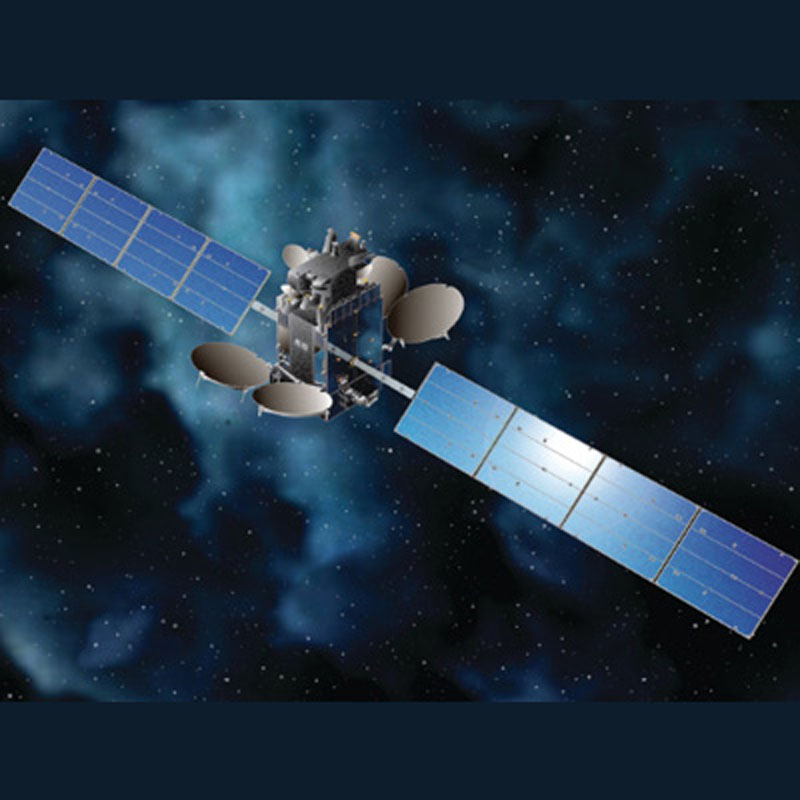
    MUMBAI: Asia’s leading satellite operator Asia Satellite Telecommunications Company Limited (AsiaSat) has reached an agreement with Globecast to deliver Deutsche Welle’s English-language program in HD to the Asia-Pacific region.

    DW in HD is an additional offering next to the existing TV channel in SD and radio services on AsiaSat 7. DW’s German-language program will continue its service across Asia via AsiaSat 5.

    For the past 20 years, AsiaSat and DW have partnered to bring German information and culture to Asia. The enhanced service offering demonstrates their commitment to providing more high-quality and relevant content to Asia. The AsiaSat fleet’s comprehensive access to Asian TV viewers has enabled DW to upgrade viewing experience as well as harness audience with different language interests.

    AsiaSat’s VP Marketing & Global Accounts Sabrina Cubbon: “I’m very pleased to extend our offerings of DW’s programs through the Globecast partnership. Both are long-term clients of AsiaSat. Moving to HD will definitely improve viewer satisfaction and is a key tool to strengthen our success in a competitive market!”

    “For DW, 2017 will be a year of not only expansion but solidification as well,” said DW’s director of distribution and sales Petra Schneider. “Content, brand and technological improvement will be more dynamic than ever before – the ability to constantly engage your audience in a consistent way and adapting to their technological watching habits remain our most important goals. The move towards HD is a step in the right direction.”

    Globecast managing director Biliana Pumpalovic said: “We are working in multiple markets to help broadcasters launch HD services and we’re very pleased that DW has turned to us and AsiaSat. We have a strong partnership with AsiaSat and we can help customers understand specific market requirements from both technical and business perspective.”

  • AsiaSat 7: Globecast to distribute DW’s new HD channel

    AsiaSat 7: Globecast to distribute DW’s new HD channel

    MUMBAI: Asia’s leading satellite operator Asia Satellite Telecommunications Company Limited (AsiaSat) has reached an agreement with Globecast to deliver Deutsche Welle’s English-language program in HD to the Asia-Pacific region.

    DW in HD is an additional offering next to the existing TV channel in SD and radio services on AsiaSat 7. DW’s German-language program will continue its service across Asia via AsiaSat 5.

    For the past 20 years, AsiaSat and DW have partnered to bring German information and culture to Asia. The enhanced service offering demonstrates their commitment to providing more high-quality and relevant content to Asia. The AsiaSat fleet’s comprehensive access to Asian TV viewers has enabled DW to upgrade viewing experience as well as harness audience with different language interests.

    AsiaSat’s VP Marketing & Global Accounts Sabrina Cubbon: “I’m very pleased to extend our offerings of DW’s programs through the Globecast partnership. Both are long-term clients of AsiaSat. Moving to HD will definitely improve viewer satisfaction and is a key tool to strengthen our success in a competitive market!”

    “For DW, 2017 will be a year of not only expansion but solidification as well,” said DW’s director of distribution and sales Petra Schneider. “Content, brand and technological improvement will be more dynamic than ever before – the ability to constantly engage your audience in a consistent way and adapting to their technological watching habits remain our most important goals. The move towards HD is a step in the right direction.”

    Globecast managing director Biliana Pumpalovic said: “We are working in multiple markets to help broadcasters launch HD services and we’re very pleased that DW has turned to us and AsiaSat. We have a strong partnership with AsiaSat and we can help customers understand specific market requirements from both technical and business perspective.”

  • DW News eyes greater coverage on S. Asia riding on reach in India

    DW News eyes greater coverage on S. Asia riding on reach in India

    NEW DELHI: German public service broadcaster Deutsche Welle, which launched its 24-hour English news channel in India on 22 June, 2015, is committed to increase its coverage on south Asia from the current 30 per cent, riding on its large scale reach in India. While the company’s flagship channel DW had started out with 300 TV homes in India, DW News now beams in 71 million TV households across direct to home (DTH) and cable platforms.


    DW News is aiming to increase its coverage in India of local issues as well as highlight local heroes and has appointed two India correspondents for the same. Speaking to Indiantelevision.com, DW head of news and current affairs Carsten von Nehman said, “Now that we have two correspondents in India, we hope that there will be greater coverage.”


    DW News India head Sudeep Malhotra added that the channel is available on DTH platforms namely Dish TV, Airtel and DD Freedish. It is also available on cable networks including Asianet, Hathway, DEN Network, InCable Network, Ortel and GTPL. The programmes are beamed via ASIASAT 7 satellite. According to him, the channel’s viewers included teens to people in their mid or late forties.


    According to von Nehman, the channel’s morning slots were generally devoted to Europe, while the early afternoon slots were about news from south Asia. The late afternoon slots were on African news and the night shows related to North America. This had been planned meticulously based on the time zones in these respective countries.


    He said apart from news on the hour, highlights included the lifestyle shows like EuromaxxArts 21 and Tomorrow Today. Other show include Discover GermanyGlobal 3000In Good Shape, Kick-off (DW has a tie-up with the German Football Association) and the political talk show Conflict Zone with Tim Sebastian.


    Asked about the marketing of the channel, von Nehman said that there would be no advertising in newspapers or elsewhere. Marketing was being done more subtly through involving viewers via contests and interactions.


    “The new DW TV opens a window to the world for our viewers in South Asia. DW offers a unique perspective that is especially valued by local business and opinion leaders and DW News will now provide them with insights into international head-lines and the details behind regional issues,” said DW head of distribution Asia Dorothee Ulrichs. 


    German ambassador Martin Ney and Prasar Bharati CEO Jawhar Sircar were the main speakers at the formal launch in India.


    It may be recalled that Prasar Bharati had signed a memorandum of understanding (MoU) with DW last year paving way for distribution of DD India on DTH platform of Hotbird-13B Satellite and the reciprocal distribution of DW-TV on DD Freedish. 


    According to Ney, India had Germany had many things in common, including federalism, a free press and healthy trade relations. “Germans are curious to know more about India and this is evident from the growing number of tourists to Germany from this country,” he said.


    Sircar said the primary aim of a public service broadcaster should not be to impose any news or information on the viewers, and leave it for the consumer to decide.


    “India has over 400 news channels and so there’s ample choice, but the real challenge lies in getting to the 150 million cellphones since the consumer is not using the mobile to get information,” Sircar said.


    DW is Germany’s international broadcaster with content in 30 languages. The flagship channel DW provides analysis and insights to viewers around the globe, reporting on important issues in English 24/7.

  • DD India’s Europe transmission uninterrupted by Deutsche Welle contract expiry

    DD India’s Europe transmission uninterrupted by Deutsche Welle contract expiry

    NEW DELHI: With Doordarshan’s contract with German pubcaster Deutsche Welle ending soon, the transmission of DD’s international channel DD India may go off the Hotbird European satellite.


    However, Doordarshan sources told Indiantelevision.com that DD India is available and will continue to be available to European viewers via the INSAT 4B’s connectivity with IS 20 satellite.


    Sources also said that the Prasar Bharati Board was considering various options available apart from IS 20, and will take a decision shortly.


    The agreement with Deutsche Welle was a year-long agreement on barter basis under, which India was using the German pubcaster’s transponder on Hotbird and was transmitting their German channel on an Indian satellite.


    Sources said that the stoppage of use of Hotbird will not mean depriving European viewers of DD India as the IS 20 transmission was on.

  • Prasar Bharati’s channel of autonomy

    Prasar Bharati’s channel of autonomy

    Seldom have government ventures succeeded in democratic India for variety of beliefs and prejudices.  Inherent security has ensured complacency in government servants with invisible accountability resulting in almost every public sector unit crashing gradually but also becoming liability to the exchequer. 


    Such ailing commercial initiatives are numerous like Air India, IDPL and HMT to name a few.  As for pure government, the performance is not even measured to stem the existing rot.  The nation coughs up large sums on salaries to maintain archaic British systems founded on in fructuous and dilatory work culture. 


    Doordarshan and AIR, the once monopolistic moghuls of video and audio arms of Information & Broadcasting Ministry, with 48000 staff and huge infrastructure as part of Prasar Bharati are under siege from the commercial private channels. The staff is till date government employees on deemed deputation status with no powers to Prasar Bharati to infuse fresh blood or promote them in the last two decades of its existence resulting in a chaotic work force with rock bottom morale with no regulation of conditions of service for employees. Most programmers of Prasar Bharati have long forgotten to produce quality content, the cadre having been decimated over the years and the engineering cadre too losing sheen with administrative impediments and faulty staff pattern, with 1:10 teeth-to-tail ratio. 


    As of today, Prasar Bharati must be the only government funded organisation with 25 cutting edge vacancies of Additional Director Generals out of 33 and 148 Deputy Director Generals out of 151 in the programme cadre creating a painful vacuum of leadership that is meant for content creation leaving the reign of DD and AIR Kendras to lower officials or to broadcast engineers by default.  Though well intentioned, Prasar Bharati, the national public service broadcaster, remains a still born child even today with shadow of government continuing despite an Act of Parliament that envisaged emergence of a BBC like institution to educate, inform and entertain people of India and Indian origin abroad. 


    Successive governments could not correct the infirmity due to inflexible approach and archaic regulations providing a sure recipe for self-destruction and resulting in natural downfall in TV ratings and Doordarshan seriously lacking audience connect.  While talking of arm’s length in governing, Prasar Bharati, the successive government’s depicted its autonomy as an oxymoron which never exists in real life. 


    But for the first time ever, after taking over, Minister of Information and Broadcasting (MIB) said, “My aim was to make Doordarshan and state-run All India Radio first choice of viewers.”  Living up to the expectations, the minister has blessed Doordarshan on their maiden effort to reach Indian diaspora through Deutsche Welle, Germany’s Public Service Broadcaster, by riding DD India, the international channel on its Hotbird 13B satellite with the reciprocal arrangement of showing each other’s channel in their bouquets in DTH platform. 


    ‘Hotbird’ has a total of whopping 1117 free-to-air TV channels with 124 English language channels to include BBC, CNN, CCTV, France 24, EuroNews, Al-Jazeera to name a few.  This satellite being the most chosen one by European countries because of its polarisiation and technical reach of 120 million TV homes in Europe, North Africa and Middle East, Prasar Bharati undoubtedly could not have got a better opportunity. 


    Being a public broadcaster, Prasar Bharati cannot compare itself with other commercially driven private channels of India as far as telecasting current Indian views and heralding the cause of fine arts showcasing heritage of India and cultural diversity through vibrant content being planned for ‘DD India’. 


    Government of India was spending to the tune of Rs 24 crore-Rs 30 crore per annum since 1995 to 2011 by hiring transponder of ‘PanAmsat’ later ‘IntelSat’ without last mile connectivity and insignificant viewership. Kudos to Jawhar Sircar and team that has ensured Doordarshan reaches to 120 million viewers across the globe to witness India as it dawns through a new image Doordarshan. 


    Countries like Japan, China, Russia and France spend between Rs 4000 and Rs 8000 crore per annum to ensure global reach for their international channels. Prasar Bharati on its part strongly aims at a content strategy considering cultural and other sensitivities of countries that would receive Doordarshan transmission with closer cooperation with Ministries of External Affairs and Overseas Indian Affairs as it rides on its maiden success in recent times truly blessed by the new government. 


    For Prasar Bharati, light seems to be at the end of the tunnel with our new Minister and his practical positivity.  “Faith is the promise of tomorrow.”


    (These are purely personal views of Prasar Bharati senior advisor VAM Hussain and indiantelevision.com does not subscribe to these views.)


  • DD to use Hotbird satellite to reach out to Europe, West Asia and North Africa

    DD to use Hotbird satellite to reach out to Europe, West Asia and North Africa

    NEW DELHI: Doordarshan will now be available on the direct-to-home (DTH) platform in the Free-to-Air (FTA) basic pack in the whole of Europe and Arab countries. This, as DD Freedish gets onboard EUTELSAT’s Hotbird-13 B satellite.


    This will help the public broadcaster project India’s viewpoint to the global audience in a cost effective manner. DD will be offered in the basic pack of the DTH service which does not require any individual to either subscribe or pay for viewing the channel.


    This has been made possible with the signing of a memorandum of understanding (MoU) between Prasar Bharati CEO Jawhar Sircar and the German public broadcaster Deutsche Welle (DW) head of distribution (Asia) Dorothee Ulrichs.


    Speaking on the occasion, Sircar said the MoU provided an important platform to position DD’s content globally. The content for the platform would be created based on the consultation with various stakeholders and the taste of the target audience.


    Congratulating Prasar Bharati on the occasion, Culture Secretary Ravindra Singh said the MoU had given an opportunity to project India’s soft power to the world. 


    The offer by DW is on extremely favourable terms and DD India does not even require a licence immediately.  The licence can be obtained within a period of one year if the experiment is successful.


    Placing DD on Hotbird DTH platform will also give it full access to the Middle Eastern GCC countries, where Indians work and reside in large numbers.


    Hotbird-13B is the most chosen satellite by European countries because of its polarity.  It has a reach of 120 million homes in the whole of Europe, Northern Africa and the Middle East. The DTH platform has a total number of 1543 TV channels of which 1117 TV channels are Free-to-Air. 124 English channels are available on this satellite, prominent amongst which are BBC, CNN, CCTV, RT, France24, VOA TV, Euromans, Sky News, Bloomberg TV, Al Jazeera, etc.  


    While Independence Day was initially the target date for launch, it is now expected to be put off to either 15 September which marks the date Doordarshan first began telecast in 1959 or Mahatma Gandhi’s birthday on 2 October as that will give sufficient time to plan the appropriate content.


    Prasar Bharati CEO Jawhar Sircar said that DD currently has a budget of Rs 2 crore to Rs 3 crore per year, for production of programmes, which has to go up and so other Ministries will need to pool in their resources/content for quality shows for the viewership abroad.


    “Programming will be mainly accessed from archival material and current shows, apart from some live and deferred live content,” he added.


    Sircar also admitted that DD India was available on Indian satellites to Europe, but this deal would help overcome the hurdle of getting people to see Doordarshan programmes. He said in India, DD Freedish continues to have the largest reach.


    He said the programming was mostly in English and Hindi, but subtitling may be used where necessary.


    Indian satellites reach around 34 countries, he said.


    He said Australian Broadcasting Corporation was expected to come on board DD Freedish within the next few weeks, and France was proposing to beam to India via an Indian satellite.


    Asked if the private channels which were beaming on the Freedish platform would also be able to reach Europe, he said DD Freedish had separate beams for public service broadcasters.


    Ulriche said there was a possibility that this may lead to co-productions with DD. She denied reports that DW had cut down on its coverage of India. Speaking to indiantelevision.com on the sidelines, Ulriche said DW beamed to the world in four beams: English, German, Arabic and Spanish. Asia was reached through the Asiasat I satellite.


    The five broad areas/regions to be covered are Central Asia, Middle East or West Asia, East Europe, West Europe and North Africa. The content would primarily target different cultures, keeping in mind the different languages of the regions like Turki, Persian, Arabic, French etc and English being reasonably the lingua franca.


    The shows for the target audiences would be decided in consultation with the concerned Ministries who have experience and expertise in the various fields and assessing the cultural and political sensitivities of the areas. A few private series will continue to be broadcast with their own view point of India. 


    Doordarshan has been trying since 1995 to build bridges of communication with Indians living abroad and also trying to showcase its diverse culture, values and rich heritage to the world by launching its first international channel.


    Upon the expansion of this  international channel into 24×7 transmission, Doordarshan signed an agreement with Pan Am SAT (later Intelsat) for achieving global footprint of its international channel in Asia, Africa, Europe and North America by placing it on ‘C’ & ‘KU’ band of IS-10 , IS-906 and G-13 satellites.


    In 2011, the services provided by Intelsat were dispensed with and the ccontract was terminated.


    From March 2011, Doordarshan started availing the service of ISRO’s INSAT-4B in both KU band & C band. However, the inadequacy of not being able to locate any significant global partners to distribute and connect DD to homes overseas continued.


    In the past also DD did make efforts to distribute its international channel in various parts of the world but made little progress in the last mile distribution due to policies which did not permit large scale spending on carriage fees.


    The pubcaster made renewed efforts through Indian missions to distribute its international channel abroad, but it could make little progress in this last mile distribution, because of several reasons. However, significant local partners could not be located to distribute and connect DD to homes overseas continued. 


    Sircar said many stereo type systems need to be broken up and the Public Broadcaster can do better. On the other hand, countries like Japan, Germany, China, Russia, France etc have invested heavily between Rs 4000 crore and Rs 8000 crore to ensure a global reach for its international channels.  

  • Sircar to address ‘World Global Forum’ in Germany

    Sircar to address ‘World Global Forum’ in Germany

    NEW DELHI: Prasar Bharati chief executive officer Jawhar Sircar is attending the first-ever ‘Global Media Forum 2014’ being organised by Deutsche Welle, Germany’s international broadcaster.


    The three-day international media congress in Bonn from 30 June to 2 July will among other things discuss how media is participating in the global trend towards greater active participation. The theme for this year is: From Information to Participation: Challenges for the Media.


    Prasar Bharati is among the two broadcasters from developing countries to have been invited to attend the meet, the other being Al Jazeera.


    Sircar will be taking part in a session on ‘The Future of Journalism and the Role of International Broadcasters.’ The discussion will be moderated by former BBC newscaster Tim Sebastian.


    The Summit will debate whether conventional media will be able to retain its position in this converged digital world where the lines between commentary and traditional journalistic reporting have been blurred., how international broadcasters can contribute to global diversity, how information services are likely to look like in the future, etc.


    Prominent guest speakers, including Google critic Jeff Jarvis and German Foreign Minister Frank-Walter Steinmeier will discuss how media is participating in the global trend towards community involvement and interest in political processes and decision-making.


    The discussions at GMF 2014 are bound to have far-reaching points of relevance for macro-visioning and formulation of media policy across the globe.

  • Intl broadcasters condemn rising threats to media freedom

    MUMBAI: The heads of BBC World Service, Deutsche Welle, Radio France Internationale, Radio Netherlands Worldwide and the Voice of America have called upon governments to honour the United Nations Declaration of Human Rights and “end any and all practices that hamper the rights of people everywhere to receive and impart information.”

    At their annual meeting in Hilversum, the Netherlands, the directors of the BBC World Service, Deutsche Welle, Radio France Internationale, Radio Netherlands Worldwide and the Voice of America issued a joint resolution denouncing what they termed growing trends towards media restrictions and attacks on journalists in many of the countries to which they broadcast.

    While acknowledging that each broadcaster has had different experiences, they spoke with one voice about a common concern – the “grave and rising threats to the right to gather information and communicate it across national borders.”

    Radio Netherlands Worldwide DG Jan Hoek said, “Our most important objective is to inform people without access to diverse media sources and viewpoints, who lack reliable and independent information.

    “In a progressively polarised environment where the media in many countries are encountering fierce curbs on their freedom to publish, we need to stand together to meet the needs of those millions of audiences worldwide who have come to depend on us as a vital source of trustworthy information.”

    According to several press monitoring organisations, press freedom has been on the decline in many countries in recent years. The Paris-based Reporters Without Borders has tracked an increase in the number of journalists killed at work each year since 2002.

    The five international broadcasters reach hundreds of millions weekly by radio, television and the Internet. Programmes are produced in 60 languages and broadcast worldwide through thousands of affiliate radio stations, television channels and cable systems.

    The joint statement reads, “In recent years, international broadcasters have seen grave and rising threats to the right to gather information and communicate it across national borders.

    “A growing number of countries – in Eurasia, Africa, South and East Asia, and Latin America – have restricted or blocked coverage of events of significant public interest. Journalists – including many working for our organisations – have been detained, arrested, expelled, kidnapped or killed.

    “Particularly disturbing are new efforts by some governments, through the licensing and regulatory process, to restrict or forbid local rebroadcasts of our programmes on radio and television through local partnerships. And more states are deliberately interfering with broadcast signals or are attempting to block or censor the internet.

    “As international broadcasters, we deplore such efforts – and call upon governments to end any and all practices that hamper the right of people everywhere to ‘receive and impart information and ideas through any media and regardless of frontiers.’” [United Nations Universal Declaration of Human Rights]

    “Each of us has a different history, a different mission, different resources and different experiences, but we all share a common goal – to present accurate and comprehensive news and information to audiences around the world. Accordingly, we oppose efforts to restrict this important work, and call upon governments worldwide to halt such practices.”