Tag: dessert

  • La Chérie’s Dancing Cloud Japanese cheesecake lands in Mumbai

    La Chérie’s Dancing Cloud Japanese cheesecake lands in Mumbai

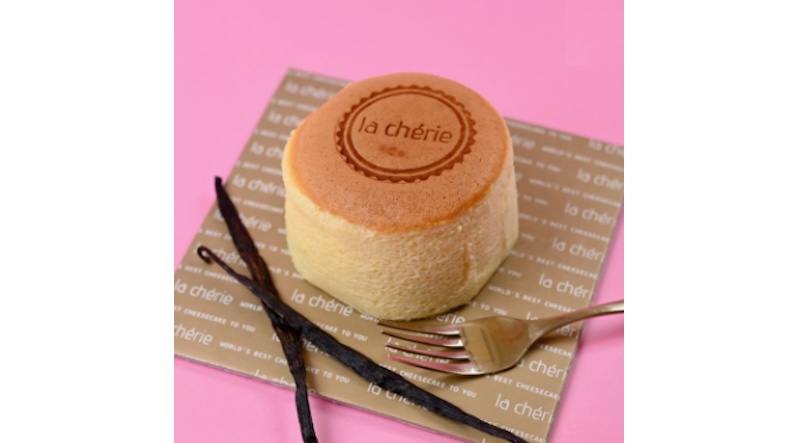
    MUMBAI: Pune’s much-loved dessert house La Chérie has wafted into Mumbai with its headline act — the Dancing Cloud Japanese Cheesecake — a dessert so airy it trembles like silk.

    A runaway hit in Pune, the souffle-style cheesecake has become a sensation for its cloud-soft texture, subtle sweetness and melt-in-the-mouth finish. Steering clear of dense, sugary cheesecakes, La Chérie’s version is baked fresh in small batches with no preservatives or artificial stabilisers — just pure technique and clean ingredients.

    “We wanted to offer something that feels familiar yet surprising — comforting but elegant,” says the La Chérie team. “The Dancing Cloud is our idea of quiet indulgence — it doesn’t shout; it stays with you.”

    With Mumbai currently in the grip of a Japanese culinary wave — from omakase dining to kawaii cafés — the brand’s entry could not be better timed. Its cloud kitchens serve a full range of cheesecakes, though the Japanese variant is the undisputed hero. Available on Swiggy and Zomato, the line-up includes the Mini Dancing Cloud (Rs 299), the Chocolate variant (Rs 359) and the Big Dancing Cloud Whole Cheesecake (Rs 899).

    What sets La Chérie apart is its restraint. There’s no gelatin, compound chocolate, agar or bulking agents — only precision baking and honest ingredients. Made with eggs, the cheesecake can be savoured warm or chilled, offering a different experience each time.

    Founded in 2020, La Chérie has built its name on craftsmanship and purity — from its signature Japanese cheesecake to its indulgent New York version. Its Mumbai launch signals more than just expansion — it’s a sweet shift in the city’s dessert culture: thoughtful, modern, and blissfully light.

  • “Ice creams has some catching up to do before it can replace traditional sweets”: Baskin Robbins’ Mohit Khattar

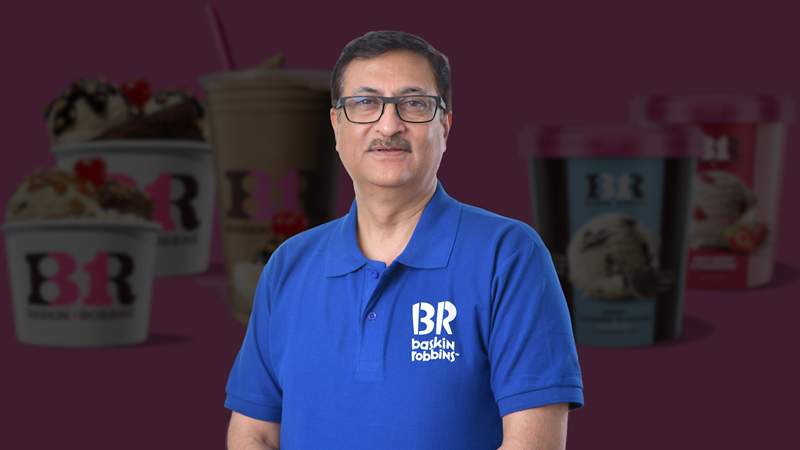
    “Ice creams has some catching up to do before it can replace traditional sweets”: Baskin Robbins’ Mohit Khattar

    Mumbai: As the festive season approaches in India, the consumer dessert market experiences a significant surge in demand, with households eagerly seeking delightful treats to celebrate. This period presents a unique opportunity for dessert brands to cater to the tastes and preferences of Indian consumers. The consumer market for ice cream is primed for significant growth. With an estimated value of nearly ₹18,000-₹20,000 crore, the ice cream industry has been experiencing a consistent annual growth rate of 15-17 per cent.

    In this context, several key trends and approaches are shaping the landscape. These include a nuanced understanding of the Indian palate, expansion plans to cater to seasonal demands, and the integration of technology to streamline supply chains and meet customer expectations.

    Indiantelevision.com in conversation with Graviss Foods Pvt Ltd (Baskin Robbins) CEO Mohit Khattar spoke on how brands like Baskin Robbins gearing up this festive season, key strategies on establishing a presence in Tier 2 and Tier 3 markets, understanding the needs of the Indian audience, and much more.

    Mohit Khattar, with nearly three decades of experience, has been with Graviss since 2017 as CEO. During his tenure, he has accelerated business growth, strengthened management, improved brand image across various channels, and fostered a strong social media presence. Since 2017, he has focused on creating a cohesive team and positioning Baskin Robbins as an industry leader through strategic partnerships, opportunity identification, and innovative product, packaging, and marketing initiatives.

    Edited Excerpts:

    On Baskin Robbins’ journey in India for three decades, adapting to meet the evolving tastes of Indian consumers, particularly during festive celebrations

    Baskin Robbins has been around in the world since 1945 and in India for the last three decades. In these last 30 years in India, a lot of things have changed. Just as the country has grown in every aspect, so has the brand Baskin Robbins. The flavours have evolved; the range of products has grown from mere ice creams to a wide range of ice cream-based desserts; the style of communication as well as the platforms on which we reach out to consumers, has undergone relevant changes. The parlours too look quite different from the parlours even a decade ago. The brand logo itself has undergone two radical changes in these 30 years.

    On Baskin Robbins preparations for the upcoming festive season in India

    The festive season is a time for merriment, bonding and indulgence. Though from an ice cream industry perspective, this coincides with the onset of winter in India. Yet Baskin Robbins has been actively bringing newness to its offering irrespective of season every year. For the upcoming season, Baskin Robbins will be introducing very exciting new flavours targeted not just kids but also we have something for adults. Additionally, there will be seasonal specials. We will talk about everything closer to the actual launch of these products. We will be creating awareness about all our new launches through social and digital platforms and of course through in parlour and in-market activations.

    On the company’s efforts to understand the Indian palate and introduce flavours that resonate with local tastes while maintaining global quality standards

    Just to give you an example, on one hand, very recently we introduced a blueberry with white chocolate flavour and on the other we introduced a caramel milk cake. On the one hand, we introduced cheesecake sundaes and on the other, we brought in Gulab Jamun sundaes. We have done this consistently over the last couple of years and balanced out our offering. The core guidance that we create and serve products with only the finest ingredients from qualified sources as well as quality and quantum of dairy fat stays constant. So, we are able to maintain the same creaminess and mouth feel that consumers can get pretty much anywhere in the world and expect from Baskin Robbins – while giving them a fairly wide range of exotic flavours to choose from. Also, I must add that we operate a very modern and well-equipped manufacturing facility that enables us to offer and maintain global quality standards. From this facility, we also supply to other parts of the world too.

    On Baskin Robbins’ response to the rising health consciousness among consumers, particularly in the context of festive offerings

    We do believe that while customers are beginning to veer towards healthier options when it comes to the festive season, customers are clear that they would rather enjoy without compromise of any kind. And if they do have to compromise, they would rather exercise portion control rather than consume a healthier version of their favourite. Keeping the above in mind, Baskin Robbins will be introducing two fabulous new bite-sized innovations for its customers. There are also other attractions lined up. We shall speak about it closer to the actual launch timelines which is around mid-October.

    On the key strategies to enter and establish a presence in Tier 2 and Tier 3 markets during the festive season

    And given the pace we maintain for our new stores, we open 8-12 every month. This is not specific to any season but is our broad strategy going forward to take the brand to where there is potential and demand. There are of course, still areas of opportunity in many pockets and a few states and we aim to plug these gaps as we go along. We intend to add another 60-80 cities over the next two years to our network.

    On Baskin Robbins’ approach to pricing its products in comparison to its nearest competitors in the ice cream industry

    Honestly, we have rarely followed any specific brand in the competitive set for the pricing of our products. Our approach has been to follow our customers instead. We price our products at affordable premium kind of pricing levels. This allows us to offer superior product quality while maintaining our aspirational brand appeal.

    On Baskin Robbins’ approach to innovation in creating unique and appealing flavours for the festive season

    This approach continues through the year. We have defined two launch windows wherein we introduce new products. One is to coincide the onset of summers in India and the other coincides with the festive period.

    On the possibility of ice creams serving as a compelling alternative to traditional sweets during the festive season and Baskin Robbins’ exploration of this in its festive offerings

    Ice creams has some catching up to do before it can replace traditional sweets. But with the kind of work happening across the industry, in terms of product innovation as well as distribution, etc., I do strongly believe that it will happen in the foreseeable future. We have over the last one year introduced a few products with traditional roots. One of them is the Gulab Jamun sundae – a modern take on an iconic Indian sweet and more recently we brought in the caramel milk cake flavour – again a new version of a very popular Indian sweet. While this just highlights a few cases, we are primed to do a lot more and to create excitement in myriad new ways going forward. Watch this space for our festive specials that are bound to warm your heart.

    On Baskin Robbins India’s approach to leveraging technology for efficient logistics and timely delivery during the festive rush and the strategies are being employed to optimize its presence across online and offline channels to reach consumers during this season

    We also operate a digital loyalty cum rewards program that identifies and segments customers to enable us to manage and drive sales performance. Additionally, we have more recently moved to e-bills and an option is given to customers to choose between paper or e-bills. On e-bills customers are served information on new products as well as we track their satisfaction levels with their last transaction and experience. Our website for e-commerce is already live and customers can chose to buy not just from aggregator platforms like Swiggy or Zomato or E-com and quick-com platforms like Blinkit or Instamart but also directly from the company’s own website. The approach is to make products available across channels.

    On Baskin Robbins’ outlook for sales growth and customer engagement during the upcoming festive season, and the KPI being monitored

    The season with Rakshabandhan has begun well. While it may be too early to say this, I expect it to be another strong season for us with a growth of around 20 per cent over the same period last year. We track growth in volumes, average revenues, growth in number of outlets as well as in share of offline and online revenues as performance indicators.

    On Baskin Robbins’ agenda for the festive season, anticipated promotions, collaborations, or unique offerings to engage with customers

    The short answer is yes. We have a very interesting cross-category collaboration in store based on which we have developed several products for our portfolio. There will also be Indian as well as international favourites coming up. We will have something of a very Insta-friendly product version too!

  • Fiction is staple diet while non- fiction is the dessert – Anuj Poddar

    Fiction is staple diet while non- fiction is the dessert – Anuj Poddar

    MUMBAI:  Over the last one year, Viacom 18’s Marathi channel Colors Marathi, has been a game changer in the Marathi television space. From a single destination of leading high octane events to being the home to varied fiction and non-fiction content, Colors Marathi has become synonymous with Marathi entertainment. Over a period of time, Colors Marathi has seen tremendous growth, not only in the viewership, but also in advertising profiling.

    Speaking with Indiantelevision.com, Colors Marathi head Anuj Poddar said, “We have benefited from the expansion of the market. Our viewership has grown by 2.4 times or 240 per cent this year from last year. We had 15 per cent relative share. Today we have 36 per cent share. If we talk about the others, Star Pravah has gone down from 22 per cent share to 12 per cent while Zee Marathi has gone down from 63 per cent to 52 per cent share. Therefore Colors Marathi has grown and advertisers have started noticing us and are coming to us.”

    Adding further, Poddar said, “This year we have got 160 advertisers which is huge number to get on board. And, both the old and new advertisers have increased spends on the channel. Therefore, Colors Marathi is growing healthily.”

    Nissan Motor Co, Samsonite Corporation, Hector Beverages, LimeRoad.com, Oxigen Services India, Scholl Piramal India, Cipla, JSW Group, Indian Oil Corporation, P.N Gadgil & Sons and Pernod Ricard India are the some of the brands that the channel has get on board.

    Over the last one year Colors Marathi has climbed up from the number three position to number two according to Broadcast Audience Research Council (BARC) India data. Also among the top five programmes, Colors Marathi has three slots. Assa Sasar Surekh Bai was the top rated show in the genre with 1609 Impressions’ 000 in week 13 of BARC data.        

    “For any GEC to do well on a consistent and sustainable basis, its fiction shows have to do well. You cannot say a channel is doing well unless its fiction does well. But fiction is also not enough by itself, you need to have a wide variety of content and non-fiction brings that variety. There is that certain segment of audience that comes for non-fiction, it could be male or kids. It brings more energy to the channel. Therefore both need to do well. But fiction is the staple diet and non-fiction is the dessert (Mithai) that adds spice to the staple diet. This year, both have worked well for us. Fiction has done really well but not at cost of non-fiction,” was Poddar’s quick rejoinder.   

    Speaking about the strategy, he mentioned, “There is only one strategy and the strategy is to make good content. We don’t follow what others are doing. I believe in making good content and then people will come to watch, but good content doesn’t mean that it is first good for me. It should be good from the context of my audience. We spend a lot of energy on research because ratings numbers are just a report card. They won’t tell you what audience liked or disliked.”

    According to the FICCI KPMG 2016 report, the largest share of the regional TV market is from the Tamil and Telugu regions. The Tamil genre has 25.7 per cent share while the Telugu genre has 24.4 per cent share. The Marathi genre saw a share of 4. 6 per cent in the regional TV space. “Tamil and Telugu are the non-HSM markets. They don’t have Hindi competition, so are lesser fragmented. But in Maharashtra I don’t compete only with Marathi channels, but also with other Hindi general entertainment channels. So yes, the share of Marathi market is lower than the share of the Tamil and Telugu markets.  But even in that case we are doing well, and that’s a bigger achievement,” said Poddar.

    The Marathi genre is performing well, but nowadays the audience that is watching movies is not only Marathi people but also across the genres and that’s why the these movies are doing well.  Poddar contended, “80 per cent of satellite movies are unsold, which is putting pressure on the satellite price. But filmmakers are getting a big boost from theatrical revenue while the satellite cost is going down. I think it’s a buyers’ market today, and in that we are lucky because we have good films to choose from. We get the films at the price we want. We are also investing back into films as we market these films. We showcase these films and give a second lease of life to them.”

    “From the ratings perspective, an early premier of a movie gives spikes, but now the scenario is different. Today movies are not ratings driven,’ he further added.

    Speaking about the market and promotional innovation for movies, he informed, “We believe that when we are showcasing movies on television, we have to create that aura all over again and we want to market the films with the same importance as other shows. We have had different initiatives ranging from on ground activities to social media traction. Even all the artists have joined us to push the release of a film. So it is like giving a second marketing promotion to the film.”

    Poshter Girl from Viacom18  Motion Pictures is the latest offering that the channel has. Talking about the two markets and their acquisition costs, Poddar informed that Hindi GEC is also in a phase correction mode, except for a few legacy deals that have been done. “If you see the peak of Hindi GEC it has gone down from Rs 50-60 crores to Rs 30-35 crores. I don’t think our biggest film is even 10 per cent of that. Its acquisition price is 5- 7 per cent of a Hindi GEC blockbuster’s price.”

  • Fiction is staple diet while non- fiction is the dessert – Anuj Poddar

    Fiction is staple diet while non- fiction is the dessert – Anuj Poddar

    MUMBAI:  Over the last one year, Viacom 18’s Marathi channel Colors Marathi, has been a game changer in the Marathi television space. From a single destination of leading high octane events to being the home to varied fiction and non-fiction content, Colors Marathi has become synonymous with Marathi entertainment. Over a period of time, Colors Marathi has seen tremendous growth, not only in the viewership, but also in advertising profiling.

    Speaking with Indiantelevision.com, Colors Marathi head Anuj Poddar said, “We have benefited from the expansion of the market. Our viewership has grown by 2.4 times or 240 per cent this year from last year. We had 15 per cent relative share. Today we have 36 per cent share. If we talk about the others, Star Pravah has gone down from 22 per cent share to 12 per cent while Zee Marathi has gone down from 63 per cent to 52 per cent share. Therefore Colors Marathi has grown and advertisers have started noticing us and are coming to us.”

    Adding further, Poddar said, “This year we have got 160 advertisers which is huge number to get on board. And, both the old and new advertisers have increased spends on the channel. Therefore, Colors Marathi is growing healthily.”

    Nissan Motor Co, Samsonite Corporation, Hector Beverages, LimeRoad.com, Oxigen Services India, Scholl Piramal India, Cipla, JSW Group, Indian Oil Corporation, P.N Gadgil & Sons and Pernod Ricard India are the some of the brands that the channel has get on board.

    Over the last one year Colors Marathi has climbed up from the number three position to number two according to Broadcast Audience Research Council (BARC) India data. Also among the top five programmes, Colors Marathi has three slots. Assa Sasar Surekh Bai was the top rated show in the genre with 1609 Impressions’ 000 in week 13 of BARC data.        

    “For any GEC to do well on a consistent and sustainable basis, its fiction shows have to do well. You cannot say a channel is doing well unless its fiction does well. But fiction is also not enough by itself, you need to have a wide variety of content and non-fiction brings that variety. There is that certain segment of audience that comes for non-fiction, it could be male or kids. It brings more energy to the channel. Therefore both need to do well. But fiction is the staple diet and non-fiction is the dessert (Mithai) that adds spice to the staple diet. This year, both have worked well for us. Fiction has done really well but not at cost of non-fiction,” was Poddar’s quick rejoinder.   

    Speaking about the strategy, he mentioned, “There is only one strategy and the strategy is to make good content. We don’t follow what others are doing. I believe in making good content and then people will come to watch, but good content doesn’t mean that it is first good for me. It should be good from the context of my audience. We spend a lot of energy on research because ratings numbers are just a report card. They won’t tell you what audience liked or disliked.”

    According to the FICCI KPMG 2016 report, the largest share of the regional TV market is from the Tamil and Telugu regions. The Tamil genre has 25.7 per cent share while the Telugu genre has 24.4 per cent share. The Marathi genre saw a share of 4. 6 per cent in the regional TV space. “Tamil and Telugu are the non-HSM markets. They don’t have Hindi competition, so are lesser fragmented. But in Maharashtra I don’t compete only with Marathi channels, but also with other Hindi general entertainment channels. So yes, the share of Marathi market is lower than the share of the Tamil and Telugu markets.  But even in that case we are doing well, and that’s a bigger achievement,” said Poddar.

    The Marathi genre is performing well, but nowadays the audience that is watching movies is not only Marathi people but also across the genres and that’s why the these movies are doing well.  Poddar contended, “80 per cent of satellite movies are unsold, which is putting pressure on the satellite price. But filmmakers are getting a big boost from theatrical revenue while the satellite cost is going down. I think it’s a buyers’ market today, and in that we are lucky because we have good films to choose from. We get the films at the price we want. We are also investing back into films as we market these films. We showcase these films and give a second lease of life to them.”

    “From the ratings perspective, an early premier of a movie gives spikes, but now the scenario is different. Today movies are not ratings driven,’ he further added.

    Speaking about the market and promotional innovation for movies, he informed, “We believe that when we are showcasing movies on television, we have to create that aura all over again and we want to market the films with the same importance as other shows. We have had different initiatives ranging from on ground activities to social media traction. Even all the artists have joined us to push the release of a film. So it is like giving a second marketing promotion to the film.”

    Poshter Girl from Viacom18  Motion Pictures is the latest offering that the channel has. Talking about the two markets and their acquisition costs, Poddar informed that Hindi GEC is also in a phase correction mode, except for a few legacy deals that have been done. “If you see the peak of Hindi GEC it has gone down from Rs 50-60 crores to Rs 30-35 crores. I don’t think our biggest film is even 10 per cent of that. Its acquisition price is 5- 7 per cent of a Hindi GEC blockbuster’s price.”