Tag: Design

  • KDY 2016: Handsome Frank on the business of creativity

    KDY 2016: Handsome Frank on the business of creativity

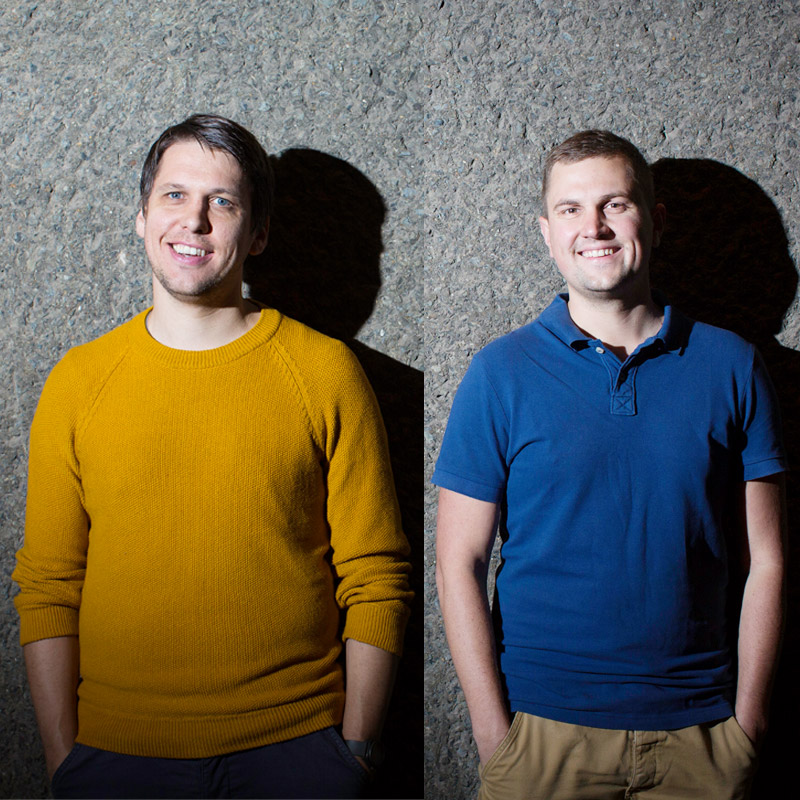
    JAIPUR: They were once in the mad corporate race, but opted out to discover the joy of working for themselves and the artistic freedom it brings. Since then, Tom Robinson and Jon Cockley have tried to give the same to the artist community cross the world — by bringing them under their banner of Handsome Frank, a UK based illustration agency.

    What Jon and Tom really do is represent close to 35 international illustrators, including the likes of Jean Jullien and Mallika Favre, and connect them to clients, and vice versa.

    Unlike any other job, Tom and Jon are required to understand each artist and their ways of expression to find a befitting job that respects the artist’s unique creative expression.

    Indiantelevision.com caught up with the dynamic duo during their visit to Jaipur for Kyoorius Designyatra 2016 and picked their brains on how they stay true the artists and still not compromise on business. In short, what it takes to keep the artists happy and the agency profitable. Excerpts from the conversation:

    Q1. How do you manage the business and keep it separate from the creative process so artists can only focus on their work?

    Tom:  There are four of us who take turns to handle things. At times one does the editorial and design, while another deals with the client.

    Jon: Apart from our varied skill sets, if the brief from the client is very technical, and requires animation and CGI, then Tom is more likely to pick it up.

    Q2. How involved are you in each of the projects?

    Tom: When we are picking an illustrator for a particular project, we keep an eye on the commercial appeal, making sure that the client is going to look at it positively, be it advertisement in print or a TV commercial. Once the project kicks off, our involvement varies quite a lot. Some artists are very hands on themselves, and we are comfortable just being copied on the mails with the clients.

    But there are illustrators who don’t want that at all. So we come forward and sort of act as a bridge between the client and the illustrator. It is about learning and respecting how each illustrator wants to work.

    Q3. They say it is hard to work with creative people like artists and illustrators. How do you change the perception?

    Jon: For me there is a big difference between an artist and an illustrator. An artist essentially creates for himself or herself and puts the art out to the world. An illustrator is hired to bring somebody else’s ideas to life. All illustrators we represent are very aware of this.

    Tom: Illustrators are also people and have emotions. They are not machines at the other end of the illustration process who just churn out work. You have to take into account people’s emotions. Some illustrators can get offended by feedback and a lot of clients write feedback in a very pragmatic and stale way that can come across as hurtful. That is when the professionalism comes in. Some learn the hard way that a negative feedback is sometimes for the better.

    Q4 .Have you worked with Indian clients/brands? Are you open to work in India?

    Jon: Yes, a couple of them, and we are open to accepting more work from here. When we started off, we thought we would only operate within the UK, but in the last five years we were surprised at how people from all over the world were reaching out to us, wanting to work with our illustrators. We have done work is Australia, South Korea, New Zealand, the US and across Europe. We judge a brief on things other than the geographical boundaries. We judge it on whether the project will be exciting or not. Obviously the timing and budgets do play a role for the artists.

    Q5. Do illustrators, especially independent ones, need help with marketing? Is marketing important to acquire good assignments?

    Jon: I agree that artists too need marketing but I don’t think they need an agent to do the job. A lot of them think they need an agent to find for them  work in the market. I think it’s the value of their work, built through their portfolio, which takes them through to the market and gets them more work. Good work will always get noticed.

    Tom: I doubt there are enough hours in a day for creative people to be business-like and do self promotion, especially when they are busy creating. To have a secondary voice spreading the word about their work is a huge help to them, I feel.

  • Star India is one of the very few to get its design right: Kyoorius’ Rajesh Kejriwal

    Star India is one of the very few to get its design right: Kyoorius’ Rajesh Kejriwal

    At a time when content and disruption are mentioned in the same breath in every digitally charged summit, design often takes a backseat. It’s an open secret that several marketers, be they traditional or digital, neglect design. In fact, a couple of years ago the understanding of the subject or its importance in driving brands was practically not there.  Very little was done in the country to drive conversations around design and innovation.

    Things would have remained the same, were it not for Kyoorius, a one stop place that connects designers, brands, creatives and every stakeholder in between. Kyoorius founder and CEO Rajesh Kejriwal welcomed the change that his endeavour brought to the industry. Its flagship awards show, Kyoorius Creative Awards and design and innovation conference Kyoorius Designyatra have set benchmarks year after year. Now the Kyoorius Creative Awards is in its 3rd edition and has the likes of R. Balki, Kartik Sharma, and Fergus O’Hare on board as jury members, while Kyoorius Designyatra celebrated ten years during its last edition. Kyoorius has also expanded with a marketing and communication division with MELT, where it focuses on emerging technology and digital marketing.

    In a candid chat with indiantelevision.com’s Papri Das, Rajesh Kejriwal opens up on the state of design in the industry, what to expect from Kyoorius Creative Awards and MELT 2016 and how most of the media brands haven’t cracked the design code.

    Excerpts:

    Is there anything new that we can expect at MELT 2016?

    This year at MELT we will have 14 halls with parallel sessions. The content itself is massive compared to last year with almost 60 speakers on board. We don’t like to emulate the whole ‘panel’ system as that gives the audience an information overload with no real crux.

    We have reached out to GroupM, SAP, Kinetic and Happy Finish who we expected to participate in this year’s MELT in Delhi. Now that we have postponed MELT and we are likely to hold it in August, we are actually looking at two expo areas. One would be heavy on new  technology that might interest marketers such as Gear from Samsung etc., and the other would have the GroupMs’ and Genesis, etc., of the industry.

    Why was MELT 2016 postponed?

    In every event we do, we ensure that the content we put out is very strong. I have to hand it to the curation team that felt the content and line-up for MELT, which was scheduled earlier this year, didn’t match up to standards, and therefore we rescheduled it.

    What have been the game changers in the design and creative industry?

    Digital was no doubt the biggest game changer. From the Indian perspective, in the last five years, the major change has been the acceptance of design by corporate India as a strategic tool, not an aesthetic one.  It is not looked at with a fresh perspective by business leaders now. Consider this as an immense change in the mindset of people. This has led to designers being treated with a lot more respect and seriousness. Because it is only when you have good clients with big budgets can you work wonders for them. If you are paid peanuts there is only so much you can do.

    According to you, which brand in India has made the best use of design in recent times?

    In the FMCG sector, I would say Paperboat is a success story when it comes to brilliant use of design. Right from the material it uses for packaging, its layout and how it is branded, Paperbaot has paid attention to detail, not just in terms of looks, but what that look conveys to its consumers. I am glad to see a newcomer in the field understanding and using design creatively. Fastrack from Titan has always stayed ahead of the design curve. It has nailed it down perfectly well.

    Royal Enfield India is currently using design very strategically. Flipkart and Myntra too have done a good job. But these are all what I call the new Indian businesses.

    What about the media brands?

    When it comes to media and broadcaster channels, I feel all of them really need to redo their designs except for Star India. If you look at their packaging logo and interface from a visual perspective, Star has got it right. All the other broadcasters do not understand how important a cohesive language branding identity is. Design defines the DNA of a channel, and its identity. It surprises me that they don’t understand its importance, because some of these networks have global reach. One would expect them to see how international media use their design.

    If you look at the packaging, and everything, it doesn’t reflect the brand identity of the channels. If one were to take away all text and show the channel to us, I can tell which one Star is, but any other brand would be a hard guess, because the visual language is missing. It is sad because that is what binds the consumers to the brand. Being in a mass consumer industry, broadcasters should get their design right.

    There is a tendency amongst some media organisations to rebrand themselves, and while they are at it, they change it in parts and pieces. I would hear from them that they have changed their show packaging without changing their identity branding. I think that is the wrong way to go about it. Design can’t be done in bits and pieces.

    What according to you is going wrong with the design industry in India?

    Where most designs go wrong is when the company or CEO decides what design suits the company. Design isn’t an opinion, it’s a solution. The right design isn’t as per the CEO’s fancy, but as per the consumer needs.

    Let me tell you the difference between the old India and new India. For old India designers, you would go to them as a client and ask for a logo. They would show you a logo and tell you it’s the best for you as it was ‘fresh’. Has any client in the world has asked for a stale logo? It clearly means the designers created a good looking logo, and told a story to fit the logo with the company, whereas a good designer will find that story before designing the logo. A good designer will figure out the strategy, the positioning, the brand identity, the target group and manifest that into a design. New India does it the latter way. But there is still a lot of India stuck to the old ways.

    You initially were from the paper and printing industry. What made you take interest in the design and creative field?

    Predominantly we were paper merchants who would purchase paper manufactured in other markets, bring it to India, brand it and sell it here. One of the ways to fuel these purchases was to influence the decision makers, i. e., the creatives and designers. Designyatra was first thought of to reach out to our clients and start a design revolution in India.

    To fuel this design movement, we had to expose the industry prevalent in India to what was happening globally, and make them feel proud of being designers. To do away with the bureaucracy involved in the entire system, I decided to go with the non-profit format.  Suddenly from being a vendor to the industry I was their friend, so Designyatra and Kyoorius definitely helped my paper business.

    From being a promotional method to becoming the actual business; tell us how did Kyoorius evolve?

    It happened soon after the paper industry slid downhill, though it didn’t happen overnight. Gradually the entire set up changed. While being a business man it wasn’t too difficult for me, it was a difficult transition for Kyoorius. Earlier it acted as promotion for my paper business. Now when the model changed, Kyoorius had to be sustainable or profitable.

    When it really came down to making a difference in the industry, Kyoorius actually had to be profitable, not run up losses. It had to be actually profitable and use that profit to make a positive difference in the industry. So that transition from not caring whether it made money or not to making Kyoorius sustainable was the real challenge.

    How did you manage this transition?

    Prior to this realisation we didn’t have sponsors. When we decided to make it sustainable, one of the obvious means for any conference to be functional is to have a sponsor. So we looked for one. This wasn’t easy because no one believed in the design industry in 2008 and 2009. In those days if you did something in the advertising sphere, major broadcasters would easily come on board. But design was an offbeat road to travel on that only a small breed of people was interested in.

    We were lucky in 2011, we managed to get Zee to take cognizance of the fact that design was important for the industry and the country and that’s how it came on board. And since then, Zee has remained a partner for Kyoorius and signed on year after year. We also started looking at pricing the tickets right, something which we didn’t pay attention to earlier.

    Post transformation what is the current structure of Kyoorius now?

    Currently we have two sides to Kyoorius. One is the marketing and communication section where advertising, media and digital, social media and emerging technologies or MarTech is covered, and the second is the design and innovation side.

    These are the two broad headers under which we operate, mostly because if you have a capable team, you can’t have a single event a year to keep it occupied.

    What is your take on sponsorship for events?

    For the creative awards, we have Colors, HT, Rishtey Happy Finish and Kinetic. Apart from this we have supporting partners like Addikt.tv etc.

    If an award show has to sustainably exist for a long period of time, in an ideal scenario, 80 per cent of the revenue should come from the ticketed sales or entries in guest registration. In India it is actually the reverse. Sponsorship is between 70 to 80 per cent while the rest is maybe tickets or miscellaneous.

    In our case thankfully, we have struck a healthier ratio with 60 per cent from sponsorship and 40 per cent from ticket sales. I hope we can soon invert this ratio for Kyoorius Creative Awards, as we have done for Designyatra.

    MELT is a difficult IP when it comes to ticket sales as it will always be about partners. I can’t charge each person Rs 20,000, so the prices for MELT tickets will always be lower. Given the content we showcase in MELT, the budget can only be met through sponsors.

    Last year it was Rs 8,000, and this year we are planning to have another optional ticket without dinner included that will be sold for  much less. It’s for those newcomers in the industry or students who want to attend, but for whom budget is an issue.
  • Star India is one of the very few to get its design right: Kyoorius’ Rajesh Kejriwal

    Star India is one of the very few to get its design right: Kyoorius’ Rajesh Kejriwal

    At a time when content and disruption are mentioned in the same breath in every digitally charged summit, design often takes a backseat. It’s an open secret that several marketers, be they traditional or digital, neglect design. In fact, a couple of years ago the understanding of the subject or its importance in driving brands was practically not there.  Very little was done in the country to drive conversations around design and innovation.

    Things would have remained the same, were it not for Kyoorius, a one stop place that connects designers, brands, creatives and every stakeholder in between. Kyoorius founder and CEO Rajesh Kejriwal welcomed the change that his endeavour brought to the industry. Its flagship awards show, Kyoorius Creative Awards and design and innovation conference Kyoorius Designyatra have set benchmarks year after year. Now the Kyoorius Creative Awards is in its 3rd edition and has the likes of R. Balki, Kartik Sharma, and Fergus O’Hare on board as jury members, while Kyoorius Designyatra celebrated ten years during its last edition. Kyoorius has also expanded with a marketing and communication division with MELT, where it focuses on emerging technology and digital marketing.

    In a candid chat with indiantelevision.com’s Papri Das, Rajesh Kejriwal opens up on the state of design in the industry, what to expect from Kyoorius Creative Awards and MELT 2016 and how most of the media brands haven’t cracked the design code.

    Excerpts:

    Is there anything new that we can expect at MELT 2016?

    This year at MELT we will have 14 halls with parallel sessions. The content itself is massive compared to last year with almost 60 speakers on board. We don’t like to emulate the whole ‘panel’ system as that gives the audience an information overload with no real crux.

    We have reached out to GroupM, SAP, Kinetic and Happy Finish who we expected to participate in this year’s MELT in Delhi. Now that we have postponed MELT and we are likely to hold it in August, we are actually looking at two expo areas. One would be heavy on new  technology that might interest marketers such as Gear from Samsung etc., and the other would have the GroupMs’ and Genesis, etc., of the industry.

    Why was MELT 2016 postponed?

    In every event we do, we ensure that the content we put out is very strong. I have to hand it to the curation team that felt the content and line-up for MELT, which was scheduled earlier this year, didn’t match up to standards, and therefore we rescheduled it.

    What have been the game changers in the design and creative industry?

    Digital was no doubt the biggest game changer. From the Indian perspective, in the last five years, the major change has been the acceptance of design by corporate India as a strategic tool, not an aesthetic one.  It is not looked at with a fresh perspective by business leaders now. Consider this as an immense change in the mindset of people. This has led to designers being treated with a lot more respect and seriousness. Because it is only when you have good clients with big budgets can you work wonders for them. If you are paid peanuts there is only so much you can do.

    According to you, which brand in India has made the best use of design in recent times?

    In the FMCG sector, I would say Paperboat is a success story when it comes to brilliant use of design. Right from the material it uses for packaging, its layout and how it is branded, Paperbaot has paid attention to detail, not just in terms of looks, but what that look conveys to its consumers. I am glad to see a newcomer in the field understanding and using design creatively. Fastrack from Titan has always stayed ahead of the design curve. It has nailed it down perfectly well.

    Royal Enfield India is currently using design very strategically. Flipkart and Myntra too have done a good job. But these are all what I call the new Indian businesses.

    What about the media brands?

    When it comes to media and broadcaster channels, I feel all of them really need to redo their designs except for Star India. If you look at their packaging logo and interface from a visual perspective, Star has got it right. All the other broadcasters do not understand how important a cohesive language branding identity is. Design defines the DNA of a channel, and its identity. It surprises me that they don’t understand its importance, because some of these networks have global reach. One would expect them to see how international media use their design.

    If you look at the packaging, and everything, it doesn’t reflect the brand identity of the channels. If one were to take away all text and show the channel to us, I can tell which one Star is, but any other brand would be a hard guess, because the visual language is missing. It is sad because that is what binds the consumers to the brand. Being in a mass consumer industry, broadcasters should get their design right.

    There is a tendency amongst some media organisations to rebrand themselves, and while they are at it, they change it in parts and pieces. I would hear from them that they have changed their show packaging without changing their identity branding. I think that is the wrong way to go about it. Design can’t be done in bits and pieces.

    What according to you is going wrong with the design industry in India?

    Where most designs go wrong is when the company or CEO decides what design suits the company. Design isn’t an opinion, it’s a solution. The right design isn’t as per the CEO’s fancy, but as per the consumer needs.

    Let me tell you the difference between the old India and new India. For old India designers, you would go to them as a client and ask for a logo. They would show you a logo and tell you it’s the best for you as it was ‘fresh’. Has any client in the world has asked for a stale logo? It clearly means the designers created a good looking logo, and told a story to fit the logo with the company, whereas a good designer will find that story before designing the logo. A good designer will figure out the strategy, the positioning, the brand identity, the target group and manifest that into a design. New India does it the latter way. But there is still a lot of India stuck to the old ways.

    You initially were from the paper and printing industry. What made you take interest in the design and creative field?

    Predominantly we were paper merchants who would purchase paper manufactured in other markets, bring it to India, brand it and sell it here. One of the ways to fuel these purchases was to influence the decision makers, i. e., the creatives and designers. Designyatra was first thought of to reach out to our clients and start a design revolution in India.

    To fuel this design movement, we had to expose the industry prevalent in India to what was happening globally, and make them feel proud of being designers. To do away with the bureaucracy involved in the entire system, I decided to go with the non-profit format.  Suddenly from being a vendor to the industry I was their friend, so Designyatra and Kyoorius definitely helped my paper business.

    From being a promotional method to becoming the actual business; tell us how did Kyoorius evolve?

    It happened soon after the paper industry slid downhill, though it didn’t happen overnight. Gradually the entire set up changed. While being a business man it wasn’t too difficult for me, it was a difficult transition for Kyoorius. Earlier it acted as promotion for my paper business. Now when the model changed, Kyoorius had to be sustainable or profitable.

    When it really came down to making a difference in the industry, Kyoorius actually had to be profitable, not run up losses. It had to be actually profitable and use that profit to make a positive difference in the industry. So that transition from not caring whether it made money or not to making Kyoorius sustainable was the real challenge.

    How did you manage this transition?

    Prior to this realisation we didn’t have sponsors. When we decided to make it sustainable, one of the obvious means for any conference to be functional is to have a sponsor. So we looked for one. This wasn’t easy because no one believed in the design industry in 2008 and 2009. In those days if you did something in the advertising sphere, major broadcasters would easily come on board. But design was an offbeat road to travel on that only a small breed of people was interested in.

    We were lucky in 2011, we managed to get Zee to take cognizance of the fact that design was important for the industry and the country and that’s how it came on board. And since then, Zee has remained a partner for Kyoorius and signed on year after year. We also started looking at pricing the tickets right, something which we didn’t pay attention to earlier.

    Post transformation what is the current structure of Kyoorius now?

    Currently we have two sides to Kyoorius. One is the marketing and communication section where advertising, media and digital, social media and emerging technologies or MarTech is covered, and the second is the design and innovation side.

    These are the two broad headers under which we operate, mostly because if you have a capable team, you can’t have a single event a year to keep it occupied.

    What is your take on sponsorship for events?

    For the creative awards, we have Colors, HT, Rishtey Happy Finish and Kinetic. Apart from this we have supporting partners like Addikt.tv etc.

    If an award show has to sustainably exist for a long period of time, in an ideal scenario, 80 per cent of the revenue should come from the ticketed sales or entries in guest registration. In India it is actually the reverse. Sponsorship is between 70 to 80 per cent while the rest is maybe tickets or miscellaneous.

    In our case thankfully, we have struck a healthier ratio with 60 per cent from sponsorship and 40 per cent from ticket sales. I hope we can soon invert this ratio for Kyoorius Creative Awards, as we have done for Designyatra.

    MELT is a difficult IP when it comes to ticket sales as it will always be about partners. I can’t charge each person Rs 20,000, so the prices for MELT tickets will always be lower. Given the content we showcase in MELT, the budget can only be met through sponsors.

    Last year it was Rs 8,000, and this year we are planning to have another optional ticket without dinner included that will be sold for  much less. It’s for those newcomers in the industry or students who want to attend, but for whom budget is an issue.
  • Publicis bags the ‘Best In Category’ award; JWT leads metal tally with 5 gold, 21 silver and 21 bronze

    Publicis bags the ‘Best In Category’ award; JWT leads metal tally with 5 gold, 21 silver and 21 bronze

    MUMBAI: There couldn’t have been a better closure to the three day long celebration of advertising genius than the final night of Abbys 2016 that unfolded amidst the hedonic mix of music, creativity and intoxication. While the abundance of alcohol kept everyone in elevated spirits, the winners of the night were seen enjoying a different level of high as they walked up the stage to receive their metals.


    Continuing its winning streak, JWT once again snared the most number of metals, with five golds, 21 silver and 21 bronze that put it on the top spot with a metal tally of 47 metals. While the absence of a Grand Prix let down many, the newly introduced Best In Category award drew a lot of attention. It was Publicis Communication that bagged the Best In category award for its ground breaking work in ‘A Giant’s Story’ for Ambuja Cement, in the film craft category.


    On the newly introduced award, Percept Limited director Ajay Chandwani shared “You can consider it as a recognition above the gold awards, but not equal to Grand Prix. To evaluate the best in gold in each category, the jury was given an option to either select a grand prix or a best in category. Usually grand prix is awarded to a piece of work that has made a path breaking and game changing effort in the category. There was no work that amounted to that this year.”


    Apart from the Best In Category award, Publicis claimed four golds, four silver and four bronze metals, putting its total metal figure to 13. DDB Mudra also shone at the Abbys with four golds, four silver ad 15 bronze setting its total number of metals to 23. If one went by metal tally, Taproot Dentsu emerged as the clear second with 40 metals to its name – two gold, 19 silver and 19 bronze.


    A total of 10 categories’ winners were revealed on the third day. The category wise break up of winners is as follows.


    Ambient Media: Out of a total of fifteen metals, the jury gave away one gold, four silver and 10 bronze. JWT Mumbai bagged the one gold and bronze leading the category, followed by DDB Mudra with two silver and four bronze.


    In Design, Alok Nanda and Company took home a gold, three silver and three bronze making it a category leader. Alok Nanda and Company was followed by Publicis Communications with one gold, two silver and one bronze metal. Out Of Box was closely behind with a gold, silver and a bronze; and McCann World Group India with a gold and silver. A total of four gold, 12 silver and 24 bronze were given away in the category.


    Digital: As per the Goafest Organising Committee chairman Nakul Chopra Digital saw the most number of entries this year – a first in Goafest. There were a total of 614 entries, as compared to 548 last year. DDB Mudra took home gold and silver in the category making it the genre leader. R K Swamy BBDO brought home the second gold, followed by Experience Commerce taking home the final gold in the category. Taproot Dentsu also shone in the category with four silver awards.


    Integrated: DDB Mudra and Publicis Communications each received a gold and bronze metals in the category. Star India too was recognized with a silver for its exceptional work for Mauka Mauka.


    Out of Home:  With a total of 15 silver and 21 bronze given away in this category, there were many intense contests for the top position. JWT scored five silver and five bronze followed by Ideas@work bagging two silver and four bronze. There were no golds awarded in this category.


    Film Craft: Early Man Film bagged one gold, three silver and a bronze in the category followed by Flying Saucer pictures with a silver and gold.


    Film Single:  While Publicis Communications claimed the freshly introduced Best In Category award followed by a bronze, it was DDB Mudra that bagged the most number of metals with a gold, a silver and four bronzes.


    Print Single: Dentsu Creative Impact got one gold and four bronze metals to its name followed by Contract Advertising with a gold and bronze. Taproot Dentsu dominated the genre with five bronze and three silvers to its name.

    This year saw the Goafest Committee introducing two new categories or special Abbys as they are otherwise being called.  They were the Young Abby and the Gender Sensitive Abby. “Since last year there has been a growing interest in introducing this award. For this category we accepted entries that were especially made to address gender issues, but were just another advertisement made for a brand that naturally took a gender sensitive approach. Hectic Content from Mumbai won the gold in this category for The Calling done for Anouk.


    The Young Abby invited entries from creative and art director teams from agencies who were under the age of 30. The creatives were required to especially tailor campaigns on ‘Gender Violence’ in the medium of their choice which was then later judged by a special jury.  Bodhisatwa Dasgupta and Nitesh Shah from JWT Gurgaon bagged the gold in this category along with the golden chance to ravel to Cannes for the Cannes Lion Awards this year.


    Going by sheer numbers, 2016 proved to be a very exciting year for Goafest as well as the advertising fraternity with a total of 4460 entries submitted for the Abbys as compared to 3475 last year.  In terms of metals awarded, the number went up from 359 in 2015 to 418 in 2016, with 245 bronze metals and 134 silver metals given away. The number of gold however went down from 71 last year to 38 this year.

  • Publicis bags the ‘Best In Category’ award; JWT leads metal tally with 5 gold, 21 silver and 21 bronze

    Publicis bags the ‘Best In Category’ award; JWT leads metal tally with 5 gold, 21 silver and 21 bronze

    MUMBAI: There couldn’t have been a better closure to the three day long celebration of advertising genius than the final night of Abbys 2016 that unfolded amidst the hedonic mix of music, creativity and intoxication. While the abundance of alcohol kept everyone in elevated spirits, the winners of the night were seen enjoying a different level of high as they walked up the stage to receive their metals.


    Continuing its winning streak, JWT once again snared the most number of metals, with five golds, 21 silver and 21 bronze that put it on the top spot with a metal tally of 47 metals. While the absence of a Grand Prix let down many, the newly introduced Best In Category award drew a lot of attention. It was Publicis Communication that bagged the Best In category award for its ground breaking work in ‘A Giant’s Story’ for Ambuja Cement, in the film craft category.


    On the newly introduced award, Percept Limited director Ajay Chandwani shared “You can consider it as a recognition above the gold awards, but not equal to Grand Prix. To evaluate the best in gold in each category, the jury was given an option to either select a grand prix or a best in category. Usually grand prix is awarded to a piece of work that has made a path breaking and game changing effort in the category. There was no work that amounted to that this year.”


    Apart from the Best In Category award, Publicis claimed four golds, four silver and four bronze metals, putting its total metal figure to 13. DDB Mudra also shone at the Abbys with four golds, four silver ad 15 bronze setting its total number of metals to 23. If one went by metal tally, Taproot Dentsu emerged as the clear second with 40 metals to its name – two gold, 19 silver and 19 bronze.


    A total of 10 categories’ winners were revealed on the third day. The category wise break up of winners is as follows.


    Ambient Media: Out of a total of fifteen metals, the jury gave away one gold, four silver and 10 bronze. JWT Mumbai bagged the one gold and bronze leading the category, followed by DDB Mudra with two silver and four bronze.


    In Design, Alok Nanda and Company took home a gold, three silver and three bronze making it a category leader. Alok Nanda and Company was followed by Publicis Communications with one gold, two silver and one bronze metal. Out Of Box was closely behind with a gold, silver and a bronze; and McCann World Group India with a gold and silver. A total of four gold, 12 silver and 24 bronze were given away in the category.


    Digital: As per the Goafest Organising Committee chairman Nakul Chopra Digital saw the most number of entries this year – a first in Goafest. There were a total of 614 entries, as compared to 548 last year. DDB Mudra took home gold and silver in the category making it the genre leader. R K Swamy BBDO brought home the second gold, followed by Experience Commerce taking home the final gold in the category. Taproot Dentsu also shone in the category with four silver awards.


    Integrated: DDB Mudra and Publicis Communications each received a gold and bronze metals in the category. Star India too was recognized with a silver for its exceptional work for Mauka Mauka.


    Out of Home:  With a total of 15 silver and 21 bronze given away in this category, there were many intense contests for the top position. JWT scored five silver and five bronze followed by Ideas@work bagging two silver and four bronze. There were no golds awarded in this category.


    Film Craft: Early Man Film bagged one gold, three silver and a bronze in the category followed by Flying Saucer pictures with a silver and gold.


    Film Single:  While Publicis Communications claimed the freshly introduced Best In Category award followed by a bronze, it was DDB Mudra that bagged the most number of metals with a gold, a silver and four bronzes.


    Print Single: Dentsu Creative Impact got one gold and four bronze metals to its name followed by Contract Advertising with a gold and bronze. Taproot Dentsu dominated the genre with five bronze and three silvers to its name.

    This year saw the Goafest Committee introducing two new categories or special Abbys as they are otherwise being called.  They were the Young Abby and the Gender Sensitive Abby. “Since last year there has been a growing interest in introducing this award. For this category we accepted entries that were especially made to address gender issues, but were just another advertisement made for a brand that naturally took a gender sensitive approach. Hectic Content from Mumbai won the gold in this category for The Calling done for Anouk.


    The Young Abby invited entries from creative and art director teams from agencies who were under the age of 30. The creatives were required to especially tailor campaigns on ‘Gender Violence’ in the medium of their choice which was then later judged by a special jury.  Bodhisatwa Dasgupta and Nitesh Shah from JWT Gurgaon bagged the gold in this category along with the golden chance to ravel to Cannes for the Cannes Lion Awards this year.


    Going by sheer numbers, 2016 proved to be a very exciting year for Goafest as well as the advertising fraternity with a total of 4460 entries submitted for the Abbys as compared to 3475 last year.  In terms of metals awarded, the number went up from 359 in 2015 to 418 in 2016, with 245 bronze metals and 134 silver metals given away. The number of gold however went down from 71 last year to 38 this year.

  • NABARD to showcase films on rural India at Mumbai International Film Festival

    NABARD to showcase films on rural India at Mumbai International Film Festival

    MUMBAI: The National Bank for Agricultural and Rural Development (NABARD) has been invited for the first time to participate in 14th Mumbai International Film Festival (MIFF) 2016.


    MIFF in association with NABARD will showcase unique and innovative documentaries titled ‘Documenting Rural India’s Real Heroes’ at MIFF 2016.


    With the theme of ‘celebrating development documentaries,’ this year, MIFF 2016 has identified over 100 such development documentaries. In MIFF, developmental films on ‘Rural India’ made by design and communications students, will be showcased as a category. 


    NABARD has joined hands with MIFF 2016 to initiate this category of films, which will exhibit the facets of developments in Rural India.


    The files of Rural India will be captured and reflected by students of film making at institutes such as Xavier Institute of Communications, Mumbai, Whistling Woods International, Mumbai and Srishti School of Art, Design and Technology, Mumbai. These students have captured various developmental projects, which NABARD has undertaken in many villages in India those have changed the lives of rural populace and empowered them in many senses. Either through watershed development for better farming or a super market to produce and sell local agriculture produce, etc., these are the ‘life changing’ stories connecting Rural India’ with an ‘Urban India.’


    The films will be showcased on 30 January, 2016 between 9.30 am – 11.15 am at the Films Division in Mumbai.

  • NABARD to showcase films on rural India at Mumbai International Film Festival

    NABARD to showcase films on rural India at Mumbai International Film Festival

    MUMBAI: The National Bank for Agricultural and Rural Development (NABARD) has been invited for the first time to participate in 14th Mumbai International Film Festival (MIFF) 2016.


    MIFF in association with NABARD will showcase unique and innovative documentaries titled ‘Documenting Rural India’s Real Heroes’ at MIFF 2016.


    With the theme of ‘celebrating development documentaries,’ this year, MIFF 2016 has identified over 100 such development documentaries. In MIFF, developmental films on ‘Rural India’ made by design and communications students, will be showcased as a category. 


    NABARD has joined hands with MIFF 2016 to initiate this category of films, which will exhibit the facets of developments in Rural India.


    The files of Rural India will be captured and reflected by students of film making at institutes such as Xavier Institute of Communications, Mumbai, Whistling Woods International, Mumbai and Srishti School of Art, Design and Technology, Mumbai. These students have captured various developmental projects, which NABARD has undertaken in many villages in India those have changed the lives of rural populace and empowered them in many senses. Either through watershed development for better farming or a super market to produce and sell local agriculture produce, etc., these are the ‘life changing’ stories connecting Rural India’ with an ‘Urban India.’


    The films will be showcased on 30 January, 2016 between 9.30 am – 11.15 am at the Films Division in Mumbai.

  • Water Communications unveils new ad for Marshalls Wallcoverings

    Water Communications unveils new ad for Marshalls Wallcoverings

    MUMBAI: Mumbai based communications agency Water Communications recently unveiled a new campaign for Marshalls Wallcoverings – ‘Design Wala Colour.’

    The campaign reflects that design is indeed an important element in our lives. However, when it comes to our walls, we think only in terms of colours and not designs. The ad stresses on the point that by adding designs to our walls, we can make the world around us even more beautiful.

    Speaking on the new campaign, Water Communications director Vandana Sethhi said, “When we think of renovating our homes or offices, we immediately start thinking different colours for different rooms and walls but for everything else in life, we always think Colurs plus Design. So the idea is instead of thinking mere colour for our walls, we think design wala colour.”

    “Marshalls Wallcoverings has pioneered the concept of wallcoverings in India. With ‘Design Wala Colour’, we once again intend to highlight to our audience the fact that walls, like other elements that are part of the home décor need to be designed and not just coloured. Take for example – windows, they are an extension of our walls and we invest a lot of time and money to get the best patterns and designs for the curtains. Similarly, we need to change our outlook towards our walls as well and go beyond just colours,” added Marshalls Wallcoverings director Mona Menon.

  • Lowe Lintas and Partners to host the 12th Portfolio Night in Mumbai

    Lowe Lintas and Partners to host the 12th Portfolio Night in Mumbai

    MUMBAI:  Think you can write a copy which will wow the creative heads of leading agencies? Then it is time to participate in the Portfolio Night. 


    In its constant endeavor to encourage and bring in raw, young creative talent to the shores of Indian advertising, Lowe Lintas and Partners will organise the twelfth edition of Portfolio Night in Mumbai. This is for the second time that the agency is hosting Portfolio Night in India.


    A global portfolio review and recruitment event is a platform for young creative aspirants to have their work sampled by at least top creative directors from the industry in one evening. In the process they not only get feedback and advice, but if they are good enough, they might land up a job as well. It is conducted on the same date in more than 20 cities all over the world every year.


    With this announcement, Lowe Lintas and Partners calls upon young creative professionals from advertising, digital and design agencies and senior students of art colleges from across the country to be a part of the world’s largest advertising portfolio review-cum-recruitment event.


    “Advertising has been the nesting place for too many media related professions. And we have lost people to these newer options. PN is also a great platform for young people to discover the joys of advertising. And since we have to cast this net wider PN should only get bigger!” said Lowe Lintas and Partners NCD Amer Jaleel.


    The agency’s NCD Arun Iyer added, “It’s a great opportunity for Lowe Lintas to give back to the community and the industry of advertising. We would want young creative guys to come in and get the chance to talk to some of the best known CDs in the country. Not only to get a sense of what the real world is all about, but also for the encouragement that they deserve and opportunities that advertising offers.”


    Founded by IHAVEANIDEA in 2003 and now presented by Art Directors Club, New York, the 2014 Portfolio Night 12 event will be held simultaneously in more than 20 participating cities worldwide. In addition to Lowe Lintas in Mumbai, confirmed Portfolio Night 12 cities and City Hosts include:

    · Athens, hosted by Bold Ogilvy & Mather

    · Austin, hosted by LatinWorks

    · Beijing, hosted by Ogilvy & Mather

    · Beirut, hosted by Havas Worldwide Middle East

    · Boston, hosted by SapientNitro

    · Budapest, hosted by Kirwoskiisobar & Umbrella

    · Cape Town, hosted by McCann

    · Chicago, hosted by Chicago Portfolio School

    · Detroit, hosted by Doner

    · Dubai, hosted by Havas Worldwide Middle East

    · Johannesburg, hosted by McCann Johannesburg

    ·  Kansas City, hosted by VML

    · Los Angeles, hosted by Team One

    · Montreal, hosted by Tank

    · New York, hosted by Huge

    · Paris, hosted by AACC

    · Shanghai, hosted by Ogilvy & Mather

    · Singapore, hosted by BatesCHI & Partners

    · Tel Aviv, hosted by Habetzefer Advertising School

    · Tokyo, hosted by Saatchi & Saatchi Fallon Tokyo

    · Toronto, hosted by The Hive


    Each City Host is responsible for bringing together the top creative directors in its city with up-and-coming advertising talent; which will provide junior talent with the opportunity to learn from the best, and to provide leading industry creative directors with a chance to mentor and give back to the advertising industry.


    With 25 top CDs from the industry slated to attend and review the work of young, enthusiastic and creative, this highly anticipated evening will unite advertising and design communities in every continent as the next generation of creative talent makes an exciting foray into the industry.


    The idea is to not just create a platform for young talent, but to also actively look for the unique, different and gifted. For the review process, aspirants will be divided into three batches and every aspirant will be given a chance to get his/her portfolio reviewed by three creative directors. Each creative director will meet three candidates individually for 15 minutes and review their work, ideas and offer them feedback.


    The best portfolio out of the lot will be identified as ALL STAR and will be flown to New York to take part in a week long creative challenge on a specific brief.


    Portfolio Night 12 is made possible by the support of global sponsors – Shutterstock, Twitter and SqaureSpace.

    Tickets for Portfolio Night are on sale since 16 April. More details are available on http://www.portfolionight.com/12/mumbai/