Tag: Department of Telecoms

  • DoT seeks views on blocking mobile apps like FB, WhatsApp

    DoT seeks views on blocking mobile apps like FB, WhatsApp

    NEW DELHI: India’s telecom department has sought views of the stakeholders on technical measures that can be adopted for blocking mobile apps like Instagram, Facebook, WhatsApp and Telegram. The proposal has been questioned and criticised by a large section of the industry and civil society, including chamber of commerce Assocham.

    The Department of Telecom (DoT) on 18 July, 2018 had written to all telecom operators, the Internet Service Providers Association of India (ISPAI), industry body Cellular Operators Association of India (COAI) and others and asked for their inputs to block applications under Section 69A of the Information technology Act. Stated aim: to uphold national security and public order.

    “DoT in the letter had said that the Ministry of Electronics and IT and law enforcement agencies have raised issue around blocking of certain mobile apps like Instagram, Facebook, WhatsApp, Telecom, etc. to meet requirement under Section 69A of IT Act,” PTI quoted an unnamed government source aware of the development.

    However, a source at DoT, on condition of anonymity, told the wire news service there was no such move to block any app and the telecom department had only started a consultation process based on a reference from the Ministry of Electronics and Information technology (Meity).

    Though PTI filed a news report on the development yesterday in the second half, the story was actually broken by online news portal medianama.com, which said it had reviewed the letter.

    The Section 69A of IT Act talks about power to issue directions for blocking for public access to any information through any computer resource. The law authorises the federal government or any officer authorised by it to issue direction to block the information on Internet in the interest of sovereignty and integrity of India, defence of India, security of the state, friendly relations with foreign states or public order or for preventing incitement to the commission of any cognisable offence relating to them.

    “Meity (Ministry of Electronics and IT) has informed DoT that blocking such apps during emergency situations are difficult as they work through multiple IP addresses and on different protocols, and, hence, there is a need for a reasonable good solution to protect national security. Being the licensing authority, DoT has initiated the discussion based on a letter received from the Group Coordinator, Cyber Law Division (Meity) during the second week of July,” a DoT official told PTI.

    In response to DoT consultation, industry body Assocham said that a proposed measure to evolve mechanisms to block applications as a whole at the telecom operator level is excessive, unnecessary, and would greatly harm India’s reputation as growing hub of innovation in technology as the country needed a “clear and predictable legal framework grounded on fairness, proportionality and the rule of law”.

    Assocham said that with the development in technology, there have emerged tools such as virtual private network, which enables users to access content that may have been blocked at telecom service provider (TSP) or internet service provider (ISP) level.

    “In this scenario, blocking of applications at the TSP/ISP level may not be an efficacious solution as users can get around the same with increasing ease. Therefore, the focus on developing mechanism to block content may be unwarranted,” Assocham said in a letter to the top-most government official at DoT, which was also sent to other senior civil servants.

    Assocham has buttressed its arguments against blocking of mobile apps by stating that online apps contribute substantially to India’s digital economy. Overall the Internet eco-system is expected to contribute up to $ 537.4 billion to overall India’s GDP of which a minimum of $ 270.9 billion could be attributed to apps, Assocham has pointed out quoting market research

    Recently, there have been widespread incidents of mob lynching in the country based on rumours spread through social media apps. The popular messaging app WhatsApp has been in the eye of storm over abuse of its platform for circulation of fake news that resulted in incitement of mob fury.

    An IT ministry official, who did not wish to be named, said WhatsApp has not committed itself on “traceability” and attribution of messages, which had been one of the key demands of the government. Hence, the ministry’s concerns have not been addressed and the potential for misuse still remains, the source was quoted by PTI.
    Last month, the government had expressed dissatisfaction over measures previously listed by WhatsApp for checking fake news that have, in several cases, triggered mob violence. WhatsApp told the government it was building a local team, including India head, as part of steps to check fake news circulation.

    Over the last one year, the Indian government has been exploring various avenues to regulate online media content, some of them botched at the initial stage, while some like the setting up of a social media hub to monitor Indians’ digital footprints was scrapped by Ministry of Information and Broadcasting after Supreme Court questioned the proposal stating whether it could lead to a surveillance state. However, a government body still exists that has the mandate to look into online media norms.

  • TRAI: Make STBs, content & telecom services disabled- friendly

    TRAI: Make STBs, content & telecom services disabled- friendly

    MUMBAI: With an aim to make communications and TV services more accessible to people with disabilities (PWDs), the Telecom Regulatory Authority of India has come out with a series of recommendations, including a confusing one suggesting that 50 per cent TV channels to be developed in PWD-friendly and accessible format over the next five years.

    In its recommendations, the TRAI suggests that manufacturers maintain accessibility standards for set top boxes (STBs), mobile phones and landlines. Box makers have till 2020 to make or import at least one model in different variants in an accessible format.

    Telecom service providers (TSPs), MSOs and DTH operators have been exhorted to have special desks in their call centres/customer support to assist PWDs using assistive technologies. The call centre executives must also undergo sensitivity training to deal with their issues.

    Broadcasters, too, could well have to invest in content modification. According to TRAI, “The Authority is of the view that there should be phase-wise, time bound plans to develop percentage[s] of channels with the aim to have 50 per cent channels in accessible format in five years’ time frame. To start with, there can be five per cent [of TV] channels in accessible format in one year, 10 per cent in two years and 50 per cent in five years.”

    When Indiantelevision.com got in touch with some TV channels on the issue, most of them said this particular TRAI suggestion on percentages of the TV channels in accessible format was not clear.

    “Does TRAI mean that half of all the government-permitted TV channels would have to have closed captioning of content for PWDs, for example? Or, does it mean that a percentage of the content in a TV channel would have to be in a prescribed format? Or, does it mean that newer accessible channels or separate feeds would have to be started? As it’s difficult to have closed captioned content for news channels, for example, no matter how much a TV channel may like to be PWD-friendly, this suggestion would need further clarifications as it would mean increasing costs on making content,” a TV channel executive opined, adding, though TRAI’s intentions were laudable, an industry reeling under a slow economy would need financial incentives from the government to implement such a suggestion.

    Meanwhile, continuing with TRAI recommendations, the regulator has suggested that Department of Telecom (DoT) and Ministry of Information and Broadcasting (MIB) instruct TSPs DTH operators and MSOs to conduct awareness campaigns regarding accessibility issues, design, affordability, availability of assistive tools and products, and about various government policies and schemes pertaining to accessible ICT (information, communications and telecoms) services that can be availed by PWDs.

    The government has been exhorted to take several major steps. The most important one is that all government websites need to be PWD-accessibility compliant. ICT products (computer hardware, mobile phones, STBs, etc.) procured by government agencies should be accessible to PWDs and should have associated support documentation and services inaccessible format.

    The government has been suggested to mandate the device manufacturers/importers not to curtail the accessibility features available in popular operating systems in any manner from their devices whether manufactured locally or imported.

    Suggestions by the International Telecommunication Union (ITU) such as products and tariff plan specific to PWDs, appropriate customer care service, adding closed captioning, audio description, etc. should be taken up in India as well, TRAI has observed.

    As mobile phones have become an integrated part of modern lifestyle, accessible handset for PWD citizens is also a necessity. According to TRAI, mobile handset manufacturers, who produce five or more than five different models, should produce at least one mobile handset satisfying accessibility criteria for PWDs at least by the end of 2020.

    The regulatory body has recommended a steering committee, comprising various government agencies and ministries, for a timely review of accessibility of ICT services to PWDs. The committee will look into other areas, including fund requirements and collaboration with state governments, the regulator has suggested.

    However, there’s a catch to this set of recommendations. As the issue was taken up suo-moto by TRAI, it needs to be seen whether MIB and DoT, for example, accept these recommendations of the regulator in any format at all as the two government organisations themselves are part of another panel looking into issues relating to PWDs vis-à-vis ICT services.

  • Comment: TRAI uplinks progressive recommendations; now MIB, others need to downlink them

    Comment: TRAI uplinks progressive recommendations; now MIB, others need to downlink them

    The approximately Rs 1,400 billion Indian broadcasting and cable sectors, reeling under the impact of a slow economy and hemmed in by erratic policy-making, would be breathing a bit easy after TRAI’s recommendations on issues related to uplink and downlink of TV channels and teleports.

    And, why not?  When the consultation paper on uplinking and downlinking guidelines was released by TRAI in December last year, the concept paper had sent alarm bells ringing in the media industry. Reason? The consultation paper had references about auctioning of satellite spectrum and TV channel permissions, introduction of AGR (adjusted gross revenue) sharing based licence fee (the concept of licensing itself was a debatable issue) and introduction of other changes.

    Most media houses sensed that an auction and AGR-based licensing and spectrum regime could have an irreparable impact on the industry, a la telecom sector, where winding down of businesses and pink slips are becoming common. Even more worrying for the sector was the assertion by TRAI — probably egged on by the Ministry of Information and Broadcasting (MIB)’s reference letter on the issue — that the administrative permissions received by TV channels under the existing norms were licences under Section 4 of the Telegraph Act, 1885, which in itself is an antiquated piece of legislation harking back to the 19th century.

    Though TRAI may not have been directly responsible for suggesting in the consultation paper, issues that rankled the industry, it did experience a rare united and collective views of the industry. Though consensus among stakeholders is rare, on this matter there was no such hesitation. And, an open house forum organised by TRAI on the issue to get further feedback could be cited as an example of this rare unity of views.

    Most attendees to the open forum conveyed loud and clear that concepts like auctioning of TV channels’ permission and AGR-based annual revenue sharing (with the government) would do more harm to the industry than any good. What’s more, some of the industry representatives reminded TRAI of its recommendations for National Telecom Policy 2018 where it had suggested “review” of all levy and fees imposed on telecom service providers.

    In the final recommendations issued earlier this week, TRAI has categorically struck down the possibility of either auctioning of permissions and/or spectrum and steered clear of AGR altogether. Rather, it has taken a highly progressive stance, which if accepted by MIB and other government organisations can inject the much-needed fuel in the industry for it to propel forward faster over the next decade.

    By not increasing any substantial financial burden on media companies in this sector, TRAI has enabled the capex to go into creating newer ventures, innovative products and business models, and other expansionary activities, rather than simply paying fees and levies. Though the suggested framework has been left mostly untouched from the perspective of administrative fees, there are a few notable changes.

    The annual licence fee for uplinking of a TV channel has been enhanced from Rs 200,000 to Rs 300,000. Similarly, the annual fee for downlinking of a TV channel has been increased to Rs 750,000 from Rs 500,000. Also, the fee for downlinking of channels uplinked from abroad has been increased to Rs 22,50,000 per annum.

    TRAI, while exhorting the likes of MIB, Department of Space and DoT to streamline processes, has interestingly suggested transfer of permissions between two companies be permitted only in the case of mergers and acquisitions as recognised under applicable laws. However, free transfer has been recommended for permission of a TV channel to its subsidiary company or holding company or a subsidiary company of the holding company. The caveat being such a company should have a valid uplinking and downlinking permission.

    A time period of only one year has been given for operationalisation of a TV channel and a lock-in period of one year from the date of operationalisation of a channel for the transfer of permission of such a channel too has been introduced.

    As for teleports, no change in the amount of one- time non-refundable processing fee levied for seeking permission for establishing a teleport has been suggested. Similarly, it has been suggested that no entry fee is levied for granting permission for establishing a teleport. However, for each antenna, a fixed annual license fee of Rs 300,000 has been recommended.

    What will also come as a relief to the teleport industry is that TRAI has refrained from restricting the number of teleports in India.

    And, once again TRAI has nudged Department of Space and Department of Telecoms to take time-bound and liberalised policy decisions relating to satellite capacity. Though not said upfront and in so many words, the regulator has pitched in for foreign satellites too. “The issue of open sky policy for Ku band frequencies may be taken up by MIB in INSAT Coordination Committee (ICC) meeting and the open sky policy should be adopted.”

    Any regulator would vouch that it’s hard to please the core constituency and stakeholders don’t always agree with its stand, but on the uplink/downlink matter the industry would agree with most of the suggestions of TRAI — and also breathe a little easy.

    Hang on, don’t pop the champagne yet. TRAI can only make suggestions — it admitted so in an open forum — and it’s up to MIB, DoT and Department of Space to accept the suggestions and implement them. And, therein lies the catch because quite a few other sets of TRAI recommendations have been gathering dust in various corridors of power.

    Also Read :

    Uplink, downlink issue: TRAI pushes for a liberal regime keeping most existing norms unchanged

    TRAI extends dates for comments on uplinking/downlinking consultation paper

  • NDCP2018 may get Cabinet nod by July-end: Minister

    NDCP2018 may get Cabinet nod by July-end: Minister

    NEW DELHI: The India government is hopeful that the New Telcom Policy 2018, which has been rechristened as National Digital Communication Policy 2018 incorporating TRAI’s suggestions to make regulations contemporary, will get the Cabinet approval by July end this year.

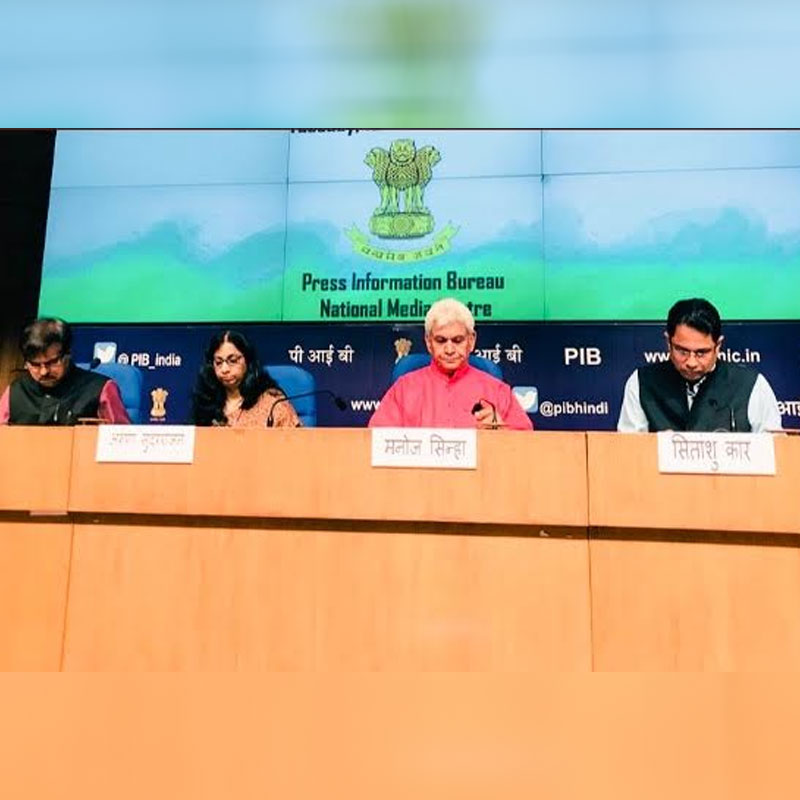
    “We are hopeful that the Cabinet approval for the National Digital Communication Policy 2018 (NDCP 2018) would come through by July-end,” Communications Minister Manoj Sinha said today while briefing the media on the government’s and his ministry’s achievements over the last four years. He added that the NDCP has some “ambitious goals”.

    The NDCP 2018 broadly envisages having more synergies amongst various ministries and other government organisations at a policy level so better coordinated moves could be made to make India’s regulations not only more contemporary, but also help in creating a business-friendly environment in an era when communications and entertainment services are showing high degree of convergence.

    The Department of Telecoms, however, in the draft NDCP 2018 put out for public comments, discarded TRAI’s suggestions to make it the converged regulator on the lines of FCC and Ofcom. The process of getting public and stakeholders’ comments on the NDCP 2018 was completed some time back and the Department of Telecoms is in the process of finalizing a draft policy for Cabinet’s direction.

    Sinha lauded his ministry’s achievements in bridging the digital divide and to a question from the media said that one of the foremost unfinished programmes is to see the full implementation of PM Modi’s dream project of Digital India.

    “Our biggest achievements in the area of telecommunications have been overcoming the pervasive trust deficit through transparent auctions of spectrum and bridging the digital divide in the country by undertaking digital infrastructure projects such as BharatNet on an unprecedented scale,” the minister tweeted after the media briefing.

    Dwelling on in-flight connectivity (IFC) and providing communications services aboard aircrafts over Indian space, Sinha said over the next one year the government could be in a position to provide IFC services. 

    Asked about government plans to rollout 5G services, the Minister informed that a panel set up in the ministry is looking into the issue and assured that India will “not miss the 5G bus” even if it had missed the 3G and 4G gravy-train.

    Also Read:

    DoT addresses broadband issues in policy out for public consultation

    Comment: India’s NTP 2018 gets digital makeover but needs complimentary policies

    TRAI stands up to DoT on use of foreign satellites for comms services on aircrafts

  • Comment: 3 areas that new MIB minister Rathore needs to target

    Comment: 3 areas that new MIB minister Rathore needs to target

    In a recent reshuffle of his cabinet colleagues and their portfolios initiated by PM Modi, a surprise move was not Ministry of Information and Broadcasting (MIB) minister Smriti Irani’s removal, but handing the independent charge of the portfolio to her till-now junior, Rajyavardhan Rathore.

    There is some merit in giving Rathore full responsibility of MIB, which was conceptualised by the nation’s founding fathers to be the government interface with the media and public, in general. That MIB could have lost its relevance in this digital age – an issue being debated in certain quarters – is another story altogether for some other time. Why Rathore at the helm of MIB seems just what the doctor advised?

    First, he is young and suave. Second, he comes with a good pedigree of being an army officer and an Olympic medalist. Third, he’s comparatively young and has built a youth and people-friendly image, apart from his work as independent charge holder at Ministry of Youth Affairs and Sports – his latest initiative on Twitter, #HumFitTohIndiaFit , aimed at encouraging fitness by inviting celebs is already a hit on social media.

    As Rathore has served as a junior MIB minister long enough to get to know the complex issues that come with the terrain, it is expected that he is best suited to address the challenges being faced by the media industry. But for that, he needs to aim at the following three areas and hit the bull’s eye.

    Content Regulation

    The previous MIB minister waded into controversies because of her largely perceived unpopular move to create a panel in April this year to explore regulations for online media/news portals and online content. It did not help her or the government’s cause as this announcement, though being hinted at for several months, came close on the heels of a widely protested move to cancel the accreditation of journalists if found peddling fake news, while the government did not define clearly what constituted a fake news. Though the order was rescinded at the behest of the PM’s Office, the online content committee lingers on directionless and with nobody willing to father the baby presently. That this move antagonised not just online journalists, but also social media players (many of whom are backed and funded by government’s sympathisers) and video-on- demand portals is a story in itself.

    Rathore knows media in India enjoys certain constitutional freedoms, including the right to exercise freedom of speech and expression. Therefore, any move targeted at “regulating” such content shall only be interpreted as silencing criticism. That the online committee is packed with government officials with minuscule industry representation and zero presence of online media raises questions on government’s motives.

    What’s more, doubts have also been raised on the jurisdictional propriety of MIB to create such a committee in the first place. The government allocation of business rules that determine the remit of various government agencies clearly highlights that for all “policy matters relating to information technology; electronics; and Internet” only Ministry of Electronics and IT (MeITY) is competent to make decisions. The ambit of MIB is limited only to “the enunciation and implementation of the law relating to radio and television broadcasting in India by private Indian companies or Indian nationals”.

    With multiple laws applicable on online content, there seems to be no need of any additional regulation for online content, though MeITY could think otherwise, but it’s for it to take a call. Still, a self-regulating mechanism that places uniform standards over user-generated content platforms and video-on-demand portals is the need of the day. This shall also be in line with Rathore’s views expressed after assuming full charge at MIB where he stressed upon self-regulation as the only means of regulating media.

    As the final authority at MIB now, Rathore needs to walk the talk on online content regulation and, probably, let the committee set up by his predecessor die a natural death.

    Online content aside, in the world of traditional broadcasting there is a need to strengthen the already established self-regulatory mechanisms such as the Broadcasting Content Complaints Council (BCCC) of the IBF and a similar self-regulatory set-up of the NBA India.

    Ease of Doing Business

    It would be an understatement to say that the past year has been a difficult period for the Indian media and entertainment (M&E) sector what with after-effects of demonetisation of high-value currency notes and a new tax regime of GST rolled out last year. The story remains the same for ease of doing business in the sector as well.

    On this aspect, Rathore could focus on the recommendations made by Telecom Regulatory Authority of India (TRAI) on`Ease of Doing Business in Broadcasting Sector’ and implement them in letter and spirit.

    A unilateral decision by the previous leadership of MIB to impose a processing fee of Rs 100,000 per day/channel on temporary live uplinking of events (such as sports) and the same amount for seeking minor amendments (like change in name, logo, etc) has been causing heart burns.

    What was the rationale behind such moves to review processing fees? Allegedly non-revision for several years and that such a move could bring in some revenue for the government. But, should a government use licensing/permission fee as means of revenue maximisation? Probably, no.

    Another issue that demands attention from Rathore is the denial of permissions by DoS to satellite TV channels using private satellite capacity, especially foreign. Here, the newly appointed minister shall have to display his trademark leadership and try to resolve the concerns of his constituents (TV channels, DTH operators, teleport operators, etc) vis-a-vis DoS.

    Building an Investment Friendly Environment

    In the recently held global Asia Media Summit 2018 in New Delhi, PM Narendra Modi said that Asia has emerged as a promising region for media businesses and offers opportunities for international cooperation. This statement highlights his government’s push for increasing investment inflow across sectors of the Indian economy – including creative industries such as M&E.

    In this respect, Rathore will have to hit the road running — which he has done — and look at all the factors impeding investments in the sectors under him. This could necessitate reviewing licensing conditions and guidelines, which many in the industry believe hamper investments.

    Can Rathore bite the bullet and recreate the magic that he unveiled one fine day years back to get India the first Olympic medal in an individual event? Certainly, he can. Keep tuned in for the next episode.

    Also Read :

    MIB clears TV channel applications; Rathore calls for stakeholder meets

    Comment: India’s NTP 2018 gets digital makeover but needs complimentary policies

    Comment: MIB’s botched whip on fake news akin to testing waters

    M&E to add 1 mn jobs in 5 years: Sudhanshu Vats

  • ISRO, DoT turf wars delaying connectivity reach: govt official

    ISRO, DoT turf wars delaying connectivity reach: govt official

    MUMBAI: India builds low-cost satellites but has the most expensive bandwidth, a senior Indian government official said on Tuesday, blaming turf wars between ISRO and Department of Telecoms (DoT) for delays in taking connectivity to far-flung areas.

    DoT special secretary N Sivasailam also flagged issues of costs and said that the Indian Space and Research Organisation (ISRO) should do more in order to take the charges at par with global experience.

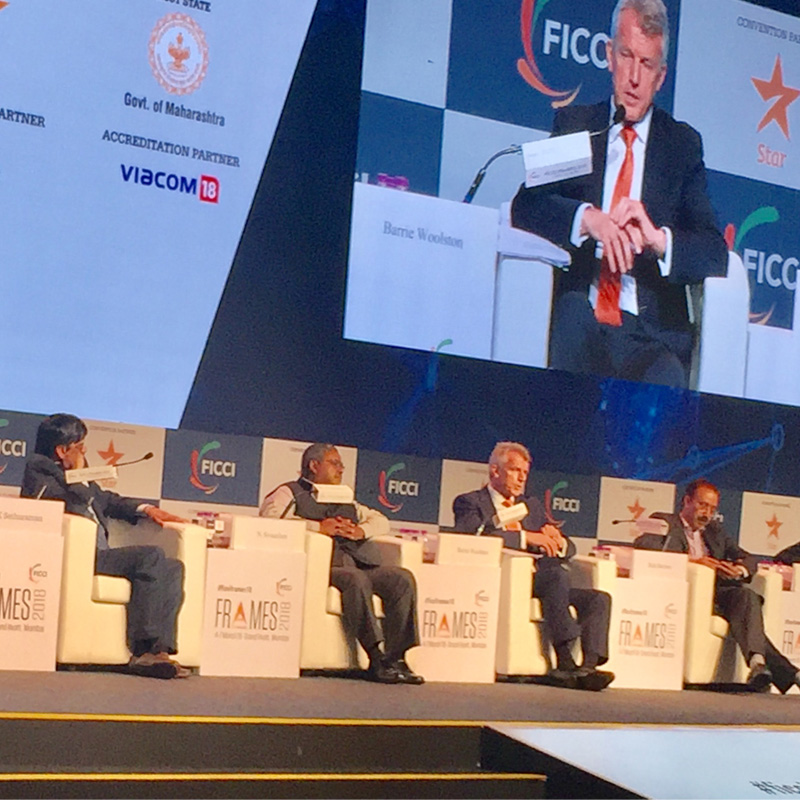
    “Here is the paradox. We produce the cheapest satellite but the costliest bandwidth,” Sivasailam was quoted by PTI as saying in a report, adding that India required more transponders on satellites. He was speaking at the ongoing FICCI-Frames 2018 here at a session on ‘Digital India: Sparking the Access Revolution.’ The session also had a talk by ISRO director for the satcom and navigation programme office, K Sethuraman, who dwelled on the agency’s vision for satellite programme of India.

    Sivasailam said there is a “problem of domains” between the DoT and the ISRO that has impacted, for the last 20 years, the roll-out of connectivity in the far flung areas of the country. 

    “The problem is of domains. We [DoT] don’t want to leave our domain [of spectrum allocation]. ISRO doesn’t want to leave its domain. It is a domain related problem…I do not see people coming together and negotiating this aspect out,” he said. Admitting that there is “politics”, which “makes things difficult”, PTI reported, adding that Sivasailam pitched for both the agencies getting over the problems for an overall benefit. 

    “It is time it stopped because it is hurting business development and ultimately people are not getting [benefited],” he said. On the critical issue of pricing, he asserted it will cost around Rs 150 to serve one user with the current cost structure in the country, whereas in the US, it costs $1 or Rs 65. “If the US is getting it for $1 for the same bandwidth for the life of the satellite, I should be getting it at the same rate. There is no reason why it should not happen in India. That is my refrain,” he said.

    Conceding that ISRO helps take satellite connectivity to 5240 far-flung locations in the country, including 4300 in North-East India, Sivasailam elaborated that the cost of satellite, bandwidth and spectrum makes “operations unviable”. 

    “If you have the volume of business, we should be able to provide at the rates internationally available and that is a matter of some concern for us. We have been working on it, but not necessarily successful on this,” he said, stressing that the industry will have to find solutions on this and DoT and ISRO also need to work together on this issue.

    Speaking of self-regulation in over the top (OTT) services, he said it cannot substitute regulation. “When you talk of regulator’s way of looking at regulations, it lies on consumer side and that’s where self-regulation in itself will fail,” he said, pointing out that while it is particularly important in the telecom sector with issues of call drop and number portability, it may not be applicable too much in the broadcasting sector.

    Sivasailam also spoke of the Telecom Regulatory Authority of India (TRAI) recommendation on in-flight connectivity, which will be taken to the Telecom Commission “sooner than later” and it “could be a reality soon”. On 20 January 2018, the TRAI came out with recommendations suggesting that airlines should be allowed to offer in-flight connectivity over Indian airspace, including broadband services. The Civil Aviation Ministry, Department of Space and DoT now have to act on the suggestions to make it a reality. 

    The Telecoms Ministry official said there are discussions within the department on whether to allow both voice and data on flights or restrict it to voice connectivity alone. The new telecom policy will also be out “very soon,” he said.

    Also Read :

    M&E stakeholders need to collaborate for growth: Sudhanshu Vats

    Broadcasters see positive future for TV in India

  • TRAI issues fresh paper seeking views on Net Neutrality definition

    TRAI issues fresh paper seeking views on Net Neutrality definition

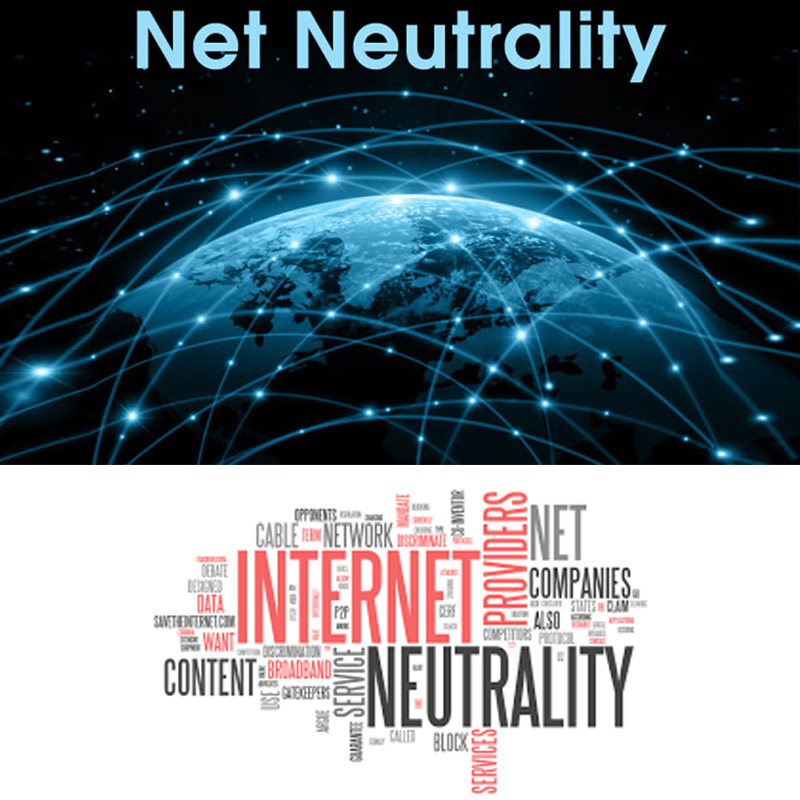
    NEW DELHI: India’s telecoms regulator Telecom Regulatory Authority of India (TRAI) yesterday floated another consultation paper on Net Neutrality (NN) seeking to establish a framework that allows Internet users the `freedom of expression’ and non discriminatory access to the Net.

    In the discussion paper, TRAI stated having identified the India-specific context, the next challenge is to examine what should be the country’s policy response on issues relating to any form of discriminatory treatment in the provision of access to the Internet and seeks views on framing a regulatory framework that would ensure that access to content on the internet is neither ‘blocked’, ‘throttled’ nor ‘preferentially treated’ by ISPs and telecom service providers (TSPs).

    “The idea of equal or nondiscriminatory treatment of traffic that flows on the Internet resonates in the NN principles adopted by various jurisdictions, although the term itself does not necessary feature in their regulatory instruments. The EU regulations, for instance, create ‘common rules to safeguard equal and nondiscriminatory treatment of traffic’ without expressly using the term NN. Given that key terms such as `equal treatment’ are still contested, many have urged against a rigid definition of NN. This was also the view expressed by the DoT (Department of Telecoms) committee in its report where it stated that ‘the crux of the matter is that we need not hard code the definition of Net Neutrality but assimilate the core principles of Net Neutrality and shape the actions around them’,” TRAI said in the consultation paper.

    The issue of Net Neutrality has been occupying Indian mind space for the last 13 months with pro and anti neutrality views floating around without actually addressing the issue that is also a topic of debate in developed markets like the US, Europe and in Asia. TRAI, which has dealt with the issue in a piecemeal fashion (zero rating plans), for example, earlier in 2016, refers to US regulator FCC stand on the issue in its present paper. However, with a new government led by President-elect Trump to take over later this month, even FCC stand may change on the issue of Net Neutrality.

    Some of the questions raised by TRAI in its present 60+ pages paper on Net Neutrality include the following:

    # How should “Internet traffic” and providers of “Internet services” be un-derstood in the NN context?

    # Should certain types of specialised services, enterprise solutions, Inter¬net of Things, etc be excluded from its scope?

    How should such terms be defined?

    # How should services provided by content delivery networks and direct interconnection arrangements be treated?

    # In the Indian context, which of the following regulatory approaches would
    be preferable?

    # Whether and how should different categories of traffic be objectively defined from a technical point of view for this purpose?

    # Should application-specific discrimination within a category of traffic be viewed more strictly than discrimination between categories?

    # How should preferential treatment of particular content, activated by a users choice and without any arrangement between a telecom service provider and content provider be treated?

    The paper, however, does seem to highlight that telecom service providers have to deploy certain traffic management practices to ensure that the wireless networks are able to maintain a certain quality of standards. Hence, it also attempts to establish the framework for what it calls “reasonable traffic management practices” to ensure the wireless networks do not get choked or congested, Economic Times reported yesterday evening on its website.

    All stakeholders will have to give in their responses by February 28, 2017after which the telecom regulator will deliberate upon the responses and make its final recommendations to the government.

    ALSO READ

    “There would be a lot on TRAI’s plate in 2017” – RS Sharma

    Free data, net neutrality: Discussion on TRAI paper to be held

    Net Neutrality: Reactions from the consumers provide deep insights

    Net Neutrality: TRAI receives a million mails, Indians awaits judgment day

  • TRAI issues fresh paper seeking views on Net Neutrality definition

    TRAI issues fresh paper seeking views on Net Neutrality definition

    NEW DELHI: India’s telecoms regulator Telecom Regulatory Authority of India (TRAI) yesterday floated another consultation paper on Net Neutrality (NN) seeking to establish a framework that allows Internet users the `freedom of expression’ and non discriminatory access to the Net.

    In the discussion paper, TRAI stated having identified the India-specific context, the next challenge is to examine what should be the country’s policy response on issues relating to any form of discriminatory treatment in the provision of access to the Internet and seeks views on framing a regulatory framework that would ensure that access to content on the internet is neither ‘blocked’, ‘throttled’ nor ‘preferentially treated’ by ISPs and telecom service providers (TSPs).

    “The idea of equal or nondiscriminatory treatment of traffic that flows on the Internet resonates in the NN principles adopted by various jurisdictions, although the term itself does not necessary feature in their regulatory instruments. The EU regulations, for instance, create ‘common rules to safeguard equal and nondiscriminatory treatment of traffic’ without expressly using the term NN. Given that key terms such as `equal treatment’ are still contested, many have urged against a rigid definition of NN. This was also the view expressed by the DoT (Department of Telecoms) committee in its report where it stated that ‘the crux of the matter is that we need not hard code the definition of Net Neutrality but assimilate the core principles of Net Neutrality and shape the actions around them’,” TRAI said in the consultation paper.

    The issue of Net Neutrality has been occupying Indian mind space for the last 13 months with pro and anti neutrality views floating around without actually addressing the issue that is also a topic of debate in developed markets like the US, Europe and in Asia. TRAI, which has dealt with the issue in a piecemeal fashion (zero rating plans), for example, earlier in 2016, refers to US regulator FCC stand on the issue in its present paper. However, with a new government led by President-elect Trump to take over later this month, even FCC stand may change on the issue of Net Neutrality.

    Some of the questions raised by TRAI in its present 60+ pages paper on Net Neutrality include the following:

    # How should “Internet traffic” and providers of “Internet services” be un-derstood in the NN context?

    # Should certain types of specialised services, enterprise solutions, Inter¬net of Things, etc be excluded from its scope?

    How should such terms be defined?

    # How should services provided by content delivery networks and direct interconnection arrangements be treated?

    # In the Indian context, which of the following regulatory approaches would
    be preferable?

    # Whether and how should different categories of traffic be objectively defined from a technical point of view for this purpose?

    # Should application-specific discrimination within a category of traffic be viewed more strictly than discrimination between categories?

    # How should preferential treatment of particular content, activated by a users choice and without any arrangement between a telecom service provider and content provider be treated?

    The paper, however, does seem to highlight that telecom service providers have to deploy certain traffic management practices to ensure that the wireless networks are able to maintain a certain quality of standards. Hence, it also attempts to establish the framework for what it calls “reasonable traffic management practices” to ensure the wireless networks do not get choked or congested, Economic Times reported yesterday evening on its website.

    All stakeholders will have to give in their responses by February 28, 2017after which the telecom regulator will deliberate upon the responses and make its final recommendations to the government.

    ALSO READ

    “There would be a lot on TRAI’s plate in 2017” – RS Sharma

    Free data, net neutrality: Discussion on TRAI paper to be held

    Net Neutrality: Reactions from the consumers provide deep insights

    Net Neutrality: TRAI receives a million mails, Indians awaits judgment day